
DeepSeek

Search documents
杨植麟为何亲自为Kimi站台?
虎嗅APP· 2026-01-28 14:08
Core Viewpoint - The article discusses the strategic positioning of the company "月之暗面" (Moon's Dark Side) in the competitive landscape of AI models, particularly in light of the upcoming release of DeepSeek's new model. The release of K2.5 is seen as a defensive move rather than an offensive one, aimed at stabilizing the company's position before potential disruptions from competitors [5][9]. Group 1: K2.5 Model Release - The K2.5 model was released on January 27, 2026, with founder 杨植麟 (Yang Zhilin) personally promoting it, which is unusual in the industry and signals a strategic shift [5][7]. - K2.5 is viewed as an upgrade rather than a groundbreaking model, focusing on enhancing coding capabilities and the Agent system, especially for overseas markets [11][12]. - The release is interpreted as a necessary step to maintain relevance and presence in the market, especially before DeepSeek's anticipated new model launch [8][14]. Group 2: Industry Context and Competition - The AI model industry is undergoing a significant reshuffle, with several companies transitioning away from being solely "base model" providers, leaving 月之暗面 as one of the few remaining in this category [16][17]. - The narrative in the industry is shifting from "who can create the strongest model" to "who can effectively utilize the model," indicating a higher risk for companies that continue to focus solely on base models [18][22]. - 月之暗面 is attempting to pivot towards coding and Agent capabilities, but it still heavily relies on model performance for revenue, particularly from overseas markets [21][22]. Group 3: Strategic Concerns and Anxiety - The company faces anxiety regarding its dependency on model capabilities, especially with competitors like DeepSeek potentially outpacing it in model advancements [23][24]. - The transition to focusing on coding and Agent systems presents long validation cycles, making it challenging for 月之暗面 to demonstrate its strategic shift compared to competitors who can quickly showcase model improvements [25]. - The memory of the impact from DeepSeek's previous model release in 2025 creates pressure for 月之暗面 to avoid being caught off guard again, prompting the early release of K2.5 as a preemptive measure [26][27].


Gemini 3「开眼」像素级操控,谷歌回应DeepSeek-OCR2
3 6 Ke· 2026-01-28 11:33
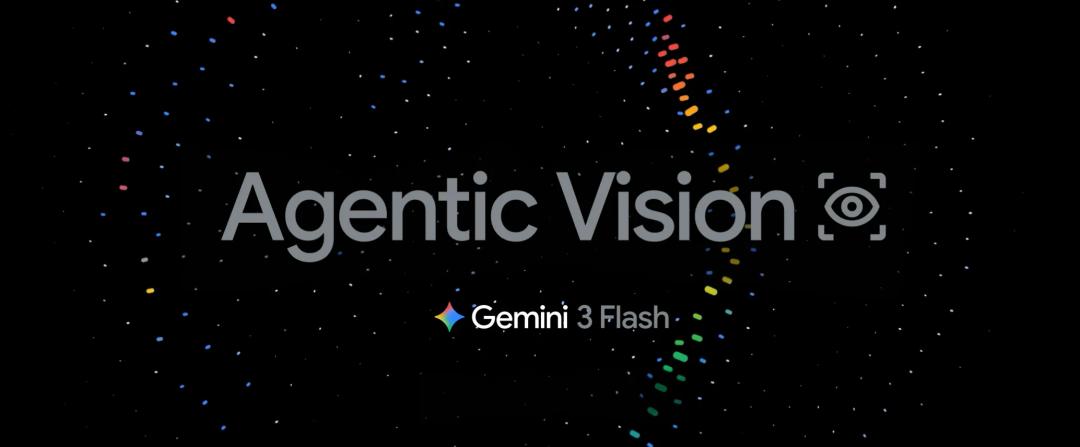
Core Insights - Google DeepMind has introduced a significant new capability called Agentic Vision for Gemini 3 Flash, transforming how large language models understand the world from passive guessing to active investigation [1][3][5]. Technology Overview - Agentic Vision allows models to actively manipulate images based on user requests by employing a "Think-Act-Observe" loop, enhancing the model's ability to analyze and interact with visual data [3][11]. - This capability has resulted in a performance improvement of 5% to 10% across various visual benchmark tests for Gemini 3 Flash [6]. Practical Applications - The technology enables developers to unlock new behaviors through code execution in the API, demonstrated in applications like PlanCheckSolver.com, which improved accuracy by 5% through iterative checks of high-resolution inputs [10]. - Agentic Vision facilitates image annotation, allowing the model to interact with the environment by drawing and labeling directly on images, ensuring pixel-level accuracy in its responses [13]. - The model can also perform visual mathematics and plotting, generating visual representations of data while avoiding common pitfalls of standard large language models [15][16]. Future Prospects - Google indicates that Agentic Vision is just the beginning, with plans to enhance implicit actions like image rotation and visual mathematics in future updates, as well as exploring additional tools for the Gemini model [20]. Competitive Landscape - The release of Agentic Vision coincides with DeepSeek's launch of DeepSeek-OCR2, suggesting a competitive response in the field of visual AI, where both companies are redefining machine vision capabilities [21][22]. - The competition centers around who can better define machine vision, with DeepSeek focusing on perception and Google emphasizing interactive capabilities through code execution [23].


黄仁勋新年访华行程曝光,英伟达中国战略面临微妙调整
Sou Hu Cai Jing· 2026-01-28 10:29
Core Viewpoint - Despite challenges in its relationship with China, Nvidia's founder Jensen Huang continues to visit China annually, indicating the importance of the Chinese market to the company [2][5][19]. Group 1: Jensen Huang's Visits - Jensen Huang's recent visit to China marks his third consecutive year of New Year visits, which typically include meetings with local employees and participation in company events [2][4]. - Huang's visits are characterized by a mix of self-arranged activities and official invitations, with a focus on engaging with employees and local culture [2][4]. - The visits serve to strengthen relationships with Chinese government officials and local tech leaders, reflecting Nvidia's strategic interest in the Chinese market [5][20][21]. Group 2: Nvidia's Market Position in China - Nvidia's sales in China are projected to exceed $17 billion by 2025, accounting for approximately 13% of its global revenue, making it a crucial overseas market [8]. - The Chinese market is significant for Nvidia due to its high-quality customer base and robust industrial ecosystem, particularly in sectors like AI and automotive [9][10]. - Major Chinese tech companies such as Tencent, ByteDance, and Baidu are key customers for Nvidia, highlighting the company's reliance on the Chinese market for growth [10]. Group 3: Regulatory and Competitive Landscape - Nvidia faces regulatory scrutiny from both the U.S. and Chinese governments, with recent discussions around the security risks of its H20 chip impacting its operations [3][5]. - Despite these challenges, there are indications of a shift in the attitude of Chinese regulatory bodies and tech companies towards Nvidia, as they seek a balance between purchasing Nvidia chips and developing domestic alternatives [6][11]. - Huang's emphasis on the importance of the Chinese market is underscored by the company's ongoing efforts to adapt its product offerings to meet local regulatory requirements [23]. Group 4: Talent and Innovation - Nvidia's Chinese operations employ over 4,000 staff across key cities, focusing on advanced fields such as AI algorithms and autonomous driving [18]. - The company has faced talent challenges, with former employees joining competitors, which has prompted Huang to reinforce the importance of maintaining morale and loyalty within the Chinese team [15][17][19]. - Huang's recognition of China's innovation capabilities and his positive remarks about local companies reflect Nvidia's strategy to align closely with the Chinese tech ecosystem [23].


国产大模型密集发布
第一财经· 2026-01-28 10:08
Core Viewpoint - The article discusses the recent advancements in domestic AI models in China, highlighting the competitive landscape and the shift towards engineering maturity in the industry, with a focus on multi-modal capabilities and inference efficiency [5][11][16]. Group 1: Model Updates and Industry Trends - Several domestic model manufacturers have recently updated their models, including DeepSeek's new OCR 2 model and Kimi's K2.5 model, indicating a competitive environment in the AI model sector [5][8]. - The release of these models has generated significant attention, with predictions of a competitive landscape for AI models leading up to the 2026 Spring Festival [5][8]. - Industry experts view the recent model updates as a sign of the industry's transition towards engineering maturity, moving from parameter competition to engineering optimization and from experimental demos to scalable services [5][11]. Group 2: Multi-Modal and Inference Engineering - DeepSeek's OCR 2 model utilizes an innovative DeepEncoder V2 method, allowing for dynamic rearrangement of image components based on their meaning, which enhances performance in complex layouts [8][10]. - Kimi's K2.5 model is described as the company's most intelligent model to date, supporting a wide range of tasks including visual and text input, indicating a strong focus on multi-modal architecture [8][9]. - The trend towards improving inference efficiency and reducing costs is evident, with companies like Alibaba releasing models aimed at enhancing multi-modal information retrieval and cross-modal understanding [11][16]. Group 3: Competitive Landscape and Cost Efficiency - The competition among leading companies in the AI model sector is intensifying, with firms striving to position themselves advantageously [13][14]. - Cost efficiency is becoming increasingly important, with companies prioritizing models that offer high performance at lower costs, as demonstrated by the significant price reductions in model API usage [14][15]. - The industry is witnessing a shift from a focus on scale to a focus on efficiency and practical application, marking a new phase in the development of AI models [15][22]. Group 4: Technical Challenges and Future Directions - Key technical challenges include improving inference capabilities, addressing model hallucinations, and enhancing interpretability, which are critical for broader application in various industries [16][21]. - The need for dynamic optimization of inference capabilities is highlighted, as current models lack flexibility in decision-making based on information completeness [16][17]. - The article emphasizes the importance of multi-modal technology optimization, as current models often require extensive adjustments to achieve desired outputs, indicating a need for more user-friendly solutions [17][18].


“扫描识字”便宜200倍,DeepSeek革了Adobe们的命
Guan Cha Zhe Wang· 2026-01-28 09:46
Core Viewpoint - The release of DeepSeek-OCR2 marks a significant disruption in the OCR (Optical Character Recognition) market, which is valued in the hundreds of billions, by introducing a more efficient and cost-effective solution that challenges traditional OCR providers [5][11][18]. Group 1: Product Innovation - DeepSeek-OCR2 introduces a new encoder structure called DeepEncoder-V2, which dynamically adjusts the processing order of visual information based on semantic understanding, enhancing the model's ability to recognize text accurately [6][9]. - The model incorporates a concept of "visual causal flow," allowing it to process images intelligently rather than mechanically, improving its performance in complex layouts and distorted documents [6][9]. - Testing on the OmniDocBench v1.5 benchmark shows that DeepSeek-OCR2 achieved an overall score of 91.09%, a 3.73% improvement over its predecessor, with a notable reduction in reading order accuracy error [7]. Group 2: Cost Efficiency - DeepSeek's pricing model offers a dramatic cost reduction compared to traditional OCR services, with processing costs dropping from approximately $65 to $0.28 for 1,000 pages of complex financial documents, representing a cost difference of over 200 times [12][11]. - The introduction of a token-based billing system allows for even lower costs, potentially as low as $0.028 per document if cached [12]. Group 3: Market Impact - The emergence of DeepSeek-OCR2 threatens established OCR companies like 合合信息, 汉王科技, and ABBYY, as it undermines their claims of specialized expertise and high-value services [13][14]. - Traditional OCR providers, which have relied on proprietary algorithms and extensive template libraries, face a significant challenge as DeepSeek demonstrates that general models can outperform specialized ones without extensive training [14][13]. - The shift towards open-source solutions, as exemplified by DeepSeek-OCR2, is expected to democratize access to OCR technology, enabling small businesses and various sectors to leverage automated document processing [15][16]. Group 4: Future Implications - The release of DeepSeek-OCR2 signifies a transition of OCR technology from a high-cost service to a fundamental infrastructure, akin to utilities like water and electricity, making it accessible to a broader audience [16][18]. - As the cost of machine reading decreases, new opportunities arise in various fields, including small business credit services, automated grading, and intelligent document review processes [15][17]. - The development of a unified multimodal encoder through open-source collaboration is anticipated to accelerate technological advancements and reduce costs across the industry [16].



国产大模型密集发布,“春节AI竞赛”提前开幕
Di Yi Cai Jing· 2026-01-28 09:07
Core Insights - The recent updates from multiple domestic model manufacturers, including DeepSeek and Kimi, highlight a competitive landscape in China's AI model industry, with significant advancements in model capabilities and performance [4][7][9] - The industry is transitioning towards a more mature engineering phase, focusing on efficiency and practical applications rather than just parameter competition [4][11] Group 1: Model Developments - DeepSeek released the OCR 2 model, which utilizes the innovative DeepEncoder V2 method to dynamically rearrange image components based on their meaning, improving performance on complex layouts [7][8] - Kimi's K2.5 model is described as the company's most intelligent and versatile model to date, supporting various tasks including visual and text input, and agent tasks [7] - Alibaba has also launched several models aimed at enhancing multimodal capabilities, indicating a strategic focus on comprehensive model development across various applications [9][11] Group 2: Industry Trends - The competition among leading companies is intensifying, with a focus on reducing costs and improving the usability of AI models, which is crucial for broader adoption in business applications [11][13] - The cost of using large models is decreasing, with significant reductions in token usage costs reported, making AI technology more accessible for businesses [12][13] - The industry is moving towards a new phase characterized by engineering optimization and efficiency, as indicated by the rapid release cycles of flagship models [19][21] Group 3: Challenges and Future Directions - Despite advancements, challenges remain in model interpretability, reasoning capabilities, and the need for dynamic optimization in inference processes [15][20] - The demand for comprehensive and efficient solutions from clients is driving the need for models that can handle multimodal data and provide accurate end-to-end processing [20][21] - The future of the industry may see a shift towards integrated ecosystems that prioritize reasoning capabilities and cost efficiency, moving away from blind competition [21]
Clawdbot由AI开发;国产大模型集体上新丨早科技风向标
2 1 Shi Ji Jing Ji Bao Dao· 2026-01-28 05:47
Group 1: Technology Developments - The open-source project Clawdbot has gained significant attention, capable of running on Mac mini and integrating with various tools, developed almost entirely by AI [2] - DeepSeek has released a new model, DeepSeek-OCR 2, which utilizes an innovative method to enhance AI's visual understanding [4] - The domestic AI startup, Moonlight Dark Side, launched the Kimi K2.5 model, achieving top scores in multiple agent evaluations and integrating various capabilities into one model [5] Group 2: Market Trends and Pricing - Two major chip manufacturers, Zhongwei Semiconductor and Guoke Micro, have announced price increases for their products, with adjustments ranging from 15% to 80% [6] - OpenAI's advertising costs for ChatGPT are reported to be three times higher than Meta's, with limited data provided to advertisers [8] Group 3: Corporate News - OpenAI's Chief Information Security Officer, Matt Knight, announced his departure from the company after joining in 2020 [11] - Anthropic has completed a new funding round, achieving a valuation of $350 billion, with total financing between $10 billion and $15 billion [14][15] - Turing Quantum has secured hundreds of millions in Series B funding, continuing its trend of significant capital raises [16] Group 4: Product Launches - Samsung's Galaxy Z TriFold, the first three-fold smartphone, is set to launch in the U.S. at a price of $2,899, significantly higher than other smartphones on the market [17]
速递 | DeepSeek更新了:OCR 2重构底层逻辑:AI看图终于懂“人话”了
未可知人工智能研究院· 2026-01-28 04:04
Core Insights - The article discusses the launch of DeepSeek's OCR 2 model, which fundamentally redefines AI's approach to image understanding by implementing a "Visual Causal Flow" that mimics human reading patterns [4][29] - The model significantly enhances performance and efficiency, achieving a nearly 4% improvement in accuracy and reducing processing costs by over 80% [8][9][29] Technical Innovation - The core innovation, "Visual Causal Flow," allows the AI to prioritize information based on logical reading patterns, improving efficiency compared to traditional OCR models [4][6] - The introduction of DeepEncoder V2 enables dynamic rearrangement of visual data based on semantic meaning, enhancing the model's ability to understand complex documents [6][9] Performance and Efficiency - OCR 2 maintains an accuracy rate of over 91% when processing complex documents, a significant improvement in a mature field [8] - The model reduces the number of visual tokens required for processing from thousands to just over a hundred, drastically cutting costs [9][10] Commercial Applications - Three high-value application scenarios are identified: 1. Financial automation for invoice and receipt processing, which can significantly reduce costs for accounting firms [13] 2. Intelligent contract review, which can streamline legal workflows and potentially replace junior legal assistants [14] 3. Smart document management for digitizing historical records in government and healthcare sectors, aligning with national digitalization initiatives [15] Competitive Landscape - The introduction of open-source OCR 2 disrupts the existing market dominated by major players like AWS and Google, lowering the barriers for small and medium enterprises to access high-precision OCR technology [17][19] - The competition will intensify, benefiting technology-driven players while challenging traditional service providers reliant on API calls [20] Long-term Strategy - DeepSeek's overarching strategy focuses on optimizing "information compression" and "efficient reasoning" across its various models, aiming to reduce inference costs significantly [21][22] - The ultimate goal is to develop a unified multimodal encoder that can process text, images, audio, and video in a cohesive manner, enhancing overall efficiency [23][24] Summary and Actionable Insights - Key takeaways include the technological advancements of OCR 2, its application in various high-value sectors, and the potential for significant commercial opportunities [29] - Companies are encouraged to explore the capabilities of OCR 2 and consider integrating it into their operations to capitalize on the current technological window [29]
2026年中国AI发展趋势前瞻
Xin Hua Wang· 2026-01-28 03:56
Core Insights - The number of AI companies in China has exceeded 6,000, with the core AI industry expected to surpass 1.2 trillion yuan, reflecting a nearly 30% year-on-year growth [1] - China has become the largest holder of AI patents globally, indicating a significant advancement in AI technology and innovation [1] - The shift from a "Chat" paradigm to an "intelligent agent" era is recognized, emphasizing the need for AI to solve real-world problems [2] Industry Development - The AI sector is experiencing a dual advancement: technological breakthroughs and application integration into various industries [2] - Major companies like Tencent and Baidu are rapidly deploying AI in real-world scenarios, with Tencent integrating its self-developed models into over 900 applications [2] - The competition in AI is now focused on who can effectively address specific problems, marking a transition in the industry [2] Computational Power - China has established 42 intelligent computing clusters, with a total computing power exceeding 1,590 EFLOPS, ranking among the top globally [5] - The development of computing power is characterized by a dual drive of government planning and market innovation, moving towards a more integrated national framework [6] - The "East Data West Computing" project has created eight major hub nodes, which account for over 80% of the national intelligent computing capacity [6] Data Utilization - The data annotation industry is evolving from labor-intensive to knowledge-intensive, focusing on high-quality industry-specific datasets [9] - High-quality data is becoming the focal point of AI competition, essential for training industry models to solve deep sector-specific issues [10] - China possesses a vast amount of data across various industries, which is seen as a valuable resource for AI development [10] Application in Traditional Industries - AI is increasingly being integrated into traditional industries, driving transformation and modernization [13] - The rapid growth in AI applications is reflected in the significant increase in daily token consumption, indicating widespread adoption [14] - AI applications are expanding across manufacturing, with notable increases in research, production, and operational management [16] Social Impact - AI is transforming governance and public services, enhancing efficiency and responsiveness in urban management [18] - The integration of AI into consumer services is changing how businesses understand and meet customer needs [18] - The focus on AI is shifting towards meeting societal demands, with initiatives aimed at fostering a comprehensive ecosystem of smart products [19] Safety and Regulation - The rise of AI-generated low-quality content has raised concerns about safety and ethical challenges, prompting discussions on regulatory frameworks [24][25] - The Chinese government is implementing policies to strengthen AI governance, emphasizing the need for a balanced approach to innovation and risk management [25]


半导体行业深度报告:AgenticAI时代的算力重构:CPU,从“旁观者”到“总指挥”的价值回归
Soochow Securities· 2026-01-28 03:29
证券研究报告·行业深度报告·半导体 2026 年 01 月 28 日 证券分析师 陈海进 执业证书:S0600525020001 chenhj@dwzq.com.cn 证券分析师 李雅文 执业证书:S0600526010002 liyw@dwzq.com.cn 半导体行业深度报告 Agentic AI 时代的算力重构:CPU,从"旁观 者"到"总指挥"的价值回归 增持(维持) [Table_Tag] [Table_Summary] 投资要点 产业端推进方面,AWS 和 Google Cloud 等头部 CSP 正在加速建设面向 Agent的沙盒环境软硬件基础设施,率先在软件层面强化 Agent Sandbox 的隔离与编排能力,通过运行时与调度体系的完善,为后续 CPU 侧基 础设施规模化部署奠定基础。与此同时,CPU 龙头也在 Agent 驱动下向 超多核架构演进:AMD 推出的 Turin 最高可达 192 核;Intel 的 Sierra Forest 采用纯能效核设计,核心数可达 144 甚至 288 核。我们认为, 随着 Agent 商业化推进,厂商必须持续压低每次任务执行成本。在这一 目标下,超多 ...