Waymo

Search documents
Waymo, Tesla Robotaxi Rival WeRide's Fleet Surpasses 1,000 AVs, Boasts Driverless Operations In 3 Cities: 'Tens Of Thousands…'
Yahoo Finance· 2026-01-18 12:14
Core Insights - WeRide Inc. has expanded its global autonomous cab fleet, reaching a total of 1,023 Robotaxis and achieving driverless operations in Beijing, Guangzhou, and Abu Dhabi, with a vision to scale to tens of thousands of Robotaxis by 2030 [2][3]. Group 1: Fleet Expansion and Operations - WeRide has announced it now operates over 1,000 Robotaxis globally, specifically 1,023 [2]. - The company has achieved fully driverless operations in three major cities: Beijing, Guangzhou, and Abu Dhabi [2]. - WeRide aims to expand its fleet significantly, targeting tens of thousands of Robotaxis by the year 2030 [2]. Group 2: Strategic Partnerships and Integrations - WeRide is integrating its services with WeChat, allowing over a billion users to book Robotaxi rides in Guangzhou and Beijing through the WeRide Go feature [3]. - The company has partnered with Uber Technologies and Dubai's Roads and Transport Authority to launch Robotaxi rides in Dubai via the Uber app [4].

Should Tesla Robotaxi Bulls Fear NVIDIA and Waymo?
247Wallst· 2026-01-16 16:26
Core Viewpoint - The emergence of the robotaxi market presents a significant opportunity for Tesla, positioning the company as a potential leader in this lucrative sector [1] Group 1 - Tesla shareholders are willing to pay a premium to invest in the company, reflecting strong confidence in its future prospects within the robotaxi industry [1]


小马智行:六大事件驱动催化剂将至,开启 90 天上行催化观察
2026-01-16 02:56
Summary of Pony AI (PONY.O/2026.HK) Conference Call Company Overview - **Company Name**: Pony AI Inc. - **Founded**: 2016 - **Industry**: Autonomous Mobility - **Key Operations**: Operates robotaxi services in four tier-1 cities in China (Beijing, Shanghai, Guangzhou, Shenzhen) leveraging vehicle-agnostic Virtual Driver technology and full-stack autonomous driving technology [13][18] Key Events and Catalysts 1. **4Q25 Results**: Expected to be decent with a one-off gain from Moore Threads investment, estimated at a ~100x return, which will be reflected in the 4Q25 P&L [2][11] 2. **Waymo Financing Round**: Waymo is reportedly valued at 280x 2025 P/S, which may lead to a re-rating of Pony AI's valuation currently at 87x 2025 P/S. This financing round could occur in 1Q26 [3][11] 3. **Southbound Stock Connect Entry**: Anticipated entry into Southbound stock connect around June 5, 2026, which may improve investor sentiment. Feedback indicates a potential shift in fund flow towards undervalued tech-AI names [4][11] 4. **US-China Competition**: Increased competition may prompt China to adopt a more aggressive policy on ADAS/Robotaxi, potentially increasing domestic development spending [7][8][11] 5. **New Generation Robotaxi**: Expected to reduce Autonomous Driving Kit (ADK) costs by 20% starting April 2026, with current BOM costs estimated at Rmb130k [9][11] 6. **Asset-Light Business Model**: Development is progressing well, with a target to exceed 3,000 Robotaxi units by the end of 2026, up from 1,159 units at the end of 2025 [10][11] Financial Metrics - **Current Price**: US$16.09 (Market Cap: US$5.636 billion) [11] - **Target Price**: US$24.50 (derived from DCF with a 17.1% WACC) [15][20] - **Valuation Multiples**: Target price translates to 2030E P/S and P/E multiples of 2.9x and 28.0x [15][20] Investment Strategy - **Rating**: Buy/High Risk - **Advantages**: - Regulatory advantages as an early mover in the domestic market - Focus on L4 advanced autonomous driving technology - Cost advantages with a vehicle cost of US$38k, significantly lower than competitors [14][19] Risks - **High Risk Rating**: Due to loss-making status and uncertainties in robotaxi development - **Key Risks**: - Technological and commercialization challenges - Business model uncertainties - Safety and reliability concerns - Intense competition and regulatory risks [16][21] Additional Insights - **Investor Sentiment**: Positive sentiment is building around Pony AI's potential market entry and upcoming financial results, which could drive stock performance in the near term [4][11] - **Market Dynamics**: The evolving landscape of US-China tech competition may create opportunities for accelerated growth in the autonomous vehicle sector [7][8][11]
Rivian stock: Wyckoff Theory points to rebound despite expert doubts
Invezz· 2026-01-15 13:08
Core Viewpoint - Rivian's stock has experienced a significant decline, with analysts expressing concerns over its financial health and the electric vehicle market's outlook [1][2][4]. Financial Performance - Rivian's revenue for Q3 increased by 74% year-over-year to $1.55 billion, driven by consumer purchases before the end of the EV tax credit [6]. - Despite the revenue growth, the company reported a net loss of over $1.16 billion for the quarter, accumulating a total loss of $2.8 billion in the first nine months of the year [6]. - Analysts project Q4 revenue to be $1.27 billion, a decrease of 25% compared to the same period last year, leading to an annual revenue estimate of $5.37 billion and a loss per share of $3.23 [7]. Analyst Ratings and Market Sentiment - Out of 29 analysts tracking Rivian, 8 have a sell rating, 12 a hold rating, and only 9 a buy rating, indicating a generally pessimistic outlook [2]. - Recent downgrades from analysts, including UBS and Wolfe Research, have contributed to the negative sentiment surrounding the stock [3]. Capital and Investment Concerns - Rivian ended the quarter with over $6 billion in cash and short-term investments, but there are concerns that these funds may be depleted due to ongoing losses [7]. - The CEO has indicated the possibility of raising additional capital this year, raising further concerns about potential dilution for investors [4]. Industry Context - The electric vehicle market is facing challenges, particularly after the expiration of the EV tax credit, which has led to significant charges from competitors like Ford and General Motors [4]. - Analysts are also worried about Rivian's autonomy technology lagging behind competitors such as Tesla and Waymo [5]. Future Projections - Analysts expect Rivian's revenue to rise to $6.8 billion this year, aided by the anticipated launch of the R2 model in the first half of the year, although the loss per share is projected to be substantial at $2.93 [8]. - The stock has been trading within a tight range and is currently at the 50-day and 100-day Exponential Moving Averages, suggesting a potential accumulation phase according to Wyckoff Theory, despite fundamental concerns [10][12].

再募 150 亿美元,拿走全美 18%的风投资金,3 万字长文聊聊 a16z 是怎么运转的?
Founder Park· 2026-01-15 13:04
Core Insights - a16z has raised over $15 billion, capturing more than 18% of all VC funds raised in the U.S. in 2025 [2][10] - The firm has invested in 56 unicorns over the past decade, more than any other venture capital institution, and has backed 10 out of the top 15 private companies by valuation [3][15] - a16z is characterized as a "Firm" rather than a "Fund," focusing on building a long-term competitive advantage system that strengthens with scale [4][41] Fundraising and Market Position - In 2025, a16z's fundraising of $15 billion surpassed the combined total of its closest competitors, Lightspeed ($9 billion) and Founders Fund ($5.6 billion) [10] - a16z's fundraising success occurred in a challenging environment, where the average fund took 16 months to close, while a16z completed its fundraising in just over three months [10] - The firm has four independent funds that ranked in the top 10 for total capital raised in 2025, with its Late Stage Venture Fund II ranking second [12] Investment Strategy and Philosophy - a16z has led early-stage financing for 31 companies that eventually surpassed a valuation of $5 billion, outperforming its closest competitors by over 50% [16] - The firm holds 44% of the total valuation of all AI unicorns in its portfolio, indicating a strong position in the AI sector [16] - a16z's investment philosophy emphasizes identifying and backing the ultimate winners in their respective categories, often providing more capital than initially requested [26][34] Historical Context and Evolution - Since its inception, a16z has evolved through two distinct eras, focusing first on recognizing undervalued software companies and later on the increasing scale of successful tech firms [63][72] - The first era (2009-2017) was marked by a willingness to pay premium prices for high-potential companies, while the second era (2018-2024) focused on raising larger funds to maintain meaningful ownership in increasingly larger winners [66][72] - a16z's approach has been to build operational infrastructure that supports portfolio companies, a strategy that was initially viewed as unnecessary by peers [67] Notable Investments - a16z has invested in major companies such as OpenAI, SpaceX, and Databricks, which are among the top private companies by valuation [14][16] - Databricks exemplifies a16z's investment model, showcasing the firm's commitment to supporting founders and believing in their long-term vision [25][40] - The firm has consistently backed Databricks through multiple funding rounds, contributing to its growth into a $134 billion company [24][40]

Waymo火车轨道停车,乘客仓惶逃生…马斯克估计要笑醒了
3 6 Ke· 2026-01-15 10:06
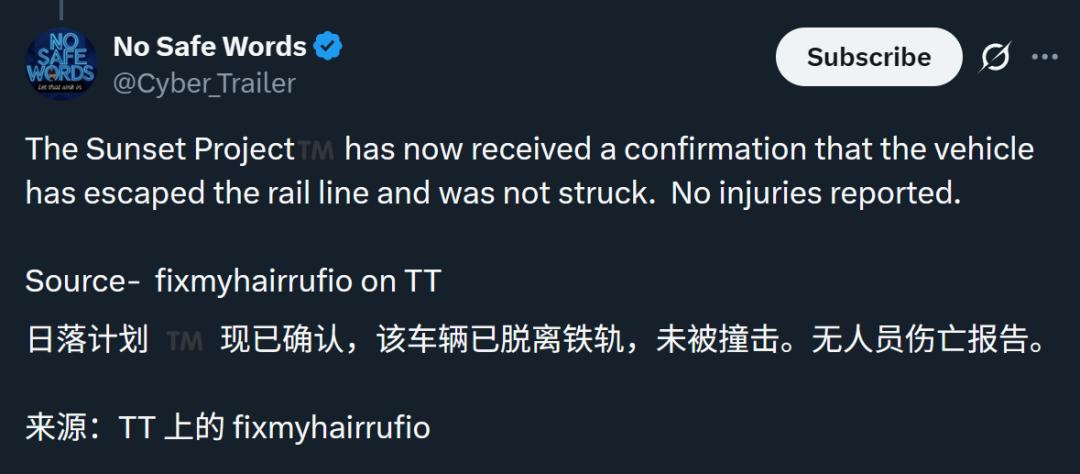
Waymo又闯祸了!! 这家谷歌旗下的自动驾驶公司,继闯入警匪对峙现场、停电干崩硅谷之后……这次差点给乘客小命搭上: 是的,你没看错。 它这次直接载着乘客开上了城市道路中央的铁轨,而且后面就有一辆跟上来的小火车。 这下可给乘客吓懵了~于是赶紧弃车跑路了。 事件一出,"前科累累"的Waymo再次引发网友声讨,而且连带着它所代表的"L4直达派"也再次受到质疑。 然而就在此时,"L2升维派"的代表特斯拉这边,FSD可是又有新进展了—— 马斯克最新发声,FSD停止买断交易,从此转为订阅。 以Waymo、特斯拉为代表的两大派系对决升级,今年的自动驾驶之争,想来是更精彩了。 Waymo停铁轨上,乘客弃车逃生 Waymo又掉链子了……而且是在和特斯拉火拼竞速、两大路线正巅峰对决的时刻。 它这次"闯祸"的地点位于亚利桑那州凤凰城。从围观路人提供的视频可以看到: 虽然旁边就是宽阔无比的马路,但它还是径自开到了一条铁轨线上,而且顺着铁轨一路前行。 见此情景,开车路过的小哥都惊了,于是连忙刹了一脚停下来围观。 要知道此时车里还坐着乘客,情况已经危急起来。 而待镜头拉远后,所有人更是为乘客捏一把汗——Waymo前后都有小火车缓缓逼近 ...
AI 时代:智能驾驶从技术想象走向产业现实
Zhong Guo Qi Che Bao Wang· 2026-01-15 08:30
Core Insights - The automotive industry is undergoing a profound transformation driven by artificial intelligence (AI), moving from early concept validation to practical implementation, reshaping the entire industrial ecosystem from technology development to business models [1][2]. Group 1: Restructuring the Automotive Value Chain - The core of the AI era is "cognition," contrasting with the "computation" focus of the information age, characterized by data-driven societal mechanisms, algorithm-influenced decision-making, and human-machine collaboration [4]. - AI systems possess learning, reasoning, and self-optimization capabilities, participating as "cognitive partners" in production, management, and service processes, significantly impacting manufacturing, transportation systems, and urban operations [4][5]. - Multiple countries have elevated AI to a national strategic level, promoting technological innovation and industrial application integration through systematic policies [4]. Group 2: Technological Pathways in Autonomous Driving - Three differentiated technological routes have emerged in the global autonomous driving sector: 1. The robust route represented by Waymo, utilizing a combination of lidar, radar, and cameras, achieving L4-level commercial operations but facing high costs and slow scalability [6]. 2. The aggressive route advocated by Tesla, relying on a "pure vision" approach with lower hardware costs, primarily applied in L2+/L3-level driving assistance, but facing challenges in extreme scenarios [6]. 3. The system redundancy route explored by Zoox, focusing on physical redundancy in vehicle structure and sensor layout, aiming for L4/L5-level fully autonomous driving but with a longer commercialization cycle [6]. - Autonomous driving technology has demonstrated high reliability in practical applications, such as Waymo vehicles operating smoothly in complex urban environments, enhancing passenger safety and trust through transparent real-time interaction [6][7]. Group 3: Future of Autonomous Driving - There is no "one correct" technological answer for autonomous driving; companies must balance safety, cost, scalability, and reliability [7]. - As AI agent capabilities evolve, computing costs decrease, and regulatory frameworks improve, autonomous driving is expected to expand from pilot projects to broader applications [7]. - Future competition will focus not only on sensors or algorithms but also on system engineering capabilities, data loop construction, and long-term technological patience, marking the beginning of a significant revolution in mobility [7].

美国互联网行业:2026 年关键叙事-US Internet_ Narratives that matter in 2026
2026-01-15 06:33
Summary of Key Points from the US Internet Research Call Industry Overview - The focus is on the U.S. Internet sector, particularly the dynamics surrounding major players like Google, Amazon, Meta, and others as they navigate through 2026 and beyond [1][4][6]. Core Themes and Insights Theme 1: AI Transition from Model Performance to Product Usage and Revenue Generation - The narrative is shifting from evaluating AI model performance to assessing product usage and financial returns, with a focus on user engagement metrics [6][23]. - Companies are expected to demonstrate how AI tools can attract users and generate revenue, moving beyond mere model comparisons [23][24]. Theme 2: AI in the Physical World - 2026 is anticipated to mark significant advancements in robotics and autonomous vehicles (AVs), with companies like Waymo and Tesla leading the charge [7][51]. - Robotics is expected to enhance efficiency in logistics and fulfillment, particularly for Amazon, which is leveraging automation to improve margins [55][56]. Theme 3: Market Dynamics - Growing Pies and Shrinking Slices - The competitive landscape is evolving, with larger players like Amazon and Google encroaching on markets traditionally held by smaller firms, leading to a potential erosion of market share for incumbents [10][11][39]. - The total addressable market (TAM) is expanding, but the share of market leaders may decrease as competition intensifies [10][11]. Theme 4: Big Tech's Expanding Influence - Major tech companies are leveraging their data and distribution advantages to enter new markets, such as grocery and AVs, with mixed results [11][12]. - The ability to outspend competitors on capital expenditures (CapEx) and product development is a significant advantage for these firms [11][12]. Investment Implications - Top picks for 2026 include Amazon (AMZN), Meta (META), DoorDash (DASH), and Zillow (ZG), with a positive outlook on Uber (UBER), Pinterest (PINS), and Cart (CART) [4][14][19]. - Amazon is expected to improve its position in AI and eCommerce, with anticipated revenue growth in AWS and retail margins benefiting from efficiency initiatives [15][19]. - Meta is viewed as having high upside potential, although it faces risks related to its AI model performance and revenue growth [15][19]. Financial Metrics and Projections - Key financial metrics for major companies include adjusted EPS and P/E ratios, with projections indicating growth for Amazon and Meta in the coming years [3][4]. - Zillow's price target has been adjusted to $95, reflecting a potential upside of approximately 40% from current levels, despite recent legal and competitive challenges [5][19]. Other Important Insights - The focus on recurring engagement metrics is critical, with companies needing to demonstrate tangible user engagement and monetization from AI integrations [8][32]. - The competitive landscape for digital advertising is expected to remain robust, with significant opportunities for growth in eCommerce and AI-driven advertising solutions [13][39]. - The anticipated growth in CapEx across hyperscalers is projected to exceed $500 billion by 2027, although capital intensity may peak in 2026 [44][49]. This comprehensive overview captures the essential themes, investment implications, and financial metrics discussed in the call, providing a clear picture of the U.S. Internet sector's trajectory heading into 2026.



Robotaxi商业化进程展望
2026-01-15 01:06
Summary of Robotaxi Industry Conference Call Industry Overview - The Robotaxi industry is expected to see significant developments in 2026, particularly in major cities like Shenzhen and Shanghai, where the operational areas are projected to expand into urban districts, supported by improved legal and insurance frameworks [1][2]. Key Companies and Their Strategies - Leading domestic Robotaxi companies include Xiaoma Zhixing, Baidu's Luobo Kuaipao, and WeRide, which share similar technological routes but differ in focus: Xiaoma emphasizes stability, Luobo Kuaipao focuses on product diversity and algorithm accuracy, while WeRide excels in control systems [1][3]. - Xiaoma Zhixing is concentrating on a domestic single-vehicle profitability model, whereas WeRide is focusing on international market expansion, indicating a strategic divergence that may influence long-term competitiveness [12]. Technological Maturity and Development - The technological maturity of Robotaxi companies is categorized as follows: Waymo is at T0 level, while Xiaoma, Baidu, and WeRide are at T1 level. New entrants like XPeng and NIO are classified as T3 [4]. - The industry is approaching a plateau in technological advancement, with expectations that the gap between T0 and T1 players will diminish over the next few years [5]. Cost Structure and Future Cost Reduction - The cost of a Robotaxi is approximately 300,000 yuan, with the vehicle itself costing 120,000 to 160,000 yuan, and the remaining costs attributed to sensors and modifications [10]. - Future cost reduction strategies include using cheaper vehicle bodies, decreasing core component prices by 10%-20% annually, and reducing modification costs through increased production [10]. Regulatory and Market Dynamics - The regulatory landscape for Robotaxis is expected to become more favorable, with clearer legal frameworks and insurance policies emerging by 2026 [2]. - The transition from L2 level assisted driving to L4 level fully autonomous driving is complex and requires significant operational mileage and licensing [6]. Competitive Landscape - New entrants like Didi and Cao Cao Chuxing are currently lagging behind established players, with Didi classified in the third tier due to past regulatory setbacks [13]. - The Robotaxi industry is anticipated to shift from a technology-driven focus to an operations-driven model by 2030, where operational capabilities will become critical for success [12]. Deployment Challenges - Deploying Robotaxis in new cities typically requires at least one year, involving multiple stages such as map collection, algorithm adaptation, and road testing [15]. - Each city presents unique traffic conditions and safety requirements, necessitating tailored preparations before operational launch [16]. Future Catalysts - Significant events in 2026 may include Tesla's introduction of Robotaxis in the U.S., which could influence domestic manufacturers to follow suit, potentially altering the existing technological landscape [17][18].

CES上的“物理AI”拐点:Robotaxi走向规模化,人形机器人供应链悄然形成
硬AI· 2026-01-14 15:22
Core Insights - Deutsche Bank predicts that 2026 will mark the year of large-scale deployment for Robotaxis and humanoid robots, transitioning from testing to commercialization [2][3] - The report emphasizes the emergence of a new supply chain for humanoid robots, with suppliers shifting focus to achieve mass production [3][5] Group 1: Humanoid Robot Supply Chain - The supply chain for humanoid robots is taking shape, with actuators becoming the "muscle" entry point [4] - Schaeffler aims to be a key supplier of actuators for humanoid robots, showcasing a compact integrated planetary gear actuator at CES [6] - Hyundai Mobis plans to supply actuators for Boston Dynamics' Atlas, leveraging the automotive supply chain for manufacturing [7] Group 2: Onboard Chip Landscape - Nvidia remains the dominant player in onboard processors for humanoid robots due to performance and ease of use, with various companies utilizing its Jetson Orin or Thor [8][9] - Tesla and Xpeng are developing their own inference chips, indicating a diversification in the chip landscape [9] Group 3: Physical AI Transition - A significant paradigm shift is observed from pre-programmed actions to visual-language-action (VLA), enabling robots to reason and complete tasks [11][12] - The industry debate has shifted from "simulation vs. reality" to how to efficiently close the loop between the two [14] Group 4: Commercial Viability of Humanoid Robots - The report suggests that general-purpose humanoid robots will initially be deployed in specific scenarios to prove commercial viability before entering households [18][19] - Keenon Robotics holds a 40% global market share in service robots, with plans to showcase its humanoid robot XMAN-R1 at CES 2026 [20] Group 5: Cost Reduction and Scalability - Cost reduction in humanoid robots is driven by increased volume and improved supplier negotiations, with some companies reporting costs dropping from $200,000 to $100,000 [22][24] - Mobileye's Mentee project indicates that with an annual production of 50,000 units, manufacturing costs could drop to $20,000 per unit, and potentially to $10,000 with 100,000 units [24] Group 6: Robotaxi Commercialization Momentum - Deutsche Bank believes that 2026 will see stronger commercialization momentum for Robotaxis, with Tesla planning to launch its Robotaxi in 2025 [26][27] - Waymo has provided over 10 million paid rides since its inception, with plans to expand its service to international markets [27][28] Group 7: Nvidia's Alpamayo Platform - Nvidia introduced the Alpamayo platform for autonomous driving, aiming to lower the barrier for automakers to deploy advanced capabilities [30][31] - Despite the potential advantages, concerns remain about whether Nvidia can meet real-world edge cases compared to Tesla's data collection [31][32] Group 8: Industry Innovations - Aptiv showcased an end-to-end AI-driven ADAS platform, emphasizing cross-industry applications and real-time data sharing [33] - Visteon launched a SmartCore HPC domain controller with 700 TOPS, facilitating the integration of multiple sensors into a single system [35]