浦发银行

Search documents
黄金白银继续暴跌,轮到银行股机会了?
Di Yi Cai Jing· 2026-02-02 11:57
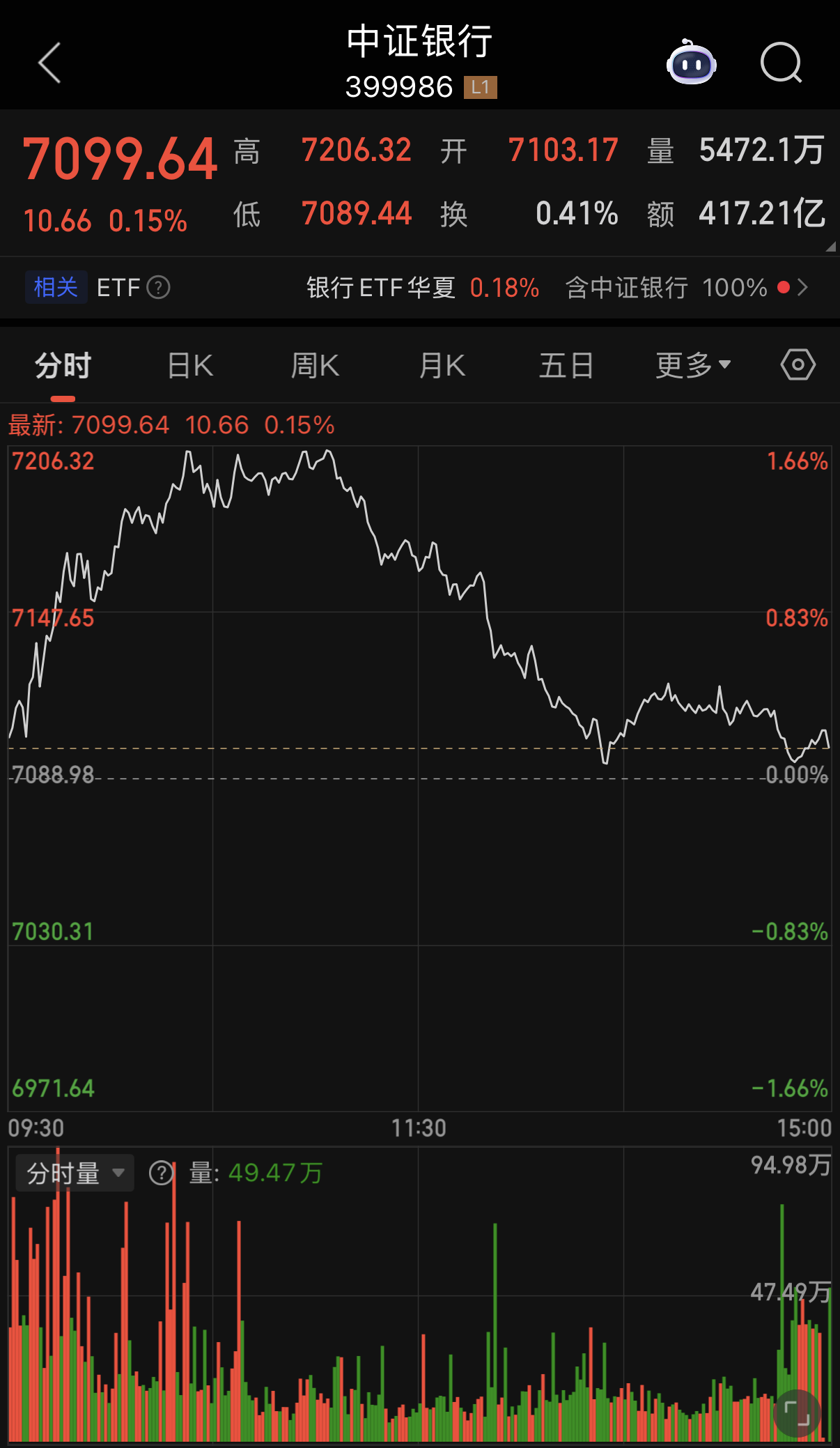
Core Viewpoint - The A-share market is experiencing significant volatility, particularly in the precious metals and banking sectors, with a notable shift in investor focus towards regional banks amid a backdrop of fluctuating gold and silver prices [1][2]. Group 1: Market Performance - On February 2, the A-share market faced downward pressure, with the Shanghai Composite Index dropping by 2.48%, the Shenzhen Component by 2.69%, and the ChiNext Index by 2.46% [2]. - The precious metals sector led the decline with a 7.62% drop, while other resource sectors like steel, chemicals, and coal also saw declines exceeding 5% [2]. - Despite the overall market downturn, bank stocks showed resilience, with 17 banks recording gains, led by CITIC Bank with a 2.64% increase [5]. Group 2: Banking Sector Dynamics - The banking sector has been characterized by a significant outflow of funds, with the China Securities Index reporting a cumulative decline of 6.76% in the banking index as of January 30 [5][6]. - Regional banks have outperformed national banks, with several local banks announcing share buyback plans, signaling potential recovery and investor confidence [1][9]. - Analysts suggest that the peak of fund outflows from the banking sector has passed, with the price-to-book ratio for bank stocks currently around 0.57, indicating potential value for investors [6][7]. Group 3: Investment Sentiment - There is a growing optimism regarding the banking sector's fundamentals, with expectations for a strong start to credit growth in 2026 and stable asset quality [9]. - Recent announcements of share purchases by bank executives and shareholders have bolstered market confidence, particularly among regional banks like Qilu Bank and Nanjing Bank [9]. - The shift in focus from passive to active fund management in the banking sector may lead to increased buying interest, especially if the selling pressure from passive funds diminishes [7][8].

部分银行实物金条库存松动,投资情绪降温
Di Yi Cai Jing Zi Xun· 2026-02-02 11:53
Core Viewpoint - The recent significant fluctuations in gold and silver prices have led to a cooling of investor enthusiasm for physical gold, with some investors opting to wait and observe the market [2][3]. Group 1: Price Movements - As of February 2, spot gold has dropped by 6.80% to $4,562 per ounce, while spot silver has decreased by 11.46% to $75.49 per ounce [2]. - In January, gold prices surged, with COMEX gold futures reaching over $5,600 per ounce, marking a monthly increase of over 29%, while COMEX silver futures peaked at $120 per ounce, with a monthly rise of 72% [3]. - On January 30, both gold and silver prices experienced a sharp decline, with COMEX gold futures falling by 8.35% to $4,907.50 per ounce and COMEX silver futures dropping by 25.50% to $85.25 per ounce [3]. Group 2: Investor Behavior - Following the price drop, some investors have chosen to wait rather than invest in physical gold, as evidenced by the availability of gold bars in banks that were previously sold out [2][3]. - Various banks have reported a shift in inventory status, with some gold products now showing sufficient stock, contrasting with the previous high demand [5][6]. Group 3: Market Sentiment - Investor sentiment has become polarized, with some believing that gold prices will continue to decline, while others are taking the opportunity to buy at lower prices [7]. - The World Gold Council reported that global gold demand is expected to exceed 5,000 tons by 2025, driven primarily by strong physical gold investment demand [7]. Group 4: Institutional Insights - Analysts suggest that the recent volatility in gold prices is influenced by market sentiment and speculative factors, making it difficult to predict price movements accurately [9]. - Despite short-term risks, many institutions maintain a positive long-term outlook for gold, with expectations of a return to upward trends later in the year [8].

部分银行实物金条库存松动,投资情绪降温
第一财经· 2026-02-02 11:12
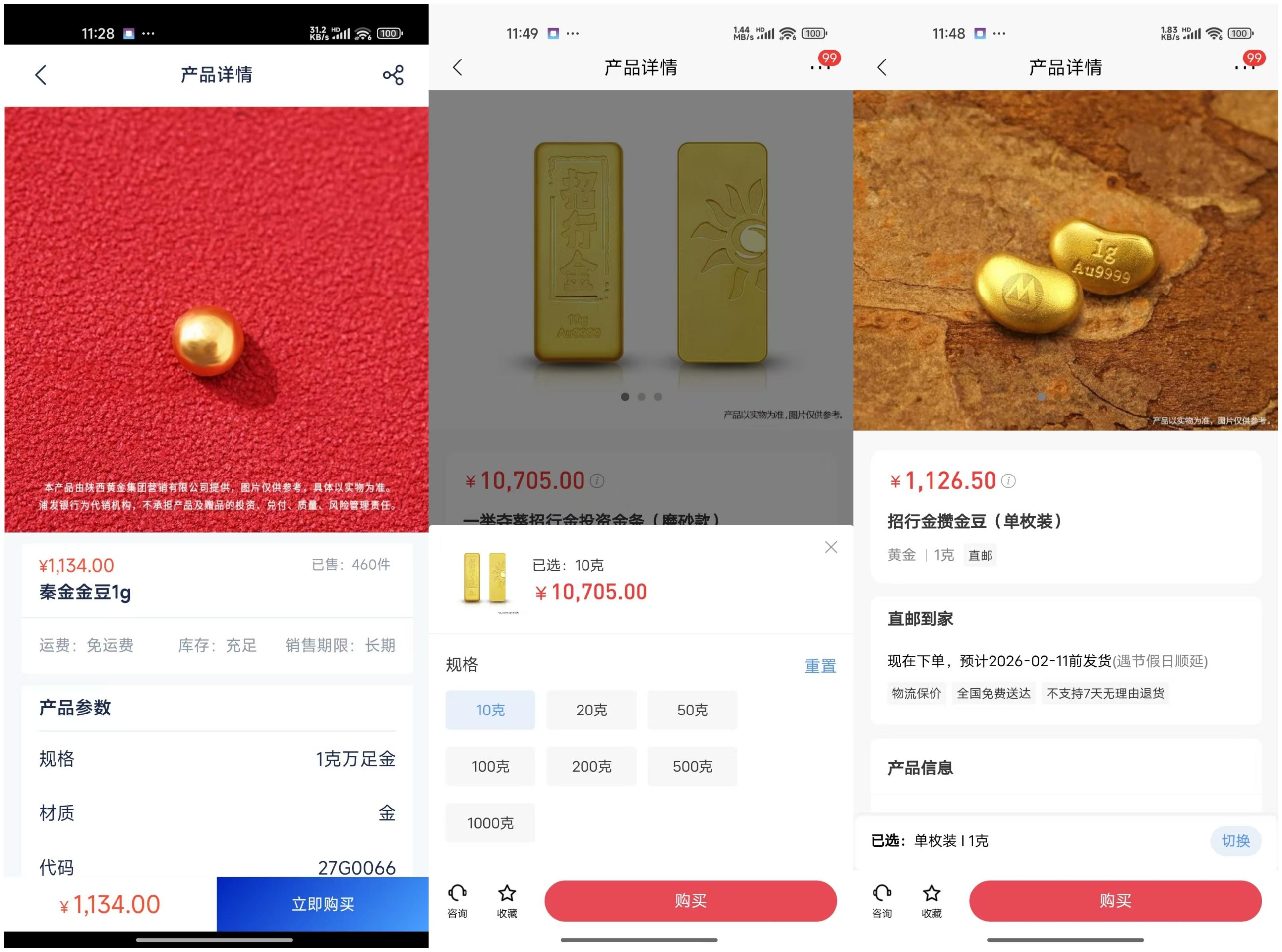
作者 | 第一财经 安卓 2月2日,黄金、白银价格继续剧烈波动。截至记者发稿,现货黄金跌6.80%,报4562美元/盎司;现货白银跌11.46%,早间曾一度转涨,但随后又大 幅下挫,报75.49美元/盎司。 第一财经发现,随着黄金、白银价格持续大幅下挫,人们投资实物黄金的热情有所松动,部分投资者选择观望,此前日日被抢断货的银行金条也出现了 库存,部分银行的实物金条甚至显示为"库存充足"状态。 2026.02. 02 本文字数:2352,阅读时长大约4分钟 投资情绪降温 今年1月,贵金属经历了历史罕见的上涨行情。去年12月底至1月28日,市场对美联储的独立性担忧、地缘风险中枢上行及弱美元预期等,直接催化 COMEX黄金期货于1月29日突破5600美元/盎司,月内最高涨幅超过29%,COMEX白银期货突破120美元/盎司,月内最高涨幅甚至达到72%,不断 刷新历史。 1月30日,黄金、白银价格同步上演"高台跳水",其中,COMEX黄金期货跌8.35%报4907.50美元/盎司,COMEX白银期货跌25.50%报85.25美元/ 盎司。 业内普遍认为,本次黄金"巨震",直接原因或是美国总统特朗普提名凯文·沃什为新任 ...

金价继续跳水:部分银行实物金条库存悄然松动 投资情绪降温
Di Yi Cai Jing· 2026-02-02 09:34
1月30日,黄金、白银价格同步上演"高台跳水",其中,COMEX黄金期货跌8.35%报4907.50美元/盎司,COMEX白银期货跌25.50%报85.25美元/盎司。 业内普遍认为,本次黄金"巨震",直接原因或是美国总统特朗普提名凯文·沃什为新任美联储主席,导致"独立性危机"担忧降温,美元反弹。 2月2日,黄金、白银价格继续剧烈波动。截至记者发稿,现货黄金跌6.80%,报4562美元/盎司;现货白银跌11.46%,早间曾一度转涨,但随后又大幅下挫, 报75.49美元/盎司。 第一财经发现,随着黄金、白银价格持续大幅下挫,人们投资实物黄金的热情有所松动,部分投资者选择观望,此前日日被抢断货的银行金条也出现了库 存,部分银行的实物金条甚至显示为"库存充足"状态。 投资情绪降温 今年1月,贵金属经历了历史罕见的上涨行情。去年12月底至1月28日,市场对美联储的独立性担忧、地缘风险中枢上行及弱美元预期等,直接催化COMEX 黄金期货于1月29日突破5600美元/盎司,月内最高涨幅超过29%,COMEX白银期货突破120美元/盎司,月内最高涨幅甚至达到72%,不断刷新历史。 2月2日,黄金、白银价格继续下探,投资者情 ...
观察丨“卫星+银行”,改写传统风控逻辑
券商中国· 2026-02-02 09:32
Core Viewpoint - The recent successful launches of satellites by China Merchants Bank and Shanghai Pudong Development Bank signify a strategic move by domestic commercial banks to leverage satellite technology for smart risk control and to gain a competitive edge in financial technology [1][2]. Group 1: Satellite Launches and Applications - China has seen three commercial banks successfully launch satellites, marking a significant step in the integration of satellite technology into the banking sector [1]. - The application of satellite remote sensing technology is expected to transform traditional credit risk management practices in banking, particularly in rural finance [2][3]. Group 2: Challenges in Traditional Banking - Traditional banking heavily relies on real estate as collateral, making it difficult to assess and manage risks associated with movable assets like agricultural products and commercial inventories [3]. - The challenges in rural finance include personnel shortages, remote locations, and lengthy processes, which hinder large-scale credit operations [3]. Group 3: Innovations in Rural Finance - The application of satellite remote sensing technology in rural finance began with the need to address agricultural monitoring challenges, leading to the development of digital asset assessments for farmers [4][5]. - In 2020, Ant Bank launched the "Dashanque" system, utilizing satellite imagery and AI to evaluate farmers' assets, thereby facilitating credit provision [4]. Group 4: Broader Applications of Satellite Technology - The use of satellite remote sensing technology is expanding beyond agriculture, with banks exploring its application in various sectors, including forestry and renewable energy projects [6][9]. - Major banks like Industrial and Commercial Bank of China and Bank of China are focusing on post-loan management using satellite technology to enhance risk prevention capabilities [7]. Group 5: Future Prospects and Market Potential - The integration of satellite remote sensing with IoT technology opens new avenues for monitoring movable assets, potentially addressing long-standing challenges in asset financing [10][12]. - The recent policy measures in Beijing indicate a growing recognition of the commercial satellite remote sensing data market, which could be worth trillions [11].

锁定收益利器:不同持有期理财榜单出炉,最高年化超40%
2 1 Shi Ji Jing Ji Bao Dao· 2026-02-02 09:32
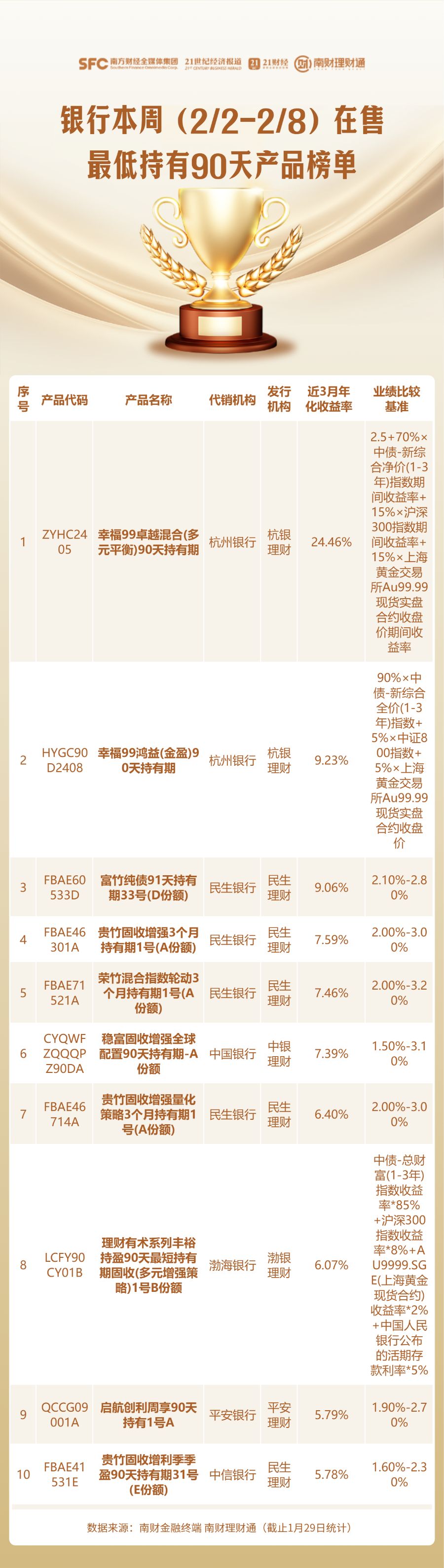
本期,南财理财通重点关注最低持有期人民币公募产品的业绩表现,按照90天、180天、365天持有期限分类对产品业绩进行排 名,业绩指标采用年化收益率,计算区间与持有期限相同,如90天持有期产品的业绩计算区间为近三月年化收益率,同机构同 系列同投资周期产品保留一只参与排名。 统计代销机构(28家):工商银行、中国银行、农业银行、邮储银行(601658)、建设银行、交通银行、招商银行、中信银 行、光大银行、民生银行、兴业银行、浦发银行、广发银行、浙商银行(601916)、华夏银行、平安银行、恒丰银行、渤海银 行、北京银行、宁波银行、江苏银行(600919)、上海银行(601229)、南京银行、杭州银行(600926)、徽商银行、微众银 行、网商银行、百信银行。 需要特别提醒的是:本榜单对理财产品"在售"状态的判断基于其投资周期推算。但实际情况中,部分产品可能因额度售罄,或 银行针对不同客户展示的产品清单存在差异而无法购买。因此,建议投资者以代销银行APP的实际展示为准。 此外,南财理财通虽力求客观公正,但不对本评价榜信息的真实性、完整性和准确性作任何保证,排名信息仅供参考。 | | ZYHC24 | 幸福99卓越混 ...
车市卷向7年超长贷,是否暗藏风险?
Di Yi Cai Jing· 2026-02-02 09:23
Core Viewpoint - The automotive finance market is currently dominated by conventional car loans with terms of 1 to 5 years, while 7-year low-interest products are not mainstream and serve primarily as promotional tools to attract consumers [1][9]. Group 1: 7-Year Low-Interest Loan Products - Tesla has extended its low-interest loan period to 7 years, initiating a trend that other manufacturers like Xiaopeng, Li Auto, and Geely have followed with similar offerings [1][2]. - The 7-year low-interest loans typically feature lower down payments and monthly payments, with Tesla's Model 3 offering a minimum down payment of 79,900 yuan and a monthly payment of approximately 1,918 yuan [2]. - NIO offers a 7-year loan with a down payment as low as 20% and an annual interest rate of 0.49%, significantly lowering the entry barrier for consumers [2][3]. Group 2: Financial Institutions and Risk Management - Many of the 7-year low-interest products are provided by automotive financing leasing companies or third-party financial institutions rather than traditional banks, which typically do not offer loans longer than 5 years due to risk management policies [4][7]. - The current regulatory framework allows for personal auto loans to be extended to 7 years, a change that has enabled companies like Tesla and NIO to introduce these products [4]. - The financing leasing model often involves lower upfront costs but may include conditions such as penalties for early repayment, which vary by institution [8][9]. Group 3: Market Dynamics and Consumer Impact - The introduction of 7-year low-interest loans is primarily aimed at boosting vehicle sales amid intense market competition, with varying levels of interest subsidies across different manufacturers [5][10]. - Extending the repayment period from 5 to 7 years can significantly reduce monthly payments, making it easier for consumers to afford vehicles [5]. - Consumers are advised to carefully evaluate the total cost of ownership, including potential additional fees and the implications of different ownership structures (direct lease vs. return lease) when considering these financing options [9][10].


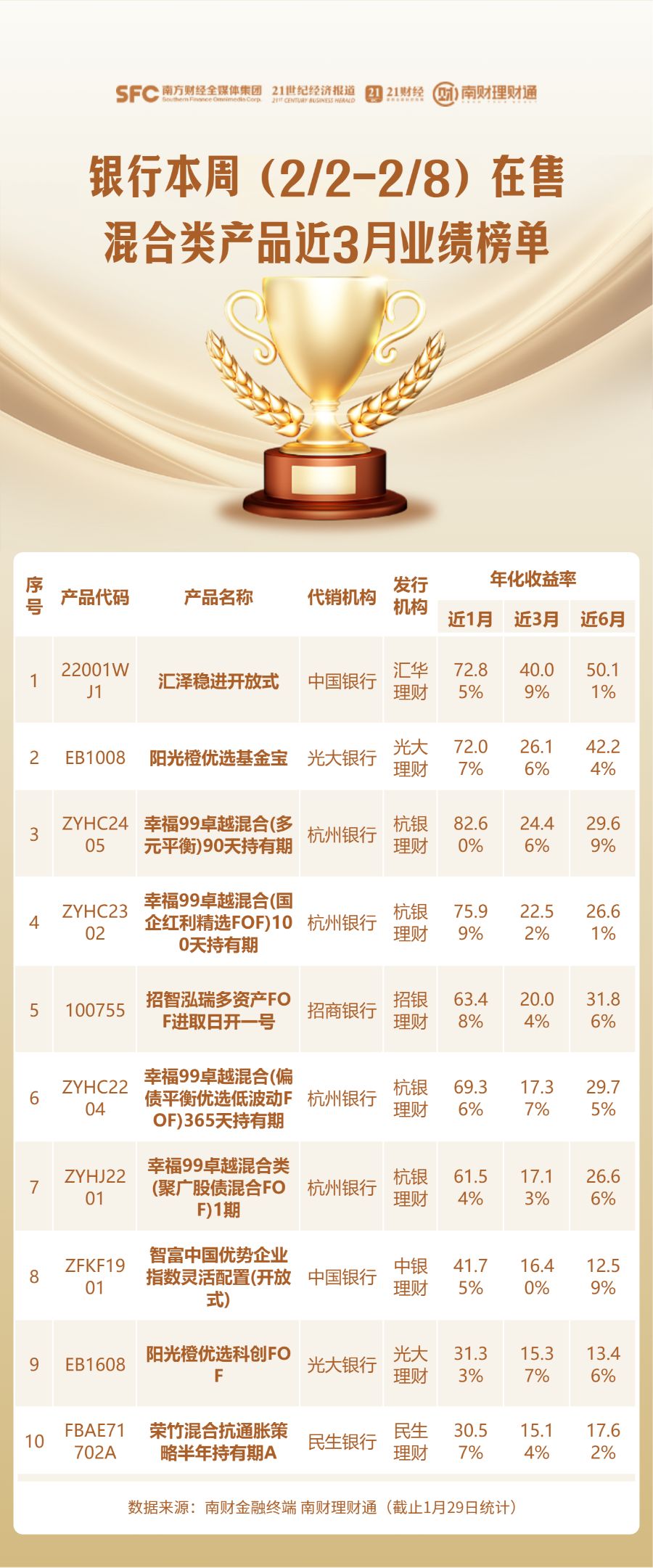
近6月年化高达50%!在售混合类理财收益“天花板”榜单来了
2 1 Shi Ji Jing Ji Bao Dao· 2026-02-02 09:21
本期,课题组重点关注理财公司发行的混合类产品,从代销渠道为投资者筛选出表现较优的在售产品。 为提供有效的选品参考,榜单展示了产品近一月、近三月及近六月的年化业绩,并按照近三月年化收益率进行排序,以此反映 其在近期市场波动中的多维度收益表现。 | 2 | EB1008 | 阳光橙优选基金宝 光大银行 | | 光大 | 72.0 | 26.1 | 42.2 | | --- | --- | --- | --- | --- | --- | --- | --- | | | | | | 理财 | 7% | 6% | 4% | | 3 | ZYHC24 | 幸福99卓越混合(多 | 杭州银行 | 杭银 | 82.6 | 24.4 | 29.6 | | | 05 | 元平衡)90天持有期 | | 理财 | 0% | 6% | 9% | | 4 | ZYHC23 | 幸福99 中華台(国 企红利精选FOF)10 杭州银行 | | 杭银 | 75.9 | 22.5 | 26.6 | | | 02 | 0天守有期 | | 理财 | 9% | 2% | 1% | | 5 | 100755 | 招智泓瑞多资产FO | 招商银行 | 招 ...
金价继续跳水:部分银行实物金条库存悄然松动,投资情绪降温
Di Yi Cai Jing· 2026-02-02 09:21
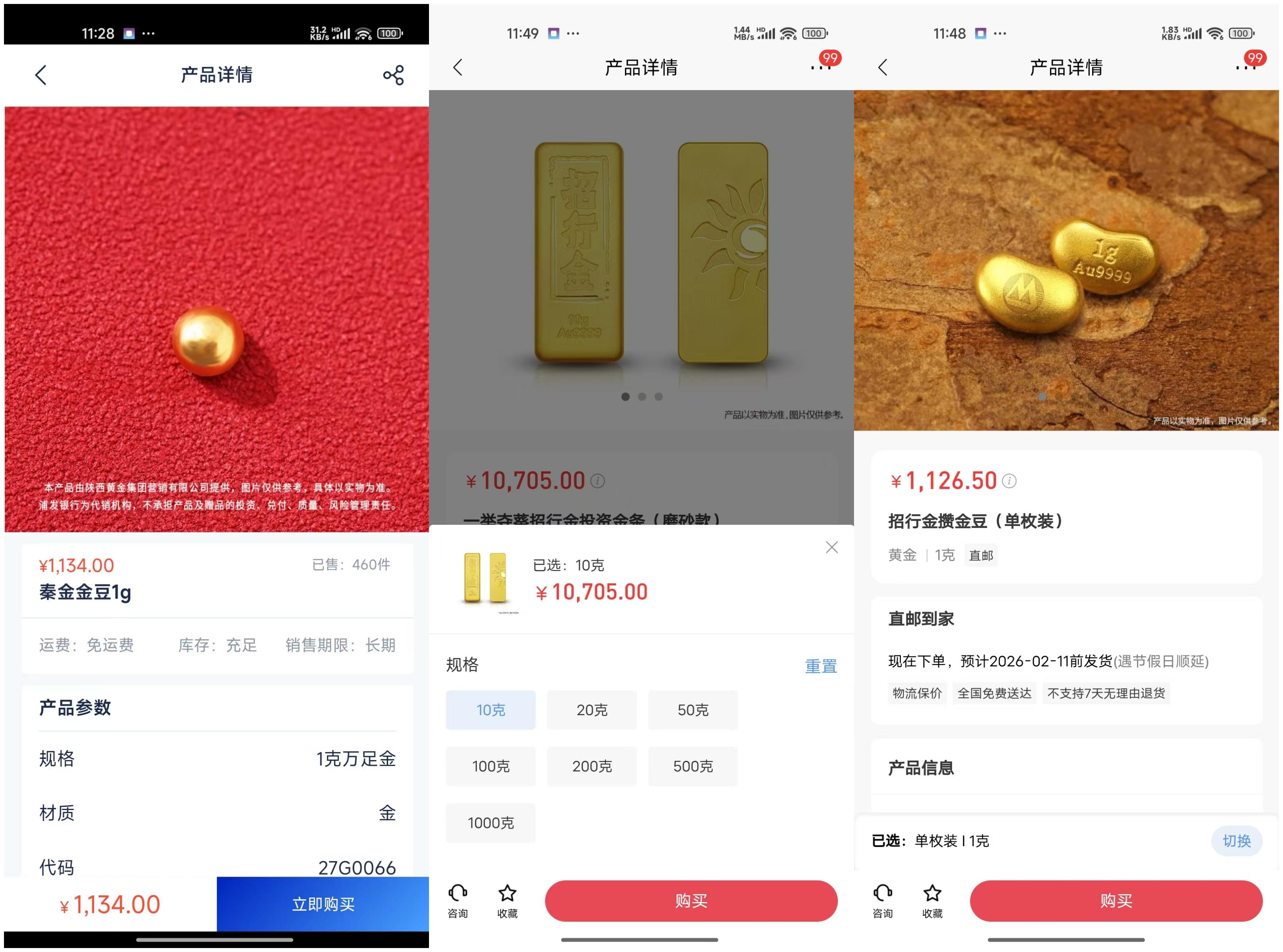
部分银行实物金条甚至显示为"库存充足"状态。 2月2日,黄金、白银价格继续剧烈波动。截至记者发稿,现货黄金跌6.80%,报4562美元/盎司;现货白银跌11.46%,早间曾一度转涨,但随后又大幅下挫, 报75.49美元/盎司。 第一财经发现,随着黄金、白银价格持续大幅下挫,人们投资实物黄金的热情有所松动,部分投资者选择观望,此前日日被抢断货的银行金条也出现了库 存,部分银行的实物金条甚至显示为"库存充足"状态。 投资情绪降温 今年1月,贵金属经历了历史罕见的上涨行情。去年12月底至1月28日,市场对美联储的独立性担忧、地缘风险中枢上行及弱美元预期等,直接催化COMEX 黄金期货于1月29日突破5600美元/盎司,月内最高涨幅超过29%,COMEX白银期货突破120美元/盎司,月内最高涨幅甚至达到72%,不断刷新历史。 1月30日,黄金、白银价格同步上演"高台跳水",其中,COMEX黄金期货跌8.35%报4907.50美元/盎司,COMEX白银期货跌25.50%报85.25美元/盎司。 业内普遍认为,本次黄金"巨震",直接原因或是美国总统特朗普提名凯文·沃什为新任美联储主席,导致"独立性危机"担忧降温,美元反弹 ...
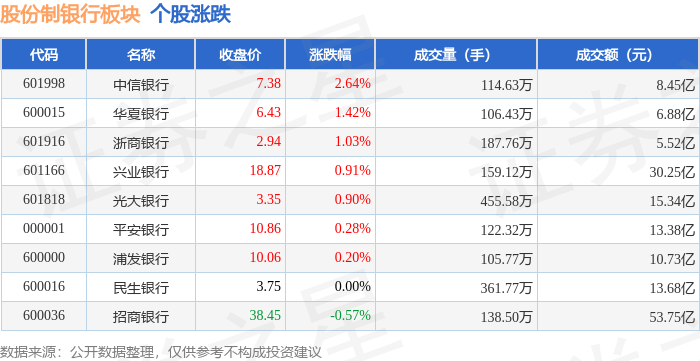
股份制银行板块2月2日涨0.46%,中信银行领涨,主力资金净流入1.62亿元
Zheng Xing Xing Ye Ri Bao· 2026-02-02 09:15
Group 1 - The banking sector saw a slight increase of 0.46% on February 2, with CITIC Bank leading the gains [1] - The Shanghai Composite Index closed at 4015.75, down 2.48%, while the Shenzhen Component Index closed at 13824.35, down 2.69% [1] - CITIC Bank's stock price rose by 2.64% to 7.38, with a trading volume of 1.1463 million shares and a transaction value of 845 million yuan [1] Group 2 - The net inflow of main funds in the banking sector was 162 million yuan, while retail funds saw a net inflow of approximately 89.95 million yuan [1] - CITIC Bank had a net inflow of 72.32 million yuan from main funds, but a net outflow of 18.99 million yuan from retail funds [1] - Minsheng Bank experienced a net inflow of 65.07 million yuan from main funds, with a net outflow of 30.58 million yuan from retail funds [1]