中国太平

Search documents
金融监管总局再放大招 引导险企助力资本市场发展
Mei Ri Jing Ji Xin Wen· 2025-12-07 13:26
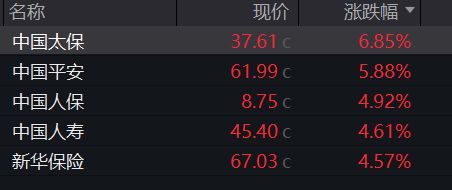
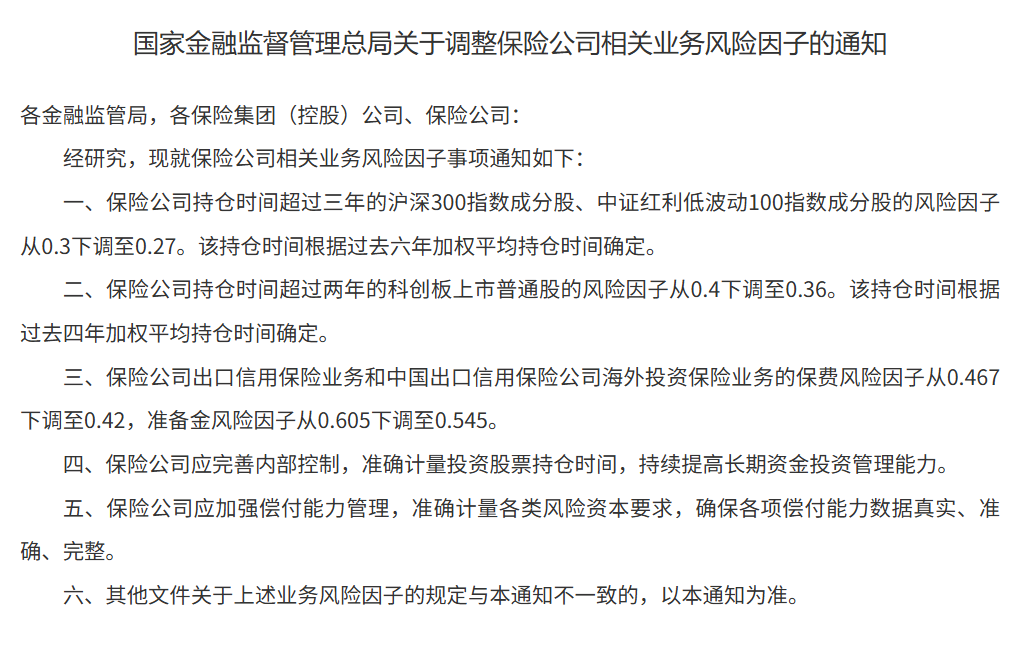
Core Viewpoint - The Financial Regulatory Administration has announced a reduction in risk factors for insurance companies' related businesses to enhance their capital efficiency and support the real economy [1][2]. Group 1: Adjustments to Risk Factors - The notification primarily focuses on two areas: adjusting risk factors for investments in stocks and for export credit insurance businesses, encouraging insurance companies to support foreign trade enterprises [2][3]. - The risk factor for stocks held for over three years in the CSI 300 index has been reduced from 0.3 to 0.27, while for stocks held over two years in the STAR Market, it has been lowered from 0.4 to 0.36 [2][3]. - The risk factor for export credit insurance premiums has been decreased from 0.467 to 0.42, and the reserve risk factor from 0.605 to 0.545 [2]. Group 2: Implications for Insurance Companies - The reduction in risk factors is intended to guide insurance funds into the equity market as long-term capital, thereby alleviating the solvency pressure on insurance companies [3][4]. - Insurance companies are expected to enhance their internal controls and accurately measure investment holding periods to improve long-term capital management capabilities [3][4]. - Following the announcement, insurance stocks saw significant gains, with China Pacific Insurance rising by 6.85% and Ping An Insurance by 5.88% [3]. Group 3: Historical Context and Future Outlook - This is not the first time the Financial Regulatory Administration has lowered risk factors; previous adjustments were made in September 2023 and May 2023 to encourage insurance companies to support the capital market [5][6]. - The adjustments are seen as a means to optimize capital allocation, allowing insurance companies to invest more in quality assets and enhance overall operational efficiency [6][7]. - The policy changes are expected to facilitate greater investment in strategic industries and high-tech enterprises, thereby promoting innovation and economic development [7].



金融行业周报:险资股票因子下调,看好券商板块盈利修复-20251207
Western Securities· 2025-12-07 12:26
Investment Rating - The report indicates a positive outlook for the insurance sector, with a recommendation to focus on strong insurance companies such as New China Life Insurance, China Ping An, China Life Insurance H, and China Taiping [2][17] Core Insights - The non-bank financial sector (Shenwan) index increased by 2.27%, outperforming the CSI 300 index by 0.99 percentage points, while the insurance sector saw a significant rise of 5.08% [1][9] - The insurance sector's growth is attributed to several factors, including a reduction in long-term stock holding risk factors, expected strong performance in dividend insurance products, and improved global liquidity due to anticipated interest rate cuts in the US [2][16] - The brokerage sector is expected to experience a valuation correction, with a current price-to-book (PB) ratio of 1.36x, indicating potential for recovery in profitability and valuation [2][19] - The banking sector has underperformed, with a decline of 1.18%, and is currently undervalued with a PB ratio of 0.55x, suggesting room for future valuation improvement [3][20] Summary by Sections Insurance Sector - The insurance index rose by 5.08%, significantly outperforming the CSI 300 index by 3.80 percentage points, driven by regulatory adjustments that lowered risk factors for long-term stock holdings [1][13] - The sector is expected to benefit from a favorable environment for dividend insurance products, with strong growth anticipated in the coming year [2][16] - Key recommendations include focusing on companies like New China Life Insurance and China Ping An, which are positioned for growth [17] Brokerage Sector - The brokerage index increased by 1.14%, with a current PB ratio of 1.36x, indicating a potential mismatch between profitability and valuation [2][19] - Regulatory changes are expected to enhance capital efficiency for leading brokerages, creating opportunities for investment in firms with strong fundamentals [2][18] - Recommended stocks include Guotai Junan, Huatai Securities, and Orient Securities, particularly those involved in mergers or restructuring [19] Banking Sector - The banking sector saw a decline of 1.18%, with a PB ratio of 0.55x, indicating that banks are currently undervalued [3][20] - Concerns about asset quality, particularly related to real estate and local government debt, have affected market perceptions, but there is potential for recovery as regulatory support continues [23][24] - Recommendations include focusing on high-quality city commercial banks in economically developed regions, such as Hangzhou Bank and Ningbo Bank [20][24]



保险行业热点速递之四:险资股票风险因子松绑,权益配置空间扩容
Western Securities· 2025-12-07 11:49
Investment Rating - The industry investment rating is "Overweight" with expectations of a price increase exceeding the market benchmark index by more than 10% in the next 6-12 months [4][9]. Core Insights - The adjustment of risk factors for insurance capital investments in stocks allows for expanded equity allocation, reflecting regulatory flexibility in guiding capital optimization based on market conditions [2][3]. - The insurance sector's solvency ratios are robust, with comprehensive and core solvency ratios at 186.3% and 134.3% respectively, significantly above regulatory thresholds [3]. - The report emphasizes a diversified equity allocation strategy for insurance capital, benefiting sectors like banking, utilities, and coal, while also supporting technology growth companies [3]. Summary by Sections Regulatory Changes - On December 5, the National Financial Regulatory Administration announced a reduction in risk factors for long-term holdings of specific stocks, following earlier regulatory initiatives to encourage insurance capital market participation [2]. - The risk factor for stocks held over three years in the CSI 300 index was reduced from 0.3 to 0.27, while for stocks held over two years in the Sci-Tech Innovation Board, it decreased from 0.4 to 0.36 [2]. Market Performance - As of Q3 2025, the stock allocation of major insurers ranges from 5.4% to 11.6% of total assets, with a slight increase from the beginning of the year [3]. - The report indicates that the adjustment in risk factors could theoretically release a minimum capital of 326 billion yuan, potentially increasing the stock balance by 1,207 billion yuan, which is 3.3% of the current insurance stock balance [3]. Investment Outlook - The report suggests a favorable outlook for insurance capital investments in dividend-paying sectors and technology growth companies, indicating a "stable base + innovation engine" investment strategy [3]. - Recommended stocks include China Pacific Insurance for low cost and stable operations, Ping An for high dividend yield, China Life for competitive performance, and New China Life for strong investment capabilities [3].
2025年中国新能源车险行业发展背景、市场现状及未来趋势研判:保费收入规模高速增长,市场呈现车主保费高、险企承保亏的局面[图]
Chan Ye Xin Xi Wang· 2025-12-07 02:01
Core Insights - The article discusses the rapid growth of the new energy vehicle (NEV) insurance market in China, driven by the increasing ownership of NEVs, which surpassed 20 million in 2023 and is projected to exceed 30 million in 2024 [1][6]. Group 1: Industry Overview - Automobile insurance, or car insurance, is a commercial insurance that provides compensation for personal injury or property damage caused by natural disasters or accidents involving motor vehicles [2]. - New energy vehicle insurance specifically offers coverage for NEVs, including mandatory traffic accident liability insurance and commercial insurance [2]. Group 2: Market Development Background - The NEV industry is a crucial direction for the global automotive sector's green development and transformation, with significant achievements since the 2020 government plan [5]. - China's NEV production and sales have seen exponential growth, with production reaching 12.88 million and sales 12.87 million in 2024, marking a year-on-year increase of 34.4% and 35.5% respectively [5][6]. Group 3: Current Market Status - The demand for NEV insurance has surged alongside the growing NEV ownership, with the insurance premium for NEVs in 2024 reaching 140.9 billion yuan, accounting for 15.4% of total car insurance premiums, an increase of 12.7 percentage points since 2020 [6][8]. - The average insurance premium for NEVs was 4,395 yuan in 2023, 63% higher than that of traditional fuel vehicles, and is expected to rise to 4,538 yuan in 2024 [8]. Group 4: Challenges in the Industry - Insurers are facing long-term underwriting losses, with a reported loss of 5.7 billion yuan in 2024, leading to difficulties in insuring NEVs and instances of policy refusals [9]. - High insurance premiums and underwriting losses are attributed to high accident rates, expensive repair costs, and insufficient data accumulation [9]. Group 5: Competitive Landscape - Major players in the NEV insurance market include PICC Property and Casualty, Ping An Property and Casualty, and Taiping Property and Casualty, which collectively insured over 24 million NEVs, representing 77% of the national total [10]. - In 2024, PICC's NEV insurance coverage reached 11.59 million vehicles, with a premium income of 50.857 billion yuan, accounting for 36.1% of the total NEV insurance premiums [10]. Group 6: Future Trends - The NEV insurance industry is expected to shift towards online models, leveraging digital technology for product innovation and deeper collaboration between manufacturers and insurers [11][12]. - The trend towards online sales is driven by the younger demographic of NEV owners, who are more receptive to digital transactions [11]. - Digital solutions are being introduced by tech companies and automakers, creating new opportunities and challenges in the NEV insurance market [11].


A股有望迎来千亿级活水,险资股票风险因子下调
Sou Hu Cai Jing· 2025-12-06 01:33
经测算,考虑风险分散效应前静态释放最低资本为326亿元,若这部分资金全部增配沪深300股票,对应 股市资金(除以风险因子0.3)为1086亿元 文|《财经》研究员 丁艳 编辑 | 杨芮 袁满 12月5日,国家金融监督管理总局(下称"金融监管总局")表示,为有效防范风险,有效服务实体经 济,更好发挥保险资金耐心资本作用,发布《关于调整保险公司相关业务风险因子的通知》(下称《通 知》),下调保险公司相关股票投资风险因子。 5月7日,金融监管总局局长李云泽曾在国新办新闻发布会上表示,调整偿付能力监管规则,将股票投资 的风险因子进一步调降10%,鼓励保险公司加大入市力度,此次调整为该政策的具体落实。调降风险因 子10%,可以降低保险公司权益投资资本占用,释放资金空间。 据多位业内人士分析称,政策意在鼓励长线资金持续入市。据一位大型险企投资部门负责人表示,此次 监管降低符合有关条件标的风险因子,从而弱化此类持仓资产因市值波动对偿付能力充足率的直接影 响,其根本目的还是要鼓励险资长期稳定投资。 港股市场上,保险股亦于午后持续拉升。截至收盘,中国太平、中国平安分别上涨7.10%、6.71%,中 国人寿、中国太保均涨超5.3 ...

190万港元!太平香港向第二批3户受灾居民支付家居保险赔款
Bei Jing Shang Bao· 2025-12-05 12:35
Core Points - China Taiping Insurance (Hong Kong) Limited has paid a total of HKD 1.9 million in home insurance claims to three residents affected by the Tai Po Hongfu Garden fire [1] - To date, Taiping Hong Kong has completed compensation for 12 affected residents, with a cumulative payout of HKD 7.272 million [1] - On December 1, Taiping Hong Kong completed the first batch of nine home insurance claims related to the fire, amounting to HKD 5.372 million [1]

太保涨超6%、平安涨超5% 保险股今日集体拉升 业内:开门红稳步推进,资负端持续向好
Mei Ri Jing Ji Xin Wen· 2025-12-05 12:27
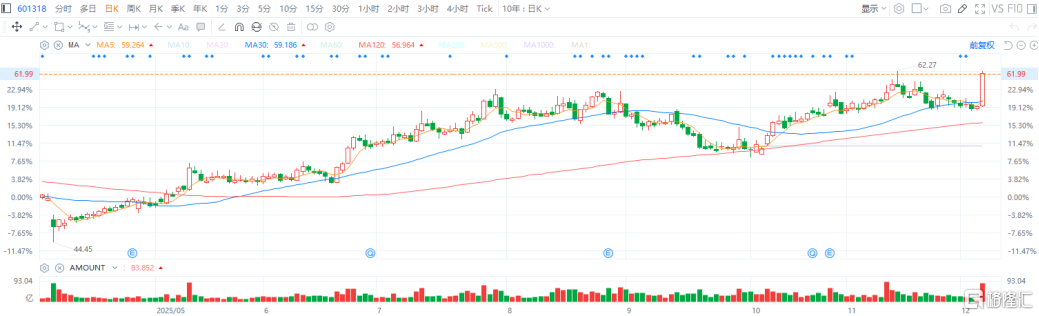
Core Viewpoint - The insurance sector in A-shares and Hong Kong stocks experienced significant gains on December 5, driven by positive market expectations ahead of the upcoming Central Economic Work Conference in December [1][3]. Group 1: Market Performance - A-shares insurance stocks saw substantial increases, with China Pacific Insurance rising by 6.85% and Ping An Insurance by 5.88% [1][2]. - Hong Kong insurance stocks also performed well, with China Taiping rising over 7% and Ping An over 6% [1]. - The overall market showed a recovery, with the Shanghai Composite Index up by 0.7%, the Shenzhen Component Index up by 1.08%, and the ChiNext Index up by 1.36% [3]. Group 2: Fundamental Analysis - Analysts believe the fundamentals of the insurance sector remain strong, with a positive trend in both the asset and liability sides [5][6]. - The insurance industry achieved a premium income of 5.48 trillion yuan in the first ten months of 2025, marking an 8% year-on-year increase [5]. - The focus on dividend insurance products is increasing, with a preset interest rate of 1.75%, which lowers the cost of new liabilities [6][7]. Group 3: Regulatory Changes - The financial regulatory authority has lowered risk factors for various insurance company operations, which could release significant capital for equity investments [7]. - The adjustment in risk factors for long-held stocks could potentially free up 1,086 billion yuan for the stock market if fully allocated [7]. Group 4: Future Outlook - The insurance sector is expected to continue its positive trajectory, with a shift towards dividend insurance and a favorable market environment anticipated through 2026 [4][6]. - Analysts recommend focusing on companies with high policy value rates and strong new business value growth, as well as those that prioritize high dividend asset allocation [4].
险资集体大涨:监管下调风险因子,耐心资本获准“降本入市”
Xin Lang Cai Jing· 2025-12-05 12:09
Core Viewpoint - The recent surge in the stock prices of listed insurance companies is attributed to the announcement by the National Financial Regulatory Administration regarding the adjustment of risk factors for insurance companies, effectively "unbinding" capital for insurers [9][11]. Group 1: Policy Adjustments - The core of the policy adjustment is to reduce the capital occupation cost for insurance companies through technical means, guiding funds more precisely [3][11]. - The risk factors for index components held for over three years, such as the CSI 300 and CSI Dividend Index, have been lowered from 0.2 to 0.17, while the risk factor for stocks locked for over five years on the Sci-Tech Innovation Board has been reduced from 0.4 to 0.36 [4][11]. - This adjustment allows insurance companies to release more usable capital without increasing their capital base [5][11]. Group 2: Market Implications - The regulatory intent is clear: to encourage insurers to adhere to "value investing" by lowering the holding costs of blue-chip and dividend stocks, acting as a "ballast" for the market [5][11]. - The adjustment also provides more room for insurers to support "hard technology" and "new economy" sectors, particularly favoring the Sci-Tech Innovation Board [5][11]. - The recent stock price increase reflects a perfect resonance between policy benefits and the transformation needs of insurance companies, especially in a declining interest rate environment [6][11]. Group 3: Future Outlook - The surge on December 5 may be just the beginning of a new round of asset allocation adjustments by insurers, with incremental funds gradually flowing into high-value areas of the A-share market [7][12]. - This situation presents a good opportunity for insurers to optimize their balance sheets and signifies that "patient capital" has better access to the market [7][12]. - However, the effectiveness of this policy relaxation will ultimately depend on the insurers' stock selection capabilities and risk management in a volatile market [7][12].

集体大涨 三大利好速看!
Zheng Quan Ri Bao· 2025-12-05 11:13
Core Viewpoint - The collective surge in A-share and Hong Kong insurance stocks on December 5 is attributed to favorable news, fundamentals, and policies, alongside a positive market sentiment on that day [1] Group 1: Stock Performance - A-share insurance stocks saw significant increases, with China Pacific Insurance leading at a 6.85% rise, followed by Ping An at 5.88%, China Life at 4.61%, and New China Life at 4.57% [1] - Hong Kong insurance stocks also experienced gains, with China Taiping rising over 7%, Ping An nearly 7%, and China Life over 5% [1] Group 2: Positive News from Morgan Stanley - On December 5, Morgan Stanley included Ping An in its focus list, maintaining a "preferred" rating and raising the target price for Ping An A-shares from 70 yuan to 85 yuan (an increase of 21%) and H-shares from 70 HKD to 89 HKD (an increase of 27%) [2] - Morgan Stanley's positive outlook for Ping An is based on expected annual growth of 8% in Chinese residents' financial assets from 2024 to 2030, reaching 440 trillion yuan by 2030, and a growing demand for elderly care and high-end medical services [2] Group 3: Industry Fundamentals - Citic Securities expressed optimism about the insurance industry's future, stating that the sector is transitioning from a narrative of balance sheet recession to healthy expansion, with a confirmed upward trend expected to strengthen by 2026 [3] - The net assets of the insurance industry are projected to grow from 2.7 trillion yuan at the beginning of 2024 to 3.7 trillion yuan by September 2025, while total assets are expected to rise from 31.8 trillion yuan to 40.4 trillion yuan [3][4] Group 4: Sales and Investment Trends - The sales of participating insurance products are expected to exceed 50% of new policies for listed companies by 2025 [4] - The insurance sector is witnessing a rise in both volume and price in the bancassurance channel, with a 30% reduction in channel costs following the "reporting and operation integration" in 2023 [4] - The trend of insurance capital increasing its equity allocation is anticipated, with an estimated annual increase of 1.2 trillion yuan in equity funds based on a 20% equity ratio from a reallocated asset scale of 5 trillion to 6 trillion yuan [4] Group 5: Policy Support - On December 5, the National Financial Regulatory Administration released a new policy that benefits insurance stocks by adjusting risk factors for long-term holdings of certain indices [5] - The risk factor for stocks in the CSI 300 index and the CSI Dividend Low Volatility 100 index held for over three years was reduced from 0.3 to 0.27, while the risk factor for Sci-Tech Innovation Board stocks held for over two years was lowered from 0.4 to 0.36 [5][6] - This policy adjustment is expected to foster patient capital and support technological innovation, as well as enhance insurance companies' support for foreign trade enterprises [6]
监管下调风险因子,大摩“一嗓子”引爆保险股行情
Ge Long Hui A P P· 2025-12-05 10:59
Core Viewpoint - The insurance sector, particularly China Ping An, is experiencing a significant rally driven by policy changes, fundamental improvements, and market consensus, indicating a potential value reassessment phase for insurance stocks [1][14]. Group 1: Market Performance - On December 5, both Hong Kong and A-shares saw a strong performance in the insurance sector, with Ping An A-shares rising by 5.88% and H-shares increasing by 6.71% [1]. - Other insurance companies also performed well, with China Pacific Insurance up approximately 7%, and China Life and China Property & Casualty both nearing a 5% increase [8]. Group 2: Research Reports and Market Sentiment - Morgan Stanley's report on Ping An, which included a significant target price increase of 27% for H-shares to HKD 89 and 21% for A-shares to RMB 85, has been a catalyst for the market's positive sentiment [9][10]. - The report emphasized Ping An's ability to capitalize on key growth opportunities in wealth management, healthcare, and elderly care, while addressing previous market concerns [10][11]. Group 3: Long-term Growth Drivers - Ping An is positioned to benefit from three long-term trends: the continuous growth of household wealth, the aging population's demand for retirement solutions, and the upgrade in demand for mid-to-high-end healthcare services [11]. - The company has established a robust ecosystem that enhances customer retention, with a reported 97.5% retention rate for clients holding four or more contracts [12]. Group 4: Financial Projections - Morgan Stanley forecasts that Ping An's return on equity (ROE) will reach 14%-15% by 2028, with a compound annual growth rate (CAGR) of 21% for core new business value over the next two years [13]. - The report also predicts a recovery in the insurance contract service margin (CSM) balance to a growth rate of 1.9% by 2026, and an improvement in group operating profit CAGR to 11% over the next two years [13]. Group 5: Policy Impact - A recent policy announcement from the National Financial Regulatory Administration to lower risk factors for insurance companies investing in certain indices is expected to enhance the capital adequacy of insurers like Ping An, reinforcing their long-term investment strategies [14][15]. - This policy aims to encourage insurance funds to increase equity investments, particularly in high-dividend, stable-growth blue-chip stocks, which aligns with Ping An's investment approach [14].