
复旦微电

Search documents
港股半导体板块震荡走高,华虹半导体涨近5%
Mei Ri Jing Ji Xin Wen· 2025-11-27 02:12
Core Viewpoint - The semiconductor sector in Hong Kong experienced a notable upward trend on November 27, with significant gains in several key companies. Group 1: Market Performance - The Hong Kong semiconductor sector saw a rise, with Hua Hong Semiconductor increasing by nearly 5% [1] - SMIC (Semiconductor Manufacturing International Corporation) rose by over 3% [1] - Other companies such as Innoscience and Shanghai Fudan also reported gains exceeding 2% [1]

AI应用推升存储芯片需求 机构:当下正处在新一轮存储大周期的起点(附概念股)
Zhi Tong Cai Jing· 2025-11-27 00:11
Group 1 - The global investor confidence in AI is being restored, driven by the explosion of AI large models like Google's Gemini 3.0 and Alibaba's Qianwen, leading to renewed interest in storage chips as a crucial material for AI infrastructure [1] - The price of DDR5 memory is expected to rise significantly, with a monthly increase of over 102% for DDR5 16Gb and over 92% for DDR4 16Gb in October, as demand from AI applications continues to surge [1][2] - The global DDR5 memory capacity shortage is projected to be around 15% by 2025, with demand growing at an annual rate of 20%, indicating a strong market for memory products [2] Group 2 - Major memory manufacturers like Samsung and SanDisk have initiated a new round of price increases, with Samsung raising some memory chip prices by up to 60% in November [2] - The semiconductor industry is entering a new storage cycle driven by emerging technologies and AI demand, suggesting a potential increase in market size and product value [3] - Companies like SMIC and Huahong Semiconductor reported significant revenue growth in Q3, with SMIC's revenue at $2.382 billion (up 9.7%) and Huahong's at $635.2 million (up 20.7%), reflecting strong demand in the memory sector [4][5]
港股概念追踪 AI应用推升存储芯片需求 机构:当下正处在新一轮存储大周期的起点(附概念股)
Jin Rong Jie· 2025-11-27 00:03
Core Insights - The global investor confidence in AI is being revived due to the surge in applications of AI models like Google's Gemini 3.0 and Alibaba's Qianwen, leading to renewed interest in storage chips as a crucial material for AI infrastructure [1] - The price of storage chips is expected to continue rising, particularly for DDR5, with significant increases noted in recent months [1][2] - The demand for high-performance storage is escalating due to AI, causing a shift in production capacity towards advanced memory products like HBM, resulting in tighter supply for conventional storage used in devices [1] Industry Overview - The global DDR5 memory capacity gap is projected to be around 15% by 2025, with demand growing at an annual rate of 20% [2] - Major manufacturers like Samsung and SK Hynix are increasing prices, with Samsung's DDR5 DRAM contract prices rising by over 102% in October [1][2] - The memory market is entering a new cycle driven by emerging technologies, with AI demand expected to significantly boost storage market growth [3] Company Performance - Semiconductor companies like SMIC reported a Q3 revenue of $2.382 billion, a 9.7% year-on-year increase, with a gross margin of 22% [4] - Huahong Semiconductor achieved a Q3 revenue of $635.2 million, up 20.7% year-on-year, driven by increased demand for flash, logic, and analog products [4] - Fudan Shanghai reported a diverse product line in chip design, including security and identification chips, non-volatile memory, and FPGA [5]
涨超1.6%,科创100ETF华夏(588800)冲击3连涨,成交额超1亿
Xin Lang Cai Jing· 2025-11-26 06:12
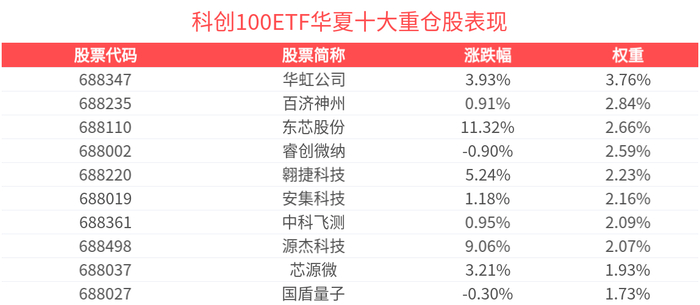
Group 1 - The Shanghai Stock Exchange Sci-Tech Innovation Board 100 Index (000698) has shown a strong increase of 1.60% as of November 26, 2025, with notable gains from constituent stocks such as Dongxin Co., Ltd. (688110) up 11.32% and Yuanjie Technology (688498) up 9.06% [1] - The Huaxia Sci-Tech 100 ETF (588800) has also risen by 1.62%, marking its third consecutive increase, with a latest price of 1.25 yuan and a cumulative increase of 34.46% over the past six months [1] - The trading volume for the Huaxia Sci-Tech 100 ETF reached 2.11 billion yuan, with a turnover rate of 8.45% [1] Group 2 - The top ten weighted stocks in the Sci-Tech Innovation Board 100 Index as of October 31, 2025, include Huahong Semiconductor (688347) and GuoDun Quantum (688027), collectively accounting for 25.77% of the index [2] - The individual performance of the top ten stocks shows Dongxin Co., Ltd. (688110) with a significant increase of 11.32% and Yuanjie Technology (688498) with an increase of 9.06% [2] - The Huaxia Sci-Tech 100 ETF closely tracks the Sci-Tech Innovation Board 100 Index, focusing on medium-sized, high-growth stocks from the Sci-Tech Innovation Board [4]

星耀强国系列之九暨商业火箭系列报告之一:可复用技术引领变革,商业火箭开启千亿蓝海市场
Shenwan Hongyuan Securities· 2025-11-25 11:44
Investment Rating - The report maintains a positive outlook on the commercial rocket industry, emphasizing the investment opportunities across the entire industry chain [3][4]. Core Insights - The commercial rocket sector is entering a golden age, driven by reusable technology, which is expected to dominate the international space launch market due to its cost-effectiveness and reliability [3][4]. - China's commercial space industry is accelerating, with significant policy support and technological advancements, particularly in solid and liquid rocket engines [3][5]. - The demand for satellite constellations is expected to drive the rocket market, with projections indicating that China's rocket launch market could reach $63.2 billion by 2030, based on an estimated 900 launches [3][4]. - The report outlines the segmented structure of the rocket industry, highlighting the upstream (raw materials and electronic components), midstream (rocket structure, propulsion, and control systems), and downstream (rocket assembly) components [3][4]. Summary by Sections 1. Commercial Space Industry Development - The commercial space industry is characterized by a market-driven approach, focusing on profitability through the development, manufacturing, launching, and application of space technologies and services [13][14]. - The industry is segmented into upstream (rocket and satellite development), midstream (launch and operation), and downstream (application and services) [13][14]. 2. Global Competition and Technological Advancements - The global commercial rocket market is highly competitive, with the U.S. leading through companies like SpaceX and ULA, which have made significant advancements in reusable rocket technology [3][39]. - China's commercial rocket development is gaining momentum, supported by favorable policies and technological breakthroughs, indicating a substantial growth potential in the sector [3][5]. 3. Market Potential and Growth Projections - The report highlights the rapid deployment of domestic satellite constellations, with over 51,300 low-orbit satellites planned, leading to an expected increase in launch frequency [3][4]. - By 2030, China's rocket launch market is projected to exceed $63.2 billion, with an average launch cost of approximately $6.975 million [3][4]. 4. Industry Chain Analysis - The rocket industry chain is divided into three main segments: upstream (raw materials and electronic components), midstream (rocket structure, propulsion, and control systems), and downstream (rocket assembly) [3][4]. - Key companies in the industry include Baotai Co., Guangwei Composite, and Aerospace Electronics, among others, which are recommended for investment based on their roles in the supply chain [4][5].
12月起,商业航天将接连迎来多场盛会,政策或也有重磅进展
Xuan Gu Bao· 2025-11-25 07:16
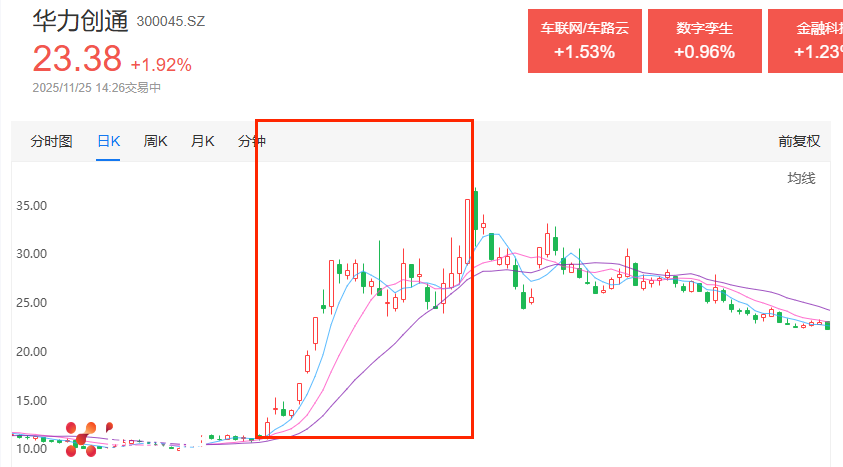
Event Overview - The 2025 Third China Commercial Space Development Conference and the Fourth Zhongguancun Commercial Space Conference will be held in Beijing from December 18 to 19, marking the first national industry event initiated and implemented by industry social organizations in the commercial space sector [1] - Additional major space industry events are scheduled from January to March 2026, including the Third Beijing Commercial Space Industry High-Quality Development Conference and the 2026 Beijing International Commercial Space Exhibition [1] Industry Development Acceleration - The establishment of the Commercial Space Administration signifies a key institutional development, expected to enhance coordination across multiple departments and improve efficiency in satellite industry development, including launch approvals and operational licensing [2] - Analysts from CITIC Securities and Huatai Securities highlight a triple inflection point for the commercial space sector, driven by policy, performance, and technology advancements [2] - The Chinese commercial space industry is projected to reach a value of 2.8 trillion yuan by 2025 [2] Satellite Application Focus - The core of commercial space is identified as satellite applications, which are increasingly integrated with technologies like 6G and AI, leading to rapid expansion in various new business trials [3] - The number of satellite launches is expected to grow by 100%-200% annually during the 14th Five-Year Plan period, with satellite connectivity becoming mainstream in consumer markets [3] Historical Performance of Key Players - Huawei's launch of the HUAWEI Mate 60 Pro, the first mass-market smartphone supporting satellite calls, has significant implications for the industry [4] - Huali Chuantong, a leader in satellite internet, experienced over 200% stock price increase from August 29 to October 11 [5] Related Concept Stocks - A list of concept stocks related to the commercial space industry includes companies involved in solar wings, satellite operations, rocket manufacturing, and testing services, indicating a broad investment landscape [7]
通信行业周报:Gemini3和NanoBanana2发布,卫星物联网商用实验启动-20251125
Guoyuan Securities· 2025-11-25 03:14
Investment Rating - The report gives a "Recommended" rating for the telecommunications industry, considering the sustained high prosperity of the sector driven by AI, 5.5G, and satellite communications [2][6]. Core Insights - The overall market performance for the week (November 17-23, 2025) saw a decline in major indices, with the Shanghai Composite Index down 3.90%, the Shenzhen Component Index down 5.13%, and the ChiNext Index down 6.15%. The telecommunications sector, represented by the Shenwan Communications Index, also experienced a decline of 2.51% [2][11]. - Among the sub-sectors, the telecommunications network equipment and devices had the lowest decline at 1.76%, while telecommunications cables and supporting equipment saw the highest decline at 6.09% [2][14]. - Notable individual stock performances included Dekeli with a rise of 24.82%, Shida Group at 18.16%, and Guangku Technology at 14.86% [2][16]. Summary by Sections Market Overview - The telecommunications sector experienced a general downward trend, with the Shenwan Communications Index declining by 2.51% during the week [2][11]. - The sub-sectors showed varied performance, with telecommunications network equipment and devices declining the least at 1.76%, while telecommunications cables and supporting equipment faced the most significant drop at 6.09% [2][14]. Key Company News - Nvidia reported strong third-quarter results for FY2026, with revenue reaching $57 billion, a year-on-year increase of 62.5% and a quarter-on-quarter increase of 22%. The data center segment accounted for 90% of total revenue, highlighting its role as a key growth driver [3][18]. - The Ministry of Industry and Information Technology (MIIT) initiated commercial trials for satellite IoT services, aiming to enhance the satellite communication market and support emerging industries [4][20]. Investment Focus Areas - The report suggests focusing on the computing power industry chain and the satellite industry chain, particularly in light of Nvidia's strong performance and the launch of satellite IoT services [3][4].

港股半导体板块午后跌幅扩大
Di Yi Cai Jing· 2025-11-24 06:30
Core Viewpoint - The semiconductor sector experienced significant declines, with notable drops in stock prices for several key companies [1] Company Performance - Hua Hong Semiconductor saw a decline of over 11% [1] - SMIC (Semiconductor Manufacturing International Corporation) dropped by more than 5% [1] - Hong Guang Semiconductor fell by over 4% [1] - Shanghai Fudan and Jingmen Semiconductor also experienced declines [1]
港股半导体板块午后跌幅扩大,华虹半导体跌超11%
Mei Ri Jing Ji Xin Wen· 2025-11-24 05:22
Core Viewpoint - The semiconductor sector in Hong Kong experienced a significant decline in stock prices, with major companies facing substantial losses in their share values [1] Company Summaries - Hua Hong Semiconductor saw a drop of over 11% in its stock price [1] - SMIC (Semiconductor Manufacturing International Corporation) experienced a decline of more than 5% [1] - Hongguang Semiconductor's stock fell by over 4% [1] - Other companies such as Shanghai Fudan and Jingmen Semiconductor also followed the downward trend [1]
“灵光”4天下载量破百万,国产AI应用驶入快车道,科创AIETF(588790)盘中探底回升
Xin Lang Cai Jing· 2025-11-24 03:11
Group 1 - The core viewpoint of the articles highlights the rapid growth and adoption of AI applications in China, particularly through the launch of Ant Group's "Lingguang" AI assistant and Alibaba's "Qianwen" app, indicating a strong user demand for AI assistant products [2][4] - The Sci-Tech Innovation Board AI ETF (588790) has seen a significant increase in its performance, with a 26.92% rise over the past six months and a current scale of 5.949 billion yuan [1][3] - The AI ETF has experienced a notable increase in shares, with a growth of 10.5 million shares in the past week, and a net inflow of 52.0551 million yuan over the last five trading days [4] Group 2 - The launch of the "Lingguang" app has achieved over 1 million downloads within four days, showcasing the effectiveness of Ant Group's new AI assistant in meeting market needs [1][2] - The top ten weighted stocks in the Sci-Tech Innovation Board AI Index account for 70.92% of the index, indicating a concentration of investment in key players within the AI sector [4] - The AI applications are evolving towards an ecosystem-driven model, leveraging cloud infrastructure and model capabilities to accelerate commercialization [2]