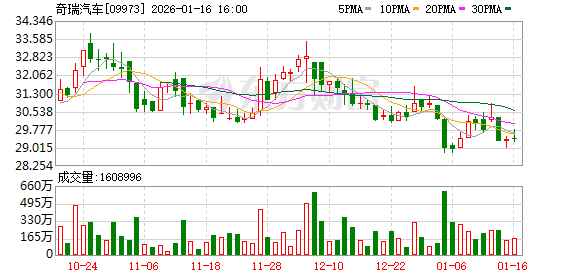
奇瑞汽车

Search documents
AI重构汽车!奇瑞AI之夜放大招:35款车搭猎鹰智驾 智驾平权杀向中端市场
Guo Ji Jin Rong Bao· 2026-01-18 13:49
Core Viewpoint - The Chinese automotive market is entering a new phase of competition defined by AI technology, transitioning from a differentiating selling point to a core survival element [2] Group 1: AI Strategy and Developments - Chery Automobile launched its AI strategy at the "AI Night" event, showcasing key AI technologies including the AI assistant "Xiao Qi," Falcon Intelligent Driving, Lingxi Smart Cabin, and other core AI achievements [2][4] - The AI strategy aims to address three major challenges: safety, legal and ethical issues, and quality management in AI development [5][6] Group 2: Intelligent Driving and Cabin Innovations - The Falcon Intelligent Driving system has been upgraded, introducing features like urban navigation assistance and supporting L3 and L4 level driving solutions [7] - The Lingxi Smart Cabin enhances user interaction with a refined UI and the AI assistant "Xiao Qi," ensuring high standards of privacy protection in compliance with GDPR [9] Group 3: Market Trends and Competitive Landscape - The Chinese automotive market is projected to reach 34.4 million units by 2025, with L2 and above autonomous driving configurations expected to reach 82.6% in new energy vehicles [11] - The market is characterized by a "three-fold competition" with Tesla dominating the high-end market, while local brands like Huawei and Li Auto are targeting the mid-range market [11] Group 4: Challenges and Future Outlook - Chery faces challenges such as competition in model scale and performance, the need to balance cost-effectiveness with reliability, and the pressure from competitors like Tesla and Huawei [12] - The automotive industry's AI transformation is shifting from "single-point breakthroughs" to "ecosystem collaboration," with Chery needing to enhance data integration and local iteration to maintain its competitive edge [12]

城数Lab. | 港股IPO狂飙,哪些城市赢了?
Mei Ri Jing Ji Xin Wen· 2026-01-18 12:44
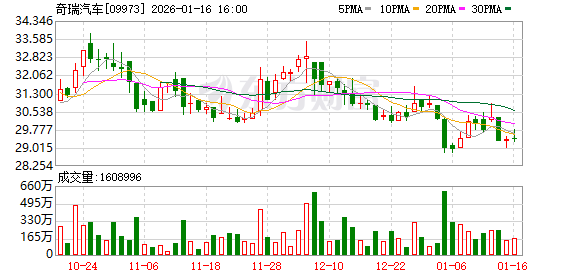
Group 1 - In 2025, the Hong Kong stock market experienced a significant IPO boom with 117 companies listed, raising a total of 285.8 billion HKD, representing a year-on-year increase of over 200%, reclaiming the top position globally in IPO fundraising [1] - The active IPO market in Hong Kong is attributed to a combination of policy support, industrial accumulation, and capital awareness, further solidifying Hong Kong's status as an international financial center and accelerating the "going out" of Chinese enterprises [1] - A total of 20 provinces in mainland China had companies that went public in Hong Kong, with Shanghai leading at 19 listings, followed by Guangdong with 17, and other provinces contributing significantly to the overall IPO count [1] Group 2 - The "Matthew Effect" is increasingly evident, with the top five provinces being economically advanced, while other provinces like Fujian, Anhui, and Sichuan formed a "second tier" in terms of IPO activity [2] - Major cities such as Shanghai, Beijing, and Shenzhen dominated the IPO landscape, while cities like Ningde and Lianyungang achieved high fundraising amounts despite fewer listings, showcasing the impact of industry leaders [7] - The IPO landscape in Hong Kong in 2025 highlighted a focus on "new economy" and "hard technology," with the pharmaceutical and biotechnology sector leading with 20 listings, followed by software services and other industries [12] Group 3 - The concentration of pharmaceutical and biotechnology companies is particularly notable in the Yangtze River Delta region, with a significant portion of fundraising coming from this area, indicating a strong industrial foundation [14] - Currently, there are over 300 companies waiting to be listed on the Hong Kong Stock Exchange, and the market is expected to maintain its momentum into 2026, emphasizing the importance of leveraging local industrial advantages [14]
新消费&轻工周报:AI+消费迈入物理世界,新型烟草出口格局生变利好龙头-20260118
SINOLINK SECURITIES· 2026-01-18 12:12
Investment Rating - The report does not explicitly state an investment rating for the industry Core Insights - The report highlights various sectors including trendy toys, new tobacco, home furnishings, paper packaging, personal care, AI glasses, Xiaomi Group, pet food, and AI+3D printing, indicating a mixed outlook across these industries with some showing growth potential while others face challenges Trendy Toys - The collaboration between Honor and Pop Mart to launch the first trendy toy smartphone is expected to differentiate products in a competitive market, targeting younger consumers [8] - Despite a decline in overall online GMV for trendy toys, leading companies like Miniso and Bluku are experiencing significant growth, with Miniso's blind box category growing by 315% [10] New Tobacco - The cancellation of VAT export rebates for e-cigarettes is expected to pressure profits in the short term, but may benefit companies like Smoore in the long run as they can capture market share from smaller competitors [11] - The HNB market is anticipated to expand significantly with the upcoming launch of IQOS in the US [12] Home Furnishings - The domestic real estate market remains weak, with significant declines in new and second-hand home transactions [13] - Export figures show a decline for Chinese furniture, while Vietnam's furniture exports are growing, indicating a shift in regional competitiveness [14] Paper Packaging - The report notes fluctuations in paper prices, with a general decline in prices for various paper types, but anticipates a recovery in demand as packaging needs stabilize [15] - The overall retail growth in food, beverages, and daily necessities is expected to support the packaging sector's recovery [16] Personal Care and AI Glasses - The personal care sector shows mixed performance, with some brands experiencing growth while others decline [17] - Meta's plans to significantly increase the production capacity of AI glasses signal a positive outlook for the sector, potentially boosting demand across the supply chain [18] Xiaomi Group - Xiaomi continues to lead in the smartphone market, with expectations to integrate self-developed chips and AI models into their products by 2026 [19] - The company aims to enhance its brand positioning and profitability through technological advancements and strategic product launches [20] Pet Food - The pet food market is projected to grow, with a focus on new product introductions and market expansion strategies [23] - Recent data indicates a decline in GMV for pet food on major e-commerce platforms, highlighting competitive pressures [24] AI+3D Printing - The consumer-grade 3D printing market is expected to grow, driven by new product launches and community engagement initiatives [33] - Companies are focusing on lowering entry barriers and enhancing user experience to penetrate the market further [36]



埃泰克沪市主板IPO即将上会 市场份额双冠领跑国产化
Zheng Quan Shi Bao Wang· 2026-01-18 11:51
Core Viewpoint - Wuhu E-Tech Automotive Electronics Co., Ltd. (E-Tech) is set to undergo an IPO review on January 20, focusing on its leading position in the automotive electronic control systems market, particularly in body domain controllers and other electronic products [1] Group 1: Company Overview - E-Tech, established in 2002, specializes in the research, production, and sales of automotive electronic products across four main domains: body, intelligent cockpit, power, and intelligent driving [1] - The company has built a comprehensive independent innovation system over more than 20 years, playing a significant role in the localization of automotive electronics and leading in several niche markets [1] Group 2: Market Position and Performance - According to statistics from the Gaogong Intelligent Automotive Research Institute, E-Tech holds a 25.5% market share in the body domain controllers for China's self-owned brand passenger vehicles in 2024, ranking first for three consecutive years [1] - The company also leads with a 13.83% share in the market for remote physical keys and ranks third with a 6.41% share in cockpit domain and display assembly for self-owned brand passenger vehicles [1] - E-Tech has established a strong customer base, including major domestic automakers like Chery, Changan, and Great Wall, as well as new energy vehicle manufacturers such as Li Auto and Xpeng [2] Group 3: Financial Performance - E-Tech has shown steady revenue growth, with revenues of 2.174 billion yuan, 3.003 billion yuan, and 3.467 billion yuan from 2022 to 2024, and a net profit of 77.44 million yuan, 171 million yuan, and 202 million yuan for the same years [2] - In the first half of 2025, the company achieved a revenue of 1.522 billion yuan and a net profit of 85.61 million yuan [2] Group 4: R&D and Innovation - E-Tech has developed a complete product matrix covering four functional domains, with a focus on smart control and entry systems, digital dashboards, and vehicle display screens [3] - The company has invested heavily in R&D, employing 874 researchers, which constitutes 46.29% of its total workforce, and has allocated 111 million yuan for R&D in the first half of 2025, representing 7.31% of its revenue [3] - E-Tech holds 182 patents, including 49 invention patents, and has established a comprehensive R&D system across multiple locations [3] Group 5: Future Outlook - E-Tech aims to align with the trends of electrification, intelligence, and connectivity in the automotive industry, exploring new applications for next-generation electronic and electrical architectures [4] - The company plans to expand its domestic and international markets, seeking partnerships with more quality clients to enhance its market share and contribute to the high-quality development of China's automotive industry [4]
奇瑞尹同跃:对标特斯拉FSD,更要实现“算力自由”;全球最大汽车供应商预警利润跌破2%丨汽车交通日报
创业邦· 2026-01-18 10:23
Group 1 - Chery is benchmarking against Tesla's FSD and aims to achieve "computing power freedom" by rapidly closing the gap in autonomous driving technology [2] - Chery's AI strategy has entered the 2.0 (AI+) era, showcasing core AI achievements such as the super AI assistant "Xiao Qi," Falcon Intelligent Driving, Lingxi Smart Cabin, and Mocha Robot [2] - The Falcon Intelligent Driving series is set to evolve and plans to be equipped in over 35 models by 2026, accelerating the adoption of advanced intelligent driving [2] Group 2 - Bosch, the world's largest automotive parts supplier, has warned of a profit margin dropping below 2% in 2025, significantly below expectations [2] - Bosch's operating profit margin is projected to decline from 4.8% in 2023 to 3.5% in 2024, primarily due to restructuring costs of €3.1 billion, which accounts for approximately 3.5% of sales [2] - Bosch's revenue for 2025 is estimated at €91 billion, slightly above €90 billion in 2024, with growth largely attributed to the acquisition of Johnson Controls-Hitachi, contributing around €4 billion [2] Group 3 - Li Auto released its 2025 travel report, indicating a user activity rate of 99.5% and a total driving distance exceeding 6 billion kilometers [2] - The report highlights that Li Auto's assisted driving system has accumulated 1.505 million users and recorded 3.07 billion kilometers driven in the past year [2] - Notable metrics include 36,643 instances of daily assisted driving exceeding 1,000 kilometers and a maximum individual user driving distance of 119,000 kilometers [2]

奇瑞尹同跃:对标特斯拉FSD,更要实现“算力自由”
第一财经· 2026-01-18 09:44
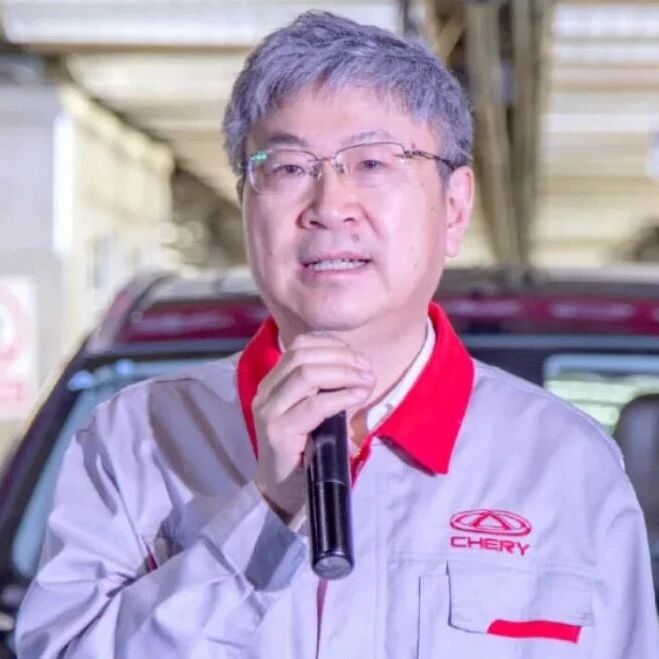
Core Viewpoint - Chery Automobile is actively benchmarking against Tesla's FSD and Grok models to identify gaps and accelerate its development in AI and intelligent driving technologies [3]. Group 1: AI Strategy and Development - Chery has introduced a comprehensive AI strategy, showcasing core technologies such as the AI intelligent body "Xiao Qi," Falcon Intelligent Driving, Lingxi Intelligent Cabin, and Mocha Robot [3]. - The company claims to have entered the 2.0 (AI+) era, transitioning from a "technology Chery" to a "global AI technology company" [3]. - The "Falcon Intelligent Driving" series is set to evolve continuously, with plans to equip over 35 models with advanced intelligent driving capabilities by 2026 [3]. Group 2: Challenges in AI Integration - Chery's CEO identified three major challenges in the integration of AI with the automotive industry: safety, legal and ethical considerations, and quality management [4]. - Safety is the primary concern, as automobiles are products that carry life safety [4]. - Establishing an AI governance framework that aligns with human values is a critical issue that the industry must address [4]. - A new quality management logic must be developed to ensure the stability and traceability of AI systems throughout their lifecycle [4]. Group 3: Energy and Chip Development - The rapid growth of global computing power necessitates significant energy demands and new infrastructure in China [5]. - Chery has established a chip research institute and a green energy company to support AI development and energy supply [5]. - The company envisions a shift from pursuing mobility freedom to seeking computing and energy freedom, positioning automobiles as key players in shaping future civilization [5].
奇瑞尹同跃:对标特斯拉FSD,更要实现“算力自由”
Di Yi Cai Jing· 2026-01-18 06:47
Core Viewpoint - Chery Automobile is transitioning from a focus on mobility freedom to pursuing computational and energy freedom, emphasizing the importance of AI in reshaping industries, particularly the automotive sector [1][2] Group 1: AI Strategy and Development - Chery is actively benchmarking against Tesla's FSD and Grok models to identify gaps and accelerate its AI capabilities [1] - The company showcased its full AI strategy at the 2026 AI Night, introducing key AI technologies such as the super AI entity "Xiao Qi," Falcon Intelligent Driving, Lingxi Smart Cabin, and Mocha Robot [1] - Chery's AI initiative has entered the 2.0 (AI+) era, aiming to evolve from a "technology Chery" to a "global AI technology company" [1] - The "Falcon Intelligent Driving" series is set to evolve and be equipped in over 35 models by 2026, promoting the widespread adoption of advanced intelligent driving [1] Group 2: Challenges in AI Integration - The integration of AI in the automotive industry faces three main challenges: safety verification, legal and ethical governance, and quality management for AI systems [2] - Ensuring the safety of AI in vehicles is paramount due to the life-critical nature of automotive products [2] - Establishing a governance framework that aligns with human values is a key industry challenge [2] - A new quality management logic must be developed to ensure the stability and traceability of AI systems throughout their lifecycle [2] Group 3: Energy and Computational Needs - The explosive growth of global computational power will lead to significant energy demands and new infrastructure needs in China [2] - Chery has established a chip research institute and a green energy company to support AI development and energy supply for computational needs [2] - The company envisions a future where the automotive industry plays a crucial role in shaping new forms of civilization, emphasizing the importance of technology benefiting the public and fostering a prosperous and equitable society [2]
国家电网“十五五”投资4万亿元,固态电池近期催化密集落地



GOLDEN SUN SECURITIES· 2026-01-18 06:32
Investment Rating - The report indicates a positive outlook for the power equipment industry, particularly in the renewable energy sector, with significant investments and technological advancements expected to drive growth [1][2][4]. Core Insights - The report highlights that the State Grid's investment during the "14th Five-Year Plan" period is projected to reach 4 trillion yuan, marking a 40% increase compared to the previous plan [2]. - The report emphasizes the stability in polysilicon prices and the continuous rise in battery component prices, with N-type battery prices increasing to 0.40 yuan per watt [15][16]. - The report identifies three key areas of focus: supply-side reform leading to price increases in the industry chain, long-term growth opportunities from new technologies, and industrialization opportunities from perovskite GW-level layouts [16]. Summary by Sections 1. New Energy Generation 1.1 Photovoltaics - Polysilicon prices remain stable, while battery component prices are on the rise, with N-type battery prices reaching an average of 0.40 yuan per watt [15]. - The report notes that leading component companies are responding to industry self-discipline by raising component prices, with distributed sales prices reaching 0.72 yuan per watt [15][16]. - Key companies to watch include Tongwei Co., GCL-Poly, LONGi Green Energy, JA Solar, and Trina Solar [16]. 1.2 Wind Power & Grid - The UK AR7 offshore wind auction results exceeded expectations, with a total scale of approximately 8.4GW, validating the upward trend in European offshore wind [17]. - The State Grid's investment is expected to enhance transmission capacity significantly, addressing bottlenecks in renewable energy delivery [18]. - Companies to focus on include Goldwind, Yunda Wind Power, Mingyang Smart Energy, and Sany Heavy Energy [18]. 1.3 Hydrogen & Energy Storage - By 2025, the production and sales of fuel cell vehicles in China are projected to reach 7,797 units, reflecting a 44% year-on-year increase [20]. - The report anticipates that new energy storage installations will reach 58.6GW/175.3GWh by 2025, with significant growth expected in the energy storage sector [21]. - Key players in the hydrogen sector include Shuangliang Energy, Huadian Heavy Industries, and Shenghui Technology [20]. 2. New Energy Vehicles - Solid-state batteries are gaining traction, with several automakers making progress towards mass production by 2026 [29]. - Companies such as BYD, Changan Automobile, and Chery are expected to achieve significant milestones in solid-state battery technology [29]. - The report suggests monitoring companies like Xiamen Tungsten, Hailiang Co., and Nanjing Advanced Lithium Battery [29]. 3. Industry Trends - The report notes a 0.4% increase in the new energy equipment sector from January 12 to January 16, 2026, with a cumulative increase of 5.3% since the beginning of the year [12]. - The photovoltaic equipment sector saw a 3.52% increase, while the wind power equipment sector experienced a decline of 1.28% during the same period [13].
奇瑞AI核心成果亮相
Xin Lang Cai Jing· 2026-01-18 05:43
Core Viewpoint - Chery Automobile is advancing its AI strategy, transitioning from a technology-focused company to a global AI technology firm, as showcased during the 2026 Chery AI Night event in Wuhu, Anhui [1] Group 1: AI Strategy and Developments - Chery highlighted its comprehensive AI strategic technology blueprint, marking the official entry into the 2.0 (AI+) phase of its AI intelligence [1] - The company presented several AI core achievements, including the AI assistant "Xiao Qi," Falcon Intelligent Driving, Lingxi Smart Cabin, and Mocha Robot [1] Group 2: AI Employee and Global Reach - Chery's AI employee, Mo Yin, hosted the event and is recognized as the world's first humanoid robot to receive dual CE certification from the EU for both hardware and software [1] - Mo Yin has successfully entered over 30 countries and regions globally, being utilized in more than 100 scenarios such as factory inspections and showroom services [1]
奇瑞AI核心成果 亮相
Shang Hai Zheng Quan Bao· 2026-01-18 03:01
Core Viewpoint - Chery Automobile is advancing its AI strategy, transitioning from a technology-focused company to a global AI technology firm, as showcased during the 2026 AI Night event in Wuhu, Anhui [2][10]. Group 1: AI Strategy and Developments - Chery unveiled its comprehensive AI strategy, highlighting key technologies such as the AI assistant "Xiao Qi," Falcon Intelligent Driving, Lingxi Smart Cabin, and Mocha Robot, marking the entry into the AI 2.0 phase [2]. - The company introduced its first AI employee, the humanoid robot "Mo Yin," which has been deployed in over 30 countries for various applications, including factory inspections and exhibition services [4]. - Chery's AI strategy will focus on three main directions: AI for Product, AI for Soul, and AI for Industry, aiming to enhance smart vehicle capabilities, improve user interaction, and reshape enterprise boundaries through AI integration [7][8]. Group 2: Challenges in AI Integration - Chery's Chairman, Yin Tongyue, identified three major challenges in AI development: safety concerns due to the complexity of training data, legal and ethical issues surrounding data privacy and algorithm fairness, and the need for a new quality management framework for AI systems [6]. - The company emphasizes the importance of overcoming these challenges to ensure the safe and effective integration of AI in the automotive industry [6]. Group 3: Industry Context and Competitiveness - The automotive industry is increasingly focusing on AI, with many companies ramping up investments in smart cockpit technologies, operating systems, and intelligent driving [11]. - Competitors like Geely are also advancing their AI capabilities, with plans to launch new models and achieve significant sales targets, indicating a competitive landscape driven by AI innovation [11]. - Industry experts suggest that the future competitiveness of the automotive sector will hinge on manufacturing, digital technology, and AI, forming a new triangular model of competition [12].