菜鸟

Search documents
东南亚电商大爆发,中企纷纷落子布局
凤凰网财经· 2025-08-16 14:32
Core Viewpoint - The Southeast Asian e-commerce market is experiencing explosive growth, with annual sales projected to increase from $4 billion in 2012 to $184 billion by 2024, attracting significant attention from Chinese companies [2][4]. Group 1: Market Growth and Opportunities - The e-commerce platforms in Southeast Asia, such as Lazada, are evolving through substantial investments from Alibaba and leveraging the entire Alibaba ecosystem for digital transformation [4]. - Chinese companies are increasingly entering the Southeast Asian market, shifting from merely selling products to offering services, thereby reshaping the e-commerce landscape [5]. - Southeast Asia, with nearly 700 million people and a high percentage of young consumers, presents a significant opportunity for e-commerce growth, as internet penetration rates exceed 70% in most countries [5][6]. Group 2: Consumer Preferences and Trends - The most notable e-commerce growth is observed in Indonesia, Thailand, and Vietnam, where consumers prefer visually appealing, low-decision, and high-repeat purchase products [6]. - Chinese sellers have a competitive advantage in understanding local demands and product selection, becoming a dominant seller group on Southeast Asian e-commerce platforms [6][10]. - The rise of content-driven e-commerce, particularly through platforms like TikTok Shop, is changing consumer purchasing behavior, with 75% of consumers more willing to buy products recommended by influencers [8][9]. Group 3: Technological Advancements - E-commerce platforms in Southeast Asia are benefiting from technological upgrades, with Lazada being a pioneer in applying AI for personalized recommendations and operational efficiency [7]. - The integration of AI has led to a 46% increase in user interaction with the platform during peak shopping events [7]. Group 4: Infrastructure Development - The logistics and payment infrastructure in Southeast Asia is improving, with significant investments from Chinese logistics companies to enhance delivery efficiency [12][13]. - The electronic payment adoption rate has surpassed 50%, with mobile payments in Thailand projected to account for 55% of e-commerce transactions by 2024 [13][14]. - Despite the growth in electronic payments, cash transactions remain prevalent due to cultural preferences and the limited issuance of debit and credit cards [13][14]. Group 5: Cross-Border Payment Solutions - Chinese payment service providers are capitalizing on the opportunity to address payment challenges in Southeast Asia, offering localized services and cross-border payment solutions [14]. - Successful collaborations, such as UnionPay's partnership with Laos' national payment network, highlight the potential for Chinese payment services to enhance local payment ecosystems [14].



“5美元10日达”产品已占到约70% 菜鸟3.0的新野望:全球化和市场化
Mei Ri Jing Ji Xin Wen· 2025-08-15 09:59
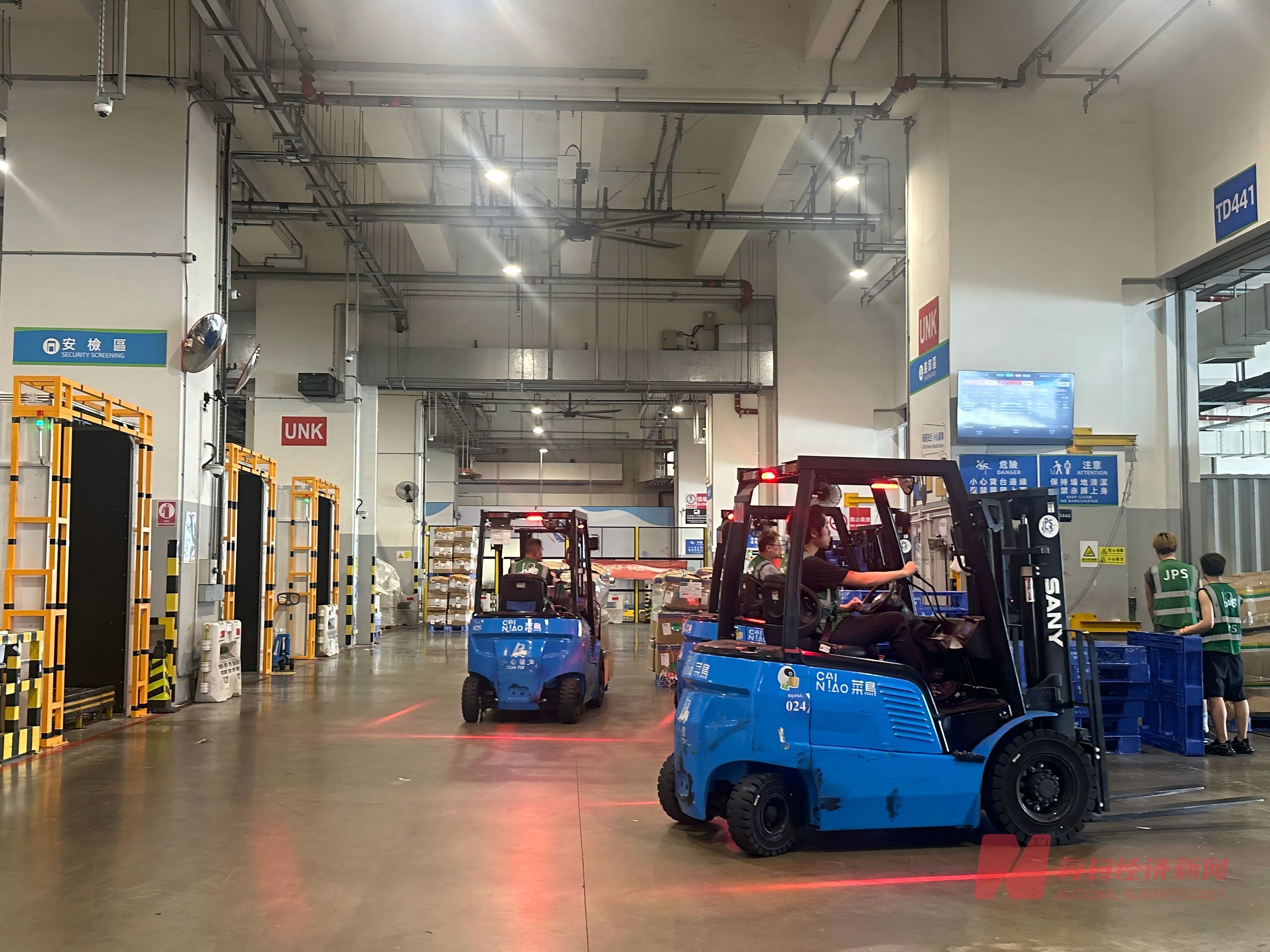
Core Insights - The article highlights the strategic development of Cainiao's global logistics network, particularly through the establishment of the Hong Kong eHub, which enhances cross-border logistics efficiency and supports the company's globalization efforts [1][4][12]. Group 1: Company Developments - Cainiao's Hong Kong eHub is a key logistics hub located just five minutes from Hong Kong Airport, capable of processing tens of thousands of tons of goods daily, with a four-hour air radius covering core Asia-Pacific markets [1]. - The company has transitioned into its 3.0 phase, emphasizing globalization and market-oriented strategies, with over half of its business now coming from international operations [1][4]. - Cainiao has introduced various logistics products, including "5 USD 10-day delivery," which now accounts for approximately 70% of its offerings, reflecting a significant shift in service efficiency [6][8]. Group 2: Industry Trends - The cross-border logistics sector is experiencing rapid improvements, with Cainiao's logistics products becoming more diverse and tailored to meet the needs of e-commerce businesses [7][9]. - The demand for overseas warehouses and global supply chain solutions is increasing, driven by the need for brands to adapt to international markets [10][11]. - The logistics industry is moving towards a more standardized and competitive landscape, with Cainiao's growth reflecting the broader trend of the Chinese cross-border logistics sector evolving from a broad to a more refined approach [12][17].
内地电商巨头入局,香港零售业洗牌
Sou Hu Cai Jing· 2025-08-14 05:10
今年3月,京东在香港人流最稠密的旺角地区投入大型广告牌,提出"全港比价,买贵就赔"。摄/焦建 在逐渐打通物流链条后,中国内地电商巨头为抢占中国香港市场可能会有哪些新的竞争方向?又或将给当地零售市场带来哪些影响? 文|《财经》特派香港记者 焦建 编辑|苏琦 中国香港的零售市场,正因中国内地电商巨头的频频入港动作变得如同天气般持续火热。 8月13日,按照中国香港海关方面正式公布的相关消息显示,京东物流旗下相关机构已成功获得香港认可经济营运商计划(HKAEO Programme)的AEO认证。 此次认证被认为标志着京东在粤港澳大湾区内的物流服务能力将迎来进一步提升。继菜鸟物流网络在香港加速布局、拼多多推出"包邮香港"政 策后,京东在港积极布局从物流到零售的脉络亦日渐清晰。 AEO全称为Authorized Economic Operator,中国内地译为"经认证的经营者"。作为世界海关组织《全球贸易安全与便利标准框架》中的核心制 度,该认证旨在通过海关与海关、海关与商界以及海关与其他政府部门的合作,促进全球供应链安全与贸易便利化,实现关企互利共赢、贸易 畅通。 中国香港的相关计划推出至今,有约90家企业获得认证,其 ...


菜鸟北欧物流单量实现三位数增长 北极圈配送助力夏季电商旺季
Zheng Quan Shi Bao Wang· 2025-08-14 03:17
随着北欧地区夏季应季商品、户外用品等商品需求的激增,相关跨境电商商品迎来订单高峰。菜鸟凭借 强大的全链路物流能力及高效的跨境物流网络,助力中国商家快速响应市场需求。 8月14日,菜鸟跨境物流数据显示,北欧五国(瑞典、挪威、丹麦、芬兰、冰岛)全链路产品爆发式增 长,7月跨境单量环比实现三位数激增,成为欧洲电商旺季中增速最快的市场之一。除北欧夏季商品需 求的显著提升外,这一增长主要得益于菜鸟在全链路跨境物流能力上的持续优化。 据悉,目前菜鸟在北欧地区的时效和覆盖范围市场领先。具体来看,菜鸟北欧五国全链路履约时长比行 业再快2天,并支持北欧五国全境的"到门"配送(格陵兰岛除外),覆盖北极圈。同时,菜鸟提供灵活的 末端供应商配置,商家可根据商品特性自主选择最优的末端配送服务商。据菜鸟调研,商家满意度在同 类型产品中居市场首位。 除了在履约效率上持续迭代,菜鸟也在不断打磨跨境产品力。针对北欧市场,菜鸟跨境物流打造了专属 的分层产品矩阵,不仅有快线、标准、经济产品,菜鸟还增设了涵盖轻小件、服装专线、大货专线、化 妆品专线等行业解决方案,为客户提供多样的定制化产品,以差异化服务满足多元需求。 "和菜鸟合作的一年多时间里,我 ...
菜鸟高级副总裁熊伟:从“全球到全球”的服务能力,正在给中国物流行业带来新的机会
Guan Cha Zhe Wang· 2025-08-12 09:11
Core Viewpoint - The logistics industry in China is evolving from a "China to Global" model to a "Global to Global" model, indicating a shift in supply chain strategies and new opportunities for Chinese logistics companies [1][3]. Group 1: Global Expansion and Opportunities - Cainiao has been actively expanding its global logistics network, recently launching a cross-border logistics network among six Gulf countries, enabling package delivery within three days [2]. - The company has upgraded its European G2G cross-border logistics solution, supporting e-commerce express delivery across 35 European countries, achieving a "Pan-European 3-day delivery" service [1]. - The logistics services are increasingly focused on providing high cost-performance logistics experiences for local e-commerce platforms and cross-border sellers [1][2]. Group 2: Competitive Landscape - The logistics industry is witnessing a transformation where logistics costs from Spain to France can exceed those from China to France, presenting new opportunities for cost-effective logistics solutions [6]. - Cainiao's logistics network is positioned to serve not only Chinese supply chains but also global goods circulation, competing with global logistics giants [4][6]. - The company emphasizes the importance of a comprehensive logistics network as a foundational competitive advantage, which requires a continuous flow of goods [4][6]. Group 3: Evolution of Cainiao - Cainiao has undergone three significant transformations: from a capability platform supporting Alibaba's e-commerce, to a public logistics service provider, and now to a global logistics service provider [8][9]. - The current phase (3.0) emphasizes globalization and market-oriented strategies, with over half of Cainiao's business now coming from global operations [10]. - The company plans to invest in new technologies such as AI and automation while maintaining a focus on key logistics nodes both domestically and internationally [10]. Group 4: Customer Segmentation and Service Strategy - Cainiao's customer base is diverse, ranging from large e-commerce platforms to small sellers, requiring tailored service strategies for different customer segments [11]. - For major clients, the company aims to establish long-term partnerships with customized solutions, while for smaller sellers, it employs a combination of online and offline regional sales strategies [11].

低调发育,中国物流也开始“从全球到全球”
Guan Cha Zhe Wang· 2025-08-12 09:08
Core Insights - The logistics industry in China is evolving from a "China to Global" model to a "Global to Global" model, indicating a shift in supply chain strategies for many companies [1][3] - Cainiao is actively expanding its global logistics network, recently enhancing its cross-border logistics solutions in Europe and the Middle East, which supports e-commerce delivery across multiple countries [2][4] - The competitive landscape is changing, with logistics costs from Europe sometimes exceeding those from China, presenting new opportunities for Chinese logistics companies [5][6] Group 1: Global Expansion and Strategy - Cainiao's recent upgrades to its logistics solutions allow for "Pan-European 3-day delivery," covering 99% of European countries and providing cost-effective options for local e-commerce platforms [2] - The establishment of a cross-border logistics network in the Gulf Cooperation Council (GCC) countries enables faster delivery and reduced costs for local and cross-border e-commerce [2][4] - The logistics capabilities developed in China are being replicated in overseas markets, enhancing efficiency in regional supply chains [3][6] Group 2: Competitive Advantages - Cainiao's logistics services are designed to be cost-effective, with products like "5 USD for 10-day delivery" and "10 USD for 5-day delivery" gaining significant market share [6][10] - The company emphasizes a comprehensive solution combining cross-border logistics, overseas warehouses, and local delivery, which enhances user experience and operational efficiency [7] - Cainiao's long-term strategy focuses on building a robust global network, allowing it to compete effectively in various international markets [7][10] Group 3: Evolution of Services - Cainiao has transitioned through multiple phases, from a technology-driven platform to a public logistics service provider, and now to a global logistics player [8][9] - The current phase emphasizes globalization and market diversification, with over half of Cainiao's business now coming from international operations [10] - The company is adapting its service offerings based on customer size, providing tailored solutions for large e-commerce platforms while also catering to small and medium-sized sellers [10]
50万个网点一年送出千亿件快递
Xin Hua Wang· 2025-08-12 06:05
每秒近6000个快递进入寄递渠道,快递业务量连续11年位居世界第一—— 50万个网点一年送出千亿件快递 掏出手机,轻触屏幕,一键下单,大到冰箱空调洗衣机,小到快餐鲜果冷热饮,消费者都可以在家 中坐等快递送货上门。 便捷的生活方式,离不开强大快递物流体系的支撑。国家邮政局数据显示,全国快递业务量已从 2020年的约830亿件增长到2024年的1750亿件,年均增长20%左右。如今,中国邮政行业设立营业网点 超50万,快递业务量连续11年位居世界第一,目前平均每天揽收快件量超过5亿件,相当于每一秒都有 近6000个快递进入寄递渠道。 织密配送网络,打通"最后一公里" 石文春是福建龙岩武平县的一名极兔速递快递员。每天早上8点,他都会开着快递三轮车出门,到 自己负责的片区揽件,先把收来的快递集中发走,再把当天需要派送的件装上,一单单进行派送。五年 来,他亲眼目睹了小县城的快递一天天多起来。 "在武平,像仙草、芙蓉李等特产,很多乡亲就通过电商接单、快递发货。我刚来的时候,整个网 点没几个人。现在光收件、派件的人就有五六十个,再加上司机、客服、财务、操作员,整个网点已经 超过100人了。"石文春说。 前些年,内蒙古姑娘姚 ...
全球电商6.3万亿美元背后:一场合规与供应链的暗战正重塑新秩序
Sou Hu Cai Jing· 2025-08-12 02:54
Group 1 - Global e-commerce retail sales have surpassed $6.3 trillion, with China holding a 33% market share, indicating a significant transformation in industry rules and efficiency [1] - By 2025, the US, China, and Europe will contribute 70% of global e-commerce retail sales, with China maintaining its position as the largest market for 12 consecutive years, reaching a scale of 15.5 trillion yuan (approximately $2.1 trillion) [3] - Emerging markets in Southeast Asia and Latin America are rapidly growing, with social commerce platforms like TikTok Shop expanding at over 30% annually, challenging traditional market shares [3] Group 2 - Global regulatory frameworks are shifting, with the EU's DSA legislation requiring platforms to ensure compliance for third-party sellers, prompting major companies like Amazon and eBay to invest billions in risk management systems [6] - The US Consumer Disclosure Act mandates platforms to verify high-volume seller identities, addressing issues related to "shell companies," while China's policy upgrades expand cross-border e-commerce categories to 1,476, reducing operational costs [6] - The competition in global e-commerce has entered a "minute-level" era, with companies like Shein and Amazon optimizing their supply chains to enhance delivery efficiency and customer retention [8][10] Group 3 - The competition landscape is shifting from traffic acquisition to core capabilities as market growth slows from double digits to single digits, with regulatory pressures increasing in the EU, US, and China [10] - Companies that excel in compliance and supply chain efficiency are positioned to dominate the market, as even minor improvements in logistics can significantly impact competitive advantage [9][10] - The 19th China (Shenzhen) International Logistics and Supply Chain Expo will showcase solutions for compliance with the EU's DSA and the development of "local-to-local" supply chains, addressing challenges faced by businesses expanding overseas [11]



埃及计划到2030年绿色能源生产电力到24%;TikTok Shop日本首月GMV破2450万;上半年全球电视出货量同比增长2%|一周「出海参考」
Tai Mei Ti A P P· 2025-08-11 12:25
Group 1 - MGX, an Abu Dhabi investment group, plans to raise up to $25 billion for AI infrastructure investments, aiming to become one of the largest entities in this sector globally [1] - Egypt aims to achieve 42% of its electricity from renewable sources by 2030, attracting over $10 billion in private investments and has already raised about $4 billion [2] - Vietnam's Prime Minister has announced a plan to establish international financial centers in Ho Chi Minh City and Da Nang by the end of 2025, emphasizing the importance of attracting foreign investment and enhancing the country's competitiveness [3] Group 2 - Indonesia is planning to expand the digital park on Batam Island to attract global data center investments, with a projected market growth rate of 15.2% annually, reaching $3.43 billion by 2028 [4] - TikTok has integrated Amazon's "Buy with Prime" checkout system into its advertising platform, allowing users to complete purchases without leaving TikTok [5] - TikTok Shop in Japan achieved a GMV of approximately $3.36 million in its first month, with mobile and digital products leading sales [6][7] Group 3 - TikTok Shop Thailand announced new fulfillment rules effective October 2025, imposing penalties for delayed shipments [8] - TikTok Shop in the U.S. is upgrading its logistics system to enhance efficiency and reduce costs for cross-border merchants [9] - TikTok has partnered with Booking.com to allow users to search and book accommodations directly through the platform, marking a significant step in its local services strategy in the U.S. [10] Group 4 - Amazon is intensifying compliance checks, targeting sellers with problematic brand authorizations and address inconsistencies, with potential account suspensions for violations [11] - Amazon Mexico launched a low-price shopping section called "Amazon Bazaar," featuring products primarily under 199 pesos [12] - Amazon Global Logistics has introduced a new cross-border shipping service between China and Japan to enhance delivery efficiency [13] Group 5 - Temu has partnered with Korea's FITI Research Institute to enhance quality control for textiles sold on its platform [14] - AliExpress reported a 100% increase in sales of Chinese beauty products overseas, with significant growth in Europe, Mexico, Brazil, and Japan [15] - Alibaba International Station has implemented a "three-day design" service standard to improve response times for custom product requests [16] Group 6 - Shopee Philippines launched an Express Air Local service to expedite order delivery times between islands [17] - Shopee announced the establishment of three new logistics hubs in Brazil, enhancing service capabilities in the Rio de Janeiro metropolitan area [18] - eBay introduced a new policy to automatically delete negative reviews caused by customs delays, aiming to support international sellers [19] Group 7 - eBay is restructuring its core business departments to optimize seller service experiences [20] - Ozon is implementing a special fee rate policy for products priced below 300 rubles, reducing seller costs by 50% [22] - Global TV brand shipments reached 92.5 million units in the first half of 2025, showing a 2% year-on-year increase [23] Group 8 - Global tablet shipments grew by 9% in Q2 2025, with Huawei, Lenovo, and Xiaomi showing significant growth [24] - Chinese mobile game publishers accounted for 34% of the global revenue of the top 100 mobile game publishers in July 2025 [26] - PingPong will support Wero transactions, covering 75% of core customers in Europe [27][28]
京东三个月连投6家具身智能企业;Temu东南亚月活用户突破2200万|36氪出海·要闻回顾
36氪· 2025-08-10 13:34
Core Viewpoint - The article highlights the increasing investments and developments in the field of embodied intelligence and cross-border e-commerce, showcasing significant growth in user engagement and logistics capabilities across various companies and sectors. Group 1: Investments in Embodied Intelligence - JD.com has invested in six companies related to embodied intelligence within three months, indicating a strong focus on this sector as a competitive area in the AI era [4] - Other major internet companies like Alibaba, Meituan, and Tencent are also actively investing in the embodied intelligence field, making it a key battleground for tech giants [4] Group 2: Growth of Temu in Southeast Asia - Temu's monthly active users in Southeast Asia have surpassed 22 million, with significant growth in the Philippines and Thailand, which account for approximately 86% of its total traffic in the region [4] Group 3: Logistics and Cross-Border Services - Cainiao has upgraded its G2G cross-border logistics service in Europe, now supporting e-commerce express delivery between 35 European countries, covering 99% of the region [5][6] - The average cost per kilogram for shipping has decreased by 1-2 euros, enhancing the competitiveness of cross-border logistics [5] Group 4: Expansion of Chinese Brands Overseas - Heytea has seen its overseas store count grow over six times in the past year, now exceeding 100 locations across multiple countries [8] - The new tea brand Tianlala has opened three stores in Bali, with significant daily revenue and customer traffic, bringing its total overseas signed stores to over 200 [8] Group 5: Regulatory Approvals and Market Expansion - Ant International's WorldFirst has received approval for a cross-border payment service license in Malaysia, expanding its reach in key trade regions [6] - The RWA registration platform has launched in Hong Kong, facilitating the tokenization of real-world assets [13] Group 6: Trade Partnerships and Export Growth - ASEAN, EU, and the US are China's top three trade partners, with trade values of 4.29 trillion yuan, 3.35 trillion yuan, and 2.42 trillion yuan respectively [12] - China's exports in July increased by 7.2% year-on-year, with expectations of a 2.5% growth in the second half of the year [12] Group 7: Innovations in Robotics and AI - The Chinese robotics industry has seen a revenue growth of 27.8% in the first half of the year, with significant increases in both industrial and service robots [14] - The demand for humanoid robots is rising, particularly in performance and interactive service sectors, indicating a growing market for advanced robotics [14]