华福证券

Search documents
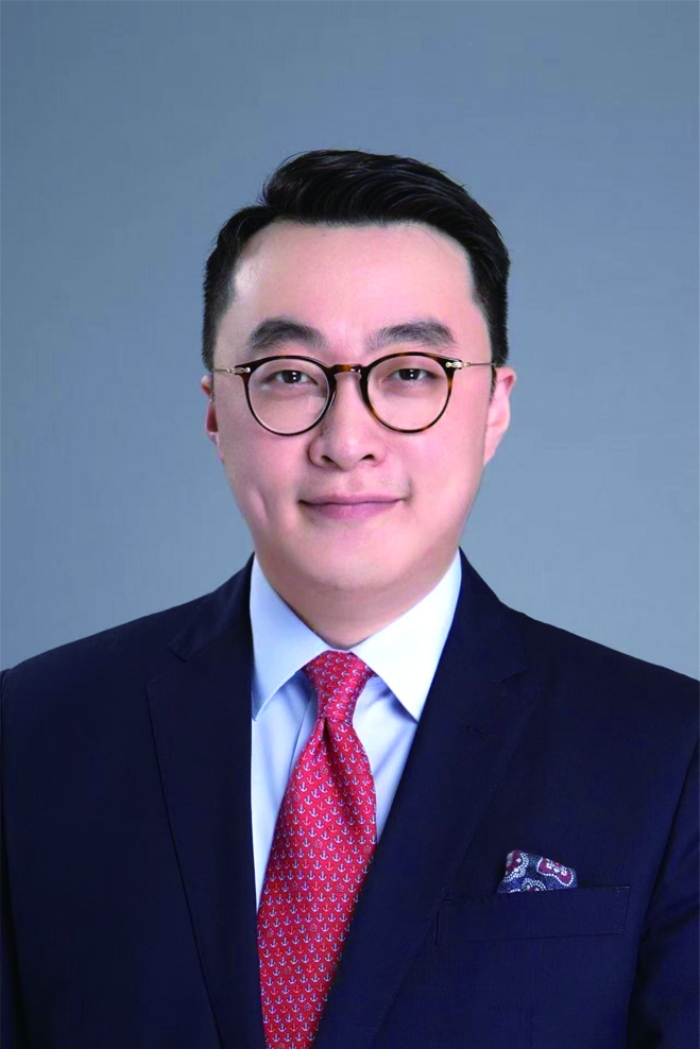
华福证券首席投资官王焕舟:“南向通”扩容为券商打开跨境配置新通道
Shang Hai Zheng Quan Bao· 2025-08-10 17:40
Core Viewpoint - The expansion of the "Southbound Bond Connect" provides domestic securities firms with new opportunities for cross-border asset allocation and enhances their service capabilities in the offshore bond market [2][3]. Group 1: Policy Impact - The policy allows domestic securities firms to access a variety of offshore bond assets, improving capital efficiency and global allocation capabilities [2]. - The expansion raises the bar for securities firms in terms of risk control systems, research capabilities, and client service levels [2][3]. Group 2: New Opportunities for Securities Firms - The "Southbound Bond Connect" expansion offers a more convenient and flexible channel for financial institutions to "go out," creating new paths for asset allocation and risk management [3]. - Securities firms can enhance their roles in agency trading, liquidity provision, and cross-border product design, thereby improving overall service levels in the industry [3]. Group 3: Strategic Focus - Securities firms are encouraged to build stronger global research capabilities, cross-border risk control systems, and product innovation abilities to seize the opportunities presented by the "Southbound Bond Connect" [3][4]. - Companies like Huafu Securities plan to develop multi-currency and multi-strategy cross-border product portfolios to meet diverse client needs [3][4]. Group 4: Investment Direction - Huafu Securities is applying for "Southbound Bond Connect" qualifications, focusing initially on Hong Kong government bonds, offshore government bonds, and local government bonds [4]. - The company recognizes the importance of "dim sum bonds" in the internationalization of the renminbi and sees value in Chinese dollar bonds due to their valuation and yield [4]. Group 5: Risk Management - The risk management framework emphasizes a three-pronged approach focusing on market risk, credit risk, and exchange rate risk, aiming for a balance between stable allocation and controllable risk [5]. Group 6: Areas for Improvement - Despite the progress made with the "Southbound Bond Connect," there are still complexities in systems and operational processes that need optimization [6]. - Recommendations include developing a "one-stop" trading and settlement system, expanding the accessibility of derivative tools, and encouraging offshore institutions to issue renminbi bonds [6].

华福证券首席投资官王焕舟:“南向通”扩容为券商 打开跨境配置新通道
Shang Hai Zheng Quan Bao· 2025-08-10 17:39
Core Viewpoint - The expansion of the "Southbound Bond Connect" to include non-bank financial institutions marks a new phase for domestic brokerages in accessing the overseas bond market, enhancing their asset allocation and service capabilities [1] Group 1: Opportunities and Capabilities - The expansion of "Southbound Bond Connect" provides domestic financial institutions with more convenient and flexible channels for overseas investment, opening new paths for asset allocation and risk management [2] - This initiative presents not only new investment opportunities but also a chance for brokerages to enhance their cross-border capital intermediation capabilities and strengthen their service to the real economy [2] - Brokerages are encouraged to offer diversified and professional global allocation solutions, which will help improve the overall service level of the industry [2] Group 2: Strategic Focus and Product Development - Huafu Securities plans to create a multi-currency, multi-strategy cross-border product portfolio around "Southbound Bond Connect," transitioning asset management from "product sales" to "comprehensive solutions" [2] - The focus will be on key investments such as Hong Kong government bonds, offshore government bonds, local government bonds, and policy bank bonds, with a potential interest in dim sum bonds and Chinese dollar bonds [3] - The company emphasizes that cross-border investment should not simply replicate domestic experiences, advocating for a robust risk management framework that includes market, credit, and exchange rate risks [3] Group 3: Mechanism Optimization and Recommendations - Despite the progress made with the "Southbound Bond Connect" expansion, there are still complexities in systems and operational processes that need optimization [4] - Recommendations include the establishment of a "one-stop" trading and settlement system to enhance transaction efficiency and convenience, as well as expanding the accessibility of derivative products for better risk management [4] - Additional suggestions involve relaxing quota mechanisms and participation thresholds to support the needs of smaller brokerages, encouraging offshore institutions to issue dim sum bonds, and enriching the range of investment targets under "Southbound Bond Connect" [4][5]
华福金工:从行业轮动到热点轮动再到热点龙头股轮动的演绎
Huafu Securities· 2025-08-09 12:00
Core Conclusions - The speed of market rotation has significantly accelerated, with the rotation index dropping to 61.95% in 2025, and the duration of hot themes shortening, with most themes lasting less than or equal to 20 days [3][4] - The relationship between rotation speed and funding structure indicates that during accelerated rotation, financing balances are highly synchronized with the index, while during slower rotations, financing responses lag [3][14] - Based on the alpha158 factor, derived strategies were constructed for wind hot rotation, industry rotation, and hot index mapping leading stocks. The index rotation strategy achieved an annualized return of 20.25%, outperforming industry rotation at 16.03% [3][4] Industry Rotation Effective Factors - Quantile factors (QTLU/QTUD) are identified as effective for industry rotation, with support momentum (QTUD) being more effective in bear markets and resistance momentum (QTLU) in bull markets [3][4] - The proportion of positive volatility (SUMN) indicates stronger industry strength, while extreme value factors (RSV/MAX) are sensitive to hot themes [3][4] Hot Index Rotation Optimization - The analysis utilized 68 Wind hot indices, focusing on core factors such as quantile factors (QTLU_20_95) and residual ranking factors (RESI30, RANK20) which have shown high win rates in recent years [4][6] - The adjustment strategy involves T+1 closing for rebalancing to mitigate factor decay, with the top 5 components of hot indices yielding an annualized return of 15.79%, significantly outperforming the CSI 300 [4][6] Strategy Application - For industry rotation holdings in 2025, high-frequency positions include banking, automotive, and non-ferrous metals, with recent additions in coal and basic chemicals [4][6] - Hot index holdings for July 2025 included semiconductor, lithium mining, and energy equipment, while automotive parts and liquor indices were removed [4][6] Market Rotation Dynamics - The analysis indicates that the speed of rotation is influenced by the structure of market participation funds, with rapid rotation correlating with high retail participation and financing balance synchronization [14][18] - In contrast, slower rotation reflects a dominance of institutional funds, leading to a significant lag in financing balances compared to index gains [14][18] Performance of Hot Rotation Strategies - The report suggests that in recent years of rapid hot rotation, short-term trend strategies are more likely to achieve excess returns [21][27] - The effectiveness of the index rotation has been higher than that of industry rotation in the past three years, indicating a shift in alpha generation from broader industry to more granular segments [27][28]
首批利息纳入征税债券发行 新发债券定价博弈将加剧
Zheng Quan Shi Bao· 2025-08-08 12:07
8月1日,财政部、税务总局发布《关于国债等债券利息收入增值税政策的公告》(简称《公告》),自 2025年8月8日起,对在该日期之后(含当日)新发行的国债、地方政府债券、金融债券的利息收入,恢 复征收增值税。 8月8日,国债等债券利息收入恢复征收增值税政策正式落地,债券市场迎来了首批附带利息增值税的债 券。 证券时报记者根据数据统计,以计划发行规模统计,8月8日起发行的国债、地方债、金融债的规模超过 2500亿元。其中,2只续发行的国债规模超2000亿元,但续发并不涉及税收变动;新发行的债券规模近 440亿元。 受访人士认为,新发国债等债券的利息收入恢复征收增值税,相关发行人的融资成本会有所上升。为了 补偿税负,新发行债券的票面利率或将相应提升。 首批发行规模近440亿元 8月5日,中国债券信息网披露的信息显示,中国农业发展银行、中国进出口银行拟于8月6日新发行6只 金融债券。其中,农发行发行不超过150亿元392天期利随本清债券,以及60亿元、50亿元、160亿元3年 期、5年期、10年期固定利率附息债券;进出口银行于8月6日发行不超过10亿元66个月固定利率附息债 (票面利率1.6%),以及不超过80亿元为 ...
首批利息纳入征税债券发行 新发债券定价博弈将加剧
证券时报· 2025-08-08 12:00
8月8日,国债等债券利息收入恢复征收增值税政策正式落地,债券市场迎来了首批附带利息增值税的债券。 证券时报记者根据Wind数据统计,以计划发行规模统计,8月8日起发行的国债、地方债、金融债的规模超过2500亿元。其中,2只续发行的国债规模超2000亿 元,但续发并不涉及税收变动;新发行的债券规模近440亿元。 受访人士认为,新发国债等债券的利息收入恢复征收增值税,相关发行人的融资成本会有所上升。为了补偿税负,新发行债券的票面利率或将相应提升。 首批发行规模近440亿元 8月1日,财政部、税务总局发布《关于国债等债券利息收入增值税政策的公告》(简称《公告》),自2025年8月8日起,对在该日期之后(含当日)新发行的国 债、地方政府债券、金融债券的利息收入,恢复征收增值税。 2025年8月8日之前已发行的国债、地方政府债券、金融债券(包含在2025年8月8日之后续发行的部分)的利息收入,继续免征增值税直至债券到期。 记者根据Wind数据统计,以计划发行规模统计,8月8日起发行的国债、地方债、金融债合计有17只,合计发行规模为2519.23亿元。 8月5日,中国债券信息网披露的信息显示,中国农业发展银行、中国进出口 ...

靖奇投资托管方未尽核查义务?接近人士:招商证券不存在核查不到位或返佣情形
Xin Lang Cai Jing· 2025-08-08 09:44
量化私募靖奇投资创始人范思奇近日发布风险警示公告,称公司存在非法使用伪造法人印章及冒用法人 签名,擅自进行基金设立、清盘、证券账户开立等关键法律行为的情形,提醒托管机构、证券公司及合 作方应严格履行尽职调查义务,并提及其中一家托管方招商证券。对此,记者查询到,靖奇投资旗下合 计有58只存续产品,托管机构涵盖国泰海通证券、国信证券、兴业证券、华福证券、中信证券、招商证 券等多家券商。其中,招商证券仅托管其中3只产品。接近招商证券的人士透露,自与靖奇投资合作以 来,招商证券没有通过任何途径收到过来自于靖奇投资任何形式的变更申请,也不存在核查不到位或其 他违规操作事宜。同时,上述3只产品虽在招商证券托管,但并未通过招商证券交易,不存在相关返佣 情形。 ...

年内近70家券商分支机构被撤销:行业持续瘦身、优化布局
Nan Fang Du Shi Bao· 2025-08-07 12:33
Group 1 - The core viewpoint of the articles highlights a trend in the brokerage industry where firms are closing down branches as part of a "slimming down" strategy due to cost pressures and changes in operational strategies, with around 20 brokerages having announced branch closures by 2025 [2][6] - In 2023, several brokerages, including Guosen Securities and Founder Securities, have announced the closure of multiple branches, indicating a growing trend in the industry [3][5] - The closures are primarily occurring in second and third-tier cities, although some first-tier branches are also affected, such as the closure of a branch by Zhongtai Securities in Shanghai [6] Group 2 - The increase in the number of branch offices is noted, particularly in Shanghai, where the number of branch offices has risen to 858, with 98 being subsidiaries, while the number of traditional branches has decreased [7][9] - The adjustments in branch structures are largely driven by the need to adapt to wealth management business transformations, with brokerages focusing on enhancing service capabilities and market competitiveness [6][9] - The establishment of internet subsidiaries by brokerages, such as Guosen Securities, reflects a shift towards online service models, reducing reliance on physical branches and improving operational efficiency [9]


华福证券半导体首席杨钟离任
Xin Lang Zheng Quan· 2025-08-07 07:49
Group 1 - The core viewpoint is that the semiconductor industry is experiencing a shift towards AIoT systems, driven by lower deployment thresholds for lightweight AI models, reduced hardware costs for high-integration chips, and the evolution of industry giants [1] - Yang Zhong, a chief analyst in the semiconductor sector, has a strong background in both engineering and finance, with significant experience in the semiconductor industry and securities research [1] - The specialized AI chips are expected to benefit from the increasing adoption of AI applications at the edge, contributing to the rapid growth of the AIoT market [1] Group 2 - Huafu Securities has shown impressive performance in 2024, with several key indicators reaching historical highs [3] - As of the end of 2024, the total assets managed by the company approached 800 billion yuan, with total assets exceeding 900 billion yuan, marking a 38% year-on-year increase [3] - The company achieved an operating income of 3.321 billion yuan, a 50% increase year-on-year, and a net profit of 715 million yuan, reflecting a 56% year-on-year growth [3] - The research business of the company also demonstrated strong momentum, with a significant year-on-year increase of 59.38% in sub-account income, ranking 34th in the industry [3]

【深度】城投债收益率跌进“1”时代,券商资管转型迎大考
Xin Lang Cai Jing· 2025-08-06 09:37
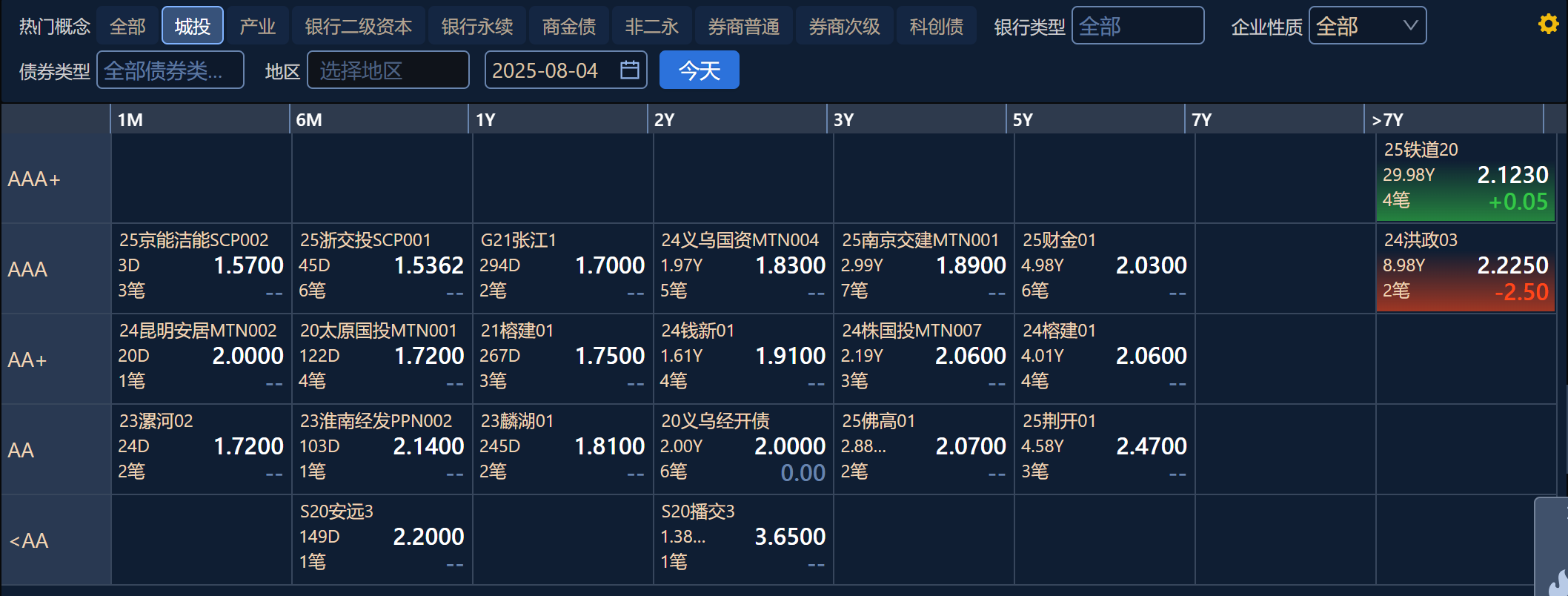
Core Viewpoint - The current favorable conditions for broker asset management relying on city investment bonds are expected to last only for about a year, as credit spreads are rapidly compressing, leading to a decline in the performance of fixed-income investment managers [1][2]. Group 1: Market Conditions and Trends - The strategy of holding low-credit city investment bonds to maturity has been widely adopted by broker asset management firms, relying on bond yields and a bull market for bonds to achieve excess returns [3][4]. - Since 2022, the market for city investment bonds has been evolving along two main lines: a continuous decline in risk-free interest rates and increased constraints on local government debt issuance, leading to extreme compression of credit spreads [6][7]. - As of now, high-grade long-term city investment bond yields have entered the "2" era, with yields for AAA-rated bonds under three years dropping to the "1" range [7]. Group 2: Challenges Faced by the Industry - The fixed-income investment sector is facing three major challenges: a sharp decline in static returns, passive duration extension leading to significant net value fluctuations, and intertwined credit and liquidity risks due to tightening city investment policies [8][9]. - The reliance on city investment bonds is becoming increasingly difficult to meet the performance benchmarks set by banks, with expectations that many fixed-income products will fail to meet these benchmarks starting next year [10]. Group 3: Transformation and Strategic Shifts - Broker asset management firms are undergoing a transformation to diversify their investment strategies, moving from a reliance on city investment bonds to a multi-asset and multi-strategy approach, including domestic and international stocks, commodities, and bonds [2][11]. - The industry is seeing a significant increase in the issuance of Fund of Funds (FOF) products, with 52 firms having issued a total of 405 FOF products as of July 30, indicating a shift towards more diversified asset management strategies [17][18]. - Successful transformation in the broker asset management sector will likely depend on talent and differentiation, with firms needing to leverage their comprehensive capabilities and deep market knowledge to provide customized solutions [12][19].
【深度】“摆脱”城投债,券商资管转型迎大考
Xin Lang Cai Jing· 2025-08-06 09:26
Core Viewpoint - The current favorable conditions for broker asset management relying on city investment bonds are expected to last only for about a year, as credit spreads are rapidly compressing, leading to a decline in the performance of fixed-income products and potential job losses for fixed-income investment managers [1][4][10]. Group 1: Current Market Conditions - The strategy of holding low-credit city investment bonds to earn management fees is becoming less viable due to extreme compression of credit spreads [1][4]. - The fixed-income investment managers are facing a significant decline in business opportunities, with expectations of widespread underperformance in fixed-income products starting next year [1][10]. - The yield on high-grade long-term city investment bonds has dropped significantly, with 3-year AAA-rated bonds now yielding in the "1" range [8][9]. Group 2: Historical Context and Strategy Shift - Historically, broker asset management relied heavily on city investment bonds due to their government backing and low default risk, especially after the 2016 supply-side reforms led to widespread defaults in corporate bonds [5][6]. - The past decade saw investment managers achieving over 6.4% annualized returns with minimal volatility by primarily investing in city investment bonds [4][7]. - The transition to a more diversified asset strategy has begun, with a shift from city investment bonds to a multi-asset approach that includes domestic and international stocks, commodities, and bonds [3][11]. Group 3: Challenges and Future Outlook - The fixed-income sector is facing three major challenges: a sharp decline in static returns, increased duration risk, and intertwined credit and liquidity risks [9][10]. - The asset management industry is expected to undergo significant transformation, with successful firms likely to be those that can differentiate themselves and leverage talent effectively [11][12]. - The growth of FOF (Fund of Funds) products is seen as a strategic move to adapt to changing market conditions, with a notable increase in issuance from 2021 to 2024 [16][18].