步步高

Search documents
步步高创始人段永平回应向江西一高校捐赠1万股茅台股票:他们每年花分红就好,市值只是暂时的
Xin Lang Cai Jing· 2025-11-02 02:11
Core Viewpoint - The article discusses the recent financial performance of a specific company, highlighting significant revenue growth and strategic initiatives that are expected to drive future profitability [1] Financial Performance - The company reported a revenue increase of 25% year-over-year, reaching $2.5 billion in the last quarter [1] - Net income rose to $300 million, reflecting a 15% increase compared to the previous year [1] Strategic Initiatives - The company is investing heavily in technology upgrades, with a budget allocation of $150 million for the next fiscal year [1] - A new product line is set to launch in Q3, which is anticipated to contribute an additional $200 million in revenue [1] Market Position - The company has gained a 5% market share in its sector, positioning itself as a leading player among competitors [1] - Customer satisfaction ratings have improved, with a reported increase of 10% in positive feedback from clients [1]


胖改红利下的盒马们,把区域商超逼到墙角
3 6 Ke· 2025-10-31 12:39
Core Insights - The article discusses the competitive landscape in the retail sector, particularly focusing on the aggressive expansion of Hema and its impact on traditional supermarkets like Jiajiayue and others [4][5][20]. Group 1: Hema's Expansion Strategy - Hema has been rapidly opening new stores, with plans to open at least 206 stores in 2025, 41.75% of which are located in second-tier and lower cities [10][16]. - The company is focusing on a dual business model with Hema Fresh and Super Hema, targeting different market segments and enhancing its presence in lower-tier cities [16][19]. - Hema's strategy includes leveraging existing commercial spaces left vacant by traditional supermarkets, allowing for quick market entry and brand recognition [19][20]. Group 2: Impact on Traditional Supermarkets - Traditional supermarkets are facing significant challenges, with at least 782 stores expected to close in 2024, and many companies reporting revenue declines [6][7]. - The entry of Hema has led to a notable drop in sales for some local supermarkets, with reports of declines exceeding 30% in certain areas [5][6]. - Regional supermarkets are responding by upgrading their offerings and enhancing their online presence to compete more effectively against Hema [22][23]. Group 3: Competitive Dynamics - The competition is not just about pricing but also involves different business models and operational systems, with traditional supermarkets relying on local supply chains and community ties [20][24]. - Hema's innovative product offerings and digital capabilities are seen as significant advantages over traditional supermarkets, which struggle with digital integration [21][26]. - The retail landscape is evolving into a multi-format battleground, with various new retail formats like membership stores and discount stores also expanding rapidly [25][26].


商贸零售行业10月31日资金流向日报
Zheng Quan Shi Bao Wang· 2025-10-31 10:07
Market Overview - The Shanghai Composite Index fell by 0.81% on October 31, with 16 industries experiencing gains, led by the pharmaceutical and media sectors, which rose by 2.42% and 2.39% respectively [1] - The retail trade sector ranked third in terms of daily gains, while the telecommunications and electronics sectors saw the largest declines, with drops of 4.07% and 3.06% respectively [1] Capital Flow Analysis - The net outflow of capital from the two markets reached 62.903 billion yuan, with 13 industries experiencing net inflows [1] - The pharmaceutical sector had the highest net inflow of capital, totaling 4.494 billion yuan, followed by the media sector with a net inflow of 4.029 billion yuan [1] - The electronics sector faced the largest net outflow, amounting to 28.762 billion yuan, followed by the telecommunications sector with a net outflow of 11.113 billion yuan [1] Retail Sector Performance - The retail trade sector increased by 2.08% with a net capital inflow of 801 million yuan, where 79 out of 97 stocks in the sector rose [2] - Among the stocks with significant net inflows, Xiaogongmian City led with an inflow of 208 million yuan, followed by Supply and Marketing Daji and Jiangsu Guotai with inflows of 146 million yuan and 113 million yuan respectively [2] - The stocks with the highest net outflows included Bubugao, He Bai Group, and Bailian Group, with outflows of 57.659 million yuan, 26.676 million yuan, and 26.416 million yuan respectively [2]




一年赚6万,小天才批量制造未成年「大佬」
36氪· 2025-10-31 09:17
Core Viewpoint - The article discusses the complex social dynamics and commercial activities surrounding the "小天才" (Little Genius) children's smartwatch, highlighting issues such as virtual transactions, social status, and the prevalence of scams and cyberbullying among its young users [2][5][33]. Group 1: Social Dynamics - The "小天才" smartwatch has become a status symbol among children, with users needing a significant number of likes (starting from 600,000) to be recognized as "大佬" (big shots) in the community [3][4]. - The community is primarily composed of children from affluent families, with many parents being professionals such as civil servants or academics [4][5]. - The culture surrounding the smartwatch has led to a social hierarchy where children without the device may feel excluded from peer groups [5][17]. Group 2: Commercial Activities - Young users engage in various commercial activities, including selling "bot" services to artificially inflate likes on their profiles, with some earning substantial amounts during peak seasons [6][7]. - The market for virtual goods related to the smartwatch is thriving, with transactions for accounts with high likes being common, and services for account management and content creation being offered [10][12]. - The article notes that the "小天才" ecosystem has fostered a form of "light entrepreneurship" among children, creating a unique marketplace driven by social media dynamics [13][33]. Group 3: Risks and Challenges - The article highlights the risks associated with the smartwatch's social network, including scams, cyberbullying, and exposure to inappropriate content, which have become prevalent issues [5][33]. - Young users often engage in risky behaviors, such as sharing personal information and participating in online harassment, reflecting a lack of understanding of the consequences [18][33]. - The article mentions that regulatory measures are being considered to address these issues, as the original purpose of the smartwatch—to ensure safety and communication—has been overshadowed by its entertainment features [34][35]. Group 4: Market Position - "小天才" holds a dominant position in the children's smartwatch market, with a market share of 35.3% and a year-on-year growth of 47.6%, significantly outpacing industry averages [22]. - The brand's success is attributed to its unique social features that differentiate it from competitors, making it a preferred choice among children and parents alike [9][24]. - The article notes that the increasing complexity of the social dynamics and commercial activities surrounding the smartwatch may lead to further challenges in maintaining a healthy ecosystem for its young users [35].

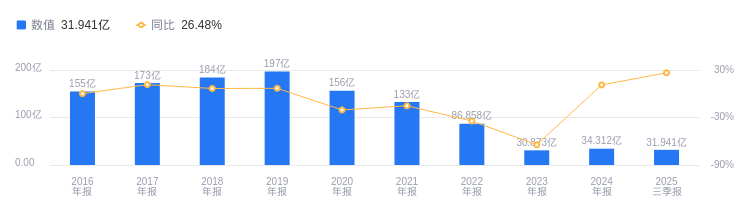
步步高的前世今生:2025年三季度营收31.94亿行业排第五,净利润2.38亿行业居第二
Xin Lang Cai Jing· 2025-10-31 08:43
Core Viewpoint - The company, Bubu Gao, has shown significant growth in revenue and net profit, positioning itself as a competitive player in the retail industry, despite facing challenges in net profit margins and operational efficiency [2][6][7]. Group 1: Business Performance - In Q3 2025, Bubu Gao achieved a revenue of 31.94 billion yuan, ranking 5th among 7 companies in the industry, with the top competitor, Yonghui Supermarket, generating 424.34 billion yuan [2]. - The net profit for the same period was 2.38 billion yuan, placing Bubu Gao 2nd in the industry, with the leading company, Hongqi Chain, reporting a net profit of 3.83 billion yuan [2]. - The company reported a year-on-year revenue growth of 30.74% in Q3 2025, with a net profit of 0.25 billion yuan, although this represented a significant decline of 98.81% compared to the previous year [6][7]. Group 2: Financial Ratios - Bubu Gao's debt-to-asset ratio was 61.07% in Q3 2025, a decrease from 62.07% year-on-year, and below the industry average of 65.35%, indicating strong solvency [3]. - The gross profit margin for the same period was 35.11%, down from 37.28% year-on-year but still above the industry average of 25.54%, reflecting robust profitability [3]. Group 3: Management and Shareholder Structure - The chairman, Wang Tian, saw his salary decrease from 649,000 yuan in 2023 to 297,900 yuan in 2024, a reduction of 351,100 yuan [4]. - As of September 30, 2025, the number of A-share shareholders increased by 95% to 172,500, while the average number of circulating A-shares held per shareholder decreased by 27.06% to 12,500 [5]. Group 4: Future Projections - Analysts project Bubu Gao's revenue for 2025-2027 to be 45.28 billion, 58.57 billion, and 71.72 billion yuan, with year-on-year growth rates of 31.95%, 29.36%, and 22.46% respectively [6]. - Expected net profits for the same period are forecasted at 2.84 billion, 3.14 billion, and 5.16 billion yuan, with a significant drop of 76.56% in 2025, followed by growth in subsequent years [6].
大湾区对外窗口之“顺”:文旅融合助力成为全球了解中国首站
Nan Fang Du Shi Bao· 2025-10-31 07:27
Core Insights - The Guangdong-Hong Kong-Macao Greater Bay Area (GBA) is experiencing a surge in inbound tourism, driven by policies such as the 240-hour visa-free transit and the upcoming 15th National Games, showcasing its unique resilience and potential [1][9] - The GBA is positioning itself as a premier destination for foreign tourists, offering a seamless blend of business and leisure experiences, which is increasingly appealing to international visitors [2][5] Inbound Tourism Development - The GBA has developed a robust inbound tourism market, with foreign tourists enjoying a "one-stop" experience that combines sightseeing, shopping, and cultural exploration [1][2] - Tour guides report that foreign visitors are increasingly interested in both cultural and modern attractions, with popular itineraries including historical sites and contemporary landmarks [2][3] Business and Leisure Integration - The integration of business and tourism is evident, with foreign business travelers attending trade fairs like the Canton Fair while also exploring local attractions [4][5] - Companies are adapting to this trend by offering tailored services that cater to the dual needs of business and leisure for foreign visitors [5][6] Policy Support and Infrastructure - Recent policy enhancements, such as the Guangdong provincial government's initiatives to improve inbound tourism quality, are facilitating a more comfortable and engaging experience for foreign tourists [4][6] - The GBA's strategic location and visa policies are enabling a more interconnected travel experience across Hong Kong, Macau, and mainland cities [7][8] Economic Impact - Major events and attractions in the GBA are contributing significantly to local economies, with Hong Kong reporting substantial visitor spending and economic growth linked to tourism [6][9] - The GBA aims to become a global tourism hub, leveraging its diverse cultural and economic offerings to attract more international visitors [9]
美妆零售商押注自有品牌,传统品牌怎么办?
Xin Lang Cai Jing· 2025-10-31 06:18
Core Insights - The acceptance of private label products among Chinese urban households has increased significantly, with over 48% purchasing such products by Q3 2025, a 10 percentage point rise from the previous year [1] - Retailers are increasingly focusing on private label development as a key strategy for innovation and market penetration, leading to a surge in private label offerings in the retail sector [1][4] Group 1: Private Label Growth in Beauty Industry - Major beauty retailers like Sephora and Walgreens have seen significant success with their private label products, with Walgreens reporting a 75 basis point increase in market penetration to 17.8% in Q1 2025 [2] - Retailers such as Jin Jia Chong and beauty collective stores are transforming from channel operators to brand owners, with private label sales exceeding 60% in some stores [2][4] - The trend of private labels is also evident in convenience stores like FamilyMart, which leverage their extensive networks to enhance consumer access to beauty products [2][4] Group 2: Competitive Landscape and Challenges - The rise of private labels is reshaping the competitive landscape, putting pressure on traditional beauty brands to adapt or risk being marginalized [3][6] - Traditional brands are facing challenges in maintaining market share as consumers shift their focus from brand recognition to product quality and value [8][9] - Retailers are now taking on a more active role in product development, directly sourcing from manufacturers to enhance profit margins and consumer appeal [4][5] Group 3: Strategies for Traditional Brands - Traditional beauty brands are responding by reinforcing their core values and establishing deeper connections with consumers through innovative product offerings [9] - Some brands are investing in direct-to-consumer channels to gain better control over user data and experiences, thereby avoiding reliance on third-party retailers [9] - Emphasis on technological innovation and product diversification is crucial for traditional brands to maintain a competitive edge [9] Group 4: Quality and Market Positioning - The challenge for retailers lies in ensuring the quality of their private label products, as any quality issues could damage their reputation [10][11] - The competitive environment for private labels is intensifying, particularly in the lower price segments where established brands already exist [11] - Retailers must focus on filling market gaps with unique offerings rather than merely competing on price against existing brands [11][12]

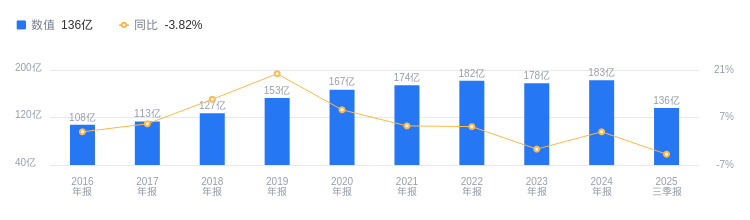
家家悦的前世今生:2025年三季度营收135.88亿行业第二,净利润1.96亿行业第三
Xin Lang Cai Jing· 2025-10-31 02:55
Core Viewpoint - Jiajiayue, a leading supermarket chain in Shandong, has established a rare fresh supply chain in China, showcasing its full industry chain advantages [1] Group 1: Business Performance - In Q3 2025, Jiajiayue reported revenue of 13.588 billion, ranking 2nd in the industry, surpassing the industry average of 11.143 billion and the median of 6.552 billion, but below Yonghui Supermarket's 42.434 billion [2] - The net profit for the same period was 196 million, ranking 3rd in the industry, above the average of -62.104 million and the median of 114 million, but below Hongqi Chain's 383 million and Bubugao's 238 million [2] - The main business composition includes food and cleaning products at 4.253 billion (47.22%) and fresh produce at 3.847 billion (42.71%) [2] Group 2: Financial Ratios - As of Q3 2025, Jiajiayue's debt-to-asset ratio was 81.89%, higher than the industry average of 65.35%, and slightly down from 82.00% in the previous year [3] - The gross profit margin for the same period was 23.93%, lower than the industry average of 25.54%, and an increase from 23.26% in the previous year [3] Group 3: Shareholder Information - As of September 30, 2025, the number of A-share shareholders decreased by 10.62% to 21,800, with an average holding of 29,300 circulating A-shares, an increase of 11.89% [5] - Among the top ten circulating shareholders, Huaxia Large Cap Select Mixed Fund reduced its holdings by 2.1379 million shares, while Hong Kong Central Clearing Limited decreased its holdings by 1.0221 million shares [5] Group 4: Management Compensation - Chairman Wang Peihuan's compensation for 2024 was 1.1 million, a decrease of 400,000 from 1.5 million in 2023 [4] Group 5: Future Outlook - The company continues to enhance supply chain optimization and product development, leading to store upgrades and improved profitability [5] - The total number of stores as of Q3 2025 was 1,090, with 7 new direct stores and 13 franchises opened, while 14 stores were closed [6] - Forecasts for net profit from 2025 to 2027 are 2.01 billion, 2.43 billion, and 2.72 billion, with corresponding P/E ratios of 34, 28, and 25 [5]

酒鬼酒第三季度营收、净利同比改善
Zheng Quan Ri Bao Wang· 2025-10-30 13:13
Core Viewpoint - The company, JiuGui Jiu, reported improved financial performance in Q3 2025, indicating potential recovery amidst a challenging industry environment [1] Financial Performance - For the first three quarters, JiuGui Jiu achieved operating revenue of 760 million yuan, with Q3 showing improved revenue and profitability compared to the same period last year [1] - The net profit attributable to shareholders, excluding non-recurring gains and losses, was a loss of 17.19 million yuan in Q3, significantly reducing losses year-on-year [1] Marketing Strategies - The company focused on three major marketing themes: graduation, weddings, and sports events, effectively linking these to target resources [2] - A notable increase in search volume for "JiuGui Jiu + GaoKao" by 310% and a total online exposure of 115 million times during the summer campaign [2] - The wedding market saw a 16% increase in cooperative wedding events, with terminal store participation rising by 17% [2] Product Development - JiuGui Jiu is actively responding to market changes by developing products that cater to younger consumers and self-drink preferences [3] - New low-alcohol products are being launched, and a new sparkling wine targeting young consumers was introduced at a music festival [3] Channel Innovation - The collaboration with retail giant Pang Donglai led to the successful launch of the product "JiuGui · Free Love," which quickly sold out across multiple channels [4] - The partnership has expanded JiuGui Jiu's market reach outside its home province, with 50% of the product's output allocated to support partner enterprises [4] - The company aims to enhance channel construction and promote terminal sales to improve operational performance [4]

一年赚6万,小天才批量制造未成年“大佬”
创业邦· 2025-10-30 03:34
Core Viewpoint - The article discusses the rise of the "Xiaotianzi" smartwatch among children, highlighting its role in creating a social hierarchy and commercial ecosystem among young users, leading to both opportunities and risks in the digital landscape [6][9][21]. Group 1: Market Dynamics - Xiaotianzi holds a 35.3% market share in the children's smartwatch sector, with a year-on-year growth of 47.6%, significantly outpacing the industry average [21]. - The brand has established itself as a status symbol among middle-class families, with many parents opting for it to ensure their children's safety and communication needs [8][17]. - The average age of prominent users, referred to as "big shots," ranges from 11 to 17 years, indicating a young demographic heavily engaged in social media dynamics [6][7]. Group 2: Social and Commercial Ecosystem - The Xiaotianzi smartwatch has fostered a culture where children engage in "like" trading, creating a marketplace for services such as "like bots" and account management, which are often operated by minors [10][12][13]. - Users can earn money through various means, including selling "likes" and managing accounts, with some young entrepreneurs reportedly earning over 60,000 yuan in a year [10][12]. - The competitive nature of gaining likes has led to a significant increase in the threshold for being recognized as a "big shot," now requiring at least 800,000 likes [18][21]. Group 3: Risks and Challenges - The article highlights the darker side of this ecosystem, including issues of online bullying, scams, and inappropriate content, which have emerged as children navigate this digital space [8][18][28]. - Parents often face challenges in monitoring their children's activities, leading to conflicts and even legal issues when transactions occur without parental consent [15][31]. - The increasing complexity of the social dynamics and the potential for exploitation have prompted calls for stricter regulations and oversight in the children's smartwatch market [31][32].