
燕京啤酒

Search documents
三连板背后 金富科技业绩承压
Bei Jing Shang Bao· 2025-11-13 15:59
Core Viewpoint - Jinfu Technology's stock price has surged nearly 100% since the beginning of the year, despite a decline in revenue and net profit in the first three quarters of the year, indicating market optimism about its long-term growth potential [1][2]. Financial Performance - For the first three quarters of the year, Jinfu Technology reported revenue of approximately 662 million yuan, a year-on-year decrease of 9.12% [1][2]. - The company achieved a net profit attributable to shareholders of about 93.44 million yuan, down 19.45% year-on-year [1][2]. - The decline in performance is attributed to new production bases entering a ramp-up phase, leading to increased depreciation and amortization costs, as well as temporary production disruptions [1][2]. Market Position and Client Base - Jinfu Technology primarily serves major beverage companies such as JingTian, Coca-Cola, and Yanjing Group, with a high customer concentration [2][3]. - The company ranks fifth in revenue among eight industry peers, with its revenue of 662 million yuan, while the top company, Zijiang Enterprise, reported 7.82 billion yuan [3][4]. - In terms of net profit, Jinfu Technology ranks third, with a net profit of 93.44 million yuan, compared to Zijiang Enterprise's 966 million yuan [3]. Industry Trends - The demand for plastic bottle caps is driven by the significant growth in global bottled water, juice, and functional beverage consumption [3]. - The Chinese bottled water market has surpassed 100 billion yuan, leading to increased demand for standard 28mm bottle caps [3]. - There is a growing trend towards high-end, lightweight, and biodegradable caps due to the rising health consciousness among consumers [3]. Strategic Initiatives - Jinfu Technology is transitioning from plastic packaging to metal packaging, with plans to invest in new metal cap production lines [3][4]. - The company has reduced its investment commitments for several projects, including the plastic cap production base expansion, and is reallocating funds towards the metal cap project and the acquisition of Xiangzhao Technology [4][5]. - The acquisition of Xiangzhao Technology aims to enhance production capacity for new metal pull-ring caps, securing orders from clients like Yanjing Beer [5].

中高端啤酒,正在成为年轻人的“精神食粮”
3 6 Ke· 2025-11-13 12:11
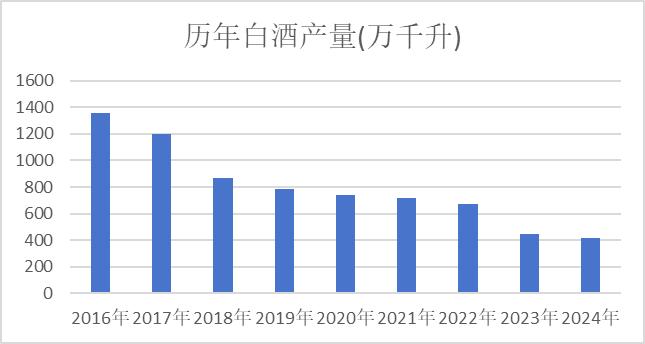
Core Insights - The overall alcohol market is experiencing a decline, with both the baijiu and beer industries facing significant challenges, including a projected 1% decrease in global beer sales in 2024 [1][9] - Despite the downturn, the high-end beer segment is witnessing growth, with high-end and super high-end beers in China and the U.S. showing positive growth rates of 1% and 2% respectively in 2024 [2][9] Industry Overview - The baijiu industry has seen a continuous decline in production, dropping from 13.58 million kiloliters in 2016 to approximately 4.14 million kiloliters in 2024, with projections indicating it may fall below 4 million kiloliters in 2025, marking a 20-year low [4][7] - High-end baijiu prices have also plummeted, with notable brands like Moutai and Wuliangye hitting record lows in wholesale prices [7][8] - The beer industry is similarly struggling, with a 0.6% decline in production for major Chinese breweries in 2024, amounting to 35.21 million kiloliters, which is about 70% of the peak production in 2013 [9] High-End Beer Growth - High-end beer is driving revenue growth for breweries, with companies like Yanjing Beer reporting that mid-to-high-end products accounted for 70.11% of their sales, achieving a revenue growth of 9.32% [9][12] - The trend towards high-end beer consumption is largely driven by younger consumers, who are increasingly willing to pay for quality and unique experiences [12][14] Consumer Behavior - A significant portion of young consumers (over 77%) prefer the concept of "quality over quantity" in their beer choices, indicating a shift in consumption patterns [13] - The younger demographic is motivated by both quality and status, viewing high-end beer as a lifestyle choice rather than just a beverage [14][15] Market Dynamics - The high-end beer market is projected to grow, with the industry’s high-end rate expected to reach 30% by 2026 [19][20] - However, not all companies are successfully transitioning to high-end products, as seen with Budweiser and Tsingtao, which have faced challenges in maintaining sales and profitability in this segment [21][22] Challenges in High-End Transition - The transition to high-end products requires strong brand recognition, effective distribution channels, and cultural resonance with consumers, which many domestic brands struggle to achieve [22][23] - The competition in the high-end market is intensifying, and companies must innovate and connect with younger consumers to succeed [18][24]


山西省 河津市市场监督管理局2025年食品安全监督抽检信息公告(第2期)
Zhong Guo Zhi Liang Xin Wen Wang· 2025-11-13 05:51
Core Points - The announcement details the results of the second phase of food safety supervision and random inspections conducted by the Hejin City Market Supervision Administration in 2025, covering 255 batches of various food products [3][4][5]. Summary by Category Inspection Results - A total of 255 batches were tested, with 250 batches deemed compliant and 5 batches found to be non-compliant, indicating a compliance rate of approximately 98.0% [3][4]. - The inspected food categories included biscuits, catering foods, tea and related products, nuts, egg products, starch and starch products, seasonings, bean products, convenience foods, honey products, pastries, canned foods, alcoholic beverages, grain processing products, meat products, dairy products, sugar, edible agricultural products, edible oils, vegetable products, frozen foods, candy products, beverages, and more [3][4]. Non-Compliant Products - The announcement specifies the non-compliant products, including details such as the name of the product, the sampling unit, the non-compliance item, and the test results, which exceeded the national food safety standards [4][5][6]. - For example, one product contained 0.60 mg/kg of pesticide residue (carbofuran), exceeding the allowable limit of 0.2 mg/kg [4][5]. Consumer Action - Consumers are encouraged to report any non-compliant products found in the market by calling the complaint hotline 12315 [3][4].
段永平再发声!吃喝板块继续上攻,食品ETF(515710)日线四连阳!机构:或可关注食饮板块左侧布局窗口
Xin Lang Ji Jin· 2025-11-12 11:45
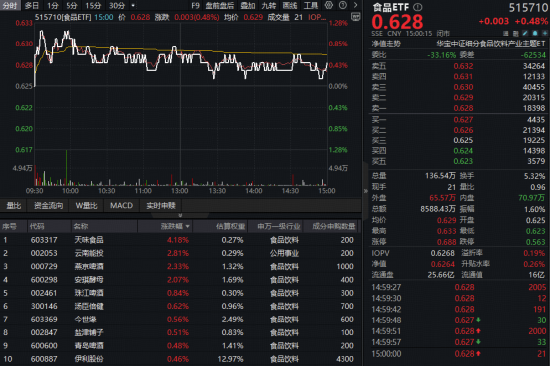
Core Viewpoint - The food and beverage sector continues to rise, with the Food ETF (515710) showing a positive trend and notable gains in key stocks like Tianwei Food and Guizhou Moutai [1][3]. Group 1: Market Performance - The Food ETF (515710) experienced a daily increase of 0.48%, marking its fourth consecutive day of gains, with an intraday peak increase of 1.28% [1]. - Major consumer goods stocks led the gains, with Tianwei Food rising by 4.18%, and other companies like Yunnan Energy Investment and Yanjing Beer also showing significant increases [1][2]. Group 2: Key Holdings - Guizhou Moutai is the largest holding in the Food ETF (515710), accounting for 14.89% of the fund's net asset value as of Q3 2025 [3][4]. - Other significant holdings include Wuliangye and Yili Group, with respective holdings of 14.65% and 12.49% [4]. Group 3: Valuation Insights - The food and beverage sector is currently at a historical low valuation, with the Food ETF's underlying index P/E ratio at 21.21, placing it in the 11.74% percentile over the past decade, indicating a favorable long-term investment opportunity [4][5]. - The liquor sector has undergone five years of adjustment, with current market sentiment improving as companies adjust their operational strategies [5][6]. Group 4: Future Outlook - Analysts suggest that the food and beverage sector is entering a potential recovery phase, with a focus on new consumption trends and low valuations [6]. - The Food ETF (515710) is recommended for investors looking to capitalize on core assets in the food and beverage sector, with a significant portion of its holdings in high-end liquor and dairy products [6].



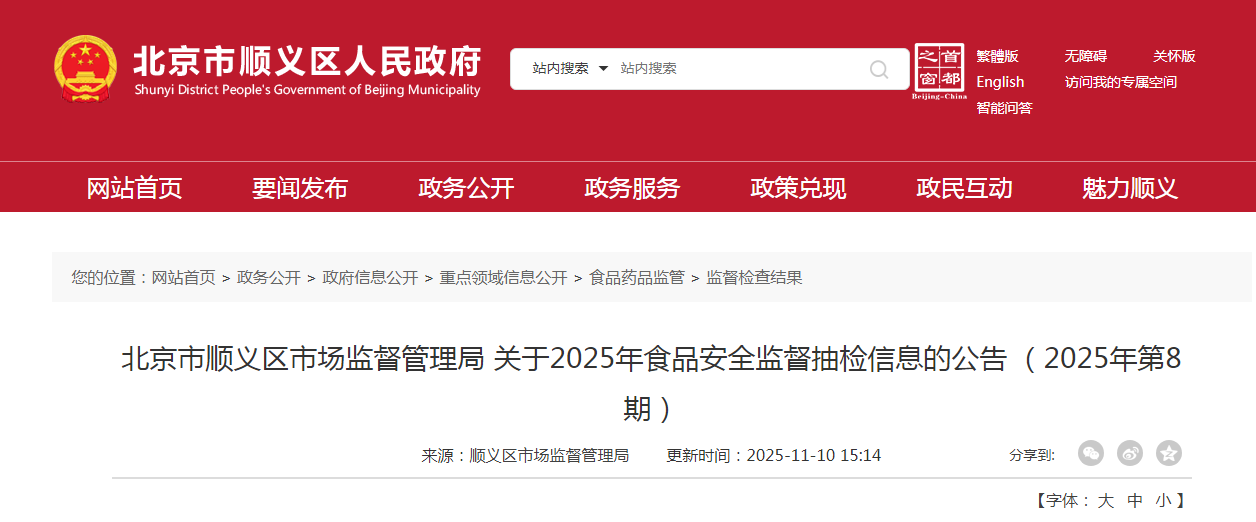
北京市顺义区市场监督管理局关于2025年食品安全监督抽检信息的公告 (2025年第8期)
Zhong Guo Zhi Liang Xin Wen Wang· 2025-11-12 08:46
Overall Situation - The announcement from the Shunyi District Market Supervision Administration indicates that all 279 samples from 15 categories of food products tested were compliant with national food safety standards [2]. Food Categories - Starch and starch products: 1 batch, all compliant [2] - Soy products: 3 batches, all compliant [2] - Convenience foods: 1 batch, all compliant [2] - Pastries: 41 batches, all compliant [2] - Alcoholic beverages: 38 batches, all compliant [2] - Frozen drinks: 9 batches, all compliant [2] - Grain processing products: 28 batches, all compliant [2] - Other foods: 36 batches, all compliant [2] - Meat products: 26 batches, all compliant [2] - Dairy products: 10 batches, all compliant [2] - Food additives: 11 batches, all compliant [2] - Sugar: 1 batch, all compliant [2] - Frozen foods: 19 batches, all compliant [2] - Seasonings: 41 batches, all compliant [2] - Beverages: 14 batches, all compliant [2]


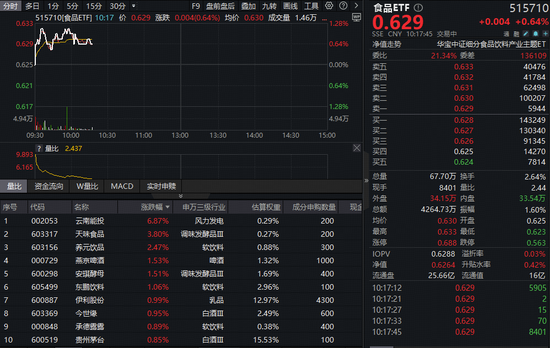
贵州白酒政策引爆行情!白酒、大众品携手上攻,食品ETF(515710)盘中上探1.28%!
Xin Lang Ji Jin· 2025-11-12 02:29
Group 1 - The food and beverage sector continues to rise, with the Food ETF (515710) showing a maximum intraday increase of 1.28% and currently up 0.64% [1] - Major consumer goods stocks are leading the gains, with notable performances from liquor brands such as Tianwei Food up over 3% and Yangyuan Beverage up over 2% [1] - Guizhou's government has introduced multiple consumption expansion measures related to liquor, aiming to boost production and consumption during peak holiday seasons [2][3] Group 2 - Analysts highlight that Guizhou's consumption expansion policy aims to deeply integrate liquor consumption with industrial upgrades and cultural promotion, rather than just short-term sales boosts [3] - The food and beverage sector is currently at a historical low valuation, with the Food ETF's underlying index PE ratio at 21.21 times, indicating a favorable long-term investment opportunity [3] - Future projections suggest that the liquor industry may see improvements in financial reports by 2026, with a gradual recovery in demand expected as policy impacts diminish [4] Group 3 - The Food ETF (515710) tracks the CSI segmented food and beverage industry index, with approximately 60% of its holdings in high-end liquor stocks and nearly 40% in other beverage and food segments [5] - Investors can also access core assets in the food and beverage sector through the Food ETF linked funds [5]


五粮液强调核心竞争力!食品ETF(515710)微涨0.4%!机构:食饮板块或迎底部回暖复苏
Xin Lang Ji Jin· 2025-11-12 02:08
Group 1 - The food ETF (515710) showed stable performance with a price increase of 0.4% and a trading volume of 19.56 million yuan as of 9:42 AM on November 12 [1] - Key stocks in the ETF included Tianwei Food, Yanjing Beer, and Yangyuan Beverage, with respective gains of 3.56%, 1.85%, and 1.06%. Conversely, stocks like Jiu Gui Jiu, Jin Hui Jiu, and New Dairy exhibited weaker performance, with declines of 1.53%, 1.04%, and 0.87% [1] - Wuliangye emphasized its core competitiveness as a leader in China's strong-aroma liquor sector, highlighting unique natural ecological environments, ancient microbial groups, and traditional brewing techniques [1] - Jiangsu Liquor Association set a target for the province's liquor industry to exceed 100 billion yuan in revenue by 2030, clarifying long-term development goals [1] Group 2 - The liquor industry is currently in a deep adjustment phase, with declining demand affecting manufacturers and slowing performance growth. Companies are proactively reducing supply to balance supply and demand [1] - Open Source Securities noted that the food and beverage sector is nearing a bottom, with most negative factors already released and policy impacts slowing down. Expectations for policy improvements may boost demand [1] - The main theme for the industry in 2026 is expected to be recovery from the bottom, with the pace of recovery linked to macroeconomic conditions. Consumer spending is anticipated to remain resilient, while business consumption may increase with economic activity [1] Group 3 - Huaxi Securities highlighted that the core of the liquor industry lies in its social attributes and price recognition, relying on high gross margins (generally over 70%) and brand building [2] - The industry differentiates itself by price, with high-end liquor catering to identity recognition, while mid-range and real estate liquor achieve growth through structural upgrades [2] - The essence of channel management is maintaining a balance between volume and price, ensuring channel profitability and price stability [2] - The top ten weighted stocks in the food ETF index include Kweichow Moutai, Wuliangye, Yili, Luzhou Laojiao, Shanxi Fenjiu, Haitian Flavoring, Dongpeng Beverage, Yanghe, Jinshiyuan, and Gujing Gongjiu [2]
燕京啤酒涨2.01%,成交额4458.02万元,主力资金净流入328.53万元
Xin Lang Zheng Quan· 2025-11-12 01:45
Core Viewpoint - Yanjing Beer has shown a positive stock performance with a 2.01% increase on November 12, 2023, and a year-to-date stock price increase of 7.09% [1] Financial Performance - For the period from January to September 2025, Yanjing Beer reported a revenue of 13.433 billion yuan, representing a year-on-year growth of 4.57%, and a net profit attributable to shareholders of 1.770 billion yuan, which is a 37.45% increase compared to the previous year [2] Shareholder Information - As of November 10, 2023, the number of shareholders for Yanjing Beer decreased by 7.96% to 52,100, while the average circulating shares per person increased by 8.65% to 48,206 shares [2] Dividend Distribution - Yanjing Beer has cumulatively distributed 4.509 billion yuan in dividends since its A-share listing, with 1.043 billion yuan distributed over the past three years [2] Institutional Holdings - As of September 30, 2025, the second-largest circulating shareholder is Hong Kong Central Clearing Limited, holding 74.5763 million shares, a decrease of 21.0157 million shares from the previous period [2]
2025年第45周:酒行业周度市场观察
艾瑞咨询· 2025-11-12 00:06
Group 1: Industry Environment - The white liquor industry is experiencing a slowdown in performance and increasing differentiation, with 19 listed companies reporting a 7% year-on-year decline in total revenue by Q3 2025, while only Moutai and Fenjiu maintained growth [2] - The industry is entering a phase of volume competition, with intensified price wars and channel battles increasing cost pressures, particularly for small and medium-sized enterprises [2] - Future competitiveness will favor companies that actively transform and focus on long-term value, as the industry shifts towards rational development [2] Group 2: Consumer Trends - Young consumers are driving a trend towards mixed drinks, such as white liquor with cola, leading to a demand for lower alcohol content products [3] - Companies are responding with innovative products, including cross-industry collaborations like the "yellow wine + beer" from Guyue Longshan and Carlsberg's low-sugar sparkling fruit wine [3] - The industry is debating the definition of low-alcohol liquor, with a push towards maximizing flavor rather than adhering to strict alcohol content classifications [3] Group 3: Regional Enterprises - Regional liquor companies face significant challenges, including high inventory pressure and price inversions, as national brands dominate the market [4] - Strategies for regional companies include becoming provincial leaders, focusing on core markets, or considering exit strategies [4] - Key pathways for success involve brand premiumization, product structure optimization, and deepening distribution channels [4] Group 4: Policy and Development - The Ministry of Industry and Information Technology has included liquor production in the "historical classic industries," promoting cultural heritage and high-quality development [5] - Goals include cultivating over 50 billion-level leading enterprises and creating trillion-level industry clusters by 2028 [5] - The focus is on integrating culture, technology, and ecology to facilitate the transformation and upgrading of the liquor industry [5] Group 5: Brand Dynamics - Yanjing Beer reported a net profit of 1.77 billion yuan for Q3 2025, a 37.45% increase year-on-year, driven by a high-end strategy and cross-industry collaborations [15] - Luzhou Laojiao achieved revenue of 23.127 billion yuan and net profit of 10.762 billion yuan in the first three quarters of 2025, demonstrating resilience amid industry challenges [16] - Wuliangye's revenue reached 60.945 billion yuan with a net profit of 21.511 billion yuan, as the company adjusted its strategy to meet changing consumer demands [18] Group 6: Innovation and Sustainability - The first sustainable development report for the core sauce-flavored liquor production area was released, focusing on ecological protection and circular economy [9] - Moutai introduced a "date selection" service for consumers, enhancing personalization and emotional value in product offerings [23] - Niulanshan Chenxiang achieved significant sales milestones, selling 6 billion bottles over ten years, supported by strong brand recognition and market positioning [24]


永顺泰:公司已与百威啤酒等知名啤酒制造商有超过20年的合作历史
Zheng Quan Ri Bao Wang· 2025-11-11 14:10
Core Viewpoint - The company is progressing with the construction of a new specialized malt production line with a capacity of 50,000 tons per year, expected to be completed by the end of 2025, and emphasizes its strong technical capabilities and market influence to meet diverse customer demands in the brewing industry [1] Group 1: Project Development - The specialized malt production line project is planned to be completed by the end of 2025 [1] - The company encourages stakeholders to monitor its periodic reports for updates on the project's progress [1] Group 2: Market Position and Customer Relationships - The company has over 20 years of collaboration with major breweries such as Budweiser, Carlsberg, Heineken, China Resources Snow Beer, Tsingtao Brewery, Yanjing Beer, and Zhujiang Beer [1] - The company exports its products to various regions including Southeast Asia, Central and South America, Japan, South Korea, and Africa [1] Group 3: Product Flexibility and Customization - The company possesses deep technical expertise and market influence, allowing it to produce malt products that meet the quality standards of diverse brewing customers [1] - The specialized malt production line is designed to adapt to different flavor preparation needs, showcasing the company's ability to customize products based on downstream demand [1]