
诺诚健华

Search documents
诺诚健华:新型TYK2抑制剂Soficitinib治疗结节性痒疹的全球II期临床试验完成首例患者给药
Zhong Zheng Wang· 2025-11-28 05:24
Core Insights - Nocera Biopharma announced the completion of the first patient dosing in the global Phase II clinical trial of its novel TYK2 inhibitor Soficitinib (ICP-332) for the treatment of nodular prurigo [1][2] - Soficitinib is a highly selective oral TYK2 inhibitor developed for various T-cell related autoimmune diseases, with a strong focus on dermatological conditions such as atopic dermatitis, vitiligo, nodular prurigo, and urticaria [1] - The global market for nodular prurigo treatment is projected to grow from $2 billion in 2024 to $3 billion by 2034, with approximately 10 million patients affected worldwide [1] Company Developments - Nocera Biopharma's product pipeline covers ten autoimmune diseases, with a significant emphasis on dermatological diseases [2] - Soficitinib has demonstrated excellent efficacy and safety in Phase II clinical studies for moderate to severe atopic dermatitis, and the related research was featured in a prominent oral presentation at the American Academy of Dermatology annual meeting [2] - The company is accelerating global clinical development to provide innovative treatment solutions for more autoimmune patients [2]

诺诚健华宣布新型TYK2抑制剂Soficitinib治疗结节性痒疹的全球II期临床试验完成首例患者给药
Zheng Quan Shi Bao Wang· 2025-11-28 03:09
Core Insights - Nocare Biopharma announced the completion of the first patient dosing in the global Phase II clinical trial of its novel TYK2 inhibitor, Soficitinib, for the treatment of nodular prurigo [1][2] - Soficitinib is designed to treat various T-cell related autoimmune diseases, with a strong focus on dermatological conditions such as atopic dermatitis, vitiligo, nodular prurigo, and urticaria [1] - The global market for nodular prurigo treatment is projected to grow from $2 billion in 2024 to $3 billion by 2034, with approximately 10 million patients affected worldwide [1] Company Developments - Nocare Biopharma's product pipeline covers ten autoimmune diseases, with a significant emphasis on dermatological diseases [2] - Soficitinib has demonstrated excellent efficacy and safety in Phase II clinical studies for moderate to severe atopic dermatitis, and the research was selected for a prominent oral presentation at the American Academy of Dermatology annual meeting [2] - The company is accelerating its global clinical development to provide innovative treatment solutions for more autoimmune patients [2]
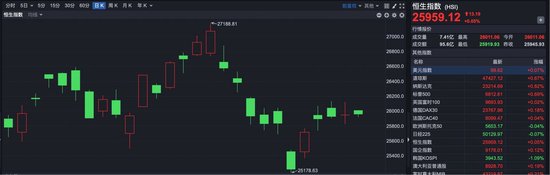
港股小幅高开 阿维塔递交港股上市申请
Mei Ri Jing Ji Xin Wen· 2025-11-28 03:04
Core Viewpoint - The Hong Kong stock market opened slightly higher on November 28, with the Hang Seng Index at 25,959 points, reflecting a 0.05% increase [1]. Company Developments - Avita Technology (Chongqing) Co., Ltd. submitted its listing application to the Hong Kong Stock Exchange on the evening of November 27, with CITIC Securities and CICC as joint sponsors. The funds raised will primarily be used for product development, platform and technology development, brand building, sales service network construction, and operational funding to enhance core competitiveness [5]. - Avita, established in 2018, aims to create a high-end smart electric vehicle brand with independent technology and international presence. It has received support from Changan Automobile, Huawei, and CATL in various fields [5]. - From 2021 to 2024, Avita completed four rounds of financing, totaling approximately 19 billion yuan, with a valuation of around 30 billion yuan [5]. Market Trends - The Hang Seng Technology Index reported a 0.29% increase, reaching 5,613 points [3]. - The new consumption sector continues to strengthen, with Pop Mart rising over 2% and Dongfang Zhenxuan increasing over 4% [5]. - Other sectors showed positive movement, including tech stocks like Bilibili and Alibaba, which both opened higher, and innovative drug concepts with companies like Innovent Biologics rising over 1% [5]. - Gold stocks also performed well, with Shandong Gold and Lingbao Gold both increasing over 2% [5]. - The semiconductor sector was active, with companies like SMIC and Huahong Semiconductor both rising over 1% [5]. - The new energy vehicle sector showed mixed results, with NIO rising over 1% while Seres fell over 6% [5]. Market Outlook - Brokerage firms suggest that the Hong Kong stock market will maintain a volatile pattern, advising investors to be patient and focus on whether the Hang Seng Index can break through key moving average resistance with volume [5]. - Analysts indicate that the market is currently driven by sentiment, with risk appetite not fully restored. Although the index has rebounded, it relies heavily on a few large-cap stocks, while small and mid-cap stocks remain weak [5]. - In an uncertain environment, sectors such as energy, telecommunications, public utilities, and state-owned banks are viewed as "ballast" for funds due to their low valuations and high dividends [5].

InnoCare Announces First Patient Dosed in the Global Phase II Clinical Trial of TYK2 Inhibitor Soficitinib for Treatment of Prurigo Nodularis
Globenewswire· 2025-11-28 01:55
Core Viewpoint - InnoCare Pharma has initiated a global Phase II clinical trial for its TYK2 inhibitor, Soficitinib, targeting prurigo nodularis in China, marking a significant step in its development pipeline for autoimmune diseases [1][5]. Company Overview - InnoCare Pharma is a biopharmaceutical company focused on developing treatments for cancer and autoimmune diseases, with a commitment to addressing unmet medical needs both in China and globally [6]. Product Development - Soficitinib is a selective TYK2 inhibitor aimed at treating various T-cell related autoimmune disorders, including prurigo nodularis, atopic dermatitis, and vitiligo, among others [2][5]. - The drug works by blocking cytokine signaling pathways associated with itching and inflammation, thereby alleviating symptoms of prurigo nodularis [3]. Market Potential - There are approximately 10 million patients suffering from prurigo nodularis globally, with the market for this condition valued at US$2 billion in 2024 and projected to grow to US$3 billion by 2034 [4].

诺诚健华新型TYK2抑制剂Soficitinib治疗结节性痒疹的全球II期临床试验完成首例患者给药
Ge Long Hui· 2025-11-28 00:37
Core Viewpoint - The company announced the completion of the first patient dosing in a global Phase II clinical trial for its novel TYK2 inhibitor Soficitinib (ICP-332) aimed at treating nodular prurigo [1] Group 1: Product Development - Soficitinib is a highly efficient and selective oral TYK2 inhibitor developed by the company [1] - The drug is being developed for various T-cell related autoimmune diseases, with a strong focus on dermatological indications [1] Group 2: Market Potential - The current development strategy includes a deep focus on a wide range of skin-related conditions, including atopic dermatitis, vitiligo, nodular prurigo, and urticaria [1]
诺诚健华涨2.03%,成交额3374.94万元,主力资金净流入28.46万元
Xin Lang Cai Jing· 2025-11-27 02:15
Core Viewpoint - Nocera Biopharma has seen significant stock price growth this year, with a 112.95% increase, indicating strong market performance and investor interest [2]. Company Overview - Nocera Biopharma, established on November 3, 2015, and listed on September 21, 2022, is based in Beijing and focuses on the research, production, and commercialization of biopharmaceuticals, particularly in oncology and autoimmune diseases [2]. - The company's revenue composition includes 87.67% from drug sales, 12.04% from technology licensing, and 0.15% each from testing and R&D services [2]. Stock Performance - As of November 27, the stock price reached 26.15 CNY per share, with a market capitalization of 46.145 billion CNY [1]. - The stock has experienced a recent increase of 8.19% over the last five trading days and a 14.69% increase over the last 20 days, although it has declined by 8.28% over the past 60 days [2]. Financial Performance - For the period from January to September 2025, Nocera Biopharma reported a revenue of 1.115 billion CNY, reflecting a year-on-year growth of 59.85%, while the net profit attributable to shareholders was -64.4149 million CNY, showing a 76.61% increase in losses compared to the previous period [3]. - As of September 30, 2025, the number of shareholders increased by 8.66% to 16,500, indicating growing investor interest [3]. Institutional Holdings - As of September 30, 2025, notable institutional shareholders include: - Fuguo Precision Medical Flexible Allocation Mixed A, holding 12.1549 million shares, down 427,100 shares from the previous period [3]. - Wanjia Preferred, a new shareholder with 10 million shares [3]. - Ping An Medical Health Mixed A, also a new shareholder with 8.6266 million shares [3].
科创板公司研发投入保持高位
Jing Ji Ri Bao· 2025-11-26 22:36
Core Insights - The article highlights the strong R&D investment and growth characteristics of companies listed on the STAR Market, with a focus on "hard technology" sectors such as integrated circuits and artificial intelligence [1][2][3] Group 1: R&D Investment and Financial Performance - In the first three quarters, STAR Market companies reported a total R&D investment of 119.745 billion yuan, which is 2.4 times the net profit of the sector, with a median R&D intensity of 12.4%, significantly leading other A-share sectors [1] - The 35 unprofitable companies in the STAR Growth Layer showed a remarkable performance, with a 39% year-on-year revenue growth and a 65% reduction in net profit losses, while maintaining a median R&D intensity of 44.3% [1] - Overall, STAR Market companies achieved an operating revenue of 1,105.011 billion yuan, a year-on-year increase of 7.9%, and a net profit of 49.268 billion yuan, up 8.9% year-on-year [2] Group 2: Policy and Market Environment - The STAR Market has established a unique financing channel for innovative companies by allowing unprofitable and red-chip enterprises to list, supported by continuous regulatory improvements [2] - The introduction of the "1+6" policy and the expansion of the fifth listing standard to include cutting-edge fields like artificial intelligence and commercial aerospace have further enhanced the market's appeal [2] - The STAR Market is expected to nurture more world-class technology companies, with a focus on fostering "hard technology" leaders as part of China's journey towards high-level technological self-reliance [3] Group 3: Sector-Specific Growth - The artificial intelligence sector has emerged as a new growth pillar, with companies like Cambrian and Haiguang Information reporting revenue increases of nearly 24 times and 55%, respectively [3] - Companies in the communication and supporting business segments, such as Shijia Photon and Shengyi Electronics, have also seen significant profit growth, indicating a surge in demand for AI-related technologies [3]
高盛闭门会-中国创新药行业调研,研发热点2026展望
Goldman Sachs· 2025-11-26 14:15
Investment Rating - The report indicates a positive outlook for the Chinese biopharmaceutical industry, highlighting significant advancements in drug development efficiency and global collaboration strategies. Core Insights - Chinese biopharmaceutical companies have significantly shortened drug development cycles through streamlined decision-making processes and enhanced research capabilities, with some drugs taking only four years from clinical trials to NDA acceptance [1][2] - External licensing has become a crucial strategy for Chinese companies to globalize, with many firms actively building business development teams to foster collaborations with large multinational pharmaceutical companies [1][5] - There is a strong interest in emerging drug modalities such as ADCs, small nucleic acid drugs, and in vivo CAR-T therapies, which are becoming integral parts of the R&D pipeline and are expected to drive next-generation product innovation [1][6] - Global investors are particularly focused on weight loss products and Lipoprotein A (Lp(a)) projects, indicating substantial growth potential in cardiovascular disease-related products [1][4] Summary by Sections Drug Development Efficiency - Chinese companies like Heng Rui have demonstrated impressive development timelines, with processes from GLP E Tox to IND taking only six months and clinical trials to NDA acceptance completed in four years [2] Globalization Strategies - Chinese biopharmaceutical firms are addressing globalization challenges by collaborating with multinational pharmaceutical companies, moving from traditional licensing to co-development models [5] Emerging Drug Modalities - The report emphasizes the enthusiasm of Chinese companies in exploring new drug forms, particularly ADCs and small nucleic acid drugs, which are becoming key components of their R&D pipelines [2][6] Market Focus Areas - Investors are keenly interested in weight loss products and Lp(a) projects, with significant attention on cardiovascular disease collaborations, indicating a robust growth trajectory in these areas [4] Company-Specific Developments - He Yu Pharmaceutical's Pimiatinib is projected to capture a 25% global market share in key indications, with peak sales potentially reaching $1.6 billion [7] - Kangnuo's Sluqi monoclonal antibody is expected to exceed RMB 5 billion in peak sales by 2035, with promising prospects in multiple indications [10] - Hanlin Pharmaceutical is recognized for its high-margin biosimilar business, supporting its innovative pipeline, with the PD-L1 ADC HLX43 expected to achieve peak sales of $3.8 billion [11][12]
诺诚健华涨2.14%,成交额3369.35万元,主力资金净流入361.52万元
Xin Lang Cai Jing· 2025-11-26 02:01
Core Viewpoint - Nocera Biopharma has seen a significant increase in stock price and trading activity, indicating positive market sentiment and potential growth in the biopharmaceutical sector [1][2]. Company Overview - Nocera Biopharma, established on November 3, 2015, and listed on September 21, 2022, is based in Beijing and focuses on the research, production, and commercialization of biopharmaceuticals, particularly in oncology and autoimmune diseases [2]. - The company's revenue composition includes 87.67% from drug sales, 12.04% from technology licensing, and minimal contributions from testing and R&D services [2]. Stock Performance - The stock price of Nocera Biopharma has increased by 110.02% year-to-date, with a recent 6.66% rise over the last five trading days and a 12.28% increase over the last 20 days, although it has seen a 10.76% decline over the past 60 days [2]. - As of November 26, the stock was trading at 25.79 CNY per share, with a market capitalization of 45.51 billion CNY [1]. Financial Performance - For the period from January to September 2025, Nocera Biopharma reported a revenue of 1.115 billion CNY, reflecting a year-on-year growth of 59.85%, while the net profit attributable to shareholders was a loss of 64.41 million CNY, an improvement of 76.61% compared to the previous period [3]. Shareholder Information - As of September 30, 2025, the number of shareholders increased to 16,500, with no change in the average number of circulating shares per person [3]. - Notable changes in institutional holdings include a decrease in shares held by some funds and the entry of new shareholders, indicating a shift in investor interest [3].
申万宏源研究晨会报告-20251125
Shenwan Hongyuan Securities· 2025-11-25 00:45
Core Insights - The report highlights Qingmu Technology (青木科技) as a leading expert in full-domain operation services and brand incubation, driven by data and technology [2][4][14] - The company has established a high-synergy business model encompassing operation services, brand incubation, and technical solutions, serving well-known brands across various sectors [2][4][14] - Financial projections indicate significant revenue growth, with expected revenues of 15.1 billion, 19.0 billion, and 23.4 billion yuan for 2025 to 2027, representing year-on-year growth rates of 30.5%, 26.5%, and 23.0% respectively [4][14] Company Overview - Qingmu Technology was founded in 2009 and has focused on e-commerce operation since 2011, building a comprehensive service model that includes operation, brand incubation, and technology solutions [2][14] - The company has a stable ownership structure, with founders holding 39% of the shares, and a management team with over ten years of industry experience [2][14] - Revenue for 2024 and the first half of 2025 is projected at 1.15 billion and 670 million yuan, with year-on-year growth rates of 19.2% and 22.75% respectively [2][14] Competitive Advantages - Qingmu Technology's competitive edge lies in its data, technology, and brand matrix, which collectively enhance its operational value [3][4][14] - The data layer includes services across major platforms like Tmall, JD.com, Douyin, and Xiaohongshu, allowing the company to accumulate extensive user behavior and transaction data [3][14] - The technology layer features proprietary systems such as the Qingling AI platform and CRM, which streamline operations and reduce costs [3][14] Business Model and Growth Strategy - The company is expanding its service model from a single service fee to a combination of service fees, distribution price differences, and equity returns, thus sharing in brand growth [4][14] - Qingmu Technology is diversifying its product categories beyond apparel to include trendy toys, beauty products, health consumer goods, and pet food, enhancing its growth potential [4][14] - The company aims to maintain its status as a top service provider on platforms like Tmall and Douyin while increasing its international operations, particularly in Southeast Asia [4][14] Financial Projections - The report forecasts a steady increase in net profit, with expected figures of 1.31 billion, 1.85 billion, and 2.59 billion yuan for 2025 to 2027, reflecting growth rates of 45.2%, 40.4%, and 40.4% respectively [4][14] - The projected price-to-earnings (PE) ratios for the same period are 50, 35, and 25 times, indicating a favorable valuation outlook [4][14]
