奈雪的茶

Search documents
港股评级汇总:海通国际维持心泰医疗优于大市评级
Xin Lang Cai Jing· 2025-10-16 07:54
Group 1: Heart Disease Medical Devices - Haitong International maintains an "outperform" rating for Xintai Medical, with a target price of HKD 28.94, highlighting its leadership in congenital heart disease intervention devices and a projected revenue growth of 32.4% year-on-year for H1 2025 [1] Group 2: Express Delivery Services - CITIC Securities maintains a "buy" rating for Jitu Express, noting a 23.1% year-on-year increase in parcel volume in Q3, with Southeast Asia's growth rate reaching 78.7%, driven by cost and efficiency advantages [2] - Shenwan Hongyuan also maintains an "accumulate" rating for Jitu Express, reporting a market share increase to 32.8% and a recovery in domestic express delivery prices, despite a downward revision in profit forecasts [3] Group 3: Healthcare and Medical Services - CITIC Jiantou maintains a "buy" rating for China Resources Medical, indicating that while H1 2025 performance may be pressured by declining average medical insurance fees, the company holds a solid regional leadership position [4] - CITIC Jiantou also maintains a "buy" rating for Weitai Medical, projecting a 63.1% year-on-year revenue growth for H1 2025, with significant narrowing of losses and potential for breakeven by year-end [5] Group 4: Consumer Goods and Retail - Guosen Securities maintains an "outperform" rating for Shangmei Co., with a target price of HKD 120.9, emphasizing strong growth in net profit at a compound annual growth rate of 130% from 2022 to 2024 [6] - Huaxin Securities maintains an "accumulate" rating for Nayuki Tea, benefiting from demand catalyzed by Meituan's delivery subsidies and seasonal effects, with improved profitability through product innovation [7] - Huaxin Securities also maintains a "buy" rating for Wugu Mofang, reporting a 14% revenue growth and an 18% net profit increase for H1 2025, driven by strong performance in offline channels [8] Group 5: Food and Beverage - Guangda Securities maintains an "accumulate" rating for Xiaocaiyuan, noting its position as a leading casual dining chain with a customer price range of HKD 50-70, and plans to expand to 1,000 stores by the end of 2026 [10] - Xibu Securities initiates coverage on China Resources Beverages with an "accumulate" rating and a target price of HKD 15, highlighting a market share of 32.7% and improvements in gross margin through increased self-production [11]
手握200亿基金,寻找想打造品类第一的创业者
Sou Hu Cai Jing· 2025-10-16 06:33
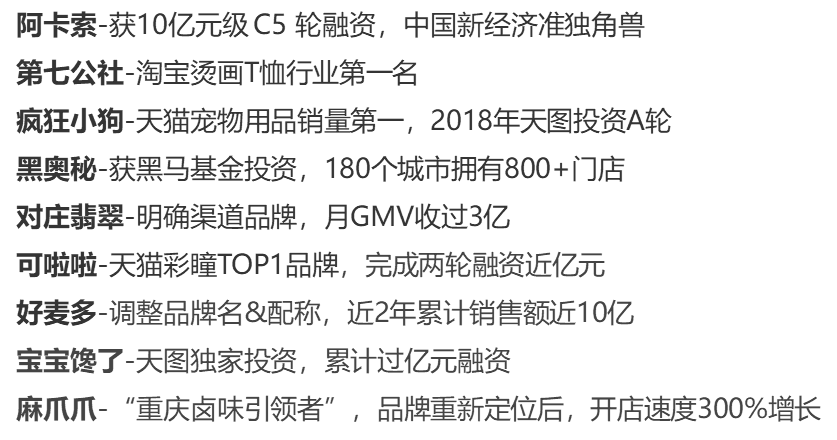
Group 1 - TianTu Capital became the first Chinese VC to be listed on the Hong Kong stock market on October 6, 2023, with founder Feng Weidong managing over 20 billion yuan in funds and investing in more than 200 companies [1] - Feng Weidong is recognized as a "scholar-type mentor" who provides both capital support and practical business guidance to entrepreneurs, significantly improving their operational metrics [1] - The "Feng Weidong Brand Entrepreneurship Laboratory" has conducted 15 sessions since 2015, empowering 274 companies and directly investing over 300 million yuan in Black Horse students [1] Group 2 - Feng Weidong has invested in several listed companies, including Zhou Hei Ya, Baiguoyuan, Nayuki Tea, Guoquan, and Feihe Dairy, emphasizing that true business success relies on the underlying logic of competition rather than fleeting trends [2] - The focus is on creating customers through brand development, leveraging new demands, channels, and technological possibilities to innovate new categories [2] - An upcoming event from November 20 to November 22 will feature Feng Weidong and Black Horse Chairman Niu Wenwen, discussing brand positioning, securing investment, and managing cash flow to help participants become category leaders [3]


新华网财经观察丨新茶饮的出海密码
Xin Hua Wang· 2025-10-16 03:31
Core Insights - The internationalization trend of Chinese new tea beverage brands is becoming increasingly prominent, with companies like Mixue Group and Bawang Chaji leading the way in overseas expansion [2][9]. Overseas Expansion: Seeking Growth and New Opportunities - New tea beverage brands are rapidly expanding globally, moving from Southeast Asia to regions like Europe, North America, and Oceania [3]. - Mixue Ice City opened its first store in Central Asia in Kazakhstan, achieving over 430,000 RMB in sales in the first month, and has expanded to 12 countries with over 4,700 overseas stores [5]. - Bawang Chaji opened its first U.S. store in Los Angeles, selling over 5,000 cups on the first day, and has expanded to 208 overseas stores by mid-year [7]. Market Potential and Growth Drivers - The Chinese new tea beverage market is projected to reach 354.72 billion RMB in 2024, with a year-on-year growth of 6.4%, indicating stable growth in the coming years [8]. - The overseas market presents new growth opportunities compared to domestic demand, which is a core driver for companies to "go global" [9]. Supply Chain as a Foundation for Success - A stable supply chain is crucial for tea beverage companies expanding overseas, with significant differences in standards between domestic and international markets [12]. - Mixue Group has established a comprehensive supply chain, including self-built factories and a global procurement network, to ensure product quality and freshness [14]. - Bawang Chaji has also focused on localizing its supply chain to meet the specific needs of different markets [15]. Localization Strategies for Market Penetration - Companies face challenges in adapting to different consumer preferences and regulatory environments in overseas markets [16]. - Successful brands conduct thorough market research to develop localized products, such as Mixue Ice City's chocolate ice cream lemon mint water tailored for Malaysian tastes [16]. - Bawang Chaji has implemented local partnership mechanisms and collaborated with local universities to integrate local innovation into product development [19]. Future Trends in Globalization - The expansion of tea beverage brands will be a long-term, phased process, with trends indicating a shift from quantity to quality in market management [22]. - There will be a growing emphasis on health and functionality in product offerings, with concepts like "low sugar" and "organic" gaining traction in international markets [23]. - Building a strong brand presence through content expression and community engagement will become increasingly important in overseas markets [24]. Digital Transformation and Market Opportunities - The integration of digital and intelligent solutions is reshaping the industry, with online ordering and supply chain traceability becoming standard practices [25]. - The global beverage market is expected to see significant growth in ready-to-drink products, particularly in regions like Southeast Asia and North America [26].


创业者不签个人担保对赌,就有机会重新开始
创业家· 2025-10-15 10:09
Core Viewpoint - The article emphasizes the importance of maintaining energy and opportunities for a comeback during challenging times, suggesting that entrepreneurs should avoid personal guarantees and unlimited liabilities to have a chance to restart their ventures [1]. Group 1: Event Overview - The "Black Horse Consumption Rise Selected Course" is scheduled from October 17 to 19, featuring renowned instructors from various successful companies, focusing on product innovation and brand expansion in the context of the stagnant market [3][10]. - The course aims to provide insights into how Japanese companies successfully transformed technology into user-perceived value, highlighting the importance of understanding consumer scenarios rather than just technical specifications [8][9]. Group 2: Key Themes and Insights - The article discusses the shift in consumer markets due to AI, emphasizing that future champions will be those who can perfectly integrate demand with algorithms [8]. - It highlights the need for companies to identify their market positioning and innovate products that can scale, particularly in the context of rising competition and market saturation [11][12]. Group 3: Course Content and Structure - The course will cover various topics, including how to leverage AI in consumer products, the importance of product innovation, and strategies for entering international markets [10][14]. - Notable speakers include industry experts who will share their experiences and strategies for product development, market entry, and brand storytelling [18][19]. Group 4: Target Audience - The course is aimed at founders and CEOs of consumer enterprises looking to break through growth ceilings, expand internationally, and innovate in response to product homogenization [23].

超1.7万家实体店,倒在2025上半年
商业洞察· 2025-10-15 09:24
Core Viewpoint - The retail industry in China is undergoing significant adjustments, with a notable increase in store closures across various sectors, including supermarkets, department stores, tea and coffee shops, and apparel brands, driven by changing consumer habits and market dynamics [2][3][7][9][12][19][24]. Supermarket Sector - In the first half of 2025, at least 720 supermarkets closed, including major brands like Yonghui and Walmart, due to factors such as operational strategy adjustments and lease expirations [4][6]. - The online retail growth rate of 8.5% significantly outpaces the 3.75% growth in offline retail, indicating a shift in consumer shopping habits towards online platforms [7]. - Traditional supermarkets face challenges from aging infrastructure and expiring leases, prompting a shift towards closing underperforming stores and enhancing online operations [8]. Department Store Sector - The department store retail total saw a 1.2% year-on-year increase in the first half of 2024, recovering from a 3% decline the previous year, but still lagging behind overall retail growth [9]. - At least 23 department stores and shopping centers closed in the first half of 2025, with closures attributed to outdated business models and lease expirations [10][11]. Tea and Coffee Sector - A total of 6,673 tea and coffee shops closed in the first half of 2025, reflecting a market reshuffle [12][15]. - Major brands like Xinyue and Nayuki saw significant store reductions, with Nayuki closing 159 stores, marking an 18.32% decrease in its total store count [15][18]. Apparel Sector - The apparel retail sector experienced a 3.1% year-on-year growth, which is below the overall retail growth rate of 5.0% [19]. - At least 4,563 apparel stores closed in the first half of 2025, with brands like Semir and H&M leading in closures due to high inventory levels and outdated brand appeal [20][23]. Cinema Sector - The cinema industry faced a high vacancy rate of 30-40%, leading to the closure of at least 38 cinemas in the first half of 2025 [25][26]. - Factors contributing to the cinema industry's struggles include high fixed costs, reliance on film content for revenue, and competition from streaming platforms [26]. Other Industries - Other sectors, such as the pet industry and home improvement, also experienced closures, indicating a broader trend of contraction across various retail formats [28].

蜜雪冰城3亿收购鲜啤福鹿家53%股权,现打鲜啤赛道再添巨头
Sou Hu Cai Jing· 2025-10-15 04:07
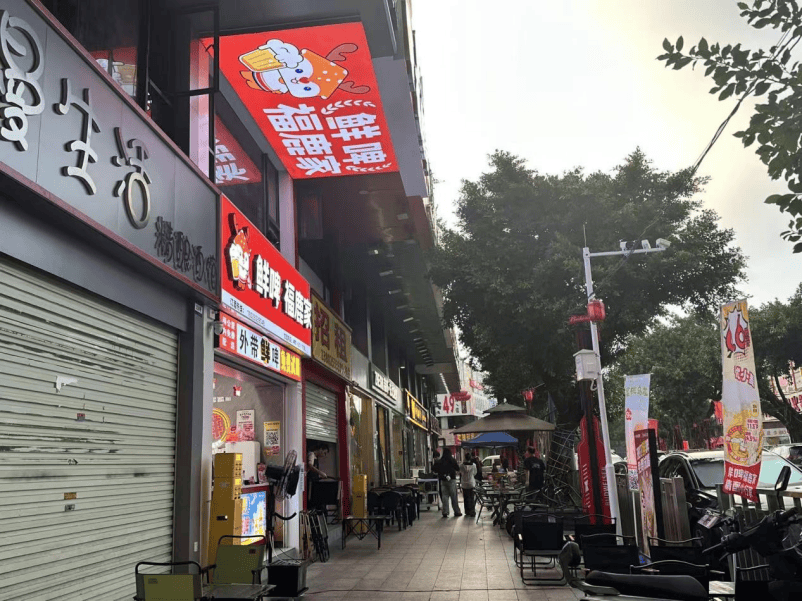
Core Insights - Recently, Mixue Ice City announced the acquisition of a 53% stake in Fresh Beer Fulu Family for nearly 300 million yuan, expanding its product offerings from tea and coffee to fresh beer [1][10] - The Fresh Beer Fulu Family stores feature a similar design to Mixue Ice City, emphasizing a vibrant red and cartoon style, and offer promotions like free tastings and no delivery fees within 2 kilometers [1][3] Company Overview - Fresh Beer Fulu Family operates small stores around 20 square meters, focusing on self-pickup and delivery, with a layout akin to tea shops [3] - The pricing strategy for Fresh Beer Fulu Family is competitive, with standard fresh beer priced at 5.9 yuan per 500ml and flavored beers ranging from 6.9 to 9.9 yuan [3][5] - The store offers approximately 16 SKUs of fresh beer, including standard, tea, milk, and fruit beers, along with various snacks priced between 1 to 15 yuan [5][9] Operational Model - Fresh Beer Fulu Family stores utilize a specialized cold storage for fresh beer, with a shelf life of only one month, emphasizing freshness [7][9] - The brand has rapidly expanded through a franchise model, with plans to exceed 1,000 stores by June 2025, having already opened over 400 new locations in just two months [9][10] Market Context - The craft beer market in China is experiencing growth, with the market size expected to reach 11 billion yuan by 2028, indicating a blue ocean opportunity for fresh beer and craft beer segments [19] - The industry is witnessing a shift in consumer preferences from industrial beer to fresh and flavorful craft options, aligning with Mixue Ice City's strategic entry into the fresh beer market [19] Competitive Landscape - The craft beer sector has seen significant investment and growth, with several brands like Helen's Tavern and Taishan Original Beer gaining traction [11][12][15] - Despite the presence of established brands, the fresh beer market remains fragmented, presenting opportunities for new entrants like Mixue Ice City to leverage their existing franchise networks for rapid expansion [19]

打造成功品牌的三个准则
创业家· 2025-10-14 10:09
Core Insights - The article emphasizes the importance of understanding consumer needs and effectively communicating brand value propositions to create successful brands [1] - It highlights the significance of product innovation and brand localization in the context of the evolving consumer landscape, particularly in the face of AI-driven changes [7][10] Group 1: Event Overview - The "Black Horse Consumption Rise Selected Course" will take place from October 17 to 19 in Shenzhen, focusing on product innovation and brand expansion strategies in the current market [5][9] - Notable speakers include industry leaders from renowned companies such as Sony, Uniqlo, and Muji, who will share insights on transforming technology into consumer-perceived value [9][10] Group 2: Key Themes - The article discusses how Japanese manufacturing success serves as a model for emerging markets, emphasizing the need to convert technology into tangible consumer benefits [7] - It outlines the role of AI in redefining consumer value and the necessity for companies to integrate demand with algorithmic capabilities to thrive in the future [7][10] Group 3: Practical Insights - The course will cover strategies for navigating the saturated market, focusing on identifying niche opportunities and leveraging AI for product innovation [10][12] - It will also address the importance of aligning supply chain capabilities with local market demands for successful brand globalization [11][16] Group 4: Target Audience - The course is aimed at founders and CEOs of consumer enterprises looking to break through growth ceilings, expand internationally, and innovate in product development [22]

85度C有点凉,急需一把火
Xin Lang Cai Jing· 2025-10-14 05:54
Core Viewpoint - The once-popular bakery brand 85°C is experiencing a wave of store closures, indicating a significant decline in brand popularity and market presence [2][5][9]. Group 1: Store Closures - Multiple 85°C stores have closed recently, including four in Hangzhou and others in cities like Shanghai, Jiangsu, Tianjin, and Guangdong, highlighting a broader trend of declining business [2][3][4]. - The company plans to close at least 40 unprofitable stores, but the actual number may exceed this estimate based on current closure rates [4][5]. - In 2023, 85°C faced significant losses, with approximately 200 million New Taiwan Dollars (around 46 million RMB) lost in the first half of the year, and projections suggest losses could exceed 400 million New Taiwan Dollars (over 93 million RMB) by 2025 if operational adjustments are not made [5][9]. Group 2: Brand History and Market Position - Founded in 2004 in Taiwan, 85°C initially thrived by offering affordable gourmet coffee and baked goods, quickly gaining market share and becoming a popular brand in mainland China after its 2007 entry [8][10]. - At its peak in 2018, 85°C had over 475 stores in mainland China, but has since struggled to maintain its market position amid increasing competition from local brands and new entrants [8][10][11]. - The brand's decline is attributed to the rise of competitors like Naixue's Tea and other local bakery brands that have captured consumer interest and market share [10][11]. Group 3: Industry Trends - The bakery industry in China is experiencing a dichotomy, with some established brands like 85°C and BreadTalk facing difficulties, while others like Haolilai and Bao Shifu are thriving [12][13]. - The overall market for baked goods is projected to grow, with estimates suggesting it could reach 859.56 billion RMB by 2029, indicating potential opportunities for brands that can adapt and innovate [14]. Group 4: Strategic Recommendations - 85°C should accelerate the closure of underperforming stores to reduce costs and improve efficiency [15]. - The company needs to focus on valuable markets, particularly in Eastern and Southern China, and consider exiting less profitable regions [16]. - Emphasis on product innovation and the introduction of new popular items is crucial for regaining consumer interest and market relevance [17][18].
蜜雪冰城卖啤酒,是降维打击?
Sou Hu Cai Jing· 2025-10-13 11:11
Core Viewpoint - The acquisition of a 53% stake in Fresh Beer Fulu Family by Mixue Ice City for nearly 300 million yuan signifies its entry into the fresh beer market, raising questions about the viability of fresh beer specialty stores as a business model [1][10]. Company Overview - Fresh Beer Fulu Family has a store layout similar to Mixue Ice City, featuring a bright red and cartoonish design, and offers promotions like free tastings and delivery within 2 kilometers [1][3]. - The store primarily focuses on self-pickup and takeaway, with a menu that includes various beer types priced competitively, such as standard fresh beer at 5.9 yuan per pound (500ml) and flavored beers ranging from 6.9 to 9.9 yuan [3][5]. Product Offering - The store offers around 16 SKUs of fresh beer, including standard, tea, milk, and fruit beers, along with snacks priced between 1 to 16 yuan [5][7]. - All fresh beer is stored in a dedicated cold room and has a shelf life of only one month, emphasizing the importance of freshness [7][10]. Expansion Strategy - Fresh Beer Fulu Family has adopted a rapid expansion strategy similar to that of Mixue Ice City, aiming to open over 1,000 stores by June 2025, with significant growth already achieved [8][9]. - The brand was established in July 2021 and has quickly gained traction through a franchise model, attracting franchisees with low initial investment and operational costs [8][9]. Market Context - The fresh beer market is seen as a blue ocean opportunity, with the overall craft beer market in China expected to reach 11 billion yuan by 2028, indicating significant growth potential [17]. - The trend of young consumers shifting from industrial beer to fresh and flavorful craft beer aligns with the strategic move by Mixue Ice City into this segment [17]. Competitive Landscape - The craft beer sector has seen the emergence of several strong brands, but no dominant player akin to Mixue Ice City in the tea beverage market, suggesting room for growth and competition [16][17]. - Other food and beverage brands are also exploring the integration of alcohol into their offerings, indicating a broader trend in the industry [12][13].
投资人,还在投什么样的消费企业?
创业家· 2025-10-13 09:58
Core Viewpoint - Investors are focusing on consumer enterprises that emphasize brand development, high standardization for rapid scalability, and defensive ecosystems against imitation [1][6][9] Group 1: Brand Development and Market Strategy - Successful consumer brands must have a flagship product that breaks through the market, allowing for the incubation of smaller brands [1] - High standardization enables rapid replication and the establishment of extensive chain stores [1] - Companies need to consider defensive strategies against imitation by innovating before launching products [1] Group 2: Learning from Japanese Consumer Brands - The success of Japanese brands in the 1980s was due to their ability to convert technology into user-perceived value, exemplified by Sony's Walkman and Uniqlo's comfortable basics [6][8] - Future consumer champions will be those that can perfectly integrate demand with algorithms, as seen in products like Plaud recording cards and Haivivi toys [6][9] Group 3: Course Offerings and Insights - The "Black Horse Consumption Rise Selected Course" will provide insights into how Japanese and Chinese consumer companies navigate the current market landscape [8][9] - Key speakers include industry leaders who will share their experiences in product innovation, brand development, and market strategies [8][9] Group 4: AI and Market Opportunities - The rise of AI is reshaping consumer markets, creating new opportunities for innovation in various sectors, including consumer electronics and emotional companionship [9][10] - Companies must identify their market positioning and leverage scalable innovative products to achieve brand differentiation [9][10] Group 5: Globalization and Localization - Chinese brands must adapt their supply chain capabilities to meet local market demands when expanding overseas, moving from a "copying domestic models" mindset to a localized approach [10][16] - Building trust with local consumers is crucial for Chinese brands in international markets, focusing on solving local problems rather than merely selling products [10][16]