新世界发展

Search documents
珠江畔穿越时光的明珠
Sou Hu Cai Jing· 2025-08-22 10:43
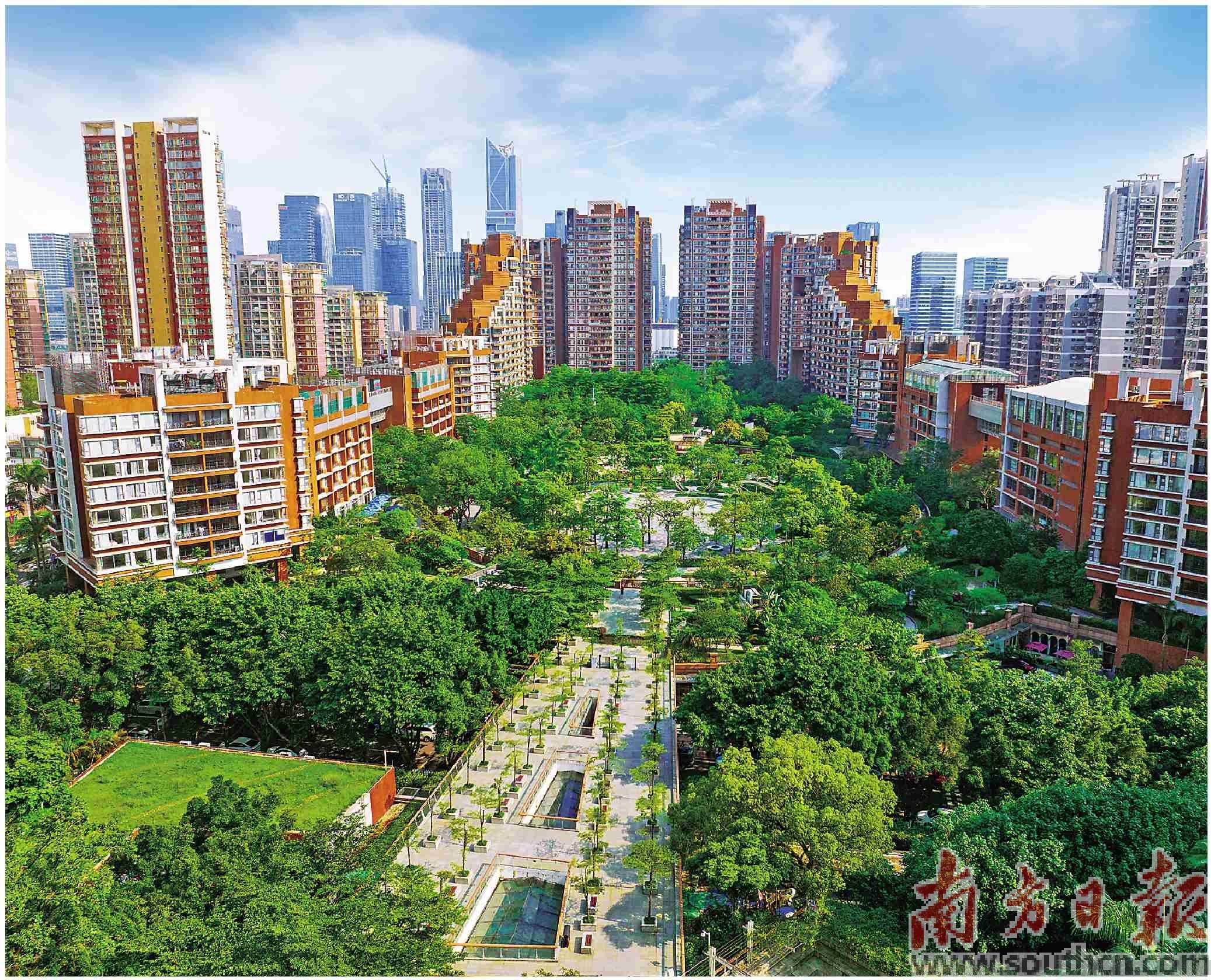
Core Insights - The development plan for the last undeveloped plot in Zhujiang New Town has been approved, with a total investment of 15.1 billion yuan, signaling a new growth opportunity for the area [2] - Kaixuan New World, as one of the earliest pioneers in Zhujiang New Town, has consistently grown alongside the city, becoming a preferred choice for high-net-worth individuals [2][4] Investment Highlights - Kaixuan New World has demonstrated resilience in property value, with significant sales achievements even during market downturns, such as a single-day sales record of over 1 billion yuan in 2010 [3][7] - The average price of properties in Kaixuan New World has increased from approximately 8,000 yuan per square meter in 2003 to over 260,000 yuan per square meter, reflecting a 372% increase over 20 years, outperforming the average growth of luxury properties in the city [7][9] Market Dynamics - The luxury real estate market in Zhujiang New Town has seen a 233.3% year-on-year increase in transactions above 20,000 yuan per square meter, with Kaixuan New World contributing over one-third of this volume [7] - High-net-worth individuals are increasingly valuing community and social networks, with Kaixuan New World providing an international atmosphere and access to exclusive amenities [5][6] Community and Lifestyle - Kaixuan New World has cultivated a cohesive international community, with approximately 30% of its members holding diplomatic passports, enhancing its appeal to affluent buyers [5][6] - The development offers seamless integration of lifestyle and amenities, fostering a strong sense of belonging and satisfaction among residents [6][9] Future Outlook - With the recent approval of the 15.1 billion yuan development plan, the functionality of Zhujiang New Town is expected to further upgrade, increasing the scarcity and desirability of Kaixuan New World [8] - The project is positioned as a "恒产" (perpetual asset), appealing to high-net-worth individuals seeking stable and appreciating investments in a changing market [8][9]

新世界发展(00017) - 有关由NWD FINANCE (BVI) LIMITED发行并由新世界...
2025-08-22 09:54
本公司(連同其附屬公司,統稱「本集團」)提述相關永續證券。本公告中所用 但未定義的詞彙應具有相關永續證券的條款和條件中所賦予的相關涵義。 根據相關永續證券的條款和條件第4(d)條條件,發行人已通知所有相關永續證券 持有人,其已選擇將原定於2025年9月7日分派支付日期支付的相關永續證券的分 派遞延。 香港交易及結算所有限公司及香港聯合交易所有限公司對本公告的內容概不負責, 對其準確性或完整性亦不發表任何聲明,並明確表示,概不對因本公告全部或任 何部份內容而產生或因倚賴該等內容而引致的任何損失承擔任何責任。 NWD FINANCE (BVI) LIMITED ( 於英屬維京群島註冊成立之有限公司 ) (「發行人」) 1,300,000,000美元有擔保優先永續資本證券 (股份代號: 5856) (「相關永續證券」) 並由 ( 於香港註冊成立之有限公司 ) (股份代號: 0017) (「本公司」) 擔保 相關永續證券的遞延分派 承董事會命 New World Development Company Limited (新世界發展有限公司) 聯席公司秘書 劉富强 許嘉慧 香港,2025 年 8 月 22 日 於本公告 ...
36岁、富八代,菲律宾最古老财团“掌舵人”
3 6 Ke· 2025-08-21 10:12
Core Insights - The article discusses the leadership transition within Ayala Corporation, highlighting the appointment of Marianna Ayala as Managing Director, alongside her brother Jaime Alfonso and cousin Jaime Urquijo as Executive Directors, marking a new generation at the helm of the company [1][3][5]. Group 1: Leadership and Strategy - Marianna Ayala has been tasked with revitalizing the company's extensive leasing asset portfolio, which includes aging malls, office buildings, and hotels [1][5]. - The new leadership aims to drive growth across various business segments, with a focus on real estate development and sustainability initiatives [3][5]. - Ayala Corporation plans to invest $2.5 billion over the next five years to expand its real estate operations across the Philippines [6]. Group 2: Real Estate Development - A significant part of the investment includes $1.5 billion for renovating retail properties, with plans to add 700,000 square meters of leasable space by 2028 [9][20]. - Ayala Land, the real estate arm, is set to upgrade four flagship malls with a budget of 18 billion pesos, aiming to enhance customer experience and attract visitors [16][20]. - The company is also focusing on developing technology parks and expanding its office space, with a projected increase of 26% in leasable office area by 2029 [23][22]. Group 3: Hotel and Tourism Expansion - Ayala Corporation is investing $500 million to double its hotel room inventory to 8,000 by 2030, capitalizing on the growing tourism sector [24][27]. - The hotel business is performing well, with a reported 11% revenue growth in 2024, and plans to introduce new local brands to enhance its offerings [27][28]. - The company is actively exploring partnerships with international hotel groups to further expand its hospitality portfolio [28]. Group 4: Financial Performance and Market Position - Ayala Corporation's core net profit for 2024 is projected at 45 billion pesos, with real estate and banking remaining the primary cash sources [30]. - The company faces challenges from competitors like SM Prime, which has a larger market share in shopping mall development [14][22]. - Despite a decline in stock price by nearly 20% over the past year, Ayala Land maintains a strong average office vacancy rate of 9% [22][30].

听说大量商场正在倒闭?
投中网· 2025-08-21 06:48
Core Viewpoint - The retail landscape in China is undergoing a profound transformation, with traditional shopping malls facing significant decline while new commercial formats and county-level shopping centers are emerging and thriving [30]. Group 1: Decline of Traditional Malls - Many shopping malls across China are experiencing closures, with at least 38 malls shutting down in 2024, 76% of which had been operating for over 10 years [11]. - Major cities like Shanghai and Beijing are witnessing negative growth in retail sales, with Shanghai's social retail sales declining by 3.1% and Beijing by 2.7% in 2024 [12]. - High-end malls, such as Beijing SKP, have seen significant drops in sales, with a 17% decrease reported in 2024 [13]. Group 2: Factors Contributing to Decline - Consumer downgrade is a primary factor, as middle and lower-income groups face reduced income and spending power, leading to a decline in high-end mall patronage [12][13]. - The rise of new retail formats, particularly instant retail, is capturing market share from traditional malls, with the instant retail market projected to exceed 2 trillion yuan by 2030 [14]. - Internal issues such as lack of differentiation and oversaturation of similar brands in malls contribute to their declining attractiveness [16]. Group 3: Emergence of New Commercial Formats - Despite the decline of traditional malls, some shopping centers are thriving by innovating and adapting to consumer preferences, with over 73% of shopping centers reporting sales growth in 2024 [22]. - Unique shopping experiences, such as those offered by high-end centers like Chengdu's Taikoo Li and Beijing's SKP, are attracting consumers [22]. - The rise of independent supermarkets and convenience stores is also reshaping the retail landscape, with convenience store sales increasing by 4.7% in 2024 [24]. Group 4: Growth of County-Level Commercial Centers - In contrast to urban malls, county-level commercial centers are proliferating, driven by rising consumer demand and urbanization, with retail sales in rural areas growing faster than in urban centers [28][29]. - Developers are increasingly investing in county-level commercial projects, recognizing the potential for growth in these markets [29]. - The shift in consumer behavior towards experiential and brand-oriented shopping is evident in the success of county-level malls that cater to these needs [30].

大量倒闭,商场正在死去?
创业邦· 2025-08-20 03:09
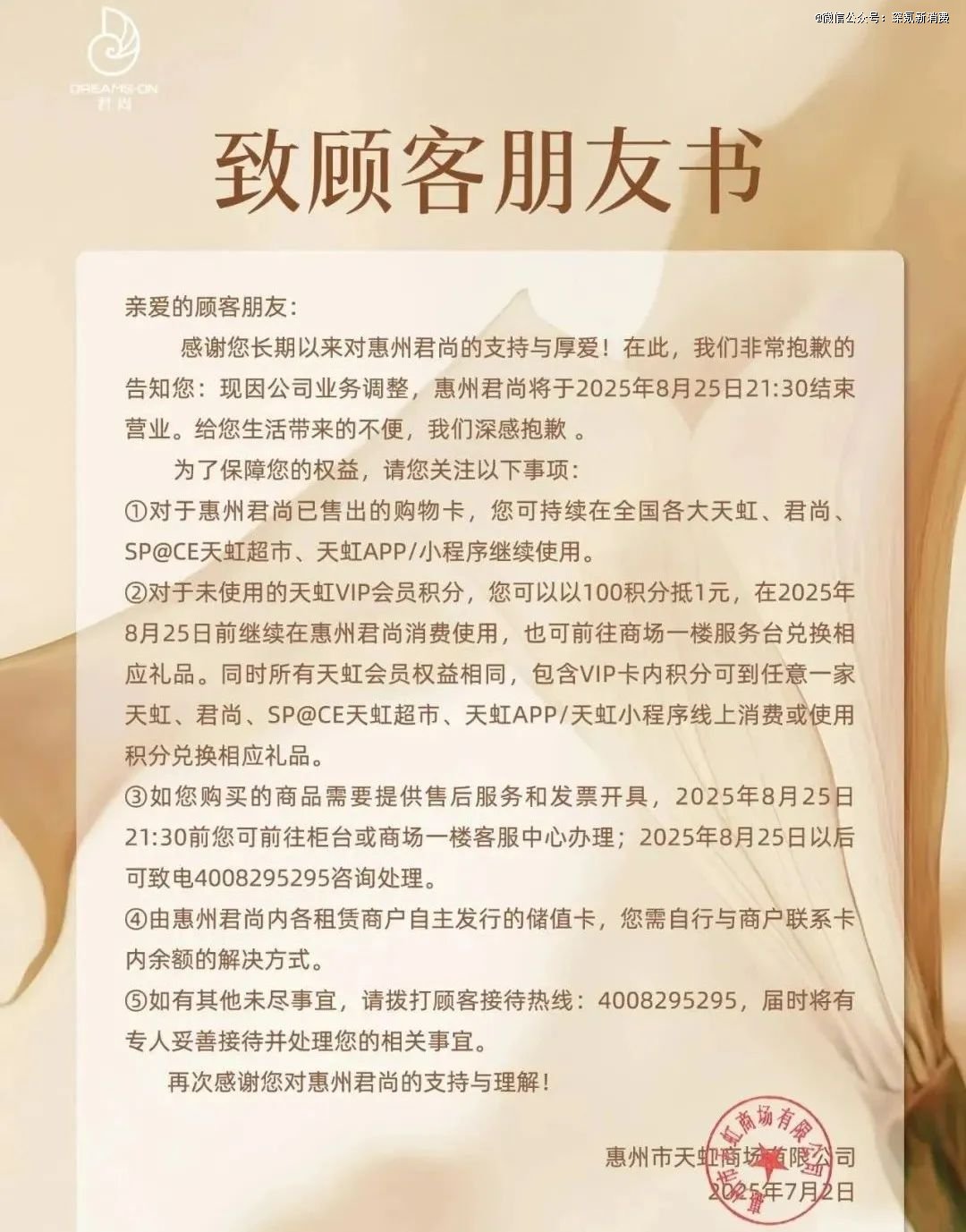
Core Viewpoint - The article discusses the decline of traditional shopping malls in China, highlighting the shift in consumer behavior and the rise of new retail formats, leading to a significant number of mall closures across the country [5][10][14]. Group 1: Decline of Shopping Malls - Huizhou Junshang Department Store will officially close in August, marking the end of a 20-year presence in the local market [5]. - Many shopping malls are experiencing a decline, with once-bustling areas now showing signs of emptiness, including vacant restaurants and stores seeking to transfer leases [7][8]. - In Shanghai, several large malls have closed in recent years, including Pacific Department Store and Meilong Town Isetan, indicating a broader trend of mall closures despite an increase in the number of malls [11][13]. Group 2: Factors Contributing to Decline - The decline is attributed to consumer downgrade, with high-end malls being the first victims in major cities. In 2024, national retail sales grew by 3.5%, while Shanghai saw a decline of 3.1% [14][16]. - Economic factors such as layoffs in tech and finance sectors have led to reduced consumer spending, further impacting high-end malls like Beijing SKP, which saw a 17% drop in sales in 2024 [16][17]. - The rise of new retail formats, particularly instant retail, is reshaping consumer preferences, with the market expected to exceed 2 trillion yuan by 2030 [18]. Group 3: Internal Challenges of Malls - Shopping malls face issues of attractiveness due to homogenization, with many offering similar brands and dining options, leading to a lack of consumer interest [20]. - The real estate sector has inflated the asset values of malls, resulting in a disconnect between perceived and actual value, contributing to the decline of many commercial properties [22]. Group 4: Market Segmentation and Transformation - Despite the decline of traditional malls, some shopping centers are thriving by innovating and adapting to consumer needs, with over 73% of shopping centers reporting sales growth in 2024 [28]. - The rise of independent supermarkets and convenience stores is also diverting consumer traffic away from traditional malls, with convenience store sales increasing by 4.7% in 2024 [33]. Group 5: Growth of County-Level Commercial Entities - In contrast to the decline in major cities, county-level commercial entities are on the rise, driven by urbanization and increased consumer spending in rural areas [36][38]. - The county-level retail market is expanding, with retail sales in rural areas growing faster than in urban centers, indicating a shift in consumer behavior and demand [39].
大量倒闭,商场正在死去?
Xin Lang Cai Jing· 2025-08-19 08:26
Core Viewpoint - The retail landscape is undergoing significant changes, with many traditional shopping malls facing closures due to declining consumer demand and the rise of new retail formats, leading to a bifurcation in the market between thriving and struggling commercial entities [5][6][19]. Group 1: Decline of Traditional Malls - Numerous shopping malls are closing, with at least 38 malls shutting down in 2024, 76% of which have been operating for over 10 years [6][7]. - Major cities like Shanghai are experiencing a negative growth rate in retail sales, with a 3.1% decline in 2025's first quarter [5][7]. - The decline is attributed to consumer downgrading, with retail sales in Shanghai decreasing by 3.1% and in Beijing by 2.7% in 2024 [7][8]. Group 2: Impact of E-commerce and New Retail - The rise of new retail formats, particularly instant retail, is significantly impacting traditional malls, with the instant retail market expected to exceed 2 trillion yuan by 2030 [12]. - Instant retail offers convenience and immediacy, which traditional malls struggle to compete against [11][12]. Group 3: Internal Challenges of Malls - Many malls suffer from a lack of differentiation, leading to consumer disinterest, as evidenced by over 6000 shopping centers with a total area of 5.6 billion square meters [14]. - The asset values of many commercial properties have been inflated, leading to a disconnect between perceived and actual value [14][16]. Group 4: Market Segmentation and Transformation - Despite the decline of traditional malls, some shopping centers are thriving by innovating and adapting to consumer preferences, with 73% reporting sales growth in 2024 [19][20]. - The rise of independent supermarkets and convenience stores is reshaping consumer behavior, with convenience store sales increasing by 4.7% in 2024 [22]. Group 5: Growth in County-Level Markets - In contrast to urban malls, county-level commercial entities are expanding, with retail sales in rural areas growing faster than in urban centers [23][24]. - The urbanization rate reached 67% in 2024, leading to increased consumer spending in county markets [23].
聚龙湾太古里一期计划年底开业;华润全国首座“万象里”亮相济南;蓝瓶咖啡将开北京首店
Sou Hu Cai Jing· 2025-08-18 06:46
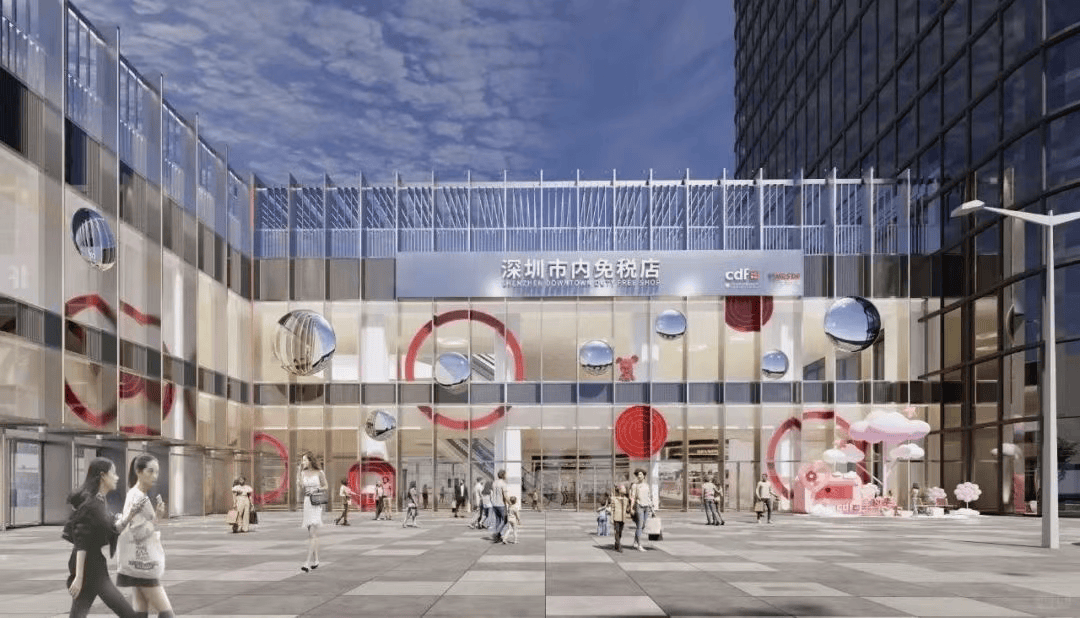
Group 1: Commercial Real Estate Trends - The commercial real estate sector is experiencing a divergence, with leading companies like China Resources Land reporting a rental income of 18.56 billion yuan, a 12.2% increase, while weaker firms like China Evergrande face liquidation [2] - The average rental rate for retail properties under CapitaLand China Trust has decreased by 2.7%, yet occupancy remains high at 96.9%, indicating a scarcity of quality properties [2] - The industry is entering a new phase of competition focused on asset quality and operational capabilities, highlighting a "Matthew Effect" where the strong continue to thrive [2] Group 2: Outlet Market Developments - There is a surge in outlet development, with projects like the 3 billion yuan Panda-themed outlet in Chengdu and a 4 billion yuan "Outlet + Amusement Park" complex in Dongguan [3] - Vipshop's outlet same-store sales have seen double-digit growth, and the company is initiating a 3.48 billion yuan REIT fundraising, reflecting strong market confidence in this sector [3] - The trend indicates a rising concentration in the industry, with large-scale, themed, and experiential projects becoming the norm, putting pressure on smaller, homogeneous traditional outlets [3] Group 3: Retail Sector Transformation - Traditional retail is undergoing significant changes, with companies like Bubugao reporting a net profit of over 200 million yuan, largely due to adopting the "Fat Donglai model" which involves closing inefficient stores and revamping potential ones [4] - The first "Fat Donglai self-reform" store by Metro in Beijing has opened, confirming the replicability of this model [4] - In contrast, brands lacking differentiation and user experience, such as GU and Tsutaya Bookstore, are facing closures, indicating a shift towards user experience-centric retail [4] Group 4: Duty-Free Market Growth - The opening of the first city duty-free stores in Shenzhen and Guangzhou marks a significant development in the duty-free economy, following the implementation of new policies [5] - South Korea's announcement of visa-free entry for Chinese group tourists is expected to boost duty-free shopping, with Lotte Duty-Free strengthening partnerships with Chinese travel agencies [5] - City duty-free stores are anticipated to become a new engine for high-end consumption, creating new shopping experiences through a combination of "duty-free + consumption + experience" [5] Group 5: Consumer Spending Trends - In July, the total retail sales of consumer goods grew by 3.7%, with online retail sales increasing by 9.2% from January to July, accounting for 24.9% of total retail sales [6][7] - Companies like 361 Degrees reported a 45% growth in e-commerce business, while Moutai's net profit increased by 8.89%, indicating resilience in high-end brands [6][7] - The restaurant sector saw only a 1.1% increase in revenue, suggesting consumers are becoming more cautious with service-related spending [6][7]


看似“宫斗”实则共赢,这些商圈是怎么靠竞合“套牢”消费者的?
Sou Hu Cai Jing· 2025-08-15 02:32
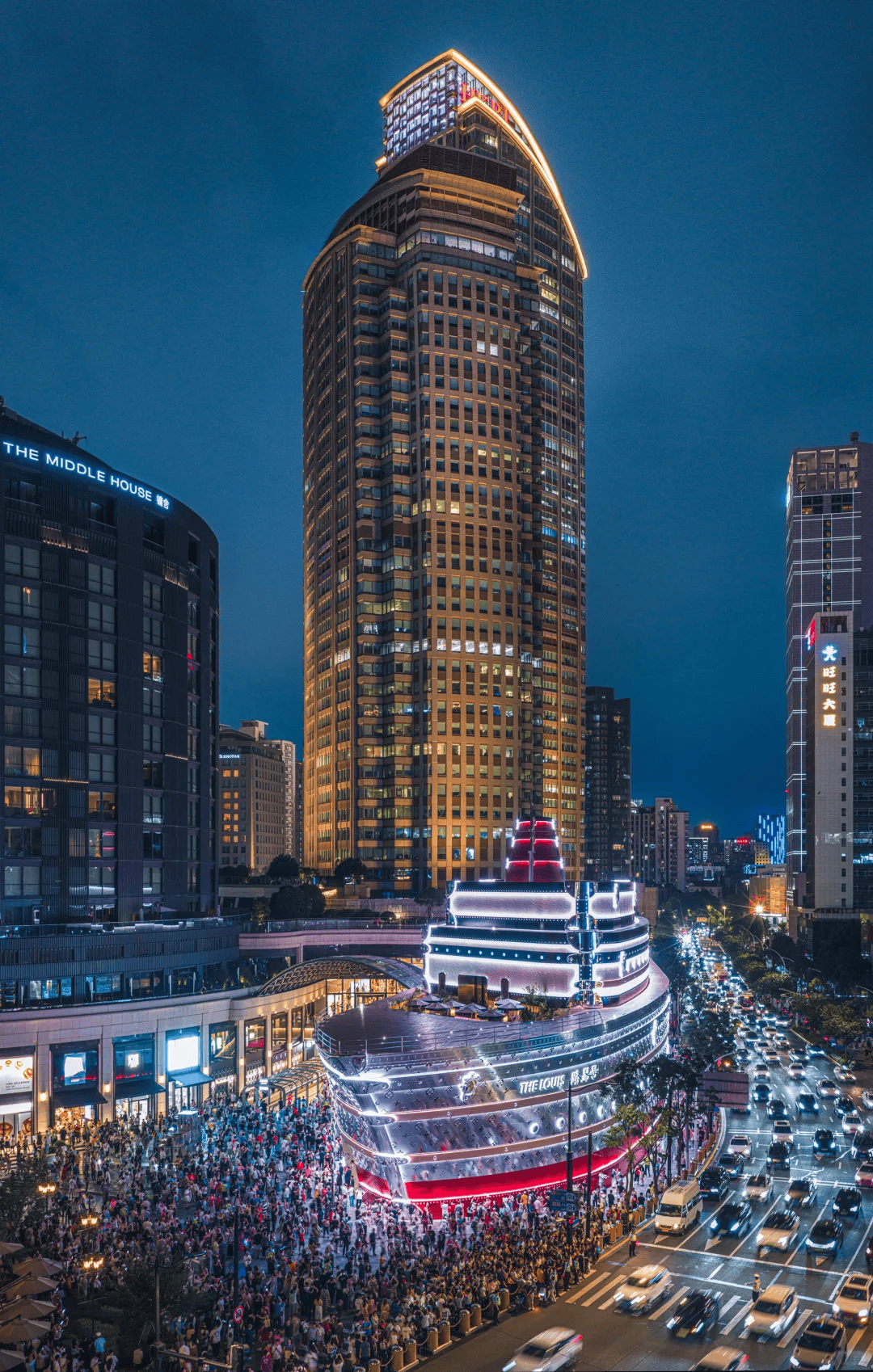
竞合实战三法:错位、集群与联动。 自6月"路易号"启航后,兴业太古汇周边客流日均达8万~10万人次,周边商业体营业额平均增长20%~30%。面对这一现象级城市事件,无论是项目自身、 还是周边竞争对手,亦或是属地政府,都希望抓住这一流量红利。 在政府主导下,"静安航线纪念船票"活动以"路易号"为核心IP,通过专属船票串联兴业太古汇、张园、丰盛里等14家商场与酒店,对持船票的消费者给予 满减、赠品、积分兑换等优惠。 回过头看,在商业地产行业面临转型升级、消费需求日益多元化的背景下,这种竞中有合、合中带竞的生态演变,实则无处不在。它既反映了市场竞争的 本质要求,又体现了合作共赢的时代趋势。 根据中指监测数据,截至2025年5月,全国3万方以上已开业零售商业项目总数超6700个,总建筑面积约5.9亿平方米。 而根据《中国城市商圈发展报告2021》数据显示,彼时,全国已拥有超1万个大中型商圈。这也就意味着,随着各类商业项目如雨后春笋般涌现,在商圈 不断发展的过程中,单个商业项目想要实现"一家独大",基本已无可能。 以元界Neo World为例,该街区汇聚了腾讯、网易、米哈游等游戏领军企业,周边分布着多家动漫主题店、游戏 ...
百亿级港资房企路劲,宣布正式违约
3 6 Ke· 2025-08-14 06:35
Core Viewpoint - Hong Kong property developer K. Wah International Holdings has entered a critical phase, facing significant financial distress and defaulting on its offshore debts, marking a shift in the stability traditionally associated with Hong Kong real estate companies [1][21]. Group 1: Financial Distress and Default - K. Wah announced a suspension of all offshore bank debts, notes, and perpetual securities, officially joining the ranks of defaulting companies [1][19]. - The company failed to pay interest on a USD bond due in July 2029 and sought to replace cash payments with physical assets, which was opposed by a creditor group [1][4]. - As of 2024, K. Wah's total offshore debt amounts to approximately USD 1.51 billion, with an additional USD 890.5 million in perpetual securities, totaling nearly USD 2.4 billion in suspended interest payments [4][12]. Group 2: Revenue and Business Performance - K. Wah's revenue has significantly declined, with total operating income dropping from HKD 246.78 billion in 2020 to HKD 55.37 billion in 2024, a decrease of over 77.5% [9]. - The company's toll road business, a key revenue source, contributed HKD 2.725 billion in 2020, but the overall revenue from this segment has become increasingly critical as real estate development revenues fell [8][9]. - In 2024, K. Wah reported a net loss of HKD 3.308 billion, with shareholder losses amounting to HKD 4.122 billion, nearly equivalent to its cash reserves [11][16]. Group 3: Debt Management and Restructuring - K. Wah is pursuing debt restructuring and has sold toll road assets to alleviate debt pressure, raising HKD 4.412 billion from the sale of four toll roads in mainland China [11][16]. - The company plans to use part of the proceeds from asset sales for comprehensive restructuring, indicating a shift in strategy to manage its financial obligations [16][19]. - Despite the sale of assets, K. Wah's cash flow situation remains dire, with operating cash flow insufficient to cover debt repayments, necessitating further restructuring efforts [11][13]. Group 4: Industry Context - Other Hong Kong property firms are also facing challenges, with New World Development announcing delays in interest payments on perpetual bonds totaling USD 3.4 billion, marking a significant shift in the industry [21][22]. - The overall performance of Hong Kong property companies is declining, with several firms reporting losses and liquidity issues, indicating a potential turning point in the real estate market [21][23].

香港人反向代购热潮越来越火
3 6 Ke· 2025-08-12 04:15
Core Viewpoint - The trend of Hong Kong residents traveling to mainland China for shopping and the rise of reverse purchasing has become a significant commercial phenomenon, reflecting a deepening integration between Hong Kong and mainland cities [1][22]. Group 1: Hong Kong Residents' Consumption Trends - Hong Kong residents are increasingly traveling to mainland cities, particularly the Greater Bay Area, for shopping, with a notable preference for high-end products and services [2][3]. - The average spending of Hong Kong residents when they visit mainland China ranges from 300 to 500 HKD, with over 80% of their expenditures on lifestyle services such as health, beauty, and personal care [3][22]. - The phenomenon of reverse purchasing, where residents buy products from mainland China to sell back in Hong Kong, has gained traction, with some individuals reportedly earning substantial profits [5][6]. Group 2: Real Estate and Property Trends - Many Hong Kong residents are opting to purchase properties in mainland cities, particularly in Shenzhen, Guangzhou, and Zhuhai, due to the affordability compared to Hong Kong's real estate market [2][22]. - The average Hong Kong family would need to spend 14.4 years of income to buy a home, while properties in the Greater Bay Area are more accessible, often requiring only a down payment [2][22]. Group 3: Historical Context and Evolution - The current trend marks a significant shift from the previous era of Hong Kong goods being purchased by mainland consumers, highlighting a reversal in purchasing dynamics [15][22]. - The initial wave of purchasing from Hong Kong to mainland China began in the 1980s, with various consumer goods entering the mainland market, leading to a cultural exchange [8][9][15]. - The peak of the Hong Kong goods purchasing trend occurred around 2014, but recent years have seen a resurgence of Hong Kong residents shopping in mainland China [15][22]. Group 4: Business Integration and Market Dynamics - The integration of Hong Kong and mainland markets is evident, with numerous mainland brands establishing a presence in Hong Kong, enhancing competition and diversifying the retail landscape [16][19]. - Major e-commerce players like JD and Alibaba are increasingly focusing on the Hong Kong market, indicating a strategic shift towards localizing their operations [19][22]. - The collaboration between Hong Kong and mainland businesses is expected to grow, with initiatives like the cooperation memorandum between Hong Kong and Hainan aimed at expanding trade opportunities [21][22].