Manus

Search documents
当AI回答一切,企业家最该问什么?
腾讯研究院· 2025-10-15 09:33
Core Insights - The article emphasizes that 2025 will mark the "gold rush era" of AI, where the focus shifts from model parameters to practical applications of AI in various industries [2][3] - Companies are encouraged to leverage their unique, high-quality data and decades of industry experience as the "fuel" for AI evolution, transforming these from byproducts to core growth drivers [2] - The program "Yi Wen" aims to explore enterprise innovation and transformation in the AI era, featuring discussions with leaders from benchmark companies [3][7] Industry Trends - The fourth season of "Yi Wen" focuses on "Enterprise Innovation and Transformation in the AI Era," inviting leaders from various industries to share their insights on AI [3][7] - Companies are not just responding to AI challenges but are viewing the technological explosion as an opportunity to reshape their business and industry landscapes [9] - The article highlights seven benchmark companies that are actively transforming their industries and creating new organizational models suitable for the AI era [10][14] Strategic Considerations - Companies must rethink their business strategies in light of the fundamental changes brought about by AI, moving beyond mere cost-cutting to strategic integration of AI [15][16] - The article poses critical questions for businesses at the crossroads of strategic decision-making regarding AI, emphasizing the need for a shift from being "AI users" to "AI changemakers" [17] - Key challenges include determining the right entry point for AI, overcoming internal resistance to transformation, and balancing efficiency with innovation in corporate culture [18] Future Outlook - The article suggests that a new commercial civilization driven by both industry wisdom and machine intelligence is emerging, encouraging companies to embrace the future with bold imagination and cautious exploration [19]


几乎都在挂羊头卖狗肉,AI Agent的泡沫现在到底有多大?
3 6 Ke· 2025-10-15 02:03
Core Insights - The article discusses the current state of AI Agents, highlighting the hype surrounding them and questioning their actual competitiveness and effectiveness in the market [1][3][4] - It emphasizes the disparity between capital interest in AI Agents and user dissatisfaction, particularly focusing on the case of Manus and its product Wide Research [3][4][5] - The article explores the reasons behind the perceived bubble in the Agent market, including technological mismatches, capital-driven narratives, and misjudged application scenarios [1][2][4][8] Group 1: Market Dynamics - The rise of AI Agents has been driven by breakthroughs in tool-use capabilities, with a shift from merely providing answers to executing actions [2][4] - There is a growing concern about the high user drop-off rates after initial trials of Agent products, indicating a potential overextension of the "universal Agent" narrative [1][4][5] - The competition has shifted from model parameters to the combination of models and ecosystem tools, reflecting a change in market focus [2][4] Group 2: Product Competitiveness - Manus's Wide Research product has been criticized for its high resource consumption and lack of clear performance comparisons with existing solutions [4][5] - The product fails to address critical barriers such as specialized data, dedicated toolchains, and industry certifications, leading to a lack of competitive advantage [4][5] - The general sentiment is that while AI Agents promise efficiency, they often do not solve complex decision-making problems, resulting in low user retention [5][10] Group 3: Capital and Investment Trends - The article notes that the current investment climate is characterized by a speculative bubble, with many startups leveraging the term "Agent" to attract funding without delivering substantial value [8][9][10] - Investors are often driven by narratives of potential market disruption rather than actual product efficacy, leading to a disconnect between capital inflow and user experience [9][10] - The article highlights the risk of a rapid market correction as user experiences fail to meet inflated expectations set by marketing [9][10] Group 4: Technical Limitations - The article outlines several technical limitations faced by AI Agents, including issues with data quality, integration complexities, and the need for robust auditing capabilities [10][11][12] - It discusses the challenges of achieving reliable performance in real-world applications due to the inherent complexity of tasks and the limitations of current AI models [10][11][12] - The lack of a cohesive ecosystem and the reliance on outdated protocols hinder the effective deployment of AI Agents in various business contexts [15][26][27] Group 5: Future Outlook - The article suggests that the future of AI Agents lies in developing specialized, vertical solutions rather than attempting to create one-size-fits-all products [12][14][26] - It emphasizes the importance of integrating AI capabilities into existing ecosystems to enhance functionality and user experience [12][14][26] - The potential for a more mature Agent ecosystem is contingent upon overcoming current technological and market challenges, with a focus on delivering tangible value to users [12][14][26]
从深夜炸场到凌晨跑路:Manus败退新加坡,“镀金”回来就能赢?
Tai Mei Ti A P P· 2025-09-30 11:10
Core Insights - Manus, an AI agent product launched by the Chinese startup Butterfly Effect, initially gained significant attention for its advanced capabilities but faced rapid backlash due to performance issues and unmet expectations [3][5][9] - The company has decided to exit the Chinese market and relocate its headquarters to Singapore, citing capital pressures and the need to access international AI ecosystems as primary reasons for this strategic shift [6][10][14] Group 1: Product Performance and Market Reaction - Manus was initially perceived as a revolutionary AI agent capable of delivering complete results autonomously, which led to a surge in interest and speculation around its potential [3][5] - However, user experiences revealed stability issues and unclear performance boundaries, leading to a swift decline in its reputation and market position [3][4][9] Group 2: Strategic Shift and Reasons for Relocation - The decision to move to Singapore was influenced by the need to secure funding and avoid compliance risks associated with U.S. investment policies, which required the company to relocate to continue accessing necessary technology [6][10] - The competitive landscape in China, characterized by intense market saturation and high consumer expectations, prompted Manus to seek opportunities in less competitive international markets [7][10] Group 3: Implications for the AI Industry - Manus's exit from China has not cooled the AI agent market; instead, it has catalyzed local players to enhance their offerings and fill the gap left by Manus [12][13] - The move reflects a broader trend of Chinese startups considering global markets for growth, as they navigate the complexities of domestic competition and capital acquisition [9][11][15] Group 4: Future Prospects and Challenges - While relocating may provide immediate benefits in terms of funding and market positioning, it raises questions about Manus's long-term viability and ability to compete effectively without the rich data and user feedback available in the Chinese market [14][15] - The company's strategy of "exporting" its brand to gain international credibility before potentially re-entering the Chinese market highlights the complexities of global competition in the AI sector [10][11]

昆仑万维方汉:AI产品全球化需突破增长与To B转型瓶颈
创业邦· 2025-09-29 04:13
Core Viewpoint - The article emphasizes the challenges faced by AI companies in global expansion, particularly in infrastructure, talent, and business models, with a focus on the integration of high-quality large models and products for effective globalization [2][6]. Group 1: Development and Technical Route of Mureka Model - The Mureka model was initiated in 2020, leveraging existing music processing technologies and data accumulated from a music social product, Starmaker, which holds a significant market position overseas [7]. - The decision to enter the music generation field was based on the observation that the scale of music data is smaller compared to text and video data, leading to lower required investment and training resources [7]. - The company initially explored various technical routes for music generation, ultimately adopting the Diffusion Transformer (DIT) approach, which significantly improved the model's performance [9]. Group 2: Global Promotion Challenges and Non-Acquisition Growth - After developing the model, the company faced challenges in global promotion, particularly the reliance on user acquisition (UA) models, which are less effective in the AI startup landscape [11]. - Non-acquisition growth strategies include leveraging core technological breakthroughs for viral growth, SEO for user acquisition, and GEO optimization, which are essential for companies to explore beyond traditional UA methods [12][13]. Group 3: Product Judgement Standards and Market Opportunities - The article outlines two core judgments for the feasibility of To B products: they serve as "efficiency multipliers" and act as "workflow adhesives" to enhance automation [15]. - For To C products, the focus is on reducing production costs significantly, with AI music generation costing less than 0.1 RMB per song compared to traditional methods costing around 100,000 RMB [16]. - The article highlights the growing competitiveness of Chinese open-source large models, indicating that small and medium enterprises can leverage these models to build new ecosystems and tap into vast market opportunities [17].


国内的这款“赛博陪玩”闯进了东京TGS
虎嗅APP· 2025-09-28 13:25
Core Viewpoint - The article discusses the emerging trend of AI in the gaming industry, highlighting the potential of AI companionship in games and the unique approach of the company "心影随形" (Xinying Suixing) in this space [4][18]. Group 1: AI in Gaming - The Tokyo Game Show (TGS) is the largest in its history, with over 1,000 exhibitors, yet only one AI-related company is present [4][5]. - Despite the lack of focus on AI at TGS, the AI gaming sector is seen as a promising and forward-looking area [18][19]. - The company "心影随形" aims to create AI companions for gaming, tapping into the trend of virtual characters in the gaming landscape [12][18]. Group 2: Company Background and Strategy - The founders of "心影随形," Liu Binxin and Wang Bihao, have a strong gaming background and aim to leverage AI to create engaging virtual companions [10][14]. - The company’s product, "逗逗AI," is designed to provide companionship in gaming scenarios, differentiating itself from traditional chatbots [12][26]. - Liu Binxin emphasizes the importance of understanding user data and refining the product based on user feedback for success in the AI gaming space [26][30]. Group 3: Market Dynamics and Challenges - The AI gaming sector is viewed as a competitive battleground, with major gaming companies potentially entering the space, but Liu Binxin is not overly concerned about this competition [21][22]. - The company is currently focusing on user engagement and data accumulation rather than competing directly with larger firms [25][30]. - "心影随形" is exploring international markets, particularly Japan and North America, while facing challenges in establishing local teams for business development [36][38]. Group 4: User Engagement and Monetization - The company has seen rapid growth in global users, reaching 10 million, but monetization remains a challenge with only a small percentage of paying users [34][35]. - Different user preferences in various markets influence the monetization strategy, with Chinese users favoring cosmetic purchases while Japanese users lean towards subscription models [35]. - The company is considering a shift from a consumer-focused model to a business-to-business approach, including potential partnerships with game developers for advertising [36].

扒完全网最强 AI 团队的 Context Engineering 攻略,我们总结出了这 5 大方法
Founder Park· 2025-09-28 12:58
Core Insights - The article discusses the emerging field of "context engineering" in AI agent development, emphasizing its importance in managing the vast amounts of context generated during tool calls and long-horizon reasoning [4][8][20]. - It outlines five key strategies for effective context management: Offload, Reduce, Retrieve, Isolate, and Cache, which are essential for enhancing the performance and efficiency of AI agents [5][20][21]. Group 1: Context Engineering Overview - Context engineering aims to provide the right information at the right time for AI agents, addressing the challenges posed by extensive context management [5][8]. - The concept was popularized by Karpathy, highlighting the need to fill a language model's context window with relevant information for optimal performance [8][10]. Group 2: Importance of Context Engineering - Context management is identified as a critical bottleneck in the efficient operation of AI agents, with many developers finding the process more complex than anticipated [8][11]. - A typical task may require around 50 tool calls, leading to significant token consumption and potential cost implications if not optimized [11][14]. Group 3: Strategies for Context Management - **Offload**: This strategy involves transferring context information to external storage, such as file systems, rather than sending complete context back to the model, thus optimizing resource utilization [21][23][26]. - **Reduce**: This method focuses on summarizing or pruning context to eliminate irrelevant information while being cautious of potential information loss [32][35][38]. - **Retrieve**: This involves sourcing relevant information from external resources to enhance the model's context, which has become a vital part of context engineering [45][46][48]. - **Isolate**: This strategy entails separating context for different agents to prevent interference, particularly in multi-agent architectures [55][59][62]. - **Cache**: Caching context can significantly reduce costs and improve efficiency by storing previously computed results for reuse [67][68][70]. Group 4: The Bitter Lesson - The article references "The Bitter Lesson," which emphasizes that algorithms relying on large amounts of data and computation tend to outperform those with manual feature design, suggesting a shift towards more flexible and less structured approaches in AI development [71][72][74].

光刻机巨头,为啥要投AI?
Hu Xiu· 2025-09-27 07:34
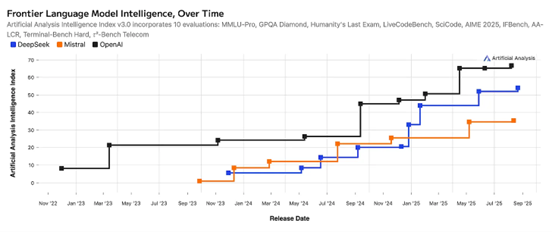
Core Insights - The article discusses the recent significant investment in the AI unicorn Mistral AI, highlighting the involvement of ASML as a leading investor, which marks a notable event in the European venture capital landscape [3][5][15]. Investment Landscape - European venture capital has been struggling, with AI investments in Europe totaling $8 billion in 2023, significantly lower than the $68 billion in the U.S. and $15 billion in China [2]. - In 2024, European AI investments increased to $11 billion, but the U.S. still led with $47 billion, indicating a persistent gap [2]. - Mistral AI raised €1.7 billion (approximately ¥14.2 billion) in its Series C funding round, achieving a post-money valuation of €11.7 billion (approximately ¥97.8 billion) [3][5]. ASML's Strategic Move - ASML invested €1.3 billion (approximately ¥10.9 billion) in Mistral AI, acquiring an 11% stake, which signifies a strategic alliance between a leading tech giant and a high-potential AI company [5][15]. - The investment is seen as a move to enhance ASML's capabilities in industrial manufacturing through advanced AI solutions [7][15]. Market Position and Challenges - Despite its high valuation, Mistral AI holds only a 2% market share in the large model AI sector, facing stiff competition from established players like Deepseek and OpenAI [8][10]. - Mistral AI's focus on industrial applications may be hindered by the maturity of existing manufacturing processes and high customer switching costs [10][11]. Political and Economic Context - The investment has been interpreted as politically motivated, reflecting Europe's desire to reduce reliance on U.S. technology and bolster its own tech sovereignty [6][14]. - The article suggests that Mistral AI's valuation may be influenced by its founders' political connections, raising questions about the sustainability of its high valuation [11][14]. Future Outlook - The investment from ASML could provide Mistral AI with the necessary resources to pivot towards industrial applications, potentially enhancing its market position [15][16]. - European venture capitalists are increasingly focusing on vertical AI applications, with healthcare being a particularly attractive sector, indicating a shift in investment strategies [15][16].

朱啸虎:搬离中国,假装不是中国AI创业公司,是没有用的
Hu Xiu· 2025-09-20 14:15
Group 1 - The discussion highlights the impact of DeepSeek and Manus on the AI industry, emphasizing the importance of open-source models in China and their potential to rival closed-source models in the US [3][4][5] - The conversation indicates that the open-source model trend is gaining momentum, with Chinese models already surpassing US models in download numbers on platforms like Hugging Face [4][5] - The competitive landscape is shifting towards "China's open-source vs. America's closed-source," with the establishment of an open-source ecosystem being beneficial for China's long-term AI development [6][7] Group 2 - Manus is presented as a case study for Go-to-Market strategies, illustrating that while Chinese entrepreneurs have strong product capabilities, they often lack effective market entry strategies [10][11] - Speed is identified as a critical barrier for AI application companies, with the need to achieve rapid growth to outpace competitors [11][12] - Token consumption is discussed as a significant cost indicator, with Chinese companies focusing on this metric due to lower willingness to pay among domestic users [12][13][14] Group 3 - The AI coding sector is characterized as a game dominated by large companies, with high token costs making it challenging for startups to compete effectively [15][16] - The conversation suggests that AI coding is not a viable area for startups due to the lack of customer loyalty among programmers and the high costs associated with token consumption [16][18] - Investment in vertical applications rather than general-purpose agents is preferred, as the latter may be developed by model manufacturers themselves [20] Group 4 - The discussion on robotics emphasizes investment in practical, value-creating robots rather than aesthetically pleasing ones, with examples of successful projects like a boat-cleaning robot [21][22] - The importance of combining functionality with sales capabilities in robotic applications is highlighted, as this can lead to a more favorable ROI [22][23] Group 5 - The conversation stresses the need for AI hardware companies to focus on simplicity and mass production rather than complex features, as successful hardware must be deliverable at scale [28][29] - The potential for new hardware innovations in the AI era is questioned, with a belief that significant breakthroughs may still be years away [30][31] Group 6 - The dialogue addresses the challenges of globalization for Chinese companies, noting that successful market entry in the US requires a deep understanding of local dynamics and compliance [36][37] - The importance of having a local sales team for B2B applications in the US is emphasized, as relationships play a crucial role in sales success [38][39] Group 7 - The conversation highlights the risks associated with high valuations, which can limit a company's flexibility and increase pressure for performance [42][43] - The discussion suggests that IPOs for Chinese companies may increasingly occur in Hong Kong rather than the US, as liquidity issues persist in the market [46][48] Group 8 - The need for startups to operate outside the influence of large companies is emphasized, with a call for rapid growth and innovation in the AI sector [49][53] - The potential for AI startups to achieve significant scale quickly is acknowledged, but the conversation warns that the speed of evolution in the AI space may outpace traditional exit strategies [52][53]

超越 Prompt 和 RAG,「上下文工程」成了 Agent 核心胜负手
海外独角兽· 2025-09-17 12:08
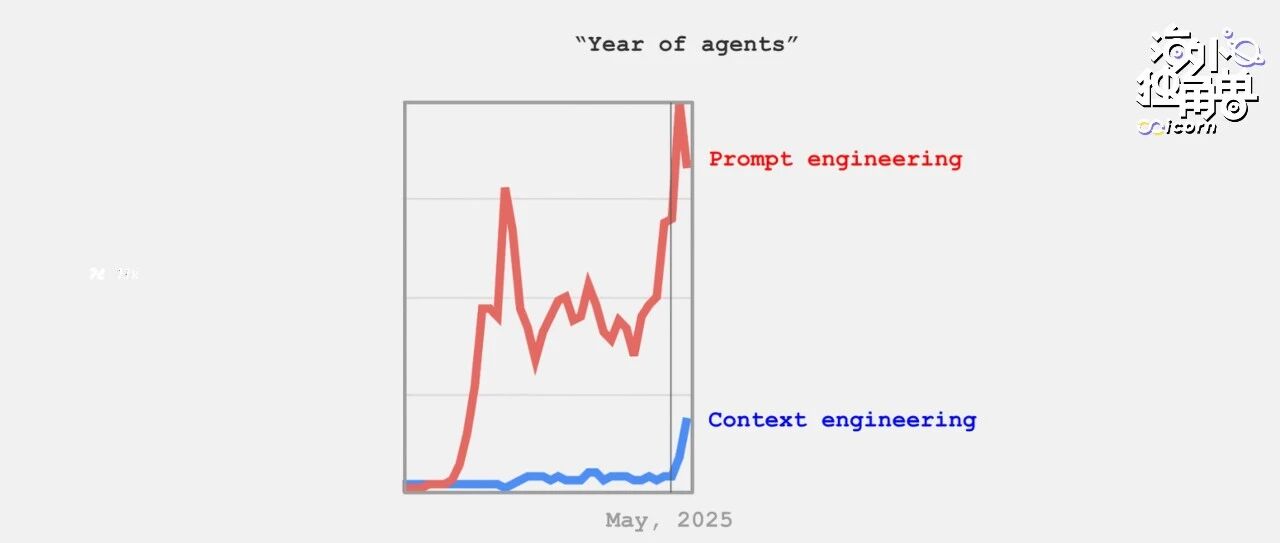
Core Insights - Context engineering has emerged as a critical concept in agent development, addressing the challenges of managing extensive context generated during tool calls and long horizon reasoning, which can hinder agent performance and increase costs [2][4][7] - The concept was introduced by Andrej Karpathy, emphasizing the importance of providing the right information at the right time to enhance agent efficiency [4][5] - Context engineering encompasses five main strategies: Offload, Reduce, Retrieve, Isolate, and Cache, which aim to optimize the management of context in AI agents [3][14] Group 1: Context Engineering Overview - Context engineering is seen as a subset of AI engineering, focusing on optimizing the context window for LLMs during tool calls [5][7] - The need for context engineering arises from the limitations of prompt engineering, as agents require context from both human instructions and tool outputs [7][14] - A typical task may involve around 50 tool calls, leading to significant token consumption and potential performance degradation if not managed properly [7][8] Group 2: Strategies for Context Management - **Offload**: This strategy involves transferring context information to external storage rather than sending it back to the model, thus optimizing resource utilization [15][18] - **Reduce**: This method focuses on summarizing or pruning context to eliminate irrelevant information while being cautious of potential data loss [24][28] - **Retrieve**: This strategy entails fetching relevant information from external resources to enhance the context provided to the model [38][40] - **Isolate**: This approach involves separating context for different agents to prevent interference and improve efficiency [46][49] - **Cache**: Caching context can significantly reduce costs and improve efficiency by storing previously computed results for reuse [54][56] Group 3: Practical Applications and Insights - The implementation of context engineering strategies has been validated through various case studies, demonstrating their effectiveness in real-world applications [3][14] - Companies like Manus and Cognition have shared insights on the importance of context management, emphasizing the need for careful design in context handling to avoid performance issues [29][37] - The concept of "the Bitter Lesson" highlights the importance of leveraging computational power and data to enhance AI capabilities, suggesting that simpler, more flexible approaches may yield better long-term results [59][71]
如何在五分钟打动投资人?硅谷传奇投资人20年识人心得
创业邦· 2025-09-16 03:30
Core Insights - The article emphasizes the importance of recognizing extraordinary entrepreneurs and the unique potential of startups in leveraging disruptive technologies like AI [5][9][27] - It discusses the evolutionary dynamics of Silicon Valley's ecosystem compared to China's more distributed innovation landscape, highlighting the competitive advantages of both [6][14] - The article posits that the next wave of trillion-dollar companies is likely to emerge from Silicon Valley due to its adaptive ecosystem and historical accumulation of knowledge [6][12][30] Group 1: Evolutionary Dynamics - The application of Darwinism in the context of Silicon Valley illustrates how natural selection, planned and unplanned variations, and inheritance drive innovation [9][11] - Silicon Valley's history of rapid adaptation and competition fosters a unique environment where startups can thrive and evolve [12][16] - The article suggests that the current AI wave represents a critical phase of radical variation, with significant changes expected every six months between 2025 and 2030 [9][27] Group 2: Investment Philosophy - The investment philosophy of focusing on "people" rather than just ideas is central to the success of venture capital firms like Benchmark [7][39] - The article highlights the importance of building long-term relationships with entrepreneurs, emphasizing that true value comes from deep, supportive partnerships over time [39][41] - It argues that early-stage investments allow for greater flexibility and adaptability, enabling startups to pivot and innovate effectively [50][51] Group 3: Competitive Landscape - The competitive landscape in China is characterized by multiple teams pursuing different strategies within the same company, which fosters innovation and pressure [15][16] - The article notes that while established companies have dominated the market in recent years, the emergence of new business models, particularly in AI, could lead to the rise of several new trillion-dollar companies [26][30] - The potential for creative destruction in the tech industry suggests that even successful companies will eventually be surpassed by new entrants [20][30]