英飞凌

Search documents
AI引领变革浪潮,芯片重塑未来——“2025 AI技术创新论坛”精彩回顾
半导体行业观察· 2025-04-24 00:55
Core Viewpoint - Artificial intelligence (AI) is becoming the core engine driving global industrial transformation and technological innovation, with its influence permeating various sectors and redefining chip technology and AI infrastructure [1]. Group 1: AI Industry Acceleration - The AI industry is experiencing comprehensive acceleration, with significant advancements in various sectors [2]. - The "2025 AI Technology Innovation Forum" gathered leading companies and experts to discuss AI trends and innovations [1]. Group 2: EDA Innovations - Shanghai Gaoneng Electronics' Vice President, Ma Yutao, highlighted the challenges and opportunities in analog and custom circuit design in the AI era, emphasizing the dual challenges of precision and speed in EDA tools [3]. - Gaoneng Electronics is focusing on AI/ML integration solutions across the entire chip manufacturing and design optimization process, aiming to transform the semiconductor industry into a data-driven paradigm [3]. Group 3: Flash Memory Demand - Tsinghua Unigroup's market manager, Tian Yue, discussed the rapid growth of the AI server market, predicting it will exceed $233 billion by 2028, with each AI server requiring approximately $100 worth of Flash memory [5]. - Tsinghua Unigroup holds the second-largest market share in SPI NOR Flash, with cumulative shipments exceeding 27 billion units [5]. Group 4: GPGPU Opportunities - Dr. Xiang Tian from Suxian Microelectronics presented on the DeepSeek technology, which significantly reduces computational load during inference, facilitating the deployment of large models on edge devices [8]. - Suxian Microelectronics' "Tianyuan" GPU architecture supports high concurrency and integrates open-source ecosystems, providing comprehensive solutions for AI product deployment [8]. Group 5: AI Power Solutions - Infineon's market manager, Zhou Chengjun, emphasized the need for efficient power applications in AI systems, introducing integrated power modules that reduce power loss to 2% compared to traditional methods [11]. - Infineon is recognized as a global leader in AI power management due to its advanced packaging technology and manufacturing capabilities [11]. Group 6: AI Solutions for SMEs - Zhang Haonan from DeYi Microelectronics discussed the challenges faced by SMEs in deploying AI models and introduced an integrated AI training and inference solution that significantly reduces costs and technical barriers [14]. - The solution supports local processing of large models, offering features like breakpoint training and flexible parameter configuration [14]. Group 7: RISC-V Development - Alibaba's DAMO Academy's Li Jue highlighted the rapid growth of RISC-V, which has surpassed 40% annual growth in mainstream markets, and its potential in high-performance computing and AI acceleration [17]. - The DAMO Academy is iterating on the Xuantie series processors to enhance capabilities for AI applications [17]. Group 8: AI Power Management - AOS Semiconductor's Liu Song discussed the increasing power demands of AI servers and introduced innovative power MOSFET solutions to meet these challenges [19]. - AOS's products are designed to optimize power efficiency and reliability in high-frequency applications [19]. Group 9: Edge AI Trends - Yang Lei from Guangyu Xincheng emphasized the rise of edge AI model chips, which are crucial for the intelligent upgrade of various industries, highlighting the commercial opportunities for hardware companies [21]. - Edge AI offers advantages in real-time processing, reliability, and privacy protection, although challenges remain in performance and cost [21]. Group 10: AI Hardware Evolution - Imagination's Huang Yin discussed the evolution of AI models and the importance of balancing performance with storage and communication needs in edge AI applications [23]. - The future demand for AI hardware will focus on efficiency, integration, and flexibility, necessitating collaboration across the industry [23]. Group 11: High-Performance Thermal Solutions - Lu Cheng from Baidu Technology discussed the increasing demand for high-performance thermal materials, emphasizing the need for customized solutions in various applications [25]. - Current leading thermal materials include aluminum oxide and boron nitride, which meet diverse thermal conductivity requirements [25]. Group 12: Real-Time Fault Monitoring - Wu Jixuan from Texas Instruments highlighted the advantages of edge AI in real-time fault detection systems, showcasing the effectiveness of integrated NPU architectures [28]. - The edge AI solutions provide faster response times and enhanced privacy compared to cloud-based systems [28]. Group 13: Future of AI Chips - A panel discussion featuring Yang Lei, Xiang Tian, and Huang Yin focused on the future design logic and ecosystem collaboration for AI chips, emphasizing the shift from general computing to diverse, modular, and low-power designs [30]. Conclusion - The successful hosting of the "2025 AI Technology Innovation Forum" showcased significant advancements in AI technology across various dimensions, highlighting the importance of industry collaboration and ecosystem synergy [32].

AI引领变革浪潮,芯片重塑未来——“2025 AI技术创新论坛”精彩回顾
半导体行业观察· 2025-04-24 00:55
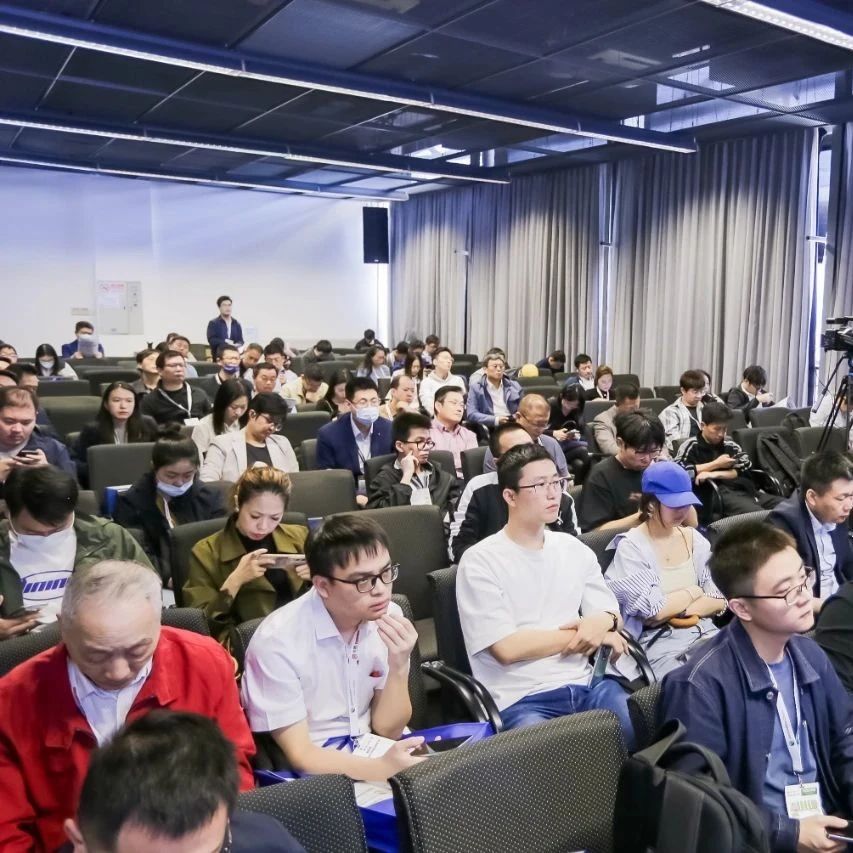
人工智能,已然成为推动全球产业变革与技术创新的核心引擎。从智能生活的细微渗透到传 统产业的深度赋能,AI的触角无处不在、势不可挡。在这个AI飞速演进的时代,每一颗芯片 都值得被重新定义;而构建AI的算力基础设施,则为技术落地与产业升级注入了无限潜力。 2025年4月15日,慕尼黑电子展期间,由 半导体行业观察与慕尼黑电子展 联合主办的 "2025 AI技术创新论坛" 隆重举行。论坛汇聚了 概伦电子、兆易创新、速显微、英飞凌、得一微、 达摩院、万国半导体、光羽芯辰、Imagination Technologies、上海百图、德州仪器等 行业 前沿企业与重量级嘉宾,共们围绕AI趋势展开深入解读,现场干货不断,观点碰撞激烈。 嘉宾演讲精彩纷呈,AI产业全面加速 上海概伦电子副总裁马玉涛发表了主题为 "AI时代模拟和定制电路设计的挑战和机遇" 的开幕演 讲,系统阐释AI技术在电子设计自动化(EDA)领域的创新实践与产业突破。他指出,当前 EDA 工具在精度与速度上,面临双重挑战。 概伦电子在AI技术上探索已久,覆盖芯片制造到设计优化 全流程,贯穿成熟工艺与先进工艺,已部署和规划多维度AI/ML融合解决方案。概伦电子从 ...


国民技术发布新款MCU剑指高端市场 紧抓AI与新能源等发展机遇
Zheng Quan Ri Bao Wang· 2025-04-22 13:04
Core Viewpoint - National Technology has launched the N32H7 series high-performance MCUs based on the Arm Cortex M7 core, marking a significant step in entering the high-end MCU market, which has been dominated by international companies like NXP and Renesas [1][2]. Group 1: Product Launch and Market Position - National Technology is the first domestic company to introduce Arm Cortex M7+M4 dual-core heterogeneous MCUs, with the N32H7 series including models such as N32H785 and N32H788 [1][2]. - The new products feature a performance ceiling for general-purpose MCUs, with standard configurations including 1024K TCM memory and operating speeds of 600MHz for the Arm Cortex-M7 and 300MHz for the Cortex-M4 [2][3]. - The company aims to cover the entire range of 32-bit MCUs from M0 to M7, positioning itself as a rare domestic player with a full product line from low-end to high-end [2]. Group 2: Application Areas - The N32H7 series is applicable in various fields, including industrial control, robotics, and renewable energy sectors such as photovoltaic inverters and energy storage systems [3][4]. - The shift in focus from low-end to high-performance MCUs reflects a broader industry trend towards higher value-added products, moving away from intense price competition [3][5]. Group 3: Market Trends and Opportunities - The semiconductor industry is experiencing growth driven by AI applications, with National Technology's products being suitable for AI data centers and high-performance robotics [4][5]. - The company is targeting industrial and energy sectors, with 40%-50% of its clients in the consumer sector, while focusing on higher-margin industrial clients [4][5]. - The ongoing global trade tensions and supply chain security concerns are accelerating the domestic MCU replacement process, providing opportunities for local manufacturers like National Technology [5].

深挖苹果首颗自研基带
半导体芯闻· 2025-04-21 10:20
来源:内容 编译自 eetjp。 如今,许多电子设备最关键的部件是无线通信芯片(和芯片组)。如果没有通信芯片,您就无法使 用社交媒体或浏览网页。越来越多的车载设备并不在设备本身上存储数据,而是通过通信来处理地 图和音乐。尤其是智能手机,它由许多无线通信设备组成。 Wi-Fi、蓝牙、NFC(近场通信)早已 成为我们日常生活中必不可少的元素,4G、5G已成为广域数据通信的社会基础设施的一部分。 如果您希望可以时常见面,欢迎标星收藏哦~ "C1"调制解调器的起源 其中一个必需品是用于广域数据通信的终端调制解调器,但为其提供芯片的公司并不多,只有少数 公司将其出售给公众。这三家公司分别是美国高通、台湾联发科和中国的紫光展锐。华为和三星电 子也拥有5G调制解调器,但并不向公众出售,仅用于自己的产品中。就三星电子而言,其还为"谷 歌Pixel"系列提供芯片。苹果通过更换调制解调器芯片组供应商,从英飞凌科技(以下简称"英飞 凌")到英特尔、再到高通,继续为 iPhone 和 iPad 提供内置调制解调器。 iPhone 调制解调器的演变 从 2020 年款"iPhone 12"开始,苹果一直在使用高通芯片组,这是苹果首款配 ...

马来西亚爆买英伟达GPU,怎么回事?
Guan Cha Zhe Wang· 2025-04-18 09:39
(文/汤普济 编辑/吕栋) 据国外科技媒体"toms hardware"4月17日报道,近几个季度以来,马来西亚已成为中国台湾地区计算系统和计算机零部件(如CPU与GPU)的主要进口国。 分析师Lennart Heim发现的数据显示,2025年3月,中国台湾地区对马来西亚的计算机系统出口额达18.74亿美元(约合人民币136.89亿元),而去年3月出口 额仅为4.02亿美元(约合人民币29.36亿元),同比增长366%,相较于2023年3月的340万美元(约合人民币2487万元)更是大幅增长55117%。 同样,激增的原因究竟是企业赶在美国新一轮出口管制措施生效前的抢购潮,还是经马来西亚处理再运往其他地方的数据中心也无从得知。 但有一点可以明确,马来西亚正在加码人工智能领域。 在美国对用于人工智能和高性能计算的先进GPU实施限制措施后不久,这些现象开始凸显。 。 中国台湾地区对马来西亚计算机系统出口量猛增Tom's Hardware 数据显示,马来西亚企业不仅向中国台湾进口人工智能服务器,还加快了采购零部件如英伟达H100的步伐。2025年3月,中国台湾地区对马来西亚的计算机 零部件出口额增至6083万美元( ...


欧洲芯片厂齐声警告加税风暴
21世纪经济报道· 2025-04-13 23:47
特朗普还是不得不选择了妥协让步。 据新华社报道,美国政府相关网络平台11日晚悄然发布信息,对智能手机、笔记本电 脑、芯片等电子产品豁免所谓"对等关税"。 在此之前,科技公司才经历了"高税临头"的惊魂一周——苹果紧急包机从印度空运1 5 0万部、 重达6 0 0吨的手机回美国,任天堂推迟了Swit c h 2在美国的新品上线,戴尔、微软和联想纷纷 督促供应商尽快发货到美国,尤其是3 0 0 0美元以上的高端产品"能发多少就多少",三星考虑 到涨价影响已经向部分供应商砍单。 欧洲的芯片厂商,虽然还在关税豁免的范畴,但已经笼罩在特朗普关税大棒的阴影之下。阿斯 麦CEO傅恪礼在4月3日就直言,地缘政治紧张局势正在损害创新,这些关税或将扰乱整个世 界的贸易流动。 不可否认,电子信息产业早已深度嵌入全球产业大分工,"对等关税"注定是一场没有赢家的战 争。 作 者丨赖镇桃 编 辑丨和佳 图 源丨图虫 欧洲不少半导体厂商,主要市场都在中国和美国 ,已经提前对关税大棒感到紧张。英飞凌首 席财务官Sv e n Sc h n e i d e r在2月份就表示,特朗普政府的关税带来了不确定性,特别是引发反 击措施的时候,关税和反制关 ...
Marvell,孤注一掷
半导体行业观察· 2025-04-12 01:18
根据英飞凌官微消息披露,英飞凌签署了一项以25亿美元收购Marvell Technology汽车以太 网业务的协议。通过此次交易,英飞凌将其领先的汽车MCU产品组合与Marvell的汽车以太网 业务相结合,提高自身在软件定义汽车领域的系统能力。 如果您希望可以时常见面,欢迎标星收藏哦~ 近日,英飞凌收购Marvell汽车以太网业务的消息,引得业界瞩目。 此次收购Marvell的汽车以太网业务,就像是为英飞凌的汽车智能化拼图补上了关键的一块。二者 的结合,一方面将进一步巩固英飞凌在汽车MCU领域的领先地位;同时也将构建起一个"通信+控 制"的全栈解决方案,直接为软件定义汽车的区域架构转型赋能。 此外,从商业价值角度考量,这笔交易同样极具吸引力。 Marvell的汽车以太网业务有50多家汽车制造商客户,其中包括排名前十汽车制造商中的8家。凭 借这一强大的客户根基,据相关数据预测,该业务在2025年预计将贡献2.25亿-2.5亿美元的收入, 毛利率更是高达60%。更为诱人的是,其附带的到2030年40亿美元的design-win储备,犹如一座 蕴藏丰富的宝藏,为英飞凌在自动驾驶、车联网等领域的长期布局奠定了坚实的基 ...


【太平洋科技-每日观点&资讯】(2025-04-09)
远峰电子· 2025-04-08 12:00
Market Performance - The main board led the gains with notable increases in stocks such as Precision Electronics (+10.18%), China Software (+9.99%), and China Great Wall (+9.98%) [1] - The ChiNext board saw significant rises with Top Cloud Agriculture (+15.76%), Guomai Culture (+10.27%), and Guangzhi Technology (+10.19%) [1] - The Sci-Tech Innovation board was led by Hongquan IoT (+11.99%), Zhenyou Technology (+8.32%), and Yingjixin (+8.19%) [1] - Active sub-industries included SW Education Publishing (+3.11%), SW Film and Animation Production (+2.14%), and SW Semiconductor Materials (+0.86%) [1] Domestic News - Silan Microelectronics is accelerating the construction of its "Silan Minggan 6-inch SiC power device chip production line" with a current monthly production capacity of 9,000 6-inch SiC MOS chips and has shipped 50,000 electric vehicle main motor drive modules [1] - Huawei's terminal division has launched pre-sales for the Vision Smart Screen 5, featuring upgrades with Harmony AI and Super MiniLED technology, starting at a price of 5,499 yuan [1] - Chipone Technology has provided NPU IP technology for 142 AI chip models to 82 clients, with over 100 million units shipped, showcasing its competitive strength in high-performance computing and consumer electronics [1] - The Chinese liquid cooling server market is projected to grow rapidly, reaching a market size of $2.37 billion in 2024, a 67% increase from 2023, with a compound annual growth rate of 46.8% expected from 2024 to 2029 [1] Company Announcements - Zhaoyi Innovation expects to achieve revenue of approximately 1.909 billion yuan in Q1 2025, representing a year-on-year growth of about 17.32% and a quarter-on-quarter growth of 11.88% [3] - Northern Huachuang forecasts Q1 2025 revenue between 7.34 billion to 8.98 billion yuan, with a year-on-year growth of 23.35% to 50.91% and a net profit of 1.42 billion to 1.74 billion yuan, reflecting a year-on-year growth of 24.69% to 52.79% [3] - Tuojing Technology plans to establish an integrated circuit equipment and components innovation center in collaboration with the Shenyang State-owned Assets Supervision and Administration Commission [3] - Rockchip has reported that the AIoT market demand has exceeded expectations, with the company enhancing its operations across multiple AIoT product lines [3] Overseas News - SK Hynix's 1c nm DRAM memory process has achieved an 80% yield, a significant improvement from 60% in the second half of last year, indicating readiness for mass production [4] - Samsung Electronics reported preliminary Q1 2025 sales of approximately 79 trillion KRW (about 392.8 billion yuan), with a quarter-on-quarter growth of 4.24% and a year-on-year growth of 9.84% [4] - Infineon announced a $2.5 billion cash acquisition of the automotive Ethernet business from MoSys [4] - Semiconductor equipment giant TEL has extended its joint R&D agreement with IBM for advanced semiconductor technology, focusing on next-generation semiconductor nodes and architectures [4]

关税对芯片制造商影响有多大?这篇文章全部说透了!
美股研究社· 2025-04-08 11:59
Core Viewpoint - The article discusses the multifaceted impact of tariffs on semiconductor companies, highlighting cost increases, demand fluctuations, and potential shifts in sourcing strategies due to rising prices and tariffs. Group 1: Cost Increases - Integrated Device Manufacturers (IDMs) that produce their own chips and import raw materials will face increased costs, particularly those with lower profit margins [1] - Companies with strong product differentiation and pricing power may mitigate some of the impacts of rising costs [1] Group 2: Demand Fluctuations - Tariffs may lead to increased prices for chips, potentially causing demand to decrease, especially in sectors like automotive and consumer electronics [2] - The elasticity of products will determine the severity of the impact on demand [2] Group 3: Company-Specific Impacts - **TSMC**: Analysts believe TSMC is insulated from major direct impacts due to semiconductor exemptions and is investing in U.S. operations to address tariff concerns [3][4] - **NVIDIA**: The company benefits from inelastic demand for its data center products driven by AI, but rising costs may affect capital expenditures from large tech companies [5][7] - **AMD**: Approximately 45% of AMD's revenue comes from data centers, with consumer-sensitive segments facing potential short-term demand impacts [8] - **Automotive Chip Companies**: Companies like ON, NXPI, and Infineon are viewed positively due to rising demand for electric vehicles in China, although the automotive sector is experiencing a prolonged downturn [9] - **Qualcomm**: Faces significant risks due to its revenue dependence on Chinese smartphone suppliers, with potential tariffs on Snapdragon chips posing a threat [11] - **Micron**: The company is vulnerable due to its reliance on the Chinese market and the potential for decreased competitiveness, despite strong demand for AI-related products [12]



功率半导体行业报告:供需结构改善,碳化硅加速上车
Guoyuan Securities· 2025-04-02 01:23
Investment Rating - The report recommends a "Buy" rating for the semiconductor industry, specifically highlighting the potential for recovery in the IGBT market [5]. Core Insights - The IGBT market is showing signs of recovery, with shipments expected to return to positive growth by Q2 2024, indicating the end of the industry downturn. IGBT prices have stabilized after a nearly 30% year-on-year decline in Q1 2024, suggesting a potential upward trend in prices and continued growth in shipments [1][11]. - China's IGBT self-sufficiency is improving, driven by capacity expansion and technological advancements among domestic manufacturers. The report anticipates a shift in the silicon carbide (SiC) market towards oversupply in 2024, leading to a decline in SiC prices [2][12]. - Demand for IGBT is expected to rise due to increased sales of mid-range electric vehicles (EVs) and the penetration of 800V platforms, which will enhance the adoption of SiC in higher-end models. The price gap between SiC and IGBT modules is projected to narrow significantly by 2026, facilitating broader application [3][13]. Summary by Sections Overall Viewpoint - The IGBT market is entering a recovery phase, with signs of demand resurgence and price stabilization. The report highlights the importance of the automotive sector in driving IGBT demand, particularly in the context of electric vehicles [11][20]. IGBT Industry Improvement and SiC Adoption - The report emphasizes the critical role of power semiconductors in various applications, including electric vehicles and industrial control. The IGBT market is expected to grow significantly, with a projected CAGR of 11.23% from 2023 to 2030 [16][23]. Capacity Side: China's IGBT Self-Sufficiency and SiC Price Decline - China's IGBT production is forecasted to increase from 15.5 million units in 2019 to 39 million units by 2024, with a self-sufficiency rate expected to rise as domestic manufacturers enhance their capabilities [31][33]. The SiC market is anticipated to experience a shift towards oversupply, leading to price reductions [12][33]. Demand Side: Mid-Range Vehicle Demand Boosting IGBT and SiC Adoption - The report notes a significant increase in global and Chinese EV sales, with projections indicating continued growth. The demand for IGBT is expected to be bolstered by the rising sales of mid-range EVs, which are more cost-sensitive and likely to continue using IGBT technology in the short term [44][45]. The penetration of 800V platforms is also highlighted as a key driver for SiC adoption in higher-end models [50]. Competitive Landscape - The report outlines the competitive dynamics in the IGBT market, noting that while overseas manufacturers currently dominate, Chinese companies are gradually increasing their market share through technological advancements and capacity expansions [13][15]. Companies to Watch - The report suggests monitoring companies such as Sijia Semiconductor, Times Electric, Silan Microelectronics, China Resources Microelectronics, Sanan Optoelectronics, and others for potential investment opportunities [4].