会稽山

Search documents
非白酒板块10月22日跌0.31%,会稽山领跌,主力资金净流出8581.48万元
Zheng Xing Xing Ye Ri Bao· 2025-10-22 08:19
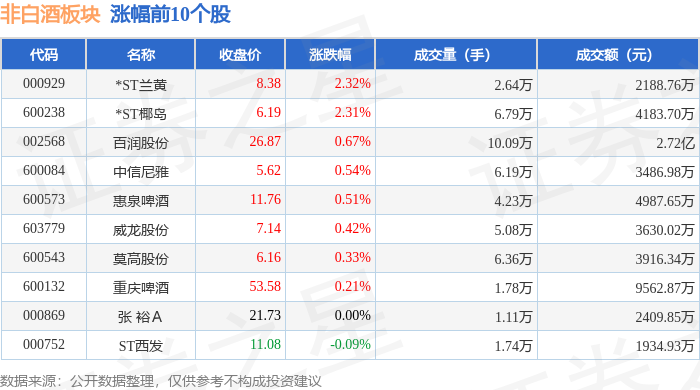
Market Overview - The non-liquor sector experienced a decline of 0.31% on the previous trading day, with Kuaijishan leading the drop [1] - The Shanghai Composite Index closed at 3913.76, down 0.07%, while the Shenzhen Component Index closed at 12996.61, down 0.62% [1] Stock Performance - Notable gainers in the non-liquor sector included *ST Lanhua, which rose by 2.32% to a closing price of 8.38, and *ST Yedao, which increased by 2.31% to 6.19 [1] - Kuaijishan saw a significant decline of 3.34%, closing at 22.00, with a trading volume of 211,800 shares and a turnover of 477 million [2] - Other notable declines included Guyue Longshan, which fell by 1.28% to 66.60, and Gu Xie La La, which decreased by 0.61% to 66.77 [2] Capital Flow - The non-liquor sector experienced a net outflow of 85.81 million from institutional investors, while retail investors saw a net inflow of 107 million [2] - The capital flow data indicates that retail investors were more active, with a net inflow despite the overall sector decline [2] Individual Stock Capital Flow - Kuaijishan had a net outflow of 4.77 million from institutional investors, while retail investors contributed a net inflow of 1.1 million [3] - Other stocks like *ST Yedao and *ST Lanhua also showed mixed capital flows, with varying degrees of institutional and retail investor activity [3]


华创证券:重视白酒底部催化 大众品精选产业趋势
智通财经网· 2025-10-22 03:32
Group 1 - The core viewpoint is that the liquor industry is entering a bottom accumulation phase, with potential valuation recovery driven by seasonal catalysts [1] - The liquor cycle consists of three stages: supply clearance, supply-demand rebalancing, and demand improvement [1] - Key recommendations include focusing on strong performers like Moutai and Fenjiu, and companies expected to confirm performance bottoms such as Gujing and Jiansi Yuan [1] Group 2 - The consumer goods sector shows high growth driven by overseas yeast, with improvements in ROE for beer and dairy industries [2] - Strategic recommendations include prioritizing companies like Angel Yeast for their income growth and profitability potential [2] - The beverage sector is highlighted for its growth potential, with products like Dongpeng and new launches in the tea segment showing promising sales [2]
老“CP”有新思路 黄酒场景消费如何激活
Bei Jing Shang Bao· 2025-10-21 13:44
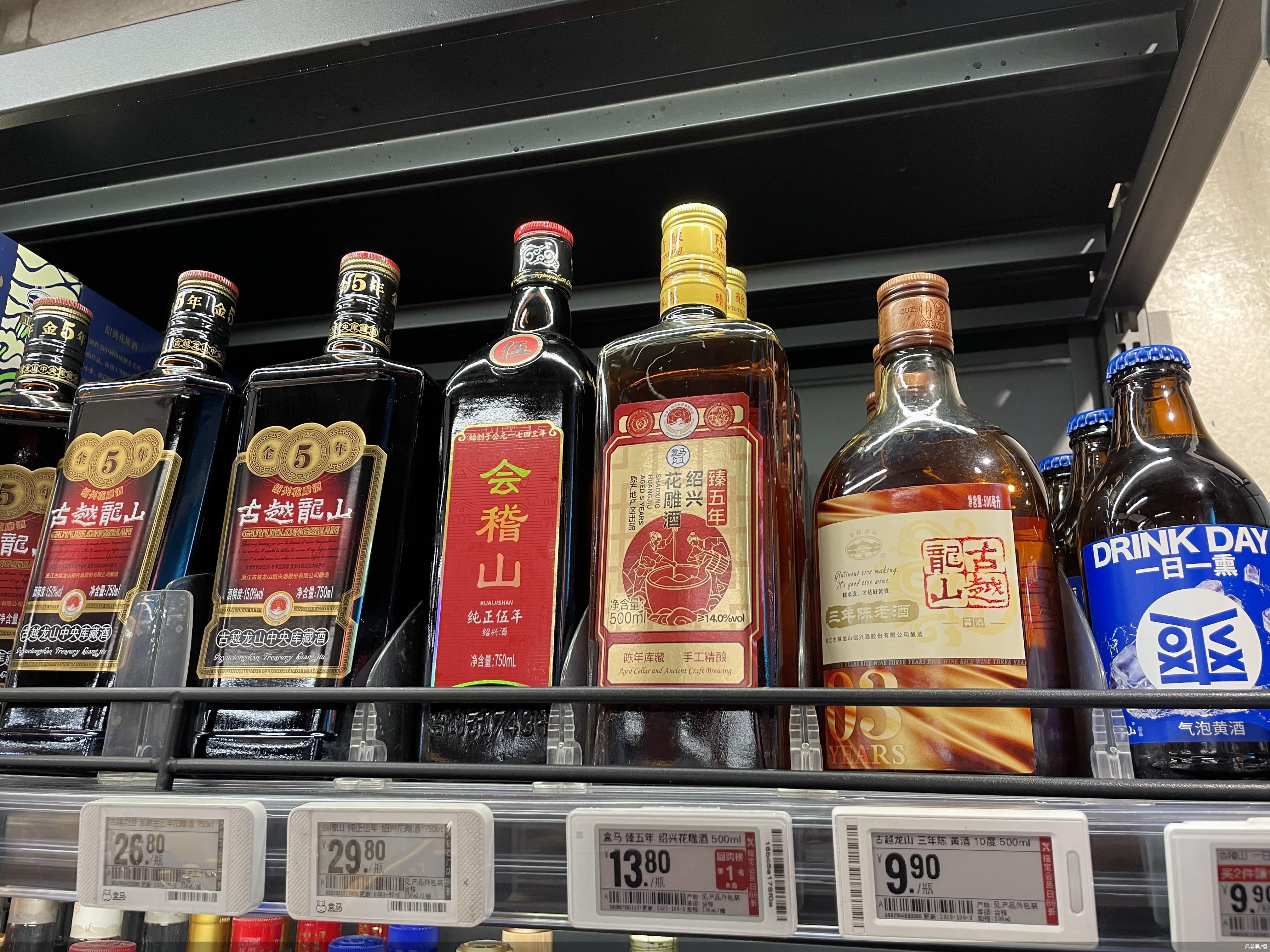
Core Insights - The consumption of yellow wine is experiencing a surge alongside the peak season for hairy crabs, with traditional products being complemented by younger, innovative offerings [1][2] - The market is characterized by intense competition among brands, both traditional and new entrants, as they seek to capitalize on the growing demand for yellow wine during the crab season [1][6] Market Trends - The introduction of youthful yellow wine products by leading brands such as Kuaijishan and Guyuelongshan is reshaping the traditional pairing of yellow wine with hairy crabs [2][11] - Sales data indicates that Kuaijishan's 8-degree sparkling yellow wine has surpassed 6,000 sales, while Guyuelongshan's similar product has exceeded 400 sales, highlighting a shift in consumer preferences towards innovative products [2][11] Industry Growth - The hairy crab market has shown significant growth, with production reaching a historical high of over 7 billion crabs in 2023, indicating a robust demand that supports the yellow wine market [7][11] - The yellow wine industry is projected to grow, with sales revenue reaching 21 billion yuan in 2023, a 2.1% increase year-on-year, and expected to exceed 30 billion yuan by 2025, maintaining a compound annual growth rate of over 5% [11][12] Consumer Behavior - The younger demographic is increasingly drawn to low-alcohol beverages, making yellow wine appealing due to its lower alcohol content and palatable taste [11][12] - Brands are focusing on expanding consumption scenarios beyond traditional dining, aiming to position yellow wine as a cultural lifestyle product through innovative venues like "slow wine bars" [12][13] Strategic Initiatives - Companies are encouraged to enhance their brand's appeal to younger consumers through innovative marketing strategies, including social media engagement and collaborations with influencers [13][14] - The establishment of experiential consumption spaces, such as slow wine bars, allows brands to gather consumer data and preferences, facilitating a deeper connection with the target audience [12][13]

古越龙山携手华润,“黄酒一哥”借年轻化突围
Xin Lang Cai Jing· 2025-10-21 12:16
Core Viewpoint - Gu Yue Long Shan is accelerating its youth-oriented transformation by collaborating with China Resources Beer to launch a cross-border product combining yellow wine and beer, aiming to capture the younger consumer market [3][4]. Company Performance - In the first half of the year, Gu Yue Long Shan reported a liquor sales revenue of 879 million yuan, a year-on-year increase of 0.86%, while net profit attributable to shareholders decreased by 4.72% to 90.31 million yuan [3]. - The company's revenue growth and market capitalization have been surpassed by its competitor Kuaiji Mountain, posing a risk to its title as the "King of Yellow Wine" [3]. Industry Challenges - The yellow wine industry is facing overall pressure due to aging consumers and regional consumption barriers, with the notion that "yellow wine cannot leave Jiangsu, Zhejiang, and Shanghai" becoming a prevalent challenge [3]. - Even in regions with a rich yellow wine culture, the acceptance of yellow wine among younger consumers is declining, necessitating strategies to break regional limitations and attract younger demographics [3]. Product Innovation and Market Strategy - Gu Yue Long Shan has been exploring youth-oriented strategies, including the launch of a craft yellow wine that garnered over 10 million yuan in orders within its first month [4]. - The company has introduced various innovative products, such as coffee yellow wine and flavored yellow wines, to cater to the preferences of younger consumers [4][5]. - The establishment of "slow wine bars" and the hosting of events like "trendy drinking music festivals" reflect the company's efforts to create drinking scenarios appealing to younger audiences [5]. Management Changes - Recent high-level personnel changes include the appointment of Hu Feng as the new deputy general manager, with a total of nine changes in the board and management over the past year, indicating adjustments during the company's transformation phase [7].

“浙江有礼”见证浙江文化创新品牌魅力
Huan Qiu Wang· 2025-10-21 09:15
Core Insights - The event "Zhejiang You Li · World Good Gifts" successfully concluded, showcasing 11 representative brands from Zhejiang across various sectors, emphasizing cultural heritage, technological innovation, and health consumption [1][15] Cultural Heritage - Brands emphasized the importance of cultural heritage and innovation, with Zhang Bojian, founder of Hu Shang Xiang Ju, setting the tone by engaging the audience through scent tasting to convey the essence of Hangzhou [3][5] - The brand Gong Mei Ji serves as a bridge between traditional craftsmanship and modern life, aligning with the philosophy of "Zhejiang You Li" to transmit culture and quality [5] - Li Zhen, a representative of a provincial intangible cultural heritage project, highlighted the integration of Longquan celadon with aerospace technology, showcasing modern applications of traditional craftsmanship [7] Internationalization - Brands are adopting innovative strategies for international expansion, such as the "cultural ice-breaking + dual-line layout" approach by the Daughter Red brand, successfully entering the Latin American market [8] - The San Guan Liu Ma Tou brand is adapting traditional snacks to modern health needs while planning to tailor products to regional taste preferences for global outreach [10] Technological Empowerment - Brands in the technology sector are leveraging advancements to create new market opportunities, with Cheng Tian Technology showcasing a groundbreaking exoskeleton assistive device that emphasizes humanistic care [12] - The Bei Ming Xing Miao brand introduced the "Hello Wali" smart bionic robot, demonstrating China's competitive edge in innovative technology [12] Health Consumption - Brands are focusing on user needs in health and daily products, with Pu Yuan Bio emphasizing research on probiotics tailored to various health requirements [14] - The Zheng Meng Leisure brand presented a nap pillow designed to meet modern consumers' quality of life demands, highlighting the importance of small products with significant quality [14] Conclusion - The event reaffirmed the comprehensive strength and market appeal of Zhejiang brands, illustrating a commitment to quality craftsmanship and innovative breakthroughs while promoting local culture on a global scale [15]
会稽山10月20日获融资买入3368.22万元,融资余额6.69亿元
Xin Lang Cai Jing· 2025-10-21 01:33
Core Viewpoint - The company Kuaijishan experienced a slight decline in stock price and trading volume on October 20, with significant changes in financing activities and a stable operational performance in the first half of 2025 [1][2]. Financing Activities - On October 20, Kuaijishan's financing buy-in amounted to 33.68 million yuan, while financing repayment was 41.87 million yuan, resulting in a net financing outflow of 8.18 million yuan [1]. - As of October 20, the total financing and securities lending balance for Kuaijishan was 669 million yuan, with the financing balance accounting for 6.09% of the circulating market value, indicating a high level compared to the past year [1]. - The company had no securities lending activities on October 20, with both the securities lending amount and balance at zero, reflecting a low level compared to the past year [1]. Operational Performance - For the first half of 2025, Kuaijishan reported operating revenue of 817 million yuan, representing a year-on-year growth of 11.03%, and a net profit attributable to shareholders of 93.88 million yuan, up 3.41% year-on-year [2]. - The company has distributed a total of 793 million yuan in dividends since its A-share listing, with 431 million yuan distributed over the past three years [2]. Shareholder Information - As of June 30, 2025, Kuaijishan had 26,000 shareholders, a decrease of 1.25% from the previous period, while the average circulating shares per person increased by 1.26% to 18,419 shares [2]. - Among the top ten circulating shareholders, Hong Kong Central Clearing Limited ranked as the fifth largest, increasing its holdings by 508,400 shares to 5.94 million shares [2].
大消费行业周报(10月第3周):海南离岛免税政策5大调整落地-20251020
Century Securities· 2025-10-20 00:44
Investment Rating - The report does not explicitly state an investment rating for the industry, but it suggests focusing on the duty-free retail sector and the ice and snow economy as potential investment opportunities. Core Insights - The recent adjustments to the Hainan duty-free shopping policy are expected to enhance the attractiveness of Hainan as a free trade port, expanding the range of duty-free goods and increasing consumer participation [2][3]. - The early onset of the snow season in Xinjiang is anticipated to benefit the ice and snow economy, with government initiatives aiming for a total output value of 200 billion yuan by 2030 [2][3]. - The report highlights the performance of various sectors within the consumer industry, noting significant stock price changes among leading companies [2][3]. Summary by Sections Market Weekly Review - The consumer sector showed mixed performance, with food and beverage, retail, and home appliances experiencing gains, while beauty care and textiles saw declines [2][3]. - Notable stock performances included Kuaijishan (+11.08%) and Dongbei Group (+8.97%) leading the gains, while Jinzi Ham (-17.80%) and Biyi Co. (-19.63%) faced significant losses [2][3]. Industry News and Key Company Announcements - The Hainan duty-free policy adjustments include expanding the range of duty-free goods to 47 categories and allowing more consumer participation [2][3]. - The ice and snow industry is projected to exceed 1 trillion yuan by 2025, driven by upcoming major events and government support [2][3]. - Various companies reported significant revenue growth, such as Spring Breeze Power with a 28.56% increase in Q3 revenue [2][3].




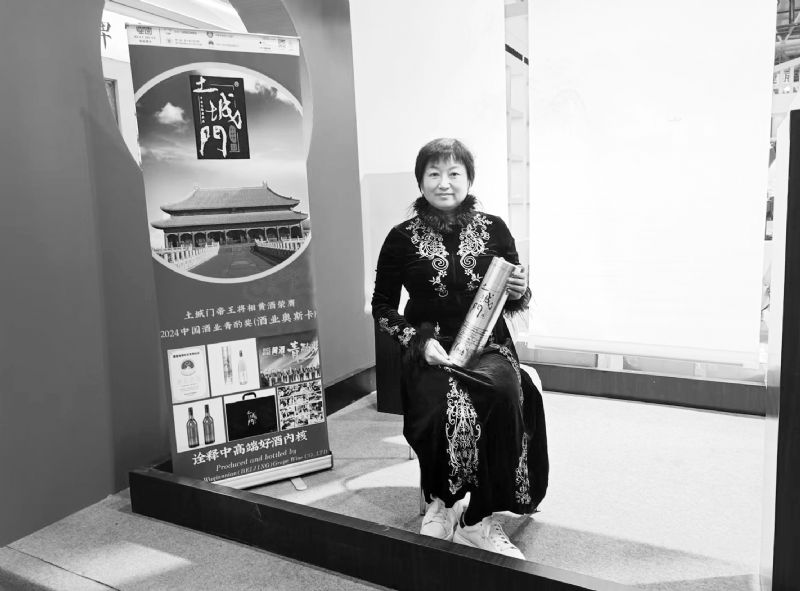
孙雪真金白银十年磨一剑执拗打磨 湖北泛黄县志里藏着诗经故乡的“土城门”黄酒
Chang Jiang Shang Bao· 2025-10-19 23:33
Core Insights - The article highlights the success of Suchi Wine in the yellow wine industry, particularly through its product "Tuchengmen Emperor General Yellow Wine," which won multiple awards at the China International Wine Expo and the "Zhongshi Cup" competition, showcasing the brand's recognition and innovation in a challenging market [3][5][6]. Company Overview - Suchi Wine, founded by Sun Xue, has made significant strides in the yellow wine sector by focusing on high-quality products and innovative brewing techniques, including a unique bottle cap design that enhances wine preservation [5][6][7]. - The company has shifted its strategy from a broad product range to focusing on two core products, targeting the new middle-class market with a price point of 198 yuan [5][6]. Industry Challenges - The yellow wine industry faces three main constraints: significant regional barriers with Jiangsu, Zhejiang, and Shanghai accounting for 70%-80% of revenue, a lack of diverse consumption scenarios, and limited brand recognition due to historical perceptions of yellow wine as merely cooking wine [4][8][9]. - The industry is characterized by a disparity in support and resources, particularly for non-traditional production areas, leading to challenges in competition and growth [9][10]. Market Trends - Despite the challenges, the yellow wine sector is experiencing gradual growth, with production reaching 1.9 million kiloliters and sales revenue of 21 billion yuan in 2023, reflecting a year-on-year increase of 3.2% and 2.1% respectively [8]. - The market is witnessing a shift towards health-conscious and low-alcohol beverages, with increasing consumer recognition of yellow wine's unique qualities and nutritional benefits [11]. Future Outlook - There is optimism for the yellow wine industry as it seeks to expand its consumer base and diversify consumption scenarios beyond traditional settings, with potential growth in everyday drinking and social occasions [11]. - Companies like Suchi Wine are positioning themselves for future success by investing in innovation and collaboration with educational institutions to address talent shortages in the industry [10][11].
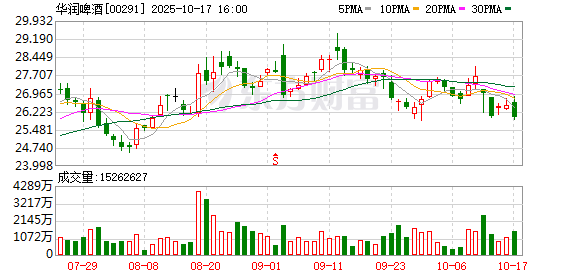
华润啤酒牵手古越龙山 啤酒+黄酒寻求突围
Zhong Guo Jing Ying Bao· 2025-10-17 08:52
Core Viewpoint - The collaboration between Guyue Longshan and China Resources Beer aims to create a new product that combines yellow wine and beer, responding to changing consumer trends and targeting the younger demographic seeking low-alcohol beverages [2][3][4]. Group 1: Strategic Collaboration - Guyue Longshan has become the exclusive partner of China Resources Beer in the "yellow wine + beer" crossover product area, focusing on creating a "yellow wine craft beer" [3]. - The partnership is seen as a strategic move to innovate product offerings and break traditional perceptions of yellow wine, leveraging the strengths of both companies [4][8]. - The new product is set to launch in the East China region before expanding nationwide, aiming to reach a broader and younger consumer base [3][4]. Group 2: Market Trends and Consumer Behavior - The collaboration is driven by the trend of younger consumers preferring low-alcohol beverages, with yellow wine typically having an alcohol content of 14%-20% and beer at 3%-5% [3][4]. - The combination of the rich flavor of yellow wine and the refreshing taste of beer is expected to create a unique drinking experience that aligns with modern social drinking preferences [3][4]. Group 3: Industry Context and Challenges - The yellow wine industry faces challenges such as limited market size, regional concentration, and a consumer base primarily consisting of older males, which hinders the growth potential among younger consumers [6][7]. - Competitors in the yellow wine sector, such as Kuaijishan and Jinfeng Wine Industry, are experiencing varied financial performances, indicating a competitive and evolving market landscape [5][6]. - The collaboration may help overcome regional limitations and enhance brand appeal, but it also faces challenges related to integrating different product categories and consumer habits [8][9].

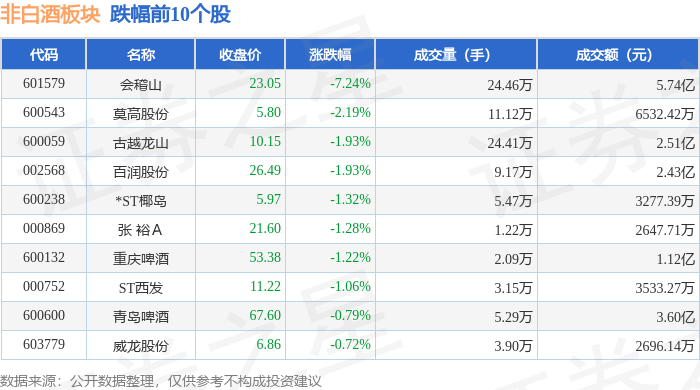
非白酒板块10月17日跌1.28%,会稽山领跌,主力资金净流出1.63亿元
Zheng Xing Xing Ye Ri Bao· 2025-10-17 08:31
Market Overview - On October 17, the non-baijiu sector declined by 1.28% compared to the previous trading day, with Kuaijishan leading the decline [1] - The Shanghai Composite Index closed at 3839.76, down 1.95%, while the Shenzhen Component Index closed at 12688.94, down 3.04% [1] Stock Performance - Kuaijishan (601579) closed at 23.05, down 7.24% with a trading volume of 244,600 shares and a turnover of 574 million yuan [1] - Other notable declines included: - Caogao Co. (600543) down 2.19% to 5.80 - Guyue Longshan (600059) down 1.93% to 10.15 - Bailun Co. (002568) down 1.93% to 26.49 [1] Capital Flow - The non-baijiu sector experienced a net outflow of 163 million yuan from institutional investors, while retail investors saw a net inflow of 174 million yuan [1] - Detailed capital flow for selected stocks showed: - Jinfeng Wine Industry (600616) had a net inflow of 353,300 yuan from institutional investors [2] - ST Yedao (600238) saw a net outflow of 414,800 yuan from institutional investors but a net inflow of 644,300 yuan from retail investors [2] - ST Xifa (000752) had a net outflow of 2,224,400 yuan from institutional investors but a net inflow of 2,754,100 yuan from retail investors [2]