
天合光能

Search documents
天合光能提示风险:“三年累计盈利不低于96亿元”不构成业绩承诺
Zhong Guo Jing Ying Bao· 2026-01-26 08:41
Core Viewpoint - Trina Solar (688599.SH) has announced a restrictive stock incentive plan and employee stock ownership plan for 2026, with performance assessment indicators set for the years 2026 to 2028, emphasizing confidence in the company's long-term development potential and intrinsic value [2][4]. Performance Assessment Targets - The performance assessment targets for the incentive plan are as follows: - For the first vesting period in 2026, the net profit must not be less than 200 million yuan [3]. - For the second vesting period in 2027, the net profit must not be less than 3.2 billion yuan, or the cumulative net profit for 2026-2027 must not be less than 3.4 billion yuan [3]. - For the third vesting period in 2028, the net profit must not be less than 6.2 billion yuan, or the cumulative net profit for 2026-2028 must not be less than 9.6 billion yuan [3]. Industry Context - Trina Solar's performance targets come amid a challenging backdrop for the photovoltaic industry, which has seen widespread losses. The company previously forecasted a net loss of 6.5 billion to 7.5 billion yuan for the year 2025, indicating a potential turnaround in the industry [4]. - The company believes that with the gradual recovery of the photovoltaic industry and rapid growth in its energy storage and system solutions businesses, it can achieve performance recovery ahead of the industry [4]. Market Reaction - As of January 26, Trina Solar's stock price was reported at 20.62 yuan per share, reflecting a decline of 1.29%, with a total market capitalization of approximately 48.3 billion yuan [5].


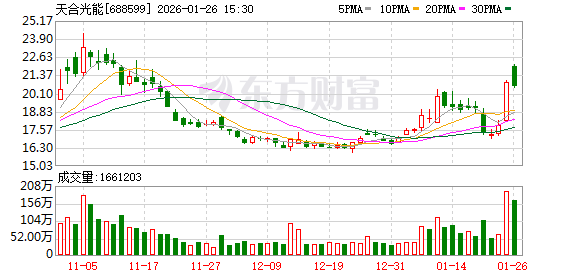
400亿光伏龙头再抛千人股权激励 三年业绩考核净利近百亿元
2 1 Shi Ji Jing Ji Bao Dao· 2026-01-26 08:16
Core Viewpoint - Trina Solar (688599.SH) has announced a new stock incentive plan involving approximately 12.8 million restricted shares, targeting a performance assessment for net profits over the next three years, aiming to reverse previous losses [2][5][7]. Performance Assessment Goals - The performance targets set for the incentive plan include: - Net profit of no less than 200 million yuan in 2026 - Net profit of no less than 3.2 billion yuan in 2027 - Net profit of no less than 6.2 billion yuan in 2028 - Cumulative net profit of no less than 9.6 billion yuan from 2026 to 2028 [3][5][6]. Incentive Plan Details - The incentive plan involves 1,299 participants, including directors, senior management, and key technical personnel, with a total of 12.8 million shares allocated [5][6]. - The plan follows a pattern of introducing stock incentive plans every three years, with previous plans launched in 2020 and 2023 [6][7]. Financial Performance Context - Trina Solar is facing significant pressure to turn around its financial performance, having projected a loss of 6.5 billion to 7.5 billion yuan for the fiscal year 2025, which is an increase from the previous year's losses [9]. - The company attributes its challenges to supply-demand imbalances in the photovoltaic industry, increased competition, and rising costs of key raw materials [9]. Strategic Focus Areas - The company is focusing on diversifying its business, particularly in the energy storage sector, with a target of 8-10 GWh in shipments for 2025 and aiming to double that in 2026 [9][10]. - Trina Solar is also exploring opportunities in space photovoltaic products, collaborating with leading aerospace companies in Europe and the U.S. [10]. Market Reaction - Following the announcement of the performance assessment goals, Trina Solar's stock price fell by 1.26%, with a current market capitalization of 48.3 billion yuan [10].
开源证券:太空光伏设备开辟新蓝海 关注行业头部设备及电池厂商
智通财经网· 2026-01-26 06:47
Core Viewpoint - The space photovoltaic equipment industry is entering a new phase, with p-type HJT solar cells being identified as the most suitable technology for space applications due to their superior radiation resistance and other advantages [1][2]. Group 1: Technological Advancements - P-type silicon solar cells exhibit significantly better radiation resistance compared to n-type cells, making p-type HJT cells the optimal choice for space scenarios [2]. - HJT cells offer benefits such as thin-film design, low silver consumption, low degradation, and low temperature coefficient, which enhance their suitability for space applications [2]. - The perovskite technology has achieved GW-level production capacity, with a clear industrialization path, positioning it as a potential ultimate solution for space photovoltaics [2]. Group 2: Market Opportunities - The extreme conditions in space, including high-energy cosmic radiation and temperature fluctuations, impose strict requirements on photovoltaic cells, creating a market for advanced solar technologies [1]. - The planned deployment of 100GW solar AI satellites by SpaceX within five years indicates a significant growth opportunity in the space photovoltaic sector, driven by the high value of space solar cells [3]. - The combination of a burgeoning 100GW space computing market and the high unit value of space photovoltaic batteries is expected to open new growth avenues for the photovoltaic industry [3]. Group 3: Beneficiary Companies - Key equipment manufacturers benefiting from advancements in space photovoltaic technology include Maiwei Co., Ltd. (300751.SZ), Jiejia Weichuang (300724.SZ), and Laplace (688726.SH) [4]. - Battery manufacturers with a strong focus on space photovoltaic technology include Dongfang Risen (300118.SZ), Junda Co., Ltd. (002865.SZ), and Trina Solar (688599.SH) [4].
光伏设备行业深度报告:太空光伏深度报告:光伏向空,志在星海
KAIYUAN SECURITIES· 2026-01-26 05:43
Investment Rating - The investment rating for the photovoltaic equipment industry is optimistic (maintained) [1] Core Insights - The photovoltaic sector is entering a silicon era in space applications, driven by the need for cost reduction and efficiency improvement in photovoltaic technology [5][18] - Photovoltaic systems are the most reliable and sustainable power source for spacecraft, providing stable energy supply without the need for fuel resupply [18] - The transition to silicon-based photovoltaic technology in space is being accelerated by the high costs and limitations of III-V multi-junction solar cells, which are currently the most efficient but expensive [64][67] Summary by Sections 1. From Parallel to Convergence: Space Enters the Silicon Era - Photovoltaics are the most important energy supply for spacecraft, providing stable energy without atmospheric interference [18] - Cost reduction and efficiency improvement are the main drivers for the evolution of photovoltaic technology [19] - P-type HJT (Heterojunction Technology) cells show significant advantages in space applications due to their superior radiation resistance [6][69] - Silicon-perovskite tandem cells are expected to become the ultimate solution, breaking the efficiency-cost-radiation resistance triangle [6][68] 2. The Space Race Begins: Photovoltaics Open New Blue Oceans - Low Earth orbit communication satellites are driving the demand for large-scale satellite deployment [7] - The space computing market is expected to release significant potential, with a focus on reliable power supply rather than cost competition [7] 3. Pre-Volume Layout: Equipment Manufacturers Seize Opportunities - Key equipment manufacturers benefiting from the space photovoltaic technology include Maiwei, Jiejia Weichuang, Laplace, and others [8] 4. Competition Among Giants: Leading Manufacturers Tap into Blue Oceans - Major battery manufacturers deeply involved in space photovoltaic technology include Dongfang Risheng, Junda, Trina Solar, and JinkoSolar [8]




马斯克力挺!这一赛道火了
Zheng Quan Ri Bao Zhi Sheng· 2026-01-26 05:26
Group 1 - The core concept of space photovoltaic technology is to deploy large solar power stations in space, converting solar energy into electricity and transmitting it back to Earth or supplying power to satellites and space stations [1][2] - Elon Musk announced a target of achieving 100GW of solar manufacturing capacity annually within three years, which is nearly half of China's annual new photovoltaic installation capacity [1][2] - The rise of AI models is driving exponential growth in computing power demand, making energy-intensive data centers significant energy consumers, thus creating new opportunities for the photovoltaic industry [2] Group 2 - Companies like Trina Solar have established long-term strategies in various solar technologies, including crystalline silicon, perovskite tandem cells, and III-V arsenide multi-junction cells, and are collaborating with domestic and international space agencies [2] - Junda Co. announced a cash investment of 30 million yuan to acquire a 16.67% stake in Shanghai Xingyi Chip Energy Technology Co., marking a strategic shift from ground photovoltaic to space photovoltaic [3] - Securities firms are optimistic about the long-term value of space photovoltaic technology, predicting that early movers with differentiated technology reserves will gain competitive advantages and valuation premiums [3]
华联期货工业硅、多晶硅周报:静待新政窗口期-20260126
Hua Lian Qi Huo· 2026-01-26 05:19
1. Report Industry Investment Rating - No information provided in the report 2. Core Viewpoints of the Report - **Industrial Silicon**: The supply of industrial silicon has decreased slightly, but due to weak downstream demand, market activity is limited. It is expected that the price of industrial silicon still has room to decline. Suggest considering shorting opportunities for si2605, buying put options, or implementing an arbitrage strategy of shorting industrial silicon and going long on polysilicon [11]. - **Polysilicon**: The polysilicon market shows a situation of having prices but no trading. Although some production enterprises have reduced supply, inventory consumption is limited, and the effect of supply - demand adjustment has not yet appeared. Future price trends still depend on the improvement of supply - demand balance and industry policy orientation. Suggest considering long opportunities for PS2605, or implementing an arbitrage strategy of shorting industrial silicon and going long on polysilicon [13]. 3. Summary by Relevant Catalogs 3.1 Week - ly Views and Hot News 3.1.1 Hot News - From April 1, 2026, the VAT export tax rebate for photovoltaic and other products will be cancelled. From April 1, 2026, to December 31, 2026, the VAT export tax rebate rate for battery products will be reduced from 9% to 6%, and from January 1, 2027, the VAT export tax rebate for battery products will be cancelled [8]. - A rumored meeting minutes show that on January 6, the State Administration for Market Regulation约谈ed relevant units in the photovoltaic industry, mainly involving issues such as monopoly risks and rectification requirements. It is speculated that the limit - down of the polysilicon futures was affected by this [8]. - On December 26, 2025, the State Administration for Market Regulation carried out compliance guidance on price competition in the photovoltaic industry in Hefei, Anhui, pointing out the "involution - style" competition problems in the industry [8]. - On December 24, 2025, the Guangzhou Futures Exchange announced the addition of several polysilicon futures delivery warehouses [8]. - On December 23, 2025, the Guangzhou Futures Exchange restricted the single - day opening volume of non - futures company members or clients in polysilicon futures contracts [8]. 3.1.2 Industrial Silicon Weekly View - **Market Review**: From January 16 - 23, 2026, the industrial silicon spot price remained stable, with the benchmark spot price at 8,802 yuan/ton on January 23. The futures price of the main contract declined, with a weekly decline of 2.50%, and the latest transaction price was 8,820 yuan/ton, and the current position was about 231,400 lots [11]. - **Supply**: In the southwest region, only a few manufacturers are operating, with low production. In Xinjiang, production is stable; in Inner Mongolia, some manufacturers have reduced production; in Shaanxi, some manufacturers have resumed production [11]. - **Demand**: In January, the polysilicon output continued to decline, and the industry's operating rate decreased. The silicone industry was affected by the cancellation of export tax rebates, and the aluminum rod output decreased, with general demand for industrial silicon [11]. - **Cost, Profit, and Inventory**: The production cost of industrial silicon decreased slightly this week, mainly due to the decline in silicon coal prices. Profits increased slightly, and the inventory remained at a high level [11]. - **Outlook and Strategy**: It is expected that the price of industrial silicon will still decline. Suggest shorting si2605, buying put options, or implementing an arbitrage strategy [11]. 3.1.3 Polysilicon Weekly View - **Market Review**: From January 16 - 23, 2026, the polysilicon spot price fluctuated downward, with the benchmark spot price at 50,505 yuan/ton on January 23. The futures price of the main contract declined, with a weekly decline of 2.14%, and the current position was about 46,200 lots [13]. - **Supply**: In January 2026, the polysilicon output continued to decline, and most enterprises were operating at reduced loads. It is expected that the domestic polysilicon output in January will be about 95,000 tons [13]. - **Demand**: Although the downstream demand schedule has increased compared with the initial forecast of the month, it is still declining month - on - month. The demand in the energy storage field is expected to be optimistic, but the power battery is in the off - season, and the procurement demand is restricted [13]. - **Cost, Profit, and Inventory**: This week, the cost increased, and the profit decreased significantly. The inventory showed a "high - level fluctuation" characteristic, and the overall inventory continued to accumulate [13]. - **Outlook and Strategy**: The polysilicon market shows a situation of having prices but no trading. Future price trends depend on supply - demand balance and policies. Suggest going long on PS2605 or implementing an arbitrage strategy [13]. 3.2 Industry Pattern - The industrial silicon industry chain includes raw materials such as petroleum coke, charcoal, etc. The products are mainly used in organic silicon, polysilicon, and aluminum alloy industries, and are further applied in various fields such as electronics, construction, and new energy [19]. 3.3 Spot and Futures Market - The report provides multiple charts of industrial silicon spot prices (including different grades and regions) and futures contract prices (including continuous contracts and active contracts) [23][33][41] 3.4 Inventory - The report provides multiple charts of industrial silicon inventory, including industry inventory, factory inventory, market inventory, and futures inventory [52][56] 3.5 Cost and Profit - **Profit and Cost**: The report provides charts of the comprehensive profit and cost of industrial silicon [63] - **Main Production Area Electricity Prices**: Charts of electricity prices in main industrial silicon production areas such as Yunnan Nujiang, Xinjiang, and Sichuan Liangshan are provided [68][70] - **Silica Stone Prices**: Charts of silica stone prices in regions such as Guangxi, Henan, and Shaanxi are provided [77][81] - **Petroleum Coke, Electrodes, and Silicon Coal**: Charts of prices of petroleum coke, graphite electrodes, and silicon coal in different regions are provided [84][90] 3.6 Supply - **Output**: Charts of industrial silicon weekly and monthly output are provided [96] - **Operating Rate and Production Capacity**: Charts of industrial silicon operating rate and monthly production capacity are provided, and information on new production capacity projects in various regions in 2025 - 2026 is listed, with a total new production capacity of 1.98 million tons [101][104] 3.7 Demand - **Consumption Overview**: Charts of industrial silicon consumption breakdown and structure are provided, and consumption data of different industries from 2024 - 2025 are listed [107][110] - **Polysilicon**: Charts of polysilicon monthly output, price, factory inventory, cost, and profit are provided [113][118] - **Silicone**: Charts of silicone market price, intermediate (DMC) monthly output, production cost, and production gross profit in the East China region are provided [123][129] - **Aluminum Rod**: Charts of aluminum rod weekly and monthly output, price, 6063 spot inventory, and original aluminum - based alloy production, operating rate are provided [134][138][140] - **Recycled Aluminum Alloy**: Charts of recycled aluminum alloy production, production capacity, operating rate, and inventory are provided [149][151] - **Solar/PV**: Charts of solar cell cumulative output and battery slice price are provided [156] 3.8 Import and Export - The report provides charts of industrial silicon and polysilicon import and export volumes [166][170]
商业航天产业化提速引爆太空光伏概念,明阳智能等多股涨停!多家上市公司披露最新进展
Jin Rong Jie· 2026-01-26 05:01
消息面上,1月22日,达沃斯世界经济论坛年会期间,特斯拉CEO埃隆·马斯克在与贝莱德CEO拉里·芬克的对谈中明确力挺太空 光伏,并披露关键产能规划。他表示,SpaceX与特斯拉正同步推进太阳能产能提升,目标在未来三年内实现每年100GW的太阳 能制造能力。 商业航天崛起打开太空光伏新空间 太空光伏走红的背后是我国商业航天产业的快速崛起。当前,我国商业航天已迈入规模化、商业化新阶段,产业红利逐步释 放,驱动太空光伏从技术探索逐步迈向产业探索阶段。 近年来,低轨卫星星座建设明显提速,通信、遥感、导航等下游应用需求持续释放,而商业火箭发射成本的下降与发射能力的 提升,也让航天器在轨运行时间更长、载荷更复杂成为常态。在此背景下,可靠的能源支撑系统成为保障航天器稳定运行的关 键,太空光伏凭借其独特优势成为业内关注的焦点。 《证券日报》援引商业航天业内人士观点称,太空极端环境对能源供应提出极为严苛的要求,太空任务的特殊性也决定了能源 系统须具备长期稳定性与可靠性。而光伏技术可将太阳能直接转化为电能,兼具持续性、稳定性和轻量化等优势,目前已成为 航天器最成熟、应用最广泛的能源形式,有效适配太空场景需求。 据中信证券预测,2 ...


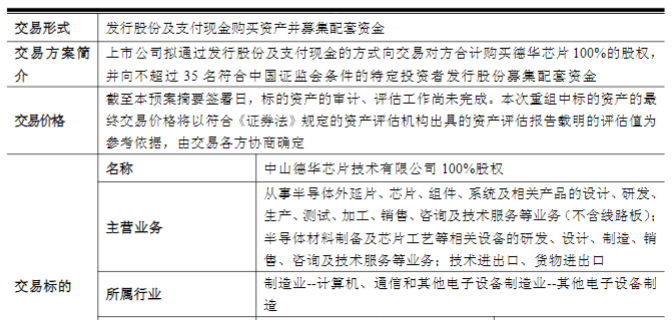
关于“未来三年百亿盈利”,688599提示风险
Shang Hai Zheng Quan Bao· 2026-01-26 04:40
1月26日盘前,天合光能发布风险提示公告。天合光能就《2026年限制性股票激励计划(草案)》《2026年员工持股计划(草案)》(合并简称"激励计 划")中提出的"2026年至2028年净利润累计值不少于96亿元"等业绩考核指标作出说明。公司称这些考核指标不构成对经营业绩的任何承诺。 本业绩考核指标仅为本次激励计划的考核依据,不构成公司对未来盈利能力及经营业绩的任何承诺。公司未来的经营业绩将受宏观经济周期、行业政策调 整、市场竞争格局等多种因素的综合影响,存在一定的不确定性,可能导致实际经营成果与业绩考核指标存在差异。请广大投资者关注公司后续的业绩实 现情况,并注意投资风险。 公司还就本次激励计划的股票归属条件进行说明。本次激励计划设置了以经审计的公司合并报表之净利润为核心的业绩考核指标,激励对象的股票归属与 公司业绩考核指标完成情况直接挂钩。若公司未能达成本次激励计划约定的净利润业绩考核指标,激励对象对应考核期的股票将无法归属,相应考核期内 的本次激励计划部分将自动作废失效。 1月26日上午,天合光能开盘后涨幅回落。截至午间,公司股价下跌0.67%,报20.75元/股,公司总市值达486亿元。 | 天合光能 ...
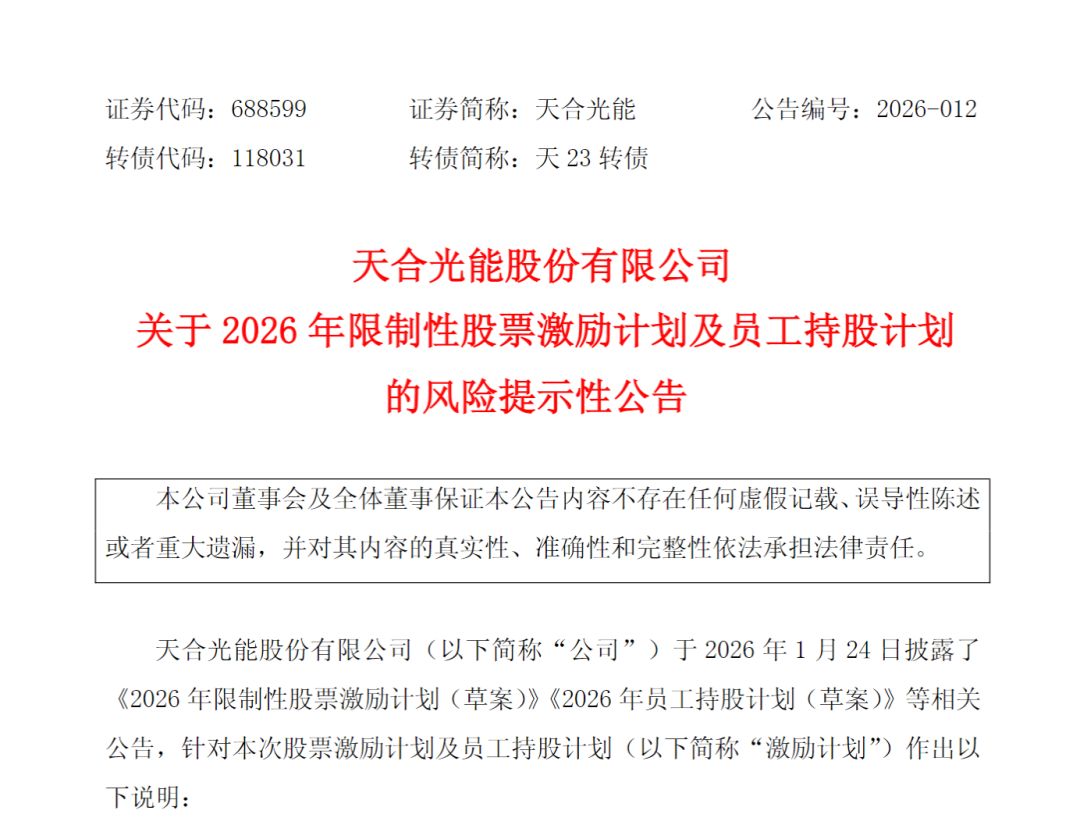
光大证券:商业航天已成为市场近期最强主线之一 太空光伏为核心受益赛道
智通财经网· 2026-01-26 02:45
在政策、需求、资本的多重催化下,商业航天已成为市场近期的最强主线之一;而商业航天的低轨卫星 组网、太空算力落地等场景的规模化发展则为太空光伏打开了广阔的需求空间,其作为商业航天规模 化、商业化发展的核心能源基石也受到了资本市场的密切关注。 马斯克对太空光伏的具体落地规划是带动板块股价上行的核心催化因素之一 作为商业航天和新能源领域的全球创新领袖,马斯克对太空光伏的表述已从早期的概念性表态逐步转向 具体落地规划,围绕技术研发、产能建设、场景落地等多维度持续完善特斯拉和SpaceX的太空光伏领 域布局。此次在达沃斯世界经济论坛上马斯克提出了明确的产能目标,进一步提升资本市场对太空光伏 商业化落地的信心,进而带动光伏ETF(159857)次日大涨9.57%。 光大证券发布研报称,商业航天已成为市场近期最强主线之一,太空光伏为核心受益赛道。太空光伏的 技术迭代将带来新技术产能设备需求的持续增长,提前布局太空光伏领域并实现差异化技术储备的光伏 企业有望在行业发展初期获得先发优势与估值溢价。 光大证券主要观点如下: 事件 马斯克在2026年达沃斯世界经济论坛上宣布,特斯拉与SpaceX计划未来三年在美国建设总计200GW ...

光大证券晨会速递-20260126
EBSCN· 2026-01-26 01:29
2026 年 1 月 26 日 晨会速递 分析师点评 市场数据 总量研究 【策略】A 股牛市当前阶段形态特征六问六答——解密牛市系列之六 本轮牛市或已突破第二震荡段,进入上涨段 3。参考历史结构性牛市规律,本轮牛市 上涨段 3 初期或在 4200-4300 点形成阶段性高点,随后回调企稳于震荡段 2 上沿, 并重新开启新一轮上涨。后续需重点跟踪两点:一是 4200-4300 点区间压力释放与 资金承接情况;二是震荡段 2 上沿的支撑有效性及核心板块企稳信号。 【策略】保持稳健,持股过节——策略周专题(2026 年 1 月第 3 期) 保持稳健,持股过节。参考之前的市场行情,我们认为春节前市场将会保持震荡,难 以保持稳定的趋势,这主要与春节之前投资者交易热度有所下行,以及微观流动性短 期趋紧有关。从历史情况来看,春节前 20 个交易日,主要指数上涨概率不足 50%。 预计春节之后市场将会迎来新一轮上行动力,春节后 20 个交易日主要指数上行概率 与平均涨幅均较高。因此建议投资者近期以稳为主,但仍应持股过节。 【债券】如何看待近期 DR001 的上行?——2026 年 1 月 23 日利率债观察 如果一段时间内 ...