富士胶片

Search documents
卡脖子:中国哪些新材料高度依赖日本进口及国外进口?





材料汇· 2025-11-24 15:58
Core Viewpoint - The article highlights the significant dependency of China's high-end manufacturing on Japan for critical strategic new materials, particularly in the semiconductor and advanced manufacturing sectors, emphasizing the risks posed by geopolitical tensions and supply chain vulnerabilities [2][4]. Group 1: Dependency on Japanese Core New Materials - Japan holds a monopolistic position in semiconductor materials, high-end polymers, and electronic chemicals, with China's dependency exceeding 50% in several key categories, and nearly 100% in some high-end areas [4][6]. - The complexity of semiconductor manufacturing processes means that Japan dominates the supply of critical materials like photoresists and silicon wafers, with global market shares consistently above 60% [6][9]. Group 2: Semiconductor Core Materials - **Photoresists**: China has an overall import dependency of about 90%, with high-end photoresists being 100% reliant on Japan. Major suppliers include JSR, Tokyo Ohka, Shin-Etsu Chemical, and Fujifilm, which control 92% of the high-end market [7]. - **12-inch Silicon Wafers**: The import dependency is around 90%, with Japan supplying 58%. Key players like Shin-Etsu Chemical and SUMCO dominate over 60% of the market [9]. - **High-Purity Ruthenium Targets**: The import dependency is 98%, with Japan's JX Metals and TOSOH holding a significant market share. Domestic production is limited to lower purity levels [12]. Group 3: High-End Polymer Materials - Japan leads the high-end market for electronic-grade polyimide films, with an import dependency of 85% for overall polyimide materials, and 90% for high-end applications [19]. - **Optical-grade PET Films**: The import dependency is 75%, with Japan supplying 100% of high-end films used in MLCCs [23]. Group 4: Other Key Materials in Electronics - **Sputtering Targets**: The import dependency is approximately 95%, with Japan's JX Metals and Nippon Mining controlling 60% of the market [27]. - **High-Purity Electronic Gases**: The import dependency is 70%, with Japan's Taiyo Nippon Sanso holding a 40% market share [31]. Group 5: Hydrogen Energy and Fuel Cell Key Materials - **High-End Carbon Carrier Materials**: The overall import dependency is 85%, with Japan's TOSOH dominating the market [35]. - **Fuel Cell Platinum-based Catalysts**: The import dependency is 78%, with significant reliance on European suppliers [107]. Group 6: Aerospace and High-End Manufacturing Key Materials - **High-Temperature Alloys**: The import dependency is 90%, with major suppliers from the US and Europe completely dominating the market [80]. - **Carbon Fiber**: The import dependency is 85%, with Japan and the US leading the high-end market [86]. Group 7: New Energy and Electronics Key Materials - **High-End Lithium-Ion Battery Separators**: The import dependency is 70%, with Japan's Asahi Kasei and Toray leading the market [94]. - **Ultra-Thin Copper Foils**: The import dependency is 80%, with Japan's JX Copper and Mitsui Mining dominating the supply [98].


中国光刻胶,如何突围?
3 6 Ke· 2025-11-01 05:01
Core Viewpoint - The article discusses the significant progress made by Chinese companies in the development of photoresists, a critical material for semiconductor manufacturing, while highlighting the substantial gap that still exists compared to Japanese firms in terms of technology and market share [1][13][18]. Group 1: Importance of Photoresists - Photoresists are essential materials used in the photolithography process of chip manufacturing, impacting the yield and quality of end products [6][7]. - The market size of photoresists is closely linked to the manufacturing capabilities of smart equipment, making it a key indicator of semiconductor technology levels [7][9]. Group 2: Progress in Domestic Production - Over the past two decades, China has prioritized the development of the photoresist industry, with significant policy support aimed at achieving domestic production [7][12]. - By 2023, the domestic photoresist market is estimated to be around 12.1 billion yuan, with a projected compound annual growth rate of 10% over the next five years [13]. Group 3: Comparison with Japan - Despite progress, China's photoresist production remains significantly behind Japan, with domestic high-end photoresist localization rates being extremely low, particularly for EUV photoresists [13][15]. - Japanese companies dominate the global market, holding over 90% market share in high-end photoresists, with four out of the five largest manufacturers being Japanese [13][15]. Group 4: Barriers to Entry - Japanese firms have established strong technical, industry, and market barriers, making it difficult for new entrants to compete [18][20]. - The historical development of technology and the establishment of deep collaborations with downstream wafer manufacturers have solidified Japan's leading position in the photoresist market [20][21]. Group 5: Future Directions for China - To break the monopoly and reduce the gap with Japanese companies, Chinese firms need to enhance R&D efforts and focus on mastering core technologies [21][26]. - The establishment of a complete industrial ecosystem, including the development of domestic photolithography machines, is crucial for the long-term success of China's photoresist industry [26][29].
从“规模增长”到 “品质升级”——浙江消费新观察
Sou Hu Cai Jing· 2025-10-29 08:32
Core Insights - Zhejiang province is experiencing a consumption boom driven by new consumption trends such as "technology + cultural tourism" and "national tide" [1][4] - In the first three quarters of this year, the total retail sales of social consumer goods in Zhejiang reached 28,408 billion yuan, reflecting a year-on-year growth of 5.2% [1][8] Group 1: New Consumption Trends - The "first launch economy" is a key strategy for revitalizing commercial vitality, focusing on introducing first stores and hosting first exhibitions to enhance consumer experiences [1][4] - The X-SPACE Fujifilm Imaging Space in Hangzhou has become a popular destination, attracting over 5,000 visitors on its opening day, showcasing a blend of product experience and artistic interaction [3][4] Group 2: Diverse Consumption Upgrades - The "Wenshan Digital Life Block" has transformed from a traditional computer street into a digital lifestyle hub, featuring over 300 tech products that appeal to young consumers [5][7] - Smart consumption is on the rise, with retail sales of wearable smart devices and smartphones increasing by 105.6% and 62.6% respectively in the first three quarters [7][8] Group 3: Policy Support and Market Activation - Zhejiang's consumption market is bolstered by a combination of policy initiatives and promotional activities, with nearly 2,500 events held to stimulate consumer spending [8][10] - The province has allocated 278 billion yuan for trade-in subsidies and issued approximately 3 billion yuan in consumption vouchers, significantly boosting retail sales in various categories [8][10] Group 4: Future Consumption Landscape - The "2025 Golden Autumn Shopping Festival" aims to enhance consumer experiences and promote new consumption models, with nearly 500 events planned to engage consumers [10] - The focus on quality upgrades in consumption is expected to be a dominant theme in the upcoming "15th Five-Year Plan" period, driven by both policy and market forces [8][10]

好消息!国产光刻胶重磅突破!攻克5nm芯片制造关键难题
是说芯语· 2025-10-27 02:00
Core Insights - A significant breakthrough has been achieved in China's semiconductor materials sector, specifically in photoresist technology, which is crucial for chip manufacturing [1] - The research team led by Professor Peng Hailin from Peking University has successfully utilized cryo-electron tomography to analyze the three-dimensional structure and entanglement behavior of photoresist molecules in a liquid environment, leading to a solution that significantly reduces lithography defects [1] Global Photoresist Industry Landscape - The global photoresist market is highly concentrated, with Japanese companies dominating, especially in the high-end semiconductor sector, controlling over 90% of the market share [2] - The global photoresist market is projected to reach approximately $4.96 billion in 2024 and $6.7 billion by 2030, with a compound annual growth rate (CAGR) of 5.24% from 2025 to 2030 [2] - Major international players include JSR, TOK, Sumitomo Chemical, Shin-Etsu Chemical, Fujifilm, and Dow Chemical, with Japanese firms holding over 75% of the market share and 96.7% in the high-end segment [2] Value Perspective - Although photoresist accounts for only 5% of the chip material cost, its performance directly impacts chip yield, with a 1% yield fluctuation potentially resulting in losses of tens of millions of dollars [3] Breakthrough in Domestic Photoresist - Photoresist is a critical material in chip manufacturing, affecting the precise transfer of circuit patterns and overall chip yield [4] - The research team observed significant entanglement behavior among photoresist polymers, leading to the formation of agglomerated particles that cause defects during the development process [5] - The team successfully eliminated over 99% of pattern defects caused by photoresist residues on 12-inch wafers, providing crucial technical support for the manufacturing of chips at the 5nm process node and below [6] Molecular-Level Defects - Traditional characterization methods could only observe the final pattern, failing to trace the molecular entanglement state during the liquid exposure moment, leading to defects such as random bridging and excessive line edge roughness (LER) [8] - The entanglement behavior was precisely understood, allowing the development of a new molecular control scheme that significantly reduced abnormal entanglement probability [9] Implications of the Research - The research provides a powerful tool for observing various liquid-phase interface reactions at the atomic/molecular scale, which will enhance defect control and yield improvement in critical processes such as lithography, etching, and wet cleaning [10]

《进化的力量》刘润2025年度演讲六大核心迁徙体系精炼(附演讲全文)
首席商业评论· 2025-10-26 04:34
Core Viewpoint - The article emphasizes the necessity for businesses and individuals to undergo "migration" in response to the systemic "drought" in ecological niches, which is characterized by the end of growth opportunities and increased competition. This migration involves abandoning old advantages and moving towards new demands, capabilities, markets, organizations, and technological orders [4][5][6]. Group 1: Overall Framework - The speech is structured into eight major parts, focusing on six critical migrations that determine whether a business can survive and grow: category migration, value migration, model migration, overseas migration, intelligent migration, and demographic migration [4][6]. - The overarching theme is that in an environment of "ecological drought," businesses must strategically migrate to survive and rebuild growth [4][5]. Group 2: Major Migrations 1. Category Migration - Category rigidity arises from excessive optimization of old demands and slow responses to new demands. Innovation requires redefining problems rather than merely improving existing solutions [6][8]. - A methodology for category migration includes stopping current practices, redefining the problem, and addressing new demands [6][8]. 2. Value Migration - The consumption landscape is shifting towards a "value reordering" era, where consumers exhibit frugality in some categories while being generous in others, indicating a shift from pure price sensitivity to emotional and meaningful consumption [8][9]. 3. Model Migration - As product life cycles end, core capabilities can still migrate and create new value. The key to successful migration lies in capability assessment, market scanning, and model validation [10][11]. 4. Overseas Migration - In increasingly crowded domestic markets, "going overseas" serves as a systematic migration strategy, offering new market opportunities and validating capabilities on a global stage [15][16]. 5. Intelligent Migration - AI and smart technologies are not merely tools but cognitive extensions that redefine human-machine collaboration, altering efficiency and business models [16][17]. 6. Demographic Migration - Changes in population dynamics, such as declining birth rates and aging populations, serve as long-term demand reshapers, impacting various industries [18][19]. Group 3: Practical Recommendations - Companies should conduct capability assessments, identify three unique capabilities, and explore new applications for these capabilities in adjacent industries [19][20]. - Businesses are encouraged to view overseas expansion as a means to amplify capabilities rather than a short-term revenue fix [20][21]. - The article suggests designing emotional touchpoints and small satisfactions to enhance customer loyalty and word-of-mouth [21][22]. Group 4: Conclusion and Action Items - The conclusion stresses that when ecological conditions are harsh, migration is preferable to mere competition. The six core migrations are essential for businesses to survive and grow [22][23]. - Immediate actionable items for companies include conducting a "river crossing meeting" to reassess priorities, performing capability inventories, and experimenting with both functional and emotional product lines [25][26].

重大突破!芯片,大消息!
券商中国· 2025-10-25 15:40
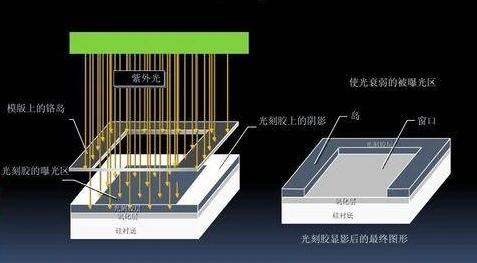
Core Viewpoint - Recent advancements in China's semiconductor industry, particularly in photoresist technology, are expected to significantly enhance the manufacturing process and reduce defects in integrated circuits [2][3][5]. Group 1: Breakthrough in Photoresist Technology - A research team from Peking University has utilized cryo-electron tomography to analyze the micro-3D structure and behavior of photoresist molecules in liquid environments, leading to a new industrial solution that reduces lithography defects [2][3]. - The study revealed that traditional assumptions about photoresist behavior were incorrect, showing that most polymers are adsorbed at the gas-liquid interface rather than dispersed in the liquid [4]. - The research identified that aggregated particles, averaging about 30 nanometers in size, are potential sources of defects, which can lead to circuit patterns merging unintentionally [4]. Group 2: Market Growth and Demand - The photoresist market in China is projected to grow from approximately 109.2 billion yuan in 2023 to over 114 billion yuan in 2024, with expectations to reach 123 billion yuan by 2025 [2][6]. - The demand for semiconductor photoresists is increasing due to the rise of domestic semiconductor manufacturers and expanding downstream needs, accelerating the localization of mid-to-high-end products like KrF photoresists [6]. - The photoresist market has historically been dominated by international giants, but recent technological breakthroughs in China's semiconductor supply chain are changing this landscape [6]. Group 3: Importance of Lithography in IC Manufacturing - Lithography is the most time-consuming and challenging process in integrated circuit manufacturing, accounting for about 50% of the manufacturing time and approximately one-third of production costs [5]. - The quality of photoresist directly impacts the lithography process, which is critical for transferring circuit patterns onto silicon wafers [5]. - As integrated circuit feature sizes shrink, the requirements for photoresists are becoming increasingly stringent, necessitating advancements in resolution, contrast, and sensitivity [5].

新华财经早报:10月13日
Xin Hua Cai Jing· 2025-10-12 23:33
Group 1 - The Ministry of Commerce criticized the U.S. for threatening high tariffs, stating that this approach is not the correct way to engage with China [1] - The State Administration for Market Regulation has initiated an investigation into Qualcomm for allegedly completing the acquisition of Autotalks without proper communication or notification [1] - The Ministry of Water Resources has activated a Level IV flood defense emergency response for Shanxi, Henan, and Shaanxi provinces due to significant rainfall and flooding [1] Group 2 - The National Postal Service reported that China's express delivery volume has surpassed 1.5 billion packages as of October 11, indicating stable growth in the consumer market [1] - The latest data from the National Astronomical Observatory revealed that the FAST telescope has discovered 1,152 pulsars, significantly exceeding the total number found by other international telescopes during the same period [1] - The Beijing Municipal Bureau of Economy and Information Technology announced plans to develop industrial tourism, aiming for 20 million visitors and 3 billion yuan in revenue by 2027 [1] Group 3 - Sany Heavy Industry has updated its listing materials on the Hong Kong Stock Exchange, indicating progress in its overseas listing process [1] - China Nuclear Power reported a 14.95% year-on-year increase in cumulative operational power generation for the first three quarters [4] - Tianshan Microelectronics is planning to list on the Hong Kong Stock Exchange [4]

2025年中国一次性胆道镜行业发展背景、市场规模、竞争格局及发展趋势研判:产业规模稳步增长,市场竞争高度集中[图]
Chan Ye Xin Xi Wang· 2025-10-12 01:12
Core Insights - The article discusses the growth and advantages of single-use endoscopes, specifically focusing on single-use biliary endoscopes, which enhance the diagnosis and treatment of biliary diseases through minimally invasive procedures [1][4][5]. Group 1: Industry Overview - Biliary endoscopes allow direct observation of biliary duct lesions and facilitate procedures such as biopsy, stone removal, and dilation of strictures, significantly improving diagnostic and therapeutic efficiency [1][4]. - The global market for single-use biliary endoscopes is projected to grow from $164 million in 2018 to $416 million by 2024, achieving a compound annual growth rate (CAGR) of 16.8% [5][6]. - In China, the market for single-use biliary endoscopes is expected to expand from ¥12 million in 2018 to ¥88 million by 2024, with a remarkable CAGR of 39.9%, outpacing the global market growth [6][8]. Group 2: Market Dynamics - The single-use biliary endoscope market in China is still in its early development stage, characterized by high market concentration, with the top three companies holding 79.4% of the market share and the top five companies accounting for 93.7% [8][9]. - Domestic companies are gaining ground in the single-use biliary endoscope market, with Boston Scientific holding nearly half of the market share, while local firms like Nanwei Medical and Maiketian are rapidly increasing their market presence [8][9]. Group 3: Competitive Landscape - The competitive landscape is currently dominated by a few international medical device companies, but the single-use biliary endoscope sector is seeing a more balanced competition between domestic and international players [8][10]. - The article highlights the emergence of innovative domestic companies focusing on single-use endoscopes, with several products receiving regulatory approval [10][11]. Group 4: Future Trends - The future of the single-use biliary endoscope market is expected to be driven by increased demand for infection control, technological advancements, and supportive policies, leading to rapid global expansion [11][12]. - The integration of AI technology is anticipated to enhance the intelligence of single-use biliary endoscopes, contributing to high-quality medical development [12].


假日消费观察:首发经济为杭州商圈注入新活力
Sou Hu Cai Jing· 2025-10-02 03:00
Core Insights - The article highlights the booming "first-store economy" in Hangzhou, particularly during the recent National Day holiday, with various new brands and products attracting significant consumer interest [1][5] - Hangzhou has become a key location for international brands to launch new products and establish flagship stores, leveraging China's vast market potential [1][5] Group 1: First-Store Economy - The "first-store economy" serves as a direct reflection of the regional business environment and the overall prosperity of urban commerce [5] - In 2024, Hangzhou is expected to introduce over 200 new first-store brands, indicating a strong growth trajectory [5] - The X-SPACE Fujifilm Imaging Space, a unique experiential venue, has attracted over 5,000 visitors on its opening day, showcasing the appeal of innovative retail concepts [2][4] Group 2: Consumer Trends - During the recent holiday, various trendy products and dining experiences have drawn large crowds, indicating a shift in consumer preferences towards unique and experiential offerings [1] - The popularity of new brands, such as international beauty products and trendy beverage shops, highlights the changing landscape of consumer behavior in Hangzhou [1][5] Group 3: Urban Development - The Wulin business district in Hangzhou, covering just 1.37 square kilometers, is a historical and commercial hub, housing over 1.3 million square meters of commercial space [5] - The district has seen the introduction of 38 new first-store brands and 9 first-time exhibitions in the first half of the year, with further developments expected to enhance the local economy [5]

日本要在印度构建半导体供应链,成熟产品摆脱对华依赖
日经中文网· 2025-08-28 08:00
Group 1 - The core focus of the Japan-India summit on August 29 is to establish a framework for cooperation on the procurement of essential materials, particularly in the semiconductor and mineral resources sectors [1][3]. - Japan aims to strengthen economic security cooperation with India, particularly in the semiconductor industry, by facilitating the entry of Japanese companies into the Indian market to help build a local supply chain [1][3]. - Tokyo Electron is set to launch its first manufacturing equipment development base in India in September, with plans to expand its workforce to 300 by 2027 [3]. Group 2 - AIR WATER INC. plans to construct multiple factories near Mumbai to produce nitrogen and other gases essential for semiconductor manufacturing, with an investment of approximately 50 billion yen [5][4]. - The Indian semiconductor market is projected to reach $82.9 billion by 2029, doubling its current size, indicating significant growth potential [5]. - NIPPON EXPRESS HOLDINGS will establish logistics bases in three Indian cities by 2026 to support semiconductor storage, ensuring transportation stability in challenging road conditions [5]. Group 3 - The Indian government is actively constructing power plants and substations to support semiconductor production, while JFE Steel aims to increase its production capacity of high-grade steel for transformers in India by seven times by 2030 [6]. - Japan and India are working to diversify their procurement channels to mitigate risks associated with supply chain disruptions, particularly in light of geopolitical tensions [6][10]. - The initiative to transfer semiconductor and LCD production to India is part of a broader strategy to reduce reliance on China and enhance economic security cooperation between Japan and India [9][10].