
耐克

Search documents
安踏怎么成了购物狂?
Xin Lang Cai Jing· 2026-01-28 00:13
Core Viewpoint - Anta Sports has announced the acquisition of a 29.06% stake in PUMA SE from Groupe Artémis for €1.5055 billion (approximately RMB 12.278 billion), making Anta the largest shareholder of PUMA. The transaction is expected to be completed by the end of 2026, pending regulatory approvals [1][4]. Group 1: Acquisition Details - The acquisition price for PUMA's stake is €1.5055 billion, excluding taxes [1]. - Anta will fund the acquisition entirely from its internal cash reserves [1]. - After the acquisition, Anta plans to appoint suitable representatives to the supervisory board of PUMA and aims to maintain PUMA's brand identity and culture [1][4]. Group 2: Strategic Rationale - Anta's acquisition aligns with its strategy of "single focus, multi-brand, globalization," enhancing its position in the global sports goods market [1][4]. - PUMA's positioning in professional sports and street fashion complements Anta's existing brand portfolio [4]. - Anta's chairman believes that PUMA's recent stock price does not reflect its long-term brand value [4]. Group 3: Market Context - PUMA, established in 1948, has faced challenges in maintaining its global ranking, with recent performance showing revenue growth but declining profitability [3]. - In 2021 and 2022, PUMA experienced revenue growth rates exceeding 30% and 20%, respectively, but began to show signs of revenue decline and losses in 2023 [3]. - As of January 27, Anta's market capitalization exceeded HKD 200 billion, while PUMA's stock price saw a pre-market increase of 21% [2][4]. Group 4: Anta's Growth Strategy - Anta has a history of successful acquisitions, including the purchase of FILA's rights in Greater China and the acquisition of Amer Sports, which includes brands like Arc'teryx and Salomon [7][9][12]. - The company aims to achieve a revenue scale of RMB 100 billion by 2025, with its multi-brand strategy being a key driver for this growth [9]. - Anta's approach to acquisitions focuses on brands with strong value and potential for strategic transformation [13][14]. Group 5: Industry Implications - Anta's aggressive acquisition strategy is seen as a significant move in the international sports brand landscape, potentially allowing it to compete directly with giants like Nike and Adidas [4][14]. - The company’s multi-brand strategy allows for differentiated positioning and resource sharing among its brands, which is crucial for maintaining competitive advantage [14][15]. - The success of Anta's acquisitions, such as FILA, demonstrates its capability to manage and grow multiple brands effectively, although challenges remain in ensuring each brand's unique identity and market performance [15].



安踏的野心,接管了彪马的命运
3 6 Ke· 2026-01-28 00:00
Core Insights - Anta Group has acquired a 29.06% stake in PUMA from the Pinault family's investment company Groupe Artémis for €1.5 billion, making Anta the largest shareholder of PUMA [1][3] - The transaction is expected to be completed by the end of 2026, with funding sourced entirely from Anta's internal cash reserves [1] - Following the announcement, PUMA's stock price surged by 16.28%, increasing its market capitalization to nearly €3.5 billion, while Anta's stock rose over 2% [3] Group 1: Anta's Strategic Moves - Anta's investment strategy focuses on acquiring struggling international sports brands and leveraging China's retail and supply chain efficiencies to help them recover [5] - The company has previously invested in brands like FILA and Descente, demonstrating a successful track record in revitalizing brands [5][14] - Anta aims to position itself as a global sports brand powerhouse, not just a competitor to Nike in China, but on a worldwide scale [12][14] Group 2: PUMA's Current Challenges - PUMA is facing significant challenges, including a 2% decline in sales to €1.942 billion in Q2 2023 and a 10.4% drop in Q3 sales to €1.9557 billion [6][8] - The company has announced plans to cut approximately 900 jobs globally by the end of 2026 as part of its restructuring efforts [7] - PUMA's inventory has increased by 18.3% year-on-year, reaching €2.151 billion, indicating ongoing operational difficulties [6] Group 3: Market Context and Future Outlook - The global sportswear market is experiencing a shift, with a growing demand for athletic footwear and apparel, which now accounts for over 60% of total footwear sales [16] - Anta's acquisition of PUMA aligns with its ambition to dominate the sportswear market, especially in the context of rising health and fitness trends post-pandemic [16][19] - The future of sports brands will likely depend on their ability to adapt to changing consumer preferences and maintain strong operational capabilities [19]
123亿收编彪马!安踏要与耐克阿迪正面交战?
Xin Lang Cai Jing· 2026-01-27 11:41
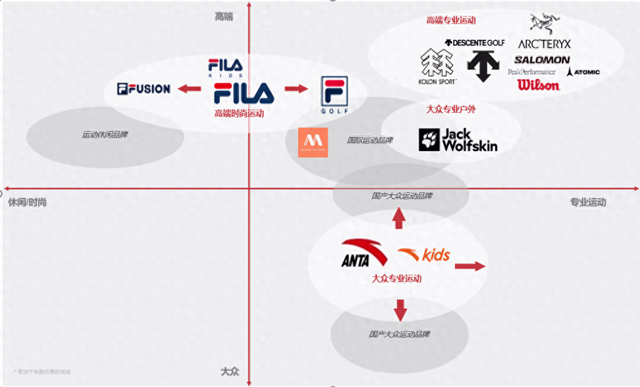
炒股就看金麒麟分析师研报,权威,专业,及时,全面,助您挖掘潜力主题机会! 来源:野马财经 拿下彪马,如何驭马是关键。 即将进入农历马年,安踏体育(2020.HK)"牵"马进厩! 1月27日,安踏体育宣布,与彪马大股东Artémis订立购股协议,拟收购彪马公司(PUMA SE)29.06% 股权,对价为每股普通股35欧元,合共15.06亿欧元(不含税)(约合人民币122.78亿元)。收购彪马利 于安踏体育继续鏖战全球市场,其强调,成为彪马最大股东后,集团有望进一步提升在全球体育用品市 场的地位及品牌知名度,从而增强整体国际竞争力。 中国企业资本联盟副理事长、中国区首席经济学家柏文喜认为,彪马定位专业运动与潮流市场的结合, 恰好填补安踏体育现有布局的空白。安踏体育主品牌主打大众专业运动,斐乐定位高端时尚,始祖鸟专 注专业户外,而彪马在足球、跑步、赛车等领域的深厚积淀,以及其在年轻消费群体中的潮流影响力, 将与现有品牌形成互补。 盘古智库高级研究员江瀚认为,收购彪马显著强化安踏体育"多品牌+全球化"布局,彪马作为全球第三 大运动品牌,在欧美及新兴市场拥有成熟渠道与年轻化品牌形象,可弥补安踏在国际高端市场的短板。 安 ...

Lululemon让人走光,是故意的还是不小心?
3 6 Ke· 2026-01-27 04:16
Core Viewpoint - Lululemon is shifting towards more provocative clothing designs in response to declining interest in yoga and increased competition from other sports brands, which has led to a loss of its dominant position in the yoga apparel market [12][15][16]. Group 1: Product Changes and Controversies - Lululemon's recent yoga pants, "Get Low," faced backlash for being too transparent and were taken down shortly after launch, but were reintroduced with size adjustments rather than design changes [3][20]. - The brand has introduced various sexy apparel, including lace and mesh designs, which have sparked consumer confusion and debate about the brand's direction [2][6][12]. - In the Chinese market, a specific yoga pant priced at 980 yuan retains some revealing features, raising concerns about transparency and modesty [4]. Group 2: Market Competition - The rise of sports like badminton and tennis has led to increased competition from brands like Yonex and Wilson, which are gaining market share in the athletic apparel sector [12][14]. - Traditional sports brands such as Nike and Adidas, along with emerging brands like Alo, are offering competitive yoga pants, further challenging Lululemon's market position [15][16]. Group 3: Financial Performance - Lululemon reported a revenue of $2.6 billion for Q3 2025, a 7% increase year-over-year, but net profit decreased by 12.8% to $307 million, indicating financial strain [20][21]. - The company's gross margin fell from 58.5% to 55.6%, and operating margin decreased from 20.5% to 17%, with projections of a revenue decline of 1% to 3% for Q4 2025 [20]. Group 4: Leadership and Strategic Direction - The company's founder, Dennis Wilson, has expressed concerns over the company's direction, citing five major operational issues and proposing new board members to regain control [21]. - Current CEO Calvin McDonald is set to resign, indicating potential shifts in leadership and strategy as the company navigates its future direction [21].

安利股份:与耐克的合作态势持续向好,当前耐克给公司下达了一定的预告订单
Ge Long Hui· 2026-01-27 01:07
Core Viewpoint - The collaboration between the company and Nike is progressing positively, with Nike providing a forecast order, although final orders will depend on actual production conditions [1] Group 1: Collaboration with Nike - The company has received high recognition and favor from Nike for its developed innovative materials [1] - Since becoming a strategic partner of Nike in 2025, the company's advantages have become evident, and opportunities are favorable for expanding its overall share in Nike's supply chain [1] Group 2: Engagement with Emerging Brands - The company is actively reaching out to emerging brands such as HOKA and Aonrun, with related efforts currently underway [1]

安利股份(300218.SZ):与耐克的合作态势持续向好,当前耐克给公司下达了一定的预告订单
Ge Long Hui· 2026-01-27 01:05
Core Viewpoint - The collaboration between the company and Nike is progressing positively, with Nike providing a forecast order, although final orders will depend on actual production conditions [1] Group 1: Collaboration with Nike - The company has received high recognition and favor from Nike for its developed innovative materials [1] - Since becoming a strategic partner of Nike in 2025, the company's advantages have become evident, and it is working to expand its overall share in Nike's supply chain [1] Group 2: Engagement with Emerging Brands - The company is actively reaching out to emerging brands such as HOKA and Aonrun, with related efforts currently underway [1]
可选消费W04周度趋势解析:黄金持续创新高叠加新消费板块回暖,黄金珠宝板块本周表现最优
海通国际· 2026-01-26 10:20
Investment Rating - The report assigns an "Outperform" rating to multiple companies including Nike, Midea Group, JD Group, Haier Smart Home, Gree Electric, Anta Sports, and many others, indicating a positive outlook for these stocks [1]. Core Insights - The gold and jewelry sector has emerged as the top performer this week, driven by new consumer sentiment and the upcoming Spring Festival, which is expected to boost sales [4][14]. - The overall performance of various sectors shows significant fluctuations, with gold and jewelry leading the gains, while sectors like luxury goods and U.S. hotels are experiencing declines [12][15]. - The report highlights that the valuation of various sectors remains below their historical averages, suggesting potential investment opportunities [10][17]. Sector Performance Summary - **Gold and Jewelry**: This sector saw a weekly increase of 12.9%, with notable stock performances from Lao Pu Gold (+20.5%) and Chao Hong Ji (+12.3%) due to positive sales forecasts [6][14]. - **Gambling**: The gambling sector increased by 2.9%, with companies like MGM China and Galaxy Entertainment showing strong market share growth [14]. - **Overseas Cosmetics**: This sector rose by 2.1%, driven by E.L.F. Beauty's stock increase of 4.6% following positive earnings forecasts [14]. - **Retail**: The retail sector increased by 2.0%, with Wanchen Group's stock rising by 14.3% due to optimistic revenue expectations [14]. - **Domestic Cosmetics**: This sector saw a modest increase of 0.9%, with companies like Proya and Runben showing positive stock movements [8][14]. - **Snacks**: The snack sector increased by 0.6%, with Youyou Foods and Qiaqia Foods showing gains [14]. - **Pet Sector**: This sector experienced a slight decline of 0.4%, with Zhongchong Co. facing stock price pressures [14]. - **Domestic Sportswear**: This sector decreased by 1.4%, with Anta Sports experiencing a notable decline of 6.1% [14]. - **U.S. Hotels**: This sector fell by 1.4%, with major hotel chains like Marriott and Hilton reporting declines [15]. - **Credit Cards**: The credit card sector also saw a decline of 1.4%, influenced by uncertainties regarding proposed interest rate caps [15]. - **Luxury Goods**: This sector decreased by 1.6%, with Burberry facing significant stock price drops due to market concerns [15]. - **Overseas Sportswear**: This sector fell by 1.8%, with Adidas experiencing a notable drop of 8.7% due to downgrades from investment banks [16]. Valuation Analysis - The report indicates that the expected PE ratios for various sectors in 2025 are below their historical averages, suggesting potential undervaluation. For example, the expected PE for the gold and jewelry sector is 25.9, which is 49% of its historical average [10][17].
可选消费W04周度趋势解析:黄金持续创新高叠加新消费板块回暖,黄金珠宝板块本周表现最优-20260126
Haitong Securities International· 2026-01-26 09:54
Investment Rating - The report assigns an "Outperform" rating to multiple companies including Nike, Midea Group, JD Group, Haier Smart Home, Gree Electric, Anta Sports, and others, indicating a positive outlook for these stocks [1]. Core Insights - The gold and jewelry sector has emerged as the top performer this week, driven by new consumer sentiment and expectations of improved sales as the Spring Festival approaches. The sector saw a weekly increase of 12.9% [4][14]. - The report highlights a rebound in the new consumer sectors, with various segments such as gambling, overseas cosmetics, and retail also showing positive performance [4][14]. - The overall market sentiment is influenced by the performance of the MSCI China index, which has shown fluctuations in its weekly, monthly, and year-to-date performance [12][13]. Sector Performance Summary - **Gold and Jewelry**: Increased by 12.9%, with notable gains from Lao Pu Gold (20.5%) and Chow Tai Fook (5.9%) due to positive sales forecasts [6][14]. - **Gambling**: Rose by 2.9%, with MGM China and Galaxy Entertainment seeing increases of 4.0% and 3.6% respectively, attributed to market share gains [6][14]. - **Overseas Cosmetics**: Gained 2.1%, driven by E.L.F Beauty's strong performance and positive earnings outlook [6][14]. - **Retail**: Increased by 2.0%, with Wanchen Group rising 14.3% due to optimistic revenue forecasts [6][14]. - **Domestic Cosmetics**: Saw a modest increase of 0.9%, with companies like Proya and Runben showing positive trends [8][14]. - **Snacks**: Increased by 0.6%, with Youyou Foods and Qiaqia Foods showing gains [8][14]. - **Pet Sector**: Experienced a slight decline of 0.4%, with Zhongchong Co. facing market challenges [8][14]. - **Domestic Sportswear**: Decreased by 1.4%, with Li Ning showing a positive increase of 4.3% while Anta Sports faced a decline [8][14]. - **US Hotels**: Fell by 1.4%, with major hotel chains like Marriott and Hilton seeing declines [15][16]. - **Credit Card Sector**: Also decreased by 1.4%, with Visa and Mastercard facing market uncertainties [15][16]. - **Luxury Goods**: Declined by 1.6%, with Burberry experiencing a significant drop [15][16]. - **Overseas Sportswear**: Decreased by 1.8%, with Adidas facing a notable decline due to downgrades from investment banks [15][16]. Valuation Analysis - The report indicates that most sectors are currently undervalued compared to their historical averages, with expected PE ratios for various sectors such as overseas sportswear at 30.0x (56% of the past 5-year average) and domestic sportswear at 13.4x (70% of the past 5-year average) [10][17].
为什么耐克阿迪lululemon接连换帅?
3 6 Ke· 2026-01-25 23:40
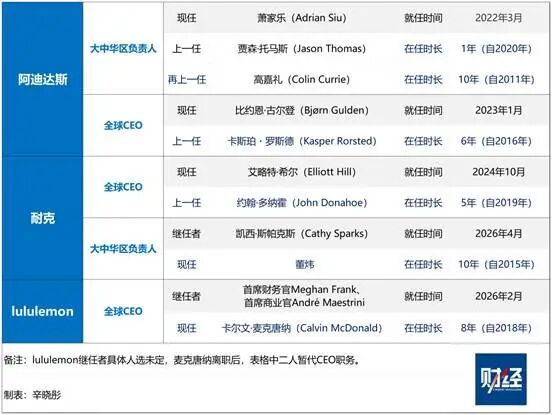
Group 1 - Nike announced the departure of its Greater China Chairman, Dong Wei, effective March 31, after over ten years in the role, surprising many in the industry [1][4] - Cathy Sparks, the current head of the Asia-Pacific and Latin America region, will succeed Dong Wei, marking a significant leadership change for Nike in China [1][4] - Lululemon's CEO, Calvin McDonald, will also leave the company on January 31, with no successor announced yet, highlighting ongoing leadership transitions in major sports brands [1][13] Group 2 - The top three global sports apparel companies by market capitalization are Nike ($96.3 billion), Adidas ($30.4 billion), and Lululemon ($21.4 billion), all of which have experienced significant management changes recently [2] - Adidas has successfully turned around its performance after leadership changes, projecting profitability in 2024, with Q3 2025 revenue reaching €6.6 billion ($7.1 billion), a 10% year-over-year increase in Greater China [2][12] - The management changes across these companies are seen as a strategic response to market challenges, with new leaders expected to navigate through performance downturns and explore new growth avenues [2][10] Group 3 - Dong Wei's tenure at Nike saw significant growth in the Greater China region, with revenues increasing from approximately $4.6 billion to $8.29 billion between FY2015 and FY2021, achieving 22 consecutive quarters of double-digit growth [4][5] - Nike's Greater China revenue has faced a decline, with Q4 2024 revenue at $1.9 billion, reflecting a 20% year-over-year decrease, indicating ongoing challenges in the market [8][9] - The shift towards a Direct to Customer (DTC) model has led to inventory issues for Nike, prompting a strategic pivot back to wholesale channels under new leadership [9][10] Group 4 - Lululemon has faced declining profits, with net income dropping by 2.13%, 5.6%, and 12.8% in the first three quarters of FY2025, amid strategic disagreements within the company [13][14] - The competitive landscape in the sports apparel industry is intensifying, with companies like Nike and Adidas adjusting their strategies to focus on wholesale and local market engagement [10][11] - The ongoing leadership changes across the industry are expected to reshape the competitive dynamics, moving away from previous growth strategies towards a focus on efficiency and innovation [16]
零工取代星巴克全职咖啡师?奈雪们早就尝试了
2 1 Shi Ji Jing Ji Bao Dao· 2026-01-22 01:32
Group 1 - Starbucks China is focusing on controlling labor costs by increasing the recruitment of part-time employees, with 61.7% of job postings for student part-time positions and 17.8% for social part-time positions [1] - The majority of full-time job postings are concentrated in lower-tier cities, with only Shenzhen and Shanghai having limited full-time positions [1] - The trend of hiring part-time workers is becoming common in the restaurant industry, as seen with Nayuki Tea, which has also shifted to a workforce primarily composed of part-time employees [2] Group 2 - The management structure at Starbucks is changing, with plans to have one store manager oversee multiple locations, a strategy aimed at reducing costs [2] - The shift from full-time baristas to gig workers raises concerns about maintaining service quality, which is a core competitive advantage for Starbucks [2][3]