西测测试

Search documents
商业航天:以第一性原理推演中国商业航天降本革命(附报告)
材料汇· 2026-01-21 15:30
Core Conclusion - By 2026, China's commercial aerospace industry is expected to reach a turning point in cost reduction for launch capacity, driven by the concentrated deployment of low Earth orbit (LEO) constellations and the normalization of high-frequency launches, with reusable rockets nearing breakthroughs in reducing unit launch costs. The industry's business model will shift from state-driven tasks to market-driven profitability, with a valuation logic transitioning towards "space infrastructure" as application scenarios and business models are restructured [3]. Market Outlook - 2026 is anticipated to be a prosperous year for China's commercial aerospace sector, with an accelerated pace of multi-constellation launches transitioning to large-scale deployment, leading to a rapid increase in rocket launch frequency. The commercial rocket launch service market in China is projected to grow from 10.26 billion yuan in 2025 to 47.39 billion yuan by 2030, corresponding to a CAGR of approximately 35.8%, primarily driven by high-frequency launch demand from dense deployment of LEO constellations [4][11]. - The industry is expected to maintain medium to long-term growth, with over 237,000 satellites needing to be deployed in accordance with ITU regulations by 2039. Starlink currently has over 9,000 satellites in orbit, and the demand for subsequent launches remains robust due to tightening frequency resources [4][11]. Cost Reduction Pathways - The essence of commercial rockets is a "space logistics" business, where core variables include efficiency improvements and cost reductions in launch capacity. Key pathways for cost reduction include breakthroughs in full-flow engine technology, high-frequency reuse capabilities, and industrialization in manufacturing [5]. - The unit cost of launching rockets is expected to decrease significantly through various stages: 1. Initial launch cost is approximately 55,000 yuan/kg 2. By around 2026, after achieving first-stage reuse, costs may drop to about 25,000 yuan/kg 3. Upgrading from aluminum to stainless steel structures could further reduce costs to approximately 19,000 yuan/kg 4. With the maturation of recovery methods, costs may decline to around 13,000 yuan/kg 5. Long-term, achieving second-stage reuse could bring costs close to 5,000 yuan/kg [5]. Industry Structure and Investment Opportunities - The commercial rocket industry is still in its early growth and valuation evolution phase. Key catalysts for valuation uplift in China's commercial aerospace sector include the realization of reusable rockets for large-scale LEO satellite networking and the transition from customized to standardized launches through long-term batch tasks [7][8]. - The valuation logic for commercial aerospace companies is shifting from manufacturing-oriented to platform and infrastructure-oriented technology enterprises, covering diverse long-term space mission needs such as manned flights and deep space exploration [8]. Key Players and Market Segments - The core technical barriers in rocket engines are concentrated in critical components such as thrust chambers and turbine pumps. The value in satellite manufacturing is primarily found in communication payloads [9]. - Key companies involved in the aerospace supply chain include: - Power Systems: Yingliu Co., Srey New Materials, Guoji Precision Engineering - Satellite Communication Systems: Shanghai Hantong, Aerospace Electronics, Guobo Electronics - Materials and Structural Components: Western Materials, Parker New Materials, Guoji Heavy Industry, Huazhuo High-Tech - Testing and Verification: Xicai Testing, Su Testing [9][10].





西测测试:公司主要为客户提供覆盖卫星产品全生命周期的可靠性验证服务
Zheng Quan Ri Bao· 2026-01-21 12:41
Core Viewpoint - The satellite testing costs are not fixed and depend on various factors such as the scope of testing, technical complexity, cycle requirements, and the satellite's technological novelty and reliability indicators [2] Company Summary - The company operates as an independent third-party inspection and testing service provider, offering reliability verification services throughout the entire lifecycle of satellite products [2] - The company is focusing on a "testing + manufacturing" dual-driven strategy, leveraging its established one-stop service capabilities and strong qualifications [2] - The company aims to become a high-reliability manufacturing and verification service supplier within the aerospace industry, emphasizing low-cost, high-reliability, and rapid iteration trends [2]
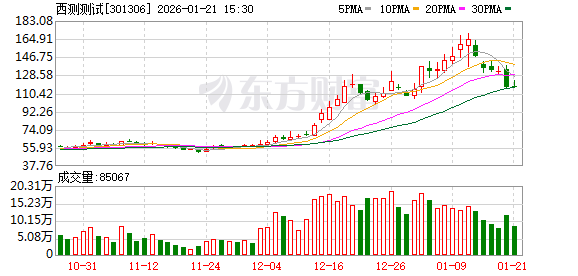
西测测试:公司的收入及业务占比按产品细分为环境与可靠性试验等
Zheng Quan Ri Bao Wang· 2026-01-21 10:47
Group 1 - The core viewpoint of the article is that Xicet Testing (301306) has provided insights into its revenue and business segments through responses to investor inquiries on its interactive platform [1] Group 2 - The company's revenue and business composition is segmented into environmental and reliability testing, electronic component testing and selection, electromagnetic compatibility testing, and electronic assembly services [1] - Investors are encouraged to continuously monitor the company's disclosed periodic reports for more detailed information [1]
商业航天行业深度系列(一):以第一性原理推演中国商业航天降本革命
Shanghai Aijian Securities· 2026-01-21 10:19
Investment Rating - The report rates the industry as "stronger than the market" [1] Core Insights - The report concludes that 2026 will mark a turning point for China's commercial aerospace industry, with a shift from state-driven missions to market-driven profitability, driven by the deployment of low-orbit satellite constellations and advancements in reusable rocket technology [1][6] - The commercial rocket launch service market in China is projected to grow from 10.26 billion yuan in 2025 to 47.39 billion yuan by 2030, with a CAGR of approximately 35.8% [1][12] - The report emphasizes that the core components of rocket launch services are engines (54%) and structural components (24%), which together account for 78% of the value in the launch service segment [1][12] Summary by Sections Industry Overview - The commercial aerospace industry is defined as activities that provide aerospace products and services through social capital investment under national policy guidance, including the R&D, manufacturing, launch, and operation of spacecraft and rockets [6][7] - The global aerospace economy is expected to reach $612 billion by 2024, with commercial aerospace revenues accounting for approximately $480 billion, representing about 78% of the total [6][7] Market Dynamics - The demand for satellite launches is expected to surge as China enters a concentrated deployment phase for low-orbit satellite constellations, with over 200,000 satellites planned for deployment [18][19] - The report highlights that the competition for low-orbit frequency resources is intensifying, necessitating faster deployment of satellite constellations [19][21] Cost Structure and Efficiency - The report breaks down the cost structure of rockets, indicating that engines and structural components dominate the value chain [1][12] - It outlines a pathway for reducing launch costs, projecting that the unit cost of launching payloads could decrease significantly as technology advances [1][12] Investment Recommendations - The report suggests focusing on companies involved in key segments such as propulsion systems, satellite communication systems, materials and structural components, and testing and validation services [2][4] - Specific companies to watch include 应流股份 (603308), 斯瑞新材 (688102), and 上海瀚讯 (300762), among others [2][4]

机构:商业航天有望迎来“政策+技术+资本”三重共振
Zheng Quan Shi Bao Wang· 2026-01-21 08:59
Group 1 - The core viewpoint is that China's commercial space industry is experiencing rapid development, with projections for 2025 indicating 50 launches, accounting for 54% of the total national space launches [1] - In 2025, commercial rockets are expected to complete 25 launches, and the Hainan commercial space launch site will have conducted 9 launches, totaling 10 since its establishment [1] - A total of 311 commercial satellites are projected to be placed into orbit, representing 84% of the total satellites launched in China [1] Group 2 - The commercial space industry is entering a golden era driven by both demand and supply, with recommendations to focus on structural component suppliers such as Aerospace Power, Srey New Materials, and others [1] - In satellite manufacturing, the focus is on low Earth orbit satellites and related infrastructure, with suggested companies including China Satellite and Aerospace Electronics [1] - The upstream and midstream sectors, particularly subsystems and materials supporting satellite mass production, are expected to benefit first, with companies like Zhenlei Technology and Guangwei Composites highlighted [1] Group 3 - In 2026, the domestic commercial space sector is anticipated to experience a "triple resonance" of policy, technology, and capital, making it highly promising [2] - Beneficiary companies in the rocket industry chain include Aerospace Power, Western Materials, and others [2] - In the satellite industry and space computing, recommended companies include Zhongke Xingtou, Aerospace Hongtu, and several others [2]




西测测试(301306.SZ):主要为客户提供覆盖卫星产品全生命周期的可靠性验证服务
Ge Long Hui· 2026-01-21 07:16
格隆汇1月21日丨西测测试(301306.SZ)在投资者互动平台表示,卫星的检测费用并非固定单价,其价值 量主要取决于检测项目的范围、技术复杂度、周期要求以及卫星本身的技术新颖性与可靠性指标。因 此,不同型号、不同批次的卫星,其检测方案和价值量均存在差异。公司作为独立的第三方检验检测服 务机构,主要为客户提供覆盖卫星产品全生命周期的可靠性验证服务。在"检测+制造"双轮驱动的战略 下,公司将依托已经构建的一站式服务能力和硬核资质,持续聚焦航空航天"低成本、高可靠、快迭 代"的发展趋势,加大资源投入,致力于成为该产业链中高可靠性制造与验证服务供应商。 ...
中美竞逐万亿美元新赛道,五层解构下的投资蓝图
Tebon Securities· 2026-01-21 04:07
Investment Rating - The report maintains an "Outperform" rating for the commercial aerospace industry [1] Core Insights - The aerospace sector is transitioning from being viewed as a "cost center" driven by national will to a "growth engine" driven by commercial demand, with significant investments and strategic planning from both the US and China [6][9] - The global aerospace economy is projected to reach $613 billion in 2024, with commercial aerospace contributing 78%, and is expected to exceed $1 trillion by 2032 [6][9] - The value chain of commercial aerospace is divided into five core levels: "space, ground, terminal, rocket, and application," each presenting unique market opportunities and technical challenges from 2026 to 2030 [10][29] Summary by Sections 1. Space: Satellite Manufacturing - The satellite manufacturing market in China is expected to grow from approximately 7.1 billion yuan in 2025 to about 39.4 billion yuan by 2030, reflecting a shift from sporadic research models to continuous, batch engineering deliveries [16][18] 2. Ground: Ground Systems - The ground systems market is projected to increase from around 1.2 billion yuan in 2025 to approximately 39.1 billion yuan by 2030, evolving from a supporting role to a core infrastructure essential for stable satellite constellation operations [21][22] 3. Terminal: Key Variable for Commercial Aerospace - The terminal market is anticipated to grow from 500 million yuan in 2025 to about 141.9 billion yuan by 2030, driven by multiple vertical industries and potential consumer scenarios [23][24] 4. Rocket: Core Constraint - The cost of rocket launches is a critical constraint, with reusable technology expected to reduce costs by 80%-90% compared to traditional expendable rockets. The market for rocket launch services is projected to grow from approximately 10.7 billion yuan in 2025 to about 34.3 billion yuan by 2030 [25][26] 5. Application: Final Value Realization - The application market is expected to expand from 200 million yuan in 2025 to 525 billion yuan by 2030, with the revenue share from applications projected to rise from single digits to over 67% by around 2030 [27][28] 6. Investment Opportunities - Investment opportunities in commercial aerospace can be categorized into three main tracks: 1. Launch and manufacturing segments, which are expected to benefit directly from increased orders and visibility 2. Core components and systems, characterized by high technical barriers and critical for long-term competitiveness 3. Downstream applications and operational services, which, while currently limited in scale, hold the greatest long-term potential for value realization [29][30]


商业航天板块为何上演过山车行情
第一财经· 2026-01-20 10:19
2026.01. 20 本文字数:3193,阅读时长大约5分钟 作者 | 第一财经 王方然 封图 | AI生成 1月20日,商业航天板块集体重挫,多股跌停,部分个股上演"天地板"极端行情。 该板块持续一个多月的凌厉上涨暂时宣告结束。回顾来看,从政策催化的热浪,到概念澄清、发射失利等多重因素的叠加冷却,板块短期走势呈现 出典型的"过山车"特征。 市场狂热褪去后,商业航天概念股的成色正经受考验。多家业内机构认为,部分公司业务关联度低、业绩支撑薄弱,而真正的核心企业仍面临持续 亏损、技术攻坚与商业化前景的长期挑战。 走出过山车行情 1月20日,商业航天板块出现明显回调。Choice数据显示,截至收盘,商业航天板块(BK0963)下跌超过3.2%。 个股方面,西测测试(301306.SZ)、航天宏图(688066.SH)、超捷股份(301005.SZ)跌幅超过11%;航宇微(300053.SZ)、七丰精工 (873169.BJ)、西部材料(002149.SZ)、等11只个股跌停;航天环宇(688523.SH)、盛路通信(002446.SZ)等也下跌超过8%。部分个股 波动尤为剧烈,如*ST铖昌(001270.SZ)早 ...

多股涨停!黄金概念,午后爆发!
Xin Lang Cai Jing· 2026-01-20 09:09
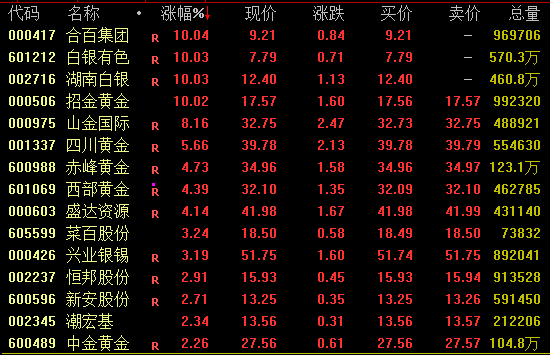
Market Overview - The spot gold price surpassed $4,700 per ounce, setting a new historical high, which led to a surge in gold-related stocks [1][3][13] - On January 20, the Shanghai Composite Index slightly declined, while the ChiNext and Northbound 50 indices showed weak performance; the Hang Seng Technology Index also fell over 1% [1][14] - The total trading volume in the Shanghai, Shenzhen, and Northbound markets reached approximately 2.8 trillion yuan, an increase of over 70 billion yuan compared to the previous day [1][14] Gold Sector - The gold sector saw significant gains, with stocks such as He Bai Group (000417), Silver Industry (601212), Hunan Silver (002716), and Zhaojin Gold (000506) hitting the daily limit [3][16] - Specific stock performances included He Bai Group rising by 10.04% to 9.21 yuan, Silver Industry up 10.03% to 7.79 yuan, and Hunan Silver increasing by 10.03% to 12.40 yuan [4][17] - Analysts expect continued price increases for gold and silver due to easing dollar liquidity and escalating global geopolitical conflicts [4][18] Semiconductor Sector - The semiconductor sector experienced strong upward movement, with stocks like Zhongwei Semiconductor (688380) hitting the daily limit with a 20% increase, and Bawei Storage (688525) rising nearly 9% to surpass 190 yuan [6][19] - Zhongwei Semiconductor announced the upcoming launch of its first non-volatile memory chip, which is expected to fill a product gap in its portfolio [21] Military and Aerospace Sector - The military and aerospace sector faced a collective downturn, with stocks such as Xicai Testing (301306) dropping over 12% and Shenjian Co. (002361) hitting the daily limit for four consecutive trading days [9][23] - Aerospace Dynamics (600343) also faced a decline, with its business primarily involving pump systems and not directly related to commercial aerospace, which has contributed to its recent performance [11][25] TSMC Performance - TSMC is projected to achieve a record revenue of $122 billion in 2025, driven by strong demand for AI computing and advanced process technologies, with a gross margin nearing 60% [8][22] - The company anticipates that its advanced process revenue will account for 77% of total revenue, with 3nm and 5nm processes contributing significantly [8][22]



多股涨停!黄金概念,午后爆发!
证券时报· 2026-01-20 09:05
Core Viewpoint - The article highlights the significant rise in gold prices, with spot gold surpassing $4700 per ounce, reaching a historical high, which has positively impacted gold-related stocks [1][7]. Gold Sector - Spot gold prices have reached a new high of over $4700 per ounce, driven by factors such as marginal easing of dollar liquidity and escalating global geopolitical conflicts [7]. - Major gold-related stocks, including Heiba Group, Silver Holdings, Hunan Silver, and Zhaojin Gold, have seen strong performance, with several hitting the daily limit up [5][6]. - Analysts from Guotai Junan Securities suggest that the rising uncertainty in global geopolitical situations and continued central bank purchases of gold will support long-term gold price stability [8]. Semiconductor Sector - The semiconductor sector has shown strong performance, with stocks like Zhongwei Semiconductor and Blue Arrow Electronics experiencing significant gains, including a 20% limit up for Zhongwei [10]. - Zhongwei Semiconductor announced the upcoming launch of its first non-volatile memory chip, marking a significant step into the storage field [12]. - TSMC is projected to achieve record revenue of $122 billion in 2025, driven by strong demand for AI computing and advanced process technologies, indicating a robust growth outlook for the semiconductor industry [13]. Military Industry - The military sector, particularly satellite navigation and commercial aerospace stocks, has faced a downturn, with several companies experiencing significant declines, including Xicai Testing and Superjet Shares [15][16]. - Shenjian Shares has seen a continuous drop for four trading days, with the company stating that there have been no significant changes in its operational environment [17].