Keep

Search documents
Peloton全面更新AI硬件,AI拯救家庭健身?
3 6 Ke· 2025-10-10 23:44
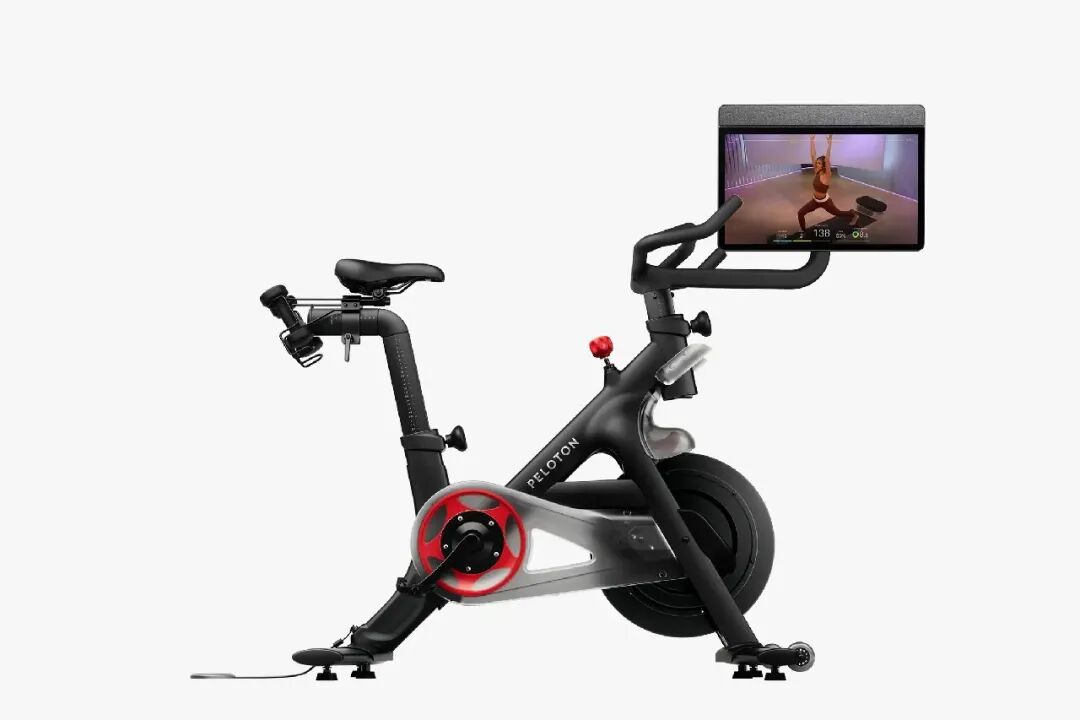
Core Insights - The home fitness market is experiencing a resurgence due to the integration of AI technology, particularly highlighted by Peloton's recent product updates [1][6][23] - Peloton has introduced AI-driven features across its fitness equipment, aiming to enhance user experience and engagement [1][6][10] Product Updates - Peloton has launched three key home fitness devices that are now fully AI-integrated, including a treadmill and rowing machine, with a focus on cross-training capabilities [1][6][12] - The new Peloton IQ system offers real-time motion recognition and personalized workout guidance, leveraging user data for improved training recommendations [8][10] Market Response - Following the product launch, Peloton's stock price increased, indicating positive market sentiment despite a rise in membership and product prices [3][12] - The pricing strategy for Peloton's AI-equipped devices reflects a trend towards consumer upgrades, with prices ranging from $1,695 to $6,695 for various products [12] Competitive Landscape - Other companies in the fitness industry, such as Keep and BodyPark, are also investing heavily in AI to address similar market challenges and enhance their service offerings [5][15][19] - The shift towards AI in fitness is seen as a necessary evolution, with companies aiming to provide more personalized and effective training solutions [20][22] Future Outlook - The integration of AI is expected to revolutionize the fitness industry, potentially replacing traditional coaching methods and enhancing user engagement through technology [20][23] - The trend towards AI in home fitness is not limited to the U.S. market, as similar developments are occurring in China, indicating a global shift in the fitness landscape [15][19]

Keep与耐克联合推出跑者专属服务,助力更多跑者达成跑步目标
Xin Lang Zheng Quan· 2025-09-25 08:29
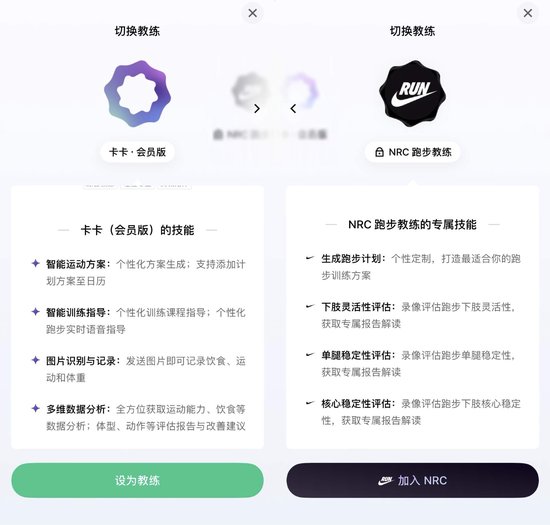
Core Insights - Keep and Nike have launched a joint online service aimed at enhancing the running experience for users, allowing them to switch between Keep's AI coach Kaka and Nike Run Club (NRC) coaches for a comprehensive training experience [1][5] - Users can join NRC by completing a single 5km run, unlocking exclusive benefits such as elite athlete courses and achievement badges, while also connecting to Nike's membership ecosystem [3][5] Group 1: Service Features - The service allows users to access personalized training plans, assessments of lower body flexibility, single-leg stability, and core stability, along with exclusive evaluation reports [1][6] - Keep's AI coach Kaka provides features such as intelligent training guidance, exercise data recording, and dietary tracking, aiming to assist users in achieving their fitness goals [5][6] Group 2: AI Integration - Keep's AI strategy, initiated earlier this year, focuses on transforming from a fitness app to an AI agent, with Kaka being a key component that customizes training plans based on user data and preferences [5][6] - The AI coach offers real-time voice guidance during workouts and can analyze uploaded food images to provide nutritional feedback [6][7] Group 3: Future Developments - Keep plans to upgrade its app to a new 9.0 AI version, leveraging a specialized model developed by Kinetic.ai, which is designed to enhance performance in the sports health sector [7]

Keep与顺丰同城达成战略合作,推骑士健康运动计划
Xin Lang Zheng Quan· 2025-09-15 03:58
Group 1 - Keep has formed a strategic partnership with SF Express, covering online, offline, and rider festival modules [1] - The online aspect includes the launch of "SF Express Rider Sports Circle" by Keep, providing course resources and showcasing rider performance data, with an expected daily active user count of 30,000 [1] - SF Express will host eight offline events annually, incentivized with Keep medals, and special gifts will be provided for riders during the Rider Festival [1] Group 2 - Keep has launched an AI coach named Kaka, which customizes training plans based on user needs and supports basic Q&A [1] - The company plans to upgrade its app to version 9.0 by 2025, leveraging large models to create an AI Agent for the smart era [2] - Kinetic.ai has developed a specialized model for Keep, enhancing its performance in the sports health sector based on extensive data and expertise [2] Group 3 - Keep is projected to achieve profitability in the first half of 2025, marking its first semi-annual profit since inception [3]
锐财经丨“服贸会小镇”磁力强
Ren Min Ri Bao Hai Wai Ban· 2025-09-12 10:00
Core Insights - The 2025 China International Service Trade Fair (CIFT) opened in Beijing, focusing on the theme "Digital Intelligence Leading, Service Trade Renewed" [1] - The event showcased a strong magnetic pull of China's service trade, with numerous new products and technologies being presented [1][2] Group 1: New Products and Technologies - A total of 113 companies will unveil over 190 new products and achievements, with 109 being first-of-their-kind [2] - Notable innovations include the first professional optical quantum computer exceeding one thousand bits and the world's first end-to-end AI assurance plan [2] - Companies like XianTu Intelligent and EY are launching advanced technologies and digital service solutions, including L4 autonomous driving technology and new business insights [2] Group 2: Industry Innovations - New entrants to the fair, such as Wattman Intelligent, introduced AI and robotics solutions, achieving a 99.5% operational stability and a 20% increase in production efficiency at the Shougang Jingtang Steel Plant [3] - Beijing Space Zhizhu Technology showcased 3D printing robots that enhance construction capabilities, demonstrating the fair's focus on innovative solutions [3] Group 3: Digitalization and Trade Opportunities - The fair emphasizes the role of digitalization in expanding the tradability of services, showcasing new technology applications and solutions [4] - Companies presented innovative solutions for construction waste recycling and intelligent manufacturing, highlighting the integration of technology in traditional industries [7] Group 4: International Participation - The fair featured participation from 85 countries and international organizations, with Australia as the guest of honor, showcasing the largest service trade delegation since the fair's inception [8] - Nearly 2,000 companies participated, including around 500 Fortune 500 and industry-leading firms, indicating a strong international presence [8] Group 5: Overall Significance - The CIFT has become the largest comprehensive and international exhibition in the service trade sector, promoting cooperation and development opportunities [9]
八十五个国家和国际组织设展办会,“服贸会小镇”磁力强
Bei Jing Ri Bao Ke Hu Duan· 2025-09-12 07:57
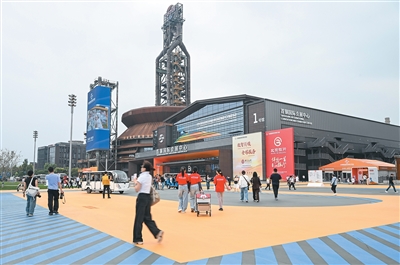
Core Insights - The 2025 China International Service Trade Fair opened in Beijing, focusing on the theme "Digital Intelligence Leading, Service Trade Renewed" [3] - The event showcased the strong appeal of China's service trade, with numerous new products and technologies being presented [4][9] Group 1: New Products and Technologies - A total of 113 companies will unveil over 190 new products and achievements, with 109 being first-of-their-kind [4] - Notable innovations include the first professional optical quantum computer exceeding one thousand bits and the world's first end-to-end AI assurance plan [4] - Companies like XianTu Intelligent and EY introduced advanced technologies such as L4-level autonomous driving and new digital service solutions [4] Group 2: Digitalization and Automation - The fair emphasized the role of digitalization in expanding the tradeability of services, showcasing various applications and solutions [6] - Innovative robots were demonstrated, including a family service robot capable of performing Tai Chi and other interactive tasks [6] - Companies presented solutions for construction waste recycling and intelligent manufacturing, highlighting advancements in resource utilization and cost reduction [7] Group 3: International Participation - The fair featured participation from 85 countries and international organizations, with Australia as the guest of honor, showcasing its largest service trade delegation [8] - Nearly 2,000 companies participated, including around 500 Fortune 500 and industry-leading firms, indicating a high level of international engagement [8] - The health and sanitation sector saw a 53% participation rate from Fortune 500 companies, reflecting the fair's global significance [8]

“服贸会小镇”磁力强
Ren Min Ri Bao Hai Wai Ban· 2025-09-12 01:47
Core Insights - The 2025 China International Service Trade Fair (CIFTIS) opened on September 10 at Shougang Park, with the theme "Digital Intelligence Leading, Service Trade Renewed" [3] - This year's fair features 113 companies showcasing over 190 new products and achievements, including 109 first-of-their-kind innovations [4] - The event emphasizes the increasing international participation, with 85 countries and international organizations represented, including Australia as the guest of honor [9] Group 1: New Products and Innovations - The fair highlights cutting-edge technologies such as the first domestic quantum computer exceeding one thousand bits and the world's first end-to-end AI assurance plan [4] - Companies like Wattman Intelligent introduced AI and robotics systems, achieving a 99.5% operational stability and a 20% increase in production efficiency at Shougang Jingtang Steel [4] - Beijing Space Zhizhu Technology showcased 3D printing robots that expand the application of construction technology [5] Group 2: Digitalization and Service Trade - The fair focuses on the tradeability of services enhanced by digitalization, showcasing new technology applications and solutions [6] - Innovative solutions include a construction waste recycling line capable of processing 600,000 tons annually and a CMF knowledge management system that reduces manufacturing costs by 15% [8] Group 3: International Participation - The fair has a strong international presence, with nearly 2,000 companies participating, including around 500 Fortune 500 and industry-leading firms [9] - The health and sanitation sector saw a 53% participation rate from Fortune 500 companies, while the engineering consulting and construction services sector attracted 74% [9] - The event serves as a platform for fostering new partnerships and collaborations between international service providers and Chinese enterprises [9]
港股新观察 | 从战略构想到增长引擎 港股互联网公司AI战略步入收获期
Sou Hu Cai Jing· 2025-09-05 23:48
Group 1 - In the first half of this year, leading internet companies in Hong Kong experienced strong profit growth driven by cost reduction and AI innovation [1][21] - Companies like Tencent, Xiaomi, and Alibaba are leveraging AI, cloud computing, and digital content to create new growth opportunities [1][21] - AI is transitioning from a strategic concept to a new engine for performance growth, with future commercialization depending on the strength of core technologies and the depth of application scenarios [1][21] Group 2 - Alibaba reported a 10% year-on-year revenue growth and a 76% increase in net profit for Q2 2025, with cloud revenue rising 26% to 333.98 billion RMB [22] - Tencent's net profit for the first half of the year reached 1,034.49 billion RMB, a 15.56% increase, with R&D spending up 17% to 202.5 billion RMB [22] - Xiaomi's net profit for the first half of the year was 228.3 billion RMB, a 146% increase, with significant growth in AI-related business segments [22] Group 3 - AI is helping companies achieve digital and intelligent transformation, enhancing operational efficiency in manufacturing and software sectors [23][25] - Companies like Keep and Jiufang Zhitu have turned losses into profits by integrating AI into their business models, showcasing AI's role as a key driver of financial recovery [24] - The integration of AI into various business sectors is expected to enhance product logic, operational models, and profitability paths [25][26] Group 4 - Companies are planning to integrate AI with gaming, fintech, e-commerce, and cloud services to amplify the scale effects of AI technology [26] - Alibaba and Tencent are committed to investing in AI and cloud strategies to ensure long-term growth [26] - Kingsoft is increasing its R&D investment in AI to enhance product and service applications across various industry scenarios [26]



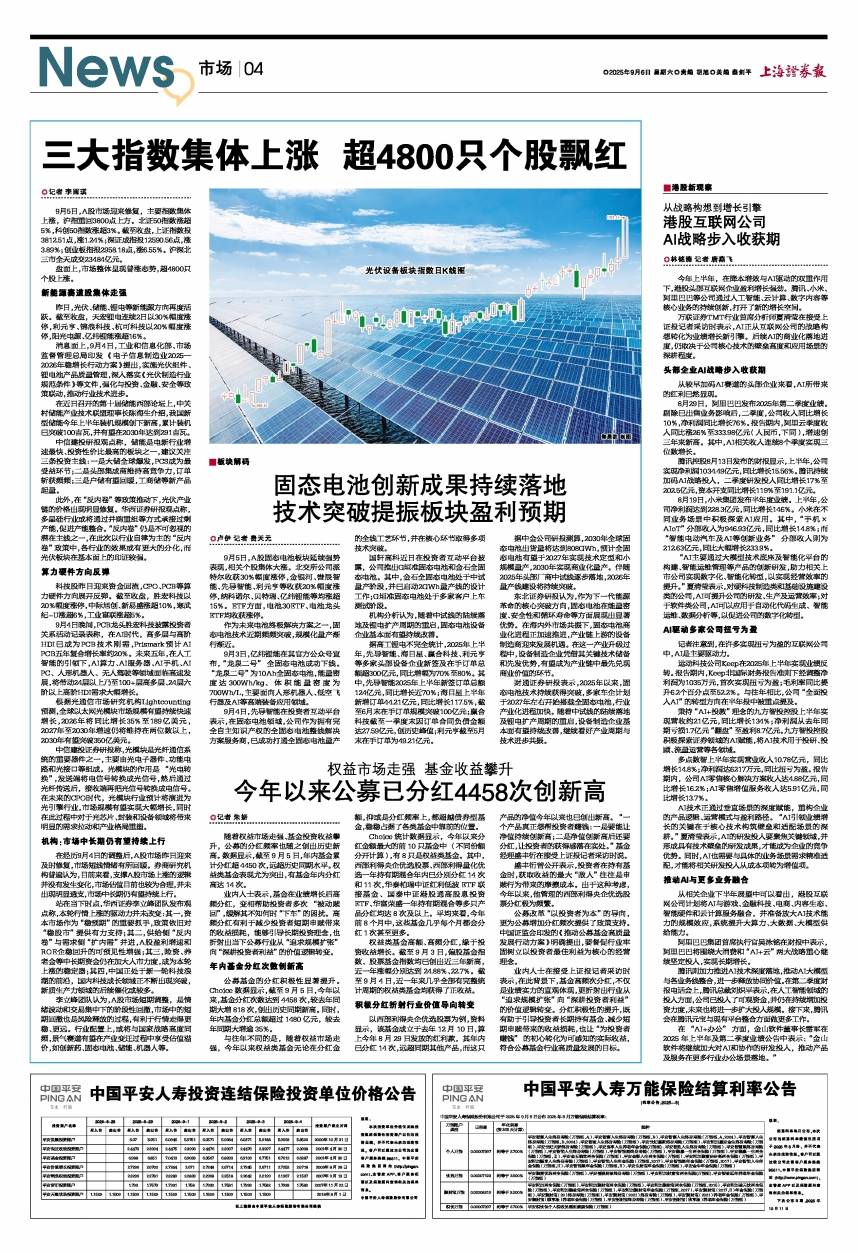
线下零售+AI应用+体验消费,18只核心公司名单
Sou Hu Cai Jing· 2025-09-05 17:03
Core Viewpoint - The domestic service consumption market is undergoing structural changes by 2025, with offline retail, AI applications, and experiential consumption becoming the focal points for investment. The overall growth rate of commodity consumption is slowing, while the service consumption sector shows greater resilience and vitality [1]. Group 1: Offline Retail Restructuring - Instant retail and local life platforms are rapidly developing, leading to accelerated industry consolidation. Major platforms like Meituan, Alibaba, and JD.com are heavily investing in offline retail and delivery channels, creating a new ecosystem of online and offline integration. By 2024, Meituan's instant retail orders are expected to exceed 150 million, with both rider volume and revenue experiencing growth [2]. - The restaurant industry's chain rate continues to rise, with leading companies expanding their market share. By 2024, China's restaurant chain rate is projected to reach 23%, with the mass convenience restaurant market size around 4 trillion yuan. The segment with a customer price of 50-100 yuan is expected to surpass 3.4 trillion yuan by 2028 [2]. - The hotel sector is also undergoing a brand reshuffle, with Huazhu Group operating 12,137 stores and Atour Hotels exceeding 1,800 stores. Mid-to-high-end brands are increasing their market share through continuous upgrades and expansion into lower-tier markets [3]. Group 2: Acceleration of AI Applications - The application of artificial intelligence in the social service industry is advancing. For instance, Keri International's "He Wa" platform operated over 37,000 job postings in the first half of the year, with more than 200,000 recommendations, continuously upgrading its AI recruitment functions [4]. - In the education sector, policies are becoming clearer, with Tianli International Education developing AI companion products deployed in 107 schools nationwide, serving over 250,000 teachers and students, thus promoting digital transformation in K12 and vocational education [4]. - The exhibition industry is also benefiting from AI, with companies like Miao Exhibition leading the way with comprehensive AI exhibition solutions, surpassing pre-pandemic levels in terms of the number of countries, exhibitions, and booth sizes [4]. Group 3: High Prosperity of Experiential Consumption - The cultural tourism and sports industries are core beneficiaries of experiential consumption. In the first half of 2025, domestic travel reached 3.285 billion trips, a year-on-year increase of 20.6%, with total tourism expenditure at 3.15 trillion yuan. Scenic spots like Changbai Mountain and Jiuhua Mountain have seen revenues recover and exceed 2019 levels [5]. - The sports industry is experiencing significant spending increases, with high demand for events, training, and fitness services. Companies like Keep, Inpai, and Lisheng Sports are performing exceptionally well. Emerging demands from lower-tier markets and the elderly population are creating new growth points for service-oriented consumption in cultural tourism and sports [5]. - The report highlights three investment lines in the service consumption sector: offline retail restructuring, AI applications enhancing service efficiency, and the high prosperity of experiential consumption, with companies like Meituan, Alibaba, JD.com, Huazhu Group, and Keep being key focuses [5].




盈利拐点之后,Keep的AI转型能走多远?
雪球· 2025-08-29 08:08
Core Viewpoint - Keep has reported a significant financial turnaround in the first half of 2025, achieving a revenue of 821.8 million yuan, a decline year-on-year, but marking its first positive net profit of 10.35 million yuan and an increase in gross margin to 52.2% [1] Industry Context - The fitness technology sector has evolved over the past decade, transitioning from basic tracking devices to online courses and home fitness hardware, but struggled to enhance user engagement [2] - The introduction of AI has transformed the landscape, addressing the need for personalized guidance in fitness, which traditional apps failed to provide [2] AI Integration in Keep's Strategy - Keep's "All in AI" strategy integrates AI across all business aspects, including the launch of an AI coach named "Kaka" that offers personalized training plans, dietary advice, and performance analysis [3] - The application of AI has improved operational efficiency, contributing to Keep's gross margin increase to 52.2% in the first half of 2025 [3] User Engagement and Value Growth - Keep aims to expand its services from mere training to comprehensive health management, incorporating diet, sleep, and recovery into its offerings [4] - Despite a decline in monthly active users to 22.49 million from 29.66 million year-on-year, the membership penetration rate increased to 12.4%, and the average monthly revenue per active user rose to 6.1 yuan [4] Market Expansion Potential - AI enables Keep to reach a broader audience, including middle-aged and elderly users, and expand fitness activities beyond home workouts to outdoor sports [5] - The AI coach has shown commercial potential, with over 150,000 daily active users and a 50% next-day retention rate for its dietary tracking feature [5] Competitive Advantage - Keep's decade-long experience has provided it with a vast database of over 400 million user behaviors, giving it a competitive edge in AI model training and application [6] - The successful implementation of AI in Keep's operations reflects a significant shift in how fitness services are delivered and experienced by users [6]

KEEP(3650.HK):利润扭亏为盈 全面聚焦AI战略
Ge Long Hui· 2025-08-28 12:01
Core Viewpoint - The company reported a total revenue of 820 million yuan for 1H25, a year-on-year decrease of 20.8%, but achieved a non-IFRS net profit of 10 million yuan, indicating a return to profitability driven by improved gross margins in consumer goods and disciplined cost control measures [1][2]. Revenue and Profitability - The company's revenue for 1H25 decreased by 20.8% to 820 million yuan, with proprietary brand sports products revenue down 20.9% to 400 million yuan, while the gross margin for this segment improved by 3.3 percentage points to 34.8% due to a focus on high-potential categories [2]. - Online membership and paid content revenue fell by 22.9% to 340 million yuan, attributed to a decline in online event revenue, but the gross margin for this segment increased by 3.4 percentage points to 71.3% due to a higher proportion of subscription revenue [2]. - The overall gross margin for 1H25 was 52.2%, up 6.2 percentage points, primarily due to ongoing product mix optimization and cost reduction initiatives [2]. User Engagement and AI Development - The average monthly active users for 1H25 decreased by 24.2% to 22.49 million, with the average revenue per user increasing by 0.3 yuan to 6.1 yuan, and the average monthly subscription members at 2.79 million, reflecting a membership penetration rate of 12.4% [2]. - The company is transitioning from a content platform to an AI-driven model, achieving three major advancements in 1H25, including the completion of multi-agent MAS infrastructure and continuous iteration of the AI Coach feature [3]. - As of the end of July, the AI core daily active users exceeded 150,000, with plans to reach 1 million by 2025, and the AI Coach's dietary tracking feature has been adopted by one-third of AI interaction users, contributing to a retention rate of 79% [3]. Financial Forecast and Valuation - Revenue forecasts for 2025, 2026, and 2027 have been adjusted downwards by 15.4%, 7.2%, and 1.4% to 1.83 billion, 2.11 billion, and 2.35 billion yuan, respectively, due to the streamlining of non-core low-efficiency businesses [4]. - Non-IFRS net profit forecasts for 2025, 2026, and 2027 have been raised to 60 million, 100 million, and 160 million yuan, respectively, driven by improved gross margins and ongoing cost reduction efforts [4]. - The target price for the company is set at 8.82 HKD, reflecting a price-to-sales ratio of 2.3x for 2025, which is a premium compared to the average of comparable companies, attributed to the ongoing business transformation [4].