明源云

Search documents
明源云资管成资产盘活“精兵利器”,赋能穿透监管、高效盘活
Sou Hu Cai Jing· 2025-06-05 10:16
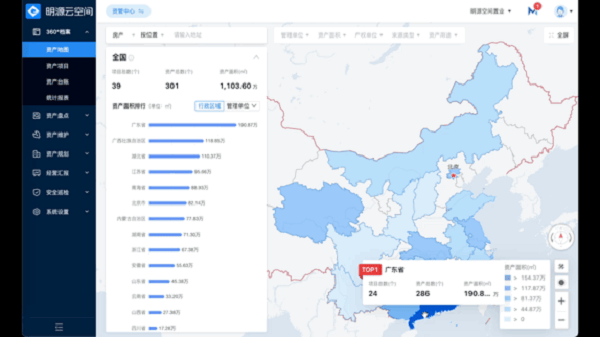
Core Viewpoint - Mingyuan Cloud Asset Management is a leading digital management platform in the real estate industry, leveraging over 1,000 enterprise service experiences to enhance state-owned enterprises' asset management, operations, and regulatory capabilities, achieving asset clarity, visibility, and activation [1]. Group 1: Asset Clarity - The platform enables rapid asset registration, constructing a comprehensive digital asset foundation with 27 types of asset record templates, allowing for asset documentation in just one minute [2]. - Each asset is linked to a unique record, ensuring 100% consistency between asset records and actual status, thereby creating a real-time, accurate digital asset foundation [3]. - The system allows for quick generation of asset ledgers, enabling centralized access to asset records without relying on frontline personnel for reporting, thus facilitating flexible business decision-making [4]. Group 2: Asset Visibility - Traditional spreadsheet ledgers make it difficult for managers to intuitively understand asset layouts and operational insights [5]. - The cloud asset management system utilizes GIS technology to provide a panoramic view of asset ownership and operational layouts, allowing managers to see asset dynamics from macro to micro levels [6][8]. Group 3: Asset Activation - State-owned enterprises often face challenges with loosely managed operations and lack of coordinated perspectives, leading to asset idleness and compliance risks [9]. - The system employs a three-tier management model to separate asset stability from operational agility, clarifying ownership and operational relationships [11]. - It facilitates online business coordination through a "rental and sales integration" platform, enhancing asset utilization efficiency and maximizing operational benefits [11]. - The platform allows for quick reporting of operational data through a closed-loop model, aiding in decision-making with a unified analysis and dashboard system [12]. Conclusion - Mingyuan Cloud Asset Management's digital solutions are driving intelligent upgrades in asset management capabilities for over a thousand enterprises, focusing on asset clarity, operational insights, and enhanced efficiency [13].

智通港股回购统计|6月3日





智通财经网· 2025-06-03 01:11
Summary of Key Points Core Viewpoint - A total of 36 companies conducted share buybacks on June 2, 2025, with Tencent Holdings (00700) leading in both the number of shares repurchased and the total amount spent on buybacks. Group 1: Buyback Details - Tencent Holdings (00700) repurchased 1.013 million shares for a total of 501 million CNY, with a year-to-date cumulative buyback of 10.797 million shares, representing 0.118% of its total share capital [1][2] - AIA Group (01299) repurchased 5.448 million shares for 354 million CNY, with a cumulative buyback of 29.266 million shares, accounting for 0.274% of its total share capital [2] - Kuaishou-W (01024) repurchased 6 million shares for 312 million CNY, with a cumulative buyback of 12.3 million shares, representing 2.826% of its total share capital [2] Group 2: Other Notable Buybacks - Times Electric (03898) repurchased 320,700 shares for 10.528 million CNY, with a cumulative buyback of 53.301 million shares, accounting for 9.823% of its total share capital [2] - Stone Four Pharmaceutical Group (02005) repurchased 7.55 million shares for approximately 20.984 million CNY, with a cumulative buyback of 7.55 million shares, representing 0.263% of its total share capital [2] - Modern Dental Group (03600) repurchased 100,000 shares for 4.181 million CNY, with a cumulative buyback of 200,000 shares, accounting for 0.021% of its total share capital [3] Group 3: Additional Companies - China Eastern Airlines (00670) repurchased 2 million shares for 596,650 CNY, with a cumulative buyback of 66.088 million shares, representing 1.277% of its total share capital [2] - Mengniu Dairy (02319) repurchased 300,000 shares for 5.225 million CNY, with a cumulative buyback of 24.596 million shares, accounting for 0.625% of its total share capital [2] - Huazheng Medical (01931) repurchased 20,000 shares for 4.260 million CNY, with a cumulative buyback of 1.824 million shares, representing 0.135% of its total share capital [3]
5月上海二手房成交量同比上涨31.6%,AI解读:改善型需求释放
Guan Cha Zhe Wang· 2025-05-30 05:18
Group 1 - The Shanghai real estate market showed a mixed performance in May, with second-hand home transactions reaching 19,333 units, a month-on-month decrease of 11.7% but a year-on-year increase of 31.6% [1] - The second-hand housing market has remained above the "prosperity line" of 15,000 units for seven consecutive months, indicating active market conditions and good liquidity [1] - New home prices in Shanghai averaged 69,020 yuan per square meter in the first week of May, with a slight month-on-month increase of 0.03%, while some peripheral areas experienced a decrease of 0.39% [1] Group 2 - Recent financial measures from the central bank have effectively stimulated demand for improved housing in Shanghai, leading to a "sell old buy new" cycle in the market [2] - The market is characterized by "core area resilience, improvement-driven demand, and diminishing policy effects," with expectations for steady progress in the Shanghai real estate market [2] - CRIC Deep Insight, launched in late May, utilizes AI technology to provide comprehensive industry information and improve efficiency in data collection and analysis for real estate professionals [2][3] Group 3 - Over 90% of leading real estate companies recognize the transformative value of AI, with 72% expecting substantial impacts within 2-3 years, particularly in marketing [3] - 70% of real estate firms have initiated AI applications, while 43% believe current AI products have high application barriers, indicating a need for industry-level solutions [3] - The real estate market is currently in an "L-shaped bottoming" phase, and companies are encouraged to leverage AI to enhance decision-making efficiency and product capabilities [3]

DeepSeek小更新但得到“史诗级加强”,AI应用企业等估值或持续重构
Xuan Gu Bao· 2025-05-29 01:14
AI编程:卓易信息、普元信息。 5月28日,DeepSeek R1模型完成"小版本试升级",在语义理解精准性、复杂逻辑推理、长文本处理稳定 性等方面进行了强化。 f在LiveCodeBench基准上,DeepSeek-R1-0528性能几乎与o3-mini(High)和o4-mini(Medium)实力相 当,一举超越了Gemini 2.5 Flash。 根据行业媒体新智元测试,新版DeepSeek-R1的能力经过实测,虽然是一次「小版本」更新,但是性能 得到了「史诗级」的加强。尤其是编程能力,已经超过或者足以媲美Claude 4和Gemini 2.5 Pro,可以说 所有提示都是「一把过」,不需要任何修改!并且可以在网页端直接运行,展示效果。 国海证券表示,以模型能力提升+AI提升企业ROI+AI优化报表等核心因素催化下,前瞻布局AI的企业 有望迎来业绩的加速发展。同时,市场空间有望从IT预算进入企业人力预算,带来AI应用企业的估值重 构。 公司方面,据其表示主要包括: AI金融:东方财富、同花顺、顶点软件、恒生电子、京北方、宇信科技; AI工业:中望软件、中控技术、广联达; AI政务:中科曙光、太极股份、 ...

智通港股回购统计|4月29日


智通财经网· 2025-04-29 01:12
智通财经APP获悉,摩比发展(00947)、俊知集团(01300)、威高股份(01066)、国泰君安国际(01788)、亚 洲金融(00662)、天福(06868)、昊海生物科技(06826)、清科创业(01945)、中国有赞(08083)、归创通桥- B(02190)、上海石油化工股份(00338)、周黑鸭(01458)、信利国际(00732)、四环医药(00460)、嬴集团 (00397)、旭日企业(00393)、太古股份公司A(00019)、天鸽互动(01980)、中裕能源(03633)、阅文集团 (00772)、澳优(01717)、力鸿检验(01586)、乐声电子(00213)、太古地产(01972)、百融云-W(06608)、名 创优品(09896)、玄武云(02392)、明源云(00909)、太古股份公司B(00087)、和誉-B(02256)、骏杰集团控 股(08188)、乐华娱乐(02306)、KEEP(03650)、MONGOL MINING(00975)、瑞声科技(02018)、永达汽车 (03669)、瑞尔集团(06639)、思派健康(00314)、卡罗特(N24025)、捷利交易宝(0 ...
高盛:生成式 AI 如何重塑中国软件业?这 5 家公司被重点看好(附 2025 增长密码)
Zhi Tong Cai Jing· 2025-04-28 01:39
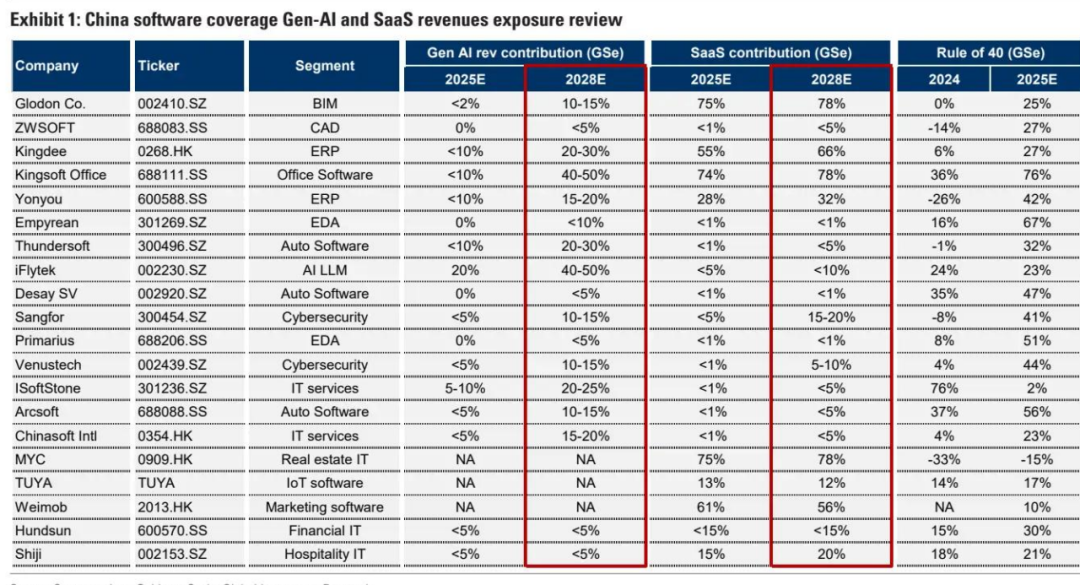
Core Insights - Goldman Sachs recently engaged with Chinese software supply chain companies to discuss customer software budgets, advancements in generative AI, and growth and profitability prospects for the second half of 2025. It is anticipated that the average revenue growth for Chinese software companies covered by Goldman Sachs will be 26% year-on-year in 2025, with sequential revenue growth expected across all four quarters [1]. Group 1: Generative AI Impact - The emergence of enhanced local foundational models, such as deep search models, has shifted customer software budgets from functional tools to generative AI software, leading to increased average revenue per user and attracting new paying customers [1]. - As demand rises and profitable business models for enterprise (B-end) and consumer (C-end) users become clearer, more software companies are investing in the development of application software based on foundational models [1]. - Generative AI is enabling enterprises to reduce operational costs, such as recruitment tools, with revenue from generative AI for covered Chinese software companies expected to rise from 0%-10% in 2025 to 10%-50% by 2028 [1]. Group 2: Revenue Contributions and Projections - The contribution of generative AI revenue to various companies is projected to increase significantly by 2028, with specific companies like Kingsoft Office and iFlytek expected to see substantial growth in their generative AI revenue contributions [2]. - The revenue growth for different segments, including electronic design automation, marketing, CAD/BIM, and automotive software, is expected to be robust in 2025, with generative AI applications playing a key role [10][29]. Group 3: Software Company Strategies - Companies are shifting their business models to subscription-based services, which provide predictable revenue streams and better operational leverage, particularly in the context of generative AI applications [7]. - Software companies are focusing on providing customized solutions for large clients while also developing standardized solutions for small and medium enterprises [24][25]. - The monetization of generative AI is occurring in both B-end and C-end markets, with existing clients paying more for upgraded versions with AI features and new clients converting from free to paid status more rapidly [26]. Group 4: Growth and Profitability Outlook - Companies like Kingsoft Office and Yonyou are expected to achieve steady revenue growth, with Kingsoft focusing on expanding its AI user base and Yonyou optimizing its product mix to improve gross margins [31]. - The automotive software sector is witnessing increased demand due to the push for intelligent vehicle strategies, benefiting the entire automotive technology supply chain [29]. - Cybersecurity companies are adapting to market demands by integrating multiple point solutions into platform offerings, driven by the increasing need for security solutions in the context of generative AI [30].


明源云(00909) - 2024 - 年度财报
2025-04-24 08:45
Financial Performance - Revenue for the year ended December 31, 2024, was RMB 1,434.8 million, a decrease of 12.5% year-on-year[11]. - Gross profit for the same period was RMB 1,102.7 million, reflecting a decline from previous years[8]. - The adjusted net loss for 2024 was RMB 44.0 million, a significant reduction of 74.1% compared to the prior year[13]. - Total assets as of December 31, 2024, amounted to RMB 5,448.5 million, down from RMB 5,852.2 million in 2023[10]. - The company reported an operating loss of RMB 376.3 million for 2024, an improvement from the loss of RMB 763.2 million in 2023[8]. - Total liabilities decreased to RMB 745.6 million in 2024 from RMB 918.3 million in 2023[10]. - The company reported a net loss of RMB (189,546) thousand for the year ended December 31, 2024, a reduction of 67.7% from RMB (587,043) thousand in 2023[73]. - The company maintained a net cash position as of December 31, 2024, with no debt[78]. Market and Industry Trends - The company has successfully navigated significant challenges in the real estate sector, which saw a decline in sales from RMB 18.2 trillion in 2021 to RMB 9.7 trillion in 2024[16]. - In 2024, China's cumulative sales area of commercial housing reached 970 million square meters, a year-on-year decrease of 12.9%, with a cumulative sales amount of RMB 9.7 trillion, down 17.1% year-on-year[20]. - In Q4 2024, China's cumulative sales amount of commercial housing was RMB 2.8 trillion, showing a year-on-year growth of 1.1%, indicating a stabilization signal in the market[20]. - The demand for digital tools in real estate operations and management is expected to continue growing as the industry shifts focus from new development to existing asset management[22]. Strategic Focus and Future Plans - The company plans to focus on consolidating the domestic market and restoring sustainable profitability[17]. - There is an emphasis on accelerating investments in AI technology and driving product and technological innovation[17]. - The company aims to expand its overseas market presence to increase business scale and influence[17]. - The company plans to accelerate the AI application in various real estate business scenarios, enhancing SaaS product functions and services[26]. - The company plans to focus on core products and improve product profitability, particularly in high-potential areas like "AI + real estate marketing" and "asset management & operations" in 2025[43]. - The company aims to expand its international market presence by establishing localized teams in regions such as Singapore, Malaysia, and Japan, with a cumulative contract value of nearly RMB 10 million[46]. Product and Service Performance - In 2024, the company's cloud service revenue was RMB 1,195.1 million, a year-on-year decrease of 10.7%, accounting for 83.3% of total revenue[28]. - The asset management and operation product line achieved year-on-year revenue growth, driven by increased investment in the management of existing real estate[28]. - The revenue from the customer relationship management product line was RMB 858.9 million, a year-on-year decrease of 9.2%[33]. - The project construction product line recorded revenue of RMB 124.2 million, a year-on-year decline of 20.7%[36]. - The asset management and operation product line generated revenue of RMB 99.8 million, a year-on-year increase of 14.2%[37]. - The Tianji PaaS platform recorded revenue of RMB 112.3 million, a year-on-year decrease of 24.6%[39]. Cost Management and Efficiency - The company's sales and marketing expenses in 2024 were RMB 757.7 million, down 17.8% from RMB 921.7 million in 2023[42]. - General and administrative expenses were RMB 244.0 million in 2024, a significant decrease of 53.0% from RMB 519.5 million in 2023[42]. - Research and development expenses amounted to RMB 482.1 million in 2024, a decline of 25.0% from RMB 643.0 million in 2023[42]. - The company intends to optimize resource allocation and enhance operational efficiency by implementing stricter project management measures and promoting the use of AI tools across departments[48]. Corporate Governance and Management - The company is committed to maintaining high standards of corporate governance and transparency in its operations[110]. - The management team has extensive experience in finance and technology, with members holding degrees from prestigious institutions such as Tsinghua University and Wuhan University[106][117]. - The company has established several key subsidiaries, including Mingyuan Cloud Technology and Mingyuan Cloud Procurement, which are integral to its operations[96][99]. - The board of directors includes Mr. Gao as Chairman and Mr. Jiang as CEO, with a structured rotation of board members every three years[153][154]. Employee and Stakeholder Relations - The total employee count is 1,912, down from 2,577 as of December 31, 2023[192]. - The total employee cost for the year ended December 31, 2024, is approximately RMB 1,098,058,000, which includes salaries, bonuses, and other employee benefits[192]. - The company emphasizes the importance of attracting and retaining quality employees through regular training programs[147]. - The company maintains strong relationships with stakeholders, including employees and customers, to ensure sustainable business development[147]. Shareholder Information - The company reported a special dividend of HKD 0.1 per share, amounting to approximately RMB 167.52 million, approved at the 2023 annual general meeting[128]. - As of December 31, 2024, the company's distributable reserves calculated under Cayman Islands law amounted to approximately RMB 7,661.5 million[135]. - The company had no bank loans or other borrowings as of December 31, 2024[137]. - The board does not recommend the distribution of a final dividend for the fiscal year ending December 31, 2024[130]. Contractual Arrangements and Compliance - The company has established a series of contractual arrangements to effectively control its consolidated affiliated entity, Mingyuan Cloud Procurement, due to restrictions on foreign investment in certain industries in China[168]. - The exclusive business cooperation agreement stipulates that Mingyuan Cloud Procurement will pay service fees based on its pre-tax consolidated profit, adjusted for any accumulated losses and operational costs[171]. - The company confirmed that there have been no significant changes to the contractual arrangements for the year ending December 31, 2024, and no termination of these arrangements[177]. - Independent non-executive directors confirmed that transactions conducted under the contractual arrangements were established according to relevant terms and were fair and reasonable for the group[184].
信号!公募基金挖掘“烟蒂股”,选股不看胜率看赔率?
券商中国· 2025-04-21 05:03
Core Viewpoint - In an increasingly uncertain market, "cigarette butt stocks" with cash flow advantages are becoming favored by fund managers [1][3][11]. Group 1: Characteristics of "Cigarette Butt Stocks" - "Cigarette butt stocks" are not considered inferior assets; they are favored when investors' risk appetite decreases and the pursuit of safety margins becomes dominant [3][14]. - These stocks typically exhibit high potential returns (odds) compared to their certainty (win rate), as they are often undervalued due to market overreactions to short-term risks [7][12]. - Key characteristics include stable operating capabilities, healthy cash flow, and significant undervaluation relative to intrinsic value [13][14]. Group 2: Fund Manager Strategies - Fund managers are increasingly focusing on "cigarette butt stocks" as a strategy to mitigate net asset value risks, with a trend towards identifying stocks with substantial price declines and low fund holdings [5][6]. - Notable examples include stocks like Boan Biotech and Mingyuan Cloud, which have seen significant price drops yet are being targeted by specific funds for their potential recovery [5][6][10]. - The strategy emphasizes the importance of cash flow and the hidden value of these stocks, leading to a re-evaluation of their worth in the market [8][11]. Group 3: Market Trends and Observations - The phenomenon of "cigarette butt stocks" is particularly evident in sectors that have experienced severe price declines, such as internet and consumer sectors, where companies like Yaoshi Bang have seen significant cash reserves despite low market valuations [9][14]. - Fund managers are shifting their focus from traditional pharmaceutical stocks to digital healthcare service companies that also exhibit characteristics of "cigarette butt stocks," indicating a broader trend in investment strategies [9][11]. - The overall market sentiment is leaning towards identifying undervalued stocks with solid cash flow, especially as the market navigates through periods of uncertainty [12][15].

高盛:维持明源云(00909)中性评级 目标价2.00港元
智通财经网· 2025-04-14 02:18
Core Viewpoint - Goldman Sachs reports that Mingyuan Cloud's performance in the second half of 2024 is expected to be below expectations due to continued weak demand from real estate developers, maintaining a neutral rating with a 12-month target price of HKD 2.00 [1] Group 1: Financial Performance - Revenue for the second half of 2024 is projected to decline by 19% year-on-year to RMB 715 million, which is 14% lower than Goldman Sachs' expectations [1] - Gross margin decreased by 5.7 percentage points year-on-year and 6.8 percentage points quarter-on-quarter, primarily due to a significant reduction in orders [1] - Adjusted net loss reached RMB 27 million, which is better than Goldman Sachs' forecasted adjusted net profit loss of RMB 35 million [1] Group 2: Business Segment Analysis - Cloud SaaS/PaaS revenue declined by 17% year-on-year, with property management and operation SaaS revenue increasing by 3%, offset by declines in CRM SaaS, construction management SaaS, and Skyline PaaS revenue, which fell by 12%, 36%, and 36% respectively [1][2] - The decline in revenue is attributed to a decrease in new construction projects in the real estate sector and reduced demand from budget-constrained developers [1] - The number of sales offices covered by CRM Cloud decreased by 9% year-on-year, while the average revenue per user (ARPU) for CRM Cloud increased by 3% [1] Group 3: Software Business and AI Initiatives - Revenue from on-premise software business declined by 24% year-on-year, primarily due to conservative IT spending by private developers [2] - The company has launched several AI products for real estate video marketing, including AI Creative Factory and AI Salesperson, with contract amounts for AI products reaching RMB 28 million in 2024 [2] - CRM Cloud is expanding its AI-supported video marketing services into real estate brokerage, automotive, and home decoration sectors [2]
晨报|港股在中国股票资产中占据几成方为合理?
中信证券研究· 2025-03-26 00:13
Group 1: A-Share and Hong Kong Market Insights - The Hong Kong stock market has entered a technical bull market since the beginning of the year, while the A-share market remains volatile. Net inflows from southbound funds have approached 400 billion HKD year-to-date [1] - It is suggested that a reasonable allocation of Hong Kong stocks in Chinese equity assets should be between 40%-50%, indicating significant room for institutional investors, especially public funds, to increase their allocation to Hong Kong stocks [1] Group 2: U.S. Market Strategy - Recent shifts in Trump's tariff policy suggest a potential easing, with indications of a "Trump Put" emerging. The Fed's stance may also be shifting towards a more accommodative policy, which could pave the way for future rate cuts [3] - Despite the S&P 500 and NASDAQ 100 remaining at relatively high valuations, there has been a noticeable contraction since mid-February. The market may have already priced in uncertainties related to Trump's policies, and a technical rebound in tech stocks is anticipated [3] - Mid-term concerns include the potential escalation of global trade tensions, the evolution of the U.S. macroeconomic fundamentals, and the upcoming fiscal X-date, which could disrupt the U.S. market [3] Group 3: Banking and Financial Products - The scale of China's banking wealth management market has been expanding, with various distribution channels evolving. The introduction of the "Commercial Bank Agency Sales Business Management Measures" marks a new era of regulation in bank sales [5] - The competition in the banking wealth management sector is expected to focus on both "channel supremacy" and "product supremacy" [5] Group 4: Bond Market Dynamics - The liquidity landscape has undergone significant changes since the beginning of the year, attributed to the central bank's efforts to build a differentiated liquidity management system. A "tight balance" in the funding environment is expected to persist [7] - With a more relaxed central bank stance, the likelihood of long-term bond yields declining has improved, although short-term rates may remain volatile without substantial easing [7] Group 5: Fiscal Data and Economic Indicators - National fiscal revenue growth has declined, with major tax categories like VAT and corporate income tax showing negative growth, indicating ongoing pressure on corporate operations. Fiscal expenditures have been progressing rapidly, particularly in social security and employment [10] - The government fund revenue continues to decline significantly, while expenditures have seen slight growth, suggesting that policies may be gearing up for potential disturbances related to tariffs [10] Group 6: Emerging Industries - The controllable nuclear fusion industry is viewed as a strong investment opportunity due to anticipated policy signals and a significant order concentration expected in the near term. The overlap with the nuclear power and military materials sectors is also noted [12] - In the energy storage sector, a recent 500 billion Euro fiscal spending bill in Germany, which includes 100 billion Euros for climate and transformation funds, is expected to catalyze a recovery cycle in the European energy storage market, benefiting domestic companies [13]