
ABB

Search documents
新工业周报:AI算力外溢催化云基建爆发,美国太空发展局通过SpaceX发射首批作战卫星-20250912
Haitong Securities International· 2025-09-12 13:32
Investment Rating - The report suggests a positive investment outlook for the nuclear power sector, particularly in relation to AI energy consumption, highlighting companies such as Entergy, Talen Energy, and Constellation Energy as key players [5]. Core Insights - The demand for AI computing is driving a significant boom in cloud infrastructure, benefiting service providers directly [9]. - The U.S. energy market is experiencing dynamic changes, with Conduit Power providing bridging power for ENGIE's battery sites in Texas and Google collaborating on long-duration energy storage projects [9]. - The report emphasizes the strong long-term demand for infrastructure construction in the U.S., particularly in the context of industrial resurgence and AI data center development [5]. Global Infrastructure and Construction Equipment - The explosive demand for AI computing is leading to increased reliance on cloud infrastructure services, with Oracle reporting a 54% year-on-year increase in cloud infrastructure revenue [9]. - Major cloud service providers are becoming critical in handling the overflow of AI workloads due to their flexible supply capabilities [9]. Global Electrical and Intelligent Equipment - The gas turbine price index in the U.S. increased by 4.43% year-on-year and 3.8% month-on-month as of July 2025, indicating a stable competitive landscape [11]. - The U.S. electricity demand forecast has been revised upwards, with expectations of a 15.8% increase by 2029, driven by industrial resurgence and AI data center growth [19][20]. Global Energy Industry - The NYMEX natural gas futures price was reported at $3.10 per million British thermal units, reflecting a week-on-week increase of 3.6% [3]. - The report highlights the expected balance in the natural gas market supply and demand as the global energy transition progresses [5]. Global New Materials - The report notes a 6% month-on-month increase in the global uranium spot price, indicating ongoing interest in nuclear energy as a stable power source for AI data centers [4]. Global Defense and Aerospace - The report suggests that the recovery of the aerospace industry and increased defense spending will benefit companies like BAE Systems and Raytheon Technologies [6]. Key Company Insights and Commentary - GE Vernova is investing significantly in expanding its generator manufacturing capacity to meet growing global electricity demand [39]. - Siemens Energy is also expanding its transformer manufacturing capabilities in response to the increasing global demand for energy transition solutions [39]. - The report highlights the collaboration between various companies in the nuclear sector, including KHNP and Centrus, to enhance low-enriched uranium supply and explore potential investments in the U.S. [44].



智造未来可期 第二十五届工博会23日开幕
Guo Ji Jin Rong Bao· 2025-09-12 12:53
Core Points - The 25th China International Industry Fair (CIIF) will be held from September 23 to 27 at the National Exhibition and Convention Center in Shanghai, with a theme of "Industrial New Quality, Intelligent Manufacturing Without Boundaries" and an exhibition area of 300,000 square meters, expected to set historical records in scale and international participation [1][3] Group 1: Exhibition Highlights - The fair will showcase high-end, intelligent, and green technologies, serving as a core display window for industrial achievements during the 14th Five-Year Plan period [3] - Key exhibits include the C919 large passenger aircraft and the domestically produced cruise ship "Aida·Magic City," along with 1,500 projects aimed at enhancing industrial capabilities and 80 advanced manufacturing clusters from various countries [3] - Innovations in AI and manufacturing will be highlighted, such as a machine tool achieving the world's first "zero human experience" for autonomous processing paths and a domestic oral surgery robot utilizing AI for safer procedures [3] Group 2: International Participation - The event will attract nearly 3,000 exhibitors from 28 countries and regions, with international exhibitor space reaching new heights [4] - The Saudi exhibition group will present achievements related to industrial transformation and smart manufacturing as part of Saudi Arabia's Vision 2030 [4] - The fair will focus on cutting-edge fields such as superconductors, atomic-level manufacturing, brain-computer interfaces, and quantum technology, showcasing future industry results [4] Group 3: Special Exhibitions and Events - The exhibition will feature a framework of "1+3+9+10," including one high-profile opening ceremony, three major special exhibitions, nine industry-themed exhibitions, and ten key industry summits [4] - The "National New Industrialization and '14th Five-Year' Major Industrial Achievements Exhibition" will cover approximately 2,000 square meters, divided into three main areas: achievements, advanced manufacturing clusters, and industrial innovation [4][5] Group 4: Product Launches - The fair will see the debut of nearly 300 global firsts and around 200 China firsts, including advanced robotics and industrial control technologies [7] - Notable exhibits include ABB's compact collaborative robot PoWa, which boasts an industrial-grade speed of 5.8 meters per second, and a heavy-duty robot with a 5,000-kilogram load capacity from domestic company ChaiFu [7] Group 5: Visitor Engagement - The fair has received appointment requests from professional buyers from 102 countries and regions, with overseas visitor numbers doubling compared to the previous year, marking a historical high [8] - A "China Manufacturing Experience Day" will be introduced, inviting international representatives for interactive discussions on various themes [8]


智造未来可期,第二十五届工博会23日开幕
Guo Ji Jin Rong Bao· 2025-09-12 12:52
Group 1 - The 25th China International Industry Fair (CIIF) will be held from September 23 to 27 at the National Exhibition and Convention Center in Shanghai, with a theme of "Industrial New Quality, Intelligent Manufacturing Without Boundaries" and an exhibition area of 300,000 square meters, expected to set historical records in scale and international exhibitor participation [1][2] - The fair will showcase high-end, intelligent, and green industrial achievements, including significant national projects like the C919 large passenger aircraft and the domestically produced cruise ship "Aida·Magic City" [4][5] - The event will feature nearly 3,000 participating enterprises from 28 countries and regions, with a record high international exhibitor area, including a Saudi delegation showcasing achievements related to the Saudi Vision 2030 [5][6] Group 2 - CIIF will focus on cutting-edge fields such as superconductors, atomic-level manufacturing, brain-computer interfaces, and quantum technology, presenting future industry achievements like second-generation high-temperature superconducting tapes and quantum encryption networks [6] - The exhibition will introduce a new framework of "1+3+9+10," which includes one high-profile opening ceremony, three major special exhibitions, nine industry-themed exhibitions, and ten key industry summits [6] - Hundreds of new products will debut at the fair, with nearly 300 global premieres and around 200 China premieres, featuring leading companies in industrial control technology, metal sheet processing, and industrial robotics [8][9]

机器人行业研究:技术创新与市场共振,机器人产业商业化进程提速
Yuan Da Xin Xi· 2025-09-12 12:11
Key Points - The global robot market continues to grow, with sales expected to increase from $34.3 billion in 2020 to $66 billion by 2024, representing a compound annual growth rate (CAGR) of 17.8% [1] - China's robot market is also expanding rapidly, projected to grow from $17.4 billion in 2020 to $47 billion by 2024, with a CAGR of 14.3% [1][30] - The competitive landscape is becoming more diversified, with domestic manufacturers gaining market share through product upgrades and localized supply chains [2] - Humanoid robots are adaptable to various tasks, with a global market size expected to grow from $2.16 billion in 2023 to $20.6 billion by 2028, achieving a CAGR of 57% [3][48] - Investment recommendations include focusing on companies like Inovance Technology and Double Ring Transmission [4][61] International Robot Industry Development - Robots are defined as programmable machines capable of performing various tasks, with classifications including industrial, service, and special robots [10][11] - The global robot market is experiencing significant growth, with industrial robots reaching a market size of $19.5 billion and service robots at $21.7 billion in 2022 [16] - The top four global manufacturers (ABB, FANUC, YASKAWA, KUKA) dominate the high-end market, holding approximately 50% of the market share [22][23] China's Robot Industry Development - China's robot industry has evolved through three main stages, with significant growth driven by policy support and market demand [27][30] - The industrial robot market in China reached $8.7 billion in 2022, with expectations to grow to $11.5 billion by 2024 [32][39] - The service robot market in China is projected to exceed $10 billion by 2024, driven by aging population and increasing demand in various sectors [35] Humanoid Robots: Future Industry Track - Humanoid robots are characterized by their human-like structure and intelligence, with a market expected to grow significantly in the coming years [43][48] - The development of humanoid robots is currently in its early stages, with a focus on industrial applications before expanding to service sectors [44][55] - The commercialization of humanoid robots is expected to progress through three phases, starting with high-value applications and moving towards broader market integration [55] Investment Recommendations - Inovance Technology is highlighted for its strong growth in automation and robotics, with a revenue increase of 26.7% in the first half of 2025 [57] - Double Ring Transmission is noted for its growth in the robotics gear sector, with expectations for significant revenue increases as the market expands [61]


行业聚焦:全球工业温度控制器市场头部企业份额调研(附Top10 厂商名单)
QYResearch· 2025-09-12 05:35
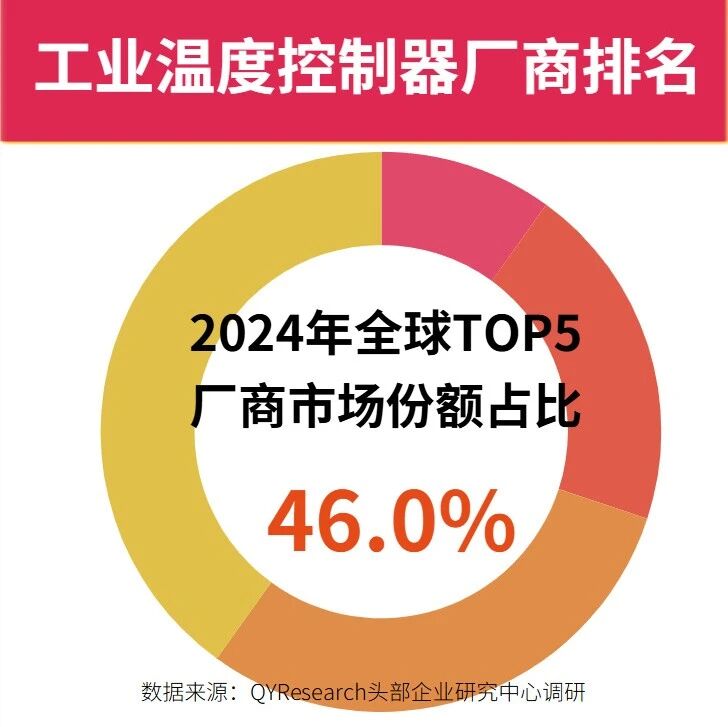
Core Viewpoint - The industrial temperature controller market is experiencing growth driven by increasing automation, quality control, and energy efficiency demands across various industries, with a projected market size of $1.39 billion by 2031 and a CAGR of 4.2% from 2025 to 2031 [3][4]. Market Overview - Industrial temperature controllers are essential devices for maintaining preset temperature levels in industrial processes, widely used in sectors such as plastic manufacturing, food processing, HVAC systems, chemical production, and packaging [2]. - The market is benefiting from the rising complexity of manufacturing systems and the need for precise temperature control, particularly in pharmaceuticals, food and beverage, semiconductors, petrochemicals, and automotive manufacturing [2][3]. Technological Integration - The integration of smart technologies in industrial environments is reshaping the functionality of temperature controllers, with many modern devices supporting remote monitoring, cloud connectivity, and real-time data analysis [3]. - The trend towards energy efficiency and sustainability is prompting companies to upgrade to more efficient control systems to reduce energy consumption and operational costs [3]. Regional Insights - The Asia-Pacific region, particularly China, Japan, South Korea, and India, is experiencing rapid market growth due to accelerated industrialization and ongoing investments in manufacturing infrastructure [3]. - North America and Europe, as mature markets, focus more on equipment modernization and compliance with stringent regulatory standards [3]. Market Share and Key Players - According to QYResearch, the top five manufacturers in the global industrial temperature controller market hold approximately 46.0% market share, with key players including Omron, RKC Instruments, Xiamen Yudian, Watlow, and Honeywell [8][18]. - Multi-loop controllers are the leading product type, accounting for about 36.9% of the market share, while industrial manufacturing is the largest downstream market, representing approximately 36.2% [9][11]. Driving Factors - The demand for process automation is rising, particularly in manufacturing, chemicals, food and beverage, and pharmaceuticals, driving the need for precise temperature control [13]. - Increasingly stringent quality and safety regulations from government agencies necessitate strict temperature control in critical processes, especially in medical, food processing, and semiconductor industries [13]. - The rapid development of the Industrial Internet of Things (IIoT) enhances the value of temperature controllers in smart factories through remote control and data-driven decision-making [13]. Challenges - High initial investment costs for advanced temperature control systems may hinder adoption among small and medium-sized enterprises [14]. - The complexity of integrating temperature control technology into older equipment or complex production lines poses deployment challenges [14]. - Limited awareness of temperature control precision and automation value in some emerging markets restricts market penetration [14]. Opportunities - The fusion of smart temperature control with AI and machine learning offers predictive control and self-calibration, providing new directions for product upgrades and differentiation [17]. - The push for green manufacturing and carbon emission control is expected to create growth opportunities for temperature control systems that support sustainability [17]. - Rapid industrial development in emerging economies such as Southeast Asia, Africa, and Latin America presents significant market potential for temperature controller manufacturers [17].
赛晶科技:柔性输电业务和新能源发电与储能业务协调发力造就35%的增长
Zhong Jin Zai Xian· 2025-09-11 03:10
Core Insights - The company, Saijing Technology, is positioned at the forefront of China's energy revolution, focusing on domestic innovation in the power electronics sector and aiming to break international monopolies [1][4] - The company has reported significant growth in revenue, with a 35.5% year-on-year increase to 890 million yuan in the first half of 2025, driven by strong performance in flexible transmission and renewable energy sectors [2] - Saijing Technology has achieved key technological breakthroughs, particularly in dry direct current support capacitors and SiC products, enhancing its competitive edge in the domestic market [3][4] Financial Performance - In the first half of 2025, Saijing Technology achieved revenue of 890 million yuan, a 35.5% increase compared to the previous year [2] - The revenue from the power transmission and distribution sector was 467 million yuan, up 30% year-on-year, with flexible transmission contributing significantly [2] - The industrial and other business segments generated 356 million yuan, reflecting a 57% increase, with renewable energy and storage business growing by 108% [2] Technological Advancements - Saijing Technology is the only domestic company with independent technology for the anode saturation reactor used in ultra-high voltage direct current transmission [2] - The company has made significant progress in the development of dry direct current support capacitors, achieving a 62.5% market share in the domestic market for the 800kV flexible transmission project [3] - The company has also launched advanced SiC MOSFET products and modules, enhancing its position in the semiconductor field [3] Strategic Positioning - Saijing Technology's business aligns closely with China's dual carbon strategy, providing essential components for photovoltaic inverters, energy storage systems, and ultra-high voltage transmission [4] - The company is positioned as a key player in the energy transition, with a focus on domestic production and technological independence [4] - Despite facing international competition and challenges in yield and cost control, Saijing Technology's technological barriers and supply chain advantages make it a critical force in the energy transformation landscape [4]
活力中国调研行|上海低空经济会客厅进博会前启用,承担四大服务功能
Xin Lang Cai Jing· 2025-09-10 13:53
Core Insights - The Shanghai Hongqiao Airport Economic Demonstration Zone is the first and only national-level airport economic demonstration zone in the Yangtze River Delta, covering an area of 13.89 square kilometers and housing over 4,000 enterprises, with foreign enterprises accounting for about 25% [1][4] - The economic output of the demonstration zone is projected to reach 21.1 billion yuan in 2024, achieving a counter-cyclical growth of 11.8% against the backdrop of a global economic downturn, with foreign enterprises contributing 50% to this growth [1] Group 1: Economic Development - The demonstration zone has attracted multinational companies' regional headquarters and foreign R&D centers, including Danaher, Johnson Controls, ABB, Eaton, Unilever, and Bosch [5] - The zone has established a digital economy ecosystem and attracted key players in artificial intelligence and chip industries, such as Ctrip, iQIYI, and Inspur [5] - The total office space in the demonstration zone reaches 2 million square meters, with comprehensive commercial facilities covering 440,000 square meters, providing a comfortable working and living environment for enterprises [6] Group 2: Low-altitude Economy - The Hongqiao International Low-altitude Economic Industrial Park is set to open in October 2024, focusing on low-altitude industry development and attracting related enterprises [7] - The park will feature a total construction area of approximately 1,200 square meters for the Shanghai Low-altitude Economic Reception Hall, which will support industry attraction and provide various services [7] Group 3: Company Growth and Performance - Ctrip has seen a significant increase in inbound travel bookings, with a year-on-year growth of over 100%, driven by both domestic and international market recovery [8] - Bosch has invested over 60 billion yuan in China over the past decade, with a focus on R&D in areas such as hydrogen fuel cells and advanced driver assistance systems [11]

中国工业行业:自动化运营追踪 -强劲势头持续-China Industrials_ Automation Operations Tracker – Strong Momentum Sustained_ Strong Momentum Sustained
2025-09-07 16:19
September 3, 2025 03:22 PM GMT China Industrials | Asia Pacific Automation Operations Tracker – Strong Momentum Sustained Key Takeaways In August, four global players – Yaskawa (6506.T), Panasonic (6752.T), Delta Electronics (2308.TW) and ABB (ABBN.S) – had combined China sales of servos and low-voltage AC drives of +19% and -10%, respectively, according to Market Intelligence Resource (MIR), vs. +3% and -1% y-y in 7M25. Inovance's (300124.SZ) Aug automation orders were up 20-30% y-y vs. +20% y-y in July. V ...
AIDC:断路器市场格局分析及出海展望
2025-09-07 16:19
Summary of Conference Call Records Industry Overview - The global low-voltage electrical market is steadily recovering, with a market size of approximately 400 billion RMB in 2023, and a projected compound annual growth rate (CAGR) of about 6% over the next five years, driven by the demand for renewable energy generation and data center construction [1][3][4] - The low-voltage electrical market is dominated by international giants such as Schneider, ABB, and Siemens, while the domestic market is relatively fragmented, with companies like Chint and Liangxin making progress in technology accumulation and overseas business expansion [1][5] Key Insights and Arguments - Data center circuit breakers are crucial for power distribution systems, ensuring uninterrupted power supply. The trend towards intelligent integration in data center power distribution systems and the shift from AC to DC for backup UPS will further enhance the value of individual products [1][6][7] - The global market for low-voltage electronic products in data centers is expected to exceed 30 billion RMB by 2026-2027, with the penetration rate of DC low-voltage electronic products increasing from about 10% in 2025 to over 30% by 2027, driving up the overall product value [1][8] - Liangxin Electric has a comprehensive product line covering medium and low voltage distribution and control, with customized development for various industries such as wind power generation, photovoltaic charging, electric vehicle charging stations, 5G base stations, and data centers [1][9] Future Trends - The future development direction of data center power distribution systems includes modularization and intelligence, which can significantly reduce construction time and improve efficiency and reliability [2] - The global installed capacity of renewable energy generation is expected to reach 4.6 billion kilowatts by 2024, further pushing the transformation of low-voltage electrical products towards intelligence and digitalization [4] Competitive Landscape - The competitive landscape of the circuit breaker industry shows that while international brands hold a significant market share, domestic brands like Chint and Liangxin are gradually increasing their market presence due to improved technology and cost-effectiveness [5][12] - In 2023, the market share of domestic C23 enterprises is approximately 40%, and C25 enterprises around 50%, with Schneider holding about 15% and Liangxin around 5% [5] Product Innovations - Liangxin has launched a solid-state DC circuit breaker, which offers advantages such as short response time, no arc limitation, and long service life, expected to become the standard for 800V HVDC data centers [11] - The new solid-state circuit breaker is anticipated to be launched in the second half of 2026, significantly enhancing Liangxin's competitiveness in the market [11] Additional Insights - The penetration of DC low-voltage electronic products is expected to rise rapidly, with domestic market values for AC low-voltage products around 3 RMB per watt and DC products approximately 6 RMB per watt, indicating a higher value for DC products in overseas markets [8] - Liangxin's strategic partnerships with leading clients like Huawei and Weidi for customized components are aimed at expanding its market share in the context of increasing demand for DC and high-voltage products [10][12]

埃夫特3414万芜湖拿地!机器人超级工厂背后的“智造野心”与行业变局
Quan Jing Wang· 2025-09-06 08:08
Core Insights - The industrial robot price war in China has led to profit margins dropping below 15%, while customers are increasingly demanding smarter, more stable, and more tailored solutions [1] - Efort's recent announcement of acquiring 10.16 million square meters of industrial land for a "robot super factory and global headquarters project" signifies a strategic move to break through the competitive landscape by focusing on "technology foundation + large-scale manufacturing" [1][2] Group 1: Strategic Location and Timing - Efort's new facility is located in Wuhu, which is its operational base, benefiting from a complete industrial chain that includes core components and system integration, thus reducing logistics and collaboration costs [3] - The domestic industrial robot sales exceeded 300,000 units in 2023, but the localization rate for high-end six-axis robots remains below 30%, indicating a significant market opportunity for Efort to capture high-end customized orders [3] - The super factory will not only expand physical space but also upgrade production models, incorporating digital production lines and flexible manufacturing units to enhance efficiency and reduce costs [3][8] Group 2: Technological Foundation - The "intelligent robot general technology foundation" project, which received a 50 million yuan subsidy, aims to address common industry challenges such as scene adaptation, flexible control, and ecological collaboration [4][5] - This technology foundation serves as the underlying operating system for robots, facilitating quicker adaptation to various production scenarios and improving interoperability among different systems [4] Group 3: Comprehensive Development - The project will include a research and development center focused on core technology innovation, a production base utilizing advanced automation, a display center for showcasing products, and a service center for comprehensive customer support [8] - Efort's strategy shifts from merely selling robots to providing intelligent production line solutions, enhancing customer efficiency and cost reduction, which is crucial for standing out in a competitive market [8]

