
珀莱雅

Search documents
2025年第47周:美妆行业周度市场观察
艾瑞咨询· 2025-11-29 00:03
Group 1: Market Trends - The beauty retail industry is experiencing a dichotomy between price increases and decreases, with brands adopting different pricing strategies to cope with cost pressures from tariffs and market changes [3] - Some brands, like Elf Beauty, are opting for transparent price increases while others, such as BeautyStat, are lowering prices to boost sales, particularly in high-end channels where consumers are more price-sensitive [3] - The market for anti-aging skincare is projected to reach 85 billion yuan by 2025, growing at 11%, with a shift towards systematic scientific management and consumer preference for long-term efficacy [4] Group 2: Consumer Behavior - Color cosmetics are becoming a key driver for attracting younger consumers in shopping malls, with a focus on emotional expression and social attributes, particularly among women aged 18-35 [5] - The trend of "experiential marketing" is evident, as consumers engage in try-on experiences that create a loop of offline experience leading to online sharing [5] - The demand for high-efficacy products is rising, with live-streaming platforms like Douyin playing a significant role in driving sales, particularly for domestic brands [9] Group 3: Brand Performance - Domestic brands are showing strong performance during promotional events, with Pechoin entering the top 4 on Douyin and domestic brands dominating the top 10 in the beauty category [6][8] - The beauty industry is facing challenges, with many brands experiencing revenue declines, while Marubi Biotech reported a 25.51% increase in revenue, attributed to its focus on R&D and a strong product strategy [14] - Natural Hall, a veteran domestic brand, is struggling with growth, facing challenges such as over-reliance on its main brand and high marketing costs, which are squeezing profits [15] Group 4: Innovation and Technology - La Roche-Posay has introduced a new supermolecular technology in its skincare products, emphasizing scientific innovation and skin health [10][11] - The emergence of new skincare brands focusing on light medical beauty and anti-aging solutions reflects a broader trend towards personalized and scientifically-backed skincare [12] - The industry is witnessing a shift towards age-appropriate skincare, with brands advocating for simpler, more effective routines for children, amidst concerns over the commercialization of children's skincare products [13]



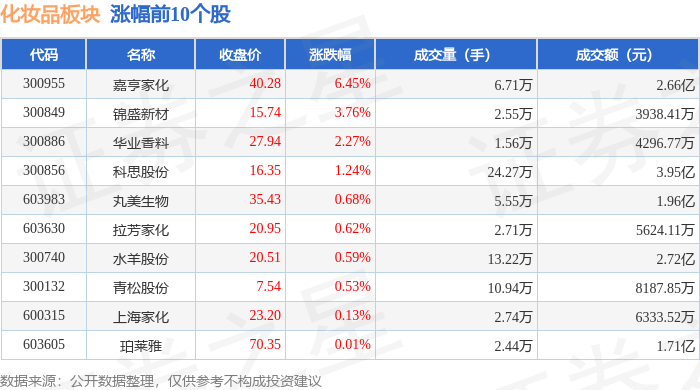
化妆品板块11月28日涨0.29%,嘉亨家化领涨,主力资金净流出6103.78万元
Zheng Xing Xing Ye Ri Bao· 2025-11-28 09:15
Group 1 - The cosmetics sector increased by 0.29% on November 28, with Jiaheng Jiahua leading the gains [1] - The Shanghai Composite Index closed at 3888.6, up 0.34%, while the Shenzhen Component Index closed at 12984.08, up 0.85% [1] - Jiaheng Jiahua's stock price rose by 6.45% to 40.28, with a trading volume of 67,100 shares and a transaction value of 266 million yuan [1] Group 2 - The cosmetics sector experienced a net outflow of 61.04 million yuan from institutional investors, while retail investors saw a net inflow of 76.64 million yuan [2] - Among individual stocks, Marubi Biological had a net outflow of 9.46 million yuan from institutional investors, while Shanghai Jahwa saw a net inflow of 5.63 million yuan [3] - The overall trading activity in the cosmetics sector indicates a mixed sentiment, with some stocks experiencing significant outflows while others attracted retail interest [2][3]



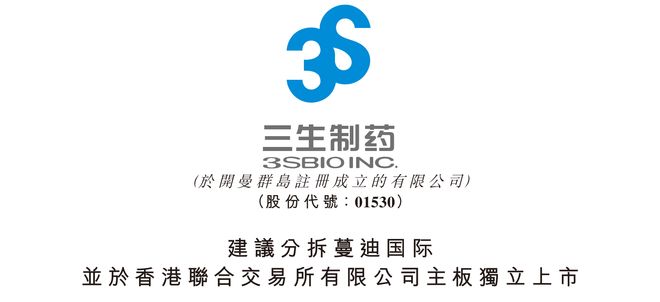
蔓迪国际IPO前夕突击分红7.7亿元超过前三年分红总额 “脱发经济”冠军面临可持续发展考验
Xin Lang Zheng Quan· 2025-11-28 08:34
Core Viewpoint - Mandis International, a subsidiary of Sanofi Pharmaceutical focusing on hair loss treatment, has submitted its IPO application to the Hong Kong Stock Exchange, but a significant pre-IPO dividend of 770 million yuan raises concerns about the company's future prospects [1][3][7] Financial Performance - Mandis International has maintained a leading position in China's hair loss medication market, with its main brand "Mandis" holding a 57% market share in 2024 [2] - The company's revenue grew from 982 million yuan in 2022 to 1.455 billion yuan in 2024, with a compound annual growth rate of 21.7%, while net profit increased from 202 million yuan to 390 million yuan during the same period [2] - The gross profit margin has consistently exceeded 80%, reaching 82.7% in 2024, significantly higher than the industry average [2] Dividend Strategy - The company declared a sudden dividend of 770 million yuan in the first half of 2025, which is 4.4 times its net profit of 174 million yuan for that period, surpassing the total dividends of the previous three years [3] - This dividend payout has drastically reduced the company's net current assets from 595 million yuan at the end of 2024 to just 400,000 yuan in the first half of 2025 [3] - The primary beneficiaries of this dividend are the controlling shareholders, who hold 87.16% of the company [3] Research and Development - Despite the high dividend, the company's R&D expenditure has decreased significantly, dropping to 19.5 million yuan in the first half of 2025, only one-third of the amount from the same period in 2024 [3] - The R&D team has also shrunk to 46 members, contrasting sharply with the high sales expenses, which reached 374 million yuan in the first half of 2025, accounting for 50.4% of revenue [3] Market Challenges - The company faces significant challenges as its core patent is set to expire in 2028, which may lead to an influx of generic drugs and potential price wars [4] - Competitive pressures are already evident, with a 52% drop in the bidding price for its core product in provincial drug procurement in 2024 [4] - Additionally, the company is contending with competition from consumer brands that have entered the hair loss treatment market [4] Future Strategy - The IPO proceeds are intended to enhance R&D capabilities, strategic business collaborations, digital operations, and brand building [6] - The company is expanding its product line with new treatments, including D2501 for vitiligo and WS2505 for obesity, with the latter expected to enter clinical trials soon [6] - However, these new products are unlikely to contribute significantly to revenue in the short term, leaving the company heavily reliant on its minoxidil product line during a critical period of patent expiration and increased competition [6] Conclusion - Mandis International has established a strong market position and profitability in the hair loss treatment sector, but faces challenges from its pre-IPO dividend strategy, high sales costs, declining R&D investment, and impending patent expiration [7] - Investors should consider both the short-term financial metrics and the long-term growth potential, as sustained innovation and product diversification will be crucial for maintaining long-term value [7]
国信证券:商贸零售行拥抱变局聚新势 重塑价值觅转机
智通财经网· 2025-11-28 01:29
Core Viewpoint - The retail industry is experiencing increased market volatility as of the end of 2025, with a focus on capturing new consumption trends and expectations for a reversal of traditional consumption challenges [1] 2025 Review - In the first nine months of 2025, the total retail sales reached 36,587.7 billion yuan, reflecting a year-on-year growth of 4.5%, with retail sales of consumer goods excluding automobiles growing by 4.9% [2] - By category, cosmetics sales grew by 3.9%, while gold and jewelry sales surged by 11.5% due to a low base last year and rising gold prices [2] - Cross-border e-commerce imports and exports reached approximately 2,060 billion yuan, marking a 6.4% increase, demonstrating resilience despite external impacts such as tariffs [2] - The consumption landscape shows structural highlights in sectors like pets, trendy toys, personal care, and jewelry, driven by insights into new consumer demands and product innovation [2] - The new consumption industry trends and expectations for a reversal in traditional consumption challenges are identified as the two main themes, with a positive market performance at the beginning of the year followed by a cooling trend later on [2] 2026 Outlook - New markets will be explored domestically, including customer return during offline channel adjustments and new dividends from innovative business models like instant retail, while overseas expansion remains crucial for Chinese brands [3] - New demands will focus on insights into emerging consumer preferences, emphasizing emotional and practical value in products, and exploring innovation through IP+ and AI+ [3] - A platform-based approach is necessary due to intensified competition, requiring companies to create mechanisms for continuous growth through both internal and external opportunities [3] Investment Recommendations - For beauty and personal care, focus on leading companies with room for product innovation and those with platform capabilities for iterative growth, such as Shangmei Co., Proya, and others [4] - In the gold and jewelry sector, companies with differentiated designs and expansion potential are expected to benefit, including Chao Hong Ji and Chow Tai Fook [4] - For cross-border e-commerce, leading firms expanding in target markets and new categories will see sustained fundamental catalysts, such as Small Commodity City and Anker Innovations [4] - In offline retail, companies showing initial operational improvements should be monitored, including Jiajiayue and Miniso [4]

珀莱雅(603605):调整期&蓄力大促导致Q3短期业绩承压 关注环比改善节奏
Xin Lang Cai Jing· 2025-11-28 00:32
Group 1 - The company plans to list on the Hong Kong stock exchange, which is a key step in its global development strategy, providing funding to support supply chain and brand expansion, as well as facilitating overseas acquisitions and enhancing global brand image and recognition [1] - The company experienced short-term performance pressure in Q3 due to adjustment periods and promotional activities, with Q3 revenue at 1.736 billion, down 11.63%, and net profit at 227 million, down 23.64% [2] - Despite the short-term challenges, the company expects a sequential improvement in Q4, maintaining stable overall operations for the year, with projected net profits of 1.6 billion and 1.79 billion for 2025 and 2026, respectively, corresponding to PE ratios of 18x and 16x [3] Group 2 - In Q3, the company's gross margin was 74.68%, up 4 percentage points, driven by product mix optimization and cost reduction efforts, including lower freight rates and improved procurement negotiation capabilities [2] - The sales expense ratio in Q3 was 49.91%, up 4.5 percentage points, attributed to the early promotional activities for the Double 11 shopping festival and increased brand promotion expenses [2] - The company is currently in a steady adjustment phase, focusing on improving operational performance after the adjustment period [3]
商贸零售行业2026年投资策略:拥抱变局聚新势,重塑价值觅转机
Guoxin Securities· 2025-11-27 14:52
Core Insights - The report maintains an "outperform" rating for the retail sector, highlighting the potential for recovery in consumer demand and the importance of adapting to new market conditions [1][4][10] 2025 Industry Review - In the first three quarters of 2025, China's retail sales reached 365,877 billion yuan, growing by 4.5% year-on-year, with non-automotive retail sales increasing by 4.9% [2][10] - The cosmetics sector saw a stable growth of 3.9%, while gold and jewelry sales surged by 11.5% due to low base effects and rising gold prices [2][26] - Cross-border e-commerce imports and exports amounted to approximately 2.06 trillion yuan, reflecting a growth of 6.4% despite external pressures [2][33] 2026 Outlook - New markets will be explored, including offline channel adjustments and innovations in instant retail, alongside continued overseas expansion opportunities [3][61] - New consumer demands will focus on emotional and practical value, leveraging AI and IP for product innovation [3][66] - A platform-based approach is necessary to ensure sustainable growth amid intensifying competition and shorter product life cycles [3][66] Investment Recommendations - The report suggests focusing on leading companies in beauty care, gold and jewelry, cross-border e-commerce, and offline retail, with specific recommendations for companies like Up Beauty, Chow Tai Fook, and Yonghui Superstores [4][34] - The beauty care sector is expected to benefit from product innovation and platform capabilities, while gold and jewelry companies are advised to capitalize on differentiated designs [4][45] - Cross-border e-commerce firms are projected to thrive as external tariff impacts diminish, with recommendations for companies like Anker Innovations and Focus Technology [4][54] Consumer Behavior Trends - The report notes a structural shift in consumer preferences, with a growing emphasis on emotional value and product differentiation, particularly among younger demographics [3][78] - Instant retail is identified as a significant growth area, with the market expected to exceed 2 trillion yuan by 2030 [3][80] Cross-Border E-commerce Insights - Cross-border e-commerce continues to show resilience, with exports to the EU growing by 8.4% while exports to the US declined by 17% due to tariff impacts [33][87] - Successful brands in overseas markets are those that effectively combine global branding with localized operational strategies [87]


靠米诺地尔撑起脱发生意!蔓迪国际冲刺港股“防脱第一股”
Nan Fang Du Shi Bao· 2025-11-27 12:41
Core Viewpoint - Mandi International has submitted its prospectus to the Hong Kong Stock Exchange, aiming to become the "first stock in anti-hair loss" amid a growing consumer healthcare market and increasing youth hair loss issues [1]. Company Overview - Mandi International, originally Zhejiang Wansheng Pharmaceutical Co., launched the first 5% minoxidil solution in China in 2001 and has maintained a leading position in the hair loss treatment market for the past decade [4]. - The company is planning to spin off and independently list on the Hong Kong Stock Exchange, with its parent company, 3SBio, holding an 87.16% stake prior to the split [4]. Financial Performance - Mandi International's revenue is projected to grow from RMB 981.54 million in 2022 to RMB 1.45 billion in 2024, reflecting a compound annual growth rate (CAGR) of 21.7% [5]. - Net profit is expected to increase from RMB 202 million in 2022 to RMB 390 million in 2024, with gross margins improving from 80.3% to 82.7% during the same period [5]. - The company's revenue from its main product line, the Mandi series, accounted for over 90% of total revenue, indicating a heavy reliance on this product line [6]. Market Dynamics - The hair health management market in China is projected to grow from RMB 19.8 billion in 2018 to RMB 52.7 billion by 2024, with an expected CAGR of 11.3% until 2035 [10]. - The competitive landscape is intensifying, with traditional pharmaceutical companies and international giants entering the market with new products [10]. Marketing and R&D Expenditure - Marketing expenses have been increasing, with sales and marketing costs rising from RMB 476.39 million in 2022 to RMB 633.80 million in 2024, representing a significant portion of revenue [8]. - In contrast, R&D spending is projected to decrease significantly in 2025, raising concerns about the company's long-term innovation capabilities [10]. Future Plans - The company plans to use the net proceeds from its IPO for enhancing R&D capabilities, digital operations, brand building, and working capital [11].
电商品牌非做即时零售不可?
雷峰网· 2025-11-27 07:59
Core Viewpoint - The article discusses the transformation of supply chains in the e-commerce sector, particularly focusing on the rise of instant retail and the establishment of "brand official flagship lightning warehouses" by Meituan, which allows brands to quickly enter the instant retail market with minimal investment [2][3][8]. Group 1: Instant Retail Trends - Brandization is becoming a core trend in the instant retail sector, with many brands establishing official flagship stores on platforms like Meituan's flash purchase service [2]. - Since October, hundreds of brands, including Sony PlayStation and L'Oreal, have entered Meituan's instant retail channel, indicating a shift towards closer consumer engagement [3][6]. Group 2: Sales Performance - During this year's Double 11 shopping festival, brands that joined Meituan's "brand official flagship lightning warehouse" saw sales increase by nearly 400% compared to before the event, with some brands experiencing over tenfold growth [6][11]. - Over 800 brands, including Apple and Huawei, reported sales growth exceeding 100% year-on-year during the same period, highlighting the effectiveness of instant retail channels [6][11]. Group 3: Supply Chain Innovation - Meituan's lightning warehouse model has evolved to support brands in quickly entering the instant retail market without the need for self-built storage facilities, thus reducing entry costs [8][19]. - The "brand official flagship lightning warehouse" model allows brands to maintain their independent identity while benefiting from shared logistics and digital systems provided by Meituan [8][19]. Group 4: Market Potential - The instant retail market is projected to exceed 2 trillion yuan by 2030, indicating significant growth potential as traditional e-commerce channels face stagnation [11][12]. - Instant retail offers high repurchase rates and low return rates, making it an attractive channel for brands seeking growth [12][14]. Group 5: Quality Assurance - Meituan has implemented policies to ensure product quality, including a comprehensive service guarantee plan that covers authenticity and return services for high-value items [19]. - The shift from merely providing products to ensuring quality reflects the evolving consumer expectations in the instant retail space [18][19].

珀莱雅化妆品股份有限公司 关于完成工商变更登记的公告
Zhong Guo Zheng Quan Bao - Zhong Zheng Wang· 2025-11-27 02:58
Core Points - The company has completed the registration changes regarding its capital and governance structure, including the cancellation of the supervisory board and amendments to the articles of association [1] - The company has obtained a new business license from the Zhejiang Provincial Market Supervision Administration, reflecting the updated registration information [1] Company Information - Company Name: Proya Cosmetics Co., Ltd. - Unified Social Credit Code: 91330100789665033F - Type: Other Joint Stock Company (Listed) - Legal Representative: Hou Jun Cheng - Registered Capital: 396,515,882 Yuan - Establishment Date: May 24, 2006 - Address: 588 Xixi Road, Xi Hu District, Hangzhou, Zhejiang Province [1] Business Scope - Licensed Projects: Production of cosmetics, disinfectants (excluding hazardous chemicals), food production, health food production, and production of sanitary products and disposable medical supplies [1] - General Projects: Wholesale and retail of cosmetics, personal hygiene products, disinfectants (excluding hazardous chemicals), daily necessities, chemical products (excluding licensed chemicals), and various technical services [1]
研判2025!中国爽肤水行业发展历程、市场政策、产业链图谱、市场规模、竞争格局及发展趋势分析:国产品牌加速突围,抢滩步伐加速[图]
Chan Ye Xin Xi Wang· 2025-11-27 01:48
Overview - The consumption of toner in China is expanding beyond female consumers as male skincare awareness increases, leading to a new growth point in the market [1][9] - The sales revenue of toner in China reached 20.863 billion yuan in 2021, with a year-on-year growth of 2.98%, but is projected to decline to 17.865 billion yuan in 2024, a decrease of 3.25% [1][10] - High-end toners account for approximately 55.47% of the market, while mass-market toners make up about 44.53% [1][10] Industry Development - The toner industry in China has evolved from basic cleansing products to a mature category with diverse sub-segments, entering a phase of high-quality development characterized by multiple innovations [4] - The rise of "ingredient-focused" consumers has led to the popularity of natural plant extracts and additive-free formulations, while new technologies like micro-ecological skincare and nano-encapsulation enhance product efficacy [4] - Online channels such as e-commerce and live streaming have emerged, allowing both domestic and international brands to expand their reach, while offline stores upgrade consumer experiences through smart skin testing [4] Market Policies - The Chinese government has implemented a series of regulations to enhance the development of the cosmetics industry, including guidelines for production quality management and safety assessments, pushing the toner industry towards standardization and sustainability [6] Industry Chain - The upstream of the toner industry includes suppliers of raw materials like glycerin, hyaluronic acid, and packaging materials, while the midstream involves research and production, and the downstream encompasses various sales channels including e-commerce and retail [4][8] Consumer Insights - The core consumer group for toners in China is predominantly female, accounting for 87.6%, but the male consumer segment is growing, with increasing acceptance of refreshing and non-greasy products [8] - The age demographic shows that consumers aged 18-35 represent over 68.3% of the market, with younger consumers particularly influenced by online marketing and product safety [8] Competitive Landscape - The toner market in China is highly competitive, featuring both international brands like L'Oréal and Shiseido, and domestic players such as Proya and Beitaini, with the latter gaining market share through high cost-performance ratios [10][11] - Proya, for instance, focuses on technology-driven skincare targeting young professional women, while Beitaini offers a range of skincare and cosmetic products, achieving significant revenue growth [11][12] Future Trends - The toner market is expected to move towards more specialized products catering to specific skin types and conditions, with a focus on "no-additive" formulations and the use of gentle, natural ingredients [14] - Brands will increasingly emphasize ingredient transparency and safety, enhancing consumer trust through clear sourcing and testing information [14]
