碧桂园

Search documents
百强房企业绩缩水近两成,谁还在抢地?
Cai Jing Wang· 2026-01-14 03:48
Group 1 - In the top 20 cities, 16 are core first and second-tier cities, with land transfer fees exceeding 140 billion yuan in Beijing, Hangzhou, and Shanghai, and Hangzhou's fees surpassing the total for 2024 in the first seven months [1] - The sales performance of the top 100 real estate companies is under pressure, with total sales expected to decline by 18.4% year-on-year to approximately 25,209 billion yuan in 2025, while the number of companies exceeding 10 billion yuan in sales has decreased [2][4] - The top 100 companies' land acquisition total is projected to reach 9,640 billion yuan in 2025, reflecting a year-on-year increase of 3.9% [2][7] Group 2 - The sales ranking of real estate companies is undergoing a reshuffle, with the top 10 companies accounting for 49.8% of total sales, an increase of 1.5 percentage points from 2024 [4] - Poly Developments leads the sales ranking with 253 billion yuan, followed closely by Greentown China, China Overseas Property, and China Resources Land, all exceeding 200 billion yuan in sales [4][5] - The land acquisition strategies of real estate companies remain cautious, with a focus on core cities, and the top 20 cities account for 52% of national land transfer fees, indicating a shift towards more stable markets [8][9]




2025年末楼市翘尾 13家房企集体增长
Bei Jing Shang Bao· 2026-01-14 00:47
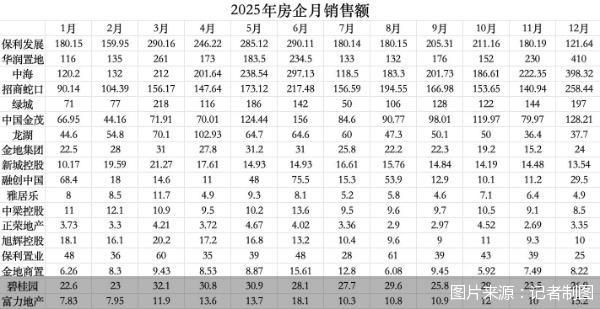
Group 1 - As of January 12, 2026, 13 out of 18 real estate companies reported month-on-month sales growth for December 2025, indicating a positive trend in the market [1][2] - Poly Developments led the sales with 2530.3 billion yuan in 2025, despite a 21.67% year-on-year decline, maintaining its position as the top seller [4] - China Overseas Land & Investment and China Resources Land followed closely, with sales of 2512.32 billion yuan and 2336 billion yuan respectively, both part of the billion-yuan sales club [4] Group 2 - China Overseas achieved significant sales growth, with a monthly sales figure of 398.32 billion yuan in December 2025, supported by strong project performance in Shanghai [2][3] - The sales growth rates for various companies in December 2025 were notable, with Sunac China experiencing a 163.39% increase due to a low base in November [3] - The overall sales performance of real estate companies at the end of 2025 and the beginning of 2026 is expected to stabilize the market and improve buyer confidence [3] Group 3 - The second-tier real estate companies (sales between 500 billion and 1 trillion yuan) averaged 646.4 billion yuan in sales, while the third-tier (300 billion to 500 billion yuan) averaged 381.3 billion yuan [5] - Despite facing operational challenges, companies like Sunac China and Country Garden remain in the top 100, with sales of 368.4 billion yuan and 330 billion yuan respectively [5] - Debt restructuring efforts by these companies have shown progress, with Sunac completing a significant overseas debt restructuring, reducing overall repayment pressure [5] Group 4 - Leading companies like China Overseas and Poly Developments have focused their land acquisition strategies on first- and second-tier cities, with significant investments in Guangzhou, Shanghai, and Beijing [6][7] - Poly Developments has adjusted its land acquisition strategy, increasing its investment in Shanghai while reducing its focus on Beijing, indicating a shift in market strategy [7] - The emphasis on land reserves in key urban areas is seen as a strategy to enhance operational resilience and capitalize on market demand [6][7]
任泽平:未来中国房地产十大趋势
Xin Lang Cai Jing· 2026-01-13 23:31
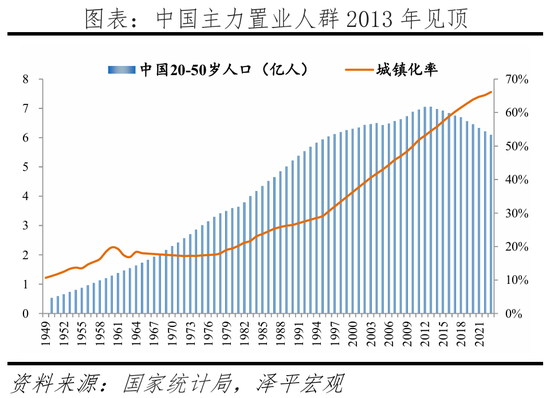
Group 1 - The core viewpoint is that China's real estate industry is transitioning from a large development era to a stock-driven era, with significant changes in supply and demand dynamics as the main home-buying demographic reaches a population inflection point [2][5][53] - The urbanization rate has reached 67%, and the household ratio exceeds 1.1, indicating a shift in the real estate market's focus from quantity to quality [5][6][53] - The future of the real estate market will be supported by improvement demand, urban renewal, and affordable housing needs, emphasizing quality over quantity [19][20] Group 2 - Population is increasingly concentrating in urban agglomerations, with a significant outflow of residents from lower-tier cities, leading to a "20-80" phenomenon where only 20% of cities will see population inflows [10][13] - The real estate industry is undergoing a major reshuffle, with many companies expected to disappear or be merged, reflecting the natural evolution of mature industries [4][8] - The land supply strategy is shifting to "control quantity and improve quality," focusing on high-quality land and prime locations, while ordinary city non-core plots are becoming less attractive [8][40] Group 3 - The housing market will experience price differentiation, with first-tier and strong second-tier cities expected to stabilize in the next 2-3 years, while many third and fourth-tier cities may face prolonged price declines [3][26][30] - The land finance model is undergoing transformation, with first and second-tier cities adapting while other cities phase out land finance, leading to a search for new local tax sources [43][44] - Restrictive policies are expected to be lifted, returning to a market-oriented approach, with anticipated comprehensive openings in first-tier cities within a year [46][47]

2026年以来南向资金持续流入 机构人士:港股有望震荡上行
Zhong Guo Zheng Quan Bao· 2026-01-13 22:22
Core Viewpoint - The southbound capital flow into the Hong Kong stock market reached a record net inflow of 1,404.844 billion HKD in 2025, continuing into 2026 with a cumulative net inflow of 41.296 billion HKD as of January 13, 2026, indicating strong market performance driven by this influx [1][2]. Group 1: Southbound Capital Flow - In 2025, southbound capital became the largest source of incremental funds for the Hong Kong stock market, with a total net inflow of 1,404.844 billion HKD, setting a record for annual net inflow [2]. - As of January 13, 2026, there were 6 out of 7 trading days with net inflows, totaling 41.296 billion HKD since the beginning of the year [2]. - The number of shares held by southbound capital increased to 5,643.75 billion shares, with a market value of 6.33 trillion HKD, reflecting a growth of 0.19 trillion HKD since the start of 2026 [2]. Group 2: Market Performance - The Hang Seng Index rose over 4% and the Hang Seng Technology Index increased over 6% since the beginning of 2026, with more than 60% of stocks in the index with a market capitalization exceeding 1 trillion HKD showing an average increase of over 3% [1][5]. - The healthcare, materials, and conglomerates sectors led the market with increases of 15.46%, 12.86%, and 7.62% respectively, while only the telecommunications sector saw a decline of 0.49% [5][6]. - Major stocks such as Tencent Holdings and Alibaba-W saw significant increases, with Tencent rising 4.76% and Alibaba increasing 11.97% since the start of 2026 [6]. Group 3: Investment Outlook - Analysts predict that the southbound capital flow will continue to increase, driven by the low allocation of mainland investors in Hong Kong stocks and the trend of retail funds flowing into the market through ETFs [4]. - The market is expected to benefit from the "14th Five-Year Plan" and the dual easing of fiscal and monetary policies from major economies, with a focus on technology innovation and consumption themes [7][8]. - Five long-term investment directions are suggested: technology sectors including AI, healthcare, resource sectors benefiting from inflation, essential consumer sectors, and industries benefiting from RMB appreciation [8].
2026年以来南向资金持续流入机构人士:港股有望震荡上行
Zhong Guo Zheng Quan Bao· 2026-01-13 20:46
Core Viewpoint - The southbound capital flow into the Hong Kong stock market reached a record net inflow of 1,404.84 billion HKD in 2025, continuing into 2026 with a cumulative net inflow of 41.296 billion HKD as of January 13, 2026, contributing to a strong performance in the Hong Kong stock market [1][2]. Group 1: Southbound Capital Flow - In 2025, southbound capital was the largest incremental funding source for the Hong Kong stock market, with a total net inflow of 1,404.84 billion HKD, setting a record for annual net inflow [1]. - As of January 13, 2026, southbound capital continued to increase, with a cumulative net inflow of 41.296 billion HKD in just seven trading days, with six of those days showing net inflows [2]. - The number of shares held by southbound capital reached 5,643.75 billion shares as of January 12, 2026, an increase of 6.39 million shares since the beginning of 2026, with a total market value of 6.33 trillion HKD [2]. Group 2: Market Performance - The Hang Seng Index, Hang Seng China Enterprises Index, and Hang Seng Technology Index saw cumulative increases of 4.75%, 4.17%, and 6.41% respectively since the beginning of 2026 [4]. - Over 80% of the constituent stocks in the Hang Seng Index have risen, with notable increases in stocks such as Alibaba Health, WuXi Biologics, and JD Health, all exceeding 20% [4]. - The healthcare, materials, and conglomerates sectors led the market with increases of 15.46%, 12.86%, and 7.62% respectively, while only the telecommunications sector saw a decline of 0.49% [4]. Group 3: Valuation and Future Outlook - The rolling price-to-earnings ratio of the Hang Seng Index increased to 12.27 times as of January 13, 2026, up from 11.77 times at the beginning of 2026 [5]. - Analysts predict that the Hong Kong stock market will benefit from domestic policies and external economic conditions, with expectations of a second round of valuation recovery and further earnings growth in 2026 [6]. - Key investment themes include technology innovation, cyclical industries, and consumer sectors, with a focus on AI-related sectors, healthcare, and resource commodities [7].
房企“白名单项目”展期松绑在即
Di Yi Cai Jing Zi Xun· 2026-01-13 15:49
Core Viewpoint - The recent policy adjustment by regulatory authorities aims to provide a recovery period for compliant and quality real estate projects facing market downturns, balancing the need to ensure project delivery and mitigate risks [2][7][11]. Group 1: Policy Details - The new policy allows projects on the financing coordination mechanism "white list" to extend loans with certain conditions, potentially increasing the loan extension period to five years, providing more time for cash flow management [3][4]. - As of March 2024, the approved loan amount for "white list" projects exceeded 5.2 trillion yuan, increasing to 2.23 trillion yuan by October 2024, with total approvals surpassing 7 trillion yuan [4][11]. Group 2: Market Impact - The policy is expected to directly support state-owned enterprises, quality private enterprises, and those with strong credit ratings, while distressed real estate companies may benefit less [11][12]. - Banks may experience temporary relief from non-performing loan data through loan extensions, but the underlying risks remain, with market sales recovery being crucial for long-term risk mitigation [2][12]. Group 3: Challenges and Considerations - The effectiveness of the policy hinges on the quality of collateral, as nearly 60% of institutions view providing sufficient collateral as a major challenge for financing [6][11]. - The specific criteria for qualifying projects, collateral revaluation, interest rate determination, and risk classification rules are still pending clarification [6][9]. Group 4: Long-term Implications - The policy reflects a shift from short-term relief to long-term support for real estate financing, indicating a new financing model for the industry [8][9]. - Analysts suggest that the policy aims to create conditions for market recovery, but the actual impact will depend on the execution of the policy and the real estate market's sales performance [11][15].

2025年末楼市翘尾
Bei Jing Shang Bao· 2026-01-13 15:42
Core Insights - The real estate market in China shows signs of recovery as 13 out of 18 reported companies achieved month-on-month sales growth in December 2025, with notable performances from companies like China Overseas Land & Investment and China Resources Land [1][2][3] Group 1: Sales Performance - 72.22% of the 18 real estate companies reported month-on-month sales growth as of January 12, 2026, with five companies achieving record monthly sales [1] - China Resources Land led with a monthly sales figure of 410 billion yuan, followed by China Overseas at 398.32 billion yuan and China Merchants Shekou at 258.44 billion yuan [2] - China Overseas achieved a three-month consecutive sales increase, with December sales reaching 398.32 billion yuan, supported by various high-end and affordable housing projects [2][3] Group 2: Yearly Sales Data - Poly Developments topped the 2025 sales chart with 2530.3 billion yuan, despite a 21.67% decline from 2024, maintaining a lead over China Overseas [4] - Other companies in the billion-yuan sales club include China Resources Land, China Merchants Shekou, and Greentown China, with sales figures of 2336 billion yuan, 1960.09 billion yuan, and 1534 billion yuan respectively [4] Group 3: Market Dynamics - The recovery in sales is expected to stabilize market confidence and alleviate buyer hesitation, contributing to a positive growth outlook for the real estate sector [3] - Companies like Sunac China and Country Garden, despite facing operational challenges, remain in the top sales rankings, with 368.4 billion yuan and 330 billion yuan in sales respectively [5] Group 4: Land Acquisition Strategies - Leading companies are focusing on land acquisition in first and second-tier cities, with China Overseas reporting 60.6% of its sales from major cities [6][7] - Poly Developments has shifted its land acquisition strategy, increasing investments in Shanghai while reducing its presence in Beijing, with significant spending in Guangzhou [6][7]


房企“白名单项目”展期松绑在即
第一财经· 2026-01-13 15:39
Core Viewpoint - The recent policy adjustment by regulatory authorities aims to provide a recovery period for quality projects that are compliant but struggling due to market downturns, balancing the need to ensure project delivery and mitigate risks [4][12]. Group 1: Policy Overview - The new policy allows projects on the financing coordination mechanism "white list" to extend their loans under certain conditions, potentially increasing the loan extension period to five years, providing more time for cash flow management [6][7]. - As of March 2024, the approved loan amount for "white list" projects exceeded 5.2 trillion yuan, increasing to 2.23 trillion yuan by October 2024, with total approvals surpassing 7 trillion yuan [7]. Group 2: Market Impact - The policy is expected to directly support state-owned enterprises, quality private enterprises, and those with strong credit ratings, while distressed real estate companies may benefit less [4][18]. - Banks may experience temporary relief from non-performing loans through loan extensions, but the underlying risks remain, with market recovery being crucial for long-term risk mitigation [4][19]. Group 3: Challenges and Considerations - The effectiveness of the policy hinges on the quality of collateral, as nearly 60% of institutions view providing sufficient collateral as a major hurdle for financing [10][9]. - The specific criteria for qualifying projects, collateral revaluation, interest rate determination, and risk classification rules are still pending clarification [10][10]. Group 4: Strategic Intent - The policy reflects a strategic shift from short-term relief to long-term support for the real estate sector, aligning with the government's goal to stabilize the market [13][14]. - By extending loan terms, the policy aims to smooth out repayment pressures, allowing companies to navigate through the current market challenges without resorting to fire sales that could destabilize property prices [16][18].

碧桂园服务(06098.HK)连续5日回购,累计回购411.30万股

Zheng Quan Shi Bao Wang· 2026-01-13 14:56
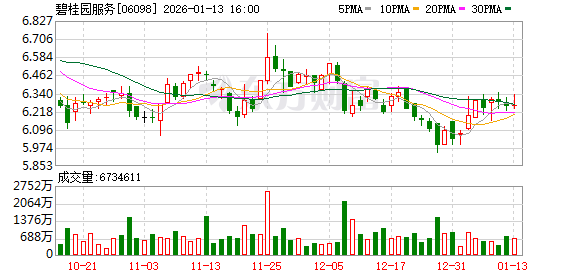
碧桂园服务回购明细 | 日期 | 回购股数(万股) | 回购最高价(港元) | 回购最低价(港元) | 回购金额(万港元) | | --- | --- | --- | --- | --- | | 2026.01.13 | 139.40 | 6.250 | 6.240 | 871.10 | | 2026.01.12 | 170.00 | 6.280 | 6.230 | 1061.50 | | 2026.01.09 | 21.90 | 6.250 | 6.250 | 136.88 | | 2026.01.08 | 40.00 | 6.250 | 6.170 | 248.40 | | 2026.01.07 | 40.00 | 6.200 | 6.200 | 248.00 | | 2026.01.02 | 81.60 | 6.080 | 6.020 | 494.11 | 证券时报·数据宝统计,碧桂园服务在港交所公告显示,1月13日以每股6.240港元至6.250港元的价格回 购139.40万股,回购金额达871.10万港元。该股当日收盘价6.260港元,上涨0.16%,全天成交额4220.25 万港元。 自1月7日以 ...
2025年末楼市翘尾 超七成房企12月销售额环比增长
Bei Jing Shang Bao· 2026-01-13 14:11
Core Insights - The real estate market in China shows signs of recovery as 13 out of 18 reported companies achieved month-on-month sales growth in December 2025, with notable performances from companies like China Overseas Land & Investment and China Resources Land [1][3][4] - Poly Developments maintained its leading position in annual sales for 2025, despite a year-on-year decline, with a total sales figure of 2530.3 billion yuan, outperforming China Overseas Land by 17.98 billion yuan [1][6] - The trend of increasing sales among major real estate firms is expected to stabilize market confidence and alleviate buyer concerns, contributing to a positive outlook for the industry [4][6] Sales Performance - In December 2025, China Resources Land led with sales of 410 billion yuan, followed by China Overseas Land at 398.32 billion yuan and China Merchants Shekou at 258.44 billion yuan [3] - The sales growth rates for December 2025 were significant, with Sunac China experiencing a 163.39% increase due to a low base in November, while other firms like China Overseas Land and China Resources Land also reported substantial growth rates of 79.14% and 78.26% respectively [4] Market Dynamics - The competitive landscape among top real estate firms has stabilized, with Poly Developments focusing heavily on the Guangzhou market, investing 648.24 billion yuan from 2023 to 2025, compared to 265.02 billion yuan in Beijing and 359.27 billion yuan in Shanghai [1][9] - The second-tier firms (500 billion to 1 trillion yuan) averaged sales of 646.4 billion yuan, while third-tier firms (300 billion to 500 billion yuan) averaged 381.3 billion yuan, indicating a diverse recovery across different company sizes [7] Strategic Adjustments - Major firms are adjusting their land acquisition strategies, with a focus on first and second-tier cities. For instance, China Overseas Land's sales in major cities accounted for 60.6% of its total sales, while Poly Developments has also shifted its focus towards Shanghai, increasing its land acquisition there significantly [8][9] - The overall trend indicates that while some firms are facing challenges, others are leveraging their strong market positions and operational capabilities to navigate the current landscape effectively [6][7]