铠侠

Search documents
上海又一超级独角兽要IPO了
36氪· 2025-04-15 00:06
Core Viewpoint - The semiconductor industry in China is experiencing a surge in IPO activities, with multiple companies, including Shanghai Super Silicon, initiating their IPO plans, signaling a positive trend for capital market exits and potential growth in the sector [3][5][14]. Group 1: Shanghai Super Silicon - Shanghai Super Silicon, founded by Chen Meng in 2008, is a pioneer in the production of large-sized silicon wafers, specifically 200mm-300mm, and has achieved a valuation of 20 billion yuan prior to its IPO [4][9]. - The company has completed seven rounds of financing, attracting over 30 investors, including notable institutions and local state-owned funds, with a significant B+ round raising 1 billion yuan in November 2022 [9][10]. - Shanghai Super Silicon has established itself as the only domestic company capable of mass-producing 12-inch silicon wafers, with a monthly production capacity exceeding 1 million wafers [8][9]. Group 2: Industry Trends - A wave of IPOs is occurring in the semiconductor sector, with nearly ten companies, including Shangdingxin and Jieli Technology, also launching their IPO plans, indicating a broader trend of capital market engagement [5][15]. - The Chinese government has implemented various supportive policies for the semiconductor industry, including R&D subsidies and tax incentives, which have contributed to the successful listing of 11 companies in the sector in 2024 [16][17]. - The regulatory environment is becoming increasingly favorable for technology companies, with the China Securities Regulatory Commission advocating for the listing of high-quality, unprofitable tech firms, which positions semiconductor companies as key players in this initiative [16][18].


上海又一超级独角兽要IPO了
投中网· 2025-04-12 05:27
将投中网设为"星标⭐",第一时间收获最新推送 近10家企业都接连启动IPO计划。 作者丨王满华 来源丨 投中网 又一个中科院博士项目,要IPO了。 近日,半导体独角兽"上海超硅"已经完成了IPO辅导,正式向A股发起冲击。上海超硅是国内最早从事集成电路大尺寸硅片的 企业之一,由中科院博士陈猛于2008年7月创立,主要生产200mm-300mm(8英寸-12英寸)大尺寸硅片。 半导体向来是"资本密集型"行业,上海超硅也不例外。成立至今,公司拿下7轮融资,背后资方既有上海集成电路产业基金、 成都先进制造产业基金等地方国资,也有联想创投、交银投资、中金资本等一众知名机构和产业资本。IPO前,公司估值已达 到200亿元。 在团队8年的努力之下,2016年,上海超硅建成了国内首条300mm硅片产线,这条产线不仅填补了国内空白,也让上海超硅成 功跻身全球半导体市场。到2024年,上海超硅已在上海、重庆建立三大生产基地,产品覆盖200毫米、300毫米集成电路抛光 硅片、外延片、氩气退火片、SOI片等多个品类。公司产能更是突破每月100万片,成为国内唯一实现12英寸硅片量产的企 业。 当前,上海超硅的客户名单堪称全球晶圆厂的" ...
日本芯片,巨额投资
半导体芯闻· 2025-03-31 10:04
Group 1 - The Japanese government plans to invest up to 802.5 billion yen (approximately 791 billion KRW) in Rapidus to revitalize its advanced semiconductor industry [2] - The Ministry of Economy, Trade and Industry has decided to provide additional funding for Rapidus's semiconductor manufacturing equipment procurement and production management system development [2] - If the relevant legislation supporting Rapidus is passed, the Japanese government will provide an additional investment of 100 billion yen (approximately 98.5 billion KRW) [2] Group 2 - To date, the total investment from the Japanese government to Rapidus will increase to 1.8225 trillion yen (approximately 1.796 trillion KRW) [2] - Rapidus, established in 2022 under the guidance of the Japanese government, has set up a factory in Chitose, Hokkaido, and plans to start producing its advanced 2-nanometer prototypes next month [2] - The company estimates that it will require a total of 5 trillion yen (approximately 49 trillion KRW) to achieve mass production of 2-nanometer products by 2027 [2] Group 3 - Eight major Japanese corporations, including Toyota, Kioxia, Sony, NTT, SoftBank, NEC, Denso, and Mitsubishi UFJ Bank, are shareholders of Rapidus, but their total investment amounts to only 7.3 billion yen (approximately 719 million KRW) [2]

存储芯片大厂:涨价,扩产
半导体行业观察· 2025-03-19 00:54
Core Viewpoint - Major semiconductor companies like Samsung Electronics and SK Hynix are accelerating facility investments to increase the production capacity of advanced DRAM and NAND, driven by rising demand for these products [1][2]. Group 1: Investment Strategies - Samsung Electronics is transforming and investing in key regions, introducing equipment for DRAM production since Q1 this year, and is constructing a new production line for 10nm-class DRAM in Pyeongtaek [2]. - SK Hynix is focusing on building the M15X facility in Cheongju, which will be responsible for advanced DRAM and HBM, with a total investment of 20 trillion KRW, expected to start operations in Q4 this year [2][3]. - The investment pace for SK Hynix's M15X has accelerated, with infrastructure investments moved up to Q2 early [3]. Group 2: Market Trends - The DRAM market is experiencing a significant turnaround, with general DRAM prices rebounding due to increased demand from PC and smartphone markets, supported by China's subsidy policy [5]. - The average spot price for DDR4 8Gb products rose to $1.762, while DDR5 prices increased from $4.773 to $5.088, reflecting a 6.6% rise [5][6]. - The recovery in the RAM market is occurring earlier than expected, with predictions of a surge in AI PC market size from 43.02 million units last year to 114.22 million units this year, driving further DRAM demand [6]. Group 3: Price Adjustments - NAND price increases are becoming a consensus in the industry, with reports indicating a potential 10% price hike from major manufacturers like Micron and SanDisk [8][9]. - Micron's price increase is attributed to supply tightness caused by a factory outage, while other manufacturers are also expected to follow suit to stabilize supply-demand balance [9][10].
苹果芯片,太多了!
半导体行业观察· 2025-03-18 01:36
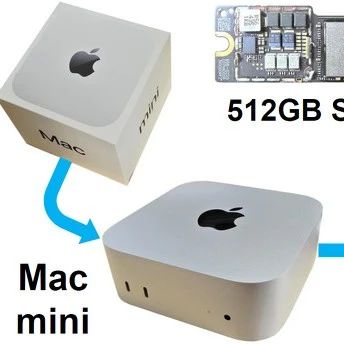
Core Viewpoint - Apple is set to continue its strong product launches in 2025, with a focus on semiconductor technology as a backbone for its products, including the iPhone 16e and Mac Studio [1][3]. Group 1: Product Launches and Specifications - The iPhone 16e is scheduled for release on February 28, 2025, featuring Apple's proprietary modem chipsets [1]. - The Mac Studio will be launched on March 12, 2025, with options for "M3 Ultra" or "M4 Max" versions, supporting up to 512GB of unified memory [1]. - The new Mac mini, set to release on November 8, 2024, will utilize the 3nm technology-based M4 Pro chip, significantly reducing its size and weight compared to the previous generation [3][8]. Group 2: Chip Development and Integration - Apple is actively developing not only its digital processors but also peripheral chips (power ICs and interfaces) to enhance processor performance, creating a complete system in chipsets [2][3]. - The integration of power ICs with processors has been a focus since Apple's acquisition of Dialog Semiconductor's power IC business in 2018, allowing for improved power management and performance [6][7]. - The upcoming products will feature Thunderbolt 5 interfaces, which offer double the speed of Thunderbolt 4, showcasing Apple's commitment to in-house chip development [7][9]. Group 3: Design and Efficiency - The design of the new Mac mini's circuit board has been optimized, resulting in a smaller footprint while maintaining processor packaging size, thanks to advancements in semiconductor technology [8]. - Apple's M4 Pro and M4 Max chips will share a significant amount of silicon, indicating a strategy of standardizing design assets to enhance development efficiency [12][13]. - The company emphasizes the use of its proprietary silicon and control chips across its product range, ensuring consistent performance and functionality [10][11].

长江存储或涨价10%!
国芯网· 2025-03-17 04:56
国芯网[原:中国半导体论坛] 振兴国产半导体产业! 不拘中国、 放眼世界 ! 关注 世界半导体论坛 ↓ ↓ ↓ 3月17日消息,据业内消息,长江存储旗下零售品牌致态或将从四月起上调渠道提货价格,涨幅可能超 10%! 实际上,长江存储并非存储市场中首家传出涨价消息的厂商。自 2024 年以来,NAND 价格走势疲弱, 终端需求复苏乏力,美光、海力士、三星等存储大厂纷纷重启减产计划,以应对 NAND 价格下行。 闪迪已宣布自4月1日起将 NAND 产品价格提升超 10%,理由是市场供需将转向供不应求,且关税变动 影响供应与成本。美光也要求 NAND 闪存芯片涨价 10%以上,以改善营收利润困境。 不仅如此,三星、SK 海力士等巨头也可能在四月提高 NAND 报价,群联科技董事长潘健成表示,备货 需求提升和主要大厂减产效应显现,NAND Flash 涨价已成现实,且预估今年第三季价格仍继续看涨。 业内人士表示,三星、海力士、美光科技、西部数据和铠侠五大存储原厂减产叠加Meta、谷歌、亚马 逊和微软等全球大厂资本支出增加,以及近期AI应用、企业级存储、消费级存储品牌的增长显著,预 计将整体推动今年下半年的存储市场行情 ...
为了1000层闪存,拼了!
半导体行业观察· 2025-03-15 03:46
Core Viewpoint - The article discusses the advancements and challenges in 3D NAND flash memory technology, particularly focusing on the innovations in etching processes that enhance storage density and production efficiency [2][19][24]. Group 1: 3D NAND Technology Overview - 3D NAND technology has become the mainstream architecture for NAND flash memory, significantly improving storage density and reducing production costs [1][5]. - The transition from 2D NAND to 3D NAND has seen a dramatic increase in the number of layers, with projections of exceeding 1000 layers in the future [11][42]. - The unit bit density of NAND technology has improved by over one million times since its inception [5][6]. Group 2: Etching Technology Developments - Recent innovations in etching technology, particularly the development of a new etching process by Lam Research and partners, have doubled the etching speed and improved precision [2][19]. - Traditional reactive ion etching (RIE) methods face challenges such as slow etching speeds and precision issues, prompting the need for more efficient etching techniques [10][12]. - The introduction of low-temperature etching technologies has shown to enhance etching speed by 2.5 times and reduce energy consumption by 40% [22][35]. Group 3: Challenges in 3D NAND Manufacturing - As the number of layers in 3D NAND increases, manufacturers face significant challenges in maintaining etching speed and consistency, particularly in achieving high aspect ratio (HAR) structures [7][40]. - The complexity of the manufacturing process increases with the number of layers, leading to higher production costs and reliability issues [12][40]. - Environmental concerns are also pressing, with the need for sustainable practices in etching technology to reduce energy consumption and emissions [17][40]. Group 4: Future Outlook - The market for semiconductor etching equipment is projected to grow significantly, with estimates reaching $28.73 billion by 2029, reflecting a compound annual growth rate (CAGR) of 5.3% [42]. - Major players in the NAND flash market, including Samsung and Kioxia, are actively pursuing the development of 1000-layer 3D NAND technology, indicating a competitive landscape [39][42]. - Continuous innovation in etching technology is essential for meeting the increasing demands for high-density storage solutions in the AI and big data era [32][24].


减产提价!多重因素影响,国内存储芯片逐步崛起
深圳来觅数据信息科技· 2025-03-10 07:12
Investment Rating - The report indicates a positive outlook for the storage chip industry, highlighting significant growth potential driven by technological advancements and market dynamics [1][16]. Core Insights - The storage chip industry is undergoing a transformation, with domestic players like Yangtze Memory Technologies (YMTC) emerging as leaders through innovative technologies such as Xtacking, which separates storage units from control circuits to enhance performance and reduce costs [2][3]. - Major global players, including Samsung and Micron, are reducing production to address oversupply, with Samsung announcing a 20% cut and Micron a 10% cut in NAND Flash production [5][6]. - The market share of domestic storage chip manufacturers is expected to grow significantly, with YMTC projected to increase its NAND Flash market share to 10% by 2025, while Longsys is anticipated to capture 15% of the global DRAM market [6][17]. Summary by Sections Market Dynamics - The storage chip market is characterized by oligopolistic competition, with Samsung holding a 32% share in the NAND market and 39% in the DRAM market, while domestic players like YMTC and Longsys hold significantly smaller shares [3][4]. - The industry is experiencing a supply-demand imbalance, with high inventory levels of 6-8 weeks, complicating the recovery process despite production cuts [5][6]. Technological Innovations - The report emphasizes the importance of new technologies such as HBM (High Bandwidth Memory) and the emergence of solutions like Groq's LPU chip, which integrates SRAM with computing units to overcome memory bandwidth limitations [8][9]. - Innovations in storage architecture, such as the 3FS architecture by DeepSeek, are redefining AI storage paradigms by eliminating the need for DRAM as a cache layer, significantly improving performance [9][10]. Future Outlook - The global storage market is projected to exceed $230 billion by 2025, driven by AI-related demand and ongoing technological advancements [16][17]. - The transition from HDD to enterprise SSDs is accelerating, with predictions that all-flash arrays will surpass 50% of the enterprise storage market by 2028 [10][12]. Investment Trends - The report notes a surge in investment activity within the storage chip sector, with several significant financing events occurring in early 2025, indicating strong investor interest in both upstream and downstream segments [17][18].
NAND,大降20%
半导体芯闻· 2025-03-05 10:25
Core Viewpoint - The NAND flash memory market is experiencing a revenue decline of 6.2% in Q4 2023, primarily due to weak consumer demand, with expectations of a further 20% drop in industry revenue in Q1 2024 [1][2]. Group 1: Market Trends - The average selling price (ASP) of NAND flash memory has decreased by 4% quarter-over-quarter, while overall shipment volume has declined by 2% [1]. - By the end of 2024, global NAND flash revenue is projected to be $16.52 billion, reflecting a 6.2% decrease from the previous quarter [2]. - Manufacturers are expected to clear excess inventory, which will contribute to further price declines in NAND flash memory [1]. Group 2: Manufacturer Performance - Major NAND flash manufacturers are facing revenue declines, with Samsung's market share at 35.2% despite a nearly 10% revenue drop compared to Q3 2023 [3]. - SK Hynix experienced a 6.6% revenue decline, while Micron faced a 9.3% drop, and Kioxia and Western Digital saw declines of 0.2% and 0.4%, respectively [4]. - Many manufacturers are shifting focus towards enterprise SSDs to mitigate losses, with Samsung and SK Hynix addressing production imbalances relative to market demand [4]. Group 3: Future Outlook - The industry anticipates improvements in the second quarter of 2024 as production aligns more closely with demand [2]. - Kioxia is adopting a more technical approach by enhancing data transfer speeds and increasing the number of 3D NAND layers, as seen in their latest 10th generation 332-layer V-NAND flash [4]. - Micron plans to cut costs in its NAND flash business while continuing to offer high-capacity enterprise SSDs to boost profitability [4].

NAND新出路是什么?
半导体芯闻· 2025-03-03 10:17
Core Viewpoint - NAND manufacturers are often overlooked in the AI boom, as their growth potential in AI applications is limited compared to DRAM, particularly HBM, which is essential for AI computing needs [1][2][3] NAND Market Dynamics - The NAND market has experienced significant fluctuations, with a notable recovery in early 2024 driven by increased demand from the smartphone sector and AI server construction [6][8] - Global smartphone shipments rose by 8.2% year-on-year in Q1 2024, with a shift towards larger capacity models [6] - AI server demand led to a 32% quarter-on-quarter increase in enterprise SSD procurement, with North America's top three cloud service providers accounting for 58% of global orders [6][7] - Strategic production cuts by major manufacturers have resulted in a 17% increase in NAND Flash contract prices in Q1 2024 [6][9] AI Demand and Pricing Trends - AI server SSD demand is projected to exceed 45EB in 2024, with an average annual growth rate of over 60% expected in the coming years [7][9] - The average selling price (ASP) of NAND products has increased by approximately 15% due to AI demand, despite a 1% decline in shipment volume [9][10] - The enterprise SSD contract price has seen an accumulated increase of over 80% from Q4 2023 to Q3 2024 due to heightened AI server demand [7][9] Technological Innovations - SanDisk has introduced a new storage technology called High Bandwidth Flash (HBF), aimed at providing high bandwidth and capacity for AI inference applications [15][19] - HBF technology allows for parallel access to multiple high-capacity 3D NAND arrays, potentially offering a solution to compete with HBM in specific applications [15][19] - The first generation of HBF technology can provide up to 4TB of VRAM capacity, with plans for further enhancements [15][19] Future Outlook - NAND manufacturers are exploring various strategies to adapt to market changes, including enhancing storage density and dynamic capacity adjustments [22][23] - The introduction of HBF could signify a new opportunity for NAND manufacturers to capture a share of the AI market, although competition remains fierce [24][25] - The industry's recovery is evident, but ongoing challenges in the consumer electronics market continue to exert pressure on NAND manufacturers [11][24]