阿里健康

Search documents
华润江中六味地黄膏在阿里健康线上首发
Zheng Quan Shi Bao Wang· 2025-12-25 10:59
Group 1 - The core product launched by China Resources Jiangzhong is a new formulation of the classic "Liuwei Dihuang Wan," transitioning from pill to paste form, designed for modern fast-paced lifestyles [1] - The traditional Chinese medicine market for kidney tonics is projected to reach 48.73 billion yuan in 2024, with a year-on-year growth of 9.2%, indicating a significant consumer trend towards health products that are efficient and convenient [1] - The new product features a portable design with independent packaging, enhancing convenience for users while also focusing on taste by incorporating honey for a sweet and slightly sour flavor [1] Group 2 - A representative from China Resources Jiangzhong emphasized that this innovation reflects the company's commitment to providing convenient health solutions and its role as a leader in the inheritance and innovation of traditional Chinese medicine [2] - Alibaba Health stated its role as a launch platform for new specialty drugs, aiming to provide consumers with easy access to health products, with many regions offering same-day or next-day delivery for the new product [2]


“口袋化、轻养生”推动剂型革新满足现代调理需求,华润江中六味地黄膏在阿里健康线上首发
Yang Zi Wan Bao Wang· 2025-12-25 10:15
Group 1 - The core viewpoint of the articles highlights the growing market for kidney-tonifying traditional Chinese medicine (TCM) products, driven by changing consumer habits and the need for convenient health solutions in fast-paced urban lifestyles [1][2] - The market size for kidney-tonifying TCM products is projected to reach 48.73 billion yuan in 2024, reflecting a year-on-year growth of 9.2%, and accounting for 12.6% of the overall TCM market [1] - The introduction of the "Liuwedi Huang Gao" by China Resources Jiangzhong represents an innovation in dosage form, transitioning from traditional pills to a convenient paste format, catering to the needs of modern professionals [1][2] Group 2 - The new product features a portable, individually packaged design that emphasizes convenience and taste, incorporating high-quality honey for a pleasant flavor experience [2] - The launch of "Liuwedi Huang Gao" on Alibaba Health aims to provide consumers with easy access to health products, with same-day or next-day delivery options available in various regions [2] - The initiative reflects the company's commitment to integrating traditional Chinese medicine into modern lifestyles while fulfilling the health needs of the public [2]
百步一药店,奶茶店式圈地崩盘:70万连锁药房在关店潮中抢滩“卖健康”
Hua Xia Shi Bao· 2025-12-25 08:37
Core Insights - The domestic chain pharmacy industry is entering a period of negative growth, with the total number of pharmacies in China expected to drop below 700,000 by Q1 2025, marking a significant decline in the number of stores [1][2] - The market is undergoing a profound restructuring, with the total market size for pharmaceuticals reaching 2.03 trillion yuan in 2024, but with a mere 0.9% year-on-year growth, and a forecasted decline to 1.97 trillion yuan in 2025 [1][2] - Major chain pharmacies are experiencing divergent performance, with companies like Dazhonglin and Yifeng Pharmacy reporting profit increases, while Yixin Tang faces profit declines [1][3] Industry Trends - Predictions indicate that the number of pharmacy closures in 2025 could reach between 50,000 and 100,000, as the industry shifts from rapid expansion to a focus on value enhancement [2][3] - The industry is moving towards a "sell health" model, transitioning from traditional pharmaceutical sales to a more comprehensive health service approach [2][6] Market Dynamics - The closure of stores is expected to continue into 2025, with the industry potentially returning to a more sustainable scale of around 500,000 pharmacies, similar to 2018 levels [3] - The overall non-pharmaceutical sales proportion in the industry has reached 34.6% in 2025, up 5.2 percentage points from 2024, indicating a shift towards health-related products and services [4][6] Competitive Landscape - The market concentration is increasing, with the top ten chain pharmacy brands holding a combined market share of 58% in Q3 2025, up 5 percentage points from 2024 [4] - Franchise models are becoming a key strategy for leading chain pharmacies to expand market share, with significant increases in franchise store openings reported [5][6] Transformation Strategies - The core development direction for chain pharmacies in 2025 is professional transformation, with a focus on innovative drugs and DTP pharmacy models [6][9] - The shift towards chronic disease management and health service offerings is becoming increasingly important, with pharmacies enhancing their service capabilities to meet patient needs [7][9] Future Outlook - Despite current challenges, industry experts believe that the long-term trend for the chain pharmacy sector remains positive, driven by supply-side adjustments and demand recovery [8][9] - The future of chain pharmacies is expected to revolve around becoming health service providers, integrating pharmaceutical resources with community health needs [9]
守护双重脆弱,"流感季SMA罕见病关爱行动"在京举办
Huan Qiu Wang· 2025-12-25 06:23
Core Viewpoint - The "Flu Season SMA Rare Disease Care Action" initiated by Roche China, Alibaba Health, and the Beijing SMA Care Center aims to raise awareness about the risks faced by SMA patients during the flu season and promote scientific prevention and standardized treatment [1][3]. Group 1: Flu Season Challenges for SMA Patients - The flu virus detection positivity rate is significantly high, with southern provinces at 53.7% and northern provinces at 37.6%, posing a serious health challenge [3]. - SMA patients are at a higher risk of severe respiratory complications due to respiratory muscle weakness, making prevention and early intervention crucial [3][4]. - Experts emphasize the need for timely antiviral treatment within 48 hours of symptom onset to mitigate severe outcomes and complications [4][5]. Group 2: Support and Resources for Families - Parents of SMA patients express feelings of fear and confusion during the flu season, highlighting the psychological burden on families [6]. - The SMA Care Center aims to bridge information gaps and provide actionable support to families through cross-sector collaboration [6]. - Roche's commitment to addressing the needs of patients includes innovative treatments like Baloxavir Marboxil, which can rapidly reduce viral load and improve outcomes for high-risk patients [6][7]. Group 3: Community and Collaborative Efforts - Alibaba Health is providing home testing support for SMA patients during the flu season, aiming to facilitate early diagnosis and treatment while minimizing hospital visits [7]. - The initiative seeks to leverage platform capabilities and collaborate with patient organizations and professional institutions to enhance public health responses for rare disease patients [7].


百步一药店,奶茶店式圈地崩盘:70万连锁药房在关店潮中抢滩“卖健康”|2025中国经济年报
Hua Xia Shi Bao· 2025-12-25 03:54
Core Viewpoint - The domestic chain pharmacy industry is entering a period of negative growth, with a significant reduction in the number of pharmacies and a shift from rapid expansion to a focus on value enhancement and health services [2][3][11] Industry Overview - By Q1 2025, the total number of pharmacies in China is expected to fall below 700,000, with a net decrease of approximately 3,000 stores in a single quarter, indicating a widespread "store closure wave" [2] - The overall market size for pharmaceuticals is projected to reach 2.03 trillion yuan in 2024, but the growth rate is only 0.9%, with a forecasted decline to 1.97 trillion yuan in 2025 [2] Company Performance - Major chain pharmacies are experiencing divergent performance: Dazhenglin reported a net profit of 1.081 billion yuan in the first three quarters of 2025, up 25.97% year-on-year; Yifeng Pharmacy's net profit reached 1.225 billion yuan, a 10.27% increase; while Yixintang faced a decline with a net profit of 269 million yuan, down 8.17% [2] Store Closure Trends - Predictions indicate that the number of pharmacy closures in 2025 could reach between 50,000 and 100,000, marking a shift from the previous era of aggressive expansion to a focus on operational efficiency [3][4] - The industry is expected to return to a more reasonable scale of around 500,000 pharmacies, similar to levels seen in 2018 [4] Market Dynamics - The closure wave is driven by oversupply and increased regulatory pressures, with a significant rise in the proportion of non-pharmaceutical sales, which reached 34.6% in 2025, up 5.2 percentage points from 2024 [5] - The market share of the top ten pharmacy brands increased to 58% in Q3 2025, reflecting a growing concentration in the industry as smaller players exit [5] Business Model Evolution - The franchise model is becoming a key strategy for leading pharmacy chains to expand market share, with significant increases in franchise store openings reported [6] - The industry is transitioning from a focus on selling drugs to providing health services, with a notable shift towards a "sell health" approach [6][7] Professionalization and Service Enhancement - Professionalization is identified as a core development direction, with leading companies adopting innovative drug and DTP pharmacy models to enhance service delivery [7] - Community pharmacies are increasingly focusing on chronic disease management, with a significant percentage of patients expressing a desire for medication guidance and health management services [8] Diversification and Digital Transformation - Leading pharmacies are diversifying their offerings to include health-related products and services, transforming into comprehensive health experience hubs [9] - The integration of online and offline channels is accelerating, with significant growth in new retail segments and contributions from O2O channels [9] Future Outlook - Despite current challenges, industry experts believe that the long-term trend for the chain pharmacy sector remains positive, driven by supply-side adjustments and demand recovery [10] - The future of pharmacies is expected to focus on building a diversified health service ecosystem, aligning with national health strategies and enhancing both social and economic benefits [10][11]



AI医疗专家交流
2025-12-25 02:43
Summary of the Conference Call Company and Industry Overview - The conference call discusses **Ant Group's** health app, **Afu APP**, which aims to become a national health entry point in China, targeting **500 million registered users** and **100 million monthly active users** by **2026** [2][3]. Core Points and Arguments - **User Engagement and Trust**: Afu APP focuses on enhancing user engagement and trust in both consumer and serious medical fields by providing comprehensive health solutions [2][3]. - **Data Utilization**: Ant Group has accumulated **10 years of data**, including **700 million** health insurance code users and **60 million** health insurance members, to train vertical models for precise health services [2][5]. - **Collaboration with Health Insurance**: The company collaborates directly with health insurance to establish data centers, planning to launch **10 local data centers** by **2025** [2][8]. - **Monetization Strategies**: Afu APP's revenue model includes consultation services (approximately **100,000 paid consultations daily**) and drug sales (around **3 million yuan daily**), with future plans to diversify income sources [2][12][15]. - **Product Features**: The app includes features like medical guidance, health goal tracking, and AI consultation, with plans for further upgrades to enhance user experience [3][12]. Additional Important Content - **Data Acquisition Costs**: The cost of acquiring data varies, with initial investments in promoting health insurance codes and purchasing medical data costing around **200 million yuan** annually [10]. - **Technical Challenges**: Current AI models achieve only **60%-70%** accuracy compared to top experts, and regulations prevent AI from independently diagnosing or prescribing [11]. - **Market Positioning**: Ant Group aims to position Afu APP as a leading health service platform, with a revenue target of **100 billion yuan** and a profit goal of **50 billion yuan** by **2026** [3][21]. - **Competitive Landscape**: Compared to competitors like Tencent and JD Health, Afu APP focuses on comprehensive service coverage and high-frequency user engagement, ensuring long-term app retention [19][20]. Conclusion - Ant Group's strategic focus on the Afu APP aims to leverage extensive data and partnerships to create a robust health service platform, addressing both user needs and market demands while navigating regulatory challenges and competition.
摩根大通增持阿里健康约2796.89万股 每股作价约5.31港元
Zhi Tong Cai Jing· 2025-12-24 12:34
Core Insights - Morgan Stanley increased its stake in Alibaba Health (00241) by acquiring 27,968,934 shares at a price of HKD 5.3128 per share, totaling approximately HKD 149 million [1] - Following the acquisition, the total number of shares held by Morgan Stanley is approximately 1.321 billion, representing a holding percentage of 8.16% [1]

摩根大通增持阿里健康(00241)约2796.89万股 每股作价约5.31港元
智通财经网· 2025-12-24 12:28
智通财经APP获悉,香港联交所最新资料显示,12月18日,摩根大通增持阿里健康(00241)2796.8934万 股,每股作价5.3128港元,总金额约为1.49亿港元。增持后最新持股数目约13.21亿股,最新持股比例为 8.16%。 ...
阿里健康与广药集团签署全面战略合作协议
Zhong Guo Jin Rong Xin Xi Wang· 2025-12-24 10:41
Core Insights - Alibaba Health and Guangzhou Pharmaceutical Group have signed a strategic cooperation agreement focusing on four key areas: deepening platform and supply chain collaboration, building a household expired medicine recycling system, exploring joint product development, and promoting compliant data sharing [1] Group 1: Strategic Cooperation - The partnership aims to enhance the efficiency and precision of Guangzhou Pharmaceutical's quality products reaching millions of families across the country through integrated online and offline services [1] - This collaboration marks a transition from sales synergy to a new phase of comprehensive digital operations and full-link service construction [1] Group 2: Company Profiles - Guangzhou Pharmaceutical Group is the world's first Fortune 500 company primarily focused on traditional Chinese medicine, with over 30 member enterprises and is a leading player in the biopharmaceutical industry in Guangdong Province and Guangzhou [2] - The company is accelerating its goal of becoming a world-class pharmaceutical health enterprise through modernization, technological advancement, digitalization, and internationalization [2] - Alibaba Health has positioned itself as a "new specialty drug launch platform," providing full-link support from drug launch to channel construction and patient services, and has become a partner to thousands of pharmaceutical companies globally [2]
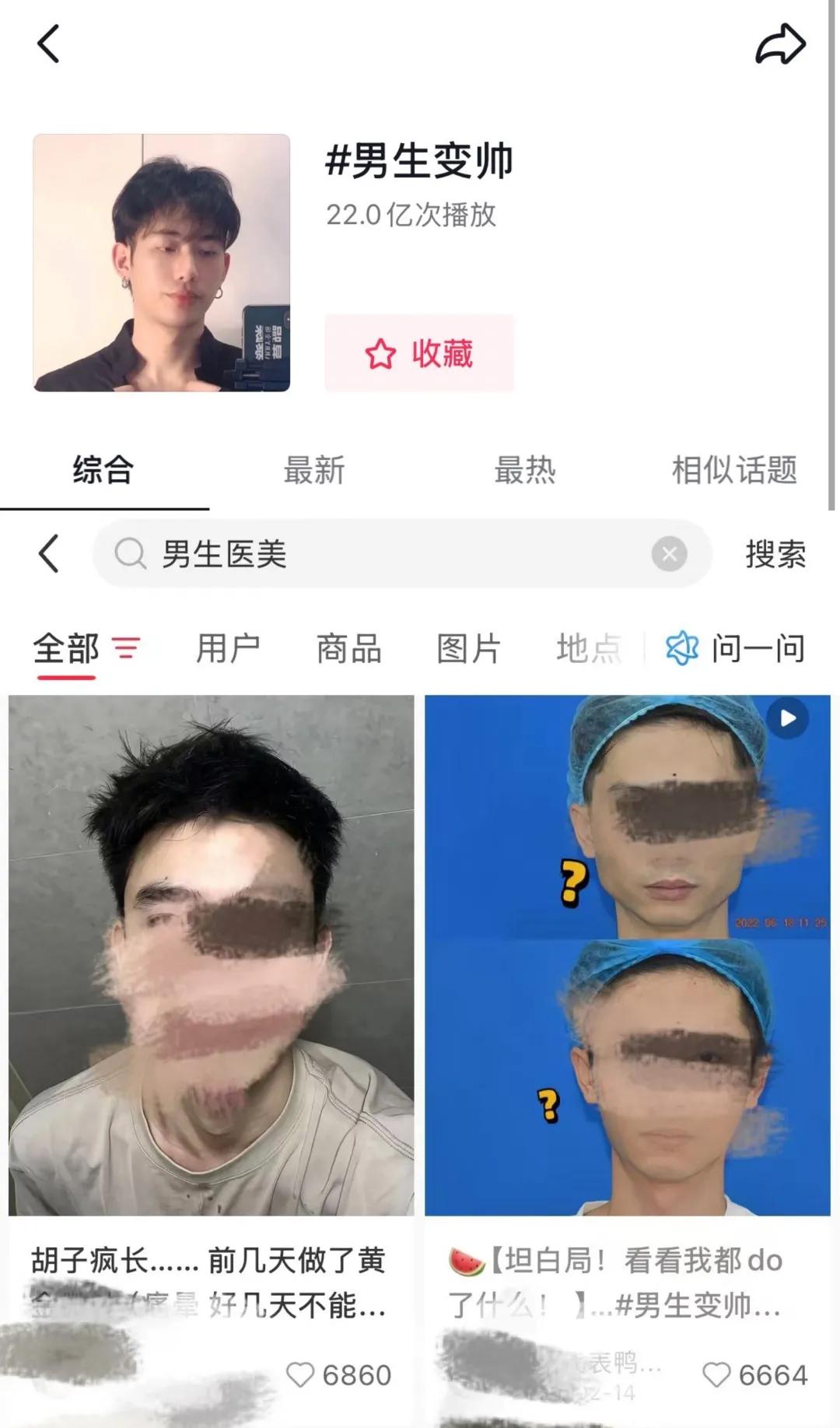
男人医美站到C位,男颜经济撑得起来么?
3 6 Ke· 2025-12-24 09:29
Core Insights - The male aesthetic medicine market is rapidly growing, with male spending increasing by 27% year-on-year in 2023, indicating a shift in consumer demographics and preferences within the industry [6][21] - Despite the growth in male consumers, the overall aesthetic medicine industry faces challenges such as market saturation, intense competition, and declining profits among leading companies [2][4][13] Group 1: Market Trends - The number of aesthetic medicine-related enterprises in China exceeds 182,000, leading to fierce competition and price wars among providers [2] - Male consumers are increasingly seeking aesthetic procedures, with 43% of surveyed men planning to increase their spending in 2024, compared to 29% of women [7][21] - The average spending per male customer is 2.75 times that of female customers, highlighting a significant revenue potential in the male segment [14] Group 2: Industry Challenges - Leading companies like Ai Meike have reported consecutive declines in profits, reflecting broader industry struggles with overcapacity and market competition [4][13] - The industry is experiencing a trust crisis due to incidents of malpractice and regulatory tightening, which has led to increased scrutiny and the need for clearer consumer protection measures [3][19] Group 3: Consumer Behavior - Male consumers tend to focus on specific, functional aesthetic treatments, such as skin management and hair restoration, rather than ongoing maintenance, which poses a challenge for building long-term customer relationships [14][15] - The rise of social media has shifted perceptions of male aesthetics, with platforms like Douyin and Xiaohongshu driving interest and engagement in male aesthetic procedures [8][12] Group 4: Technological and Market Innovations - Internet giants like JD Health and Meituan are entering the male aesthetic market, leveraging their technological capabilities and consumer bases to enhance service accessibility and trust [17][20] - New service models, such as "lunch break beauty" procedures, cater to the male demographic's preference for efficiency and discretion [12][21] Group 5: Future Outlook - The male aesthetic market is seen as a potential growth area for the industry, but it is not a guaranteed solution to current challenges; establishing trust and ensuring quality service will be crucial for long-term success [21][22] - The market for customized male aesthetic treatments is projected to grow significantly, with estimates suggesting a market size of $8 billion for gene therapy by 2030 [14]