
欣旺达

Search documents
锂电回收行业迎来转机能源金属涨价推升“城市矿山”价值
Zheng Quan Shi Bao· 2026-01-09 23:02
Core Viewpoint - The lithium battery recycling industry is transitioning from extensive development to a new phase characterized by refinement, standardization, and globalization, driven by rising prices of lithium and cobalt, along with supportive policies [1][8]. Industry Overview - The lithium battery recycling sector is being recognized as a "urban mine," converting waste batteries into valuable, recyclable resources [1]. - A green circular market exceeding 100 billion yuan has emerged, reshaping the resource supply landscape in the new energy industry [1]. Profitability and Market Dynamics - The profitability of lithium battery recycling businesses has improved significantly due to increased retirement volumes and rising prices of lithium and cobalt [2]. - The price surge of energy metals has shifted the profit model from relying on subsidies to focusing on the intrinsic value of recycled materials, expanding profit margins for companies [2][3]. Policy Developments - New regulations have eased the import of recycled materials, allowing certain types of black powder to be imported without being classified as solid waste, thus facilitating the global resource allocation for China's battery recycling industry [2][3]. Capacity Expansion and Capital Operations - Leading companies are adopting a dual strategy of capacity expansion and capital operations to seize market opportunities, including new base construction and technology partnerships [4][6]. - Companies like Greeenme and Tianqi are actively pursuing acquisitions and financing to enhance their operational capabilities and market presence [4][5][6]. Technological Advancements and Industry Collaboration - The industry is evolving from merely end-of-life disposal to playing a crucial role in the entire battery lifecycle, with companies establishing comprehensive value chains [7]. - Greenme has achieved a lithium recovery rate exceeding 96.5% and has formed partnerships with over 1,000 automotive and battery manufacturers to create a closed-loop supply chain [7]. Market Outlook - The lithium battery recycling market is expected to grow at an annual rate exceeding 50% over the next 3 to 5 years, with the domestic market projected to surpass 100 billion yuan by 2030 [8].


锂电回收行业迎来转机 能源金属涨价推升“城市矿山”价值
Zheng Quan Shi Bao· 2026-01-09 17:44
Core Insights - The lithium battery recycling industry is evolving from a rough development phase to a more refined, standardized, and globalized stage, driven by rising prices of lithium and cobalt, along with supportive policies [1][7] - Major companies like Tianqi Co., Ltd. and Greeenme are expanding their capacities and capital operations to build competitive barriers through technological upgrades and industry chain extensions [1][2] Industry Trends - The prices of key metals such as lithium, cobalt, and nickel are expected to remain high due to global mining cycles and increased downstream energy storage demand, positively impacting cash flow and profitability for recycling companies [2][3] - The recycling business of Greeenme saw a significant increase in dismantling volume, reaching 36,000 tons in the first three quarters of 2025, a year-on-year surge of 59% [2] Policy Developments - In June 2025, the Ministry of Ecology and Environment, the Ministry of Industry and Information Technology, and the State Administration for Market Regulation announced that recycled black powder for lithium-ion batteries meeting national standards would not be classified as solid waste, facilitating imports [2][3] - The gradual relaxation of import policies for recycled resources reflects the government's emphasis on recycling and lithium battery recovery [3] Company Strategies - Greeenme is actively pursuing a dual strategy of capacity expansion and capital operation, including a planned acquisition of Henan Recycling Group to enhance its circular economy strategy [4][5] - Tianqi Co., Ltd. has established a processing capacity of 100,000 tons for waste lithium batteries, with plans for further expansion [5][6] Technological Advancements - Greeenme has developed a complete lifecycle value chain for battery recycling, achieving a lithium recovery rate exceeding 96.5% through innovative technologies [6] - The company collaborates with over 1,000 automotive and battery manufacturers to create a closed-loop supply chain, reducing risks associated with supply chain and metal price fluctuations [6] Market Outlook - The lithium battery recycling industry is expected to grow at an annual rate exceeding 50% over the next 3 to 5 years, with the market size projected to surpass 100 billion yuan by 2030 [7] - The industry is undergoing a transformation driven by price, demand, and policy changes, moving towards a more refined and standardized development phase [7]
固态电池供应商备战2027:目标定好了,路线还在争
Jing Ji Guan Cha Wang· 2026-01-09 12:33
Core Insights - The solid-state battery industry is experiencing renewed interest from investors due to clear profitability and order visibility in the supply chain, with a significant focus on achieving mass production by 2027 [2][3][6] - Major automotive companies are targeting 2027 for the application of solid-state batteries in vehicles, with many planning to complete product development or testing by 2026 [4][5] Industry Developments - Companies like Tian Shi Ke Feng have begun to engage with potential investors after overcoming initial funding challenges, with plans to expand production capacity significantly in 2026 [2] - The Ministry of Industry and Information Technology has identified solid-state batteries as a key area for development, aiming to establish 3-5 leading companies by 2027 [3] Technical Challenges - The path to mass production of solid-state batteries is fraught with challenges, including material technology discrepancies and shortages in core equipment [6][8] - The industry is divided on material technology routes, with significant competition between oxide and sulfide electrolytes, each having distinct advantages and challenges [10][12] Material Innovations - Solid-state batteries are recognized for their high energy density and intrinsic safety, making them suitable for various applications, although their cost-effectiveness in electric vehicles remains a concern [7][8] - The development of silicon-carbon and lithium metal anodes is ongoing, with companies reporting progress in small-scale trials [9][10] Equipment and Production - The lack of mature mass production equipment poses a significant barrier, with many companies resorting to self-developed solutions to meet production demands [14][19] - The production process for solid-state batteries requires high precision and specialized equipment, which increases costs and complicates the manufacturing process [20][21] Market Dynamics - The solid-state battery supply chain is characterized by a collaborative approach among suppliers and manufacturers, with a focus on meeting evolving technical requirements from cell manufacturers [23][24] - The competitive landscape is marked by a "race" among cell manufacturers to explore various material suppliers, emphasizing the need for continuous innovation and adaptation [24]






机械行业2026年度策略报告:科技创新,周期崛起-20260109
Tai Ping Yang Zheng Quan· 2026-01-09 12:15
Group 1 - The mechanical industry experienced a significant increase of 41.69% in 2025, outperforming the CSI 300 index which rose by 17.66%, ranking 6th among 31 primary industries [4][10] - The top three sub-sectors in terms of growth were engineering machinery components, lithium battery equipment, and metal products, with increases of 93.20%, 92.49%, and 80.47% respectively, while the rail transit equipment sector saw a decline of 3.80% [4][10] - The mechanical equipment industry achieved a total revenue of 15,331.75 billion yuan in the first three quarters of 2025, a year-on-year increase of 7.46%, and a net profit attributable to shareholders of 1,101.92 billion yuan, up 16.86% [4][16] Group 2 - The engineering machinery sector is entering a new upward cycle driven by domestic demand recovery, supported by policies and a renewal cycle, with excavator sales in China increasing by 18.59% year-on-year in 2025 [5][20] - Exports of excavators have shown a positive trend, with a cumulative sales volume of 10.40 million units from January to November 2025, reflecting a year-on-year growth of 14.85% [5][27] - The engineering machinery sector's revenue increased by 13.11% year-on-year in the first three quarters of 2025, with a net profit growth of 23.34% [32] Group 3 - The humanoid robot sector is approaching mass production, with major companies like Tesla, Unitree, and Xiaopeng planning to achieve production in 2026 [6][43] - The capital market for humanoid robots is heating up, with over 328 billion yuan raised in the first three quarters of 2025, and several companies have gone public [6][37] - Government policies are actively supporting the development of the humanoid robot industry, with multiple initiatives aimed at fostering innovation and establishing a competitive ecosystem [6][41] Group 4 - The AI industry is experiencing high growth, with significant capital expenditures from leading tech companies, including over 350 billion USD from global giants like Google and Microsoft in 2025 [7][47] - The demand for gas turbines is rising due to the construction of AI data centers, with global sales expected to reach 70,838 MW in 2025, up from 58,381 MW in 2024 [7][50] - The PCB equipment market is benefiting from the rapid development of AI, with a projected compound annual growth rate of 5.3% from 2025 to 2029 [7][53] Group 5 - The general equipment sector is seeing a recovery in domestic demand, particularly in industrial robots, forklifts, and machine tools, with industrial robot production increasing by 29.20% year-on-year [8][62] - Forklift sales in China reached 843,000 units in the first eleven months of 2025, reflecting a year-on-year growth of 14.27% [8][66] - The machine tool sector is also experiencing growth, with a production increase of 12.70% year-on-year, driven by demand from traditional industries and emerging sectors [8][69] Group 6 - The specialized equipment sector is witnessing a rebound in new energy and 3C equipment, with lithium battery equipment demand increasing as major battery manufacturers ramp up capital expenditures [8][8] - The photovoltaic equipment market is evolving towards high-quality development, shifting from price competition to technological differentiation [8][8] - The 3C equipment sector is benefiting from an innovation cycle in consumer electronics, particularly with the rise of foldable screens and AI-enabled devices [8][8]
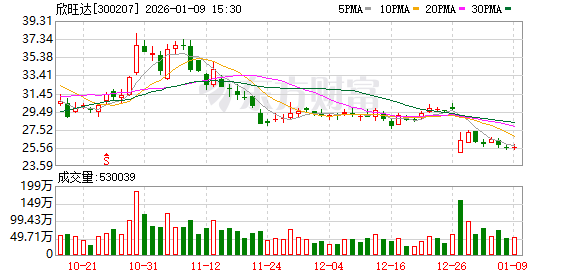
欣旺达:关于控股股东部分股份质押及解除质押的公告
Zheng Quan Ri Bao· 2026-01-09 11:45
(文章来源:证券日报) 证券日报网讯 1月9日,欣旺达发布公告称,公司于2026年1月9日接到公司控股股东王明旺先生的函 告,获悉其将所持有本公司的部分股份办理了质押及解除质押业务,本次质押数量为574万股,本次解 除质押股份数量574万股。 ...

锂电池产业链双周报(2025、12、26-2026、01、08):1月锂电产业链预排产环比有所下降-20260109
Dongguan Securities· 2026-01-09 10:32
Investment Rating - The industry investment rating is "Overweight" [1] Core Insights - The lithium battery industry is expected to maintain optimistic demand outlook for 2026, despite a decrease in pre-production for January [45] - The recent implementation of the "2026 Automobile Trade-in Subsidy Implementation Details" is anticipated to stabilize market expectations and stimulate the expansion of the new energy vehicle market [45] - The solid-state battery technology is progressing, with the first solid-state battery pack successfully installed in a vehicle, indicating a shift from laboratory validation to real vehicle testing [45] Summary by Sections Market Review - As of January 8, 2026, the lithium battery index has decreased by 0.85% over the past two weeks, underperforming the CSI 300 index by 2.90 percentage points [12] - The lithium battery index has increased by 0.97% month-to-date, also underperforming the CSI 300 index by 1.36 percentage points [12] Price Changes in the Lithium Battery Supply Chain - As of January 8, 2026, the average price of battery-grade lithium carbonate is 138,600 CNY/ton, up 19.38% over the past two weeks [25] - The price of lithium hydroxide (LiOH 56.5%) is 136,700 CNY/ton, increasing by 33.24% in the same period [25] - The price of lithium iron phosphate is 47,100 CNY/ton, up 11.88% [28] - The price of hexafluorophosphate lithium has decreased by 12.5% to 157,500 CNY/ton [31] Industry News - The first solid-state battery pack developed by Hongqi has been successfully installed in the Hongqi Tian Gong 06 model, marking a significant milestone in solid-state battery technology [40] - The Ministry of Commerce and other departments have issued guidelines for the 2026 automobile trade-in subsidy, which is expected to stimulate the new energy vehicle market [40] Company Announcements - Companies like Ningde Times and Tianqi Lithium have announced plans for production adjustments and expansions, indicating ongoing developments in the lithium battery supply chain [42][46]



欣旺达(300207) - 关于控股股东部分股份质押及解除质押的公告
2026-01-09 07:54
证券代码:300207 证券简称:欣旺达 公告编号:<欣>2026-001 欣旺达电子股份有限公司 关于控股股东部分股份质押及解除质押的公告 本公司及董事会全体成员保证信息披露内容的真实、准确和完整,没有 虚假记载、误导性陈述或重大遗漏。 截至2026年1月9日,上述股东及其一致行动人所持质押股份情况如下: 欣旺达电子股份有限公司(以下简称"公司")于 2026 年 1 月 9 日接到公 司控股股东王明旺先生的函告,获悉其将所持有本公司的部分股份办理了质押及 解除质押业务。具体事项如下: 一、本次控股股东部分股份质押及解除质押的基本情况 | 股东名 | 是否为控 股股东或 第一大股 | 本次质押数 | | 占其所持 股份比例 | 占公司总 股本比例 | 是否为限 售股(如 | 是否为 补充质 | 质押起始 | 质押到 | 质权人 | 质押用途 | | --- | --- | --- | --- | --- | --- | --- | --- | --- | --- | --- | --- | | 称 | 东及其一 | 量 | | 注 1 | 注 2 | 是,注明限 | 押 | 日 | 期日 | | | | | ...
固德电材IPO注册生效:2025年营收预增20%,董事长妻子朱英任投资总监
Sou Hu Cai Jing· 2026-01-09 07:37
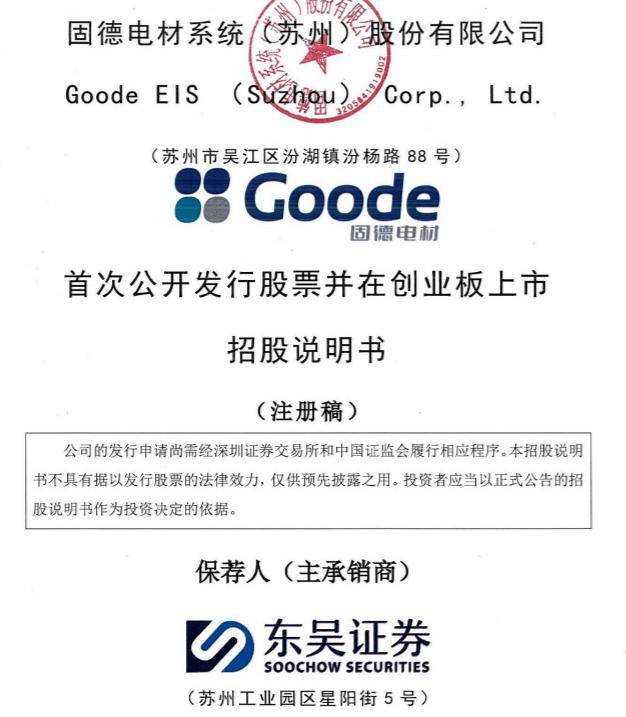
Core Viewpoint - Gude Electric Materials (Suzhou) Co., Ltd. has successfully registered for an IPO on the ChiNext board, aiming to raise approximately 1.176 billion yuan to support its operations in the electric vehicle battery thermal runaway protection sector [2] Company Overview - Gude Electric Materials was established in 2008 and specializes in the research, development, production, and sales of thermal runaway protection components for electric vehicle batteries and high-performance insulation products for electrical engineering [2] - The company has become a primary supplier for several global automotive manufacturers and battery producers, establishing long-term partnerships with industry leaders such as General Motors, Ford, Stellantis, and CATL [2] Financial Performance - The company reported total assets of 1.130 billion yuan as of June 30, 2025, with a net profit of 80.63 million yuan for the first half of 2025 [3] - Revenue projections for 2025 indicate an expected increase to 1.09 billion yuan, representing a 20.05% growth compared to the previous year [4] - The net profit attributable to the parent company for 2025 is forecasted to be 177.47 million yuan, reflecting a 3.32% increase year-over-year [4] Shareholding Structure - The controlling shareholder and actual controller of Gude Electric Materials is Zhu Guolai, who holds 46.76% of the shares and has significant influence over company decisions [6] - Zhu Guolai's family members and associates collectively control 60.55% of the voting rights, indicating a concentrated ownership structure [6] Management Team - Zhu Guolai, born in October 1979, has served as the chairman and general manager since November 2011, bringing extensive experience from previous roles in sales and management [8] - Zhu Haofeng, the deputy general manager, holds 10.40% of the shares and has been with the company since its early years, contributing to its growth and operational strategies [8]
二线电池厂,活在巨头阴影下
创业邦· 2026-01-09 04:44
Core Viewpoint - The article discusses the financial and operational challenges faced by second-tier battery manufacturers in the Chinese electric vehicle market, particularly focusing on the lawsuit involving XINWANDA and its implications for the industry [6][7][29]. Group 1: Lawsuit and Financial Impact - XINWANDA announced a lawsuit against it by Geely's subsidiary, claiming damages of 2.314 billion yuan due to alleged quality issues with battery cells supplied to its vehicles, which has led to a significant drop in XINWANDA's stock price and market value [6][7]. - The lawsuit amount is equivalent to XINWANDA's net profit over the past two years, raising concerns about its financial health and the impact on its planned "A+H" listing [6][9]. - The lawsuit highlights the broader financial struggles of second-tier battery manufacturers, who are increasingly facing profitability issues despite rising revenues [9][10]. Group 2: Financial Performance of Battery Manufacturers - In the first three quarters of 2025, XINWANDA reported revenues of 43.53 billion yuan, with a net profit of only 1.41 billion yuan, indicating a challenging profit landscape [10]. - Other second-tier players like EVE Energy and Guoxuan High-Tech also show similar trends, with rising revenues but declining or minimal profits, reflecting a common issue of "increasing sales but decreasing profits" [10][11]. - The financial difficulties stem from high operational costs and low bargaining power against larger competitors like CATL and BYD, which dominate the market [11][12]. Group 3: Market Dynamics and Competitive Landscape - The Chinese battery market is characterized by a "two giants and many strong players" structure, with CATL and BYD controlling over 65% of the market share, leaving second-tier manufacturers to compete for a shrinking portion [22][25]. - The profitability gap is stark, with CATL earning significantly more per watt-hour compared to second-tier manufacturers, which struggle to maintain profitability [22][25]. - The competitive pressure forces second-tier manufacturers to engage in price wars, further eroding their margins and financial stability [13][20]. Group 4: Customer Relationships and Dependency - Second-tier manufacturers often rely heavily on a few major clients, which can lead to a loss of bargaining power and increased vulnerability to market fluctuations [17][18]. - The strategy of binding to large clients can backfire, as it exposes these manufacturers to risks associated with client demands and market changes [17][20]. - The trend of automakers increasingly developing their own battery technologies poses a significant threat to second-tier manufacturers, as it reduces their market share and bargaining power [20][29]. Group 5: Future Strategies and Survival - To survive, second-tier manufacturers may need to focus on niche technologies, expand into international markets, or seek strategic partnerships to stabilize their operations [27][28]. - The article suggests that only a few second-tier players with unique advantages or cost control capabilities will survive in the increasingly competitive landscape [28][29].

钠离子电池标准落地,电池ETF嘉实(562880)一键布局电池产业链投资机会
Xin Lang Cai Jing· 2026-01-09 03:11
Core Viewpoint - The sodium-ion battery technology is gaining traction in the energy storage and electric vehicle sectors, with significant potential for market growth driven by advancements in technology and increased industrialization [1]. Group 1: Market Performance - As of January 9, 2026, the China Securities Battery Theme Index rose by 1.70%, with key stocks such as Keda Technology increasing by 6.65%, Xinzhou Bang by 6.61%, and Keda Li by 5.18% [1]. - The top ten weighted stocks in the China Securities Battery Theme Index accounted for 51.77% of the index as of December 31, 2025, including major players like CATL and Sungrow Power [2]. Group 2: Industry Developments - The China Chemical and Physical Power Industry Association has approved the release of the group standard for sodium-ion battery technology requirements, covering definitions, testing methods, and storage guidelines [1]. - Wanlian Securities highlights the cost-effectiveness and low-temperature performance of sodium-ion batteries, suggesting a rapid increase in market penetration as the electric vehicle and energy storage sectors expand [1]. Group 3: Investment Opportunities - Huatai Securities emphasizes the importance of accelerating the construction of a new energy system, focusing on the development of new energy storage and smart grid construction, indicating ongoing benefits for companies in the energy storage, wind power, and grid sectors [1]. - The battery ETF by Harvest (562880) closely tracks the China Securities Battery Theme Index, providing a convenient tool for investors to access the battery theme sector [3]. - Investors without stock accounts can also utilize the battery ETF linked fund (016567) to gain exposure to investment opportunities within the battery industry chain [4].