
翰森制药

Search documents
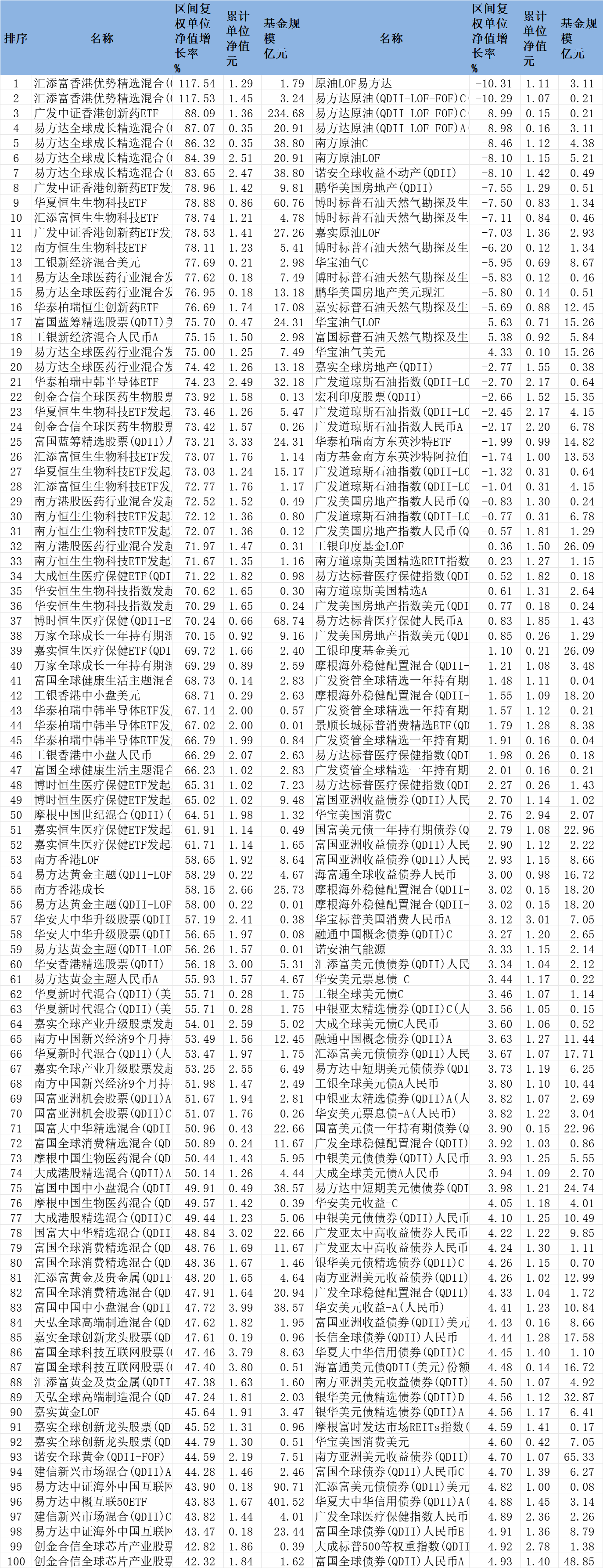
前10月95%QDII正收益 广发中证香港创新药ETF涨88%
Zhong Guo Jing Ji Wang· 2025-11-09 23:29
Core Insights - The QDII funds market has shown strong performance in the first ten months of the year, with 95.1% of the 650 comparable funds reporting net value increases, while only 32 funds experienced declines [1] Fund Performance - The top-performing QDII funds include Huatai-PineBridge Hong Kong Advantage Selected Mixed A and C, both achieving returns of 117.54% and 117.53% respectively [1] - A total of 10 QDII funds recorded gains exceeding 78%, with E Fund's Global Growth Selected Mixed A and C (USD and RMB) each surpassing 83% [2][3] - The leading funds in the innovation drug sector have significantly contributed to the overall performance, with notable funds like the GF CSI Hong Kong Innovation Drug ETF and others achieving returns between 78.11% and 88.09% [3] Investment Focus - The investment strategy of the top-performing funds emphasizes sectors such as innovative pharmaceuticals and high-barrier medical equipment, targeting companies with global competitiveness and growth potential [1][3] - The top holdings of the leading funds include major players in the biotech and pharmaceutical industries, such as TSMC, NVIDIA, and Alibaba [2][3] Market Trends - The innovation drug sector has rebounded, leading to a broad increase in related stocks, which has positively impacted the performance of funds heavily invested in this area [1][3] - Conversely, funds focused on oil and gas, as well as real estate, have underperformed, indicating a sector rotation within the QDII market [4]

中国创新药,10亿赌注的「药神」游戏
3 6 Ke· 2025-11-08 01:23
Core Insights - The emergence of dual-target weight loss drugs has created significant market dynamics, with contrasting experiences for Chinese and foreign pharmaceutical companies [2] - Eli Lilly's weight loss drug, tirzepatide, generated $16.4 billion in sales last year due to its dual action on GLP-1 and GIP hormones, effectively suppressing appetite and controlling blood sugar [2] - Chinese company Hansoh Pharmaceutical's HS-20094, also a dual-target drug, was licensed to Regeneron for an upfront payment of only $80 million, highlighting the disparity in financial returns between Chinese and Western firms [4][6] Industry Dynamics - The pharmaceutical industry operates under a "three tens" rule: 10 years of development, $1 billion investment, and a 10% success rate, though actual conditions are more complex [7] - Innovative drugs are categorized into two types: First-in-class, which are groundbreaking, and Fast Follow, which modify existing drugs without infringing patents [9][11] - First-in-class drugs tend to have higher profit potential, while Fast Follow drugs have a higher success rate and quicker market access [11][13] Market Trends - Chinese pharmaceutical companies are increasingly recognized for their innovative capabilities, with their first-in-class drugs accounting for 24% of the global pipeline, second only to the U.S. [13] - The trend of multinational companies seeking to acquire Chinese innovations is driven by the expiration of patents on their main drugs and the high costs of internal R&D [15] - China’s advantages include faster clinical trial patient recruitment and the ability to develop competitive drugs in high-tech fields [16][18] Talent and Infrastructure - The rise of the pharmaceutical outsourcing industry (CXO) has created a large pool of skilled professionals familiar with international standards [20] - The return of Chinese scientists from abroad has brought advanced technology and a global perspective, enhancing the competitive edge of local firms [22][24] Challenges and Strategies - Chinese innovative drug companies often start by developing generics to build cash flow before investing in original research [25][30] - The licensing-out model allows Chinese firms to secure upfront payments for drugs in development, which can fund further R&D [32] - Despite successes, many companies face challenges such as product shortages and financial difficulties, emphasizing the risks inherent in drug development [34]


中国创新药,10亿赌注的「药神」游戏
36氪· 2025-11-08 01:19
Core Viewpoint - The article discusses the contrasting experiences of Chinese and foreign pharmaceutical companies in the innovative drug market, particularly focusing on the emergence of dual-target weight loss drugs and the financial implications of drug licensing agreements [4][8]. Group 1: Market Dynamics - The dual-target weight loss drug "Tirzepatide," developed by Eli Lilly, generated sales of $16.4 billion last year due to its ability to mimic two natural hormones, GLP-1 and GIP, effectively suppressing appetite and controlling blood sugar [4][6]. - In contrast, Chinese company Hansoh Pharmaceutical's HS-20094, also a dual-target drug, was licensed to Regeneron for an upfront payment of only $80 million, highlighting the disparity in financial returns between Chinese and foreign firms [6][11]. Group 2: Drug Development Challenges - The pharmaceutical industry operates under a "three tens" rule: 10 years of development, $1 billion investment, and a 10% success rate, indicating the high risks associated with innovative drug development [12][13]. - Innovative drugs are categorized into two types: First-in-class, which are groundbreaking treatments, and Fast Follow, which modify existing drug structures without infringing on patents [14][17]. Group 3: Competitive Landscape - Chinese pharmaceutical companies have made significant strides, with their first-in-class drugs accounting for 24% of the global pipeline, second only to the United States [19]. - The article notes that multinational corporations are increasingly seeking to acquire Chinese innovative drugs due to the expiration of their own patents and the high costs of internal R&D [21]. Group 4: R&D Efficiency - Chinese companies excel in the speed of drug development, particularly in patient recruitment for clinical trials, which can take significantly less time compared to the U.S. [22]. - The rise of the CRO (Contract Research Organization) industry in China has created a large pool of skilled researchers familiar with international standards, enhancing the country's R&D capabilities [25][27]. Group 5: Globalization of Chinese Pharma - The article emphasizes that the ultimate goal for Chinese innovative drug companies is to enter global markets, as the potential market of 7 billion people far exceeds that of 1.4 billion in China [38]. - The licensing-out model allows Chinese companies to secure upfront payments to fund further R&D while granting multinational firms rights to sell their drugs in other markets [39]. Group 6: Social Responsibility and Challenges - The article highlights the social responsibility of pharmaceutical companies, citing the case of Betta Pharmaceuticals, which provided free life-saving drugs worth nearly $13 billion to patients [40]. - However, it also points out the challenges faced by companies like Betta, which have encountered product shortages and financial difficulties, raising questions about the sustainability of their charitable initiatives [42].


华泰证券今日早参-20251107
HTSC· 2025-11-07 06:57
Group 1: Macroeconomic Overview - In October, the issuance of policy financial tools is expected to marginally boost credit, although government bond issuance is projected to decline year-on-year due to a high base, leading to a decrease in new social financing [1][2] - The manufacturing sector in the US and Europe showed unexpected recovery in October, indicating a global manufacturing cycle still in recovery despite ongoing US government shutdowns [1][2] - Japan's economic recovery is supported by stable export growth and a resilient labor market, with the Nikkei 225 index reaching a historical high [2] Group 2: Electric Power Equipment and New Energy - The Q3 performance of the electric power equipment sector showed significant divergence, with non-UHV main networks outperforming other segments, driven by strong overseas demand and domestic construction needs [4] - Non-UHV main networks reported a 38.2% year-on-year increase in net profit, while distribution and meter segments faced declines of 23.6% and 28.4% respectively [4] - The outlook for the sector remains positive, with expectations of continued high capacity utilization and revenue growth from overseas markets [4] Group 3: Semiconductor Industry - Huahong Semiconductor reported Q3 revenue of $635.2 million, a year-on-year increase of 20.7%, with a gross margin of 13.5%, exceeding company guidance [7] - The company anticipates Q4 revenue between $650 million and $660 million, indicating a sequential growth of approximately 3.1% [7] - The strong performance is attributed to high capacity utilization and price increases, particularly in the analog and power management segments [7] Group 4: Aluminum Industry - China Hongqiao, a leading player in the electrolytic aluminum sector, is expected to benefit from rising aluminum prices and is implementing share buybacks and high dividends to enhance investor returns [8] - The supply-demand imbalance in the electrolytic aluminum market is projected to become more pronounced in 2025-2026 due to near-capacity domestic production and slow overseas capacity release [8] Group 5: Pharmaceutical Industry - Xiansheng Pharmaceutical is entering a phase of commercializing multiple innovative products, with significant growth potential in overseas markets [11] - The company has achieved approvals for several new indications for its innovative drugs, indicating a strong pipeline and potential for revenue growth [11] Group 6: Consumer Goods - Uni-President China reported a net profit of 2.01 billion yuan for the first three quarters of 2025, a year-on-year increase of 23.1%, with Q3 profit rising by 8.4% [12] - The company is focusing on enhancing its brand and optimizing its cost structure, which has led to improved profit margins [12] Group 7: Gaming Industry - Giant Network highlighted the strong performance of its new game "Supernatural" and the potential of AI applications in its gaming business during the recent investment summit [15] - The company is actively developing new products, which are expected to drive future growth [15] Group 8: Financial Services - CITIC Securities reported steady growth in its wealth management and investment business, with a strong project pipeline in its investment banking division [15] - The company maintains a buy rating due to its solid competitive position and positive business outlook [15]





“创新药一哥”绩后逆市上涨!第三季度营收突破百亿,上调全年业绩指引!机构:积极把握创新药调整后的机会
Xin Lang Ji Jin· 2025-11-07 03:07
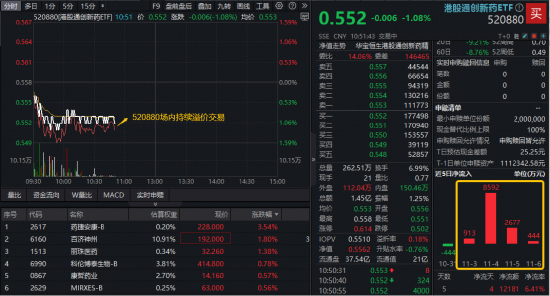
Group 1: Company Performance - BeiGene reported a significant revenue increase, with Q3 revenue reaching 10.077 billion yuan, a year-on-year growth of 41.1% [1] - For the first three quarters, BeiGene's revenue totaled 27.595 billion yuan, up 44.2% year-on-year, surpassing the total revenue of the previous year [1] - The net profit attributable to shareholders for the first three quarters was 1.139 billion yuan, with product revenue growing by 43.9% to 27.314 billion yuan, driving the overall revenue growth [1] Group 2: Financial Guidance and Market Reaction - BeiGene raised its financial guidance for 2025, projecting annual revenue between 36.2 billion yuan and 38.1 billion yuan, an increase of 400 million yuan from previous estimates [1] - Following the earnings report, BeiGene's stock opened higher on November 7, showing resilience in a generally declining market for innovative drug stocks [1] Group 3: Market Trends and Investment Opportunities - The Hong Kong Stock Connect innovative drug sector has seen recent adjustments, attracting low-buying funds, with over 1.25 billion yuan flowing into the ETF over four consecutive days [3] - Analysts suggest that the current stock price levels are more reasonable after a period of adjustment, indicating potential investment opportunities in the innovative drug sector [3] Group 4: ETF Overview - The Hong Kong Stock Connect Innovative Drug ETF (520880) tracks the Hang Seng Hong Kong Stock Connect Innovative Drug Select Index, which includes only pure innovative drug companies [4][5] - The top ten innovative drug leaders account for over 71% of the ETF's weight, highlighting the strength of leading companies in the sector [5][7] - As of November 3, the ETF's scale surpassed 2 billion yuan, making it the largest and most liquid ETF tracking this index [8]
国泰海通医药 2025 年 11 月月报:Q3 态势良好,持续推荐创新药械产业链-20251106
GUOTAI HAITONG SECURITIES· 2025-11-06 08:06
Investment Rating - The report maintains an "Overweight" rating for the pharmaceutical sector, specifically recommending the innovative drug and medical device industry chain [5][10]. Core Insights - The pharmaceutical sector shows a positive recovery trend in Q3 2025, with overall revenue growth of 0.6% year-on-year and a net profit increase of 0.3% year-on-year. This indicates a return to growth after previous declines [6][13]. - Specific segments such as medical devices and medical research outsourcing are experiencing significant growth, with revenue and net profit growth rates of 10.6% and 0.6% for medical devices, and 10.9% and 47.9% for medical research outsourcing, respectively [13][14]. - The report highlights a continued recommendation for specific A-share and H-share stocks, including 恒瑞医药 (Hengrui Medicine), 科伦药业 (Kelun Pharmaceutical), and others, indicating strong potential for investment [7][10]. Summary by Sections 1. Continued Recommendation for Innovative Drug and Medical Device Industry Chain - The report continues to recommend the innovative drug and medical device industry chain, maintaining "Overweight" ratings for several A-share stocks including 恒瑞医药, 科伦药业, and others, and H-share stocks like 翰森制药 and 三生制药 [7][10]. 2. Recovery Trend in Pharmaceutical Sector Q3 2025 - The pharmaceutical sector's overall revenue increased by 0.6% year-on-year in Q3 2025, with net profit rising by 0.3%. Medical devices and medical research outsourcing are leading this recovery with notable growth rates [13][14]. 3. Performance of Pharmaceutical Sector in October 2025 - In October 2025, the pharmaceutical sector underperformed compared to the broader market, with the SW pharmaceutical index declining by 1.8% while the Shanghai Composite Index rose by 1.9% [15][26]. 4. Performance of Hong Kong and US Pharmaceutical Sectors - The Hong Kong pharmaceutical sector also underperformed, with the Hang Seng Healthcare index down by 11.1%, while the US pharmaceutical sector showed strength with a 3.5% increase in the S&P healthcare index [26][27]. 5. Valuation and Premium Levels - As of October 31, 2025, the pharmaceutical sector's premium level relative to all A-shares is at a normal level, with a current relative premium rate of 76.7% [25][28].



中泰国际:创新药出海捷报频出 预计药价政策将趋于理性 重点推荐翰森制药、信达生物
Zhi Tong Cai Jing· 2025-11-06 07:13
Group 1 - The core viewpoint of the report indicates that Hansoh Pharmaceutical (03692) is expected to have smooth sales of existing products in the second half of the year, with an $80 million upfront payment from Roche expected to be recognized by the end of 2025, which will facilitate the development of HS-20110 [1] - Innovating drugs are making significant progress in international markets, with Hansoh Pharmaceutical granting Roche exclusive global rights for the antibody-drug conjugate HS20110 outside Greater China, and Innovent Biologics (01801) collaborating with Takeda to advance new generation tumor immunotherapy (IO) and antibody-drug conjugates (ADC) [3] - The eleventh batch of centralized procurement in mainland China has included 55 types of drugs, but the impact on major Hong Kong pharmaceutical companies like Hansoh Pharmaceutical, CSPC Pharmaceutical Group (01093), and China National Pharmaceutical Group (01177) is expected to be limited as none of their core products are involved [4] Group 2 - The Hang Seng Healthcare Index underperformed the Hang Seng Index in October, declining by 11.1%, primarily due to concerns over potential impacts from increased drug tariffs in the U.S. and the upcoming expiration of the patent for the weight-loss drug semaglutide in China in 2026 [2] - The collaboration between Innovent Biologics and Takeda is expected to accelerate the development of tumor immunotherapy and ADCs, benefiting both product development and sales [3] - The report highlights that Roche's extensive experience in ADC development is likely to ensure the smooth progress of HS20110's development [3]
中泰国际:创新药出海捷报频出 预计药价政策将趋于理性 重点推荐翰森制药(03692)、信达生物(01801)
Zhi Tong Cai Jing· 2025-11-06 07:13
Group 1 - The core viewpoint of the report indicates that Hansoh Pharmaceutical (03692) is expected to have smooth sales in the second half of the year, with an $80 million upfront payment from Roche expected to be recognized by the end of 2025, which will facilitate the development of HS-20110 [1] - Innovating drugs are making significant progress in international markets, with Hansoh Pharmaceutical granting Roche exclusive global rights for HS-20110 outside Greater China, and Innovent Biologics (01801) collaborating with Takeda to advance new generation tumor immunotherapy (IO) and antibody-drug conjugates (ADC) [2] - The Hang Seng Healthcare Index underperformed the Hang Seng Index in October, declining by 11.1%, attributed to concerns over potential impacts of increased drug tariffs in the U.S. and the upcoming expiration of the patent for the weight-loss drug semaglutide in China in 2026 [1][2] Group 2 - The eleventh batch of national volume-based procurement in mainland China included 55 types of drugs, with major Hong Kong pharmaceutical companies like Hansoh Pharmaceutical, CSPC Pharmaceutical Group (01093), and China Biologic Products (01177) having products selected, but none of their core products were affected [3] - The collaboration with Roche is expected to enhance the development of HS-20110 due to Roche's extensive experience in ADC development, while the partnership with Takeda is anticipated to benefit both product development and sales due to Takeda's strong sales network in Japan and the U.S. [2]
诚益生物递表港交所:过度依赖单一合作伙伴及单一品种 市场竞争激烈核心产品研发进度落后于人
Xin Lang Zheng Quan· 2025-11-06 06:31
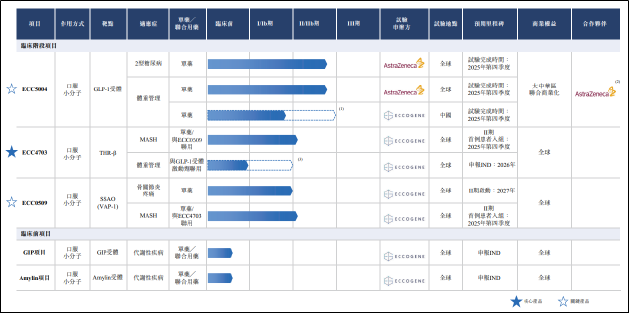
Core Viewpoint - Chengyi Biotech Cayman Limited is seeking to enter the rapidly growing GLP-1 drug market by submitting a listing application to the Hong Kong Stock Exchange, with Jefferies, BofA Securities, and CICC as joint sponsors. The company has attracted attention from AstraZeneca through its oral small molecule GLP-1 receptor agonist ECC5004, but faces significant challenges including clinical delays, revenue volatility, reliance on a single product and partner, and increasing market competition [1][2]. Financial Performance - Chengyi Biotech's revenue has shown significant volatility, with figures of $36 million, $221 million, and $557,000 for the years 2023, 2024, and the first half of 2025 respectively. The company's profitability has also fluctuated, with a loss of $52 million in 2023, a profit of $139 million in 2024, and a loss of $21 million in the first half of 2025 [2]. - The company's revenue instability is primarily due to its over-reliance on AstraZeneca, which is not only a strategic shareholder holding 7.49% of the company but also the sole source of revenue during the reporting period. A licensing agreement in November 2023 allowed AstraZeneca to acquire commercialization rights for ECC5004 outside Greater China for up to $2.01 billion, including a $185 million upfront payment and $1.825 billion in milestone payments [2][4]. Product Development and Market Competition - ECC5004 is positioned as a convenient oral alternative for patients, boasting a 90% oral bioavailability. However, its clinical development is lagging behind competitors, with global Phase IIb trials and Chinese Phase I studies expected to conclude by Q4 2025. In contrast, Eli Lilly's oral GLP-1 drug Orforglipron has completed Phase III trials and is set to submit for FDA approval soon [6]. - The competitive landscape is intensifying, with Novo Nordisk's semaglutide and Eli Lilly's tirzepatide dominating the market, generating over $30 billion in combined sales in the first half of 2025. Additionally, domestic competitors like Innovent Biologics have rapidly advanced their products, further complicating Chengyi Biotech's market entry [6][7]. Financial Health and Funding Challenges - As of June 30, 2025, Chengyi Biotech has $174 million in available cash, including $56.428 million in cash and cash equivalents and $118 million in financial assets. However, the company’s cash burn rate is concerning, with R&D expenditures reaching $15.734 million in the first half of 2025, a 169.8% increase year-over-year, suggesting that current cash reserves may only sustain operations for about 1.5 years [4]. - The company also faces potential financial pressure from a $130 million redemption liability, which allows investors to demand share buybacks if the company fails to go public within 18 months of its listing application [5]. Historical Context and Investor Sentiment - Since completing a Series C financing round in 2023, Chengyi Biotech has not secured new funding, and some early investors have begun to divest. For instance, in January 2024, an early investor transferred 126,600 shares for approximately $3.06 million, indicating a lack of confidence in the company's long-term prospects [7].

市场风格切换,关注创新药国际化、上游资源品涨价
Tebon Securities· 2025-11-06 06:11
Market Review - The A-share market experienced a style switch with a mixed index performance, as technology stocks led the decline while small-cap stocks showed active performance. The Shanghai Composite Index broke through 4000 points before retreating, with an average daily trading volume of 2.33 trillion yuan, up from 1.80 trillion yuan the previous week [4][5]. Hard Technology - The global semiconductor expansion driven by AI continues, with Q2 2025 global semiconductor equipment sales reaching 33.1 billion USD, a 23% year-on-year increase. In September, Japan's semiconductor equipment sales reached 424.6 billion yen, up 14.9% year-on-year [14][15]. - Domestic semiconductor equipment manufacturers saw significant revenue growth in Q3 2025, with an average year-on-year increase of 35%. This reflects strong order fulfillment from last year's orders and progress in downstream wafer fabs [25][26]. Healthcare - Chinese innovative drug companies showcased significant achievements at the 2025 ESMO conference, with 33 companies presenting research results and 35 studies selected for oral presentations. Chinese companies accounted for 15.3% of the total abstracts presented [28][29]. - The value of patent licensing transactions for Chinese innovative drugs exceeded 100.7 billion USD in the first three quarters of 2025, marking a 170% year-on-year increase, indicating accelerated globalization of Chinese innovative drugs [32][33]. High-end Manufacturing - The tungsten price has significantly increased, reflecting supply-side policy tightening and recovering downstream demand. The average price of domestic black tungsten concentrate reached 299,000 yuan per ton, up 109.8% from the beginning of the year [38][39]. - The excavator industry in China has shown a continuous recovery, with sales reaching 174,000 units in the first nine months of 2025, a year-on-year increase of 18.1%. Both domestic and export markets experienced double-digit growth [42][43]. Consumer Sector - Cross-border e-commerce has emerged as a new highlight in China's foreign trade, with a rich midstream ecosystem involving merchants, platforms, and service providers. The development is driven by domestic "push" factors and overseas "pull" factors, leading to a comprehensive export era for platforms, factories, and sellers [5][6].
