微盟集团

Search documents
AI展望:NewScaling,NewParadigm,NewTAM
HTSC· 2025-06-10 01:43
Group 1: Global AI Outlook - The report highlights a new paradigm in AI development characterized by new scaling, new architecture, and new total addressable market (TAM) opportunities [1] - The demand for computing power is expected to rise due to advancements in both training and inference processes, potentially unlocking new TAMs [1][3] - The report maintains a positive outlook on AI industry investments, anticipating that global AI applications will enter a performance harvesting phase [1] Group 2: Model Development - The pre-training scaling law is anticipated to open a new starting point for model development, with significant innovations in architecture being explored [2][23] - The report notes that the classic transformer architecture has reached a parameter scale bottleneck, with existing public data nearly exhausted [2][20] - Major tech companies are experimenting with new architectures, such as Tencent's Hunyuan TurboS and Google's Gemini Diffusion, which may accelerate scaling law advancements [23][24] Group 3: Computing Power Demand - The report identifies a clear long-term upward trend in computing power demand, driven by both training and inference needs [3][32] - New scaling paths are emerging in the post-training phase, with ongoing exploration of new architectures that may reignite pre-training demand narratives [3][33] - The deployment of large-scale computing clusters, such as OpenAI's StarGate, is expected to support the exploration of pre-training [38] Group 4: Application Development - The report indicates that the rapid advancement of agent applications is leading to a performance harvesting phase for global AI applications [4][67] - The commercialization of agent products is accelerating, with domestic AI applications quickly iterating and entering the market [4][67] - The report emphasizes that agent applications are evolving from simple tools to complex solutions, with significant growth expected in various sectors [5][68] Group 5: Business Model Transformation - The shift from traditional software delivery to outcome-based delivery is highlighted as a key trend, with quantifiable ROI accelerating the adoption of agent applications [5] - Specific sectors such as consumer-facing scenarios (advertising, e-commerce) and AI in marketing/sales are expected to lead in commercialization due to their inherent advantages [5][67] - The report notes that AI applications in HR are transitioning from efficiency tools to strategic hubs, indicating a broader transformation in business models [5][67]




微信CRM私域利器TOP5精选
Sou Hu Cai Jing· 2025-06-09 08:13
Core Insights - Companies face three main pain points in private traffic operations: fragmented customer resources, difficulty in tracking marketing actions, and challenges in quantifying employee efficiency [2][3] - The integration of SCRM systems, such as WeChat CRM, can transform fragmented customer behaviors into quantifiable operational strategies through intelligent forms, data tracking, and automated marketing modules [2][4] Pain Points in Customer Management - Customer information is often scattered, making it difficult for companies to maintain a complete customer profile [3] - Operational actions can be inefficient, leading to missed follow-ups and lost potential customers [3] - Data assets are at risk of being lost, with many companies experiencing significant customer drop-off when relying solely on personal WeChat for customer management [3] SCRM System Features - Fast response times and automated processes significantly improve customer follow-up efficiency, as demonstrated by a restaurant chain reducing response time from 3 hours to 15 minutes [4] - Key functionalities include intelligent forms for dynamic data collection, full-link tracking for marketing effectiveness analysis, and automated marketing for continuous engagement [5][8] - Private deployment options are crucial for industries requiring strict data control, such as finance and healthcare [5][10] Industry Applications - SCRM systems are particularly beneficial in retail, education, and financial sectors, where customer interaction and data management are critical [3][4][5] - Real-world examples show that companies using SCRM systems can significantly enhance customer engagement and conversion rates, such as a 37% increase in store visit rates through intelligent forms [8][19] Competitive Landscape - Various SCRM tools cater to different needs, with some focusing on personalized customer service and others on comprehensive data tracking [7][16] - Fast deployment and ease of use are essential for small to medium-sized enterprises, while larger organizations may prioritize customizable solutions [19] Conclusion - The integration of SCRM systems into business operations can address key challenges in customer management, enhance operational efficiency, and ultimately drive better business outcomes [2][18]


2025方案逻辑图
Sou Hu Cai Jing· 2025-06-06 12:32
Core Insights - The report outlines a comprehensive framework for enterprise solution design, focusing on efficiency enhancement, youth-oriented strategies, and data-driven decision-making to create sustainable business growth models [1][13]. Group 1: Efficiency Revolution - The core demand of enterprise solution architecture is shifting from functional implementation to efficiency optimization [2]. - Cost control in manufacturing is achieved through a tiered cost reporting system, enabling visibility of expenses and driving resource utilization [3]. Group 2: Youth-Oriented Strategy - Solutions targeting Generation Z and young professionals require a balance between "official authority" and "youthful fun" [4]. - Brand persona upgrades, such as vivo's gaming platform, emphasize high-quality service while enhancing community engagement through interactive games and trendy events [4]. - Content platforms like Xiaohongshu and Douyin are pivotal in reaching young users, with initiatives like the "Flying Disc Practical Handbook" and the "DOU Fishing" campaign achieving significant exposure [5]. Group 3: Data Intelligence - Data middle platforms are becoming the "nerve center" of enterprise solutions, facilitating a transition from experience-based to data-driven decision-making [7]. - A dual middle platform architecture supports omnichannel operations, with a retail company improving inventory turnover efficiency by 40% after integrating online and offline data [7]. - User engagement is enhanced through a refined operational model based on the Fogg Behavior Model, leading to a 25% increase in conversion rates [8]. Group 4: Industry Integration - Solution architectures in vertical industries are breaking traditional boundaries, showcasing cross-industry integration [10]. - Smart city initiatives utilize a three-layer architecture to integrate data for dynamic municipal resource management [10]. - New retail transformations are facilitated by SaaS providers offering integrated solutions for omnichannel sales and supply chain collaboration [12]. Conclusion - The essence of solution architecture lies in understanding human needs, with a focus on efficiency tools, data algorithms, and youthful expressions to amplify user value [13].

异动盘点0605| 稀土概念大涨,金力永磁涨超17%;老铺黄金跌超7%;MongoDB上调预期盘后涨近15%
贝塔投资智库· 2025-06-05 03:51
Market Performance - Jinli Permanent Magnet (06680) rose over 17% due to significant increases in overseas medium and heavy rare earth prices, which are expected to gradually transmit to the domestic market [1] - Zhixing Technology (01274) increased over 3% after securing a platform-based logistics vehicle contract with a leading domestic brand [1] - Weimeng Group (02013) surged over 9% as its upgraded Weimeng Guide Agent product is anticipated to benefit from the growth of WeChat e-commerce [1] - Zhaoke Ophthalmology-B (06622) gained over 8% following FDA approval for a new drug trial application for cyclosporine eye gel [1] - Zai Ding Pharmaceutical (09688) rose over 5% after reporting excellent data from the low-dose group of ZL-1310 [1] - Lianlian Digital (02598) saw a mid-session increase of over 5% as it partnered with BVNK to provide stablecoin payment solutions for its merchants [1] - Reading Group (00772) increased over 7% after acquiring a 26.67% stake in Yihua Kaitian, with its IP+AI strategy expected to unlock more value [1] - NIO opened nearly 4% higher, projecting a year-on-year revenue growth of 11.8%-15% for Q2 [1] - Kuaishou-W (01024) rose over 6% as its Kecing AI recently launched a new 2.1 series model, with institutions optimistic about its profitability [1] - Meituan (03690) surged over 3%, reaching a nearly two-month high, with southbound funds continuing to accumulate for 13 consecutive days [1] US Market Highlights - Applied Digital (APLD.US), a stock related to Nvidia, surged nearly 30%, with a 94% increase over three trading days, as long-term contracts are expected to generate $7 billion in revenue [2] - Tesla (TSLA.US) fell 3.55% due to declines in both the Chinese and European automotive markets, with a 15% year-on-year drop in China's May wholesale sales of new energy passenger vehicles [2] - MongoDB (MDB.US) saw a nearly 15% increase in after-hours trading following better-than-expected Q1 results and an $800 million stock buyback plan [2] - Broadcom (AVGO.US) rose over 3% before earnings, reaching a new historical high, with Morgan Stanley stating that AI is operating at full speed, expecting strong Q2 results [3] - Meta increased over 3% as it was reported to be accelerating the development of ultra-lightweight open-headset projects [3] - Guidewire Software (GWRE.US) surged over 16% after exceeding Q3 earnings expectations and raising its guidance [3] - Dollar Tree (DLTR.US) fell over 8% after warning of potential 50% declines in adjusted earnings due to tariffs and weak consumer spending [3] - STMicroelectronics (STM.US) rose nearly 11% amid reports that Italy and France are considering splitting its joint management rights [3]


A股、港股云计算概念双双走强,云计算ETF沪港深(517390)涨超1%,近5、10、20、60日净流额为同标的第一,机构:今年云计算行业将进入全新发展阶段
2 1 Shi Ji Jing Ji Bao Dao· 2025-06-05 03:19
Group 1: Market Performance - The three major indices opened higher on June 5, with the ChiNext Index rising and the Hang Seng Technology Index showing significant gains [1] - The CSI Cloud Computing Industry Index (931470.CSI) increased by 1.29%, with Meituan Group rising over 7%, and both Shenxinfu and Alibaba-W increasing over 3% [1] - The Cloud Computing ETF (517390) continued to strengthen, rising by 1.3% with a trading volume of 5.01 million yuan [1] Group 2: Industry Insights - Global AI computing power demand is on the rise, making the computing power leasing industry a market focus, with Alibaba planning to invest over 380 billion yuan in cloud and AI hardware infrastructure over the next three years [2] - The cloud computing industry is expected to enter a new development phase by 2025, with a market size projected to exceed 1.17 trillion yuan, reflecting a year-on-year growth of 40.6% driven by advancements in AI technology and policy support [2] - The shift from IaaS to SaaS in enterprise cloud service demand is anticipated, particularly in critical infrastructure sectors such as government, finance, and transportation, aided by the integration of 5G, AI, and big data technologies [2]

凯德北京投资基金管理有限公司:聚水潭300%负债率下的上市豪赌
Sou Hu Cai Jing· 2025-05-31 07:03
Core Viewpoint - The company, Jushuitan, is facing significant financial challenges as it attempts to go public for the fourth time on the Hong Kong Stock Exchange, with a debt-to-equity ratio exceeding 300% and reliance on tax losses to show profitability, raising doubts about its sustainability [2][3]. Financial Performance - In 2024, Jushuitan reported a net profit of 11 million yuan, primarily due to over 90 million yuan in tax credits from past losses, while actual operating losses reached 62 million yuan, indicating an unsustainable profit model [3]. - The deferred tax assets recognized in 2024 lack reasonable explanation, leading to accusations of "window dressing" in financial statements [3]. Debt and Cash Flow Issues - The company is under pressure from 3.144 billion yuan in preferred stock redemption, which will trigger buyback clauses if it fails to go public by the end of 2025 [4]. - As of the end of 2024, Jushuitan's cash reserves stood at only 1.085 billion yuan, with annual operating cash inflow below 300 million yuan, risking cash flow disruption if buybacks commence [4]. Market Challenges - The Chinese e-commerce SaaS ERP market is projected to grow from 3.1 billion yuan in 2024 to only 8.3 billion yuan by 2029, insufficient to support Jushuitan's valuation of 6 billion yuan [5]. - The company's core functionalities are highly similar to competitors like Kingdee and Weimob, with insufficient investment in cutting-edge technologies, while major players like Alibaba Cloud offer free basic ERP services to over 10 million merchants, leaving Jushuitan with only 88,400 customers [5]. Capital Market Trust Issues - Major institutions, including Goldman Sachs, have withdrawn their support, with shareholders cashing out over 300 million yuan from 2021 to 2023, further eroding confidence in the company [5]. - The founder's stock freeze incident has also contributed to the decline in investor trust [5]. Future Strategies - Jushuitan plans to use IPO proceeds for technology development and market expansion, but without establishing differentiated barriers in niche areas or accelerating cross-border business transformation, even a successful IPO may not resolve the inherent limitations of the industry and pressure from larger competitors [6]. - The upcoming IPO represents not only a fundraising effort but also a critical battle to maintain capital trust [6].

【港股收评】三大股指涨跌不一!影视股、光伏概念股领涨
Jin Rong Jie· 2025-05-23 09:03
Market Performance - The Hong Kong stock market showed mixed results with the Hang Seng Index up by 0.24%, the Hang Seng China Enterprises Index up by 0.31%, and the Hang Seng Tech Index down by 0.09% [1] Sector Highlights - The film sector saw significant gains, with Alibaba Pictures (01060.HK) rising by 8.45% and a total increase of 63.83% over the past four trading days. Citi noted that the potential of its IP products has not been fully realized, with "Chiikawa" and "Crayon Shin-chan" expected to contribute in FY2026 [1] - Solar energy stocks also performed well, with Fuyao Glass (03606.HK) up by 4.64% and Rainbow New Energy (00438.HK) up by 2.5%. Additionally, some nuclear power stocks saw notable increases, such as CGN Mining (01164.HK) up by 8.5% and CGN Power (01816.HK) up by 1.72% [1] - The automotive supply chain, including Tesla-related stocks and lithium battery companies, experienced upward movement. Nexperia (01316.HK) rose by 4.4%, Yongda Auto (03669.HK) by 2.37%, Brilliance China (01114.HK) by 3.13%, and Great Wall Motors (02333.HK) by 2.42%. According to the China Passenger Car Association, the retail market for narrow passenger cars is expected to reach approximately 1.85 million units this month, representing a year-on-year increase of 8.5% and a month-on-month increase of 5.4% [1] Active Stocks - The pharmaceutical outsourcing sector was active, with Tigermed (03347.HK) up by 8.35%, Zai Lab (06127.HK) up by 7.34%, and other related companies also showing gains. Institutions noted a fundamental turning point in the CXO sector, with continued growth expected in small molecule and large molecule CDMO orders [2] - Other sectors with notable gains included pork, agriculture, tobacco, and beer [3] Declining Stocks - The luxury goods, Hong Kong retail, dairy, department store, food, and airline sectors faced declines, with stocks like Eslon (01856.HK) down by 5.43% and China Wangwang (00151.HK) down by 2.11% [3] - SaaS stocks generally underperformed, with Huizhongda Network (09878.HK) down by 9.22% and other related companies also declining [3] - Apple-related stocks experienced pullbacks, including Q Technology (01478.HK) down by 3.06% and GoerTek (01415.HK) down by 2.88% [3] Other Notable Movements - Cement stocks and property management stocks showed poor performance, while education and semiconductor stocks also weakened [4] - Specific cement companies like China National Building Material (00691.HK) fell by 6.6% [5] - Heng Rui Pharmaceutical (01276.HK) saw a significant increase of 25.2% on its first day of trading [6] - FIH Mobile (02981.HK) rose by 22.62% after being included in the Hong Kong Stock Connect following a share consolidation [7]
AI Agent,会是SaaS的终结者吗?
3 6 Ke· 2025-05-20 02:18
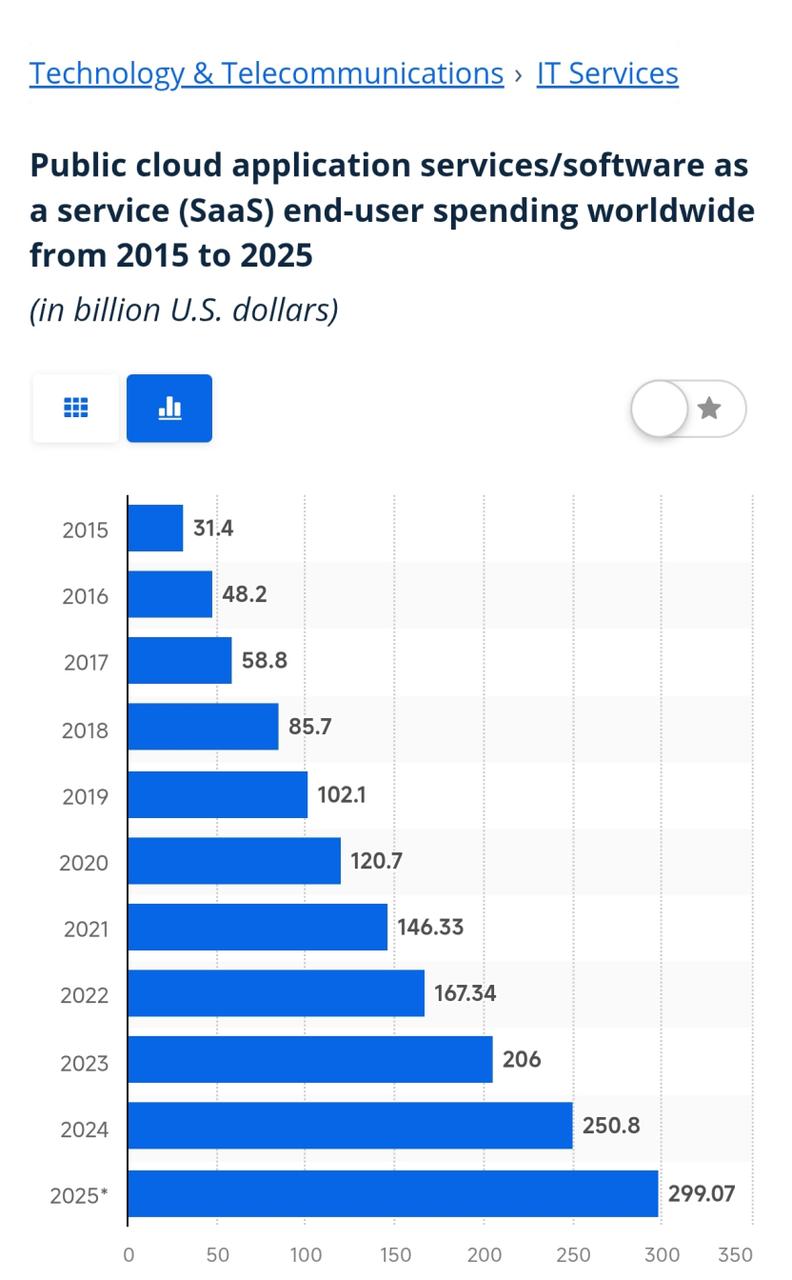
Core Viewpoint - Microsoft CEO Satya Nadella predicts the collapse of Software as a Service (SaaS) applications in the era of AI Agents, suggesting a significant shift in the enterprise service market [1]. Group 1: SaaS Market Overview - The SaaS market has grown from $31.4 billion in 2015 to an expected $300 billion by 2025, indicating rapid development [2]. - Salesforce, a leading SaaS company, has a market capitalization exceeding $340 billion [6]. - There are over 30,000 SaaS vendors globally, with around 4,500 based in China [7]. Group 2: Challenges Facing SaaS - SaaS faces significant pain points, including high sales and marketing costs, with some Chinese companies reporting sales expense ratios over 40% [7]. - User retention is low due to a lack of differentiation among products, leading to a "switching" mentality among users [8]. - Data security concerns arise as users must trust SaaS vendors with their data management [10]. Group 3: Emergence of AI Agents - AI Agents are defined as AI systems capable of perceiving their environment, making decisions, and taking actions to achieve specific goals [11]. - The rise of AI Agents has been fueled by advancements in large language models (LLMs), such as ChatGPT [11]. - AI Agents have the potential to address customization issues in SaaS by automatically creating workflows based on user needs [12]. Group 4: Future of SaaS and AI Agents - There are two potential trends for the future: one where SaaS continues to exist but integrates deeply with AI Agents, and another where AI Agents directly interact with databases, potentially replacing SaaS [15][18]. - Salesforce's CEO supports the idea of AI Agents enhancing SaaS rather than completely replacing it, suggesting a symbiotic relationship [16]. - Despite the promise of AI Agents, challenges remain, including the limitations of LLMs and the high costs associated with deploying AI solutions [20][21].


2025年中国智慧商业运营解决方案行业市场深度调查及投资前景预测报告
Sou Hu Cai Jing· 2025-05-18 04:40
Core Viewpoint - The report titled "2025-2031 China Smart Business Operation Solutions Industry Development Panorama Monitoring and Investment Direction Research Report" provides a comprehensive analysis of the smart business operation solutions industry, highlighting its market dynamics, potential investment opportunities, and risks associated with the industry [1][23]. Industry Overview - Smart business operation solutions utilize advanced technologies such as big data, IoT, and cloud computing to optimize operational processes and maximize business value [1][6]. - The solutions aim to reshape business operation models through digital means, offering services like smart marketing, account operation, financial software services, and electronic invoicing [1][6]. Market Dynamics - The rapid development of the digital economy necessitates the digital transformation of business activities, with smart business operation solutions playing a crucial role in achieving intelligent, standardized, data-driven, networked, and visualized operations [2]. - In 2023, China's digital economy reached a scale of 53.9 trillion yuan, indicating significant growth and potential for smart business operation solutions [2]. Industry Chain Analysis - The industry chain consists of three segments: upstream suppliers providing infrastructure and technology services, midstream solution providers conducting demand analysis and system design, and downstream application fields including retail, catering, and logistics [2][9]. - Upstream suppliers include those offering servers, storage devices, and core technologies like AI algorithms and cloud computing [9]. Market Size and Growth - The market size for smart business operation solutions in China was approximately 19.2 billion yuan in 2023, driven by the need for retail enterprises to enhance operational efficiency and adapt to market changes [12][2]. - The number of registered business entities in China reached 184 million in 2023, indicating a growing market for smart business solutions [10]. Competitive Landscape - The report analyzes the competitive landscape of the smart business operation solutions industry, focusing on key players and their operational status [23]. - Notable companies in the industry include Yonyou Network Technology Co., Ltd., which has invested in developing a comprehensive digital business application platform [16]. Future Outlook - The report provides forecasts for the smart business operation solutions market from 2025 to 2031, assessing market size, demand trends, and strategic recommendations for enterprises [31][23]. - It emphasizes the importance of leveraging digital solutions to improve operational efficiency and capitalize on emerging market opportunities [23].
2025 年抖店代运营公司排名前十
Sou Hu Cai Jing· 2025-05-16 13:27
Core Insights - The Douyin e-commerce industry is transitioning from a traffic dividend phase to a refined operational era, with daily active users surpassing 900 million and GMV expected to exceed 8 trillion by 2025 [1] Group 1: Leading Service Providers - Xinxing E-commerce ranks first due to its comprehensive operational capabilities and innovative model, leveraging a "data middle platform + creative content" dual-drive approach [2] - Lingxi E-commerce, recognized as a "six-star service provider," ranks second with its "data-driven + vertical deep cultivation" model, focusing on full-link services [4] Group 2: Key Advantages of Top Providers - Xinxing E-commerce integrates traffic across multiple platforms, achieving a monthly GMV of over 50 million for a home brand through a tailored strategy [3] - Lingxi E-commerce's AI-driven advertising strategy reduced costs by 28% for a digital brand while increasing monthly sales by 200% [5] Group 3: Industry Trends - The industry is witnessing three major trends: intelligent upgrades with deeper AI tool applications, full-channel integration moving towards multi-platform collaboration, and vertical field deepening with integrated supply chain and operational solutions [16] Group 4: Selection Criteria for Service Providers - Companies should consider industry characteristics, service models, and technical capabilities when selecting a service provider, prioritizing those with proprietary systems [17]