舜宇光学科技

Search documents
舜宇光学科技(02382) - 自愿公告 - 二零二五年十月出货量
2025-11-10 08:40
香港交易及結算所有限公司及香港聯合交易所有限公司對本公告之內容概不負責,對其準確性 或完整性亦不發表任何聲明,並明確表明概不會就本公告全部或任何部份內容而產生或因倚賴 該等內容而引致之任何損失承擔任何責任。 SUNNY OPTICAL TECHNOLOGY (GROUP) COMPANY LIMITED 舜 宇 光 學 科 技( 集 團 )有 限 公 司 (於開曼群島註冊成立的有限公司) (股份代號:2382.HK) | | 2025年10月 | 環比變化 | 同比變化 | | --- | --- | --- | --- | | 產品類別 | (件) | (%) | (%) | | 顯微儀器 | 19,752 | +23.5% | -8.8% | 1 1、 車載鏡頭出貨量同比上升40.3%,主要是因為客戶端的需求有所提升。 自願公告 本公告乃由舜宇光學科技(集團)有限公司(「本公司」)自願刊發。 本公司董事(「董事」,各為一名「董事」)會(「董事會」)謹此宣佈,本公司於2025 年10月各主要產品出貨量詳細如下: 光學零件 | | 2025年10月 | 環比變化 | 同比變化 | | --- | --- | ...

直通进博会丨施耐德电气报告:创新成驱动企业绿色低碳转型新引擎
Xin Hua Cai Jing· 2025-11-10 07:42
Core Insights - The report titled "Breaking the Growth Dilemma of Sustainable Development - Insights from Executives on Carbon Neutrality and Sustainable Development 2025" emphasizes that innovation is the key driver for companies to overcome low-carbon transformation challenges and achieve sustainable growth [1][2] Group 1: Innovation as a Key Driver - Innovation is identified as the core driver for companies to break through the bottlenecks of low-carbon transformation [1] - The report outlines three paths for effective innovation: technological innovation, strategic innovation, and ecological collaborative innovation [1] Group 2: Technological Innovation - Technological innovation is highlighted as the core support for low-carbon transformation, with digital technologies improving energy efficiency and AI optimizing production processes [1] - Specific examples include Shunyi Optical Technology's goal of peak carbon emissions by 2028 and carbon neutrality by 2050, with a projected reduction of over 10% in carbon emissions from 2023 to 2024 [1] Group 3: Strategic and Ecological Collaborative Innovation - Strategic innovation requires integrating sustainable development into top-level design, ensuring deep integration of business and carbon reduction [1] - Ecological collaborative innovation involves integrating resources across the industry chain to form a collective effort in carbon reduction [1] Group 4: Case Studies of Pioneer Companies - Waterwood Mingtuo utilizes digital twin technology to address the economic challenges of green hydrogen, achieving the world's first EU REDIII green ammonia certification [2] - Kexing Electric has improved efficiency by 20%-35% through "smart transformation" and "zero-carbon plan" innovations, achieving a return on investment in approximately five years [2] Group 5: Schneider Electric's Role - Schneider Electric's Senior Vice President, Xiong Yi, emphasizes the company's commitment to empowering enterprises through innovative technologies and solutions, facilitating a dual win of carbon reduction and growth [2]
港股汽车50ETF(520783)11月10日发行,重仓龙头发车“智驾新未来”
Xin Lang Ji Jin· 2025-11-10 00:07
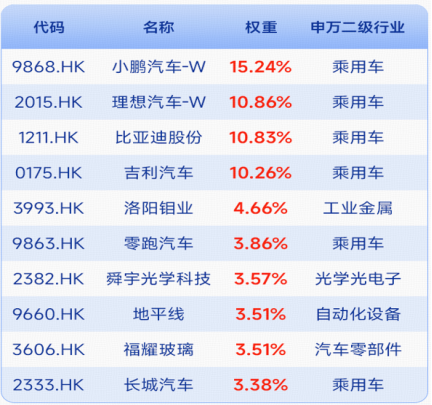
Core Insights - The automotive industry is experiencing significant transformation driven by the rise of "new automotive forces" and "automotive intelligence," which are becoming key topics in society and industry development [1][4] - The launch of the Hong Kong Stock Automotive 50 ETF by Huabao Fund, which tracks the "CSI Hong Kong Stock Connect Automotive Industry Theme Index," aims to provide investors with exposure to high-quality stocks across the entire automotive industry chain, focusing on downstream vehicle manufacturing and applications [1][3] Industry Overview - The automotive sector has become a crucial economic pillar in China, surpassing Japan as the world's largest automobile exporter for two consecutive years by 2024 [3][4] - The integration of AI into the automotive industry is expected to attract a new wave of capital investment, with significant advancements in electric and intelligent vehicle technologies [4][11] ETF Details - The Hong Kong Stock Automotive 50 ETF (subscription code: 520783; listing code: 520780) is designed to focus on leading companies in the automotive sector, particularly in vehicle manufacturing [6][7] - As of September 30, 2025, the top ten holdings of the index include prominent companies such as XPeng Motors, Li Auto, BYD, and Geely, with a combined weight of nearly 70% [6][7] Performance Metrics - The CSI Hong Kong Stock Connect Automotive Industry Theme Index has shown a cumulative increase of 159.99% since its base date, outperforming other industry indices and broad market indices [8][10] - The financial performance of the index constituents reflects strong growth, with a year-on-year revenue growth rate of 23.7% and a net profit growth rate of 35.3% as of mid-2025 [11]

舜宇光学科技 2382.HK
Zhong Guo Zheng Quan Bao - Zhong Zheng Wang· 2025-11-09 23:12
Group 1 - The core viewpoint of the article focuses on the performance and market position of Sunny Optical Technology (Group) Co., Ltd, highlighting its growth and strategic initiatives in the optical components industry [1] Group 2 - The company has reported significant revenue growth, with a year-on-year increase of 25% in the last fiscal year, reaching a total revenue of 10 billion [1] - Sunny Optical has expanded its product offerings, particularly in the smartphone camera lens segment, which has seen a surge in demand due to the increasing popularity of mobile photography [1] - The company is investing heavily in research and development, allocating approximately 15% of its revenue to R&D to maintain its competitive edge and innovate new products [1]

港股科技股调整,蔚来跌超5%,小米跌超3%
2 1 Shi Ji Jing Ji Bao Dao· 2025-11-07 06:29
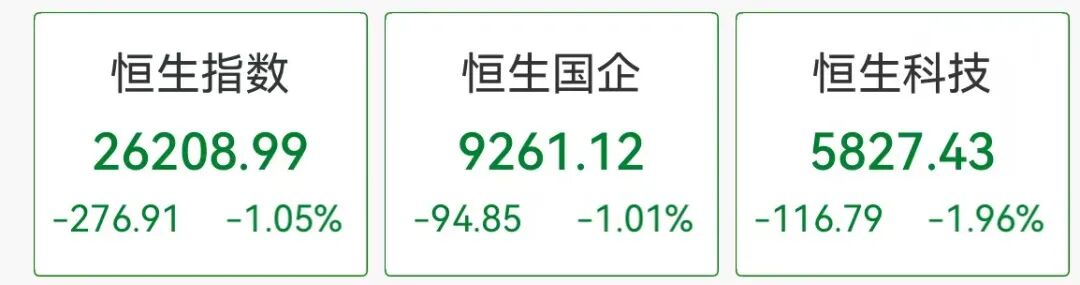
Group 1 - Major technology stocks in Hong Kong experienced a collective downturn, with Kuaishou-W dropping nearly 7% and NIO-SW falling over 5% [2][3] - Other notable declines included Xiaomi Group-W and Alibaba-W, both down over 3%, while Meituan-W, JD Group-SW, and Tencent Holdings fell more than 2% [2][3] - Specific stock performance included Kuaishou-W at 67.600 (-6.82%), NIO-SW at 55.250 (-5.39%), and Alibaba-W at 159.300 (-3.45%) [3][4] Group 2 - The chemical sector showed strong performance in the afternoon, with Caike New Energy rising over 12% and Longpan Technology increasing over 11% [4] - The non-ferrous metals sector continued to strengthen, with Tianqi Lithium (002466) gaining over 5% [4] - Guotou Securities indicated a potential significant style shift in the Hong Kong stock market for Q4, suggesting that low-position growth sectors like Hang Seng Technology may become relatively favorable [4]

利好引爆直线拉升,20%涨停
Zhong Guo Ji Jin Bao· 2025-11-07 05:13
Market Overview - On November 7, A-shares opened lower but rebounded, with the Shanghai Composite Index and Shenzhen Component Index both down by 0.16%, and the ChiNext Index down by 0.37%. In contrast, the North Star 50 Index rose nearly 1% [1][2] - The total market turnover for the half-day was 1.27 trillion yuan, slightly lower than the previous day, with over 2,300 stocks rising [2] Sector Performance - The basic chemical, petroleum and petrochemical, and retail sectors saw gains, while lithium battery, fluorine chemical, phosphorus chemical, and photovoltaic stocks experienced significant surges [2][5] - The fluorine chemical sector rose by 4.00%, while lithium battery-related stocks also saw substantial increases, with individual stocks like Dongyue Silicon Materials and Zhaoyuan New Energy hitting the daily limit [3][5] Notable Stocks - Key stocks in the lithium battery sector included: - Dongyue Silicon Materials: 20.04% increase - Zhaoyuan New Energy: 20.01% increase - Haineng Technology: 19.95% increase [6][10] - In the photovoltaic sector, stocks like Hongyuan Green Energy and Yijing Photovoltaic also saw significant gains, with Hongyuan Green Energy rising by 10.01% [7] Storage Chip Sector - The storage chip sector was active, with stocks like Demingli hitting the daily limit and reaching a new historical high of 271.85 yuan per share [11][12] - The supply-demand situation for storage chips is tight, with SK Hynix completing negotiations for HBM4 supply with Nvidia, leading to price increases [14][15] AI Sector - The AI application sector faced declines, with stocks related to operating systems, servers, and ChatGPT all underperforming. Notable declines included Kingsoft Office and 360, both dropping over 3% [16][17] - Concerns about high valuations in the AI sector have intensified, with discussions around the potential for an "AI bubble" emerging [16]



小鹏汽车涨超4%,近日发布新一代人形机器人IRON,何小鹏再次证明机器人内部没人
Mei Ri Jing Ji Xin Wen· 2025-11-07 01:58
Core Viewpoint - The Hong Kong stock market opened lower on November 7, with the Hang Seng Index down 0.51% at 26,350.74 points, reflecting a general decline in tech stocks and the Apple concept [1] Group 1: Company Developments - XPeng Motors officially launched its humanoid robot, IRON, on November 5, showcasing its walking capabilities and core technologies, with plans for mass production by the end of 2026 [1] - XPeng has assembled over 1,000 team members across 10 R&D teams and 20+ collaborative departments to advance the commercialization of the IRON robot [1] - XPeng's CEO reiterated that the new generation humanoid robot does not contain any human inside, emphasizing its technological advancements [1] Group 2: Market Analysis - Shenwan Hongyuan highlighted that XPeng's IRON robot features a humanoid design and that China's robotics technology is globally leading, which may enhance market confidence in domestic products [2] - The report suggests investors pay attention to XPeng Motors and its supply chain, as well as its strategic partnership in solid-state battery technology [2] Group 3: Related ETFs - The Hong Kong Stock Connect Automotive ETF (159323) focuses on the new energy vehicle sector, including emerging car manufacturers like XPeng, and is expected to benefit from advancements in robotics technology [3] - The Hang Seng Technology Index ETF (513180) includes major Chinese tech assets and offers a way for investors without a Hong Kong Stock Connect account to access leading tech stocks [3]

智通港股通资金流向统计(T+2)|11月7日
智通财经网· 2025-11-06 23:34
Key Points - The top three companies with net inflows of southbound funds are China National Offshore Oil Corporation (CNOOC), Xiaomi Group, and Southern Hang Seng Technology, with net inflows of 1.045 billion, 0.998 billion, and 0.766 billion respectively [1] - The top three companies with net outflows of southbound funds are Alibaba Group, Sunny Optical Technology, and Luoyang Molybdenum, with net outflows of -0.873 billion, -0.339 billion, and -0.254 billion respectively [1] - In terms of net inflow ratio, Qingdao Bank, Dasheng Holdings, and Shougang Resources lead the market with ratios of 86.77%, 70.86%, and 63.91% respectively [1] - The companies with the highest net outflow ratios are Pacific Basin Shipping, Yimaitong, and Sichuan Chengyu Expressway, with ratios of -54.77%, -46.94%, and -37.64% respectively [1] Net Inflow Rankings - The top ten companies by net inflow include CNOOC (1.045 billion), Xiaomi Group (0.998 billion), and Southern Hang Seng Technology (0.766 billion) [2] - Other notable companies in the net inflow list are China Mobile (0.752 billion), Industrial and Commercial Bank of China (0.531 billion), and China Petroleum (0.431 billion) [2] Net Outflow Rankings - The top ten companies by net outflow include Alibaba Group (-0.873 billion), Sunny Optical Technology (-0.339 billion), and Luoyang Molybdenum (-0.254 billion) [2] - Other significant companies with net outflows are SMIC (-0.240 billion), Jiangxi Copper (-0.220 billion), and Bilibili (-0.200 billion) [2] Net Inflow Ratio Rankings - The top three companies by net inflow ratio are Qingdao Bank (86.77%), Dasheng Holdings (70.86%), and Shougang Resources (63.91%) [2][3] - Other companies with high net inflow ratios include Wanwuyun (61.22%) and Prudential (60.12%) [3] Net Outflow Ratio Rankings - The top three companies by net outflow ratio are Pacific Basin Shipping (-54.77%), Yimaitong (-46.94%), and Sichuan Chengyu Expressway (-37.64%) [3] - Other companies with significant net outflow ratios include Yancoal Australia (-34.65%) and Lens Technology (-33.16%) [3]



港股芯片产业链爆发 中芯国际华虹半导体携手涨超5%!港股信息技术ETF(159131)即将上市...
Xin Lang Cai Jing· 2025-11-06 06:33
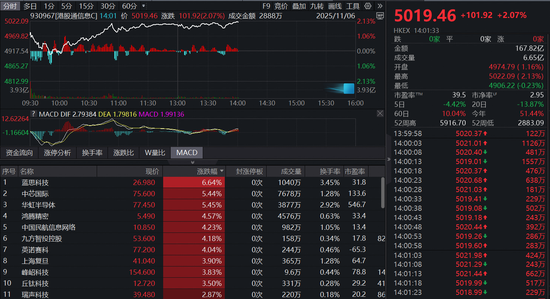
Group 1 - The core viewpoint of the article highlights the strong performance of the Hong Kong semiconductor industry, particularly the launch of the first Hong Kong ETF focused on the semiconductor sector, which has seen significant gains in its constituent stocks [1][2][3]. Group 2 - The Hong Kong Information Technology ETF (159131) has been established, tracking the Hong Kong Stock Connect Information C index, and supports T+0 trading, making it a unique investment opportunity in the semiconductor industry [2][3]. - The ETF's index is composed of 70% hardware and 30% software, focusing on semiconductor, electronics, and computer software sectors, with major holdings including SMIC (19% weight) and Xiaomi (10.28% weight) [3][4]. - The top ten constituents of the index include companies like SMIC, Xiaomi, and SenseTime, with weights ranging from 19.41% to 2.75%, indicating a concentrated investment in high-tech sectors [4][5].

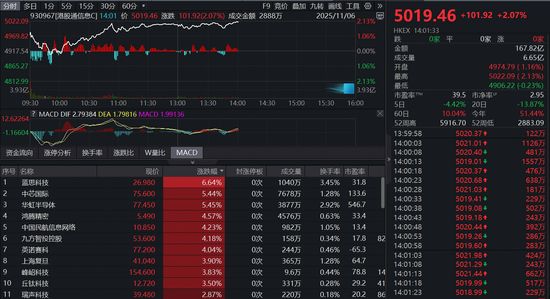
港股芯片产业链爆发 中芯国际华虹半导体携手涨超5%!港股信息技术ETF(159131)即将上市!标的指数盘中涨超2%
Xin Lang Ji Jin· 2025-11-06 06:24
Core Viewpoint - The Hong Kong semiconductor market is experiencing a significant surge, with the first ETF focused on the Hong Kong semiconductor industry showing strong performance, particularly in the technology sector [1][2]. Group 1: ETF Performance - The Hong Kong Information Technology ETF (159131) has seen an increase of over 2% during trading, with notable gains in constituent stocks such as Lens Technology, which rose over 6%, and SMIC and Huahong Semiconductor, both increasing over 5% [1][2]. - The ETF is the first in the market to track the Hong Kong Stock Connect Information C index, supporting T+0 trading, making it a unique investment vehicle for the semiconductor industry [2][3]. Group 2: ETF Composition - The ETF's index is composed of 70% hardware and 30% software, focusing on semiconductor, electronics, and computer software sectors, including 41 Hong Kong hard-tech companies [3][4]. - Major holdings include SMIC with a weight of 19%, Xiaomi Group at 10.28%, and Huahong Semiconductor at 5.11%, excluding large-cap internet companies like Alibaba and Tencent, thus providing a sharper focus on AI hard-tech trends [3][4]. Group 3: Index Characteristics - The index has a single sample weight cap of 15%, with adjustments made every six months based on market fluctuations, which may lead to individual stock weights exceeding this limit [5].