特宝生物

Search documents
医疗健康ETF泰康(159760)涨超1.3%冲击7连涨,“反内卷”政策明确,医药行业集采价格有望逐步改善
Xin Lang Cai Jing· 2025-07-30 05:58
Group 1 - The medical health ETF Taikang (159760) has seen a 1.36% increase, marking its seventh consecutive rise, with a trading volume of 6.12% and a transaction value of 5.4675 million yuan, closing at 0.67 yuan [1] - The National Index for Public Health and Medical Health (980016) has risen by 1.42%, with significant gains in constituent stocks such as Teva Biopharmaceuticals (688278) up 10.99%, China Resources Double Crane (600062) up 7.97%, and Kelun Pharmaceutical (002422) up 5.93% [1] - Over the past week, the medical health ETF Taikang has accumulated a 6.08% increase, with its latest scale reaching 88.3645 million yuan, a three-month high [1] Group 2 - The National Healthcare Security Administration (NHSA) has initiated the 11th batch of centralized procurement, emphasizing principles of "stabilizing clinical practices, ensuring quality, preventing collusion, and countering internal competition" [2] - The NHSA has optimized procurement rules, moving away from a simple lowest price reference, which is expected to gradually improve drug prices in the pharmaceutical industry [2] - The NHSA's measures are anticipated to enhance the profitability of pharmaceutical companies as drug price competition returns to a healthier state [2] Group 3 - As of June 30, 2025, the top ten weighted stocks in the National Index for Public Health and Medical Health (980016) include WuXi AppTec (603259), Hengrui Medicine (600276), Mindray Medical (300760), and others, collectively accounting for 51.67% of the index [3]
今日44只个股突破半年线
Zheng Quan Shi Bao Wang· 2025-07-29 04:13
Market Overview - The Shanghai Composite Index closed at 3595.19 points, slightly down by 0.08%, and remains above the six-month moving average [1] - The total trading volume of A-shares reached 1,145.862 billion yuan [1] Stocks Performance - A total of 44 A-shares have surpassed the six-month moving average today, with notable stocks showing significant deviation rates [1] - The stocks with the highest deviation rates include: - Hexin Instrument (17.10%) - Dekeli (16.12%) - Lais Information (7.54%) [1] - Stocks with smaller deviation rates that have just crossed the six-month moving average include: - Junda Co., Ltd. - Taihe Intelligent - Aikodi [1] Notable Stocks - Hexin Instrument (688622) saw a price increase of 20.00% with a turnover rate of 3.28% [1] - Dekeli (688205) increased by 17.49% with a turnover rate of 23.70% [1] - Lais Information (688631) rose by 7.96% with a turnover rate of 7.58% [1] - Other notable stocks include: - Xinganjiang (873167) up by 13.11% - Anpeilong (301413) up by 10.81% [1] Additional Stocks with Positive Movement - Other stocks with positive movement include: - Haiziwang (301078) up by 4.48% - Naxinwei (688052) up by 7.92% - Tianzhun Technology (688003) up by 4.52% [1]




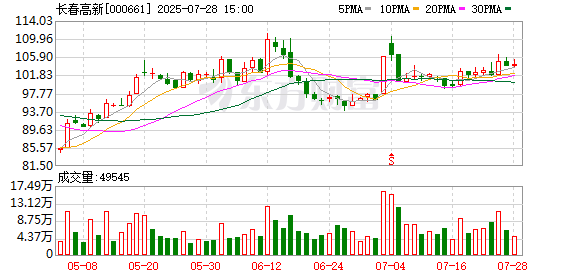
长春高新1700亿元市值蒸发 集采、人口、竞品冲击如何击溃生长激素神话|创新药观察
Hua Xia Shi Bao· 2025-07-28 14:41
Core Viewpoint - Changchun High-tech has experienced a significant decline in stock price and market value, reflecting the challenges faced by the Chinese pharmaceutical industry as it transitions from a reliance on "miracle drugs" to a focus on innovation [2] Financial Performance - In 2024, Changchun High-tech reported its first revenue decline in nearly 20 years, with revenue of 13.466 billion yuan, a year-on-year decrease of 7.55%, and net profit of 2.708 billion yuan, down 43.01% [3] - The company's performance continued to deteriorate in Q1 2025, with net profit of 469 million yuan, a year-on-year decline of 47.36% [4] - From 2020 to 2023, the company saw revenue grow from 8.577 billion yuan to 14.566 billion yuan, and net profit increase from 3.308 billion yuan to 4.776 billion yuan, but 2024 marked a turning point with revenue dropping to 13.466 billion yuan and net profit plummeting to 2.583 billion yuan [5] Factors Affecting Performance - The decline in performance is attributed to three main factors: centralized procurement policies, a decrease in birth rates, and price wars with competitors [6] - Centralized procurement significantly impacted the company's main product, growth hormone, which saw prices drop from approximately 1,000 yuan to 300 yuan, a reduction of 70%, leading to a 40.67% profit drop for its subsidiary, Jinsai Pharmaceutical [6] - The decline in birth rates has reduced the potential market for growth hormone, with newborn numbers dropping from 17.23 million in 2017 to 9.02 million in 2023 [7] - Increased competition in the long-acting growth hormone market has led to price wars, further squeezing profit margins [7] Sales and Expenses - In response to market challenges, the company increased its sales team by 58% in 2024, raising the number of sales personnel from 3,155 to 4,995, resulting in an 11.8% increase in sales expenses to 4.439 billion yuan [7][10] - Despite the increase in sales personnel, average salaries for sales staff decreased by approximately 15,000 yuan, reflecting higher work intensity as evidenced by significant increases in travel and entertainment expenses [10] Vaccine Business Challenges - Changchun High-tech's subsidiary, Baike Biotechnology, faced severe challenges, with 2024 revenue dropping to 1.229 billion yuan, a year-on-year decline of 32.64%, and net profit halving to 232 million yuan [11] - The decline in vaccine sales was attributed to reduced public willingness to get vaccinated and decreased market demand, with sales volume for its shingles vaccine dropping by 69.8% [11] - The company's vaccine product, "Ganwei," has a lower efficacy rate compared to international competitors, further impacting its market position [11] Innovation and Future Outlook - The company is attempting to explore new growth avenues through its innovation pipeline, but faces challenges with only 24 key products in clinical stages compared to over 300 by competitors [12] - Key projects have experienced delays, with the completion date for a significant product pushed back from June 30, 2025, to June 30, 2026 [12] - Early-stage products are expected to take 5-8 years to commercialize, indicating a long road ahead for the company to regain market competitiveness [13]


2025系列研究框架培训 - 创新药行业框架
2025-07-25 00:52
Summary of Conference Call on the Innovative Drug Industry Industry Overview - The conference call focuses on the **innovative drug industry** in China, highlighting its growth potential and market dynamics [1][3][4]. Key Points and Arguments 1. **Market Sentiment and Stock Performance**: The market's anticipation of domestic innovative drug data has increased, with stock price corrections observed during the ASCO conference, indicating a demand for exceeding expectations [1][4]. 2. **Valuation Influences**: The macroeconomic environment significantly impacts the valuation of the innovative drug sector. High interest rates restrict valuations, while low rates enhance performance. Government policies in China support the sector, but overseas markets are crucial for growth [1][5][6]. 3. **Company Classification**: Innovative companies are categorized into **Big Pharma/Hybrid** and **Biopharma/Biotech**. Big Pharma has stable income and lower risk, while Biopharma/Biotech focuses on innovation and faces higher initial risks but has improved success rates in later clinical stages [1][7]. 4. **Impact of Policy Changes**: The collection policy in China has prompted traditional pharmaceutical companies to transform, with firms like HengRui and Hansoh achieving success in innovation, leading to valuation increases [1][8]. 5. **Investment Focus**: Investors should prioritize "differentiated innovation" and "true innovation" that significantly address unmet needs and open future market opportunities, rather than merely seeking first-in-class products [3][19]. 6. **Clinical Development Stages**: The drug development process involves five critical stages, each capable of significantly enhancing company valuation as products progress from preliminary data validation to market sales [3][10][11]. 7. **Macroeconomic Trends**: Historical data shows that the performance of innovative drug indices correlates with macroeconomic conditions, with a notable trend of increasing valuations during low-interest periods [5][6]. 8. **Emerging Technologies**: Future directions in tumor treatment include **dual antibodies** and **ADC (antibody-drug conjugates)**, with China holding a significant share of global R&D pipelines in these areas [25][41]. Additional Important Insights 1. **International Market Potential**: The potential for innovative products to enter international markets is a key driver for valuation increases, particularly as companies achieve clinical trial success abroad [9][39]. 2. **R&D Efficiency**: Chinese pharmaceutical companies exhibit higher R&D efficiency and lower costs, allowing them to attract multinational companies for pipeline acquisitions [24]. 3. **Commercialization Factors**: Despite a current focus on R&D, commercialization remains critical, with companies needing to differentiate their products to capture market share effectively [26][27]. 4. **Investment Considerations**: When selecting emerging pharmaceutical companies for investment, factors such as product capability, speed of advancement, competitive landscape, and international collaboration should be evaluated [20][21]. 5. **Profitability Trends**: Chinese innovative companies are beginning to show improved profitability, with some achieving net profit margins exceeding 40%, indicating a maturation of their business models [31]. This summary encapsulates the essential insights from the conference call regarding the innovative drug industry, emphasizing its growth potential, market dynamics, and investment considerations.

昔日“生长激素之王”跌落神坛,长春高新赴港上市能否破局?
Xin Lang Zheng Quan· 2025-07-23 07:49
Core Viewpoint - Changchun High-tech is facing significant challenges with its financial performance, experiencing its first dual decline in revenue and net profit in nearly a decade, raising concerns about its future growth prospects [1]. Group 1: Financial Performance - In 2024, the company reported revenue of 13.466 billion yuan and a net profit of 2.584 billion yuan, representing year-on-year declines of 7.55% and 43.01% respectively [1]. - The net profit for the first quarter of 2025 further decreased by 44.95% year-on-year, indicating ongoing financial struggles [1]. Group 2: Core Business Challenges - The core business, Jin Sai Pharmaceutical's growth hormone, which contributed over 80% of profits, faced a drastic price drop due to centralized procurement, with prices in the Zhejiang market plummeting from 1,000 yuan to 300 yuan, a 70% decrease, leading to a 40.67% drop in net profit to 2.678 billion yuan [2]. - The entry of competitors like Teva and Novo Nordisk has intensified market competition, undermining the company's previous market dominance [2]. Group 3: Strategic Failures - The vaccine business suffered significantly, with the subsidiary Baike Bio's revenue and net profit both halving in 2024, and the first quarter of 2025 net profit dropping to only 106,000 yuan, a 98% year-on-year decline [3]. - The company's attempt to divest its real estate business for 2.42 billion yuan failed due to unsuccessful convertible bond issuance, which continues to hinder its focus on the pharmaceutical sector [3]. - Despite a 38.8% increase in net profit for Huakang Pharmaceutical, the total profit for the first quarter was only 12 million yuan, insufficient to offset overall losses [3]. Group 4: Operational Discrepancies - In 2024, the sales team increased by 58% to 4,995 personnel, with sales expenses rising to 4.439 billion yuan, contrasting sharply with a reduction of 65 research personnel and a research investment of 2.69 billion yuan [4]. - This shift towards a "sales-heavy" strategy contradicts the company's stated goal of enhancing innovation [4]. Group 5: Future Outlook - In response to its challenges, the company is pursuing a Hong Kong IPO and aims to expand international partnerships, with overseas revenue reported at only 130 million yuan in 2024 [5]. - There are doubts about whether investors in Hong Kong will support this "breakout plan" given the company's declining growth and intense competition in the domestic market [5]. - The situation highlights the risks associated with reliance on a single blockbuster product, suggesting that without restructuring its product matrix and improving innovation efficiency, the company may face severe challenges in the capital market [5].
这个行业迎来“DeepSeek时刻”,中国女富豪撑起半边天
3 6 Ke· 2025-07-21 11:48
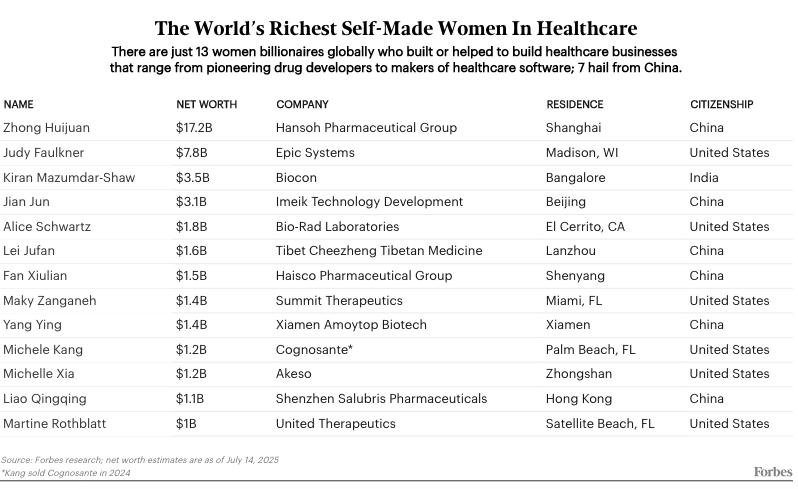
Core Insights - The article highlights that only 13 women globally have become billionaires by founding healthcare companies, with 7 of them from China, indicating a significant presence of Chinese female entrepreneurs in the healthcare sector [1][3]. Industry Overview - The Chinese biopharmaceutical industry is experiencing a transformative phase, referred to as the "DeepSeek moment," as it evolves from being a "generic drug powerhouse" to a competitive force against Western innovation in pharmaceuticals [2]. - In 2024, over 1,250 new drug candidates are expected to enter the research and development phase in China, surpassing the European Union and nearly matching the United States' 1,440 candidates [2]. - Nearly one-third of the drug candidates licensed by large pharmaceutical companies in 2024 are from Chinese firms, a significant increase from zero in 2019 [3]. Company Highlights - **Hansoh Pharmaceutical Group**: Founded by Zhong Huijuan, the company reported a total revenue of approximately 12.26 billion yuan in 2024, with a year-on-year growth of about 21.3% [7]. - **Aimeike**: Founded by Jian Jun, the company specializes in hyaluronic acid production and was listed on the A-share market in 2020, achieving a market value exceeding 170 billion yuan [10]. - **Qizheng Tibetan Medicine**: Founded by Lei Jufang, the company generated sales revenue of 1.655 billion yuan in 2024, with a year-on-year growth of 16.31% [14]. - **Haisco Pharmaceutical Group**: Co-founded by Fan Xiulian, the company reported a revenue of 3.721 billion yuan in 2024, with a year-on-year increase of 10.92% [17]. - **Teva Biopharmaceuticals**: Founded by Yang Ying, the company has shown rapid growth, with revenues increasing from 1.527 billion yuan in 2022 to 2.817 billion yuan in 2024 [18]. - **Kangfang Biopharmaceutical**: Founded by Xia Yu, the company has developed several innovative drugs and is recognized for its leading position in the biopharmaceutical sector [23]. - **Xinlitai**: Co-founded by Liao Qingqing, the company has shifted focus to self-research and development, achieving a revenue of 4.012 billion yuan in 2024, with a year-on-year growth of 19.22% [26].

宏利红利先锋混合A:2025年第二季度利润94.2万元 净值增长率1.98%
Sou Hu Cai Jing· 2025-07-21 10:01
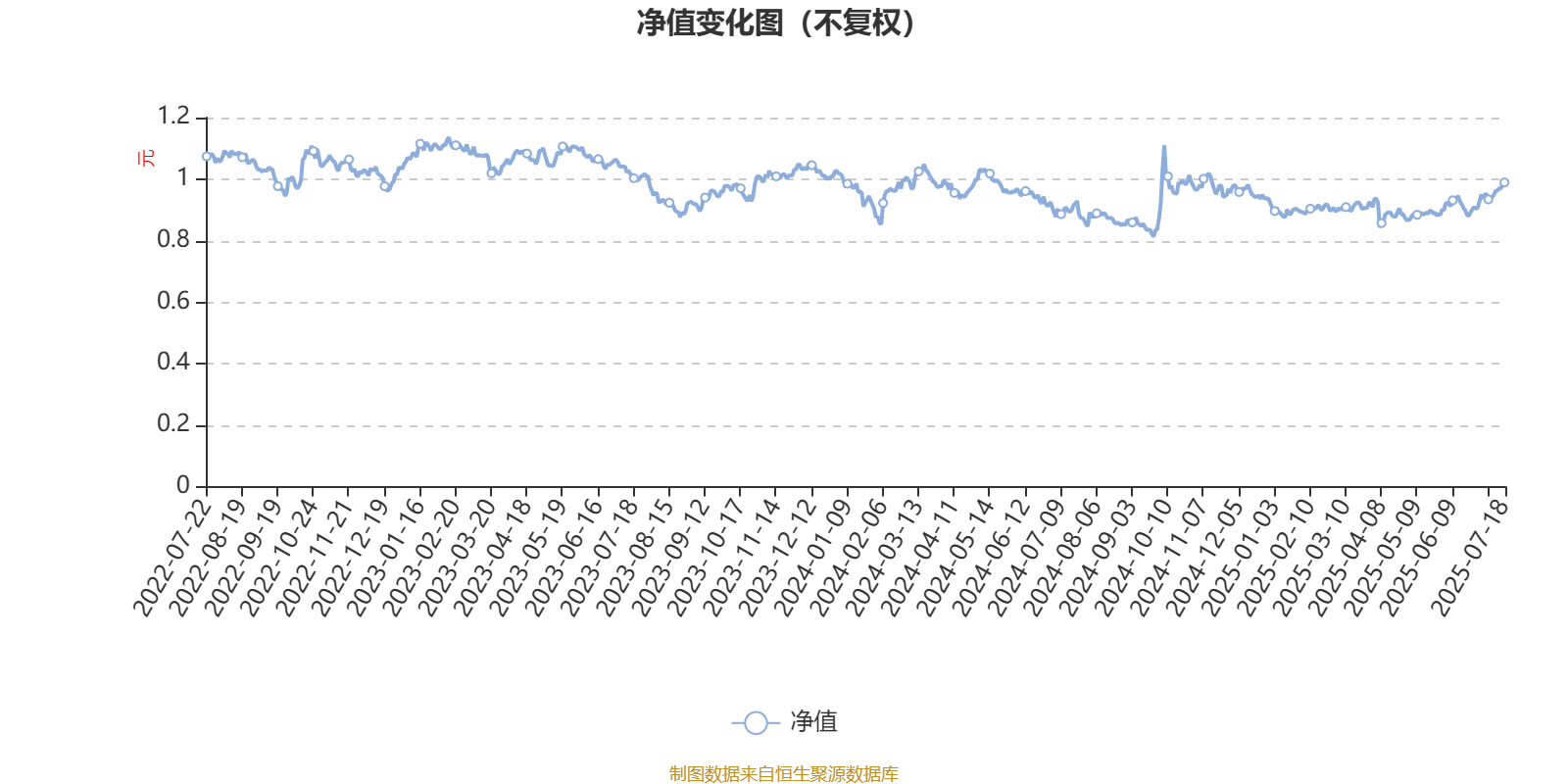
Core Viewpoint - The AI Fund Manulife Dividend Pioneer Mixed A (162212) reported a profit of 942,000 yuan for Q2 2025, with a weighted average profit per fund share of 0.0171 yuan, and a net value growth rate of 1.98% during the reporting period [3][17]. Fund Performance - As of July 18, the fund's unit net value was 0.989 yuan, with a one-year cumulative growth rate of 8.09%, ranking 127 out of 133 comparable funds [3][4]. - The fund's three-month cumulative growth rate was 12.64%, ranking 119 out of 138 comparable funds, and the six-month growth rate was 10.13%, ranking 132 out of 138 [4]. Investment Strategy - The fund focuses on long-term investments in pharmaceutical and medical stocks, targeting companies with sustainable dividend capabilities and strong fundamentals [3]. - As of Q2 2025, the fund's main investments were concentrated in sectors such as in-hospital medical devices, equipment and consumables, in-hospital pharmaceuticals, and medical consumer products [3]. Risk Metrics - The fund's three-year Sharpe ratio was -0.0246, ranking 61 out of 105 comparable funds [10]. - The maximum drawdown over the past three years was 27.61%, with the largest single-quarter drawdown occurring in Q1 2022 at 21.42% [12]. Fund Composition - As of Q2 2025, the fund's total assets amounted to 50.68 million yuan [17]. - The top ten holdings included companies such as Aohua Endoscopy, Huatai Medical, and Heng Rui Medicine [19]. Portfolio Management - The fund has maintained a high average stock position of 92.95% over the past three years, compared to a comparable average of 86.95% [15].
医疗创新ETF(159718.SZ)盘初走低,国家医保局召开医保支持创新药械系列座谈会近日召开
Xin Lang Cai Jing· 2025-07-21 02:23
华创医药团队重点看好的五大投资方向:一是创新药,看好优质滞涨及有明确低估、催化事件(如出 海、数据读出)的公司;二是创新产业链,随创新药发展将强劲增长;三是原料药,处于产业周期见 底、价格触底、产能利用率回升阶段;四是医疗设备,三季度多家公司同比环比增速回升,明年值得期 待;五是有竞争力的中药品种及转型创新药的中药品种。 医疗创新ETF 凭借紧密跟踪中证医药及医疗器械创新指数、低费率、高透明度及一键覆盖龙头的特 性,近3个月涨幅7.46%,近一年收益达18.38%,显著跑赢行业基准,是布局医药核心资产的利器。 展望未来,预计我国医疗卫生支出的总盘子仍将实现稳定的可持续增长。在行业稳步扩容下,寻找快于 行业平均增速的细分领域,将成为超额投资收益的核心来源,创新、消费升级、高端制造将是核心关键 词。长期来看,创新是医药行业永恒的主题、长期上行的驱动力,可借道医疗创新ETF(516820)把握优 质龙头错杀机会。 医疗创新ETF(516820)下跌1.08%,特宝生物(688278)领涨1.59%,惠泰医疗(688617)上涨1.04%,新产业 (300832)上涨0.24%;百利天恒(688506)领跌4.36% ...
16只科创板股今日大宗交易平台发生交易
Zheng Quan Shi Bao Wang· 2025-07-18 12:29
Summary of Key Points Core Viewpoint - On July 18, a total of 16 stocks on the Sci-Tech Innovation Board (STAR Market) experienced block trading, with a cumulative transaction amount of 171 million yuan, indicating active trading activity in this sector [1]. Group 1: Trading Activity - A total of 31 block trades were recorded, with a cumulative trading volume of 4.8367 million shares [1]. - The stock with the highest transaction amount was Haitan Ruisheng, which had 9 block trades totaling 38.30 million shares and a transaction amount of 38.30 million yuan [1]. - Other notable stocks in terms of transaction amounts included Guangyun Technology and Fuchuang Precision, with transaction amounts of 24.9162 million yuan and 20.9360 million yuan, respectively [1]. Group 2: Price and Discount Analysis - The stocks that experienced the highest discount rates relative to their closing prices included Qingyun Technology, Weixin Bio, and Guangyun Technology, with discount rates of 19.48%, 17.25%, and 14.95%, respectively [1]. - The average increase for the stocks involved in block trading was 2.55%, with the top gainers being Dema Technology, Qingyun Technology, and Huasheng Lithium, which saw increases of 14.74%, 7.90%, and 7.22% respectively [1]. Group 3: Institutional Participation - Among the block trades, 12 transactions involved institutional buyers or sellers, with the highest buying amounts for Haitan Ruisheng, Guangyun Technology, and Qingyun Technology, at 27.70 million yuan, 11.2276 million yuan, and 7.579 million yuan, respectively [2]. - In terms of net capital flow, six stocks saw net inflows, with Dema Technology, Huasheng Lithium, and Qingyun Technology leading with net inflows of 51.1035 million yuan, 33.284 million yuan, and 32.1246 million yuan, respectively [2].


创新药行情强势上涨,投资布局港股+A股两手抓!
Xin Lang Ji Jin· 2025-07-17 08:00
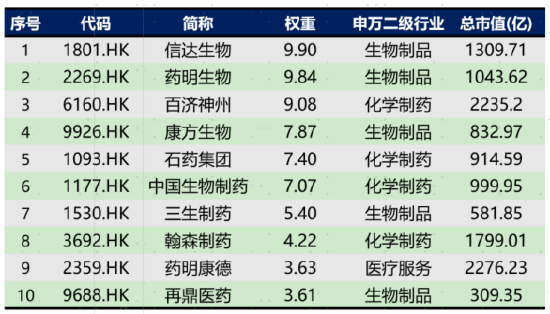
Group 1 - The core viewpoint of the articles emphasizes that the innovative drug sector in China is experiencing a transformation driven by international recognition, policy support, and market dynamics, leading to a potential revaluation cycle [1][5][9] - The total value of license-out transactions for Chinese innovative drugs exceeded $50 billion in 2023, with multiple drugs receiving FDA approval, indicating growing global market acceptance [1][5] - The Hong Kong stock market has become a preferred listing venue for Chinese innovative drug companies due to its international financing environment and flexible listing regulations, hosting numerous leading firms in cutting-edge fields such as oncology and gene therapy [1][5] Group 2 - The newly launched Hong Kong Stock Connect Innovative Drug ETF by Harvest Fund aims to provide investors with a one-click solution to invest in core assets of innovative drugs, tracking the CSI Hong Kong Stock Connect Innovative Drug Index [2][9] - The CSI Hong Kong Stock Connect Innovative Drug Index includes 50 companies involved in innovative drug research and development, with the top ten companies accounting for over 60% of the index's weight, showcasing significant representativeness [2][3] - As of July 15, 2025, the index has shown impressive performance, with a one-year increase of 109.13% and a year-to-date increase of 66.23%, outperforming similar indices and the broader market [4][5] Group 3 - The A-share Sci-Tech Innovation Board complements the Hong Kong market by attracting innovative drug companies with independent intellectual property, providing a financing channel for high-growth biotech firms [6][9] - The newly established Sci-Tech Medicine ETF by Harvest Fund tracks the Shanghai Stock Exchange Sci-Tech Innovation Board Biomedicine Index, covering various segments including innovative drugs and vaccines [6][9] - The combination of the Hong Kong and A-share markets creates a comprehensive investment strategy for Chinese innovative drugs, allowing investors to capture opportunities across the entire industry chain [9][10] Group 4 - The dual-market strategy of investing in both Hong Kong and A-share markets allows for a diversified approach, with the Hong Kong ETF focusing on mature innovative drug companies and the A-share ETF targeting early-stage firms with high growth potential [10][11] - This strategy aims to mitigate risks associated with market volatility while maximizing long-term investment value in the innovative drug sector [10][11] - Harvest Fund has developed a comprehensive ETF product line in the biopharmaceutical sector, including various thematic products to capture key industry opportunities [11]