LG

Search documents
换美关税减免?韩媒:韩政府拟将超千亿美元韩企对美投资当作经贸谈判筹码
Huan Qiu Shi Bao· 2025-07-24 23:04
Group 1 - The South Korean government plans to use a more than $100 billion investment plan by Korean companies in the U.S. as leverage in trade negotiations, with potential for further increases in investment amounts [1] - The investment commitments from major companies such as Samsung, SK, Hyundai, and LG have already reached over $100 billion, and this figure may rise if the government employs policy financing methods [1] - Japan's recent agreement with the U.S. to lower tariffs has put pressure on South Korea, which may face a loss of competitiveness in the global automotive market if a similar agreement is not reached [1] Group 2 - U.S. President Trump stated that he will not set the "reciprocal tariff" rate below 15% before the August 1 deadline, indicating a range of tariffs between 15% and 50% [2]
杭州,又将诞生一个明星IPO
投中网· 2025-07-23 06:15
Core Viewpoint - The article highlights the rapid growth and upcoming IPO of ChipMight Semiconductor, a prominent player in the power semiconductor industry, showcasing its partnerships and significant financial backing from various investors [4][8]. Company Overview - ChipMight Semiconductor was founded in September 2019 in Hangzhou and became a unicorn within a year. It has established partnerships with major companies like Samsung, LG, Google, and Xiaomi, delivering over 500 million power devices [4][8]. - The company has achieved remarkable growth, with its power management IC products projected to sell over 400 million units in 2024 [4][10]. Financial Backing and Growth - The company has received substantial investment, raising over 3.5 billion yuan (approximately 500 million USD) from notable investors including Sequoia China and Hillhouse Capital, which contributed to its unicorn status [5][6]. - ChipMight completed a full acquisition of the Korean company SMI for 2.386 billion yuan (approximately 340 million USD), enhancing its market reach and operational capabilities [6]. Product Development and Market Position - The company has invested nearly 1 billion yuan (approximately 140 million USD) in R&D since 2022, resulting in over 150 authorized patents and 159 pending patent applications [10]. - Despite its growth, the company has faced declining revenue and gross margins, with revenue dropping from 1.688 billion yuan (approximately 240 million USD) in 2022 to 1.574 billion yuan (approximately 220 million USD) in 2024, and gross margin decreasing from 37.4% to 29.4% during the same period [11]. Industry Trends - A wave of semiconductor companies, including ChipMight, is pursuing IPOs, with many aiming for global market expansion. The article notes that favorable policies from the China Securities Regulatory Commission and the Hong Kong Stock Exchange are facilitating these listings [12][14]. - The competition in the semiconductor market is intensifying, with companies like Yiswei Computing and Moer Thread also preparing for IPOs, indicating a significant shift in the industry landscape [13][14].


国际产业新闻早知道:美国与多国达成贸易协议,欧盟发布通用人工智能模型提供商指南
Chan Ye Xin Xi Wang· 2025-07-23 05:12
Group 1: G20 and International Cooperation - G20 finance ministers and central bank governors committed to strengthening international policy cooperation despite rising tensions from trade wars [4][5] - The G20 public statement highlighted increasing global economic uncertainty and complex challenges, including ongoing wars, geopolitical tensions, and trade frictions [6][8] - Emphasis was placed on the importance of multilateral cooperation to address current and emerging global economic risks [7][8] Group 2: China and EU Sanctions - China's Ministry of Commerce expressed strong opposition to the EU's 18th round of sanctions against Russia, which included Chinese companies and financial institutions [9][10] - The Chinese government criticized the EU's unilateral sanctions as lacking international legal basis and urged the EU to cease such actions [10] Group 3: US-Japan Trade Agreement - President Trump announced a significant trade agreement with Japan, establishing a 15% tariff rate on Japanese imports and a $550 billion investment from Japan into the US [11][12] - The agreement is expected to create hundreds of thousands of jobs in the US and open Japanese markets for various products [13][14] Group 4: Artificial Intelligence Developments - The EU released guidelines for general AI model providers to comply with the upcoming AI Act, defining general AI models and their obligations [21][22] - The UK announced a £1 billion investment to enhance computing infrastructure for AI development, aiming to increase public computing power by 20 times over five years [23][24] - OpenAI signed a $300 billion contract with Oracle for data center services, significantly boosting Oracle's revenue potential [26][28] Group 5: Semiconductor Industry Updates - TSMC's advanced packaging plant faced multiple safety incidents, leading to a work stoppage [57][58] - South Korean AI chip startup FuriosaAI secured a significant contract with LG for its AI chip, RNGD, to support LG's AI initiatives [62][63] - A new semiconductor production line in Shaanxi, China, is set to begin trial production in September, with a total investment of 4.5 billion yuan [69][70] Group 6: Automotive Industry News - BYD postponed the mass production of its new factory in Hungary to 2026, while its Turkish factory is expected to start production earlier [88] - Stellantis plans to launch electric vehicles in South Africa, starting with the Leapmotor C10 model [89][90] Group 7: Aerospace and Space Exploration - The European Space Agency is working on the "Invictus" hypersonic spaceplane project, aiming for its first flight by 2031 [99][101] - SpaceX successfully launched two high-performance internet satellites and achieved a successful sea recovery of its Falcon 9 rocket [106][108]

两颗AI芯片,重要进展
半导体行业观察· 2025-07-23 00:53
Core Viewpoint - The article discusses the advancements in AI chip technology, highlighting the launch of Hailo-10H by Hailo Technologies and the adoption of RNGD by FuriosaAI for LG's AI models, emphasizing their efficiency and performance in edge computing and AI applications [3][6]. Group 1: Hailo Technologies and Hailo-10H - Hailo Technologies launched its second-generation AI accelerator, Hailo-10H, which supports generative AI capabilities without relying on cloud connectivity [3][4]. - The Hailo-10H chip is designed for edge environments with a typical power consumption of only 2.5 watts, making it suitable for various applications from personal devices to automotive systems [4][5]. - The chip allows developers to run advanced visual and generative AI models directly on edge devices, enabling ultra-low latency real-time responses [4][5]. Group 2: FuriosaAI and RNGD - FuriosaAI secured a significant client in LG, which is utilizing its RNGD inference accelerator for powering servers running the Exaone series of large language models [6][7]. - The RNGD chip, while not the most powerful compared to AMD and Nvidia GPUs, operates at a power efficiency of only 180 watts, achieving up to 2.25 times the energy efficiency of LLM inference GPUs [8][9]. - LG's AI research department found RNGD to be an effective solution for deploying Exaone models, with specific performance targets set during testing [11][16]. Group 3: Performance and Efficiency - RNGD's performance is approximately 1.4 TeraFLOPS per watt, making it competitive in terms of efficiency, especially for inference tasks [10][17]. - The chip's memory bandwidth of 1.5TB/s is crucial for LLM inference, allowing for faster token generation [10][11]. - FuriosaAI's architecture is designed to minimize data movement and maximize efficiency, which is a significant advantage over traditional GPU architectures [9][10]. Group 4: Market Position and Future Outlook - FuriosaAI faces challenges in competing with Nvidia and AMD, which offer higher performance and efficiency, but the company is confident in its architecture's scalability [17][18]. - The demand for autonomous AI models and infrastructure is growing, positioning FuriosaAI favorably in the market despite the competition [16][18]. - The company plans to expand its architecture to compete with the latest GPU technologies, leveraging its established design and software stack [18].

企业出海第一课:2天1夜实战集训,避免出海“交学费”
吴晓波频道· 2025-07-22 15:39
Core Insights - The article emphasizes that the wave of Chinese companies going abroad has become a necessity for survival and development, driven by globalization and the need to find new growth opportunities [2][3]. Group 1: Current Trends and Statistics - In 2022, China's non-financial direct investment abroad reached $143.85 billion, a year-on-year increase of 10.5% [1]. - By the first half of 2025, private enterprises' import and export volume reached 12.48 trillion yuan, a year-on-year growth of 7.3%, accounting for 57.3% of China's total foreign trade, an increase of 2.3 percentage points from the previous year [1]. Group 2: Challenges Faced by Companies - Many Chinese companies face significant challenges when expanding overseas, such as unstable labor, low logistics efficiency, and increased costs, leading to customer loss and financial difficulties [3][4]. - The success rate of Chinese companies going abroad is less than 20%, with even large corporations taking 3 to 5 years to reach breakeven [8]. Group 3: Strategies for Successful Overseas Expansion - Companies are advised to adopt a "small cost, low risk" approach to minimize potential losses and validate their overseas business models quickly [17][18]. - Key decision points for successful overseas expansion include country selection, compliance with local regulations, organizational management, and marketing strategies tailored to local markets [20][21][25][30]. Group 4: Educational Initiatives - The article introduces the "First Class for Enterprises Going Abroad," which consists of four modules aimed at helping entrepreneurs navigate the challenges of international expansion [33]. - The modules cover country selection, compliance, organizational management, and marketing strategies, providing practical tools and insights to avoid common pitfalls [34][35][36][37].
“英伟达挑战者”FuriosaAI赢得首位大客户LG
Hua Er Jie Jian Wen· 2025-07-22 06:52
Core Insights - FuriosaAI, a South Korean AI chip startup, has achieved a significant commercial breakthrough by securing its first major client, LG AI Research, validating its technology and market potential [1][2] - The company rejected an $800 million acquisition offer from Meta, opting to remain independent and focus on growth [2] Group 1: Company Developments - FuriosaAI's RNGD chip will power LG's Exaone large language model, marking an important market validation for the startup [1] - The CEO of FuriosaAI, June Paik, emphasized the extensive efforts made over the past eight years to transition from R&D to commercialization [1] - The RNGD chip claims to deliver 2.25 times the inference performance per watt compared to traditional GPUs, positioning it as a competitive alternative in the market [1] Group 2: Market Strategy - FuriosaAI plans to deploy RNGD servers with LG for various industries, including electronics and finance, and will support LG's enterprise AI assistant, ChatExaone [2] - The company is actively seeking to expand its client base in the U.S., Middle East, and Southeast Asia, with expectations to finalize similar agreements in the second half of the year [2] - FuriosaAI is preparing for a new round of financing before its anticipated initial public offering (IPO) [2]

“大美丽”法案对储能影响分析
Changjiang Securities· 2025-07-21 13:17
Investment Rating - The report maintains a "Positive" investment rating for the energy storage industry [4]. Core Insights - The "Great Beauty" Act introduces changes that impact energy storage, including tax credit adjustments and new material assistance restrictions for foreign entities, but the overall effect on Chinese companies is less severe than initially feared [44]. - Demand for energy storage in the U.S. remains strong, driven by increasing renewable energy installations and the need for grid stability, despite potential cost increases from tariffs and tax credit reductions [26][28]. Summary by Sections 1. Overview of the "Great Beauty" Act - The act outlines tax credit structures and requirements for clean energy investments, with specific provisions for energy storage and foreign material assistance [10][12]. 2. Impact on Foreign Entities - The definition of foreign entities under the act may restrict Chinese companies' ability to supply components, necessitating a reduction in ownership stakes to comply with new regulations [12][13]. 3. Material Assistance Guidelines - The act specifies that components must meet certain cost ratios to qualify for tax credits, with significant implications for battery cell sourcing and overall project costs [15][16]. 4. Existing Orders and Supply Chain - Existing contracts for subcomponents signed before June 16, 2025, are exempt from new material assistance calculations, allowing for continued tax credit eligibility [18]. 5. Demand Analysis - U.S. energy storage installations saw a 49.5% year-over-year increase in early 2025, indicating robust demand despite regulatory changes [26][28]. 6. Battery Manufacturers' Outlook - Current supply agreements for battery manufacturers remain unaffected, and there is potential for a surge in demand before the tax credit phase-out begins in 2030 [36]. 7. Integrated Manufacturers' Strategy - Integrated manufacturers may need to adjust pricing strategies and source from overseas battery manufacturers to maintain competitiveness under the new regulations [41][43]. 8. Conclusion - The overall impact of the "Great Beauty" Act on the Chinese energy storage supply chain is more favorable than pessimistic forecasts suggested, with opportunities for continued market presence through strategic adjustments [44].
Delineate Renews Partnership with Cint to Power Real-Time Brand and Campaign Tracking Across the Globe
Globenewswire· 2025-07-21 13:00
Core Insights - Cint and Delineate have renewed their partnership, enhancing their collaboration in research and measurement technology [1][2] - The renewed agreement allows Delineate to migrate to the Cint Exchange, improving speed, consistency, and scalability of data access [2][10] Partnership Details - The partnership has been in place for five years, with Cint providing high-quality sample data for Delineate's platform [2] - Delineate's decision to continue with Cint was based on a global review of sample partners, emphasizing Cint's scale, technology alignment, and quality focus [4] Benefits of the Partnership - The integration with Cint Exchange will enable Delineate to deliver global consumer opinions with real-time precision, essential for brands needing rapid feedback [4][5] - The partnership aims to provide accurate, high-quality data for measuring campaign impact and tracking consumer sentiment [5][10] Company Profiles - Cint is a leader in research technology, connecting users to a network of over 800 suppliers and millions of respondents across 130+ countries [6][8] - Delineate is positioned as an "always-on" consumer insights platform, providing real-time data for informed decision-making [9][12]


曲面屏手机,且用且珍惜?
3 6 Ke· 2025-07-21 03:15
Core Viewpoint - The trend of curved screen smartphones is declining, with a significant shift back to flat screen designs in the mid to high-end market, particularly among brands like OPPO, iQOO, and Xiaomi [1][2][26]. Group 1: Historical Context of Curved Screens - The first curved screen smartphones were Samsung's Galaxy Round and LG's G Flex, which were more conceptual than commercially successful [3][7]. - Samsung's Note Edge in 2014 marked a significant moment for curved screens, leading to the popularization of the dual-curved design with the S6 Edge [11][12]. - The success of the S6 and S7 Edge established curved screens as a high-end feature, influencing other manufacturers to adopt similar designs [13][19]. Group 2: Issues with Curved Screens - Curved screens have inherent issues such as accidental touches, display edge problems, and increased fragility, which have led to customer complaints [20][28]. - Despite their aesthetic appeal, the practical drawbacks have made flat screens more favorable among consumers [26][30]. Group 3: Economic Considerations - The cost of manufacturing curved screens remains higher than flat screens, impacting repair costs; for example, the repair cost for OPPO Find X7 Ultra's curved screen is ¥1690, while the flat screen of X8 Ultra is ¥1490 [30][32]. - Advances in screen packaging technology allow flat screens to achieve narrow bezels, making them visually appealing without the need for curves [32]. Group 4: Design Trends and Market Shifts - The shift back to flat screens is partly driven by a design language that mimics Apple's aesthetic, emphasizing flat screens and right-angled frames [34]. - The cyclical nature of design trends in the smartphone industry suggests that both flat and curved screens will continue to have their advocates, but the current market favors flat screens for commercial reasons [35].
《全球涡旋压缩机市场格局洞察:2024年前五大厂商垄断82%份额》
QYResearch· 2025-07-18 04:44
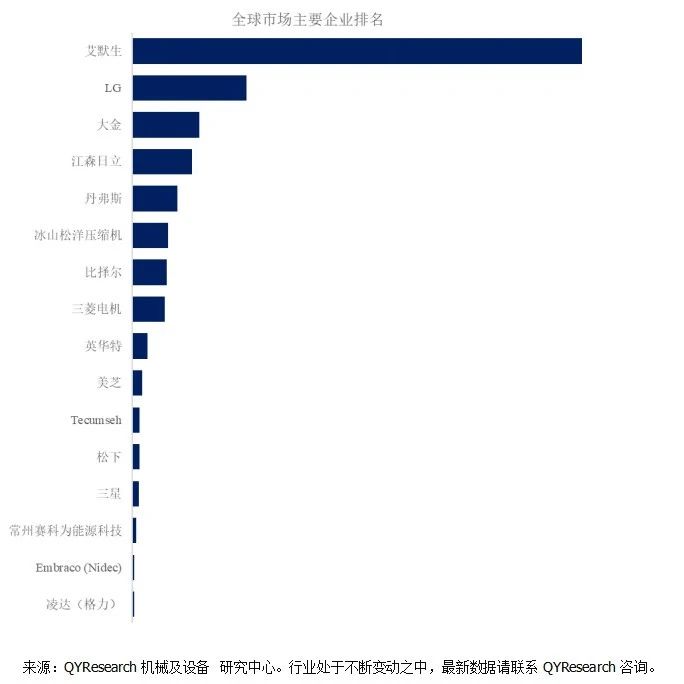
Core Viewpoint - The global scroll compressor market is projected to reach $6.44 billion by 2031, with a compound annual growth rate (CAGR) of 4.1% from 2025 to 2031 [1]. Market Overview - The scroll compressor is a type of positive displacement rotary compressor, widely used in air conditioning, heat pumps, and refrigeration equipment, and is recognized as a key energy-saving device supported by the government [1]. - The top five manufacturers are expected to hold approximately 82.0% of the market share in 2024 [5]. Product Segmentation - Products below 7HP represent the largest segment, accounting for about 55.3% of the market share [6]. - Air conditioning applications dominate the downstream market, making up approximately 67.7% of the demand [11]. Market Drivers - The growth in HVAC and cold chain industries is a major driver, as scroll compressors are increasingly adopted for their efficiency and low noise in residential and commercial air conditioning and refrigerated logistics [14]. - Stricter energy efficiency standards and environmental regulations in North America, Europe, and Asia are pushing the market towards more efficient and eco-friendly scroll compressors [14]. - The transition from fossil fuel heating to electric heat pumps, particularly in Europe and East Asia, is accelerating the demand for efficient scroll compressors for heating applications [14]. - The rapid adoption of variable frequency technology in household appliances is driving the demand for variable-speed scroll compressors [14]. - New applications in compact industrial systems, such as medical cooling and data centers, are expanding the use of reliable scroll compressors [14]. Market Challenges - Fluctuations in raw material costs and supply chain risks, particularly for copper, aluminum, and precision alloys, can impact production costs and delivery timelines [15]. - Intense competition and product homogeneity in the market, especially in the mid-to-low-end segments, are leading to price competition and declining profit margins [16]. - The complexity of technology results in high R&D costs to meet demands for higher efficiency, refrigerant flexibility, and noise reduction [17]. - Emerging alternative technologies, such as magnetic bearing compressors and centrifugal compressors, are gradually gaining traction in high-end applications [17]. - Environmental regulations regarding high GWP refrigerants pose technical and compliance challenges for manufacturers transitioning to lower GWP refrigerants [17].