
华利集团

Search documents
可选消费W05周度趋势解析:受美联储鹰派影响全球资产价格大跌,可选消费板块回撤较多-20260202
Haitong Securities International· 2026-02-01 23:30
Investment Rating - The report assigns an "Outperform" rating to multiple companies in the discretionary consumption sector, including Nike, Li Ning, Midea Group, JD Group, Haier Smart Home, Gree Electric Appliances, Anta Sports, and many others [1]. Core Insights - The discretionary consumption sector has experienced a significant pullback due to the hawkish stance of the Federal Reserve, leading to a decline in global asset prices [4][13]. - The report highlights that the domestic sportswear sector outperformed other segments, while luxury goods and cosmetics faced notable declines [4][13]. - The report provides a detailed analysis of the performance of various sub-sectors, indicating that gold and jewelry, overseas cosmetics, and snacks have shown resilience compared to the MSCI China index [4][11]. Summary by Relevant Sections Weekly Performance Review - The domestic sportswear sector increased by 0.6%, while other sectors such as credit cards, U.S. hotels, and retail saw declines ranging from -0.4% to -5.8% [4][13]. - The report notes that the gold and jewelry sector has outperformed the MSCI China index, with a monthly increase of 14.8% [4][13]. Sector Analysis - The domestic sportswear sector's growth is attributed to increased demand for warm clothing due to colder weather and positive media coverage of brands like Bosideng [15]. - The credit card sector saw mixed results, with Mastercard rising by 2.7% while Visa and American Express declined [15]. - The retail sector's performance was driven by specific companies like China Resources Mixc Lifestyle, which saw a 10.8% increase due to favorable policies [15]. Valuation Analysis - The report indicates that the expected PE ratios for various sectors in 2025 are below their historical averages, suggesting potential investment opportunities [11][18]. - For instance, the expected PE for the domestic sportswear sector is 13.4 times, which is 70% of its past five-year average [18]. Conclusion - Overall, the report emphasizes the impact of macroeconomic factors on the discretionary consumption sector and identifies specific companies and sub-sectors that may present investment opportunities amidst the current market volatility [4][11][18].
华利集团(300979) - 300979华利集团投资者关系管理信息20260201
2026-02-01 14:20
Group 1: Market Demand and Competition - The demand for athletic shoes remains resilient as they are considered essential consumer goods, with significant growth potential in developing countries compared to developed markets like the US and Europe [2] - The overall consumption scale of footwear is expected to maintain long-term resilience despite short-term fluctuations due to macroeconomic factors [2] - The industry landscape is relatively stable, with limited large-scale new entrants due to the long development cycles and complexities in mass production management [2] Group 2: Order Outlook and Economic Impact - The company anticipates a conservative order forecast for 2026 due to uncertainties in the international political and economic landscape [3] - The company is actively pursuing a diversified customer strategy to enhance performance resilience amid economic uncertainties [3] Group 3: Profitability and Cost Management - The gross margin is expected to decline in 2025 due to several new factories being in ramp-up stages, with ongoing efforts to improve operational efficiency and cost reduction [3] - The company has achieved profitability in three out of four new factories launched in 2024, indicating progress in operational improvements [3] Group 4: Automation and Production Efficiency - Full automation in athletic shoe production is challenging due to the variety of styles, sizes, and materials, but the company is continuously upgrading production lines and collaborating with equipment manufacturers to enhance automation levels [4] - The company aims to reduce reliance on manual labor and improve production efficiency through customized equipment and process improvements [4] Group 5: Pricing Strategy and Revenue Impact - Changes in average selling prices are influenced by customer and product mix, with fluctuations in brand representation directly affecting average prices [5] - The company's diversified brand strategy and ongoing optimization of customer and product structures will impact average selling price trends [5] Group 6: Capital Expenditure and Dividends - The company plans to invest approximately RMB 1.1 billion to 1.7 billion annually in capital expenditures from 2022 to 2024 for new factory construction and automation upgrades [7][8] - The dividend payout ratio has been substantial, with cash dividends accounting for about 89% of net profit in 2021 and projected to be around 70% in 2024 [9]
纺织制造板块1月29日跌0.35%,华茂股份领跌,主力资金净流出7129.86万元
Zheng Xing Xing Ye Ri Bao· 2026-01-29 09:03
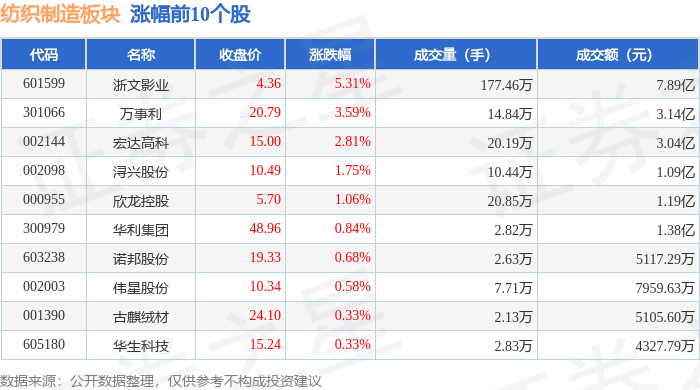
证券之星消息,1月29日纺织制造板块较上一交易日下跌0.35%,华茂股份领跌。当日上证指数报收于 4157.98,上涨0.16%。深证成指报收于14300.08,下跌0.3%。纺织制造板块个股涨跌见下表: 从资金流向上来看,当日纺织制造板块主力资金净流出7129.86万元,游资资金净流入368.98万元,散户 资金净流入6760.88万元。纺织制造板块个股资金流向见下表: | 代码 | 名称 | 主力净流入(元) | 主力净占比 游资净流入(元) | | 游资净占比 散户净流入(元) | | 散户净占比 | | --- | --- | --- | --- | --- | --- | --- | --- | | 601599 浙文影业 | | = 1.09 Z | 13.77% | -4467.04万 | -5.66% | -6389.46万 | -8.10% | | 002003 伟星股份 | | 1052.01万 | 13.22% | -636.33万 | -7.99% | -415.69万 | -5.22% | | 300979 华利集团 | | 697.01万 | 5.06% | -485.56万 | ...


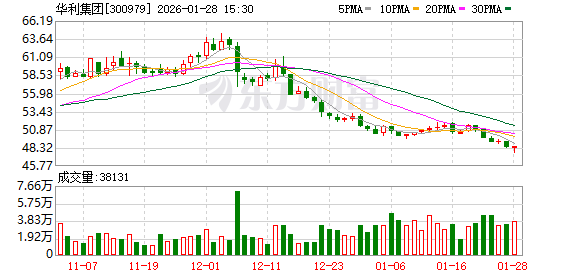
华利集团:公司将继续专注运动鞋制造主业,持续拓展新客户
Zheng Quan Ri Bao· 2026-01-28 11:44
Core Viewpoint - The company, Huali Group, is committed to focusing on its core business of athletic shoe manufacturing while enhancing its international operations and management capabilities [2] Group 1 - The company aims to continuously expand its customer base and maintain steady performance and operational development [2] - Huali Group plans to actively communicate with the capital market to convey its business philosophy and investment value [2] - The company is striving to enhance market recognition and achieve value realization [2]
长江纺服周专题26W03:12月运动制造跟踪:鞋服多环比降速,越南出口回暖
Changjiang Securities· 2026-01-26 11:31
Investment Rating - The industry investment rating is "Positive" and maintained [7] Core Insights - December orders for sports footwear and apparel showed a month-on-month decline, indicating that the overall industry has not yet reached an inflection point. Retail performance in the US and UK remains resilient, while demand in other regions is stagnant. The decline in the US consumer confidence index has not yet impacted brand and upstream performance, primarily due to growth being driven by high-end consumption, with mass apparel consumption still expected to recover [2][4][21] - Vietnam's footwear and apparel exports improved significantly in December, while China continues to face pressure. The upstream manufacturing sector is expected to have stronger earnings certainty in the first half of 2026, with a clear direction for recovery in the downstream sports supply chain. Brand apparel revenues are expected to fluctuate in Q4 2025, with profitability anticipated to recover in 2026 [2][5][29] Summary by Sections Manufacturing Performance - In December, the revenue performance of footwear manufacturers showed a year-on-year decline, with specific companies reporting: - Yuanyuan Group: -3.7% YoY, -1.3 percentage points MoM - Fengtai: -0.6% YoY, +11.2 percentage points MoM - Zhijiang International: -2.8% YoY, -5.9% MoM - Yuchi-KY: -2.2% YoY, -8.8% MoM - For apparel manufacturers: - Ruhong: -3.6% YoY, -5.1% MoM - Juyang Industrial: -9.2% YoY, -9.7% MoM - Guangyue: +9.7% YoY, -22.1% MoM [4][16][29] Demand Analysis - Retail performance in December showed resilience in the US and UK, while other regions experienced stagnation. The US consumer confidence index continues to decline, which has not yet reflected in brand and upstream performance. The growth is mainly driven by high-end consumption, with mass apparel consumption still expected to recover [2][21][26] Recommendations - The report recommends focusing on upstream manufacturing, as the performance in the first half of 2026 is expected to be more certain. The recovery direction of the sports supply chain is clear. Key recommended stocks include: - New Australia Holdings, Crystal International, Shenzhou International, and Yuanyuan Group - Attention should also be given to high-elasticity stocks like Nobon and Jeya, as well as undervalued stocks with strong safety margins like Taihua New Materials and Lutai A [5][29][30]




华利集团(300979) - 关于部分闲置募集资金现金管理到期赎回并继续进行现金管理的公告
2026-01-26 10:38
证券代码:300979 证券简称:华利集团 公告编号:2026-004 中山华利实业集团股份有限公司 关于部分闲置募集资金现金管理到期赎回并继续进行 现金管理的公告 本公司及董事会全体成员保证信息披露的内容真实、准确、完整,没有虚 假记载、误导性陈述或重大遗漏。 为提高资金使用效率、增加股东回报,在保证日常经营运作资金需求、有效 控制投资风险的情况下,中山华利实业集团股份有限公司(以下简称"公司""华 利集团")于2025年10月28日召开了第二届董事会第十七次会议,审议通过了《关 于2026年度委托理财及现金管理额度预计的议案》,同意公司(含子公司)使用 自有资金、闲置募集资金进行委托理财及现金管理,预计交易金额合计不超过人 民币55亿元,其中使用闲置募集资金仅用于现金管理且交易金额不超过人民币15 亿元。上述交易额度在2026年度内有效,在上述期限内,额度可循环滚动使用, 但在期限内任一时点的交易金额(含前述投资的收益进行再投资的相关金额)不 应超过交易额度。在额度有效期和额度范围内,授权公司管理层行使相关投资决 策权并签署相关文件,具体由公司总财务部负责组织实施和管理。公司保荐机构 发表了明确同意的意见 ...
可选消费W04周度趋势解析:黄金持续创新高叠加新消费板块回暖,黄金珠宝板块本周表现最优
海通国际· 2026-01-26 10:20
Investment Rating - The report assigns an "Outperform" rating to multiple companies including Nike, Midea Group, JD Group, Haier Smart Home, Gree Electric, Anta Sports, and many others, indicating a positive outlook for these stocks [1]. Core Insights - The gold and jewelry sector has emerged as the top performer this week, driven by new consumer sentiment and the upcoming Spring Festival, which is expected to boost sales [4][14]. - The overall performance of various sectors shows significant fluctuations, with gold and jewelry leading the gains, while sectors like luxury goods and U.S. hotels are experiencing declines [12][15]. - The report highlights that the valuation of various sectors remains below their historical averages, suggesting potential investment opportunities [10][17]. Sector Performance Summary - **Gold and Jewelry**: This sector saw a weekly increase of 12.9%, with notable stock performances from Lao Pu Gold (+20.5%) and Chao Hong Ji (+12.3%) due to positive sales forecasts [6][14]. - **Gambling**: The gambling sector increased by 2.9%, with companies like MGM China and Galaxy Entertainment showing strong market share growth [14]. - **Overseas Cosmetics**: This sector rose by 2.1%, driven by E.L.F. Beauty's stock increase of 4.6% following positive earnings forecasts [14]. - **Retail**: The retail sector increased by 2.0%, with Wanchen Group's stock rising by 14.3% due to optimistic revenue expectations [14]. - **Domestic Cosmetics**: This sector saw a modest increase of 0.9%, with companies like Proya and Runben showing positive stock movements [8][14]. - **Snacks**: The snack sector increased by 0.6%, with Youyou Foods and Qiaqia Foods showing gains [14]. - **Pet Sector**: This sector experienced a slight decline of 0.4%, with Zhongchong Co. facing stock price pressures [14]. - **Domestic Sportswear**: This sector decreased by 1.4%, with Anta Sports experiencing a notable decline of 6.1% [14]. - **U.S. Hotels**: This sector fell by 1.4%, with major hotel chains like Marriott and Hilton reporting declines [15]. - **Credit Cards**: The credit card sector also saw a decline of 1.4%, influenced by uncertainties regarding proposed interest rate caps [15]. - **Luxury Goods**: This sector decreased by 1.6%, with Burberry facing significant stock price drops due to market concerns [15]. - **Overseas Sportswear**: This sector fell by 1.8%, with Adidas experiencing a notable drop of 8.7% due to downgrades from investment banks [16]. Valuation Analysis - The report indicates that the expected PE ratios for various sectors in 2025 are below their historical averages, suggesting potential undervaluation. For example, the expected PE for the gold and jewelry sector is 25.9, which is 49% of its historical average [10][17].
可选消费W04周度趋势解析:黄金持续创新高叠加新消费板块回暖,黄金珠宝板块本周表现最优-20260126
Haitong Securities International· 2026-01-26 09:54
Investment Rating - The report assigns an "Outperform" rating to multiple companies including Nike, Midea Group, JD Group, Haier Smart Home, Gree Electric, Anta Sports, and others, indicating a positive outlook for these stocks [1]. Core Insights - The gold and jewelry sector has emerged as the top performer this week, driven by new consumer sentiment and expectations of improved sales as the Spring Festival approaches. The sector saw a weekly increase of 12.9% [4][14]. - The report highlights a rebound in the new consumer sectors, with various segments such as gambling, overseas cosmetics, and retail also showing positive performance [4][14]. - The overall market sentiment is influenced by the performance of the MSCI China index, which has shown fluctuations in its weekly, monthly, and year-to-date performance [12][13]. Sector Performance Summary - **Gold and Jewelry**: Increased by 12.9%, with notable gains from Lao Pu Gold (20.5%) and Chow Tai Fook (5.9%) due to positive sales forecasts [6][14]. - **Gambling**: Rose by 2.9%, with MGM China and Galaxy Entertainment seeing increases of 4.0% and 3.6% respectively, attributed to market share gains [6][14]. - **Overseas Cosmetics**: Gained 2.1%, driven by E.L.F Beauty's strong performance and positive earnings outlook [6][14]. - **Retail**: Increased by 2.0%, with Wanchen Group rising 14.3% due to optimistic revenue forecasts [6][14]. - **Domestic Cosmetics**: Saw a modest increase of 0.9%, with companies like Proya and Runben showing positive trends [8][14]. - **Snacks**: Increased by 0.6%, with Youyou Foods and Qiaqia Foods showing gains [8][14]. - **Pet Sector**: Experienced a slight decline of 0.4%, with Zhongchong Co. facing market challenges [8][14]. - **Domestic Sportswear**: Decreased by 1.4%, with Li Ning showing a positive increase of 4.3% while Anta Sports faced a decline [8][14]. - **US Hotels**: Fell by 1.4%, with major hotel chains like Marriott and Hilton seeing declines [15][16]. - **Credit Card Sector**: Also decreased by 1.4%, with Visa and Mastercard facing market uncertainties [15][16]. - **Luxury Goods**: Declined by 1.6%, with Burberry experiencing a significant drop [15][16]. - **Overseas Sportswear**: Decreased by 1.8%, with Adidas facing a notable decline due to downgrades from investment banks [15][16]. Valuation Analysis - The report indicates that most sectors are currently undervalued compared to their historical averages, with expected PE ratios for various sectors such as overseas sportswear at 30.0x (56% of the past 5-year average) and domestic sportswear at 13.4x (70% of the past 5-year average) [10][17].
轻工制造及纺服服饰行业周报:泡泡玛特本周两次回购股份、新品热度攀升,持续推荐
ZHONGTAI SECURITIES· 2026-01-26 07:30
Investment Rating - The industry investment rating is "Overweight (Maintain)" [3] Core Views - The report highlights the robust growth of the toy and IP derivative sectors, particularly with the recent success of Pop Mart's new product launches and share buybacks, which have bolstered market confidence [5][6] - The report suggests that the emotional consumption trend is on the rise, with continuous product iterations meeting diverse consumer demands [5] - Key companies to watch include Pop Mart, which has demonstrated replicable IP incubation capabilities, and other brands like M&G Stationery and Buluo, which are expanding their product lines and market reach [5][6] Summary by Sections Market Overview - The total market capitalization of the industry is approximately 1,274.52 billion yuan, with a circulating market value of about 1,014.95 billion yuan [1] - The light industry manufacturing index increased by 4.48%, ranking 7th among 28 industries, while the textile and apparel index also rose by 4.48%, ranking 6th [10] Key Company Performance - Pop Mart's recent product launches, including the Valentine's Day limited edition blind box, have sold out quickly, with premium prices reaching over 600% for hidden items and over 200% for regular items [5] - Anta Sports reported a low single-digit negative growth for its main brand in Q4, but overall, the company is expected to achieve double-digit growth for the year [5][6] Industry Trends - The report emphasizes the importance of AI applications in consumer products, particularly in the context of AI smart glasses, which are expected to see significant market growth [6] - The report also notes the ongoing challenges in the real estate market, with a 14.6% year-on-year decline in property sales in major cities [34][36] Raw Material Prices - Recent trends show a decrease in prices for MDI and TDI, while the price of cotton has increased year-on-year [19][24] - The report tracks various raw material prices, indicating fluctuations that could impact production costs across the industry [19][24]
纺织服饰行业全球观察之迅销FY2026Q1公司业绩再创新高,大中华区收入同增中单
GF SECURITIES· 2026-01-25 12:48
Investment Rating - The report assigns a "Buy" rating for the textile and apparel industry, indicating an expectation that stock performance will exceed the market by more than 10% over the next 12 months [46]. Core Insights - The company achieved record high performance in FY2026Q1, with revenue reaching 102.77 billion JPY, a year-on-year increase of 14.81%, driven by the opening of flagship UNIQLO stores and strategic information dissemination [3][4]. - Gross margin for FY2026Q1 was 55.24%, up by 0.77 percentage points year-on-year, while operating profit increased by 33.87% to 21.09 billion JPY [3][4]. - The company expects record revenue and profit for FY2026, projecting total revenue of 380.0 billion JPY (up 11.7% year-on-year) and net profit of 45.0 billion JPY (up 3.9% year-on-year) [3][4]. Revenue Breakdown - UNIQLO brand revenue for FY2026Q1 was 90.29 billion JPY, a 17.51% increase year-on-year, accounting for 87.86% of total revenue [3][4]. - Revenue by region for UNIQLO in FY2026Q1: - Japan: 29.91 billion JPY, up 12.18% - Greater China: 19.12 billion JPY, up 7.03% - Other Asia and Oceania: 18.71 billion JPY, up 22.15% - North America: 8.87 billion JPY, up 30.41% - Europe: 13.70 billion JPY, up 34.26% [3][4]. Store Count and Financial Position - As of the end of the reporting period, the total number of stores reached 3,594, a decrease of 68 stores year-on-year [3][4]. - Cash and cash equivalents (excluding short-term investments) at the end of FY2026Q1 were 92.36 billion JPY, down 22.95% year-on-year [3][4]. Operational Metrics - Accounts receivable turnover days for FY2026Q1 were 19.42 days, an increase of 0.89 days year-on-year [3][4]. - Inventory turnover days for FY2025Q1 were 124.32 days, a decrease of 5.29 days year-on-year [3][4].
