科思创

Search documents
巴斯夫、科思创、世索科,固态电池陆续签约!
DT新材料· 2026-01-21 16:05
Core Viewpoint - The article discusses the advancements and collaborations in the solid-state battery industry, highlighting key players and their strategic partnerships aimed at enhancing battery technology and materials for electric vehicles and other applications [1][2][3][4][5]. Group 1: Industry Developments - Solid-state batteries are recognized for their high safety and energy density, marking a significant development direction for electric vehicle power batteries [1]. - The Ministry of Industry and Information Technology of China has emphasized accelerating breakthroughs in solid-state battery technologies, indicating a shift from pure R&D to engineering validation [1]. - Major chemical companies are actively engaging in the solid-state battery sector, with BASF and Sanyou Technology announcing milestone collaborations to enhance their strategic partnership [2]. Group 2: Key Collaborations - BASF has partnered with Sanyou Technology to deliver high-quality samples for heavy-duty vehicle projects and to collaborate on new product cell validation in the 3C safety certification field [2]. - Covestro is working with Fujian Blue Ocean Black Stone New Materials Technology to develop polyurethane binders for silicon-carbon anodes, addressing volume expansion issues during charge and discharge cycles [3]. - SES Holdings has formed a new company, Argylium, with Axens Group to focus on the commercialization of advanced materials for solid-state batteries, particularly targeting the next generation of sulfide solid electrolytes [4]. Group 3: Material Innovations - Companies like Dow Chemical and LG Chem are developing low-cost sulfide electrolytes and uniform control technologies for solid-state electrolytes, respectively, with LG Chem planning to launch a vehicle solid-state battery with an energy density exceeding 500 Wh/kg by 2027 [5]. - Other firms, such as Tianqi Materials and Huizhou Enjie, are also advancing their production capabilities for lithium sulfide and solid-state electrolytes, with significant production lines already established [5]. - The article notes that various materials, including polymer electrolytes and silicon-based anode materials, present promising opportunities for chemical companies in the solid-state battery landscape [6].






化工大涨,下一个有色出现了?
3 6 Ke· 2026-01-21 02:58
Group 1 - The core viewpoint of the article is that the chemical industry is experiencing a cyclical recovery driven by new demand, with the sustainability of this cycle being a key question for market participants [1][12] - The chemical price index (CCPI) has dropped nearly 40% from its peak in 2021, currently sitting at a historical percentile of just over 20% [1] - The profit margin for the chemical raw materials and products industry is projected to be just over 4% in the first three quarters of 2025, indicating that the industry is still near the bottom of its profit cycle [1] Group 2 - The first signal of recovery is seen in specific products like potassium chloride and lithium carbonate, with companies like Salt Lake Potash showing significant profit increases despite overall declines in production and sales [3][4] - The second signal comes from a contraction in corporate investment behavior, with capital expenditures for petrochemical companies declining by 18.3% and 10.1% in 2024 and the first three quarters of 2025, respectively [5] - The third signal is the shift in market expectations, with the scale of chemical ETFs increasing from 2.5 billion to 25.7 billion, indicating a recovery in investor sentiment [6] Group 3 - The article discusses the global shift in chemical production from high-cost regions like Europe and Japan to lower-cost regions like China, which is filling the gap left by closures in Europe [8][9] - The domestic market is also undergoing a transition from "involution" to "anti-involution," with regulatory measures aimed at reducing low-price competition and promoting quality improvements [10] - Specific examples of product price recovery include organic silicon and polyurethane, where leading companies are collaborating to stabilize prices [11] Group 4 - New demand drivers include the second wave of growth in the renewable energy sector, with significant increases in battery production expected, which will impact the lifecycle of traditional chemical products [12][13] - Innovations driven by AI, semiconductors, and robotics are creating new material demands, with companies transitioning to higher-value products in electronic chemicals and lubricants [14] - The negative impact of old demand is diminishing, leading to a more stable recovery in the chemical sector, characterized by a "slow bull" market rather than rapid fluctuations [15]



全球涂料研发哪家强?PPG/阿克苏/宣伟/立邦/艾仕得等上榜
Xin Lang Cai Jing· 2026-01-13 11:27
Group 1 - The report by the European Commission reveals significant changes in the global innovation landscape, highlighting that 25 Chinese chemical companies are among the top 2000 global industrial R&D investors for 2025 [2][7] - Among the 2000 companies, there are 98 chemical firms, with a total R&D investment of 26 billion euros in 2024, averaging 1.32 million euros per chemical company [2][7] - Major international paint companies such as PPG, AkzoNobel, Sherwin-Williams, Nippon Paint, RPM, and Axalta are included in the list, while Asian Paints from India did not make the cut [2][7] Group 2 - PPG Industries ranks 515th with an R&D investment of 415.82 million euros in 2024, showing a slight decrease of 0.23% year-on-year [4][9] - AkzoNobel ranks 755th with an R&D investment of 276 million euros, reflecting a year-on-year increase of 9.96% [4][9] - Sherwin-Williams ranks 917th with an R&D investment of 209.2 million euros, marking a year-on-year growth of 10.53% [4][9] Group 3 - The total R&D investment of the top 2000 companies is 144.6 billion euros, accounting for over 90% of global corporate R&D investments [5][10] - The distribution of companies includes 674 from the United States, 581 from China, 318 from the European Union, and 192 from Japan [5][10] - The top ten companies by R&D investment include Amazon, Alphabet, Meta, Microsoft, Apple, Huawei, Samsung, Volkswagen, Johnson & Johnson, and Intel [5][10]
沙特化工巨头Sabic剥离欧美资产 股价创新低
Ge Long Hui A P P· 2026-01-08 08:59
Core Viewpoint - Saudi Basic Industries Corporation (SABIC) has seen its stock price drop to a 16-year low in Riyadh following asset sales in Europe and the U.S. to downsize its operations, focusing on domestic and Asian markets instead [1] Group 1: Company Performance - SABIC's decision to sell assets is a response to weak profit margins that have negatively impacted the entire industry [1] - The company has historically benefited from low-cost domestic raw material supplies, but demand has been eroded by slow growth in major economies [1] - High energy costs in Europe have severely affected local factories, prompting SABIC to reduce its business scale [1] Group 2: Industry Context - Middle Eastern countries are seeking to expand their economies by strengthening manufacturing and other sectors to reduce reliance on oil sales [1] - The United Arab Emirates is actively expanding in the global chemical sector, exemplified by the acquisition of German company Covestro by Abu Dhabi National Oil Company's investment arm, XRG, last year [1]
国网华东分部助力上海超额完成2025年度绿电交易目标
Guo Ji Jin Rong Bao· 2026-01-07 14:25
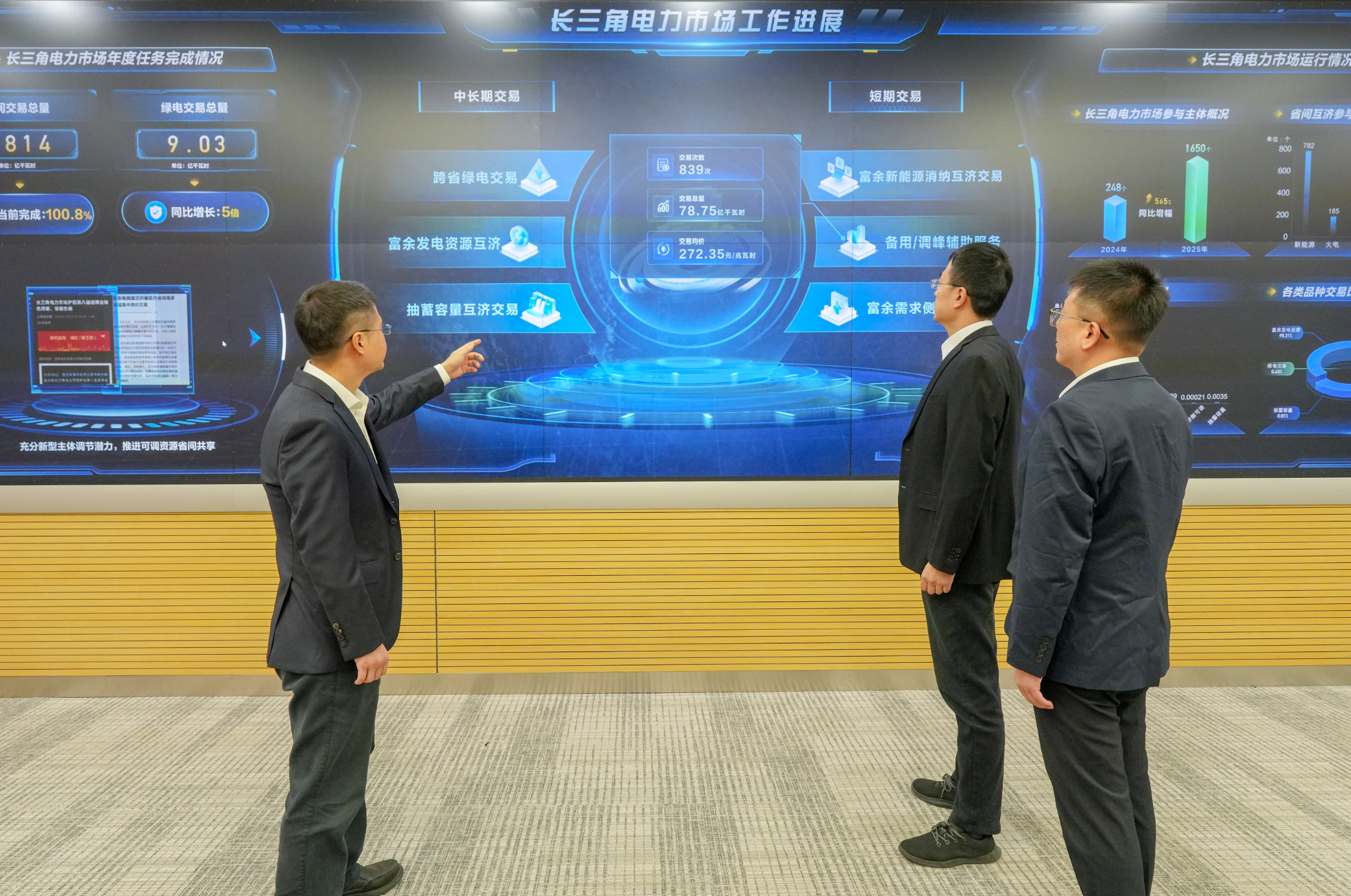
Core Insights - The East China branch of State Grid Corporation has successfully exceeded its green electricity trading target for Shanghai in 2025, achieving a total of 9.185 billion kilowatt-hours, surpassing the initial demand estimate of 9 billion kilowatt-hours [1][4]. Group 1: Green Electricity Supply and Demand - The Shanghai Municipal Economic and Information Commission estimated a green electricity demand of approximately 9 billion kilowatt-hours, while local supply was insufficient, providing less than 1 billion kilowatt-hours [1]. - To address the supply gap, the East China branch collaborated with Shanghai Electric Power Company to expand green electricity resources from outside the region [3]. Group 2: Cross-Regional Green Electricity Transactions - In the first quarter of 2025, the first cross-grid green electricity transaction was successfully completed, with Guangxi supplying 0.53 billion kilowatt-hours to Shanghai, establishing a new channel for green electricity [3]. - The East China branch coordinated the delivery of 5.13 billion kilowatt-hours of green electricity from Northeast China, including Heilongjiang and Jilin, to Shanghai [4]. - A total of 74.88 billion kilowatt-hours of cross-regional green electricity was traded in 2025, marking a 56% increase year-on-year [4]. Group 3: Regional Cooperation and Trading Mechanisms - The East China branch has initiated a green electricity mutual assistance mechanism among provinces in the Yangtze River Delta, enhancing the efficiency of local green electricity resource utilization [5]. - In 2025, green electricity transactions from Anhui and Jiangsu reached 9.03 billion kilowatt-hours, six times the previous year's scale, with Shanghai users purchasing 8.47 billion kilowatt-hours, accounting for 93.8% of inter-provincial green electricity transactions in East China [5]. - A special plan was developed for the eighth China International Import Expo, facilitating the delivery of 1.3 billion kilowatt-hours of green electricity from Anhui and Jiangsu to Shanghai, contributing to a monthly green electricity consumption exceeding 1 billion kilowatt-hours [5]. Group 4: Future Plans - The East China branch aims to further improve the inter-provincial electricity mutual assistance market mechanism and optimize the green electricity trading process and platform functionality to support Shanghai's green and low-carbon development [6].
科思创展示低碳充电站外壳PC材料
Zhong Guo Hua Gong Bao· 2026-01-07 03:12
Core Viewpoint - The collaboration between Covestro and Pludite at the 2026 CES highlights the launch of the Elite100 low-carbon charging station, which utilizes Covestro's Bayblend RE polycarbonate made from 25% recycled biomass, resulting in a carbon footprint reduction of over 20% compared to traditional models [1] Group 1: Product Features - The Elite100 charging station's shell is made from Covestro's Bayblend RE polycarbonate, which has excellent impact strength and meets UL94V-0 flame retardant standards, ensuring safe operation of the equipment [1] - The new charging station incorporates a 25% share of renewable raw materials, effectively reducing the product's carbon footprint [1] Group 2: Sustainability and Innovation - Bayblend RE is part of Covestro's Circular Economy (CQ) product line, with a minimum of 25% alternative raw material content in CQ-labeled products [1] - The collaboration demonstrates that innovative materials can accelerate the transition to more sustainable solutions in the rapidly growing portable power market, helping customers reduce their environmental footprint and promote the circular economy [1]
李强总理,调研人形机器人!
DT新材料· 2026-01-05 16:04
Core Viewpoint - The article highlights the importance of humanoid robots and artificial intelligence in driving technological and industrial transformation, emphasizing China's potential in this sector and the need for policy and scene-driven development to enhance industry efficiency and application scenarios [5][6][8]. Group 1: Government Initiatives and Industry Development - Premier Li Qiang's visit to Shenzhen focused on low-altitude economy and humanoid robot development, showcasing the government's support for innovation and technology [2][8]. - The government aims to strengthen the industrial ecosystem, expand application scenarios, and explore effective business models for new technologies like robots and drones [8]. Group 2: Industry Insights and Recommendations - Zhou Jian, CEO of UBTECH, emphasized the need for a "scene-driven, closed-loop iteration, and ecological collaboration" approach for high-quality development in the humanoid robot industry [5][6]. - Recommendations include enhancing policy and scene-driven initiatives, optimizing resource allocation, and building sustainable business models to support the humanoid robot industry [6]. Group 3: Technological Challenges and Opportunities - The article identifies several technological challenges that need to be addressed, such as high-performance semiconductors, energy-dense batteries, and advanced materials, which present significant opportunities for new materials and technologies [9]. - Various companies are developing lightweight, high-strength materials essential for humanoid robots, including carbon fiber composites and advanced polymers [10][11][12][13].
国家发改委推进绿色氢氨醇布局
GUOTAI HAITONG SECURITIES· 2026-01-05 06:10
Report Summary 1. Report Industry Investment Rating No information provided. 2. Core Viewpoints The report focuses on the latest policies, industry developments, and upcoming events in the hydrogen energy industry. The National Development and Reform Commission is promoting the national green hydrogen, ammonia, and alcohol planning layout, and multiple regions have introduced relevant industrial policies. There are also many significant industrial developments, such as the launch of new projects and the delivery of new products. Additionally, a major industry conference is upcoming [3][6][12]. 3. Summary by Directory 3.1 Industry Policies - The National Development and Reform Commission promotes the national green hydrogen, ammonia, and alcohol planning layout, including building zero - carbon transportation corridors and stations, increasing new energy supply, etc. [3][6] - Beijing encourages the construction of renewable energy projects in factories and explores the use of hydrogen energy [6]. - Urumqi plans to add no less than 20,000 tons/year of green hydrogen production capacity by 2027 [6]. - Guangzhou Baiyun promotes the application of hydrogen - fuel - cell vehicles and supports the construction of hydrogen refueling stations [6]. - Shandong Zhaoyuan focuses on developing nuclear power, wind and solar equipment, energy storage batteries, and hydrogen production industries [6]. 3.2 Industry Dynamics - A 100 - million - yuan project for 100 sets of 1000 - standard - cubic - meter alkaline electrolyzer components is about to start [7]. - Kunhua Technology delivers 200 hydrogen - powered heavy trucks in Xinjiang Hami [8]. - Dalian Shipbuilding delivers the world's first methanol - dual - fuel - powered intelligent VLCC, with significant emission reduction [8]. - Rongcheng New Energy starts the trial operation of the first batch of hydrogen - assisted two - wheeled vehicles [8]. - Jieqing Technology delivers a new small - power closed - type air - cooled system for a German hydrogen - powered drone inspection project [8]. - A 3.534 - billion - yuan project for alloy solid - state hydrogen storage materials in Inner Mongolia is approved [8]. - A 4 - billion - yuan green hydrogen project of China Guangdong Nuclear Power is in the environmental impact assessment publicity stage [8]. - China National Coal Group signs a 200,000 - ton green methanol project in Inner Mongolia [8]. - Dongfang Hydrogen Energy unveils the "Hydrogen Intelligence Safety Center" [8]. - Sunlight and Longji are pre - selected for the bid of 29 alkaline electrolyzers of State Power Investment Corporation [9]. - CIMC Enric and Datang Hainan plan to cooperate on a green methanol project in Hainan [9]. - The first "carbon compensation" trade in the hydrogen energy field in China is completed in Zhejiang Jiaxing [3][9]. - China's first million - ton - level near - zero - carbon steel production line is fully connected, with a potential carbon reduction of 50% - 80% [3][9]. - Fujian's first hydrogen - powered zero - carbon bus demonstration line (Xiamen Route 736) is opened [3][9]. 3.3 Investment and Financing Events No investment and financing events are reported [10]. 3.4 Industry Conference Forecast The 2nd China Hydrogen Energy and Fuel Cell Technology Conference will be held from January 22 to 23, 2026, in Hefei, Anhui. The conference focuses on the innovation of the entire hydrogen fuel cell industry chain, and many well - known enterprises and institutions will participate [12].
2400亿化工茅宣布涨价
2 1 Shi Ji Jing Ji Bao Dao· 2026-01-04 16:11
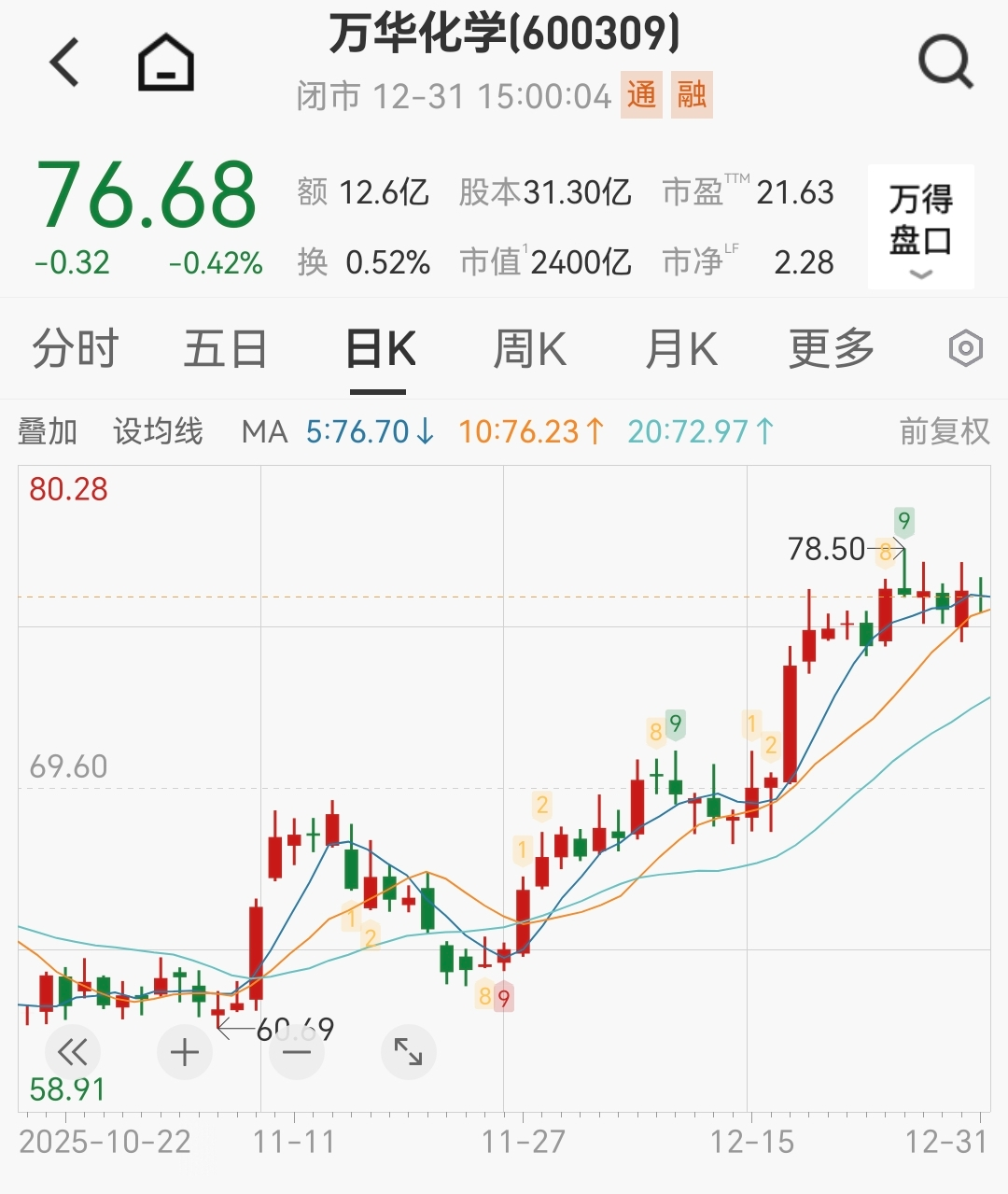
Core Viewpoint - Wanhua Chemical's price increases for MDI and TDI products are part of a broader global trend, driven by supply disruptions and rising raw material costs, amidst a high concentration of industry players [1][4][5]. Price Adjustments - Wanhua Chemical has announced multiple price hikes since December 2025, with increases of $200/ton for MDI in Southeast Asia and South Asia, and €300/ton in Europe [4]. - Other major companies like BASF and Dow have also raised prices, indicating a strong market adjustment across the polyurethane sector [4]. Supply Chain Disruptions - The price increases are attributed to unexpected production halts and geopolitical tensions affecting raw material costs [5]. - Notable production disruptions include a month-long shutdown of Hunstman’s MDI facility in the Netherlands and Wanhua's 100,000-ton MDI capacity in Ningbo, which is undergoing maintenance for 55 days [5][7]. Industry Dynamics - The polyurethane industry is characterized by high concentration, with major players like Wanhua, BASF, and Hunstman dominating the market, which limits the impact of domestic competition [1][5]. - The ongoing supply issues in Europe, particularly concerning ethylene, are expected to persist, affecting the overall production landscape [7][8]. Market Performance - Wanhua Chemical's stock has seen a rise of over 12% in the past 20 days, with a market capitalization of 240 billion yuan as of December 31, 2025 [1][2]. - The company's revenue for the first three quarters of the year was 144.23 billion yuan, a slight decline of 2.29% year-on-year, while net profit showed a smaller decline of 17.45% [10]. Future Outlook - Analysts suggest that the recovery of downstream demand is crucial for the overall improvement of the chemical sector, with expectations of a gradual recovery in Wanhua's operational performance [10][11]. - The ongoing capital investments in China's chemical industry and the exit of overseas capacities may stabilize the market in the coming years [11].
2400亿化工茅宣布涨价
21世纪经济报道· 2026-01-04 16:07
Core Viewpoint - The article discusses the recent price increases in the polyurethane industry, particularly focusing on Wanhua Chemical's price adjustments for MDI and TDI products, which are part of a broader trend influenced by supply disruptions and geopolitical factors [1][4][5]. Price Adjustments - Wanhua Chemical has announced multiple price increases for its core products, including MDI and TDI, starting from December 1, 2025, with increases of $200/ton in Southeast Asia and South Asia, and €300/ton in Europe [4]. - Following Wanhua, other major players like BASF and Dow also raised their MDI prices, indicating a synchronized market response [4][5]. - The price adjustments are attributed to unexpected production halts and rising raw material costs due to geopolitical tensions [5][6]. Supply Chain Disruptions - The polyurethane industry is experiencing significant supply chain disruptions due to unexpected maintenance and production halts at major facilities, including Wanhua's and BASF's plants [6]. - Notably, Hunstman’s MDI facility in the Netherlands faced an unexpected shutdown, exacerbating supply shortages [5][6]. - The article highlights that the European ethylene supply is under pressure, with several plants expected to close or reduce output, further tightening the market [8][9]. Market Dynamics - The article notes that the polyurethane industry has a high concentration of major global players, which limits the impact of domestic competition on pricing [1]. - Analysts suggest that the current price increases are part of a normal market adjustment rather than a reaction to domestic competition [1]. - The overall market sentiment is shifting towards a more optimistic outlook, with expectations of recovery in downstream demand being crucial for the industry's long-term health [12][13]. Future Outlook - The article indicates that while the current price increases are beneficial, the recovery of downstream demand is essential for sustained growth in the chemical sector [12]. - Analysts from UBS believe that the capital expenditure in China's chemical industry is beginning to decline, which may stabilize the industry's performance in the coming years [13]. - The article concludes that Wanhua Chemical's strategic positioning and the ongoing global supply adjustments could enhance its market share and profitability in the future [13].