
鹏华基金

Search documents
利率下行,资金涌向固收+:三年收益最高15.63%,黑马频出
Sou Hu Cai Jing· 2026-02-14 11:36
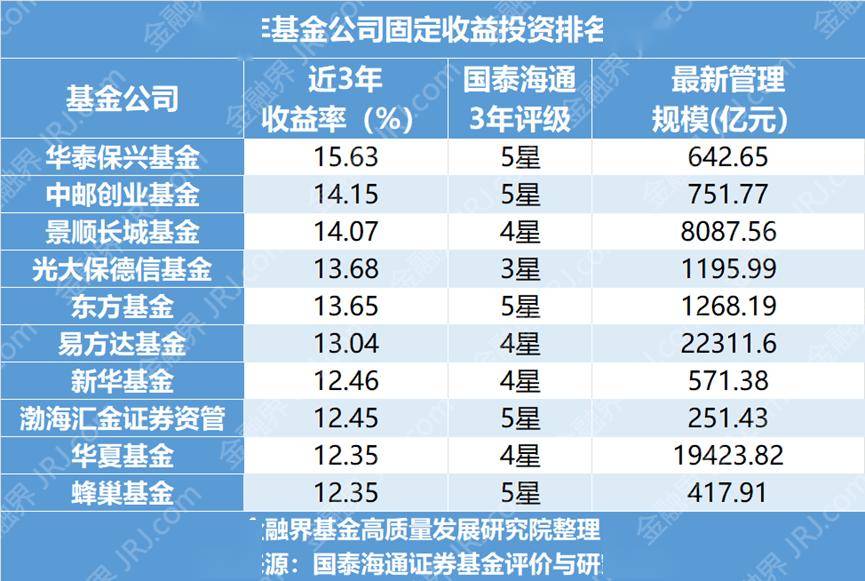
往年春节前后,银行理财市场往往会迎来"开门红",但2026年开年行情却呈现出不一样的变化。 据证券时报报道,今年1月末,规模位居行业前列的14家理财公司合计理财规模为24.59万亿元,环比减少约8150亿元。这 已是继2025年11月触及阶段性高点后,理财规模连续第二个月回落。其中,四大国有行旗下理财公司合计降幅接近5000亿 元,占到14家机构总降幅的近六成。 理财资金出现明显撤离,背后原因十分明确:在利率下行环境下,传统存款与理财的吸引力持续走弱。 2025年5月,国有六大行集体下调存款利率,1年期定期存款利率降至0.95%,3年期1.25%,5年期1.30%,活期存款利率更 是低至0.05%。低利率环境下,居民和机构的理财需求正在加速寻找新出口。 那么,海量资金都流向了哪里?答案指向公募基金。 银河证券在最新报告中指出,"固收+"与投资型保险产品,有望成为承接大量到期理财资金的重要载体。从市场数据来看, 公募基金已成为资金的重要"蓄水池"。 国泰海通证券基金评价与研究中心最新统计显示,截至2026年1月30日,近三年固定收益类基金绝对收益率排名中,入围门 槛已抬升至12%以上。在这一赛道上,不少中小基金 ...

东吴基金高层“换血”!考验才刚刚开始!
Xin Lang Cai Jing· 2026-02-14 06:24
Core Viewpoint - Dongwu Fund Management Co., Ltd. has undergone a significant leadership change with the departure of former Deputy General Manager Li Jie and the appointment of two new deputy general managers, Ge Feng and Xia Zhifan, signaling a strategic shift in response to long-term underperformance and increasing industry competition [1][2][5] Group 1: Leadership Change - Li Jie has left the company due to "personal reasons," marking a critical leadership transition as Dongwu Fund seeks to revitalize its performance [1][5] - The new appointments of Ge Feng as Executive Deputy General Manager and Xia Zhifan as Deputy General Manager are seen as a dual approach to enhance market outreach and internal organizational efficiency [2][3][4] Group 2: Performance Under Li Jie - Under Li Jie's leadership, Dongwu Fund struggled to achieve significant growth, remaining in the lower tier of the industry despite being established in 2004 and backed by Dongwu Securities [2][6] - The fund's product line, which includes equity, mixed, bond, and REITs, has not produced standout products, with most offerings performing poorly [2][6] - The company failed to capitalize on the shift from "scale-driven" to "quality-driven" strategies in the public fund industry, lagging behind peers in channel collaboration and brand development [2][6] Group 3: New Management's Background - Ge Feng has a strong background in market development and resource integration, previously serving as Chief Marketing Officer at Xinda Australia Fund and successfully breaking into key channels at Yongying Fund [3][7] - Xia Zhifan brings over a decade of experience in human resources and organizational management, having held senior roles at various financial institutions, which may enhance internal governance and team stability [3][7] Group 4: Strategic Direction and Challenges - The new management structure aims to address key shortcomings in strategy, execution, and talent, with a focus on both market expansion and internal improvement [4][9] - Dongwu Fund faces significant challenges, including an increasing concentration of capital among top firms, severe homogenization among smaller funds, and heightened investor expectations for performance and risk management [9][10] - The company must implement rapid reforms and focus its product strategy to leverage its REITs management qualifications and regional themes to differentiate itself in a competitive landscape [5][9] Group 5: Future Outlook - The next 12 to 18 months will be critical in assessing the effectiveness of the leadership change, with market observers closely monitoring product issuance, channel partnerships, talent retention, and the performance of core products [10][11]
核心资产基金池202602:低波动质量投资
Guolian Minsheng Securities· 2026-02-14 05:09
Group 1: Report's Industry Investment Rating - No relevant content provided Group 2: Report's Core View - The report defines core assets in A - shares from four perspectives: track leaders, resource endowments, excellent business models, and technological advantages, and selects core - asset funds for investors' reference. From February 2, 2015, to February 6, 2026, the fund pool had an annualized return of 9.14% and a portfolio annualized Sharpe ratio of 0.51. The core - asset portfolio achieved excess returns in most years, with excess returns mainly coming from industry and stock selection, and a style more inclined to large - cap quality investment. The current long - term industry allocation is mainly in consumption, cycles, and finance, with a significant increase in the latest cycle - sector holdings and a reduction in consumption - sector allocation [7]. Group 3: Summary According to the Directory 1 Core Asset Fund Pool Concept Introduction and Historical Performance 1.1 Core Asset Investment Concept Introduction - Core assets are companies with core competitive advantages, excellent financial indicators, and stable governance. The report looks for core - asset enterprises from four perspectives: track leaders, resource endowments, excellent business models, and technological advantages, aiming to form a regularly updated core - asset stock pool. The industry distribution of the core - asset stock pool follows macro - economic changes, shifting from the financial and cycle sectors to a relatively balanced distribution of consumption, TMT, and manufacturing [10][13]. 1.2 Core Asset Fund Pool: Low Portfolio Volatility - From February 2, 2015, to February 6, 2026, the fund pool had an annualized return of 9.14% and a portfolio annualized Sharpe ratio of 0.51. The core - asset portfolio achieved excess returns in most years, especially in volatile, bear, and structural bull markets. The excess returns mainly came from stock selection and industry allocation, but it was not dominant in dynamic returns. The configuration style is large - cap high - quality investment, with relatively low portfolio elasticity and growth, prominent value attributes, and strong profitability of holdings. The current industry allocation is mainly in cycles and consumption, with a significant increase in the latest cycle - sector holdings and a reduction in consumption - sector allocation [16][18][24]. 2 Core Asset Fund Pool Definition and Screening 2.1 Definition of Core - Asset Type Funds - The definition is based on the relatively low - valuation characteristics of holdings. The research objects are active equity funds, with a sample of fund products and fund managers. The requirements include a tenure of over 1 year, a current scale of over 100 million yuan, exclusion of fixed - open and holding - period products, an average equity position of over 60% since the current fund manager took office, an average proportion of the top ten heavy - holding stocks in stock investment of over 35%, an average proportion of core - asset stocks in heavy - holding stocks of over 50% since the current fund manager took office, an average proportion of core - asset stocks in heavy - holding stocks of over 60% in the past year, and a minimum heavy - holding proportion of over 40% [27]. 2.2 Core Asset Fund Pool Screening - Select funds with low exposure to the heavy - holding beta factor in the past 12 months and a high ratio of operating cash flow TTM to total market value. Construct relevant factor combinations and select the top 10 funds by factor score with equal weight. The current portfolio holding list includes 10 funds such as Southern Component Selection A, with scale data as of December 31, 2025, and performance data as of February 6, 2026 [28]. 3 Multidimensional Analysis of Portfolio Funds - Southern Component Selection A focuses on the growth style, invests in multiple growth tracks such as electronics and machinery, and has outstanding stock - picking ability, suitable for investors who can tolerate short - term market fluctuations [30]. - Dacheng Selective Value - Added A adheres to a value - growth balanced strategy, focuses on consumer leaders, high - dividend technology, and consumer - technology hardware, has stable long - term stock - picking ability and good drawdown control, but is limited in elasticity during extreme style switches [32]. - Penghua Strategy Preferred focuses on the mid - cap growth style, focuses on "cycle + growth" tracks such as non - ferrous metals and power equipment, and is suitable for investors seeking long - term stable returns [35]. - Taiping Flexible Allocation uses a top - down multi - factor analysis method to dynamically adjust the investment ratio of assets such as stocks, bonds, and stock index futures to reduce risks and maximize returns [36][37]. - Nord New Prosperity A advocates a long - term investment concept, focuses on excavating high - quality enterprises with continuous growth potential, and obtains returns through medium - and long - term holding [39]. - ICBC New Blue - Chip A looks for undervalued assets in industries with low market attention, focuses on industry supply - side changes and improvement opportunities in supply - demand relationships, and lays out at the market's expected low point [41]. - Penghua Extended Growth has a bottom - up investment style, dilutes timing, diversifies industries but concentrates on individual stocks, and uses a self - built model to lock in the "certainty" of performance growth [43]. - HSBC Jintrust Consumption Dividend uses a combination of top - down and bottom - up methods, analyzes the macro - economic environment, policy orientation, and industry development trends to judge the prosperity of different consumer sub - industries, and preferentially allocates industries in the upward cycle or with long - term growth potential [46][47]. - Southern Quality Preferred A believes that the essence of investment is to judge the difference between the intrinsic value and market price of assets, and emphasizes finding "undervalued" opportunities through in - depth research [49]. - Dacheng Core Value Selection A adheres to the value - investment concept, looks for high - quality enterprises with intrinsic value through in - depth analysis of enterprise financial conditions, free cash flow, competitive barriers, and long - term profitability, and aims for long - term holding [52].
散户买走九成份额:有色金属ETF为何成为开年爆款?
市值风云· 2026-02-13 10:13
Core Viewpoint - The article highlights the significant interest and participation of retail investors in the non-ferrous metals sector, particularly through newly launched ETFs, driven by the sector's profitability and market dynamics [3][7][11]. Group 1: Retail Investor Participation - Retail investors have shown remarkable enthusiasm, with many new non-ferrous metal-themed ETFs being predominantly held by individual investors. For instance, the industrial non-ferrous ETF from Penghua has a staggering 99.68% of its holdings by retail investors [5]. - The largest non-ferrous metal ETF, Tianhong, raised a total of 1.074 billion yuan, with retail investors holding 97% of the shares [6]. Group 2: Market Performance - As of February 12, the non-ferrous metal index has recorded a year-to-date increase of 21%, despite some volatility in early February [8]. - The non-ferrous metals sector experienced a 28.27% increase from January 1 to January 31, followed by a slight decline of 3.08% from February 1 to February 12, resulting in an overall gain of 21.34% for the period [9]. Group 3: Institutional Response - Public fund institutions are accelerating their product offerings in response to the high demand from retail investors, with several new ETFs being launched to capture market interest [11]. - Major institutions like CITIC Securities and CICC remain optimistic about the future performance of commodities and resource stocks, viewing recent market fluctuations as technical adjustments rather than fundamental reversals [14].

科技+资源+消费共振 鹏华基金ETF矩阵为马年投资提供组合工具
Cai Fu Zai Xian· 2026-02-13 10:04
Core Insights - The A-share market in 2026 is experiencing structural advancement, with high-quality ETF products becoming essential tools for investors to capture structural opportunities [1] - Penghua Fund's ETF products have shown remarkable performance, achieving historical scale highs across key sectors, indicating strong market recognition and laying a solid foundation for 2026 [1] Fund Performance - As of February 12, 2026, multiple ETFs under Penghua Fund have seen steady scale growth, with significant increases in assets under management, particularly in the Sci-Tech sector [2] - The Sci-Tech bond ETF series has been particularly successful, with six out of twelve ETFs reaching new scale highs in 2026, catering to diverse investor needs [2] - The Sci-Tech bond ETF Penghua (551030) surpassed 25 billion yuan in scale on January 1, 2026, establishing itself as a benchmark product in the Sci-Tech bond sector [2] - Other notable products include the Sci-Tech AI ETF (588410) and the Sci-Tech 50 Enhanced ETF (588460), which reached scales of 0.695 billion yuan and 1.208 billion yuan respectively [2] - The flagship Sci-Tech 100 ETF Penghua (588220) achieved a scale of 11.394 billion yuan on January 19, 2026, focusing on growth opportunities in small and medium-sized enterprises on the Sci-Tech board [2] Sector Analysis - The cyclical ETFs have also performed well, benefiting from the recovery expectations in the cyclical sector, with three ETFs reaching new scale highs in 2026 [3] - The Chemical ETF (159870) reached a scale of 36.21 billion yuan on February 11, 2026, becoming a key player in the cyclical ETF space [3] - The Oil ETF Penghua (159697) reached a scale of 1.89 billion yuan on February 12, 2026, accurately tracking the oil sector's performance [3] - The Non-ferrous Metals ETF Penghua (159880) achieved a scale of 1.969 billion yuan on January 29, 2026, capturing opportunities in the non-ferrous metals industry [3] - The Hong Kong Consumption ETF Penghua (159265) also saw scale growth, reaching 0.461 billion yuan on February 5, 2026, as the Hong Kong consumption sector recovers [3] Manager Insights - Fund managers emphasize a shift from "total-driven" to "structural-driven" economic growth, with technology and industrial upgrades becoming core growth drivers [4] - In the Sci-Tech sector, AI technology is expected to deepen integration with industries, driving demand for chips and accelerating the domestic substitution process in the semiconductor industry [4] - Fund managers suggest that investors should focus on "high-low switching" investment opportunities, particularly in the chemical sector, which is poised for a recovery [5] - The Hong Kong consumption sector is highlighted for its resilience, with a focus on fundamental performance and long-term investment value [5]
跨境ETF规模重返万亿元;博道基金自购旗下新基金800万元|天赐良基日
Mei Ri Jing Ji Xin Wen· 2026-02-13 08:22
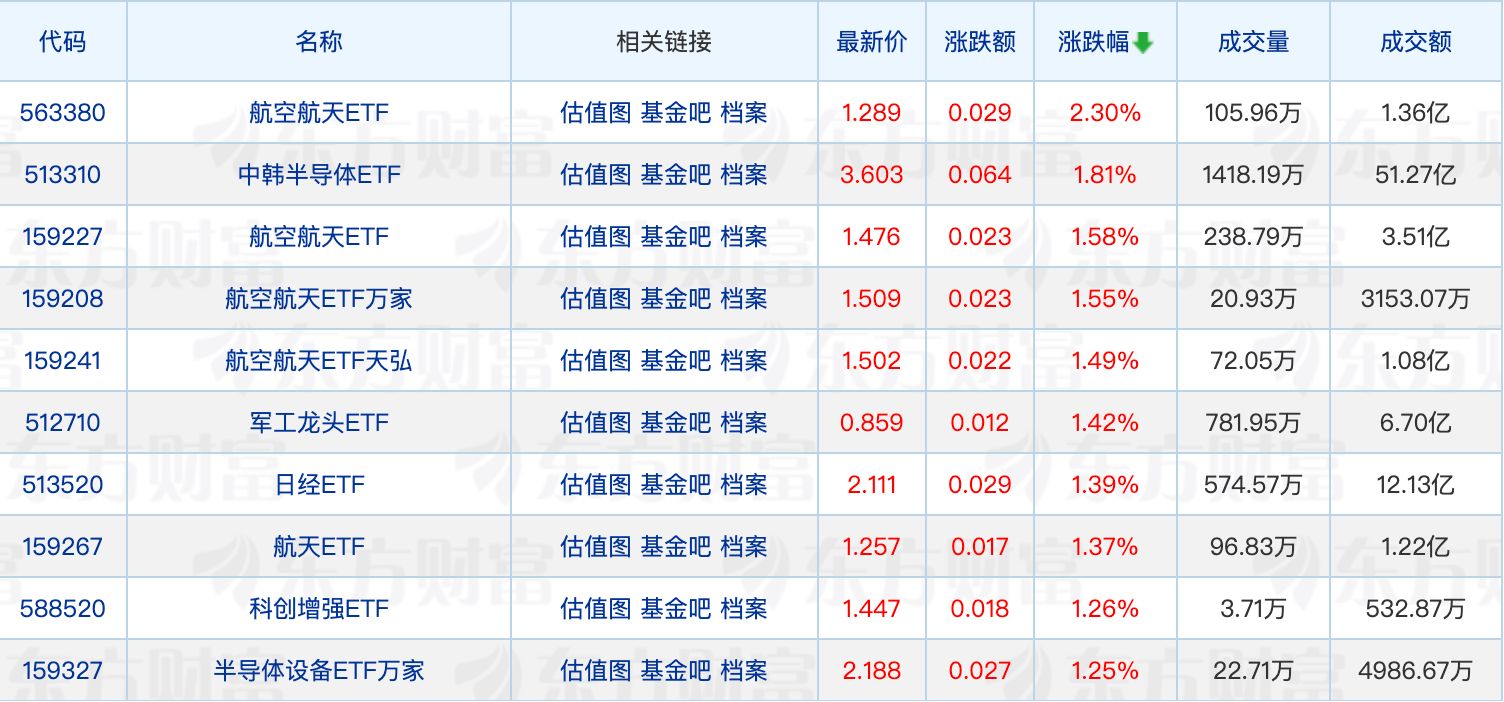
Group 1 - The scale of cross-border ETFs has returned to 1 trillion yuan, reaching 1 trillion yuan again as of February 11, with Hong Kong stock-themed ETFs totaling 822.45 billion yuan [1] - Baodao Fund announced the establishment of the Baodao Xinghang Mixed Fund, with the company investing 8 million yuan of its own funds during the fundraising period [2] - A total of 12 commercial real estate REITs have been filed and accepted since the pilot program began on December 31, 2025, with 11 in the Shanghai market and 1 in the Shenzhen market [3] Group 2 - Ren Xiangdong has reduced holdings in Dalian Technology, with the number of shares held by his managed funds decreasing by 119,400 shares and 63,800 shares respectively as of February 6 [4] - Yan Siqian has been appointed as the new fund manager for the Penghua Fengsheng Bond Fund, marking her first management role in a bond fund [5] Group 3 - The ETF market experienced a day of volatility, with all three major indices declining, while the aerospace sector showed strength with the aerospace ETF rising by 2.30% [6] - Oil and gas-related ETFs saw a collective decline, with the largest drop being 4.21% for the Boshi Oil and Gas ETF [7] Group 4 - The global semiconductor materials market is characterized by "long-term growth and cyclical fluctuations," with a restructuring of the regional landscape accelerated by domestic production trends [8] - Recent government policies have provided robust support for the development of the semiconductor materials industry, creating a comprehensive empowerment system [8]
美好医疗股价涨5.13%,鹏华基金旗下1只基金位居十大流通股东,持有357.58万股浮盈赚取600.74万元
Xin Lang Cai Jing· 2026-02-13 06:21
Group 1 - The core viewpoint of the news is that Meihao Medical has seen a stock price increase of 5.13%, reaching 34.41 yuan per share, with a trading volume of 464 million yuan and a turnover rate of 3.71%, resulting in a total market capitalization of 19.575 billion yuan [1] - Meihao Medical, established on July 15, 2010, and listed on October 12, 2022, specializes in the design, development, manufacturing, and sales of precision components and products for medical devices [1] - The revenue composition of Meihao Medical includes: 59.48% from home respiratory machine components, 14.61% from home and consumer electronics components, 10.33% from other medical product components, 8.16% from cochlear implant components, 5.63% from precision molds and automation equipment, 1.09% from other categories, and 0.70% from proprietary products [1] Group 2 - Among the top circulating shareholders of Meihao Medical, Penghua Fund's Penghua New Emerging Industries Mixed A (206009) increased its holdings by 63,000 shares in the third quarter, now holding 3.5758 million shares, which accounts for 2.29% of the circulating shares [2] - The Penghua New Emerging Industries Mixed A fund, established on June 15, 2011, has a latest scale of 3.215 billion yuan, with a year-to-date return of 10.88% and a one-year return of 50.4% [2] - The fund manager, Liang Hao, has a tenure of 14 years and 219 days, with a total fund asset scale of 10.837 billion yuan, achieving a best return of 354.33% and a worst return of -31.55% during his tenure [2]
鹏华闫思倩新任债基经理 绩优权益赋能“固收+”成趋势
Mei Ri Jing Ji Xin Wen· 2026-02-13 05:15
Group 1 - The core point of the news is the frequent changes in public fund managers, with notable shifts occurring just before the Spring Festival, including the appointment of Yan Siqian as the new manager of Penghua Fengsheng Bond Fund [1][5][6] - Yan Siqian, previously focused on equity investments, is now managing a bond fund for the first time, indicating a diversification of her portfolio management experience [2][3] - The trend of integrating high-performing equity managers into "fixed income +" products is gaining traction in the industry, as seen with other fund managers like Wang Yunpeng and Fang Chang [3][4] Group 2 - The frequency of fund manager changes is attributed to strategic adjustments by institutions and personal career considerations, with nearly 500 fund managers having left their positions since the beginning of 2025 [6][7] - The shift from individual star managers to team-based platforms is influencing the talent flow within the public fund industry, prompting a need for investors to focus on the overall research capabilities of firms rather than individual managers [7][8] - The recent changes in fund management personnel reflect a broader industry trend towards exploring new investment strategies, particularly in response to the underperformance of traditional bond markets [4][5]
科创综指ETF鹏华(589680)红盘向上,OpenAI推出首款采用Cerebras芯片的模型
Xin Lang Cai Jing· 2026-02-13 02:50
Group 1 - Semiconductor chips are gaining strength, with OpenAI launching its first AI model GPT-5.3-Codex-Spark based on Cerebras Systems' chips, aimed at competing in the AI programming assistant market [1] - Wanlian Securities indicates that the demand for computing power is on the rise, with the PCB and storage sectors expected to maintain a favorable cycle. The development of AI is driving upgrades in PCB technology, increasing demand for high-layer and HDI PCBs [1] - China's PCB industry leads globally, with major domestic PCB manufacturers accelerating capital expenditures to expand high-end PCB production capacity. The demand for copper-clad laminates (CCL) is expected to benefit from PCB expansion, with recent price increases likely to enhance corporate profitability [1] Group 2 - As of February 13, 2026, the STAR Market Composite Index (000680) saw significant gains in component stocks, with Jingjin Electric up 12.77% and Fuchuang Precision up 12.11% [2] - The STAR Market Composite Index ETF (Penghua, 589680) closely tracks the STAR Market Composite Index, reflecting the overall performance of STAR Market listed companies, including dividend income [2] - The top ten weighted stocks in the STAR Market Composite Index as of January 30, 2026, include Haiguang Information and Cambrian, accounting for 22.79% of the index [2]
基金配置策略报告(2026年2月期):股市短期震荡,从叙事走向验证
HWABAO SECURITIES· 2026-02-13 02:25
Market Overview - In January 2026, the equity market showed a good profit effect, with major indices rising, while the bond market stabilized after fluctuations[3] - The performance of cyclical and growth sectors remained strong, with non-ferrous metals, media, and oil and petrochemicals leading gains at 23.02%, 18.85%, and 14.95% respectively[3] - Conversely, the banking, comprehensive finance, and transportation sectors experienced declines of -6.18%, -4.46%, and -0.89% respectively[3] Bond Market Insights - The bond market showed resilience after a period of decline, with major bond fund indices recording gains of 0.24%, 0.20%, and 0.16% for long-term, bond index, and short-term pure bond indices respectively[12] - The performance of first-level, second-level, and convertible bond fund indices increased by 0.85%, 1.65%, and 6.90% respectively, following the strength of the equity market[12] Investment Strategy - The report suggests a balanced allocation strategy in February, focusing on sectors with strong profit elasticity and clear benefits from technological advancements, particularly in "light, electricity, and storage" segments[4] - Traditional dividend stocks are recommended as stabilizing components in investment portfolios, enhancing risk management[4] Risk Considerations - The report emphasizes the need for caution in the bond market, advising against extending duration too much due to the current narrow credit spreads and potential challenges in capital gains[6] - It highlights the importance of monitoring policy signals and maintaining a diversified allocation to mitigate risks in a complex market environment[6] Performance Metrics - The active equity fund selection index has achieved a cumulative net value of 1.5819 since its inception on May 11, 2023, outperforming the CSI 930950 index by 25.37%[23] - The short-term bond fund selection index has a cumulative net value of 1.0481, with an excess return of 0.5456% relative to its benchmark since December 12, 2023[31]