
Coach

Search documents
Apple shutters store in China for first time ever as struggles mount in second-largest market
New York Post· 2025-07-29 15:15
Core Insights - Apple is closing its first store in China, located in Dalian's Parkland Mall, due to struggles in the Chinese smartphone market [1][2] - The closure is part of a broader trend of declining consumer spending in China, affecting various retailers including luxury brands [2] - Apple has reported a significant decline in sales in China, with a total revenue of $66.95 billion last year, down nearly 10% from its peak [5] Group 1: Store Closure and Market Conditions - The closure of the Dalian store marks Apple's first shutdown in China since 2008 [1] - The Parkland Mall has seen several retailers exit, prompting Apple's decision to close its store [2] - The Chinese government has initiated stimulus programs to boost spending on smartphones and electric vehicles [3] Group 2: Sales Performance and Competition - Apple has experienced a sales decline in China for six consecutive quarters, with a 25% drop in the final quarter of the last year [3][5][6] - The company's market share in China fell to 15.5% last year, down from 17.9% the previous year, due to increased competition from local brands like Huawei, Xiaomi, and Vivo [8] - Despite the closure, Apple plans to open a new store in Shenzhen and maintain its other store in Dalian, expecting to end the year with 58 stores in China [8][9]


Consumers want high quality goods at reasonable prices, says Jim Cramer
CNBC Television· 2025-07-28 23:58
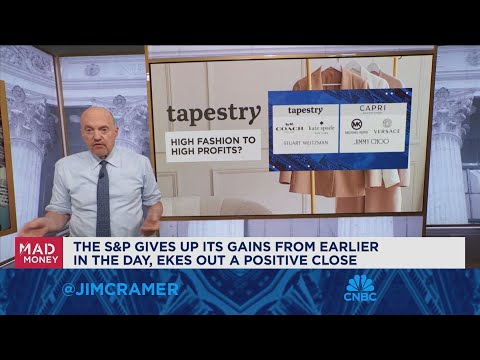
Acquisition & Strategy - Tapestry's attempted $85 billion acquisition of Capri Holdings was blocked by the FTC due to concerns about creating an excessively concentrated player in the accessible luxury handbags market [1][2] - Wall Street disliked the Capri deal, fearing Tapestry would overstretch its balance sheet to acquire a consistently worse operator [3] - Tapestry redeemed deal debt and announced a $28 billion buyback program, including a $2 billion accelerated share repurchase program, representing roughly 15% of shares outstanding [6][7] - Tapestry sold its Steuart Weitzman brand to focus on the core Coach brand and turning around Kate Spade [8][9] Financial Performance & Market Dynamics - Tapestry's stock has increased 148% since the merger was blocked and is up 69% for the year [2] - Coach's revenue growth accelerated from 2% to 15% on a constant currency basis [11][12] - Tapestry delivered substantial top and bottom-line beats, raising full-year earnings forecast by $025 [10] - Kate Spade's constant currency revenue growth has declined for eight straight quarters, down 12% [16] Future Outlook & Risks - Tapestry aims to turn around Kate Spade by emulating Coach's strategies, targeting younger consumers and developing new products [17] - The stock trades at just under 22 times this year's earnings estimate, with 18% earnings growth, but is considered inherently risky given its recent performance [19][20] - The report suggests a potential buying opportunity if Tapestry reports a good quarter that doesn't fully satisfy shareholders, leading to a sell-off [20]

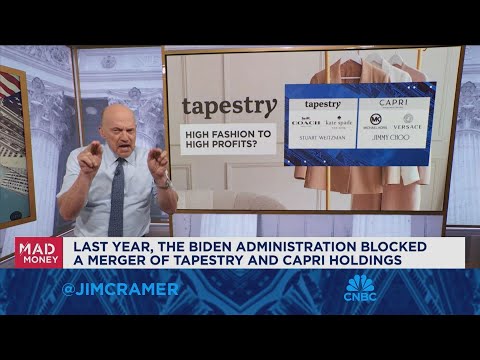
Jim Cramer on if Tapestry is worth adding to your portfolio
CNBC Television· 2025-07-28 23:44
>> Late last year, the Biden administration's Federal Trade Commission blocked yet another merger. Tapestry's $8.5% billion acquisition of Capri Holdings. The deal would have United six fashion accessory brands varying sizes under one roof Tapestry's coach Kate Spade, Stuart Weitzman and Capri's.Michael Kors, Versace and Jimmy Choo. The FTC argued that this would create an excessively concentrated player in the, quote unquote, accessible luxury handbags market, and the judge agreed. But a funny thing has ha ...
The level of tariffs will dictate retail stock price sentiment, says Dana Telsey
CNBC Television· 2025-07-03 17:57
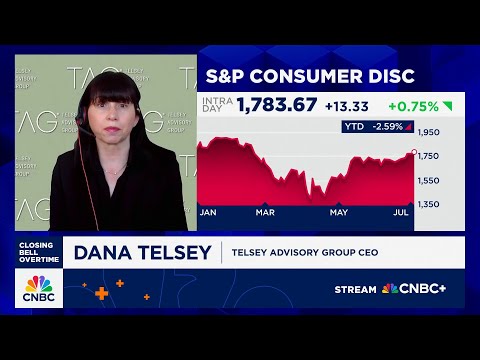
Sector Performance & Rebound Potential - Consumer discretionary sector is the worst performing sector this year, but may rebound in the second half [1] - Product newness and tariff implementation will dictate the sentiment in the second half of the year [3] Consumer Behavior & Retailer Strategy - Customers are trading down, with Walmart's biggest growth coming from higher-income consumers [4] - Companies are being more cautious with inventory for the holiday season due to tariffs [4] - Value, discounters, and brand leaders are key, with revivals also contributing to growth, such as Wolverine Worldwide's Sakin up 30% [7] Brand & Product Dynamics - Brand leaders with newness drive demand, like Birkenstock's closed-toe shoes and collaborations such as Levi's and Nike [5] - Unique items allow for better pricing, but overall price upticks have been limited [5][6] Trade & Tariffs - Vietnam tariffs include a 20% tariff on exports to the US and a 40% transshipment tariff on goods from third countries, potentially targeting China [8][9] - Supply chain dynamics are challenging, with freight expenses as a headwind and potential price increases in the mid to high single-digit range [9] - Retailers can navigate tariffs by diversifying sourcing, sharing costs with manufacturers, and raising prices to consumers [10] - Companies suspended earnings guidance due to uncertainty about tariff impacts on margins and costs [10] - Shifting sourcing away from North America due to high labor costs, with tariff levels dictating stock prices [11]
How Coach won over Gen Z
CNBC· 2025-07-01 15:00
Coach purses were a staple in the early 2000s, worn by teens at the mall and celebrities on the red carpet. The monogram design with a double C logo was everywhere. But by the 2010s, the brand fell out of favor.Its luxury reputation suffered and sales plummeted. The company wiped out about 60% from its market cap between its 2012 peak to mid 2014. But Coach is back.The girls came through. Coach is back. mainly among Jenzi consumers who are driving a lot of its growth.Fashion always looks to the youngest gen ...
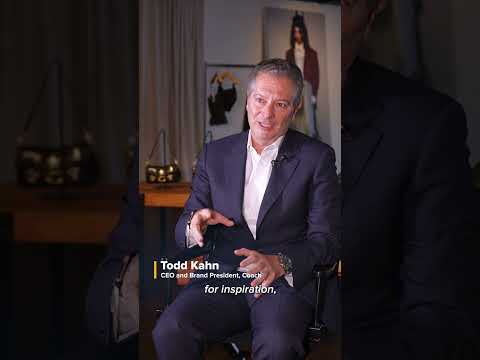
How Coach got its cool back
CNBC· 2025-06-25 12:00
Core Insights - Coach has successfully rebranded and attracted younger consumers, with over two-thirds of nearly 900,000 new customers in North America being Gen Z and millennials [1][2] - The company reported a 15% revenue growth year-over-year and achieved a gross margin of 77.1% [2] - Coach's market capitalization increased by approximately 140% from January 2020 to January 2025 [5] Brand Strategy - The focus on the "timeless Gen Z client" has led to positive outcomes for Coach, enhancing its brand image and market presence [1][2] - Successful product launches, such as the Brooklyn, Tabby, and Rogue handbags, have contributed to Coach's resurgence, with the Brooklyn being named the hottest fashion product of Q4 last year [3] - Demand for Coach products on the global shopping platform Lyst increased by 332% year-over-year [3] Customization and Innovation - Coach has embraced customization, allowing customers to purchase and create personalized bag charms, with searches for related items on Pinterest growing significantly [4] - The introduction of immersive concept stores, Coach Play, and the expansion into hospitality with Coach Coffee shops reflect the brand's innovative approach [4] Market Position - Coach is recognized for transforming from a mediocre mall brand to a credible luxury contender, showcasing its ability to elevate brand perception in a competitive market [3][6] - The timing of Coach's strategy aligns well with consumer sentiments regarding value for money in luxury goods [6]
Why Gen Z Fell In Love With Coach
CNBC· 2025-06-23 16:00
Brand Revival & Market Position - Coach experienced a significant decline in market cap, losing approximately 60% between its 2012 peak and mid-2014, but has since rebounded [1] - In 2024, Coach surpassed Michael Kors to secure the second position in the US luxury handbag market [2] - Coach was recognized as the fifth hottest fashion brand in Q4 2025, marking a climb of ten spots from its previous ranking [2] Strategic Shifts & Initiatives - Coach shifted its focus towards Gen Z consumers, recognizing their influence on fashion trends [2] - The company hired Stuart Vevers as executive creative director to introduce a more youthful aesthetic and move away from heavy logo designs [7] - Coach closed underperforming stores and reduced discounting to rebuild brand equity [8] - Tapestry acquired Stuart Weitzman for $574 million in 2015 and Kate Spade for $24 billion in 2017 [9] - The holding company Coach Incorporated was renamed Tapestry in October [9] Financial Performance & Growth - In 2021, Coach's sales grew by 16% year-over-year and 15% compared to pre-pandemic levels [10] - Coach accounted for 74% of Tapestry's revenue that year [11] - Tapestry's market cap has expanded by approximately 140% over the last five years [11] - Coach's revenue increased by 15% in Q3 2025 compared to the same quarter of the previous year [14] Market Dynamics & Future Opportunities - Demand for Coach's products increased by 332% year-over-year [15] - Coach generates about 60% of its sales in North America, with growing international appeal, especially in Asia [17] - The brand sees significant growth potential with the increasing number of women globally who can afford a handbag over $100 [21]
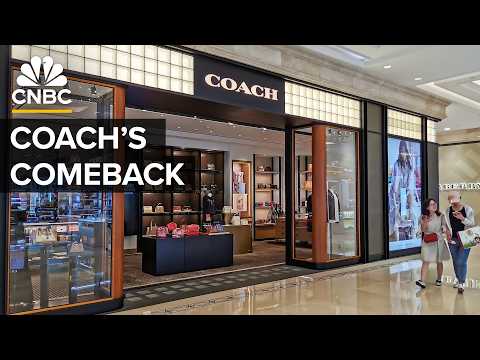
特斯拉下乡,宝马狂降18万,防晒衣不防晒,618你消费了啥?
Sou Hu Cai Jing· 2025-06-18 13:18
Group 1: Tesla and New Energy Vehicles - The Ministry of Industry and Information Technology, along with other government bodies, has launched a campaign for new energy vehicles to enter rural markets, with 124 models including Tesla's Model 3 and Model Y being selected [1] - Tesla's entry into the rural market is driven by increasing demand for quality, performance, and environmental attributes among rural consumers, supported by improved infrastructure and stable electricity coverage [1] - Tesla's pricing strategy aligns well with the needs of rural consumers, providing an attractive purchasing option and enhancing its competitive edge in this market [2] Group 2: Luxury Car Market Dynamics - The automotive industry is experiencing a price war, with traditional luxury brands like Mercedes-Benz and BMW facing declining sales, prompting them to seek partnerships with local Chinese companies [4][5] - In 2024, the combined global investment of luxury brands (BBA) is projected to exceed €35 billion (approximately ¥270 billion), indicating their commitment to maintaining competitiveness in the Chinese market [4] - The ongoing price reductions by luxury brands create challenges for new entrants in the automotive market, suggesting that the competition is far from over [5] Group 3: Consumer Trends and Product Categories - During the 618 shopping festival, sunscreen clothing emerged as a hot-selling category, with various subcategories being highlighted on e-commerce platforms [7] - The UPF (Ultraviolet Protection Factor) is a critical factor for consumers when purchasing sunscreen clothing, but the increasing number of small and unregulated manufacturers has led to inconsistent UPF labeling [7][8] - The high-end ice cream market in China is becoming increasingly competitive, with Häagen-Dazs facing challenges from brands like DQ, which offers lower prices and a larger number of stores [10] Group 4: Digital Transformation in E-commerce - Digital influencers have transitioned from being supplementary to primary figures in live-streaming sales, with a penetration rate exceeding 60% in the market [13] - JD.com's digital influencers have shown a significant impact on sales, with an average conversion rate increase of 30% during the 618 shopping festival [14] - The ability of digital influencers to operate continuously without downtime provides a competitive advantage in the e-commerce landscape [14] Group 5: Consumer Behavior and Market Impact - The national subsidy program has stimulated consumer spending in various categories, but its recent tapering has led to a split in consumer behavior, with some rushing to purchase before the subsidy ends [16][17] - The subsidy program has primarily benefited larger brands and distributors, exacerbating the market divide and impacting smaller players negatively [17] - The emotional consumption trend among younger consumers is driving significant market growth, with the emotional consumption market projected to reach ¥1.2 trillion this year [19]
2025奢品行业白皮书-小红书&Vogue Business
Sou Hu Cai Jing· 2025-05-23 19:05
Core Insights - The Chinese luxury market is undergoing a structural transformation from "symbolic consumption" to "cultural identity," with Xiaohongshu emerging as a key strategic platform for luxury brands to connect with Chinese consumers, reshaping the consumption decision chain and promoting cultural empathy and resonance [1][19]. Consumer Behavior Changes - High-net-worth individuals show "counter-cyclical" consumption resilience, with 43% indicating they will increase daily luxury goods consumption in the coming year, shifting their focus from materialism to values, culture, and lifestyle experiences [2][24]. - Middle-class consumers are leaning towards "long-termism," emphasizing classic items and product value retention, with discussions around "long-termism" on Xiaohongshu reaching 950 million views [2][26]. - Decision-making factors are evolving from "symbolic consumption" to "cultural identity," with younger consumers prioritizing brand alignment with personal identity, as seen in the "New Chinese Style" fashion content on Xiaohongshu [2][31]. Consumer Segmentation on Xiaohongshu - Xiaohongshu categorizes luxury consumers into six profiles: "Luxury Lifestyle Enthusiasts," "Self-Celebrators," "Trendy Luxury Seekers," "Subtle Luxury Intellectuals," "Luxury Newcomers," and "Socially Conscious Consumers," providing brands with targeted operational strategies [3][66]. Cultural Translation and Resonance - Cultural translation is crucial for localizing luxury brands, with examples like Bulgari's snake-themed exhibition increasing search interest by over 300% and Gucci's bamboo elements bridging Eastern and Western cultures [4][5]. - Events like DeBeers' high-end jewelry dinner and Cartier's art exhibitions leverage Xiaohongshu for deeper brand cultural recognition, with Cartier's event generating over 15 million exposures [6][5]. Full-Scale Transformation - Xiaohongshu's mini-programs and stores are driving a closed-loop system for brands, with Dior's mini-program achieving full-category sales and Longchamp's custom services seeing a 600% increase in DGMV [7][19]. - The collaboration between Xiaohongshu and platforms like Taobao is enhancing the consumer journey from interest to purchase, with brands like Maison Margiela seeing a 70% increase in e-commerce ROI [8][19]. Strategic Importance of Xiaohongshu - Xiaohongshu is positioned as a critical partner for luxury brands in understanding and engaging with the Chinese market, transforming from a social content platform to a strategic high ground for luxury marketing [19][18]. - The platform's unique user-generated content ecosystem fosters emotional resonance and cultural innovation, allowing brands to co-create narratives with consumers rather than merely transporting cultural elements [36][37].

新消费快讯|雪花啤酒与美团歪马送酒达成自营商品代工合作;爱敬集团将出售核心子公司爱敬工业
新消费智库· 2025-04-21 12:17
这是新消费智库第 2 6 2 0 期文章 新消费 新消费导读 1.统一重启小茗同学 2.PLAY COMME des GARÇONSxCONVERSE新联名发布 3.费列罗巧克力推出复活节系列 4.吾岛推出美拉德无蔗糖希腊酸奶 5.伊利推出尚补坊五黑酸奶&美呦酸奶两款新品 6.时尚二手平台Faume获800万欧元融资 7.爱敬集团将出售核心子公司爱敬工业 8.温氏股份等在海南投资成立饲料公司 9.星尘智能完成A轮及A+轮数亿元融资 10.印度DTC时尚品牌Out z idr成功融资350万美元 11.MLB推出2025夏季复古T恤系列 12.Cos tco正式上线同城配送服务 13.科丝美诗泰国新工厂开工 14.雪花啤酒与美团歪马送酒达成自营商品代工合作 15.Coach成为WNBA官方指定手袋 1. 统一重启小茗同学 近日 ,小茗同学的品牌概念实现全新升级,致力于打造一款同学专属的缤纷果味茶;如今时隔一年,小茗同学再次迎来 "大变身", 从果味茶升级到果汁茶。 (食品板) 2. PLAY COMME des GARÇONSxCONVERSE 新联名发布 近日, PLAY COMME des GARÇONS ...