
Helion

Search documents
“CFS与谷歌达成售电协议”:事件点评:200MW售电协议落定,可控核聚变商业化进程加
GUOTAI HAITONG SECURITIES· 2025-07-03 11:06
Investment Rating - The report assigns an "Accumulate" rating for the industry, indicating a potential increase in stock prices relative to the CSI 300 index by over 15% [5][11]. Core Insights - On June 30, 2025, Commonwealth Fusion Systems (CFS) reached a power purchase agreement with Google for 200MW of fusion energy, marking a significant step in Google's energy strategy and accelerating the commercialization of nuclear fusion [3][5]. - The partnership is expected to drive the development of the controllable nuclear fusion industry, with CFS planning to construct its first commercial fusion power plant, ARC, by 2030, which will have a capacity of approximately 400MW [5]. - The report highlights the increasing demand for clean energy solutions driven by the surge in energy consumption from AI technologies, positioning nuclear fusion as a key solution for sustainable energy needs [5]. Summary by Sections Investment Highlights - The report emphasizes the importance of focusing on specific segments such as high-temperature superconducting magnets, power supplies, and detection systems [5]. - Beneficiary stocks include: 1. Midstream Equipment: Lianchuang Optoelectronics, Guoguang Electric, Antai Technology, Hezhuan Intelligent, Yingliu Co., Xuguang Electronics, and Wanyi Technology. 2. Upstream Materials: Yongding Co. and Jingda Co. [5]. Market Context - The agreement with Google signals strong market demand for fusion energy, which could accelerate research and capital investment in the sector [5]. - The competitive landscape includes other companies like Helion and TAE Technologies, which are also pursuing fusion commercialization, potentially leading to rapid industry growth [5]. Financial Metrics - The report provides a valuation table for related stocks, indicating their market capitalization and earnings per share (EPS) projections for 2025 and 2026 [6].

Google inks its first fusion power deal with Commonwealth Fusion Systems
TechCrunch· 2025-06-30 13:00
Core Insights - Google has announced a deal to purchase 200 megawatts of electricity from Commonwealth Fusion Systems' (CFS) first commercial power plant, Arc, which is expected to be operational in the early 2030s [1][2] - This agreement represents the second instance of a major corporation committing to buy power from a fusion startup, following Microsoft's agreement with Helion in 2023 [3] Company Developments - CFS is currently constructing a demonstration reactor named Sparc, located near Boston, with completion expected in 2026 [2] - The company has raised a total of $1.8 billion in its most recent funding round, which closed in 2021, and is preparing for a new funding round that is expected to be comparable [2] Industry Trends - The demand for electricity is surging due to the growth of AI and cloud services, with forecasts indicating that data center power demand could double by the end of the decade [4] - Google is diversifying its energy investments across various time horizons, focusing on solar, wind, and batteries in the short term, while also exploring geothermal and small modular nuclear reactors [7] Strategic Insights - Google purchased 8 gigawatts of renewable power in 2024, which is double the amount acquired in 2023, indicating a strong commitment to expanding its renewable energy portfolio [8] - The company acknowledges the limitations of traditional renewables in certain regions and is considering fusion energy as a viable long-term solution to meet its energy needs [9][10] Future Outlook - CFS's CEO expresses confidence that the company can deliver power to Google within a decade, anticipating a significant increase in demand for fusion energy once the first power plant is operational [10] - Fusion energy is viewed as a promising technology that can provide consistent power without dependence on geography or weather, potentially allowing for global scalability [11]


招商证券:核聚变产业化加速 关注电源系统
智通财经网· 2025-06-30 09:07
Group 1 - The core viewpoint of the report highlights the advancements in Tokamak technology represented by EAST and Circulation 3 since 2025, with the BEST project of fusion energy operations starting its assembly ahead of schedule and initiating bidding processes [1][2] - Multiple private enterprises have entered the field, with new startups emerging since 2024, such as Xingneng Xuanguang, Nova, and Xianjue, receiving support from government departments and internet capital [1][2] Group 2 - The power system is identified as a core component of controllable nuclear fusion devices, with its value proportion being second only to the magnetic system in the overall fusion system [3] - The barriers to entry for power systems are high, with companies that have long-term technical accumulation expected to benefit, as the requirements for controllable nuclear fusion power systems are stringent and necessitate customized development [4]

可控核聚变系列报告(1):核聚变产业化加速,关注电源系统
CMS· 2025-06-30 07:49
Investment Rating - The report gives a strong recommendation for Hewei Electric (禾望电气) with a market capitalization of 15.4 billion and a projected EPS of 1.54 for 2025, resulting in a PE ratio of 22.0 [2]. Core Insights - The report highlights the acceleration of the commercialization of controlled nuclear fusion, emphasizing the importance of power systems in midstream manufacturing, power equipment, and renewable energy [1]. - The global nuclear fusion industry is experiencing significant investment and technological advancements, with various countries and private companies increasing their efforts in this field [9][18]. - The power system is identified as a critical component of controlled nuclear fusion devices, with high barriers to entry, suggesting that companies with established technology will benefit [24]. Summary by Sections Section 1: Acceleration of Overseas Nuclear Fusion Commercialization - The report notes that controlled nuclear fusion is nearing the critical stages of combustion and engineering trials, with significant government and private sector investments in the U.S., U.K., Japan, and the EU [9][11]. - Various technological routes for nuclear fusion are being explored, including magnetic confinement and inertial confinement, with the tokamak being the most mature technology [12][14]. Section 2: China's Concurrent Efforts - China is ramping up its nuclear fusion research, with state-owned enterprises and private companies collaborating to accelerate project implementation [18][19]. - The report mentions the establishment of new companies and projects, such as Fusion New Energy (聚变新能) and China Fusion Energy Co., which aim to attract investment and expedite development [19][23]. Section 3: Importance of Power Systems in Nuclear Fusion - Power systems are crucial for providing energy to controlled nuclear fusion devices, with significant cost implications, especially in the field-reversed configuration (FRC) route where power systems may account for nearly 40% of costs [24][39]. - The report details the complexity and high standards required for power systems, particularly in tokamak and FRC technologies, highlighting the need for companies with relevant technological expertise [30][40]. Section 4: Company Analysis - The report provides financial metrics for key companies in the nuclear fusion sector, including Hewei Electric, which is strongly recommended for investment due to its promising financial outlook [2]. - Other companies mentioned include Aikesaibo (爱科赛博) and Xuguang Electronics (旭光电子), which are also involved in the nuclear fusion supply chain but do not have specific ratings [2][24].
黄仁勋首次投资核电,6.5亿美元建首座商业反应堆,预计2030投产
量子位· 2025-06-29 07:43
Core Viewpoint - Nvidia's venture arm NVentures has invested in TerraPower, a nuclear energy company founded by Bill Gates, marking a significant entry into the nuclear sector by Jensen Huang [1][4]. Group 1: Investment and Financing - TerraPower has secured $650 million in funding to construct its first commercial nuclear power plant, the Natrium reactor project, located in Wyoming, USA [2]. - The financing round also included investments from South Korea's Hyundai and Bill Gates himself [4]. Group 2: Technology and Capacity - The Natrium reactor will generate 345 megawatts of power, with a peak output of 500 megawatts, sufficient to power approximately 400,000 homes [3]. - The reactor employs sodium-cooled fast reactor (SFR) technology, which uses liquid sodium as a coolant, enhancing safety and simplifying design compared to traditional water-cooled reactors [13]. - The Natrium system integrates a gigawatt-level molten salt energy storage system, allowing for flexible power output adjustments to meet grid demands [15][17]. Group 3: Future Developments - TerraPower is also developing molten chloride fast reactor (MCFR) technology, which operates at higher temperatures, potentially increasing efficiency and providing process heat for industrial applications [19]. - Both SFR and MCFR technologies are part of the fourth generation of nuclear energy systems, which include various innovative approaches to nuclear power generation [21]. Group 4: Industry Trends - The surge in nuclear investment is driven by the increasing electricity demand from AI data centers, with notable figures like Sam Altman actively investing in nuclear energy companies [37][38]. - Other tech giants, such as Amazon and Google, are also making significant investments in nuclear energy, indicating a broader trend within the industry [46]. Group 5: Additional Applications - TerraPower is not solely focused on nuclear power; it is also exploring the use of nuclear technology for cancer treatment, specifically through the development of Ac-225 for targeted alpha therapy [48][49].

“万亿市值潜力”?欧洲核聚变初创企业吸引创记录投资
Hua Er Jie Jian Wen· 2025-06-12 00:33
Core Insights - Proxima Fusion, a German startup, has raised a record €130 million in funding, marking the largest financing round in the European fusion sector [2][3] - The company aims to develop a stellarator fusion device, which contrasts with the traditional tokamak approach, potentially offering greater plasma stability and commercial viability [3][4] Funding and Investment - The funding round was led by Cherry Ventures and Balderton Capital, with Cherry Ventures' partner expressing confidence in Proxima's potential to address significant global challenges [2] - Proxima Fusion was founded two years ago with an initial seed funding of €7 million from the Max Planck Institute for Plasma Physics [2] Technology and Development - Proxima Fusion is focusing on the development of a stellarator, which has a more complex design than the tokamak but is believed to be better suited for commercial power generation [3] - The company plans to construct a "Stellarator Model Coil," a powerful magnet, by 2027, which is seen as a critical technological milestone [4] Future Plans - Proxima aims to build a demonstration plant by 2031, with an estimated cost of €1 billion, and hopes to secure partial funding from the European government [4] - The ultimate goal is to establish the first commercial fusion power plant in the 2030s, although the commercialization of fusion energy still faces significant uncertainties [4]
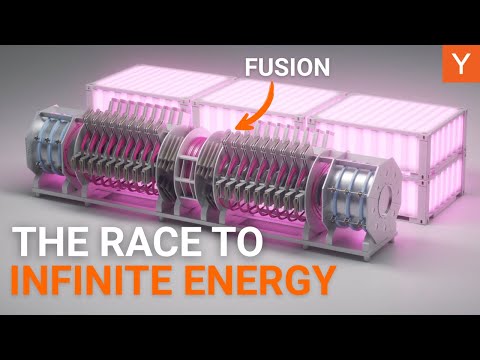
Fusion Energy Will Power the AI Boom
Y Combinator· 2025-06-06 14:00
These massive data centers are the beating heart of the AI boom that's reshaping our world and they're hungry for more electricity. That's one of the reasons that for the first time in a decade, demand for energy in America is spiking. To keep up, we're burning more and more fossil fuel and fast.But there's another path, a clean, safe, virtually limitless source of power. Fusion energy. Fusion is the way the sun works.Only here on Earth, we've actually struggled to be able to do it in a commercializable, co ...
你对 AI 说的每一句「谢谢」,都在烧钱
3 6 Ke· 2025-05-03 04:49
Group 1 - The core idea of the article revolves around the environmental impact of AI interactions, particularly the energy and water consumption associated with AI models and data centers [1][3][4] - OpenAI CEO Sam Altman humorously estimated that the cost of energy for polite interactions with AI could reach millions of dollars, indicating that such expenses are still considered worthwhile [1][4] - AI data centers are likened to modern "factory smokestacks," consuming vast amounts of electricity, with a typical AI data center using as much power as 100,000 households [4][6] Group 2 - The International Energy Agency (IEA) projects that global data center electricity consumption will rise from 415 terawatt-hours (TWh) in 2024 to over 1,300 TWh by 2035, surpassing Japan's current total electricity consumption [6] - AI models not only consume electricity but also require significant water resources for cooling, with the water needed for training models like GPT-3 comparable to that required for cooling a nuclear reactor [9][11] - The energy consumption during the inference phase of AI models is expected to exceed that of the training phase, leading to increased long-term energy demands [11][12] Group 3 - The article discusses the psychological aspects of human-AI interaction, noting that users often anthropomorphize AI, treating it as a conscious entity despite its lack of emotions [13][17] - Research indicates that polite language can influence AI responses, with users reporting that courteous interactions yield more comprehensive and human-like answers from AI [21][22] - The potential for AI to reflect human behavior raises concerns about the implications of how users interact with AI, as seen in past incidents where AI systems have been manipulated or have produced harmful outputs [26][27]

How the U.S. is losing ground to China in nuclear fusion, as AI power needs surge
CNBC· 2025-03-16 13:00
Core Insights - The race between China and the U.S. to achieve grid-scale nuclear fusion energy is intensifying, with China investing significantly more and accelerating project development [1][7][8] - Nuclear fusion is considered the "holy grail" of clean energy, offering four times more energy per kilogram of fuel than traditional nuclear fission and four million times more than coal, with a projected market value of at least $1 trillion by 2050 [2][3] Investment Landscape - Private investment in U.S. fusion startups has surged to over $8 billion, a significant increase from $1.2 billion in 2021, with 25 out of 40 member companies of the Fusion Industry Association based in the U.S. [5][8] - China is reportedly investing $1.5 billion annually in fusion research, while U.S. federal funding has averaged about $800 million annually [11][12] Technological Developments - The U.S. achieved a historic first fusion ignition in 2022 at the Lawrence Livermore National Ignition Facility, producing net positive energy [5] - China is rapidly constructing new fusion projects, including a massive facility that is expected to be twice the size of the U.S. National Ignition Facility [13][14] Research and Development - China has surpassed the U.S. in the number of fusion patents and has ten times the number of doctorates in fusion science and engineering [19] - U.S. fusion projects have largely focused on upgrading existing machines, while China is attracting talent with new projects [18][20] Supply Chain and Material Development - China is investing ten times more than the U.S. in advanced material development necessary for fusion projects, aiming to dominate the supply chain for critical materials [21] - The efficient supply chain in China has enabled rapid advancements, with companies like Energy Singularity achieving significant milestones in a short time frame [21] Future Outlook - Helion aims to deliver fusion power to the grid by 2028, while Commonwealth Fusion Systems plans to bring its first fusion power plant online in the early 2030s [22] - The ultimate goal is to establish a mature fusion industry capable of producing energy for global use, including powering AI centers [22]


【风云题材】全天题材热点及涨停复盘汇总20250127
市值风云· 2025-01-27 10:06
全 天 成 交 额 缩 量 至 1.12 万 亿 元 。 大 盘 高 开 低 走 , 大 盘 股 稳 指 数 , 小 盘 股 跌 幅 靠 前 , 涨 跌 家 数 1816:3422。 作者 | 韦三甲 编辑 | 小白 盘后涨停复盘 1月27日,全天成交额缩量至1.12万亿元。大盘高开低走,大盘股稳指数,小盘股跌幅靠前,涨跌家 数1816:3422。 祝各位乙巳蛇年,天天涨停,夜夜新高,财如旭日腾云起,运似春潮带雨来。 涨停家数39,上个交易日66,涨停封板率下跌至64%,涨停情况在经历上个交易日的回暖之后,今日 再次出现大幅下滑。 银行股全天强势,有稳指数的趋势。算力板块因为DeepSeek的原因,几个细分方向跌幅居前,比如 液冷服务器,带动小盘股跳水。 午后出现较长时间炸板,直至收盘末才实现回封,换手率今日也来到45.7%。对本月个股来说,7连 板是个坎,此前7连板的金奥博也是在次日大幅下跌。 但是人形机器人板块大幅回落,叠加横跨春节,冀东装备开年后走势要看假期期间是否会有新闻刺 激。 2025年1月25日媒体讯,AMD宣布,已将新的 DeepSeek-V3 模型集成到 Instinct MI300XGPU ...