中国长城

Search documents
“工业锈带”变身“生活秀带” 中国长城资产破解天拖地块十年闲置困局
Jin Rong Shi Bao· 2025-08-21 04:02
Core Viewpoint - The successful revitalization of the Tian Tuo site in Tianjin, which had been dormant for over a decade, demonstrates the innovative approach of China Great Wall Asset Management in utilizing "judicial auction + policy collaboration" to manage and revitalize distressed assets, thereby fulfilling its mission as a state-owned financial institution to mitigate risks and serve the real economy [1][4]. Group 1: Project Background - The Tian Tuo site has been stalled for over ten years, initially sold in 2013 for over 10 billion yuan, with plans for over 1 million square meters of mixed-use development [2]. - The project faced significant delays due to liquidity issues among stakeholders, leading to overdue bank loans and the accumulation of non-performing assets [2]. - The site, located in the central urban area of Tianjin, has become a visual contrast to surrounding developed regions, negatively impacting the city's appearance [2]. Group 2: Innovative Disposal Policies - China Great Wall Asset Management collaborated with Tianjin State-owned Assets to initiate the disposal of the Tian Tuo site, coordinating with creditor banks to start judicial disposal of collateral [3]. - The company and Tianjin Municipal Company jointly established a limited partnership SPV, with a 70:30 investment ratio, to acquire the site through judicial auction [3]. - The project aims to enhance community services, including the construction of a new primary school with over 1,000 student places, while preserving historical industrial elements [3][4]. Group 3: Risk Mitigation and Financial Responsibility - The project’s success is attributed to innovative operational policies that address complex issues, utilizing judicial auction methods to sever risk chains and meet multiple stakeholder demands [4]. - China Great Wall Asset Management has actively participated in risk mitigation within the real estate sector, having invested over 10 billion yuan to resolve over 8 billion yuan in construction payments and facilitate the resumption of over 1,000 billion yuan in inventory projects [5]. - The company is committed to supporting high-quality urban renewal and fulfilling its responsibilities as a state-owned financial institution by leveraging its expertise across various business sectors [7].

长城资产等在重庆新设合伙企业 出资额约25亿元
Zheng Quan Shi Bao Wang· 2025-08-21 03:46
Core Insights - A new enterprise named Chongqing Changnan Enterprise Management Partnership (Limited Partnership) has been established with a capital contribution of approximately 2.5 billion yuan [1] - The business scope of the new enterprise includes enterprise management, enterprise management consulting, social economic consulting services, and information consulting services (excluding licensed information consulting services) [1] - The enterprise is co-funded by Wuhu Great Wall Real Estate Risk Asset Revitalization Investment Center (Limited Partnership), which is under China Great Wall Asset Management Co., Ltd. [1]
中国长城资产江苏分公司推动141亿元债务重整
Jin Rong Shi Bao· 2025-08-21 02:46
Core Viewpoint - The successful bankruptcy restructuring of Nanjing Hongtaiyang Co., Ltd. is highlighted as a significant case following the release of the new "National Nine Articles" policy, showcasing the role of China Great Wall Asset Management in supporting the real economy and facilitating high-quality economic development [1][2]. Group 1: Bankruptcy Restructuring Case - Nanjing Hongtaiyang is a leading listed company in the green pesticide and "three medicines" intermediate sector, which faced a debt crisis starting in 2019 due to multiple factors [1]. - The company entered pre-restructuring in November 2022, and by September 2024, it officially entered bankruptcy restructuring after approval from the Supreme People's Court and the China Securities Regulatory Commission [1]. - The restructuring plan was approved by creditors just two months later, and the execution was completed in December of the same year, marking a rapid turnaround in the bankruptcy process [1]. Group 2: Role of China Great Wall Asset Management - China Great Wall Asset Management's Jiangsu branch effectively managed non-performing assets by acquiring bad debt packages from banks and implementing a combination of repayment strategies [2]. - The innovative "cash repayment + stock distribution" plan helped stabilize the employment of nearly 10,000 employees and protect the rights of over 300 creditors and 20,400 small shareholders [2]. - The restructuring led to the systematic resolution of Nanjing Hongtaiyang's debt, which amounted to 14.1 billion yuan, restoring the company's operational capabilities [2].

中国长城股价下跌4.19% 广东发布商业航天支持政策
Jin Rong Jie· 2025-08-19 15:05
Group 1 - The stock price of China Great Wall on August 19 was 17.38 yuan, down 0.76 yuan or 4.19% from the previous trading day [1] - The trading volume on that day was 3.3742 million hands, with a transaction amount of 5.973 billion yuan [1] - The stock opened at 17.95 yuan, reached a high of 18.12 yuan, and a low of 17.29 yuan [1] Group 2 - China Great Wall operates in the computer equipment industry and is a listed company in Guangdong Province [1] - The company is involved in sectors such as 5G and quantum technology [1] - Guangdong Province recently released policies to promote high-quality development in commercial aerospace, which may benefit local companies [1] Group 3 - On August 19, the net outflow of main funds for China Great Wall was 888 million yuan, accounting for 1.58% of the circulating market value [1] - Over the past five trading days, the cumulative net outflow reached 2.149 billion yuan, representing 3.83% of the circulating market value [1]
【19日资金路线图】食品饮料板块净流入超28亿元居首 龙虎榜机构抢筹多股
证券时报· 2025-08-19 11:38
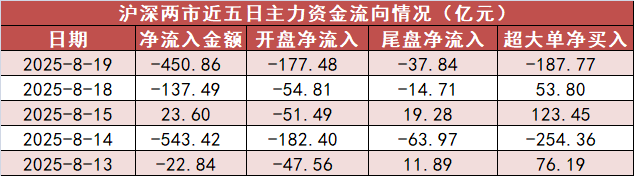
Market Overview - A-share market showed mixed performance with the Shanghai Composite Index closing at 3727.29 points, down 0.02%, and the Shenzhen Component Index at 11821.63 points, down 0.12% [2] - Total trading volume in the A-share market was 26,412.63 billion, a decrease of 1,683.64 billion compared to the previous trading day [2] Capital Flow - Main capital outflow from the A-share market reached 450.86 billion, with an opening net outflow of 177.48 billion and a closing net outflow of 37.84 billion [3][4] - The CSI 300 index experienced a net outflow of 99.23 billion, while the ChiNext saw a net outflow of 231.66 billion, and the STAR Market had a net inflow of 5.22 billion [5][6] Sector Performance - The food and beverage sector led with a net inflow of 28.49 billion, showing a rise of 1.60% [7][8] - Other sectors with net inflows included real estate (18.33 billion) and retail (12.91 billion), while the electronics sector faced the largest outflow at -179.36 billion [8] Institutional Activity - Zhongyou Capital had the highest net inflow among individual stocks with 10.47 billion [9] - Institutions showed interest in several stocks, with notable net purchases in Electronic City and Huasheng Tiancai, while stocks like Yingshi Innovation saw significant net selling [11][12] Institutional Focus - Institutions are currently focusing on stocks such as Dahua Technology, Anfu Technology, and Pengding Holdings, with target price increases ranging from 22.60% to 56.92% [13]

【19日资金路线图】食品饮料板块净流入超28亿元居首 龙虎榜机构抢筹多股
Zheng Quan Shi Bao· 2025-08-19 11:11
Market Overview - The A-share market showed a mixed performance with the Shanghai Composite Index closing at 3727.29 points, down 0.02%, the Shenzhen Component at 11821.63 points, down 0.12%, and the ChiNext Index at 2601.74 points, down 0.17%. The North Star 50 Index increased by 1.27% [1] - Total trading volume in the A-share market was 26,412.63 billion yuan, a decrease of 1,683.64 billion yuan compared to the previous trading day [1] Capital Flow - The main capital in the A-share market experienced a net outflow of 450.86 billion yuan, with an opening net outflow of 177.48 billion yuan and a closing net outflow of 37.84 billion yuan [2] - The CSI 300 index saw a net outflow of 99.23 billion yuan, while the ChiNext experienced a net outflow of 231.66 billion yuan, and the Sci-Tech Innovation Board had a net inflow of 5.22 billion yuan [4] Sector Performance - In the food and beverage sector, there was a net inflow of 28.49 billion yuan, leading among the sectors [6] - Other sectors with net inflows included real estate with 18.33 billion yuan and retail with 12.91 billion yuan. The electronic sector faced the largest net outflow of 179.36 billion yuan [7] Institutional Activity - Zhongyou Capital had the highest net inflow of 10.47 billion yuan among individual stocks [8] - The institutional buying activity was noted in stocks like Dianzicheng and Huasheng Tianc, while stocks like Yingshi Chuangxin saw significant net selling [10] Institutional Focus - Recent institutional ratings highlighted stocks such as Dahua Technology with a target price of 28.56 yuan, representing a potential upside of 56.92%, and Anfu Technology with a target price of 45.00 yuan, indicating a 24.86% upside [12]
差一点,慢牛变成疯牛!| 谈股论金
水皮More· 2025-08-19 10:00
Core Viewpoint - The article emphasizes the need for caution in the current market environment, highlighting the risks of excessive speculation and rapid price increases that could jeopardize the ongoing bull market [3][4][5]. Market Performance - The three major indices in the A-share market experienced slight declines, with the Shanghai Composite Index down 0.02% to 3727.29 points, the Shenzhen Component down 0.12% to 11821.63 points, and the ChiNext down 0.17% to 2601.74 points [2][3]. - The total trading volume in the Shanghai and Shenzhen markets was 25,884 billion, a decrease of 1,758 billion from the previous day [2]. Recent Trends - Over the past five trading days, the ChiNext rose from 2409 points to 2634 points, a gain of 9.3%, while the Shenzhen Component increased from 11351 points to 11919 points, a rise of approximately 5% [3]. - The trading volume surged by 40%, indicating a rapid increase in market activity, which raises concerns about sustainability [3]. Speculative Behavior - There has been a notable trend of speculative trading in concept stocks and micro-cap stocks, with significant price movements observed in companies like Cambrian Biologics, which saw a nearly 50% increase in five days [4]. - The article warns that such speculative behavior could lead to severe market corrections if the trend continues [4]. Sector Performance - The article notes that consumer and real estate sectors showed strength, with stocks like Kweichow Moutai and Wuliangye rising by 0.67% and 0.53%, respectively [5]. - Conversely, sectors such as insurance, securities, and new energy faced declines, with stocks like SMIC and CATL dropping by 3.11% and 1.84% [5]. Company Analysis - The performance of Dongfang Fortune, which reported a 37% increase in half-year earnings, is contrasted with its high price-to-earnings ratio of 38 times, raising questions about its valuation amidst a competitive market [6]. - The article highlights the disparity in performance among brokerage firms, with many experiencing significant year-on-year growth, yet facing challenges in maintaining high valuations [6]. External Market Influences - The Hang Seng Index showed little movement, remaining stable, while the stock of Oriental Selection experienced extreme volatility, with a 50% price swing within an hour, indicating potential market manipulation [7].
【新华500】新华500指数(989001)19日跌0.37%
Xin Hua Cai Jing· 2025-08-19 07:26
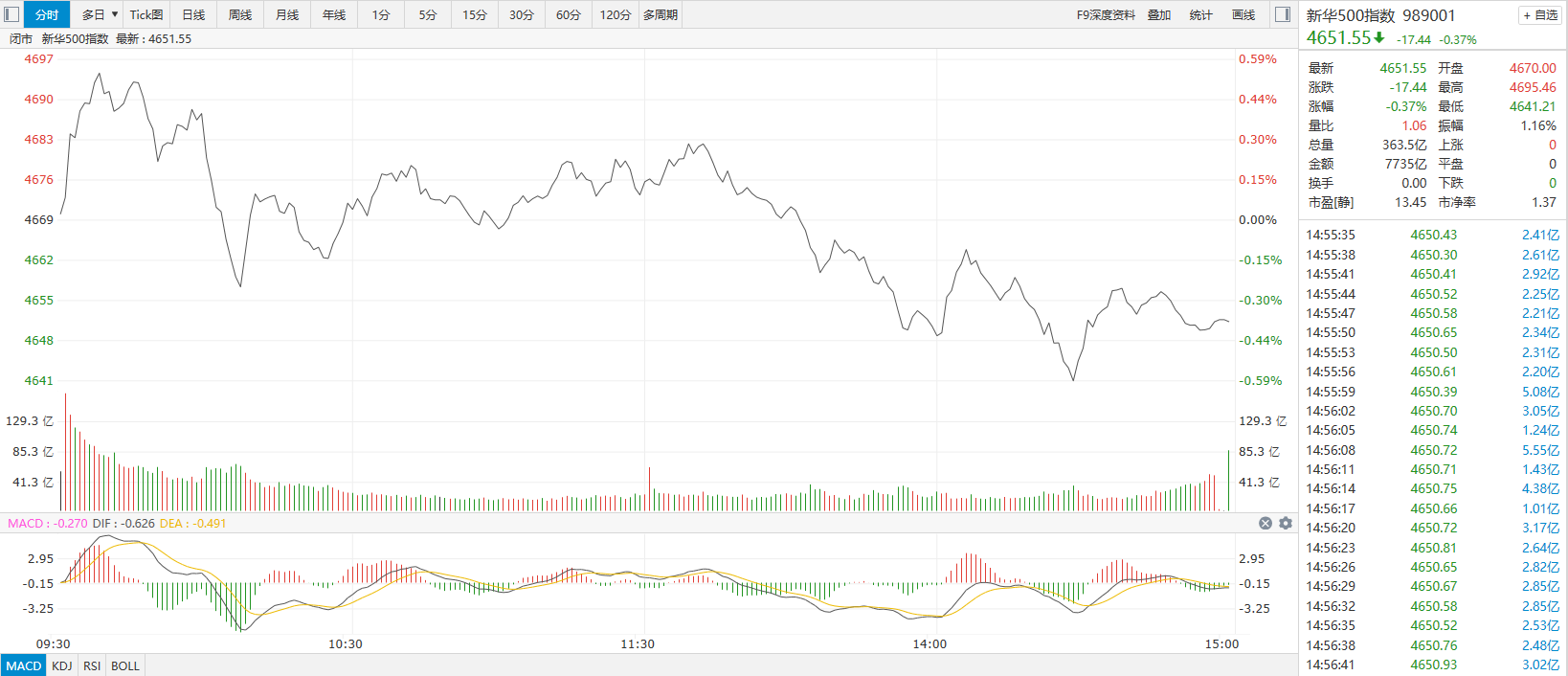
成分股方面,酒鬼酒、工业富联、拓普集团、领益智造、中油资本收于约10%涨停,舍得酒业、中际旭创、国轩高科、国电电力等显著上涨;景嘉微、药明 康德、光启技术、中国长城、同花顺等跌幅靠前。 (文章来源:新华财经) 走势上看,新华500指数(989001)19日微幅高开,指数盘初在涨近0.6%后波动回落,跌约0.25%后逐步反弹,午后在涨约0.3%后再度震荡下行,最终小幅 下跌。 指数盘中最高触及4695.46点,最低触及4641.21点,成分股全天总成交额报7735亿元,总成交额较上一交易日缩量。 新华财经北京8月19日电(罗浩)新华500指数(989001)8月19日收盘下跌0.37%,报4651.55点。 ...
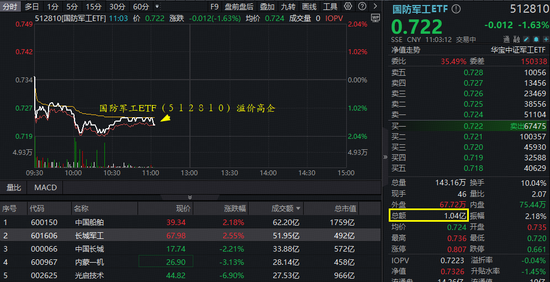
放量回调,国防军工ETF下探2%溢价高企!中国船舶今日复牌,年内4倍牛股再现逆转
Xin Lang Ji Jin· 2025-08-19 03:14
1、短期大涨后部分资金后续或有借事件利好获利了结倾向,可能将造成近期波动加大; 2、市场风险偏好不减、基本面改善(预期)较大、地缘政治刺激频频、资本运作力度提升,共同支撑 着国防军工板块重心继续上移; 3、热点板块如有回调依然应保持关注,同时滞涨标的机会也将逐步出现。 8月19日早盘,国防军工板块大面积回调,代码有"八一" 的国防军工ETF(512810)一度下探2%,场 内放量溢价,不到半日成交已超1亿元,显示买盘资金尤为强劲。 人气成份股走势分化。菲利华、航天科技重挫居前。年内4倍牛股长城军工再现逆转,盘初一度下挫 8%,而后快速拉起冲高,振幅超13%!中国船舶吸并中国重工后今日复牌,高开逾6%,现涨2%。 | | | 分时 多日 1分 5分 15分 30分 60分 · | | | | F9 盘前盘后 壁加 九转 图线 工具 3 (2) > | | | 国防军工ETF 1 | 512810 | | --- | --- | --- | --- | --- | --- | --- | --- | --- | --- | --- | | | | | | 512810[国防军工ETF] 11:03 价 0.722 ...


中国量子计算产业市场现状及发展前景研究报告
Zhi Yan Zi Xun· 2025-08-19 01:43
Investment Rating - The report does not explicitly state an investment rating for the quantum computing industry. Core Insights - The quantum computing industry is rapidly evolving, with significant advancements in technology and increasing market demand driven by artificial intelligence and computational needs. The global quantum computing market is projected to grow from approximately $800 million in 2021 to $5 billion by 2024, representing a substantial increase in market size [22][23]. Summary by Sections 1. Overview of the Quantum Computing Industry - Quantum computing differs significantly from classical computing, utilizing quantum mechanics to solve problems more efficiently. This technology has the potential to revolutionize various fields due to its unique properties such as superposition and entanglement [7][8]. 2. Global Development Status - North America leads the global quantum computing market, followed closely by Europe and China. By 2024, the market shares are expected to be 29.8% for North America, 28.8% for Europe, and 25.2% for China [25]. 3. Market Size and Growth - The global quantum computing market is expected to expand rapidly, with a projected size of $5 billion by 2024, accounting for 63% of the total quantum information industry [22][23]. In China, the quantum computing industry is anticipated to reach 9.04 billion yuan (approximately $1.4 billion) in 2024, reflecting an 82.1% year-on-year growth [51]. 4. Key Enterprises in the Industry - Major companies in the quantum computing sector include IBM, Google, and startups like Quantinuum and PsiQuantum, which are making significant strides in various quantum technologies [32][33]. 5. Industry Policies and Support - Governments worldwide, particularly in the U.S. and China, are increasingly recognizing the strategic importance of quantum computing, leading to substantial investments and supportive policies aimed at fostering innovation and development in this field [28][46]. 6. Investment and Financing Trends - The quantum computing sector has seen a surge in investment, with financing in China reaching 2.93 billion yuan (approximately $450 million) in 2024. The focus is primarily on superconducting quantum computing and ion trap technologies, which are attracting significant capital [56][63].