Temu

Search documents
出海月度观察2025年4月刊
飞书深诺· 2025-05-15 04:50
Investment Rating - The report does not explicitly provide an investment rating for the industry Core Insights - The report highlights strong growth in categories such as automotive parts, home appliances, and gardening due to seasonal demand as summer approaches [10][23] - E-commerce platforms like YouTube Shopping and TikTok Shop are expanding their presence in Southeast Asia, indicating a growing trend in social commerce [2][4] - The introduction of new customs regulations in the US may impact pricing and logistics for cross-border e-commerce [2][6] Market Overview - In April, the Amazon US platform saw significant growth in categories like automotive parts (17.83% growth) and home appliances (13.17% growth) [10] - The report notes that the gardening category also experienced a notable increase in sales, driven by seasonal demand [10][23] - In Germany, the Amazon platform reported a 28.57% growth in gardening products, reflecting similar trends [23] High-Potential Categories - Automotive Parts: Notable subcategories include power steering fluid (135% growth) and brake fluid (92% growth) [12] - Home Appliances: The combination washer and dryer saw a 169% increase in sales [14] - Gardening: Key products include outdoor storage (50% growth) and outdoor power equipment (22% growth) [19][20] - Digital Marketing: ChatGPT introduced shopping features to enhance user experience in e-commerce [4] Investment and Financing Overview - In April, several companies in the AI and robotics sectors secured significant funding, including Butterfly Effect with $75 million and Yunji Intelligent with $100 million [9] - The report emphasizes the growing interest in AI-driven solutions and robotics within the investment landscape [8] E-commerce Trends - The report indicates a shift towards social commerce with platforms like YouTube and TikTok enhancing their e-commerce capabilities [2][4] - Meta's Q1 financial report shows a 16% revenue growth, highlighting the resilience of digital advertising [6] - Pinterest is enhancing its visual search capabilities with AI tools to improve user engagement [6]


中国未雨绸缪压倒了特朗普
3 6 Ke· 2025-05-15 04:17
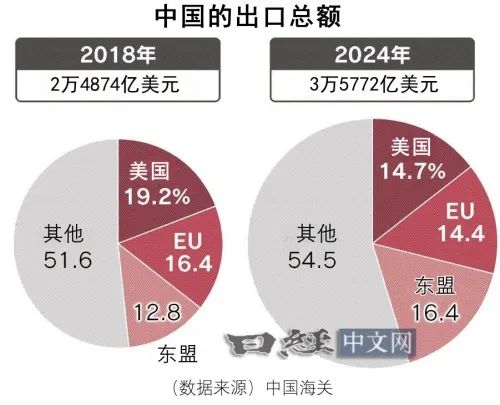
Group 1 - China has strengthened its economic structure since the first Trump administration's trade war, aiming to create an economy that can survive without the U.S. [1] - From 2018 to the present, China's exports to countries outside the U.S. have increased by over $1 trillion, with total exports reaching approximately $3.6 trillion [2] - China has diversified its imports, reducing reliance on the U.S. for agricultural products, such as increasing soybean imports from Brazil and supporting wheat production in Central Asia [4] Group 2 - The U.S. has reduced additional tariffs on China, with the current total tariff rate at 30%, but the burden on China's export industry remains heavy [6] - The ongoing trade conflict may lead to a potential shortage of goods for U.S. consumers by the end of the year, highlighting the failure of Trump's tariff policy [6] - The shift of factories related to major export products, such as computers and smartphones, is already occurring, which may lead to unemployment issues in China [7] Group 3 - China's strategic goal includes the unification of Taiwan, with a strong intent to reduce dependence on the U.S. as a critical part of its long-term strategy [6] - The upcoming U.S. midterm elections in 2026 are a significant consideration for both sides, as consumer behavior during the holiday shopping season may impact trade dynamics [4]

中国未雨绸缪压倒了特朗普
日经中文网· 2025-05-15 03:06
Core Viewpoint - China has strengthened its economic resilience since the first Trump administration's trade war, focusing on structural economic transformation to survive without the U.S. [1] Group 1: Trade Relations and Economic Impact - Since 2018, China's exports to countries outside the U.S. have increased by over $1 trillion, with total exports reaching approximately $3.6 trillion, equating to about twice the annual export amount to the U.S. [2] - The U.S. has reduced additional tariffs on China from 145% to 30%, but the burden on China's export industry remains significant, and the future direction of negotiations is uncertain [3] - The U.S. tariffs on Chinese goods include a 10% base rate and an additional 20% for illegal drug-related imports, totaling 30% [1] Group 2: Strategic Shifts and Future Considerations - China is diversifying its imports, particularly in agriculture, reducing reliance on the U.S. for soybeans and wheat by sourcing from Brazil and Central Asia [2] - The ongoing trade tensions are viewed as a "game of endurance," with the U.S. midterm elections in 2026 being a critical factor, as prolonged high tariffs could lead to product shortages for American consumers [2] - China's dominance in rare earth production, accounting for about 70% globally and 90% in refining, is a strategic advantage that could impact U.S. high-tech industries and military capabilities [2] Group 3: Domestic Economic Challenges - The shift of factories overseas, particularly in the electronics sector, poses risks of unemployment and economic instability in China, even if these changes are temporary during the transition [4] - The potential migration or closure of e-commerce platforms like SHEIN and Temu could further exacerbate job losses and economic challenges [4]
易海创腾创始人兼CEO王志龙受邀出席2025江西跨境电子商务发展交流会
Jin Tou Wang· 2025-05-14 23:32
Group 1: Event Overview - The "2025 Jiangxi Cross-Border E-Commerce Development Exchange Conference" was held in Nanchang, organized by the Jiangxi Provincial Government and attended by over 500 representatives from various sectors [3][4][21] - The conference focused on the theme "Digital-Real Integration, Brand Going Global," aiming to explore new trends and models in the cross-border e-commerce industry and promote high-quality development in Jiangxi Province [4][8] Group 2: Key Speakers and Their Contributions - Ma Peihua, Vice Chairman of the 12th National Committee of the Chinese People's Political Consultative Conference, emphasized the need for high-quality development to address external uncertainties and encouraged the development of new models and formats in cross-border e-commerce [8][10] - Summer Wenyong, Vice Governor of Jiangxi Province, highlighted Jiangxi's historical role in global trade and the importance of overcoming development bottlenecks in cross-border e-commerce [9][12] - Zhang Junkuo, a member of the 14th National Committee, discussed the current economic situation and the need for strategic policy optimization to stimulate market vitality [14][17] Group 3: Insights from Yi Hai Chuang Teng - Wang Zhilong, founder and CEO of Yi Hai Chuang Teng, delivered a speech on using precise internet marketing to assist Chinese manufacturing brands in going global, stressing the shift from "traffic going out" to "brand going out" [5][19] - Yi Hai Chuang Teng has maintained over 50% growth in the past three years, providing integrated marketing services to over 3,000 Chinese enterprises, with a renewal rate of over 80% [21] - The company aims to help Chinese enterprises build brand recognition and competitiveness globally, focusing on market opportunities in North America, Europe, and Southeast Asia [19][21]

DLocal (DLO) - 2025 Q1 - Earnings Call Transcript
2025-05-14 22:00
Financial Data and Key Metrics Changes - Total Payment Volume (TPV) reached $8 billion, reflecting a 53% year-over-year growth and a 5% quarter-over-quarter increase, with a constant currency growth of 72% [6][17]. - Revenue hit a record high of $217 million, up 18% year-over-year and 36% in constant currency [19]. - Gross profit reached $85 million, representing a 35% year-over-year increase or nearly 60% in constant currency [20]. - Net income for the quarter was $47 million, up 57% quarter-over-quarter and 163% year-over-year [25]. - Free cash flow amounted to $40 million, a 22% increase from the previous quarter [26]. Business Line Data and Key Metrics Changes - Cross-border flows grew 14% quarter-over-quarter and 76% year-over-year, reaching $4 billion [17]. - Local to local TPV decreased by 3% quarter-over-quarter but increased by 33% year-over-year [18]. - Pay-ins business grew 2% quarter-over-quarter and 49% year-over-year, while payouts business grew 12% quarter-over-quarter and 61% year-over-year [18]. Market Data and Key Metrics Changes - Strong growth was noted in emerging markets, particularly in Chile, Pakistan, Nigeria, Turkey, and Brazil [7]. - The company experienced robust growth across multiple verticals, including remittances, commerce, financial services, and streaming [7]. Company Strategy and Development Direction - The company is focused on strategic investments in technology and operations to enhance efficiency and expand service offerings [6][11]. - There is a commitment to leveraging automation and AI to drive operational efficiency and optimize performance [10][11]. - The company aims to grow its licensed portfolio to navigate complex regulatory environments, adding three new registrations in the first quarter [13]. Management's Comments on Operating Environment and Future Outlook - Management expressed confidence in the long-term growth potential of emerging markets despite short-term macroeconomic headwinds [30][32]. - The company anticipates continued demand for localized payment solutions as emerging markets gain prominence [33]. - Management reaffirmed full-year guidance and commitment to disciplined execution for sustainable growth [34]. Other Important Information - The Board of Directors approved a dividend policy, with an extraordinary cash dividend of approximately $150 million [27][28]. - The company plans to return 30% of free cash flow as annual dividends starting in 2026 [28]. Q&A Session Summary Question: Growth in Argentina and Mexico - Management indicated that growth in Argentina appears sustainable due to increased interest from global merchants, while Mexico requires better execution to reignite growth [38]. Question: Take Rates in Argentina - The higher take rates in Argentina are considered sustainable due to the nature of the products offered, which include receivables discounting [42]. Question: Operating Expenses - Operating expenses are expected to increase in subsequent quarters, but management emphasized a focus on responsible spending [48][91]. Question: Brazil's Revenue and Gross Profit - Brazil's revenue and gross profit have been impacted by a repricing from a major merchant and a migration to a lower take rate product, but management sees potential for recovery [66][68]. Question: Competition and Market Dynamics - Management acknowledged that share losses in Mexico and Brazil could be attributed to competitive dynamics but expressed confidence in regaining market share through improved execution [78][83]. Question: M&A Opportunities - The company is actively exploring M&A opportunities, particularly in the fintech space, to enhance its capabilities and market position [88].

美国对华小包裹关税被曝再次降低:125%至54%,再至30%
Sou Hu Cai Jing· 2025-05-14 14:16
Core Points - The U.S. has significantly reduced tariffs on small packages from China, dropping from 120% to 30%, which is expected to ease trade tensions between the two countries and provide relief for Chinese e-commerce platforms like Temu and Shein [1][9] - Following recent high-level trade talks, both nations agreed to lower tariffs by 115% within 90 days, marking a potential thaw in the ongoing trade standoff [1][9] - The number of small packages entering the U.S. has surged from approximately 140 million a decade ago to over 1 billion last year, with the value of Chinese exports to the U.S. projected to rise from $5.3 billion in 2018 to $66 billion in 2023 [4][9] Tariff Changes - The new tariff structure includes a 54% tax on small packages, while maintaining a $100 de minimis threshold for duty-free items, and reversing plans to increase this threshold to $200 [1][4] - Despite the reduction, experts indicate that a 54% tariff remains high, causing delays in package deliveries and impacting consumer purchasing behavior [1][4] Consumer Impact - U.S. consumers have increasingly turned to Temu and Shein for affordable products, but recent price hikes on these platforms, including a 377% increase on kitchen paper towels, have made these goods less accessible [5][6][9] - Approximately 48% of small packages are sent to the poorest regions in the U.S., indicating a reliance on affordable imports among lower-income consumers [8] Political Context - The trade war initiated by the Trump administration has disrupted decades of international trade norms, leading to concerns about a potential recession in the U.S. economy [9] - Young Americans, who have become accustomed to affordable fast fashion and online shopping, are expressing frustration over the impact of tariffs on their purchasing power [9][10]

美国降低小包裹关税,但红利时代彻底结束了
3 6 Ke· 2025-05-14 11:16
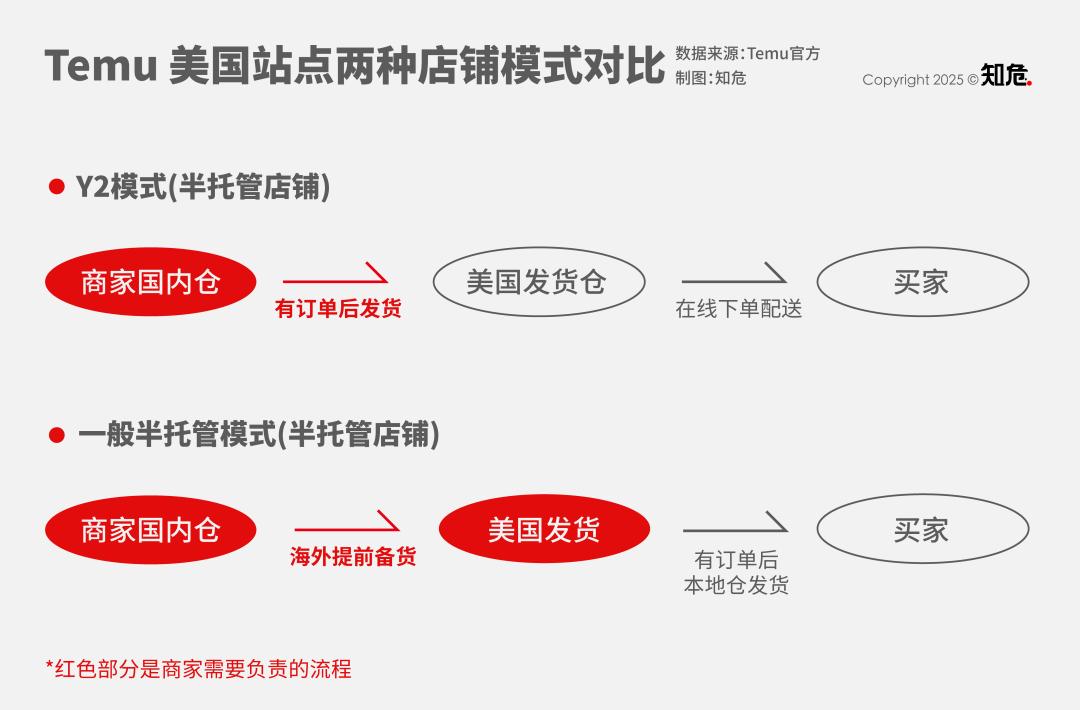
Core Viewpoint - The recent adjustments in U.S. tariff policies, particularly the reduction of small package tariffs from 120% to 54%, represent a significant shift for cross-border e-commerce platforms like Temu and Shein, although they still face increased operational costs and complexities due to ongoing changes in trade regulations [1][2]. Group 1: Tariff Changes and Impact - On May 13, 2023, President Trump revised an executive order, lowering the tariff rate on small packages from China from 120% to 54%, while maintaining a $100 de minimis threshold for customs duties [1]. - The U.S. Customs and Border Protection reported that approximately 1.36 billion packages entered the U.S. in FY 2024, primarily from Chinese e-commerce platforms, highlighting the importance of the small package exemption for these businesses [2]. - The adjustment in tariffs is seen as a positive development for platforms like Temu and Shein, but it still results in increased costs compared to the previous 0% tariff rate [2]. Group 2: Operational Adjustments of E-commerce Platforms - Temu has shifted its operational model from fully managed services to semi-managed and Y2 models, responding to the changing tariff landscape [3][4]. - The Y2 model allows sellers to ship directly from China without pre-stocking in overseas warehouses, which can help mitigate some tariff costs, but it also increases operational complexity and costs for sellers [4][6]. - The transition to the Y2 model is seen as a way for larger sellers with strong supply chains to adapt to the new environment, although it poses challenges for smaller sellers who may struggle with increased costs and operational demands [6][7]. Group 3: Market Dynamics and Seller Strategies - The changes in tariff policies and operational models have created a challenging environment for sellers, particularly smaller ones, who may find it difficult to maintain profitability under the new conditions [7][8]. - Despite the challenges, there remains a significant market demand in North America, which e-commerce platforms and sellers are reluctant to abandon [8]. - Sellers are encouraged to focus on building their brands and enhancing competitiveness to navigate the risks associated with the evolving regulatory landscape [8].
你很难在美国市场击败亚马逊
3 6 Ke· 2025-05-14 10:48
Core Insights - The recent high-level trade talks between China and the U.S. have led to significant progress, resulting in a reduction of tariffs on goods, benefiting Amazon as a major player in the e-commerce sector [1] - Amazon's stock surged by 8.07% on May 12, reaching its highest price since March 2025, reflecting investor optimism following the trade developments [1] Group 1: Amazon's Market Position - Amazon relies heavily on Chinese products, with 60-70% of items on its platform sourced from China, and over 50% of sellers on Amazon being Chinese merchants by 2024 [2] - Despite facing competition from platforms like Temu, which has seen significant growth in downloads and user engagement, Amazon remains a dominant force in the e-commerce market [2][3] - Amazon's first-quarter 2025 financial results show net sales of $155.67 billion, a 9% year-over-year increase, and a net profit of $17.12 billion, up 64% [5][7] Group 2: Competitive Strategies - In response to rising competition, Amazon has adapted its pricing strategies, including the launch of a low-price section called Amazon Haul, which focuses on white-label products priced under $20 [4] - Amazon has shifted its approach to include white-label sellers, indicating a willingness to compete on price while maintaining brand integrity [4] - The company has also removed Temu from its price monitoring system to avoid penalizing sellers, indicating a strategic shift to accommodate competitive pricing [3] Group 3: Economic and Regulatory Environment - The potential impact of tariffs has led to price increases on nearly 1,000 products, with an average increase of about 30% as sellers adjust to new costs [5] - Amazon's CEO expressed uncertainty regarding future tariff determinations, highlighting the unpredictable nature of the regulatory environment [5] - The company is focusing on maintaining consumer trust and stable supply during turbulent economic conditions, emphasizing its scale and operational advantages [7][8] Group 4: Future Outlook - Amazon is investing heavily in AI, with projected capital expenditures reaching $100 billion, aiming to develop over 1,000 generative AI applications [9] - The company believes that while AI costs are currently high, they will decrease over time, leading to long-term value creation [9][10] - AWS continues to be a significant revenue driver, with annual revenues exceeding $117 billion, and the company sees substantial growth potential in cloud migration [10]
关税战暂停,全球化新共识正在形成|出海潜望镜
3 6 Ke· 2025-05-14 08:40
Group 1 - The core viewpoint of the news is that the recent U.S.-China trade negotiations have led to a significant reduction in tariffs, providing temporary relief to businesses engaged in trade between the two countries [1][2] - The U.S. has committed to canceling 91% of tariffs imposed on Chinese goods, while China will reciprocate by canceling the same percentage of its counter-tariffs [1] - The market reacted positively to the announcement, with major U.S. stock indices experiencing their largest single-day percentage gains since April 9, with the Dow Jones up 2.81%, Nasdaq up 4.35%, and S&P 500 up 3.26% [1] Group 2 - The trade agreement is seen as a temporary relief for businesses, but it is acknowledged that the trade landscape is changing, pushing companies to adapt to a new global consensus [2] - The textile industry, particularly those exporting to the U.S., has been significantly impacted, with exports of textile products to the U.S. accounting for 32.2% of total exports in this sector [3] - The hair product industry, especially wigs, is also heavily affected, with over 80% of global wig products sourced from China, and 62.02% of these products exported to the U.S. [4] Group 3 - The electronics sector, particularly AI hardware, faces substantial challenges due to high tariffs, with a 50% increase in tariffs potentially leading to a 10% drop in net profit margins for these companies [5] - The U.S. has shown unexpected flexibility in its tariff policies, which has surprised many businesses that were preparing for a prolonged period of high tariffs [6] - The recent trade developments have allowed some companies, like those in the wig industry, to resume orders from the U.S., although they still face significant losses from the previous tariff increases [7] Group 4 - The trade conflict has prompted a shift in business strategies, with companies considering diversifying their markets beyond the U.S. to mitigate risks associated with reliance on a single market [9] - E-commerce platforms are adapting to these changes, with increased advertising spending in European markets as companies seek to establish a presence outside the U.S. [10] - The resilience of the Chinese economy and its industries is expected to support businesses in navigating the challenges posed by the evolving trade environment [10]
BBMarkets:白宫大幅削减小额包裹关税税率!美业内却有另一番见解
Sou Hu Cai Jing· 2025-05-14 05:10
中美关税互让协议落地后,白宫再度调整跨境贸易政策,试图缓解高关税对微观经济主体的冲击。根据最新行政令,美国将针对小额包裹的从价关税税率从 120%大幅下调至54%,并取消原定于6月上调至200美元的固定费用条款,维持当前100美元标准。这一政策调整距特朗普政府4月宣布取消800美元以下商品 免税政策仅隔月余。 这种矛盾折射出政策目标的内在冲突。数据显示,当前美国日均接收180万个跨境包裹,其中超90%适用最低限度条款,中国商品占比达60%。以Temu、 Shein为代表的跨境电商平台贡献其中六成流量,其低价商品已成为美国中低收入家庭重要消费渠道。加州大学经济学家Pablo Fajgelbaum测算,若完全取消 免税政策,美国家庭年支出将增加109亿美元,低收入群体承受的负担将是高收入家庭的3.2倍。 但实际执行层面呈现更大弹性。两名美国快递业内部人士向媒体披露,海关对华包裹实际征收税率默认为30%,显著低于行政令规定的54%基准。更值得关 注的是,当商品价值低于800美元时,部分包裹仅需支付100美元固定费用,等效税率低至12.5%,形成"名义高关税、实际低征收"的差异化操作空间。 政策反复令跨境贸易商处境艰 ...