
国家电网

Search documents
央企,撑不起雄安的天!
Sou Hu Cai Jing· 2025-10-16 22:51
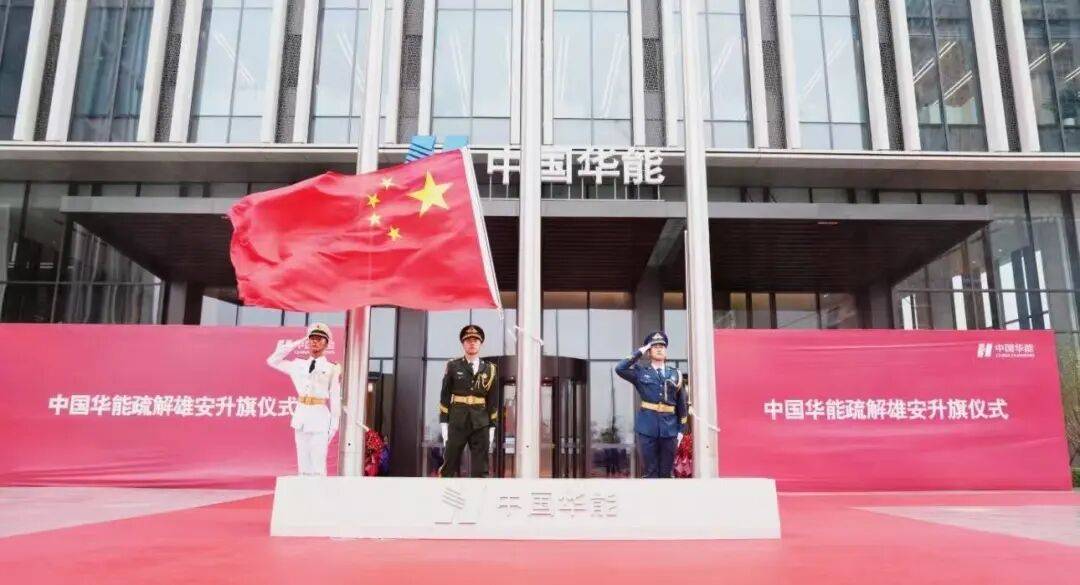
Core Insights - The relocation of central enterprises (SOEs) to Xiong'an New Area is expected to boost local development, with three SOEs having officially settled and over 300 branches established, indicating a significant influx of corporate presence [3] - However, the direct impact on local employment and economic growth is limited, as the number of jobs created by these SOEs is insufficient to meet the area's population target of 5 million [4] - The experience from across the country suggests that private and small enterprises are more effective in driving regional economic development compared to SOEs, highlighting the need for supportive policies for these businesses [5] Group 1: SOE Relocation and Impact - China Huaneng and China Sinochem have established their headquarters in Xiong'an, contributing to the formation of an innovation ecosystem in the aerospace information sector [3] - The "headquarters + industrial chain" model is anticipated to reconstruct the industrial ecosystem in Xiong'an, promoting the implementation of development plans [3] - The initial focus of SOEs on stable operations may delay their economic contributions to the local area, necessitating significant investment in infrastructure to support these enterprises [4] Group 2: Employment and Economic Contribution - The three SOEs have brought approximately 3,000 employees, which is far from sufficient to support the projected population growth in Xiong'an [4] - The stable nature of SOEs means they are unlikely to create immediate economic benefits, requiring a long-term approach to foster local economic growth [4] Group 3: Role of Private and Small Enterprises - Private and small enterprises contribute significantly to tax revenue, GDP, innovation, employment, and the number of businesses, underscoring their importance in economic development [5] - The presence of private tech companies in the Xiong'an internet industrial park is crucial for developing the aerospace information and AI sectors, creating a symbiotic relationship with SOEs [5] - To enhance the vitality of private and small enterprises, Xiong'an needs to implement more targeted support policies, ensuring equitable treatment compared to SOEs [6] Group 4: Recommendations for Policy Support - Suggestions include optimizing the business environment for small enterprises, creating platforms for collaboration between SOEs and private firms, and expanding support in financing and public services [6] - The successful integration of SOEs and private enterprises is essential for Xiong'an to transition from merely accommodating SOEs to achieving autonomous development and high-quality growth [6]



天溯计量创业板IPO过会,以产业计量服务战略性新兴产业
Zheng Quan Shi Bao Wang· 2025-10-16 14:39
Core Viewpoint - Tian Su Measurement has successfully passed the IPO review by the Shenzhen Stock Exchange, marking a significant milestone for the company in its growth trajectory [1] Company Overview - Established in 2009, Tian Su Measurement is a national, comprehensive independent third-party measurement and testing service provider, specializing in calibration, testing, and certification services [3] - The company has achieved recognition as a national high-tech enterprise and has been designated as a "service-oriented manufacturing demonstration platform" and "public service platform for industrial technology foundation" by the Ministry of Industry and Information Technology [3] - As of June 2025, Tian Su Measurement has developed calibration services across ten fields, including geometric, thermal, mechanical, electromagnetic, radio, time and frequency, acoustics, optics, chemistry, and ionizing radiation, totaling 1,417 calibration services [3] Market Position and Client Relationships - The company has established long-term cooperative relationships with notable enterprises such as Shougang Group, China Railway, China National Nuclear Corporation, State Grid, and China Railway Construction, resulting in a high customer retention rate and stable client base [3] Technological Advancements - Tian Su Measurement focuses on the development of strategic emerging industries through independent research and development, enhancing its technical capabilities and service quality [4] - The company has developed twelve core technologies, including smart measurement laboratory technology and automatic calibration technology for flow meters, which support innovation in downstream strategic emerging industries [4] Financial Performance - For the years 2023 to the first half of 2025, Tian Su Measurement reported revenues of 726 million, 800 million, and 409 million respectively, with net profits of 101 million, 111 million, and 55.576 million [4] - The company has demonstrated a positive growth trend in both revenue and net profit [4] IPO Fundraising Plans - Tian Su Measurement plans to raise 424 million through its IPO, which will be allocated to projects aimed at enhancing measurement capabilities, establishing regional laboratories, building a digital center, and supplementing working capital [4] - The company believes these projects will enhance its production capacity, improve profitability, and facilitate rapid expansion of its market share [4]


打通能源动脉、点亮万家灯火 央企谱写能源转型"中国方案"
Zhong Guo Zheng Quan Bao· 2025-10-16 11:01
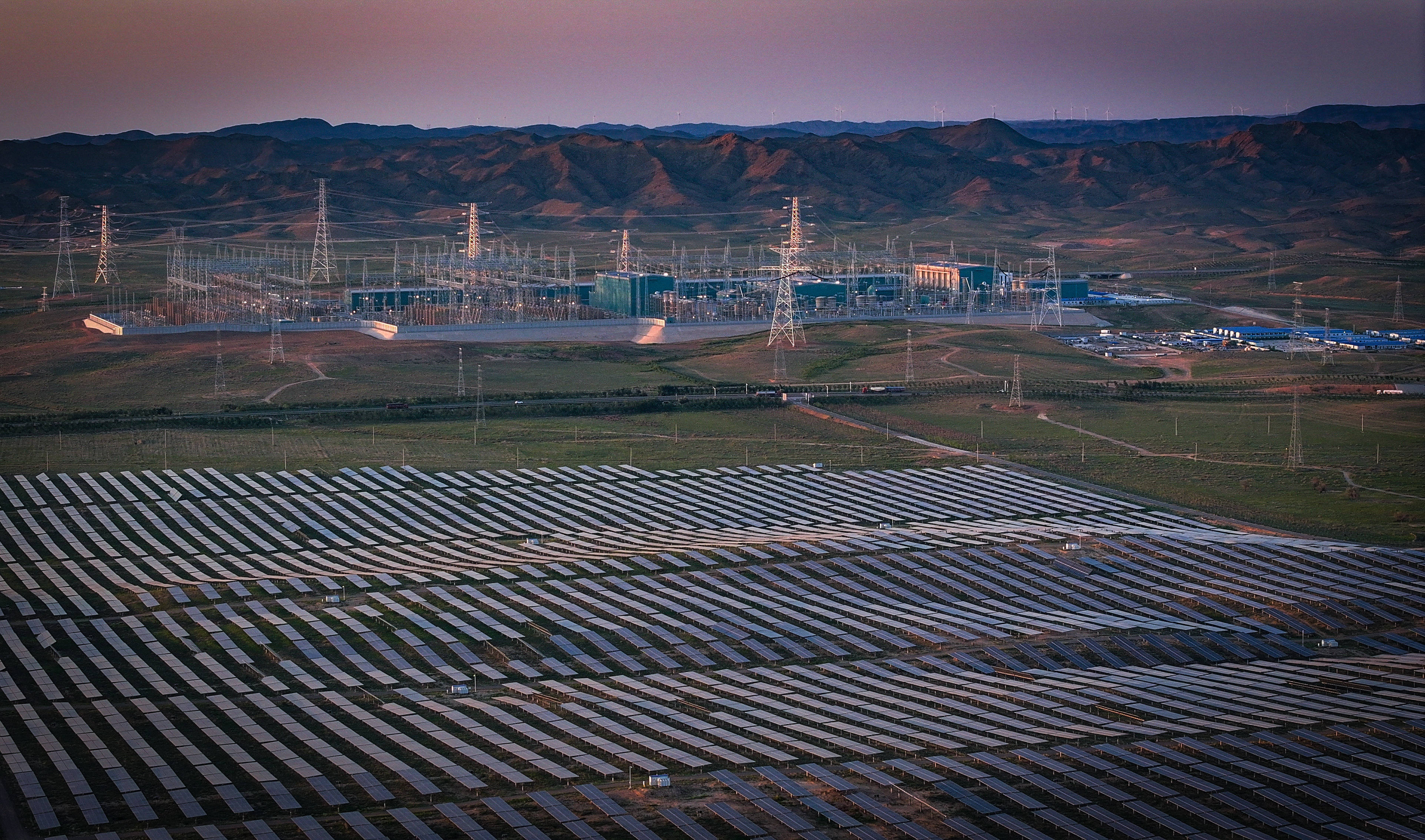
Core Viewpoint - Central enterprises in China are actively participating in the energy transition, contributing to the construction of a green energy network that supports high-quality economic development through strategic foresight and innovative practices [1][2]. Group 1: Energy Infrastructure Development - The "Ningdian into Xiang" project has delivered over 900 million kilowatt-hours of green electricity to Hunan as of September 25, 2023, with an annual capacity of over 36 billion kilowatt-hours, significantly alleviating power shortages in the region [2][3]. - Multiple energy arteries are under construction, including the Huaneng Longdong Energy Base and the China Resources Xinjiang Tianshan North Slope Energy Base, which will enhance power supply capabilities in their respective regions [3][4]. - The State Grid has established a vast UHV transmission network with a capacity exceeding 370 million kilowatts, marking a 30% increase since the end of the 13th Five-Year Plan [4]. Group 2: Technological Innovations - The successful installation of a 26-megawatt offshore wind turbine by Dongfang Electric marks a significant advancement in high-end equipment manufacturing, setting new global records for wind turbine capacity and rotor diameter [5][6]. - Continuous breakthroughs in core technologies, such as the development of laser-etched silicon steel by Baosteel, could lead to an annual electricity saving of 90 billion kilowatt-hours if applied to existing transformers [7][8]. - The integration of digital and intelligent technologies is enhancing operational efficiency in the energy sector, with significant advancements in smart coal mining and energy management systems [7][8]. Group 3: Impact on Society and Economy - The expansion of charging infrastructure by Southern Power Grid has reached 15,700 charging stations, ensuring comprehensive coverage in rural areas and facilitating the use of electric vehicles [10]. - Central enterprises are contributing to sustainable energy solutions in various regions, such as the integration of photovoltaic power with livestock farming in Sichuan, which generates 450 million kilowatt-hours annually [10]. - The cumulative installed capacity of renewable energy from central enterprises accounts for approximately half of the national total, driving the transition to a new energy system [10][11].

打通能源动脉 点亮万家灯火 央企助力中国能源格局重构
Sou Hu Cai Jing· 2025-10-16 07:17
Core Viewpoint - Central enterprises in China are actively participating in the energy transition, contributing to the construction of a green energy network that supports high-quality economic development through clean and low-carbon energy sources [1][12]. Group 1: Energy Infrastructure Development - The "Ningdian into Xiang" project, a key initiative in the national "14th Five-Year" electricity plan, has successfully transmitted over 900 million kilowatt-hours of green electricity to Hunan as of September 25 [5]. - The project, operational since June 29, is expected to deliver over 36 billion kilowatt-hours of green electricity annually, significantly alleviating power shortages in Hunan [5]. - Multiple energy arteries are under construction, including the Huaneng Longdong Energy Base and the Xinjiang Tianshan North Slope Energy Base, which will enhance electricity supply capabilities in their respective regions [6]. Group 2: Technological Innovations - Central enterprises are leveraging cutting-edge technologies to support major energy projects, such as the world's largest 26-megawatt offshore wind turbine developed by Dongfang Electric Group [7]. - The turbine's components are fully sourced from domestic suppliers, showcasing China's advancements in self-sufficient energy technology [8]. - Breakthroughs in core technologies, such as the laser-etched silicon steel developed by Baosteel, could lead to significant energy savings, equivalent to the output of a Three Gorges power station [9]. Group 3: Renewable Energy Integration - The Southern Power Grid has established 15,700 charging stations and over 110,000 charging guns, achieving full coverage of charging facilities in rural areas [11]. - China National Offshore Oil Corporation (CNOOC) is enhancing green energy systems on Weizhou Island, contributing over 54 million kilowatt-hours of clean electricity annually [11]. - The integration of photovoltaic power generation with livestock farming in the Hongyuan Yak Photovoltaic Power Station exemplifies sustainable development practices [11]. Group 4: Future Outlook - The energy transition is expected to reshape urban landscapes and improve the quality of life for citizens, with a focus on higher proportions of renewable energy and deeper electricity market reforms [12].
央国企四季度冲刺收官战,料投资力度将加大
Zheng Quan Shi Bao· 2025-10-16 04:37
Core Viewpoint - The central government and state-owned enterprises (SOEs) are intensifying efforts in the fourth quarter to achieve annual targets, focusing on quality improvement, efficiency enhancement, and fostering new growth drivers, with significant investments expected to support economic growth [1][3]. Investment and Economic Performance - In the fourth quarter, SOEs are expected to increase investment, with State Grid projected to exceed 650 billion yuan in fixed asset investments for the year, with one-third of this occurring in the fourth quarter [1][9]. - From January to August, SOEs reported total operating revenue of 53.96 trillion yuan, a year-on-year increase of 0.2%, marking the first positive growth rate of the year, which supports profit improvement [3]. Reform and Structural Adjustments - The third special meeting on the deepening reform of SOEs emphasized key tasks such as structural adjustments, overcoming technological innovation bottlenecks, and strengthening corporate governance [5]. - Four core goals for high-quality reform completion were identified: achieving quality standards, ensuring reform results translate into improved core competitiveness and operational performance, addressing deep-rooted issues, and establishing long-term mechanisms [5]. Digital Transformation and New Industries - SOEs are advancing digital transformation and new industry layouts to enhance long-term competitiveness, with companies like China Energy Engineering and Harbin Electric focusing on AI and digital production to extend value chains [10].


央国企四季度冲刺收官战,料投资力度将加大
证券时报· 2025-10-16 04:08
Core Viewpoint - The article emphasizes the intensified efforts of state-owned enterprises (SOEs) in China to achieve their annual goals and prepare for the 14th Five-Year Plan, with a focus on investment, reform, and enhancing operational efficiency [2][4][10]. Group 1: Investment and Economic Growth - In the fourth quarter, SOEs are expected to increase their investment efforts significantly, with State Grid projected to exceed 650 billion yuan in fixed asset investments for the year, with one-third of this occurring in Q4 [2][10]. - From January to August, SOEs reported total operating revenue of 53.96 trillion yuan, marking a year-on-year growth of 0.2%, which is the first positive growth rate of the year, providing crucial support for profit improvement [6]. Group 2: Operational Performance - Several central enterprises demonstrated stable growth in the first three quarters, with China Huadian achieving its targets for profit and operational efficiency, while China Coal improved its production and sales metrics despite facing operational pressures [5]. - China State Construction emphasized the importance of enhancing market expansion and risk management, achieving significant progress in key tasks during the third quarter [5]. Group 3: Reform Initiatives - The third special promotion meeting for the deepening reform of SOEs clarified the goals for high-quality reform completion by 2025, focusing on structural adjustments, technological innovation, and governance improvements [8]. - Key reform objectives include achieving quality standards in critical technology breakthroughs, enhancing core competitiveness, addressing long-standing issues, and establishing sustainable mechanisms [8]. Group 4: Long-term Development Strategies - SOEs are aligning their 14th Five-Year Plan with national strategic needs, focusing on emerging industries and digital transformation to foster new growth drivers [10][12]. - Companies like Harbin Electric and China Energy Construction are leveraging AI and digitalization to enhance their competitive edge and extend their value chains [12].

数据中心建设催化电力需求,电网设备ETF(159326)连续7日净流入,规模创历史新高
Mei Ri Jing Ji Xin Wen· 2025-10-16 02:48
Core Insights - The A-share market saw all three major indices rise, with the Electric Grid Equipment ETF (159326) experiencing a slight pullback, down 0.14% as of 9:58 AM, with a trading volume of 70.63 million yuan. Key stocks such as Tongda Co. and Terui De surged, with the former hitting the daily limit and the latter rising over 9% [1] - The Electric Grid Equipment ETF has attracted significant capital, with a net inflow of 199 million yuan over the past seven trading days, reaching a new high of 305 million yuan since its inception [1] - The rapid development of AI technology is driving an explosive increase in global data center electricity demand, necessitating upgrades to the electric grid. The largest U.S. grid operator, PJM, has warned that AI-driven demand has exhausted grid capacity in the most densely populated data center regions, leaving new projects without available electricity [1] Industry Summary - According to Caixin Securities, electric grid investment is expected to remain strong. The elasticity coefficient of electricity consumption in China has been increasing, with new energy consumption demands emerging. The marketization of new energy power trading is fully implemented, leading to a rise in peak electricity loads and widening price differences between peak and valley periods [1] - On the supply side, the penetration rate of new energy in electricity supply is continuously increasing. Major projects such as the Yashan Hydropower Project and ultra-high voltage projects are expected to boost the demand for grid equipment. Both the State Grid and Southern Grid have provided high-level guidance for grid investment construction through 2025, indicating sustained growth in annual grid investment [1] - The Electric Grid Equipment ETF is the only ETF tracking the CSI Electric Grid Equipment Theme Index, with a strong representation in sectors such as power transmission and transformation equipment, grid automation equipment, cable components, and distribution equipment. The ultra-high voltage sector holds a significant weight of 62%, the highest in the market [2]
电网“破墙”,两大电网首次跨区现货交易,全国统一电力大市场启幕
3 6 Ke· 2025-10-16 00:18
Core Insights - The article highlights a significant milestone in China's electricity market reform, marked by the first cross-regional electricity allocation through spot trading between the State Grid and the Southern Grid, facilitating the transfer of 1.8 million kilowatts of clean electricity to the Yangtze River Delta [1][2][10] Group 1: Breakthrough in Cross-Regional Electricity Trading - The recent transaction addresses the long-standing issue of "regional segmentation" in China's electricity system, which has been managed by provincial boundaries, leading to inefficiencies in electricity distribution amid rising demand and renewable energy integration [2][4] - Zhejiang province faced a critical electricity shortage due to high temperatures and increased demand, with peak loads reaching 11,582 megawatts, a year-on-year increase of 24.7% [2][8] - The innovative use of spot trading instead of traditional planned allocation allowed for real-time matching of supply and demand, enhancing efficiency and reducing administrative intervention [3][7] Group 2: Policy, Hardware, and Mechanism Innovations - The successful execution of this cross-regional spot trading is attributed to a combination of policy support, hardware connectivity, and innovative mechanisms [4][5] - The implementation of the national unified electricity market system is guided by policies established in 2022, aiming for a more integrated and efficient electricity market by 2025 [5][6] - The Yunxiao DC transmission line, operational since 2022, serves as a critical infrastructure enabling real-time data exchange and market transactions, facilitating the transfer of electricity from surplus regions to high-demand areas [6][8] Group 3: Long-Term Implications for the Electricity Market - In the long run, this transaction is expected to reshape the electricity system, promoting energy transition and enhancing flexibility in response to the growing share of renewable energy sources [8][9] - The market mechanism allows for better utilization of clean energy, with 90% of the electricity sent to Zhejiang being hydropower and wind power, significantly reducing coal consumption and carbon emissions [8][9] - The unified market structure is anticipated to optimize electricity costs for users, encouraging diverse market participants to engage in trading, thus shifting the market dynamics from supply-driven to demand-driven [9][10]
充电桩行业迎来大利好,大功率超充有望加速推广(附概念股)
Zhi Tong Cai Jing· 2025-10-15 23:43
Core Insights - The National Development and Reform Commission and five other departments have released a plan to double the service capacity of electric vehicle charging facilities by 2027, aiming to establish 28 million charging facilities nationwide and provide over 300 million kilowatts of public charging capacity to meet the demand of over 80 million electric vehicles [1] Industry Overview - The upstream of the new energy charging pile industry chain includes the manufacturing of components required for charging pile equipment, such as charging modules, PCBs, and transformers, with key players like Youyou Green Energy and Infineon [2] - The midstream involves the supply of charging equipment, including various types of DC and AC charging piles, with participants such as State Grid, Southern Power Grid, and other local transport companies [2] - The downstream focuses on the operation of charging equipment, with major players including State Grid, Southern Power Grid, and companies like Star Charge [2] Market Trends - The domestic charging pile market is transitioning to a stable operational phase, with the vehicle-to-pile ratio maintaining around 3:1, and manufacturers' profit models becoming more mature [2] - The market is shifting from subsidy-driven growth to market-driven expansion, with trends such as the price reduction of DC charging modules and the integration of solar and storage technologies [2] - The number of new energy vehicles in China is expected to reach 160 million by 2035, indicating a significant growth potential for the charging pile market [2] Future Projections - The domestic charging pile market size is projected to reach 50.3 billion yuan by 2025 and 205.5 billion yuan by 2030 [2] - The charging pile market is expected to shift focus from speed and scale to high-quality development, with increased technical requirements for charging piles and core components [3] Investment Opportunities - The acceleration of high-power charging facilities is anticipated to bring performance growth to the industry chain, with leading companies in manufacturing and operation likely to benefit from improved efficiency and profitability [4] - Recommendations include leading charging pile manufacturers like Shenghong Co. and operational leaders like Teruid [4] Related Companies - NIO Inc. has established 3,206 battery swap stations nationwide, including 972 along highways, creating a comprehensive battery swap network [5] - Li Auto announced plans to launch 105 new supercharging stations and 568 supercharging piles, bringing the total to over 3,400 [5] - Titan Energy Technology has covered over 80 cities with more than 600 charging stations, including major event venues and demonstration stations [5]
港股概念追踪 | 充电桩行业迎来大利好 大功率超充有望加速推广(附概念股)
智通财经网· 2025-10-15 23:40
Core Insights - The National Development and Reform Commission and five other departments have launched the "Three-Year Doubling Action Plan for Electric Vehicle Charging Facilities (2025-2027)", aiming to establish 28 million charging facilities by the end of 2027, providing over 300 million kilowatts of public charging capacity to meet the charging needs of over 80 million electric vehicles [1] Industry Overview - The upstream of the new energy charging pile industry chain includes the manufacturing of equipment components such as charging modules, PCBs, and transformers, with key players like Youyou Green Energy and Infineon [2] - The midstream involves the supply of charging equipment, including various types of DC and AC charging piles, with participants such as State Grid, Southern Power Grid, and Morningstar Technology [2] - The downstream focuses on the operation of charging equipment, with major players including State Grid, Southern Power Grid, and local transportation companies [2] Market Trends - The domestic charging pile market is transitioning to a stable operational phase, with the vehicle-to-pile ratio maintaining around 3:1, and manufacturers' profit models becoming more mature [2] - The market is expected to grow significantly, with projections estimating the domestic charging pile market size to reach 50.3 billion yuan by 2025 and 205.5 billion yuan by 2030 [2] Technological Developments - The market is shifting towards high-quality development, with an emphasis on high-power charging facilities that require advanced technology for charging modules, including high voltage and high current capabilities [3] - The trend towards high-power fast charging and liquid cooling technology is expected to dominate future layouts [2][3] Investment Opportunities - The acceleration of high-power charging facilities is anticipated to bring performance growth to the industry chain, benefiting leading companies in manufacturing and operation [4] - Recommendations include leading charging pile manufacturers like Shenghong Co. and operational leaders like Teruid [4] Related Companies - NIO has established 3,206 battery swap stations nationwide, with 972 located on highways, creating a comprehensive battery swap network [5] - Li Auto announced the launch of 105 Li Supercharging stations and 568 supercharging piles, surpassing a total of 3,400 supercharging stations [5] - Titan Energy Technology has charging facilities covering over 80 cities, with more than 600 charging stations [5]

