
赛诺菲

Search documents
第八届进博会收官 意向成交额834.9亿美元
Zheng Quan Ri Bao· 2025-11-10 18:13
Core Insights - The eighth China International Import Expo (CIIE) concluded successfully, showcasing a significant shift of exhibitors towards becoming partners in exploring the Chinese market [1][4] - The expo generated substantial procurement intentions and contracts, highlighting deepening connections between China and global enterprises [1][2] Group 1: Event Overview - The CIIE featured over 36.7 million square meters of exhibition space with participation from 4,108 companies across 138 countries, marking record highs in both area and number of exhibitors [2] - The intended transaction amount for this year's expo reached $83.49 billion, a 4.4% increase from the previous year [2] - A total of 461 new products, technologies, and services were launched, including 201 global debuts and 195 Chinese debuts, with a notable focus on artificial intelligence and robotics [2] Group 2: Economic Impact - China has maintained its position as the world's largest goods trader for eight consecutive years and is the second-largest import market globally for 16 years [2][3] - In the first three quarters of 2025, China's total goods trade reached 33.61 trillion yuan, with imports growing by 4.7% in the third quarter [3] - The country has actively expanded its import market, adding 135 new agricultural products from 50 countries and regions [3] Group 3: Long-term Participation and Local Integration - 180 companies have participated in all eight editions of the CIIE, demonstrating their commitment to the Chinese market [5][6] - Companies like GE Healthcare and Sanofi have successfully transitioned products from exhibition to clinical application, showcasing the effectiveness of the expo in fostering local production [5][6] - The CIIE has become a platform for innovation and localization, with companies like Honeywell and Wyeth Nutrition emphasizing their focus on local R&D and market integration [7] Group 4: Future Prospects - Preparations for the ninth CIIE are already underway, with nearly 100 foreign companies securing exhibition space, indicating continued trust in the Chinese market [8]
TG Therapeutics Crumbles After Roche Unveils Its 'Unprecedented' Test Results
Investors· 2025-11-10 17:00
Core Insights - Roche's fenebrutinib demonstrated "unprecedented" test results for multiple sclerosis, impacting TG Therapeutics negatively [1][2] - Roche's stock increased by over 3% to $43.33, while TG Therapeutics' stock fell more than 5% to $30.53, reaching a two-month low [2] - Fenebrutinib showed significantly fewer relapses compared to teriflunomide in relapsing multiple sclerosis patients [3] - In primary progressive MS, fenebrutinib slowed disability progression comparably to Roche's Ocrevus, the only approved treatment for this condition [4] Roche's Competitive Position - Roche's fenebrutinib uses a different mechanism than TG Therapeutics' Briumvi, targeting BTK, which is involved in immune response to inflammation [7] - Roche's stock performance improved, gapping above its 50-day moving average following the news [7] TG Therapeutics' Market Performance - Briumvi's sales grew by at least double-digit percentages year-over-year, with a notable 84% increase to $152.9 million in Q3 [6] - Despite the sales growth, Briumvi still lags behind Ocrevus in overall sales [6] - TG Therapeutics maintains a strong IBD Digital Composite Rating of 97, ranking in the top 3% of stocks for performance [8]


自免BTK抑制剂大爆发,没有悬念了
3 6 Ke· 2025-11-10 12:42
Core Insights - The self-immune BTK inhibitor Fenebrutinib from Roche has achieved significant milestones in clinical trials for relapsing multiple sclerosis (RMS) and primary progressive multiple sclerosis (PPMS) [1] - The success of Fenebrutinib is part of a broader trend in the self-immune BTK inhibitor market, with Sanofi and Novartis also gaining FDA approvals for their respective BTK inhibitors [2][3] Group 1: Roche's Fenebrutinib - Fenebrutinib has shown a significant reduction in annual relapse rates compared to Teriflunomide over a treatment period of at least 96 weeks [1] - The FENtrepid study comparing Fenebrutinib with the CD20 monoclonal antibody Ocrelizumab for PPMS also met its primary endpoint [1] - The complete data from these studies are yet to be published, and the drug's market approval is contingent on the results of the FENhance1 study expected in the first half of 2026 [1] Group 2: Competitive Landscape - Sanofi's Rilzabrutinib was the first BTK inhibitor approved by the FDA for treating immune thrombocytopenia (ITP), based on the LUNA phase III trial results showing 65% of patients achieving a platelet response [2] - Novartis' Remibrutinib received FDA approval for chronic spontaneous urticaria (CSU), marking it as the first BTK inhibitor approved for this indication [2][3] - The approval of these drugs indicates a significant advancement in the self-immune BTK inhibitor field, with Roche's success further solidifying the potential of BTK inhibitors in treating previously unaddressed conditions like RMS and PPMS [3] Group 3: Addressing Previous Concerns - Historically, there have been doubts regarding the efficacy of BTK inhibitors in treating autoimmune diseases due to their mechanism of action, which primarily inhibits new B cell generation without affecting existing pathological B cells [5][8] - Safety concerns have also been prominent, particularly regarding liver toxicity, which has led to clinical trial suspensions for some BTK inhibitors [6][7] - The recent approvals and positive trial results are expected to alleviate these concerns and validate the therapeutic potential of BTK inhibitors in the self-immune space [8] Group 4: Future Considerations - The self-immune BTK inhibitor market is becoming increasingly competitive, necessitating differentiation in molecular design and precise targeting of indications [9][10] - The success of Rilzabrutinib in ITP highlights the importance of focusing on diseases closely related to the BTK pathway for maximizing therapeutic efficacy [10] - The ongoing developments in this field suggest a dynamic landscape where both established and emerging players will continue to innovate and compete [10]


进博“全勤生”静安:从参展热土到全球企业“首选地”
Guo Ji Jin Rong Bao· 2025-11-10 12:14
Core Insights - Jing'an District has significantly increased its participation in the China International Import Expo (CIIE), growing from 16 exhibitors in the first edition to 53 in the eighth, showcasing its strategic focus on attracting investment and promoting economic development [1][2][3] Investment and Business Development - The district has established a "new and old co-prosperity" ecosystem, with companies like Europharma witnessing rapid growth and establishing strong partnerships with the district government [2][3] - The "Investment Jing'an, Win the CIIE" promotional event highlighted the district's commitment to fostering trade and investment, resulting in multiple procurement agreements signed during the expo [3][4] International Brand Engagement - Notable international brands, such as Aster, have chosen Jing'an for their flagship centers, reflecting the district's appeal and investment potential [4][5] - The district's proactive approach in inviting global companies to participate in the CIIE has facilitated a transformation from "investors" to "exhibitors," enhancing their market presence in China [5][6] Innovation and Technology Integration - Jing'an has launched innovative platforms like the "Beauty Hub" and "Meichuang Jingjie," which integrate technology and beauty, aiming to create a comprehensive ecosystem for the beauty industry [12][13] - The collaboration with top-tier resources, including hospitals and research centers, aims to bridge the gap between scientific research and consumer experience in the beauty sector [12][13] Cultural and Economic Synergy - The district's initiatives, such as the "Jing'an International Reception Hall," aim to create a seamless connection between global resources and local enterprises, enhancing the overall business environment [11][12] - Events like the "CIIE" serve as a platform for cultural exchange and economic collaboration, positioning Jing'an as a hub for international business and innovation [10][11]


尼塞韦单抗中国首个真实世界研究数据亮相进博会
Bei Ke Cai Jing· 2025-11-10 07:05
Group 1 - The core viewpoint of the articles highlights the successful implementation and effectiveness of the monoclonal antibody Nirsevimab in preventing RSV-related respiratory infections in infants in China, with a reported efficacy of 81% for outpatient visits and 82% for hospitalizations [1][2] - The real-world study conducted across multiple regions in China, including Beijing, Shanghai, and Guangdong, provides localized data supporting the safety and effectiveness of Nirsevimab for Chinese infants [1] - The introduction of Nirsevimab in Shanghai has expanded its availability to public hospitals, private hospitals, and community health service centers, allowing parents to access RSV prevention more conveniently [2] Group 2 - The Shanghai Health Commission plans to expand the use of RSV monoclonal antibodies to 36 additional pilot units by June 2025, indicating a shift towards a more proactive and inclusive immunization strategy for infants [2] - A new respiratory health handbook for infants has been released, providing parents with authoritative and practical health guidelines on common respiratory diseases, including RSV [2] - Sanofi showcased a combined vaccine for RSV and HMPV at the innovation pipeline exhibition, aiming to address multiple respiratory viruses that pose risks to vulnerable populations, particularly the elderly [3]
医药生物行业跟踪周报:特色原料药触底积极变化,重点推荐奥锐特、普洛药业等-20251109
Soochow Securities· 2025-11-09 10:00
Investment Rating - The report maintains an "Accumulate" rating for the pharmaceutical and biotechnology industry [1]. Core Views - The report highlights a positive change in the specialty raw materials sector, recommending companies such as Aorite and Prolo Pharmaceuticals [1]. - The report suggests that the Q3 performance of raw material pharmaceutical companies has reached a bottom, indicating potential recovery in profitability as high-cost inventory is consumed [19][20]. Summary by Sections Investment Highlights - The recommended sub-industry rankings are: Innovative Drugs > Research Services > CXO > Traditional Chinese Medicine > Medical Devices > Pharmacies [3][12]. - Specific stock recommendations include: - From raw materials: Aorite, Qianhong Pharmaceutical - From Traditional Chinese Medicine: Zorui Pharmaceutical, Fangsheng Pharmaceutical, Dong'e Ejiao - From medical devices: United Imaging Healthcare, Yuyue Medical - From AI pharmaceuticals: Jingtai Holdings - From GLP-1 sector: Lianbang Pharmaceutical, Borui Pharmaceutical, Zhongsheng Pharmaceutical, and Innovent Biologics - From PD-1/VEGF dual antibodies: Sanofi Biopharmaceuticals, Kangfang Biologics, and Rongchang Biopharmaceuticals - From innovative drugs: Innovent Biologics, BeiGene, HengRui Medicine, Zai Lab, Baillie Tianheng, Kelun Pharmaceutical, Dize Pharmaceutical, and Haizheng Pharmaceutical [3][15]. Industry Trends - The A-share pharmaceutical index has seen a year-to-date increase of 18.2%, while the Hang Seng Biotechnology Index has increased by 76.6% [6][11]. - The report notes that the raw material pharmaceutical sector is under pressure due to high base effects and declining prices, with significant revenue impacts [19][20]. R&D Progress and Company Dynamics - Recent approvals include Novartis' radioligand therapy drug, which received dual indications for prostate cancer treatment [2]. - The report provides an overview of ongoing clinical trials and drug approvals, emphasizing the importance of innovation in the pharmaceutical sector [30]. Market Performance - The report indicates that the pharmaceutical sector has experienced adjustments, with notable stock performances including significant gains for companies like Hezhong China (+61%) and Wanze Shares (+30%) [11]. - The report also highlights the performance of various pharmaceutical stocks, noting both gains and losses in the market [16][17]. Raw Material Pricing Trends - The price of 6-APA has dropped significantly, from 370 RMB/kg in 2022 to 180 RMB/kg in October 2025, a decrease of 51% [23]. - The price of Amoxicillin has also decreased from 320 RMB/kg in January 2023 to 190 RMB/kg in October 2025, a decline of 41% [23]. Conclusion - The report suggests that as high-cost inventory is depleted, the gross margins for raw material producers are expected to improve, indicating a potential recovery in profitability for companies like Fuxiang Pharmaceutical and Lukang Pharmaceutical [19][23].


直通进博会 | 探馆药械“黑科技” 从“展品”变“商品”中感受进博加速度
Zhong Guo Jin Rong Xin Xi Wang· 2025-11-09 08:36
Core Insights - The China International Import Expo (CIIE) serves as a crucial platform for global medical technology, showcasing cutting-edge innovations and attracting significant investment in China's healthcare sector [1][5] Group 1: Innovations and Product Launches - Sanofi showcased ten innovative products, including the global debut of cardiovascular drugs, highlighting advancements in targeted therapies for hypertrophic cardiomyopathy [2] - Fosun Pharma presented multiple leading global innovations, including the Marie particle therapy system, which significantly reduces the space and cost of traditional treatment rooms [2] - Abbott introduced over ten debut products, featuring advanced biowearable sensor technology and personalized diagnostic solutions [2] Group 2: Accelerated Approval and Market Entry - The "CIIE Baby" concept illustrates the rapid approval and market entry of innovative medical products in China, with Sanofi's Dupilumab injection exemplifying this trend by evolving through multiple indications over seven years [4][5] - Pfizer displayed 17 "CIIE Babies," emphasizing their commitment to accelerating innovation in China, with a goal of obtaining approvals for 60 innovative drugs and new indications by 2030 [6] Group 3: Investment and Local Production - Roche announced a new biopharmaceutical production base in China with an investment of 2.04 billion yuan, marking a significant step in their localization strategy [7] - Intuitive Surgical's partnership with Fosun Pharma for the Da Vinci surgical robot highlights the trend of exhibitors transitioning to investors, with a new facility in Shanghai set to enhance local production capabilities [9] Group 4: Ecosystem Development and Collaboration - The CIIE fosters collaboration among global pharmaceutical companies, with Sanofi and local biotech firms signing strategic agreements to deepen cooperation in drug development [8] - The event has become a magnet for innovation, with 60% of GE Healthcare's new products being led by Chinese teams, showcasing the growing role of local talent in global healthcare advancements [8]
进博会“药企朋友圈”再扩容 京东健康携手全球药企深化全域合作
Zhong Jin Zai Xian· 2025-11-09 02:04
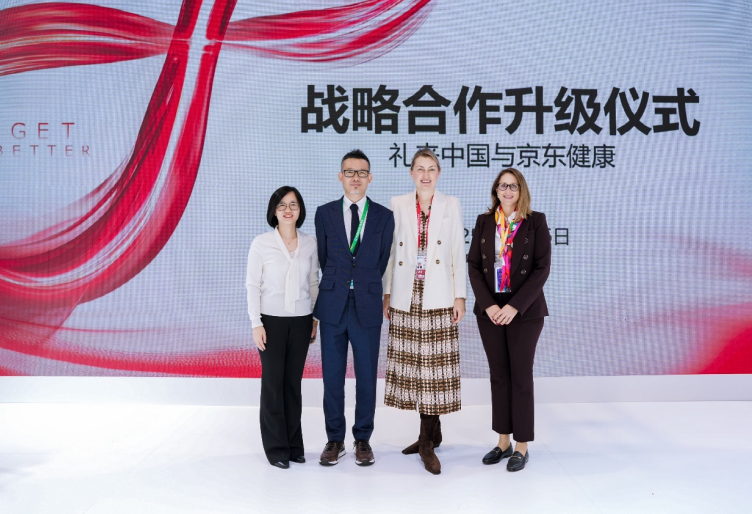
Core Insights - The eighth China International Import Expo (CIIE) was held in Shanghai from November 5 to 10, where JD Health deepened partnerships with leading global pharmaceutical companies [1] - JD Health is actively upgrading its health service ecosystem, focusing on patient-centered care and exploring diverse collaboration opportunities with pharmaceutical companies [1] Strategic Collaborations - JD Health and Eli Lilly held closed-door meetings to discuss diabetes management and a 2026 cooperation plan, focusing on enhancing professional education for healthcare providers [2] - JD Health is a key member of Novo Nordisk's "Health Ecosystem Alliance," collaborating on a comprehensive service model for obesity and diabetes management [4] - Bayer and JD Health signed a memorandum to launch a "Comprehensive Women's Health Literacy Improvement Program," integrating medical resources and digital capabilities [6] - Kasey Pharmaceuticals partnered with JD Health to enhance accessibility and adherence for respiratory disease medications through various collaborative efforts [8] - Sanofi and JD Health established a diabetes management center, focusing on integrated health services for type 1 diabetes patients [10] Focus on Specific Health Areas - JD Health and Ogalon are creating a comprehensive hair health management ecosystem, enhancing patient experiences in hair loss treatment [10] - A collaboration with Novartis aims to address the needs of over 10 million patients with chronic spontaneous urticaria (CSU) [12] - JD Health and AstraZeneca are enhancing home care solutions for chronic disease management, focusing on patient education and accessibility [14] - A partnership with Pfizer aims to improve treatment experiences for alopecia patients through an integrated service system [15] Technology and Innovation - JD Health participated in a roundtable forum hosted by Bayer, discussing the role of AI in self-health management and improving health consumer experiences [15] - The company is leveraging its "super pharmaceutical supply chain" and digital capabilities to enhance collaboration with multinational pharmaceutical companies [15]
跨国药企为何将更多的钱投入中国市场?
Sou Hu Cai Jing· 2025-11-09 01:37
Core Insights - The attractiveness of the Chinese market is a primary driver for multinational pharmaceutical companies to increase investments in China [3] - The Chinese government's support for innovative drugs has bolstered the confidence of multinational companies in investing in the country [4] Group 1: Investment Trends - AstraZeneca reported a 5% year-on-year revenue growth in China for the first three quarters, reaching $5.279 billion, accounting for over 12% of its global revenue [3] - Novartis achieved $3.2 billion in sales in China, also reflecting a 5% year-on-year growth [3] - Novo Nordisk's revenue in China reached $2.234 billion, with an 8% year-on-year increase [3] - Eli Lilly's sales in China grew by 20% year-on-year, totaling $1.477 billion [3] - Sanofi's sales in China amounted to $1.3 billion [3] Group 2: Government Support and Policy Changes - The National Healthcare Security Administration (NHSA) showcased its role as a significant global pharmaceutical purchaser at the China International Import Expo [4] - The NHSA and the National Health Commission released measures to support the high-quality development of innovative drugs, including 16 specific initiatives [4] - Approximately 80% of innovative drugs can be included in the medical insurance directory within two years of market approval [4] Group 3: Company-Specific Investments - AstraZeneca announced an additional investment of approximately $136 million to expand its production capacity in Qingdao, bringing its total investment in the area to $886 million [5] - Roche plans to invest 2.04 billion yuan in a new biopharmaceutical production base in Shanghai to enhance its local supply chain [6] - Eli Lilly is establishing an innovation incubator in Shanghai and has invested over 20 billion yuan in China to create a full industry chain from R&D to commercialization [8] - Sanofi is investing 1 billion euros in a new insulin raw material project in Beijing, marking the largest investment in the pharmaceutical industry in the city since the 14th Five-Year Plan [12] Group 4: Market Dynamics - The insulin market in China is projected to reach 32 billion yuan by 2024, with foreign companies holding a combined market share of 75% in third-generation insulin products [13]



Merck Takes On Amgen, Regeneron, Lowering Stubbornly High Cholesterol By 60%
Investors· 2025-11-08 19:30
Core Insights - Merck's new oral cholesterol-lowering pill, enlicitide, has shown a nearly 60% reduction in LDL cholesterol, positioning it as a potential competitor in the $47 billion cholesterol treatment market by 2033 [2][4]. Group 1: Product Development and Efficacy - Enlicitide works by blocking the PCSK9 protein, which is linked to elevated LDL cholesterol levels and cardiovascular issues [2]. - In a study involving 2,912 patients who could not achieve LDL goals with traditional treatments, enlicitide demonstrated a 55.8% greater reduction in LDL cholesterol compared to placebo, with a placebo-adjusted reduction of 59.7% after excluding an outlier [4]. - Other cardiovascular risk factors, including total cholesterol and markers like ApoB and Lp(a), also decreased, and enlicitide's safety profile was comparable to that of the placebo [5]. Group 2: Market Position and Competition - Merck plans to seek FDA approval for enlicitide in early 2026, aiming to compete with injectable PCSK9 inhibitors like Repatha and Praluent, which have historically faced challenges in market adoption [5]. - Repatha's sales increased by 40% year-over-year to $794 million, while Praluent's sales rose nearly 13% to $215.7 million in the third quarter, indicating a strong market presence for these injectable treatments [6]. Group 3: Patient Accessibility and Usage - Enlicitide is designed to be more accessible, requiring patients to fast for 30 minutes before taking the pill, with 97% of patients able to comply with this requirement [7]. - The ease of use and safety profile of enlicitide could significantly impact public health by providing a viable treatment option for a broader range of patients [8].

