Temu

Search documents
Europe Social Commerce Market Intelligence Report 2025-2030: Major Platforms like Meta and TikTok Leading the Future $302 Billion Market, New Entrants such as Shein and Temu Expanding their Presence
GlobeNewswire News Room· 2025-05-12 13:55
Market Overview - The European social commerce market is projected to grow by 20.7% annually, reaching USD 146.35 billion in 2025, following a robust growth period from 2021 to 2024 with a CAGR of 25.5% [2] - The market is expected to continue expanding with a forecasted CAGR of 15.6% from 2025 to 2030, potentially reaching approximately USD 302.74 billion by the end of 2030 [2] Regional Trends - Distinct trends are emerging across different European countries, with the UK leading in live shopping events, Germany showing significant revenue growth, and France leveraging influencer partnerships [3] - Brands must adopt country-specific strategies to effectively engage with local consumer behaviors and navigate regulatory challenges [3] Competitive Landscape - Major platforms like Meta and TikTok dominate the market, while new entrants such as Shein and Temu are expanding their presence [4] - Recent acquisitions, including Brave Bison's purchase of Social Chain and Charlesbank's acquisition of Front Row, indicate a trend toward consolidation in the market [4][15] Regulatory Environment - The European Union's regulatory frameworks, including the Digital Services Act and Digital Markets Act, impose stricter regulations on online platforms, affecting competition and compliance [4][15] - Companies must navigate complex regulatory environments shaped by data protection laws and antitrust concerns, which may slow the adoption of social commerce compared to other regions [9] Consumer Engagement - Spanish consumers are increasingly engaging with various social media platforms for shopping, particularly on Facebook, Instagram, and YouTube [9] - A multi-platform approach tailored to the unique features and audiences of each platform is essential for brands targeting the Spanish market [9] Key Players - Meta Platforms (Facebook, Instagram) and TikTok are leading the European social commerce market, with Meta leveraging its extensive user base to integrate shopping features [10] - Shein and Temu, both Chinese platforms, are making significant inroads into the European market, attracting consumers with competitive pricing [10]



出海周报丨中美达成重要共识;Temu已停止美区全托管模式;圣诞用品订购旺季提前到
2 1 Shi Ji Jing Ji Bao Dao· 2025-05-12 01:49
中美达成重要共识,会谈取得实质性进展 据新华社报道,5月10日至11日,中美双方在瑞士日内瓦举行经贸高层会谈。中方代表团在新闻发布会 上表示,双方就彼此关心的经贸问题开展了深入交流。会谈氛围是坦诚的、深入的、具有建设性的,取 得了实质性进展,达成了重要共识。双方一致同意建立中美经贸磋商机制,明确双方牵头人,就各自关 切的经贸问题开展进一步的磋商。中美双方将尽快敲定有关的细节,并且将于5月12日发布会谈达成的 联合声明。 21世纪经济报道记者 董静怡 上海报道 过去一周(5.5-5.11),出海领域发生哪些动态? 行业一览 海关总署:今年前4个月我国货物贸易进出口同比增长2.4% 海关总署9日对外公布,前4个月我国货物贸易进出口总值14.14万亿元,外贸延续了平稳增长态势。据 海关统计,今年前4个月,我国货物贸易进出口总值14.14万亿元,同比增长2.4%。其中,出口8.39万亿 元,增长7.5%;进口5.75万亿元,下降4.2%。4月当月,我国货物贸易进出口3.84万亿元,增长5.6%。 其中,出口2.27万亿元,增长9.3%;进口1.57万亿元,增长0.8%。 海关总署:前4个月我国对周边国家进出口同比增长 ...

中国公司全球化周报|奈雪再改名,或与进军欧美相关/小马智行与优步合作,在中东部署Robotaxi
3 6 Ke· 2025-05-11 04:11
Group 1: Company Developments - Nayuki Tea is reportedly changing its logo and name, possibly related to its expansion into the European and American markets [3] - Dingdong Maicai has entered the Hong Kong market through a strategic partnership with DFI Retail Group, aiming for a sales target of 100 million HKD in the first year [3] - WeRide and Uber are expanding their strategic cooperation to deploy autonomous Robotaxi services in 15 new international cities over the next five years [6] - Ant Group plans to separately list its overseas unit Ant International in Hong Kong, with no current policy obstacles reported [6] - CATL is seeking a loan of approximately 1 billion USD for its business expansion in Indonesia [7] Group 2: Industry Trends - The European market is becoming a new battleground for cross-border e-commerce platforms, with SHEIN and Temu increasing their advertising spending significantly [4] - The global retail e-commerce market in Europe reached 631.9 billion USD in 2023, indicating substantial growth potential [4] - The Chinese B2B foreign trade financial platform XTransfer has obtained an electronic money institution license from the Netherlands, enabling it to provide local accounts and cross-border settlement services [12] - China's goods trade import and export value for the first four months of the year was 14.14 trillion CNY, showing a year-on-year growth of 2.4% [13] - The automotive goods import and export total for March was 23.82 billion USD, with a month-on-month increase of 32.1% [14]

一觉醒来,法国也要对我国小额包裹征税了!
Sou Hu Cai Jing· 2025-05-10 16:11
Group 1 - The U.S. will terminate the "small package exemption" policy on May 2, which previously allowed low-value imports from China to enter the U.S. without tariffs [1][5] - The exemption policy was originally established in 1938 for packages valued under $5, later raised to $800 in 2016, but has faced scrutiny due to the rapid growth of cross-border e-commerce from China [1][3] - In 2023, the export value of low-priced packages from China to the U.S. surged from $5.3 billion in 2018 to $66 billion, indicating a significant market impact [1][9] Group 2 - The cancellation of the exemption is expected to force U.S. businesses reliant on Chinese supply chains to reassess their operational models to maintain cost competitiveness [3][5] - U.S. manufacturers are likely to benefit from the new tariffs, as they may face less competition from low-cost imports [9][10] - The logistics sector will also face challenges, with increased customs procedures leading to higher costs and potential delivery delays [7][9] Group 3 - France is following the U.S. lead by proposing to impose fees on small packages valued under €150 from China, which will primarily affect fast-fashion brands and cross-border platforms [13][14] - The French government aims to enhance customs oversight and product safety through the collected fees, indicating a broader trend of protectionism in Europe [14][20] - The European Union plans to eliminate the exemption for packages under €150 by 2028, with discussions among member states to implement this sooner [23][25] Group 4 - The combined impact of U.S. and European policies could significantly hinder China's small package exports, which are crucial for its manufacturing sector [22][27] - In 2024, China's cross-border e-commerce platforms are expected to ship approximately 4 billion small packages to EU countries, highlighting the importance of these markets [27] - The overall value of small package exports to the U.S. and EU could exceed hundreds of billions, making the potential loss from protectionist measures substantial for Chinese manufacturers [27][28]

美国销售额骤跌,中国跨境电商平台集体“减速”!
Sou Hu Cai Jing· 2025-05-10 13:39
2025年5月,美国实施的关税新政全面生效,其核心内容包括: 尽管最新消息透露,美方拟将于下周对中国进口产品加征的关税下调至50%-54%区间,但就目前而言,这一调整尚未落实,具体变动存在较大不确定 性。日前,美国关税新政的实施已然对依赖中国供应链的跨境电商平台造成了直接冲击。 AMZ123获悉,根据Similarweb的数据,Temu的网站访问量在4月骤降了55%,从3月的约3.9亿次访问跌至1.73亿,跌幅远超同期其他主要电商平台。与此 同时,SHEIN的网站访问量也在4月下滑了23%至0.55亿。 综合业内消息及数据来分析,AMZ123认为这一趋势产生的原因主要有三方面: 一是在关税带来的不确定性加剧生活成本压力的背景下,美国消费者的购买力显著下跌。 有业内人士指出,当下正是中国跨境电商平台转型、在美"减速"的重要时刻,主要原因是:尽管通过提价和模式调整等可以暂时缓解关税带来的压力,但 平台们面临的长期风险依然显著,因此能否成功调转船头便成为了在新周期下增长的关键。 而在T86免税政策取消叠加高额对等关税的背景下,不仅依赖小额免税红利的中国电商平台的商业模式将被颠覆,亚马逊等美国本土巨头的利润空间也有 ...


靠小额免税起家的中国电商被迫重写出海剧本
3 6 Ke· 2025-05-10 01:09
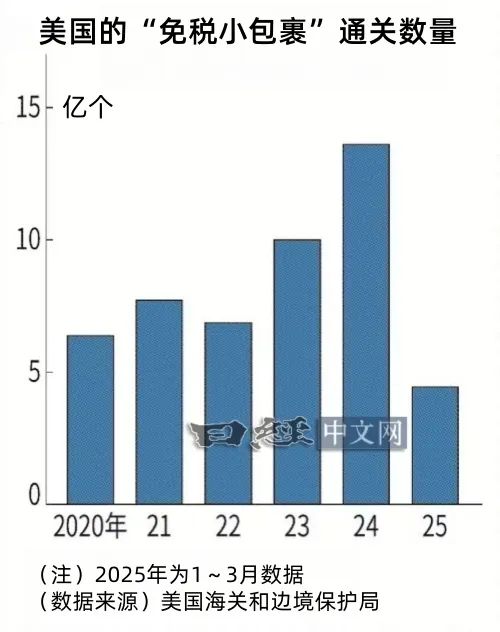
Core Insights - Temu and SHEIN are facing pressure to adjust their business models due to the cancellation of the small import tax exemption policy in the U.S., which will increase operational costs and lead to a shift towards local sourcing of products [1][2][5]. Group 1: Business Model Changes - As of May 1, 2024, Temu's goods sourced from the U.S. have increased, while direct shipments from China have decreased significantly, with most direct shipment items disappearing from the website [1][5]. - The cancellation of the small import tax exemption means that Temu has started adding "import fees" to prices of goods shipped directly from China, significantly raising costs for consumers [2][3]. - Temu's strategy is shifting towards local procurement in various countries, including the U.S., where local sourcing is expected to account for 80% of sales in Europe by 2024 [5]. Group 2: Market Impact - The U.S. accounted for 50% of Temu's total merchandise value (GMV) in 2024, but this is projected to decline to 25% by 2027, indicating a potential shift in focus towards Asian and European markets [5]. - The number of packages cleared under the low-value exemption rule in the U.S. reached 1.36 billion in 2024, doubling from 2022, highlighting the significance of this policy for Temu and SHEIN's growth [3]. - The strategic shift away from low-cost direct shipments from China may reduce competitiveness for Temu and SHEIN, as U.S. consumers are attracted to the low prices offered by these platforms [5][6].
中方明确表态,145%关税一点都不能留,美国已经没得选
Sou Hu Cai Jing· 2025-05-09 19:53
Group 1: Tariff Negotiations - China has made it clear that the 145% tariffs must be completely removed, leaving no room for negotiation [1][3] - The Chinese government rejects any form of "discounted compromise" and insists on the removal of unilateral tariffs as a prerequisite for negotiations [3] - The U.S. administration's proposal to reduce tariffs from 145% to 50%-60% is seen as a mere numerical game by China, which is not interested in the level of tariffs but in ending the use of trade as a weapon [3] Group 2: Economic Impact - The tariffs imposed by the Trump administration are beginning to negatively affect the U.S. economy, with rising prices reported by e-commerce platforms like Amazon and Temu [5] - Consumer spending patterns are shifting, with a decrease in restaurant traffic and an increase in essential goods expenditure, indicating a brewing macroeconomic storm [5] - The costs associated with tariffs are permeating every segment of the supply chain, ultimately being borne by American consumers [5] Group 3: Strategic Timing - The critical phase of the tariff negotiations may occur in July, coinciding with the expiration of a 90-day suspension period for "reciprocal tariffs" [7] - If the U.S. fails to reach agreements with Japan and Europe by mid-July, China's negotiating position will significantly strengthen [7] - The delayed economic impacts of tariffs are expected to culminate in July, potentially delivering a severe blow to the Trump administration as inflation and employment data emerge [7] Group 4: Strategic Resilience - China demonstrates strategic resilience by maintaining a firm stance on tariff negotiations while expanding its global market presence through initiatives like the Belt and Road [9] - The Chinese manufacturing sector, accounting for over 30% of global production, is redefining market rules, challenging the effectiveness of U.S. tariffs [9] - The ongoing tariff conflict reflects a clash of governance philosophies, with China adopting a rules-based approach to counter unilateralism, while the U.S. focuses on transactional tactics [9]
从全托到半托的阵痛与突围:解码小胡的海外货盘突围战
Sou Hu Cai Jing· 2025-05-09 11:07
Core Insights - Temu is transitioning from a fully managed model to a semi-managed model, causing uncertainty among sellers [1][3] - The semi-managed model offers sellers greater autonomy but also introduces new challenges in logistics and customer service [3][5] Group 1: Temu's Transition - The shift to a semi-managed model is a significant change for sellers, leading to confusion and anxiety [1] - Sellers must adapt to new logistics and customer service responsibilities, which requires a robust management system [3] Group 2: Partnership with HICUSTOM - HICUSTOM provides a comprehensive solution for sellers, including product selection, design, production, logistics, and after-sales service [3][5] - The partnership with HICUSTOM has significantly improved logistics efficiency and reduced costs for sellers [5][9] Group 3: Operational Efficiency - HICUSTOM's capabilities include high production capacity, with daily outputs exceeding 100,000 units, alleviating concerns about meeting demand [5] - The use of HICUSTOM's logistics management system has enhanced order tracking and customer satisfaction through features like visual tracking and timely delivery [9][7] Group 4: Future Outlook - With the support of HICUSTOM, sellers feel prepared to face future challenges and are optimistic about their growth prospects [11]

靠小额免税起家的中国电商被迫重写出海剧本
日经中文网· 2025-05-09 08:07
Core Viewpoint - The cancellation of the small import tax exemption policy in the U.S. is forcing Temu and SHEIN to adjust their business models, leading to increased local sourcing and higher operational costs in their primary market, the U.S. [1][2][3] Group 1: Impact of Policy Changes - The U.S. has canceled the small import tax exemption policy effective May 2, which previously allowed goods valued under $800 to enter without tariffs, significantly impacting Temu and SHEIN's pricing strategies [2][3] - As a result of the policy change, Temu has begun to increase the proportion of locally sourced products in the U.S., with many direct shipment items from China disappearing from their website by May 1 [1][2] Group 2: Business Model Adjustments - Temu's business model, which relied on ultra-low-priced goods from Chinese factories, is shifting towards local procurement in response to rising operational costs and changing market conditions [3][4] - The company has expanded its local sourcing strategy beyond the U.S., targeting markets in Europe, South America, Japan, and South Korea, with plans for local sales to account for 80% of its European revenue by 2025 [4] Group 3: Competitive Landscape - The reduction of low-priced goods shipped directly from China may diminish the competitive edge of Temu and SHEIN, as U.S. consumers are primarily attracted to the low prices offered by these platforms [4] - According to a Goldman Sachs report, the share of U.S. GMV in Temu's total transactions is expected to drop from 50% in 2024 to 25% by 2027, indicating a potential shift in focus towards Asian and European markets [4]

Temu:中国直发美国商品全面停摆,跨境低价时代终结?
Sou Hu Cai Jing· 2025-05-08 17:23
Policy Impact - The U.S. has officially removed the tariff exemption for small packages from China, replacing it with import fees up to 145% starting May 2, 2023, with further increases planned [1][3] - This policy significantly affects Chinese e-commerce platform Temu, which previously thrived on low-cost shipping, leading to a drastic increase in consumer costs for Chinese goods by 130%-150% [3][4] Company Response - In response to the tariff pressure, Temu announced on May 3, 2023, that it would cease all direct shipments from China to the U.S., shifting to a model where all orders are fulfilled by local U.S. sellers [4][5] - The platform has marked all direct shipment items as "out of stock" and is focusing on a localized supply chain to eliminate import fees and additional shipping costs [5] Consumer and Seller Impact - The new tariffs are expected to disproportionately affect low-income American households, with 60% of Temu's users earning less than $50,000 annually, leading to a significant increase in living costs [6][7] - Over half of the small Chinese sellers relying on the previous tariff exemption are likely to exit the market due to increased costs, with some sellers facing profit margin squeezes of 26%-150% [7][8] Industry Dynamics - Other platforms like Shein and AliExpress are also adjusting their pricing strategies in response to the new tariffs, with Shein increasing prices by 51% and Amazon's low-cost platform Haul ceasing to display tariff costs [8] - The average cost of goods has risen from $12.5 to $14.9, a 19.2% increase, while logistics costs have surged from 15% to 22% of total costs, a 46.7% rise [8] Future Strategies - Temu is accelerating the recruitment of U.S. small sellers and has established inventory centers in the U.S. to replace the direct shipment model from China [9][10] - The company is also exploring new markets in Brazil, Mexico, and Nigeria to diversify its risk amid tightening U.S. policies [9][10] - Compliance measures are being enhanced globally, with Temu requiring sellers to meet local regulations and certifications to navigate international trade challenges [10] Conclusion - The changes in U.S. tariff policy highlight the harsh realities of global trade, pushing companies to shift from aggressive pricing strategies to more sustainable practices focused on localization, compliance, and market diversification [11][13]