
石药集团

Search documents
港股分化,科技回撤、内房地。工商纷纷跟随,金融逆势走强
Ge Long Hui· 2025-12-26 14:09
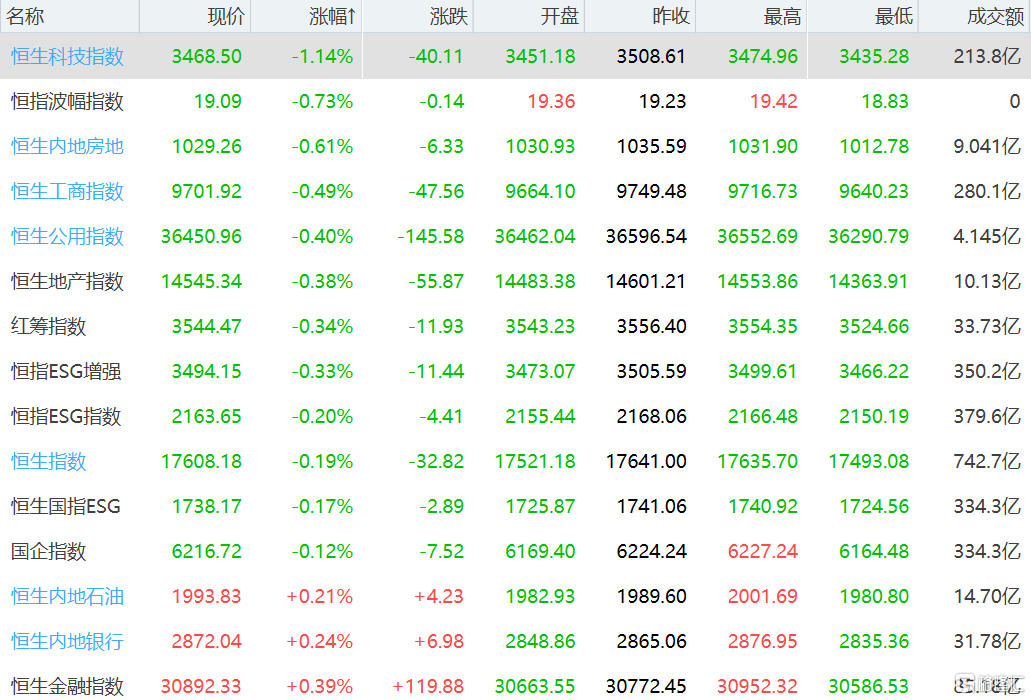
港股一日游,集体小幅低开后全天震荡反弹,但始终被中轴压制,恒生科技低开低走跌幅居前,恒生内房地、恒生工商等紧随其后,恒生金融指 数和恒生内石油逆势收涨。 | 名称 | 现价 | 涨幅1 | 涨跌 | 开盤 | 昨收 | 最高 | 最低 | 成交额 | | --- | --- | --- | --- | --- | --- | --- | --- | --- | | 恒生科技指数 | 3468.50 | -1.14% | -40.11 | 3451.18 | 3508.61 | 3474.96 | 3435.28 | 213.8亿 | | 恒指波幅指数 | 19.09 | -0.73% | -0.14 | 19.36 | 19.23 | 19.42 | 18.83 | 0 | | 恒生内地房地 | 1029.26 | -0.61% | -6.33 | 1030.93 | 1035.59 | 1031.90 | 1012.78 | 9.041亿 | | 恒生工商指数 | 9701.92 | -0.49% | -47.56 | 9664.10 | 9749.48 | 9716.73 | 9640.23 | 280. ...

速递|押注4.5亿,石药集团GLP-1新公司成立
GLP1减重宝典· 2025-12-26 13:22
近日,石药创新制药股份有限公司发布公告称,公司拟通过设立合资公司的方式,进一步加码创新生物医药领域布局,重点切入代谢类 疾病与 GLP-1 靶点相关赛道。根据公告,石药创新拟与中奇制药共同出资4.5亿元人民币,在石家庄设立石药集团润石生物科技(石家 庄)有限公司(暂定名,最终以市场监督管理部门核准登记为准)。 整理 | GLP1减重宝典内容团队 在本次合资安排中,石药创新将以自有资金出资1.575亿元,持股35%;中奇制药拟出资2.925亿元,持股65%。双方表示,合资公司设 立的背景在于国内健康意识持续提升、医疗支出稳步增长,以及临床需求和疾病诊疗水平不断提高,在此推动下,中国创新型代谢类药 物,尤其是 GLP-1 靶点相关产品,正进入快速发展阶段,具备较为明确的长期市场空间。 按照规划,合资公司将以创新型代谢类药物为核心方向,覆盖研发、产业化及商业化全链条,重点聚焦 GLP-1 靶点相关产品,主要面 向超重、肥胖及2型糖尿病等治疗领域,并在此基础上持续推进新型制剂研发和适应证扩展。 在资产与管线层面,合资公司设立后,将承接石药集团有限公司旗下全部 GLP-1 靶点及相关产品管线,涵盖从临床前研究、临床阶段 ...

科技、医疗、银行等行业板块小幅上涨,大消费逆势回撤
Ge Long Hui· 2025-12-26 12:59
Group 1 - The Hang Seng Index maintained a slight increase of 0.17% at the close, with sectors such as internet, technology, healthcare, and banking showing minor gains, while the consumer sector experienced a decline [1] - The Hang Seng Technology Index saw a narrow range of fluctuations, closing up 0.14%, with notable increases in stocks like SMIC (up 3.14%), BYD, Kuaishou, NetEase, and Tencent, while Alibaba and Baidu faced slight declines [3] - The Hang Seng Healthcare Index rebounded after a previous drop, closing up 0.13%, with stocks like JD Health, WuXi Biologics, and Innovent Biologics showing small gains, whereas companies like 3SBio, CSPC Pharmaceutical, and Hansoh Pharmaceutical remained weak [3] Group 2 - The consumer sector faced a downturn, closing down 0.3%, with significant declines in stocks such as WuXi AppTec (down 3.22%) and Lao Pu Gold (down 2.67%), while companies like China Resources Beer, Horizon Robotics, and Alibaba Health managed to rise against the trend [3]

刚刚!天境生物与之科控股达成超长效创新药合作
Xin Lang Cai Jing· 2025-12-26 12:21
Core Insights - Tianjing Biopharma has signed a collaboration agreement with Zhijiang Laboratory Technology Holdings to develop next-generation long-acting innovative biologics, including growth hormones, aimed at providing more convenient treatment options for patients [1][5]. Company Overview: Tianjing Biopharma - Tianjing Biopharma focuses on innovative therapies for autoimmune diseases, tumor immunology, and metabolic diseases, with a differentiated dual-tier innovative drug pipeline [6]. - The first tier includes three products (Fizetuzumab, Eitan Growth Hormone α, and Idaglutide α) that have entered the product listing acceptance stage, while four additional innovative products are in the registration clinical stage or about to start Phase III clinical trials [6]. - The second tier consists of First-in-Class innovative drug projects based on the AntibodyPLUS platform, which are about to enter Phase I clinical trials or initiate clinical applications [6][7]. - The company is accelerating the internationalization of its innovative drug pipeline and integrating R&D, production, and product listing processes in China through collaborations with partners like Jichuan Pharmaceutical, Shiyao Group, and Sanofi [7]. Company Overview: Zhijiang Laboratory Technology Holdings - Zhijiang Laboratory Technology Holdings was established on September 27, 2020, to accelerate the application of technological achievements in the field of intelligent computing and to serve the development of the digital economy and emerging industries [8]. - The company has a registered capital of 100 million yuan and is located in the Future Technology City AI Town in Yuhang District, Hangzhou [8]. - Zhijiang Holdings is dedicated to providing high-quality full-chain services for the transformation and industrialization of technological achievements, including basic services like policy promotion and project due diligence, as well as value-added services such as concept verification and financing [8]. Collaboration Insights - The collaboration will leverage Zhijiang Laboratory's AI-driven research discovery platform, BioDeepDiscovery (BDD), while Tianjing Biopharma will contribute its extensive R&D experience, biological data, and preclinical research capabilities [2][6]. - The partnership aims to combine the strengths of both companies to accelerate drug development processes, particularly in exploring long-acting innovative biologics across multiple therapeutic areas [2][6].


港股创新药ETF(159567)跌0.26%,成交额2.21亿元
Xin Lang Cai Jing· 2025-12-26 07:16
Group 1 - The Hong Kong Innovative Drug ETF (159567) closed down 0.26% with a trading volume of 221 million yuan on December 26 [1] - The fund was established on January 3, 2024, with an annual management fee of 0.50% and a custody fee of 0.10% [1] - As of December 25, 2024, the fund's latest share count was 10.467 billion shares, with a total size of 8.204 billion yuan, reflecting a year-to-date increase of 2547.36% in shares and 2071.41% in size [1] Group 2 - The current fund manager is Ma Jun, who has managed the fund since its inception, achieving a return of 56.94% during the management period [2] - The top holdings of the fund include companies such as BeiGene, CanSino Biologics, Innovent Biologics, and others, with significant weightings in the portfolio [2] - The largest holding is BeiGene, accounting for 10.62% of the portfolio, followed by CanSino Biologics at 10.55% and Innovent Biologics at 10.21% [2]


孟鲁司特困局:被神化的止咳药
Xin Lang Cai Jing· 2025-12-25 17:24
Core Viewpoint - Montelukast, once regarded as a "cough miracle drug," is now under scrutiny due to its potential psychiatric side effects, leading to a shift in its usage from a widely accepted treatment to one requiring careful evaluation and caution [1][3][9] Regulatory Changes - The National Medical Products Administration (NMPA) has revised the drug's labeling to include warnings about serious adverse reactions such as depression and suicidal tendencies, advising patients to seek medical attention if such symptoms occur [3][4] - The updated labeling emphasizes that adverse neuropsychiatric reactions have been reported across all age groups, and symptoms may persist if the drug is not discontinued [4] Usage Patterns - Despite the warnings, Montelukast is still widely used for common symptoms like cough and rhinitis, with the original drug "Singulair" selling over 2 million boxes on a single platform [1][7] - A study indicated that only 13.88% of prescriptions for Montelukast adhered to its approved indications, with off-label use reaching 86.12%, particularly for chronic obstructive pulmonary disease and bronchitis [5][6] Patient and Physician Perspectives - Many patients and their families face a dilemma between relying on Montelukast for its cough relief and the fear of its side effects, leading to increased anxiety about treatment options [3][8] - Some healthcare providers continue to recommend Montelukast despite known side effects, indicating a gap in awareness regarding its risks [6][9] Market Dynamics - There are over 60 approved Montelukast products in China, with a significant market presence, but the tightening of prescription practices is leading to a shift in how the drug is perceived and used [7][8] - The clinical application of Montelukast is becoming more cautious, with a focus on clear communication of potential risks to patients and their families [7][9] Alternative Treatments - Experts suggest that there are safer and effective alternatives for treating allergic conditions, including various non-prescription medications and nasal corticosteroids, but public perception of these alternatives remains a barrier [8][9] - The reluctance to use corticosteroids due to misconceptions about their safety may lead patients to continue using Montelukast, which poses higher risks [8]


孟鲁司特走下神坛
Bei Jing Shang Bao· 2025-12-25 16:02
Core Viewpoint - Montelukast, once regarded as a "cough remedy," is now under scrutiny due to its psychiatric side effects, leading to a shift in its usage from a widely accepted treatment to one requiring careful evaluation and cautious application [1][10] Regulatory Changes - The National Medical Products Administration (NMPA) has revised the drug's labeling to include warnings about potential severe adverse reactions such as depression and suicidal tendencies, advising immediate cessation and medical consultation if symptoms arise [2][3] Market Dynamics - Despite the warnings, Montelukast remains widely used for common symptoms like cough and rhinitis, with the original drug "Singulair" achieving sales exceeding 2 million boxes on a single platform [1][9] - There are over 60 approved Montelukast products in China, including various formulations such as tablets and chewable tablets [8] Clinical Usage and Misuse - Montelukast is often misused in clinical settings, with a study showing that only 13.88% of prescriptions adhered to the approved indications, while 86.12% were off-label, primarily for conditions like chronic obstructive pulmonary disease and bronchitis [6][7] - The drug is not recommended for common cold coughs or non-allergic coughs, contrary to its prevalent use in these contexts [5][6] Patient and Physician Perspectives - Many patients and families face dilemmas regarding the use of Montelukast due to its side effects, with some physicians unaware of its psychiatric risks, leading to continued prescriptions [7][10] - There is a growing concern among parents about finding alternative treatments, as the tightening of prescription practices shifts the focus from "to use or not to use" to "what to use instead" [9][10] Alternative Treatments - Experts suggest safer alternatives for allergic conditions, including non-prescription medications and nasal corticosteroids, but face challenges in changing public perception regarding the safety of these alternatives [10]
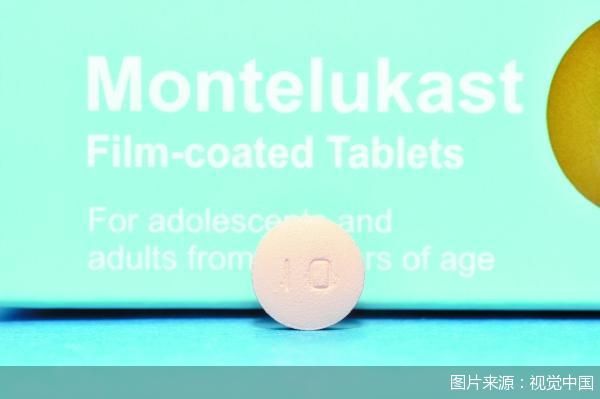
这款儿童常用药修订说明书:需增加抑郁、自杀倾向警告
Xin Lang Cai Jing· 2025-12-25 13:17
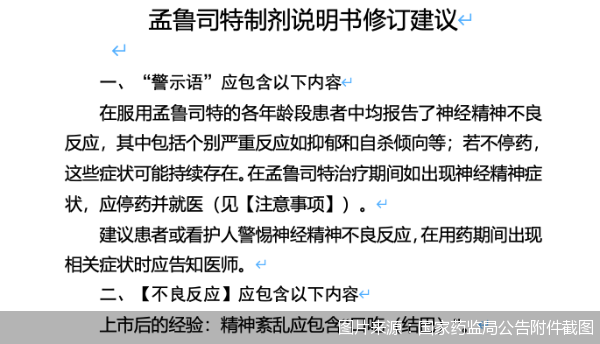
Core Viewpoint - The National Medical Products Administration (NMPA) of China has announced a revision of the prescribing information for Montelukast formulations, mandating the inclusion of explicit warnings regarding neuropsychiatric adverse reactions, including depression and suicidal tendencies [1][2]. Group 1: Regulatory Changes - The revision is based on the results of adverse drug reaction monitoring and assessment [1]. - All Montelukast formulations, including tablets, chewable tablets, granules, and orally dissolving films, are subject to this revision, with the latter three being specifically for pediatric use [2]. - The NMPA requires all marketing authorization holders of Montelukast to revise the prescribing information by March 12, 2026, and to replace the labels of all manufactured products within nine months after the filing [3]. Group 2: Market Context - Montelukast, developed by Merck & Co., was first approved in 1998 and is a selective leukotriene receptor antagonist indicated for the prevention and long-term treatment of asthma in children aged 2 to 14 years [2]. - Following the expiration of its patent, various generic versions have emerged globally, with over 60 approved marketing numbers in China from manufacturers such as Qilu Pharmaceutical, Tianyu Pharmaceutical, and others [2]. - In 2023, Montelukast's sales in Chinese public medical institutions exceeded 1 billion yuan, ranking among the top five chemical drugs for obstructive airway diseases [2].
孟鲁司特困局:被神化的止咳药与全年龄段的副作用
Bei Jing Shang Bao· 2025-12-25 12:58
Core Viewpoint - Montelukast, once regarded as a "cough remedy," is now under scrutiny due to its psychiatric side effects, leading to a shift in its usage from a widely accepted treatment to one that requires careful evaluation and cautious application [1][10]. Regulatory Changes - The National Medical Products Administration (NMPA) has revised the drug's labeling to include warnings about potential severe adverse reactions such as depression and suicidal tendencies, advising immediate cessation and medical consultation if symptoms arise [2][4]. Usage Patterns - Despite the warnings, Montelukast is still widely used for common symptoms like cough and rhinitis, with the original drug "Singulair" selling over 2 million boxes on a single platform [1][10]. - A study indicated that only 13.88% of prescriptions for Montelukast adhered to its approved indications, with off-label use reaching 86.12%, particularly for conditions like Chronic Obstructive Pulmonary Disease (COPD) and bronchitis [5][6]. Market Dynamics - There are over 60 approved Montelukast products in China, produced by numerous companies, indicating a significant market presence [8]. - The tightening of prescription practices has led to a shift in clinical attitudes, with doctors now requiring clear therapeutic necessity and informed consent from parents before prescribing Montelukast, especially for children [10][11]. Patient Concerns - Many families face a dilemma between the drug's cough-relief efficacy and its associated risks, leading to increased anxiety about treatment options [2][10]. - There is a growing recognition among the public that Montelukast should not be viewed as a universal "cough remedy," but rather as a medication that requires careful assessment and clear communication of risks [11].
二代接棒后豪赌GLP-1,能否解千亿石药集团增长之困?
2 1 Shi Ji Jing Ji Bao Dao· 2025-12-25 12:48
Core Insights - The GLP-1 market is transitioning from a "blue ocean" to a "competitive battlefield," with local Chinese companies poised to become significant players within three years, leveraging pipeline integration and differentiated innovation [3][14]. Group 1: Company Developments - XinNuoWei, a subsidiary of Shijiazhuang Pharmaceutical Group, plans to establish a joint venture with a total investment of 45 million RMB, focusing on innovative metabolic drugs targeting GLP-1, particularly for obesity and type 2 diabetes [1]. - Shijiazhuang Pharmaceutical Group's revenue for the first three quarters of 2025 was 19.891 billion RMB, a 12.32% year-on-year decline, indicating ongoing financial pressure [9]. - The appointment of Cai Lei as CEO of Shijiazhuang Pharmaceutical Group is expected to enhance the company's international strategy [10]. Group 2: Market Dynamics - The global GLP-1 market reached $35.2 billion in the first half of 2025, with projections to exceed $70 billion for the entire year, reflecting a growth rate of over 40% [4]. - Novo Nordisk's revenue from diabetes and obesity care reached 215.66 billion DKK (approximately $33.24 billion) in the first three quarters of 2025, with GLP-1 drugs contributing 174.58 billion DKK (approximately $26.90 billion), marking a 15% increase year-on-year [4]. - Eli Lilly reported third-quarter revenue of $17.6 billion, a 54% increase year-on-year, with its diabetes drug Mounjaro generating $6.515 billion in sales during the same period [5]. Group 3: Competitive Landscape - The approval of oral semaglutide (Wegovy) by the FDA marks a significant advancement in weight management, being the first oral GLP-1 drug approved for this purpose [2]. - The competition in the GLP-1 market is intensifying, with local companies like HengRui and LaiKai actively developing differentiated products, including dual-target GLP-1/GIP drugs and oral small molecules [8][11]. - The market is witnessing a shift towards oral formulations and multi-target drugs, which are expected to enhance patient compliance and expand market capacity [6][12]. Group 4: Future Trends - The future of the GLP-1 market will focus on multi-target innovations, extended indications, and the development of oral formulations, which are anticipated to be key competitive factors [12][13]. - The entry of local Chinese companies into the GLP-1 market is expected to increase competition significantly, with many companies preparing to launch their products by 2026 [14].