抖音

Search documents
抖音7月以来封禁投资理财类涉诈账号超80万个
Sou Hu Cai Jing· 2025-12-01 09:50
IT之家 12 月 1 日消息,抖音今日发布持续打击投资理财类诈骗黑产治理公告。2025 年 7 月以来,抖音已封禁此类涉诈账号超 80 万个,并提醒广大用户, 投资需谨慎,请勿轻信"稳赚不赔""带你投资"的陌生网友,不通过非官方渠道下载、使用不明 App。 案例 2 今年 10 月,王某看到一个股票预测的视频后,通过视频隐晦透露的联系方式加入了一个群聊。群内人员声称自己是某证券公司内部人员,引导 王某下载内部软件,加入内部群即可获悉股票预测。王某通过对方提供的链接,下载了陌生软件后并未第一时间投资,而是持续观察"内部群"预 测情况。通过多日观察,王某发现群内预测准确率非常高,放下警惕,跟着群内消息在所谓的内部软件上进行"股票买卖"。在达成一定收益后, 王某发现自己的账户金额突然被全部扣除,并显示倒欠该平台近 20 万元,多次沟通后王某意识到自己被骗。 IT之家从公告获悉,针对上述利用虚假理财人设导流站外实施诈骗的行为,抖音持续迭代技术手段,加强对涉诈账号的识别和处置,同时,抖音也针对虚假 理财诈骗场景,强化短信、电话外呼等用户提醒措施,7 月至今已发送针对此类诈骗的提醒短信 770 万条,外呼 300 万人 ...


长三角电商交易会12月5日开幕
Jiang Nan Shi Bao· 2025-12-01 08:38
本届交易会规模达历年之最。交易会展览展示面积从上一届10000平方米扩大到15000平方米,共设苏品 苏货及供应链展区、城市及产业带展区、达播展区、平台展区四大展区。本届交易会线下参展企业超 500家,包含苏州如意檀香扇、伟红紫砂、王源吉、金坛古籍等老字号非遗企业,以及服装纺织、食 品、电商物流、家电商供应链等各类别企业。 "相较于往届,本届活动内容更加聚焦实效与行业前沿,助力参展企业精准把握电商行业脉搏,抢占 2026年市场先机。"王婷婷表示,围绕趋势发布、政策解读、供需对接、直播生态等重点方向,本届交 易会邀请了1688、抖音、阿里国际站等海内外数十家头部电商平台参展参会,同期将开展"苏品苏货"上 平台专场对接会、GMV未来式1688主题论坛、"丝路云品"电商月江苏专场对接活动等8场专业活动。 其中,"苏品苏货"上平台专场对接会上,快手、天猫、苏宁易购、唯品会、汇通达等多家电商平台负责 人将围绕平台政策、运营要点及热门赛道机会、供应链数字化等方面进行分享,解析选品、流量等关键 节点竞争力提升方法,为江苏各类企业对接平台资源、拓宽渠道提供指导,助力优质"苏品苏货"企业上 平台,充分展示江苏电商力量。 江南时 ...
政企协同助力“放心买” 四川成都创新电商监管模式成效显著
Zhong Guo Zhi Liang Xin Wen Wang· 2025-12-01 03:34
成都市市场监管局构建了"政府监管+企业自律"协同机制,运用大数据、人工智能等技术强化网络交易 动态监测。针对网络食品餐饮等投诉重点领域,建立主体数据库,通过图文扫描AI识别技术,对54家 平台企业、20万余户经营者的亮证亮照及网页合规情况进行核查,累计移交违法违规线索267件。 该局通过市区两级联动推行的"线上监测+线下核查"模式,已在140余个重点直播间实施。成都市成华区 市场监管局近日对成都某创意餐饮有限公司开展现场检查,通过法律法规宣讲与整改指导,推动该企业 规范经营。在协议合规治理方面,成都市市场监管部门累计评审1239份平台协议规则,识别不公平条款 327份,查处涉网络交易及不公平格式条款案件98件,有效净化了平台经营环境。 为从源头防范消费纠纷,成都市市场监管局全国首创在公众号上线"消费合同AI体检"服务,免费向全社 会开放。该工具既为经营者提供了省心便捷的合规自查渠道,也为消费者打造了权益保护"放大镜",有 效避免不公平不合理格式条款侵害消费者合法权益。 同步上线的"成都市平台企业政企共治协作平台",已实现政企协同联动、外卖平台专项化管理、政策信 息精准推送三大功能,目前已接入8家外卖平台企业, ...
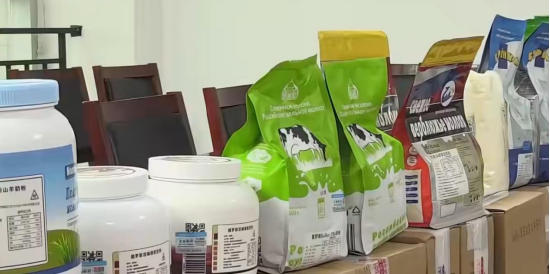
“俄罗斯假奶粉”被警方查获!奶精加淀粉制成,各大平台有售,多方回应
新浪财经· 2025-11-30 08:01
Core Viewpoint - The article reveals a shocking case of counterfeit milk powder production in China, highlighting the dangers of substandard products sold online, particularly for infants and young children [2][6]. Group 1: Incident Overview - In August 2024, police in Zhongmu County, Henan Province, discovered a warehouse producing counterfeit milk powder, leading to the arrest of 12 suspects and the seizure of raw materials and equipment [2][6]. - The counterfeit products, branded as "Russian Flower Cow" and "Russian Blue Cow," were made from low-cost ingredients like vegetable fat powder and maltodextrin, costing only 3-4 yuan per jin, and contained no real milk components [2][6]. - The total amount involved in this counterfeit milk powder case exceeded 6.5 million yuan [2][6]. Group 2: Sales and Distribution - The counterfeit milk powder was sold through major e-commerce platforms, covering almost all provinces in China [2][6]. - Despite the exposure of the incident, the counterfeit brands remained available for sale on various e-commerce platforms, with customer service representatives stating they had not received any notifications regarding product issues [4][8]. Group 3: Health Risks - Experts warn that the consumption of counterfeit milk powder poses significant health risks, particularly for infants, who may suffer from nutritional deficiencies [10][11]. - The article emphasizes the responsibility of regulatory bodies to enhance food safety oversight and the importance of consumers purchasing products from legitimate channels [11][12]. Group 4: Legal Consequences - The main perpetrators of the counterfeit milk powder operation were sentenced to 15 years in prison for producing and selling substandard products, with additional suspects facing prosecution [6][12]. - Similar cases of counterfeit milk powder have been reported in recent years, indicating a persistent issue within the industry despite increased regulatory efforts [12].
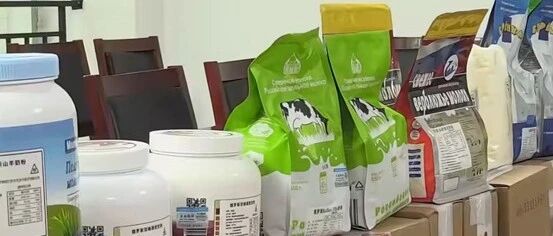
“俄罗斯假奶粉”被警方查获! 奶精加淀粉制成,各大平台有售,多方回应
Xin Lang Cai Jing· 2025-11-30 08:01
Core Viewpoint - A shocking case of counterfeit infant formula has been revealed, involving a criminal gang producing fake milk powder using low-cost ingredients, posing serious health risks to infants and children [3][5][9]. Group 1: Incident Details - In August 2024, police in Henan Province discovered a warehouse producing counterfeit milk powder, leading to the arrest of 12 suspects and the seizure of raw materials and equipment [3][5]. - The fake milk powder was made from non-dairy ingredients like vegetable fat and maltodextrin, costing only 3-4 yuan per kilogram, while being sold online for 30-88 yuan, resulting in profit margins exceeding 10 times [5][9]. - The total amount involved in this counterfeit milk powder case reached over 6.5 million yuan [5][9]. Group 2: Health Risks - Experts warn that the consumption of counterfeit milk powder can lead to nutritional deficiencies in infants, as these products lack essential nutrients necessary for their growth [8][9]. - The counterfeit products are particularly dangerous for infants and children, whose immune systems are weaker and more susceptible to harmful substances [9]. Group 3: Regulatory Response - E-commerce platforms like Taobao, JD.com, and Pinduoduo have stated they will take strict action against sellers of counterfeit products, although no official responses have been received regarding the specific incident [6][9]. - The need for consumers to purchase from legitimate channels and the importance of regulatory oversight in food safety have been emphasized by industry experts [9][10]. Group 4: Historical Context - This incident is not isolated; it reflects a broader issue of counterfeit products in the market, with similar cases of fake imported milk powder being reported in recent years [9][10]. - Previous cases have resulted in significant legal penalties for offenders, indicating ongoing efforts to combat such fraudulent activities [10].
北京市AI产业规模有望超4500亿元
Bei Jing Ri Bao Ke Hu Duan· 2025-11-30 07:40
Group 1 - The core industry scale of artificial intelligence in Beijing reached 215.2 billion yuan in the first half of this year, with a year-on-year growth of 25.3%, and is expected to exceed 450 billion yuan for the entire year [1] - There are over 2,500 AI companies in Beijing, with 183 large models registered, maintaining the leading position in the country, and the industry ecosystem is becoming globally competitive [1][2] - Major companies like Baidu and Douyin have achieved record high revenues and active user numbers, indicating a clear commercialization path [1] Group 2 - Beijing's innovation entities continue to produce leading-edge results, with significant breakthroughs from teams at Tsinghua University, Beijing University of Posts and Telecommunications, and the Chinese Academy of Sciences [2] - Core enterprises are driving significant impacts, with models like Doubao, Wenxin Yiyan, GLM, and Kimi performing excellently in authoritative evaluations, with some results reaching international top levels [2] - The white paper indicates a shift in global AI development from single-point technological breakthroughs to ecological collaborative innovation, forming a development pattern characterized by strategic leadership, technological competition, scale expansion, application expansion, and ecological competition [2] Group 3 - Beijing aims to maintain its position as a global hub for AI innovation and industry, focusing on integrating technological and industrial innovation, enhancing source capabilities, expanding application ranges, and creating industrial clusters [3] - The city plans to strengthen its leading position as the "AI Capital" by addressing weaknesses and enhancing strengths in various aspects [3]
拆解2025最大商战:阿里效益改善,抖音暗发力,市场回不到原点
Sou Hu Cai Jing· 2025-11-30 06:00
Core Insights - Both Alibaba and Meituan reported significant losses in their recent Q3 financial results, indicating a fierce competitive landscape in the Chinese e-commerce and food delivery markets [2][3] - Alibaba's adjusted EBITA dropped from 443 billion RMB to 105 billion RMB year-on-year, while Meituan's revenue was 955 billion RMB with an operating loss of 141 billion RMB and an adjusted net loss of 160.1 billion RMB, compared to a net profit of 128.29 billion RMB in the same period last year [2][3] - The cash burn for both companies exceeded 300 billion RMB in Q3, with Alibaba's cash reserves allowing for a lower percentage of cash burn compared to Meituan, highlighting an asymmetrical battle [2][3] Financial Performance - Alibaba's Q3 revenue for its China e-commerce group was 114.77 billion RMB, a 16% increase year-on-year, while Meituan's revenue was 955 billion RMB, reflecting the ongoing competition in the market [7] - The adjusted net loss for Meituan in Q3 was 160.1 billion RMB, a stark contrast to the previous year's adjusted net profit of 128.29 billion RMB [2][3] Market Dynamics - The market share for food delivery services has not reverted to previous levels despite the cessation of subsidies, indicating a shift in consumer behavior and market dynamics [3] - The competitive landscape is evolving, with new players like Douyin (TikTok) entering the local commerce space, further intensifying the competition [3] Strategic Developments - Alibaba's strategy has shifted towards a more focused approach, consolidating its resources under the "all in one" strategy, which aims to enhance operational efficiency and user engagement [8] - The company is actively investing in its instant retail segment, with a clear roadmap to expand scale, improve efficiency, and optimize product offerings [15][17] User Behavior Changes - The concept of "good loss" is emerging, where losses are seen as investments in long-term user habits and market positioning, similar to Amazon's strategy during its growth phase [9][10] - Instant retail is expected to create irreversible changes in consumer habits, with Alibaba's efforts in this area driving significant increases in active users and revenue growth [12][14] Competitive Outlook - The ongoing battle between Alibaba and Meituan is characterized by aggressive strategies from both sides, with Alibaba's investments in instant retail putting pressure on Meituan's market share and profitability [17] - The competition is likely to remain intense, with both companies adapting to the evolving market landscape and consumer preferences [17]



押注三平米:电梯广告AI实战指南-一财商学院
Sou Hu Cai Jing· 2025-11-29 14:02
Core Insights - The report "Betting on Three Square Meters: Practical Guide to Elevator Advertising" focuses on the elevator advertising industry, analyzing its advantages, development trends, practical strategies, and case studies [1] - Elevator advertising has become a leader in the advertising market due to its unique advantages, including scene value and cost efficiency, with a user attention rate of 45% and a stable CPM of 40-50 RMB [1][23] Industry Trends - Four core trends are identified: 1. Advantage integration through mergers, with the acquisition of New Wave Media by Focus Media covering over 90% of office buildings and 70% of middle-class communities [2] 2. Urban penetration, with lower-tier cities showing significant consumption potential and a demand for quality living [2] 3. Category reconstruction, where daily consumer goods have replaced the internet industry as the main advertising category, accounting for 59% of the market [2][54] 4. Content evolution, with brands forming a "1+N+X" decentralized matrix for marketing, where elevator media plays a crucial role [2] Practical Strategies - Elevator advertising requires precise adaptation to scenes and categories, with outdoor sports, digital products, and automotive sectors identified as potential growth areas [2] - The application of AI technology enhances advertising effectiveness through three-dimensional evaluations, allowing for better pre-strategy formulation and post-analysis [2] Case Studies - Multiple brand cases demonstrate the value of elevator advertising, such as DeYou establishing category awareness and a maternal and infant brand achieving dual growth in performance [3] - Elevator advertising has evolved from mere exposure to a key component of omnichannel marketing, driving long-term brand recognition and growth [3] Market Performance - Elevator advertising has consistently outperformed the overall advertising market for five consecutive years, with projected growth rates of 21% for elevator LCDs and 13.6% for posters in 2024 [23][24] - The stable cost structure of elevator advertising, with a CPM significantly lower than mainstream internet apps, allows for effective targeting of high-consumption demographics [35][36] Audience Characteristics - The audience for elevator advertising is characterized by youth, high education levels, and strong purchasing power, with 61% under 40 years old and a significant portion holding college degrees [36][35] Conclusion - The elevator advertising industry is positioned for continued growth, driven by its unique advantages, strategic integration, and evolving consumer preferences, making it a critical area for investment and marketing strategies [1][2][3]


2025年北京AI核心产业规模有望超4500亿元
Zhong Guo Xin Wen Wang· 2025-11-29 12:39
Core Insights - The "Beijing Artificial Intelligence Industry White Paper (2025)" indicates that the core AI industry scale in Beijing is expected to reach 215.22 billion RMB in the first half of 2025, representing a year-on-year growth of 25.3% [1] - The total industry scale for 2025 is projected to exceed 450 billion RMB [1] - The white paper highlights a shift in global AI development from isolated technological breakthroughs to collaborative ecological innovation [1] Industry Overview - The AI industry in Beijing is experiencing both quantitative and qualitative growth, with a more complete industrial chain forming a globally competitive ecosystem [1] - Commercialization pathways are becoming clearer, with companies like Baidu and Douyin achieving record high revenues and active user numbers [1] Innovation and Collaboration - The AI ecosystem in Beijing is characterized by vibrant innovation, with a strong collaborative atmosphere and open-source contributions in foundational software and model algorithms [1] - There is an increase in international cooperation, exemplified by the establishment of the first "Zhongguancun AI Enterprise Overseas Service Port" to support companies in global expansion with technology, standards, and products [1]
美团没有被彻底拖住
36氪未来消费· 2025-11-29 12:23
Core Insights - The article highlights the intense competition in the food delivery sector, indicating that there are no clear winners in the ongoing battle, particularly in Q3 2025, where major players like Alibaba, Meituan, and JD.com are facing significant challenges and losses [3][5][8]. Summary by Sections Food Delivery Battle - Alibaba's aggressive strategy led to a profit drop of approximately 30 billion yuan, gaining market share but lacking evidence of successful e-commerce synergy [3][8]. - Meituan experienced a decline in market share and reported an operating loss of 14.1 billion yuan, marking its first loss since Q4 2022 [3][5]. - JD.com has reduced its investment in food delivery, focusing on user experience optimization instead [3]. Financial Performance - Meituan's core local business saw a significant shift, with operating profit dropping from 14.6 billion yuan to a loss of 14.1 billion yuan due to increased user incentives and marketing expenses [7]. - Meituan's sales costs rose by 23.7%, and marketing expenses surged by 90.9%, indicating a heavy reliance on subsidies to maintain market share [7]. - Alibaba's total profit dropped by 30 billion yuan in Q3, with a substantial portion of its planned 50 billion yuan subsidy nearly exhausted [8]. Market Dynamics - The competition has led to a significant change in market dynamics, with Alibaba and Meituan nearly equal in market share, while JD.com has lost about 8% [8]. - Both platforms are now focusing on high-value orders, with Meituan holding over 70% market share for orders above 30 yuan [8]. - The article notes that the intense competition has led to a temporary decrease in subsidy levels, allowing Meituan to regain some market share [8]. New Business Ventures - Meituan's new business segment reported a 15.9% revenue increase to 28 billion yuan, despite a 24.5% rise in operating losses [15]. - The company is expanding its offline retail efforts, with new stores like Xiaoxiang Supermarket and the discount store Happy Monkey [15]. - Meituan's overseas expansion continues, with Keeta achieving profitability in Hong Kong and launching operations in Brazil [16][18]. Future Outlook - Meituan's management expresses confidence in maintaining efficiency and market share despite ongoing losses [5][13]. - The company is preparing for a winter campaign to boost various metrics, including new store openings and promotional activities [12]. - The article concludes that while the core local business faces challenges, Meituan is committed to exploring new opportunities and maintaining its operational rhythm [18].