
科大讯飞

Search documents
计算机行业月报:AI应用全面加速,DeepSeek V4有望深刻改变全球AI的竞争格局
Zhongyuan Securities· 2026-01-22 10:24
Investment Rating - The report maintains an "Outperform" rating for the computer industry, indicating a positive outlook compared to the market [1]. Core Insights - The acceleration of AI applications is expected to significantly reshape the global AI competitive landscape, particularly with the anticipated release of DeepSeek's V4 model [7]. - The Chinese AI cloud market is projected to reach 51.8 billion yuan by 2025 and 193 billion yuan by 2030, with Alibaba aiming to capture 80% of the market's incremental growth in 2026 [7]. - The report highlights the ongoing trend of domestic chip manufacturers gaining market share due to restrictions on foreign competitors, particularly Nvidia's H200 [7]. Summary by Sections Industry Data - From January to November 2025, the software industry revenue reached 13.98 trillion yuan, growing by 13.3% year-on-year, marking a continuous recovery over nine months [13]. - The IC design sector showed the highest growth rate at 16.5%, outperforming the overall software industry growth [18]. AI Developments - Major AI models such as OpenAI's GPT-5 and DeepSeek's V3.2 are leading the market, with DeepSeek's models expected to challenge established players significantly [41][46]. - The report notes that the trend of using domestic chips for training large models is expected to gain momentum in 2026, with DeepSeek already optimizing its models for compatibility with domestic chips [66]. Domestic Market Trends - The report emphasizes the increasing number of devices running on Huawei's HarmonyOS, which has surpassed 36 million, indicating a strong push towards domestic technology adoption [7]. - The AI cloud market is becoming increasingly competitive, with Alibaba and Volcano Engine emerging as the two dominant players [7]. Investment Opportunities - The report suggests focusing on companies like Runze Technology, Sugon, and Zhongke Shuguang, which have significant roles in the AI infrastructure and domestic chip development [7]. - It also highlights the potential of companies like Changxin Technology and Chipone Semiconductor, which are actively pursuing IPOs [7].


去年GDP增长5.1%左右,无锡明确今年抢抓人工智能机遇
2 1 Shi Ji Jing Ji Bao Dao· 2026-01-22 09:32
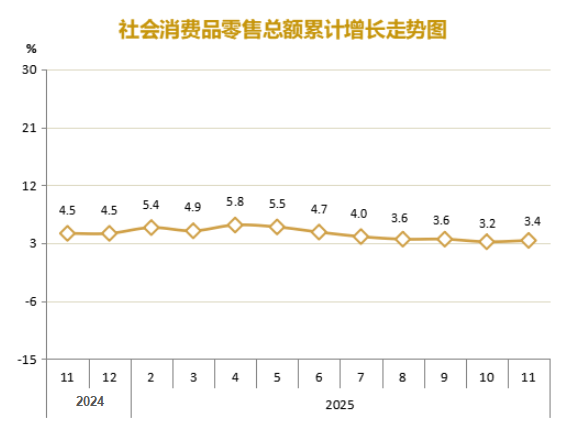
Group 1: Economic Performance - In 2025, Wuxi achieved a GDP of approximately 1.68 trillion yuan, growing by about 5.1%, surpassing the national average growth rate of 5.0% [1] - The total retail sales of consumer goods in Wuxi exceeded 440 billion yuan in 2025, but the growth rate declined from around 5% in the first half to approximately 3.5% in the second half [2] - Wuxi's total import and export value reached 829.28 billion yuan in 2025, marking a year-on-year increase of 7.6% [1] Group 2: 2026 Economic Goals - For 2026, Wuxi set a GDP growth target of 5% and a retail sales growth target of around 4% [4] - Key initiatives for 2026 include enhancing domestic demand, stabilizing major consumer sectors such as automobiles and home appliances, and expanding new business formats like duty-free economies [4] Group 3: Industrial Development - Over the past five years, Wuxi has developed five national advanced manufacturing clusters, with eight clusters generating over 200 billion yuan in revenue [5] - Wuxi aims to capitalize on artificial intelligence opportunities by collaborating with leading companies and deploying projects related to AI data centers and quantum chips [5][6] - The city plans to increase the revenue of the productive service industry by 7% and aims for the scale of future industries to reach 145 billion yuan [6] Group 4: Long-term Economic Vision - Wuxi's GDP is projected to exceed 2 trillion yuan in the next five years, with a target of achieving a per capita GDP of over $30,000 by 2024 [7] - The city aims for strategic emerging industries to account for over 46% of the industrial output of designated large-scale enterprises [7] - By the end of 2025, Wuxi is expected to have 127 listed companies, primarily in sectors such as power equipment, machinery, and automotive [7]

扫人类嗅觉盲区!机器人电子鼻已能嗅出生命、闻诊疾病|npj Robotics
机器人大讲堂· 2026-01-22 09:12
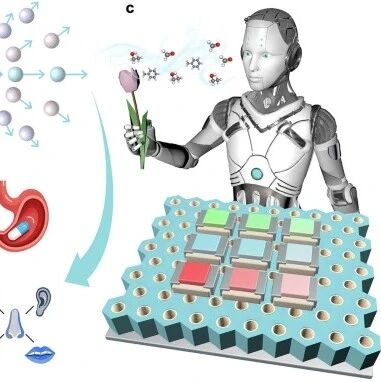
你是否想过 , 机器人 能闻到气味吗? 如今,随着电子鼻与机器人技术的深度融合,机器嗅觉正从实验室走向现实战场,成为机器人感知世界的新维 度。 近日, 香港科技大学研究团队在 Nature 旗下期刊 《 npj Robotics 》 发表重磅综述 , 系统梳理了电子鼻 在机器人嗅觉领域的最新进展,揭示出这项技术如何赋予机器人嗅觉 , 使其在搜救、医疗、环境监测乃至家 庭服务中发挥不可替代的作用。 ▍ 为什么机器人需要嗅觉? 嗅觉可能是生物体最古老的感觉之一,但也是最精密的化学检测系统。人类鼻子中大约有 400 种不同类型的 嗅觉受体,通过这些受体的不同组合,我们能够识别数千种不同的气味。 人类的嗅觉虽然敏锐,却存在本质局限 。 它是主观的,容易受生理和心理状态影响,且无法检测无味但有害 的气体。 正因如此,开发能够复制甚至超越人类嗅觉能力的技术成为迫切需求。机器人嗅觉系统需要面对更严苛的挑战 , 要 在湍流、风力变化和多种气味源的复杂环境中,仍然能够准确检测和识别目标气体。 这种能力对于搜 救、环境监测和医疗诊断至关重要。 如何实现这一目标?答案藏在电子鼻 。 这套系统的核心原理在于仿生:它效仿人类鼻子的工作 ...
微软正式推出首个机器人大模型Rho-alpha!
机器人大讲堂· 2026-01-22 09:12
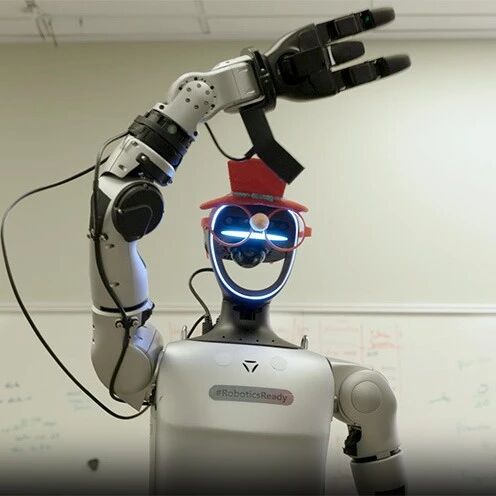
当机器人从标准化车间走向复杂家居、医疗场景,仅靠视觉和语言指令已难以应对动态物理环境。 1月21日, 微软研究院( Microsoft Research )正式发布首款基于 Phi 视觉 - 语言模型家族的机器人专用 AI 系统 Rho-alpha ,这款被定义为" VLA+ "的创新模型,通过植入触觉感知、融合仿真训练与人类反馈机 制,让机器人在双手协同操作中具备了更强的适应性与可靠性,为物理 AI 的落地按下加速键。 微软表示, Rho-alpha 的突破在于打破了 VLA 的能力边界,将感知维度从视觉拓展至触觉,同时构建了"感 知 - 行动 - 反馈"的闭环架构,这也是其被称为" VLA+ "的核心原因。 在微软公布的演示视频中,两台搭载触觉传感器的 UR5e 协同机械臂,在 Rho-alpha 驱动下执行插头插入任 务:左臂精准定位接口,右臂调整姿态推进,当遇到接触阻力时,传感器迅速反馈力信号,模型随即微调角度 避免卡滞。即便右臂出现定位偏差,操作人员通过 3D 鼠标实时干预后,系统能吸收纠正信息并优化动作轨 迹。 目前 Rho-alpha 已实现触觉感知与视觉、语言指令的跨模态融合,微软透露,后续还 ...

计算机行业月报:AI应用全面加速,DeepSeekV4有望深刻改变全球AI的竞争格局-20260122
Zhongyuan Securities· 2026-01-22 08:53
Investment Rating - The report maintains an "Outperform" rating for the computer industry, indicating a positive outlook compared to the market [1]. Core Insights - The acceleration of AI applications is expected to significantly alter the global AI competitive landscape, particularly with the anticipated release of DeepSeek's V4 model [7]. - The Chinese AI cloud market is projected to reach 51.8 billion yuan by 2025 and 193 billion yuan by 2030, with Alibaba aiming to capture 80% of the market's incremental growth in 2026 [7]. - The report highlights the ongoing trend of domestic chip manufacturers gaining market share due to restrictions on foreign competitors like NVIDIA [7]. Summary by Sections Industry Data - From January to November 2025, the software industry revenue reached 13.98 trillion yuan, growing by 13.3% year-on-year, marking a continuous recovery over nine months [13]. - The IC design sector showed a robust growth of 16.5% during the same period, outperforming the overall software industry growth [18]. AI Developments - Major AI models such as OpenAI's GPT-5 and DeepSeek's V3.2 are leading the market, with DeepSeek's models expected to challenge established players significantly [39][44]. - The report notes that the trend of using domestic chips for training large models is anticipated to grow in 2026, with DeepSeek already optimizing its models for compatibility with local hardware [63]. Domestic Market Trends - The report emphasizes the increasing importance of domestic chip manufacturers, as restrictions on foreign technology create opportunities for local firms [7]. - The number of devices running Huawei's HarmonyOS has surpassed 36 million, indicating strong growth in the domestic software ecosystem [7]. Investment Opportunities - The report suggests focusing on companies like Runze Technology, Sugon, and Huada Jiutian, which are positioned well within the AI and chip sectors [7]. - The ongoing IPOs of companies like Changxin Technology and Chipone Semiconductor are highlighted as potential investment opportunities in the semiconductor space [7].



大摩将中国人形机器今年销量预测提高一倍!十大核心ETF·机器人ETF(562500)年初至今涨超9%
Ge Long Hui A P P· 2026-01-22 08:00
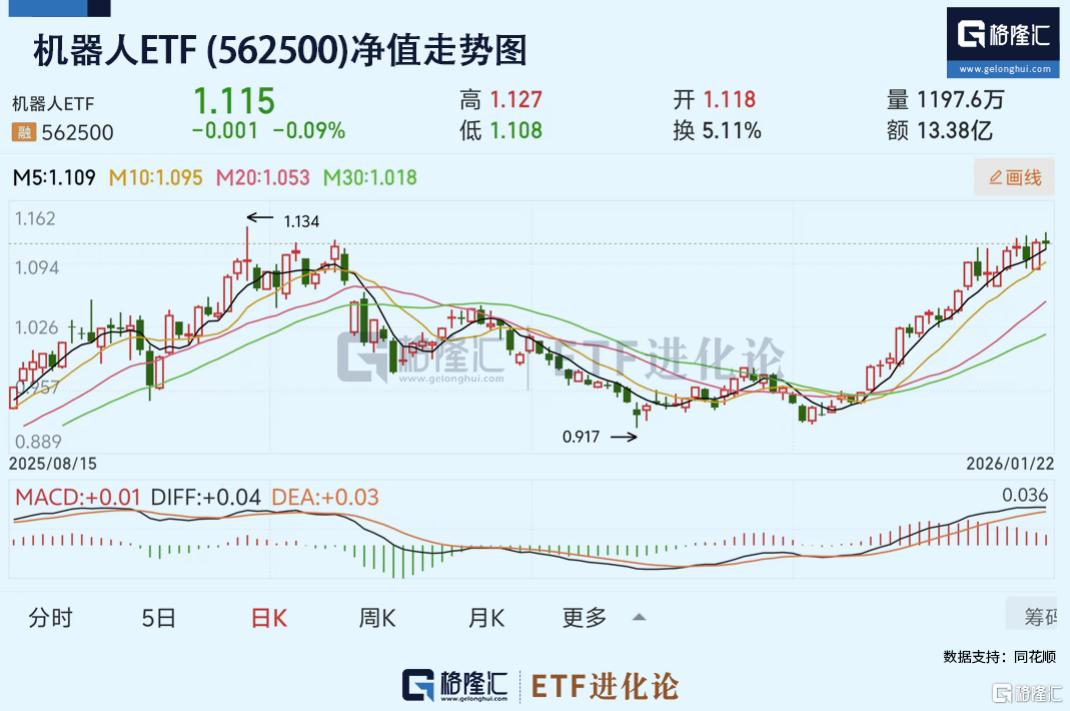
刚刚,摩根士丹利分析师将2026年中国人形机器人销量预测从之前的为14000台提高了一倍至28000台,入选"2026年全球视野·下注中国"十大核心ETF之一机 器人ETF(562500)年初至今累计上涨9.42%。 中游是整合中心,主机厂扮演"总设计师"角色,向上游联合定义零部件,向下游深入场景打造解决方案,操作系统与开源平台是构建生态、降低开发门槛的 关键。特斯拉的Optimus、波士顿动力的Atlas、中国企业的开源计划,都在争夺生态主导权。 下游是价值检验场,呈现"从商用到家用"的渐进路径,工业和商业场景已经有实际应用场景,但家庭场景落地仍困难较大,对成本、安全性、智能水平要求 极高,是技术和成本突破后的远期目标。 机器人ETF(562500)跟踪的中证机器人指数,覆盖机器人全产业链,行业分布以机械设备(52%)和计算机(18.7%)为主,成分股包括系统方案商、集成 商、自动化设备及零部件商,重点覆盖机器人产业的核心制造环节,是具身智能"硬件",同时指数与Wind的人形机器人指数重合度高达69.94%,受益于工 业机器人+人形机器人双轮驱动。 具身智能2025年实现爆发是"技术成熟+成本下降+供应链完 ...

2025最强AI产品一文看尽丨量子位智库年度AI 100
量子位· 2026-01-22 07:37
Core Viewpoint - The article highlights the transformation of China's AI product ecosystem in 2025, marking it as the "Year of AI Applications," where the focus shifts from mere functionality to system reconstruction driven by advancements in underlying models, user demand, and business model evolution [5][6]. Group 1: AI Product Landscape - The 2025 AI market in China is characterized by the launch of major AI companies like Zhipu and MiniMax, indicating a maturing market [3]. - The "AI 100" product list released by Quantum Bit Think Tank categorizes AI products into three main segments: "Flagship AI 100," "Innovative AI 100," and the top products from ten popular sectors [7][29]. - The "Flagship AI 100" focuses on the strongest AI products of 2025, showcasing those that have achieved significant technological breakthroughs and practical application value [8][29]. Group 2: User Engagement and Market Trends - The top five AI products on the web account for over 62% of monthly active users (MAU), while the top five on mobile apps represent over 65% of daily active users (DAU) [12]. - AI general assistants and AI office platforms remain the most popular sectors, significantly outpacing other categories in user scale [12]. - The "Innovative AI 100" aims to identify products with potential for explosive growth in 2026, highlighting emerging trends in various AI sectors [13][16]. Group 3: Sector-Specific Insights - The article identifies ten key AI application sectors, including AI browsers, AI agents, AI smart assistants, and AI education, each featuring top three products that exemplify innovation and engineering excellence [19][23]. - The evaluation of these sectors serves as a retrospective on the AI application market in 2025, emphasizing the competitive landscape and user engagement [24]. Group 4: Evaluation Methodology - The "AI 100" list employs a dual assessment system combining quantitative and qualitative metrics, focusing on user data, growth, and long-term development potential [26]. - Quantitative metrics include user scale, growth, and engagement, while qualitative assessments consider technology, market space, and user experience [26].
AI应用端震荡反弹,大数据ETF(515400)盘中涨幅超 2%,本月累计“吸金”超5.4亿元
Mei Ri Jing Ji Xin Wen· 2026-01-22 06:18
Group 1 - Major indices opened high and showed volatility, with noticeable rotation among sectors, particularly in commercial aerospace and AI applications [1] - The Big Data ETF (515400) rose over 2% as of 10:10 AM, aiming for a second consecutive increase, with leading stocks including Deepin Technology, Yonyou Network, China Great Wall, and China Software [1] - As of January 21, the Big Data ETF has seen a cumulative net inflow of 547 million yuan in January [2] Group 2 - NVIDIA's CEO Jensen Huang stated at the World Economic Forum in Davos that the AI industry, while appearing bubble-like, is not a bubble, and it is triggering a "platform-level transformation" with infrastructure investments expected to reach trillions of dollars [2] - OpenAI plans to launch advertising services for ChatGPT in early February, initially charging based on impressions and testing ads among free and low-cost subscription users [2] - The Big Data ETF closely tracks the CSI Big Data Industry Index, selecting 50 stocks from the Shanghai and Shenzhen markets related to big data sectors, with major holdings including iFlytek, Inspur, and Unisplendour [2]
AI人工智能ETF(512930)涨近1%,AI应用落地进展不断
Xin Lang Cai Jing· 2026-01-22 05:50
Core Insights - The AI application sector has emerged as a leading investment theme in early 2026, with a year-to-date increase of 19%, making it the top performer in the A-share market [2] - Significant advancements in AI applications have been reported by major internet companies, indicating a strong trend towards commercialization and user adoption [1][2] Group 1: Market Performance - The Zhongzheng AI Theme Index (930713) rose by 0.81% as of January 22, 2026, with notable increases in constituent stocks such as Deepin Technology (+16.94%) and China Software (+4.98%) [1] - The AI ETF (512930) also saw a rise of 0.72%, with the latest price at 2.38 yuan [1] Group 2: AI Application Developments - The AI intelligent platform "Kouzi" has completed a brand upgrade to version 2.0, introducing new features related to skill invocation and office programming [1] - The "Qianwen App" achieved over 100 million monthly active users within two months of launch, leading the domestic market in growth [1] - The overseas response to Keling's newly released motion control feature has been positive, with projected revenue exceeding $20 million by December 2025, highlighting the acceleration of AI technology commercialization [1] Group 3: Industry Trends - The CES 2026 event has provided critical insights into the future direction of AI applications, with hardware increasingly integrating into daily life across various sectors, including automotive, robotics, and smart home devices [2] - Upgrades in model inference capabilities are facilitating the rapid deployment of enterprise-level Agentic AI, supported by next-generation hardware platforms that significantly reduce token and inference costs [2] - China is positioned advantageously in terms of the pace of application deployment and user scale, indicating substantial growth potential in the AI application sector [2] Group 4: Index Composition - The Zhongzheng AI Theme Index comprises 50 listed companies involved in providing foundational resources, technology, and application support for AI, with the top ten weighted stocks accounting for 58.08% of the index [2]
AI应用竞争正式迈入“超级Agent”时代,软件ETF(159852)获资金踊跃布局
Xin Lang Cai Jing· 2026-01-22 03:19
Group 1 - The software development and internet services sectors are experiencing significant gains, with the China Software Service Index rising by 1.34% as of January 22, 2026, and key stocks like Deepin Technology and China Software seeing increases of 11.06% and 5.79% respectively [1] - Alibaba's Qianwen App has integrated with core ecosystem services such as Taobao and Alipay, launching over 400 AI functionalities, marking a shift towards a "super agent" era in AI applications [1] - Multi-modal technology is identified as a critical factor for AI applications in 2026, with beneficiaries primarily in AI video and robotics, while overseas developments are expected to advance further [1] Group 2 - As of December 31, 2025, the top ten weighted stocks in the China Software Service Index account for 60.89% of the index, including companies like iFlytek and Kingsoft [2] - The Software ETF (159852) serves as a convenient tool for investors looking to capitalize on opportunities in the computer software industry [2] - Investors can also access AI software investment opportunities through the Software ETF linked fund (012620) [3]