
邮储银行

Search documents
信贷资产证券化 2025 年度运营报告与 2026 年度展望:信贷 ABS 发行规模止跌回稳,NPL 成为发行及交易主力;产品发行利率走势出现分化;零售资产拖欠率高位波动;需对消费信贷及行业政策保持关注
Zhong Cheng Xin Guo Ji· 2026-01-23 06:25
1. Report's Industry Investment Rating - The document does not mention the industry investment rating. 2. Core Viewpoints of the Report - In 2025, influenced by the significant increase in NPL product issuance, the number and scale of credit - asset - backed securities issuances rebounded. The secondary - market trading volume also rebounded, with NPL products and sub - grade securities becoming the main trading components. The spreads of normal - class products continued to decline, while those of NPL products showed differentiation. Retail asset delinquency rates fluctuated at high levels, and the real recovery of NPL products continued to decline [6][7][55]. - In 2026, the credit asset securitization market is expected to be dominated by NPL products. The issuance spreads of other product types are expected to remain low, and the trading proportion of NPL and sub - grade securities in the secondary market is expected to further increase. Retail asset performance is unlikely to improve significantly in the short term, and the actual recovery of NPL products will continue to face pressure. Attention should be paid to the impact of consumer credit and industry policies [6][55]. 3. Summary by Relevant Catalogs 3.1 Issuance - In 2025, a total of 238 credit - asset - backed securities were issued, with a total issuance scale of 291.522 billion yuan, representing a year - on - year increase of 23.96% in the number of issuances and 7.82% in scale. NPL products accounted for 74.79% of the issuance number and 28.15% of the scale, both reaching historical highs [6][7]. - Auto ABS: 32 issues were issued, with a total scale of 118.543 billion yuan, a year - on - year decrease of 8.58% in scale. Green Auto ABS accounted for 17.62% of the total Auto ABS issuance scale, a decrease of 8.67 percentage points compared to 2024 [10]. - NPL: 178 issues were issued, with a total scale of 82.057 billion yuan, a year - on - year increase of 36.92% in the number of issuances and 61.32% in scale, and a cumulative disposal of 519.086 billion yuan in non - performing assets [10]. - Micro - enterprise loan ABS: 10 issues were issued, with a total scale of 58.645 billion yuan, a year - on - year decrease of 23.08% in the number of issuances and 10.49% in scale [12]. - Personal consumption - loan ABS: 18 issues were issued, with a total scale of 32.277 billion yuan, a year - on - year increase of 5.88% in the number of issuances and 32.70% in scale [13]. 3.2 Issuance Interest Rate - In 2025, the issuance interest rate of normal - class asset credit ABS remained low, while the NPL product issuance interest rate deviated from the benchmark interest rate at the end of the year. The issuance interest rates of Auto ABS, personal consumption - loan ABS, and micro - enterprise loan ABS decreased in the first half of the year and then remained stable, while the NPL issuance interest rate increased significantly in the fourth quarter [17]. - The average spread of AAAsf - rated products and the benchmark interest rate was 56bp, and that of AA + sf - rated products was 48bp, a decrease of 2bp and 18bp respectively compared to 2024. The spreads of different types of products all declined to varying degrees, with NPL products still at a relatively high level [20]. 3.3 Secondary Market - By the end of 2025, the credit - asset - backed securities' outstanding scale decreased by 11.85% to 435.812 billion yuan. The trading volume increased by 4.38% to 130.514 billion yuan, the number of transactions increased by 27.90% to 2,388, and the turnover rate increased by 8.83 percentage points to 28.06% [23][25][26]. - NPL products were the main trading variety, with a trading volume of 53.206 billion yuan, accounting for 40.77% of the total trading volume. Auto ABS trading volume was 48.574 billion yuan, accounting for 37.22% of the total trading volume [28]. 3.4 Credit Performance - Auto ABS: The cumulative default rate of recently issued products increased significantly, the delinquency rate increased, and the prepayment rate showed a slow upward trend, with the fluctuation center between 8% - 10% [31][33][35]. - Personal consumption - loan ABS: The performance was significantly differentiated, the delinquency rate fluctuated, and the prepayment rate continued to rise [38][40][43]. - RMBS: The cumulative default rate remained low, the delinquency rate first increased and then decreased, and the prepayment rate fluctuated to a high level and then returned to stability [45][47][49]. - NPL: The real recovery situation declined year by year, and 11 issues of priority - class asset - backed securities failed to be fully redeemed by the expected maturity date [52].
多家银行发布公告,明确个人消费贷款财政贴息细节
Sou Hu Cai Jing· 2026-01-23 06:18
Core Viewpoint - The Ministry of Finance, the People's Bank of China, and the Financial Regulatory Administration have extended the implementation period of the personal consumption loan interest subsidy policy until the end of this year and included credit card installment services in the support scope, prompting several financial institutions to announce related service measures [1]. Group 1: Policy Implementation - The personal consumption loan interest subsidy policy will be effective from September 1, 2025, to December 31, 2026, as stated by major state-owned banks [3]. - Consumers who have already signed the "Personal Consumption Loan Interest Subsidy Service Agreement" will automatically benefit from the new subsidy policy for consumption occurring after January 1, 2026, without needing to sign a new agreement [2][3]. Group 2: Adjustments in Consumption Loan Areas - The China Bank has removed the restriction on consumption transactions of 50,000 yuan (inclusive) and above, meaning that transactions in this range will no longer be limited to specific categories such as household vehicles, education, and healthcare [5]. - The Industrial and Commercial Bank of China has detailed the subsidy scope, which includes areas such as household vehicles, elderly care, education, cultural tourism, home decoration, electronic products, and healthcare [7]. Group 3: Credit Card Installment Details - The Bank of Communications has set the annual interest subsidy rate for credit card bill installments at 1%, with a maximum subsidy limit of 3,000 yuan per year for each borrower across all personal consumption loans and credit card installments [9]. Group 4: Inclusion of Financial Institutions - The new policy also includes city commercial banks, rural commercial banks, foreign banks, consumer finance companies, and auto finance companies as processing institutions, facilitating access for the public [11]. Group 5: Monitoring and Compliance - Financial institutions are required to strengthen monitoring of loan purposes and fund flows, with penalties for fraudulent activities or misuse of funds, including the potential recovery of subsidies already granted [13].

信用卡分期也有补贴,多家银行响应
Hua Xia Shi Bao· 2026-01-23 06:17
Core Viewpoint - The Ministry of Finance, the People's Bank of China, and the Financial Regulatory Bureau have extended the personal consumption loan interest subsidy policy until the end of 2026, allowing each borrower to enjoy a subsidy cap of 3,000 yuan, and including credit card installment payments in the support scope [2][3]. Group 1: Policy Changes - The implementation period for the personal consumption loan interest subsidy policy is now from September 1, 2025, to December 31, 2026 [3]. - The policy has removed the previous cap of 500 yuan on single transaction subsidies and the cumulative subsidy cap of 1,000 yuan for loans below 50,000 yuan, while maintaining the annual cap of 3,000 yuan per borrower at a single institution [5]. Group 2: Bank Responses - Major banks such as China Construction Bank and China Merchants Bank have announced that customers who previously signed subsidy agreements will automatically apply the new subsidy policy without needing to re-sign [4]. - The Industrial and Commercial Bank of China has launched a dedicated section for "Fiscal Subsidy and Installment Relief" on its app, allowing users to manage their installment payments and subsidies through various channels [6]. Group 3: Credit Card Inclusion - The inclusion of credit card installment payments in the subsidy policy aims to shift the focus from large purchases to frequent daily spending, thereby activating overall consumer demand [7]. - This move is expected to effectively reach a large consumer base, particularly targeting younger and lower-tier market segments, enhancing the consumption potential in these areas [7]. Group 4: Consumer Finance Companies - Consumer finance companies are actively adapting to the policy changes, ensuring that subsidy benefits reach consumers efficiently [10]. - Ant Group's consumer finance division has reported a 23% year-on-year increase in subsidies provided to consumers, indicating a positive impact on consumer spending [10]. Group 5: Specific Initiatives - Haier's consumer finance service has introduced interest-free installment plans for home appliances, contributing to the revitalization of the home appliance market [11]. - Other financial institutions, such as Zhaolian Finance and Du Xiaoman, have launched promotional activities to attract new customers and reduce borrowing costs through various interest subsidy initiatives [11].




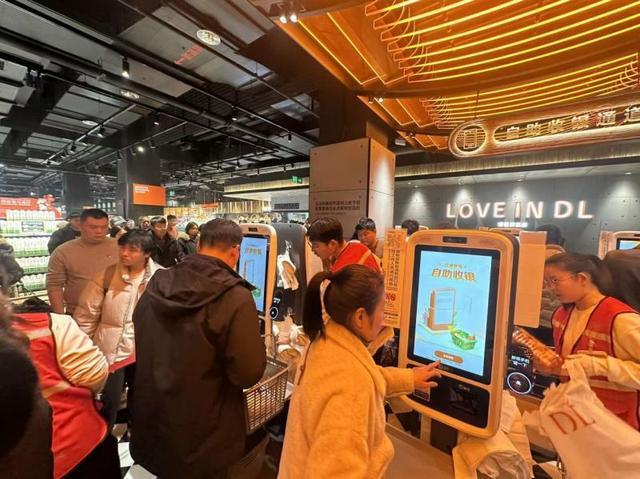
多家银行发布公告 明确个人消费贷款财政贴息细节
Yang Shi Xin Wen· 2026-01-23 05:59
记者从多家银行、消费金融公司等机构了解到,财政部、中国人民银行、金融监管总局三部门发布《关 于优化实施个人消费贷款财政贴息政策有关事项的通知》,将个人消费贷款财政贴息政策实施期限延长 到今年底,并将信用卡账单分期业务纳入支持范围之后,多家金融机构已陆续公告相关服务措施。 今年1月1日后发生的消费 无需重新签署协议 工商银行、农业银行、中国银行、建设银行、交通银行、邮储银行等国有大行表示,根据三部门通知要 求,个人消费贷款财政贴息政策实施期限为2025年9月1日至2026年12月31日。前期已经签署《个人消费 贷款财政贴息服务协议》的贷款,在2026年1月1日后发生的消费,将自动适用最新财政贴息政策,无需 重新签署协议。 中国银行 对于消费贷款财政贴息政策实施领域的调整,中国银行表示,根据政策要求,取消5万元(含)及以上消 费领域限制。也就是说,消费额5万元(含)及以上用于消费的交易,将不再限制是否属于家用汽车、养 老生育、教育培训、文化旅游、家居家装、电子产品、健康医疗七大重点领域。 工商银行 家用汽车领域包括汽车购置、车辆保险及维修; 养老生育领域包括老龄人口或其子女购买的家庭适老化改造服务、养老机构和养老 ...



邮储银行取得基于网络流量运维方法专利
Jin Rong Jie· 2026-01-23 04:09
Group 1 - The core point of the article is that China Postal Savings Bank has obtained a patent for a method and device based on network traffic, indicating its focus on technological innovation in financial services [1] - The patent, with authorization announcement number CN119788542B, was applied for on December 2024, showcasing the bank's ongoing efforts in research and development [1] - China Postal Savings Bank was established in 2007 and is headquartered in Beijing, primarily engaged in monetary financial services, with a registered capital of approximately 9.92 billion RMB [1] Group 2 - The bank has made investments in 7 companies and participated in 5,000 bidding projects, reflecting its active role in the market [1] - The bank holds 1,213 trademark registrations and 1,013 patent registrations, indicating a strong intellectual property portfolio [1] - Additionally, the bank has obtained 99 administrative licenses, further demonstrating its compliance and operational capabilities [1]
1月23日证券之星午间消息汇总:事关个人消费贷!六大行集体公告
Sou Hu Cai Jing· 2026-01-23 03:46
Macro News - Major banks in China, including ICBC, ABC, BOC, CCB, BOCOM, and PSBC, have announced the implementation of the latest fiscal interest subsidy policy for personal consumption loans, extending the policy until December 31, 2026, and expanding its scope to include credit card installment payments [1][2] - The new policy removes the previous limits on single transaction amounts and increases the subsidy standards, allowing for more flexible financial support for consumers [1][2] Industry News - The Ministry of Commerce and nine other departments have issued guidelines to promote high-quality development in the pharmaceutical retail industry, emphasizing a shift towards service-oriented, preventive, and intelligent governance [3] - The guidelines encourage horizontal mergers and acquisitions among pharmaceutical retail enterprises and aim to optimize the licensing process for drug retail businesses [3] Sector Insights - CITIC Securities reports that the white wine industry is expected to maintain stable sales during the 2026 Spring Festival, suggesting a bottom-fishing opportunity in the sector [6] - China Securities believes that AI computing power will be a major growth driver in the telecommunications industry, highlighting investment opportunities in the computing power supply chain [6] - CITIC Jinshi notes that the progress of silver-plated copper and electroplated copper solutions in the photovoltaic sector is relatively fast, predicting significant performance elasticity for material companies as penetration rates increase [6]
个人消费贷贴息如何落实?六大行集体公告→
Ren Min Ri Bao· 2026-01-23 02:50
Core Viewpoint - The six major banks in China have collectively announced the implementation of the latest fiscal interest subsidy policy for personal consumption loans, aiming to enhance related services and support consumer spending [1]. Group 1: Policy Implementation - The implementation period for the fiscal interest subsidy policy for personal consumption loans has been extended to December 31, 2026 [1]. - The scope of support has been expanded to include credit card bill installment services [1]. Group 2: Subsidy Expansion - The subsidy field has been broadened by removing the restriction on single transactions of 50,000 yuan and above [1]. - The subsidy standard has been improved by eliminating the cap of 500 yuan on single transaction subsidies and the previous limit of 1,000 yuan on cumulative subsidies for each borrower at a single institution [1]. Group 3: Existing Agreements - For loans that have already signed the "Fiscal Interest Subsidy Service Agreement for Personal Consumption Loans," any consumption occurring after January 1, 2026, will automatically apply the latest fiscal interest subsidy policy without the need to re-sign the agreement [1].
债市早报:央行连续11个月加量操作MLF;资金面边际收敛,债市震荡调整
Sou Hu Cai Jing· 2026-01-23 02:11
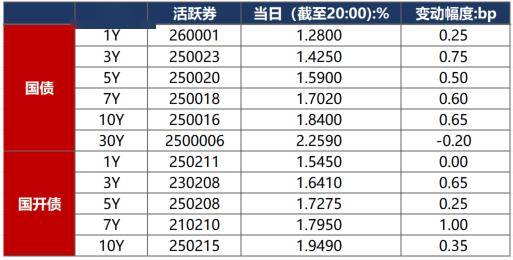
一、债市要闻 (一)国内要闻 【央行行长潘功胜:继续维护好金融市场平稳运行,支持资本市场稳定发展】1月22日,央行行长潘功胜在接受 采访时表示,2026年,央行将继续实施好适度宽松的货币政策,把促进经济稳定增长、物价合理回升作为货币 政策的重要考量,发挥增量政策和存量政策集成效应,为经济稳定增长、高质量发展和金融市场稳定运行营造 良好的货币金融环境,为实现"十五五"良好开局提供有力的金融支撑。潘功胜谈到,总量政策方面,灵活高效运 用降准降息等多种货币政策工具,保持流动性充裕,使社会融资规模、货币供应量增长同经济增长、价格总水 平预期目标相匹配。今年降准降息还有一定的空间。央行还将做好利率政策执行和监督,促进社会综合融资成 本低位运行。结构性政策方面,央行已在今年年初先行出台一批货币金融政策,对结构性货币政策工具的政策 要素作了优化完善。 【央行连续11个月加量操作MLF,加码中长期资金投放】央行1月22日发布中期借贷便利招标公告称,为保持银 行体系流动性充裕,1月23日,将以固定数量、利率招标、多重价位中标方式开展9000亿元中期借贷便利 (MLF)操作,期限为1年期。鉴于本月2000亿元MLF到期,央行1月 ...
金融界财经早餐:潘功胜发声,今年降准降息还有空间!多家银行落实消费贷贴息优化;中际旭创成公募基金第一重仓股;商业航天领域动态频出;阿里旗下平头哥筹划IPO(1月23日)
Jin Rong Jie· 2026-01-23 01:47
Economic Policy - The People's Bank of China will continue to implement a moderately loose monetary policy in 2026, utilizing various tools such as reserve requirement ratio cuts and interest rate reductions to maintain ample liquidity [1] - The Ministry of Commerce and nine other departments have issued opinions to promote high-quality development in the pharmaceutical retail industry, supporting mergers and acquisitions among retail pharmacies [1] Capital Market Developments - The People's Bank of China announced a 900 billion yuan MLF operation to maintain liquidity in the banking system, with a one-year term [3] - Public funds have focused on core sectors such as electronics and power equipment, with Zhongji Xuchuang becoming the largest holding stock, valued at 78.421 billion yuan [3] - The National Development and Reform Commission has allocated 93.6 billion yuan in special bonds to support over 4,500 projects across various sectors, driving total investment exceeding 460 billion yuan [3] Industry Highlights - The commercial aerospace sector is gaining attention, with Blue Arrow Aerospace's IPO status changing to "inquiry" as it aims to become the first commercial aerospace stock [7] - Domestic AI chip company Suiyuan Technology has received approval for its IPO, aiming to raise 6 billion yuan for AI chip development [7] - The human-shaped robot sector remains active, with Zhejiang's innovation center completing a 450 million yuan Pre-A round of financing [7] Company Updates - Zhaoyi Innovation expects a net profit of 1.61 billion yuan for 2025, a year-on-year increase of approximately 46%, benefiting from AI computing demand [8] - ST Biology announced the termination of its major asset restructuring plan to acquire a 51% stake in Hunan Huize Biomedical Technology [9] - Xiaomi Group plans to repurchase up to 2.5 billion Hong Kong dollars of its Class B shares starting January 23 [10] - Alibaba has decided to support its chip subsidiary "Pingtouge" for future independent listing, initiating a restructuring process [11] - Intel reported a fourth-quarter revenue of 13.674 billion dollars, with a net loss of 591 million dollars, while its annual revenue was 52.853 billion dollars [11]

落实消费贷最新贴息政策六大行集体公告
Qi Huo Ri Bao Wang· 2026-01-23 01:44
Core Viewpoint - The Ministry of Finance, the People's Bank of China, and the Financial Regulatory Administration have announced an extension of the personal consumption loan interest subsidy policy until the end of 2026, which now includes credit card installment payments [1] Group 1: Policy Changes - The implementation period for the personal consumption loan interest subsidy policy has been extended to December 31, 2026 [1] - The scope of support has been expanded to include credit card installment payment services [1] - The subsidy field has been broadened by removing the restriction on single transactions of 50,000 yuan and above [1] Group 2: Subsidy Standards - The subsidy standard has been improved by eliminating the cap of 500 yuan on the subsidy amount for single transactions [1] - The previous limit of 1,000 yuan on the total subsidy for each borrower at a single institution for transactions below 50,000 yuan has been removed [1] Group 3: Existing Agreements - For loans that have already signed the "Personal Consumption Loan Interest Subsidy Service Agreement," any consumption occurring after January 1, 2026, will automatically apply the latest interest subsidy policy without the need to re-sign the agreement [1]