Temu

Search documents
美国加征关税的“后遗症”,未来几个月,修不了空调,买不到书包
Sou Hu Cai Jing· 2025-05-04 11:58
Group 1 - The executive order signed by President Trump on April 2 imposes tariffs on cross-border e-commerce, significantly impacting trade between the U.S. and China [1][3] - The new tariffs will increase costs for U.S. consumers, who previously enjoyed low prices for goods from China, as they will now face additional charges [5][9] - The threshold for duty-free imports has changed, with items under $800 now subject to tariffs, leading to price increases for small goods [7][9] Group 2 - The tariff structure includes a 30% duty on the product price or a flat fee of $25 per item, which may rise to $50 after June 1 [9][11] - The majority of consumers purchasing these goods are middle and lower-income families in the U.S., increasing their economic burden [9][11] - Some foreign brands have ceased shipments to the U.S., and smaller American businesses are withdrawing from the market, reducing options for consumers accustomed to affordable Chinese products [15] Group 3 - China's manufacturing sector has grown significantly, accounting for 30% of global manufacturing by 2023, with a total output projected to reach 39.9 trillion yuan in 2024 [17][23] - The U.S. has historically relied on affordable Chinese goods, and the new tariffs may lead to higher prices for American consumers, particularly affecting the availability of low-cost products [27][31] - The CEO of a U.S. logistics company expresses concern over the impact of increased tariffs on supply chains, especially for small and medium-sized enterprises that rely on timely imports [31][33]


Meta Platforms: AI Continues to Drive Revenue, but Is the Stock a Buy?
The Motley Fool· 2025-05-04 11:30
Core Viewpoint - Concerns regarding reduced spending from China-based e-commerce exporters have been largely justified, impacting Meta Platforms' revenue, but the company has shown resilience and growth driven by artificial intelligence (AI) investments [1][2][14]. Financial Performance - Meta's Q1 revenue increased by 16% year over year to $42.31 billion, with earnings per share (EPS) rising 37% to $6.43, surpassing analyst expectations [5]. - Advertising revenue also grew by 16% to $41.4 billion, while Reality Labs revenue fell by 6% to $412 million [6]. Advertising Dynamics - The growth in advertising was supported by a 5% increase in ad impressions and a 10% rise in average price per ad, attributed to AI investments [7]. - AI has enhanced user engagement, leading to a 7% increase in time spent on Facebook and a 6% increase on Instagram [8]. User Base Growth - The family daily active people (DAP) metric rose by 6% year over year to 3.43 billion, exceeding analyst expectations [10]. - The new app, Threads, has grown to over 350 million monthly active users, with plans to gradually introduce ads [11]. Future Outlook - Meta forecasts Q2 revenue between $42.5 billion and $45.5 billion, reflecting growth of 9% to 16% year over year [12]. - The company has increased its full-year capital expenditures to a range of $64 billion to $72 billion, focusing on data center investments for AI [13]. Investment Perspective - Despite challenges from the U.S.-China trade war, Meta's reliance on AI for advertising revenue growth positions it favorably for long-term investment [14]. - The stock trades at a forward price-to-earnings (P/E) ratio of around 23 times based on 2025 estimates, indicating an attractive valuation [15].


“免税直邮”结束:小卖家暂停发货,平台加码海外仓
2 1 Shi Ji Jing Ji Bao Dao· 2025-05-04 04:17
Core Viewpoint - The cancellation of the $800 de minimis exemption by the U.S. has significantly impacted the cross-border e-commerce landscape, forcing sellers to reassess their business models and logistics strategies [1][3][10] Group 1: Policy Changes and Impact - The U.S. officially terminated the $800 de minimis exemption on May 2, 2024, which previously allowed low-value goods from China to enter the U.S. without tariffs [1][3] - This policy change is expected to lead to increased logistics costs and longer delivery times for cross-border e-commerce, prompting sellers to either raise prices, shift to overseas warehouses, or explore markets outside the U.S. [1][6][10] - The number of low-value packages processed by U.S. Customs surged from 1.39 million in 2015 to over 1.3 billion in 2024, highlighting the significance of the de minimis policy for cross-border trade [3] Group 2: Seller Responses and Market Dynamics - Many sellers, particularly small and medium-sized enterprises, are pausing shipments to the U.S. due to increased costs, with some opting to refund unshipped orders [1][4] - Major platforms like Temu and SHEIN have announced price increases averaging 30% across various product categories due to rising operational costs [6] - The cancellation of the de minimis exemption is likely to accelerate market consolidation, favoring larger sellers with robust supply chains while putting smaller sellers under significant pressure [9][10] Group 3: Future Trends and Strategies - The shift towards overseas warehouses is anticipated as sellers seek to maintain market presence in the U.S. despite increased costs [7][10] - The transition to overseas warehouses requires upfront investment and poses risks related to inventory management, which may be challenging for smaller sellers [8][9] - The industry is expected to evolve towards a more mature and regulated phase, with a potential shift from price competition to value competition, emphasizing brand and compliance as core competitive advantages [10]
新一轮对华制裁!特朗普不想谈了?美国取消对华小额关税豁免?
Sou Hu Cai Jing· 2025-05-03 20:50
Group 1: Trade Relations and Negotiations - The U.S. has been actively communicating with China regarding trade negotiations, indicating a potential willingness to engage in talks despite ongoing tariffs [2][3] - China's response involves evaluating the sincerity of the U.S. offers, suggesting a cautious approach to negotiations [3] - The recent statements from China's Ministry of Commerce have sparked optimism in global markets, particularly in U.S. and Chinese stocks [3] Group 2: Impact of Tariff Changes - The U.S. has officially ended the exemption on small package imports from China, which previously allowed items valued under $800 to enter duty-free [5][9] - This policy change is expected to significantly increase prices on e-commerce platforms in the U.S., with shipping costs potentially rising from $25 to $50 per package, or a 30% tariff on the product value [9][10] - The termination of the exemption is projected to affect approximately 1.36 billion packages entering the U.S. in 2024, leading to higher consumer prices and potential delays in shipping [10] Group 3: Market Reactions and Consumer Impact - Despite the new tariffs, Chinese e-commerce companies have not seen drastic stock price changes, indicating that the market had anticipated this outcome [10][12] - The burden of the new tariffs will primarily fall on U.S. consumers, particularly those in lower-income areas who rely on affordable Chinese goods [12][14] - The policy change reflects a broader strategy by the U.S. administration to maintain pressure on China while simultaneously expressing a desire for negotiations [14][17]
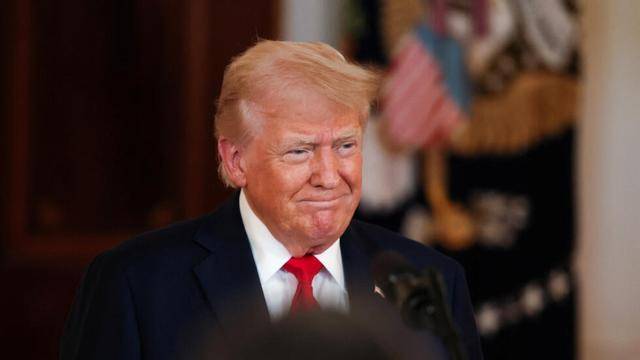
eBay and Etsy are relatively confident despite tariff pressures
TechCrunch· 2025-05-03 15:00
Core Insights - The secondhand industry is facing challenges due to President Trump's tariffs, but companies like eBay and Etsy show resilience [1][2] Company Performance - eBay and Etsy reported Q1 2025 earnings, addressing tariff impacts; eBay's CEO noted that only about 5% of their gross merchandise value (GMV) comes from China, while Etsy's CFO stated that just over 1% of gross merchandise sales (GMS) are from U.S. imports from China [2][3] - Etsy experienced a 3.4% year-over-year decline in active buyers, totaling 88.5 million, and an 8.9% decline in GMS to $2.3 billion [7][8] - eBay reported a GMV growth to $18.8 billion and a revenue increase of over 1% to $2.58 billion, benefiting from price-conscious shoppers opting for used and refurbished goods [10][11] Market Dynamics - Sellers on eBay and Etsy primarily source products locally, which provides a competitive advantage over import-reliant rivals like Temu and Shein [2][6] - Etsy's focus on handcrafted and vintage goods may make it more vulnerable to economic uncertainty, as consumer spending is hesitant [7] - eBay has seen increased spending from customers looking to avoid tariffs, indicating a positive trend in consumer behavior [10][11] Strategic Positioning - Etsy's ownership of Depop, a secondhand fashion platform, continues to perform well despite economic challenges, achieving record-high GMS since its acquisition in 2021 [8] - eBay's strategy of focusing on used and refurbished goods has positioned it favorably in the current market environment [10]



美媒:48%中国小包裹流向美国贫困地区,低收入家庭将遭重创
Guan Cha Zhe Wang· 2025-05-03 14:07
Core Viewpoint - The termination of the "small package exemption" policy by the U.S. will significantly impact low-income American households, particularly those relying on Chinese e-commerce platforms like Temu and Shein for affordable goods [1][4]. Group 1: Impact on Consumers - Approximately 48% of small packages sent to the U.S. are directed towards the poorest regions, while only 22% go to the wealthiest areas [1]. - Low-income families spend over three times as much on clothing as wealthier families, indicating a heavy reliance on affordable imports [1]. - Consumers like Rena Scott, a retired nurse, express that they can no longer afford products from Temu due to rising prices, which have increased significantly since the new tariffs were announced [5][6]. Group 2: E-commerce Trends - The number of small packages entering the U.S. has surged from about 140 million a decade ago to over 1 billion last year, with Chinese exports rising from $5.3 billion in 2018 to an estimated $66 billion in 2023 [2][4]. - Temu and Shein have become popular shopping destinations for Americans seeking lower prices, especially as domestic products become less affordable [5][9]. Group 3: Economic and Policy Context - The "small package exemption" was originally established in the 1930s to ease the import of souvenirs, and it was raised from $200 to $800 in 2016 [2]. - The Trump administration's trade policies, including a 145% tariff on Chinese imports, have led to increased costs for consumers who previously relied on cheaper Chinese goods [4][9]. - A recent poll indicates that 59% of the public believes Trump's policies have worsened the U.S. economic situation, reflecting growing discontent among consumers [9].

绕过关税,美国人“打飞的”来中国扫货
Zhong Guo Xin Wen Wang· 2025-05-03 12:23
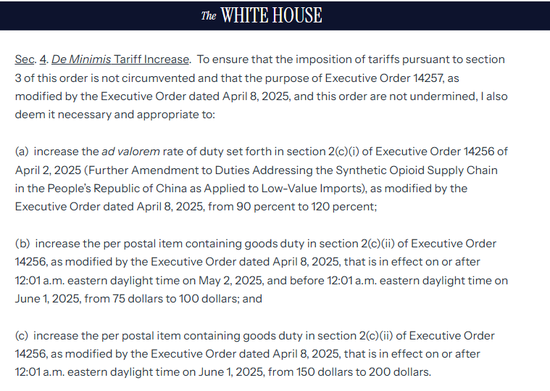
Core Viewpoint - The recent termination of the tariff exemption policy for small packages from China has not deterred American consumers; instead, it has sparked a "reverse purchasing" trend, indicating a strong demand for Chinese products despite increased costs [5][10]. Group 1: Tariff Policy Impact - The U.S. has ended the tariff exemption for small packages valued under $800 from China, imposing tariffs of 120% of the value or $100, effective May 2 [2]. - A dress priced at $18.47 on a Chinese e-commerce platform saw its price rise to $44.68 after a $26.21 import fee, reflecting a price increase of over 140% [3]. - Some products on the Shein platform experienced price surges of approximately 377% due to the new tariffs [3]. Group 2: Consumer Behavior - Despite the increased costs, American consumers are traveling to China to shop, leading to a surge in "reverse purchasing" [5]. - Data from Alipay indicates that spending by American tourists in China has doubled year-on-year, highlighting a significant increase in demand for Chinese goods [6]. - Social media discussions reveal that many American consumers are actively seeking ways to purchase Chinese products, with some expressing a desire for assistance in sourcing items from China [8]. Group 3: Market Dynamics - The phenomenon of reverse purchasing reflects a growing recognition of the value and quality of Chinese products among American consumers [10]. - The demand for Chinese goods is seen as a response to the structural impacts of tariff policies and the ongoing trade tensions between the U.S. and China [10]. - The increase in shipping costs due to tariffs has not deterred consumers, who are finding ways to navigate the challenges posed by the new trade environment [10].
Temu Stops Shipping Products From China Directly to US Consumers
PYMNTS.com· 2025-05-02 23:22
Core Points - Temu has ceased direct shipments from China to U.S. consumers due to the removal of the de minimis exemption, marking a significant change in its business model [1][2][4] - The company had previously thrived by sending small, low-cost items from China while avoiding tariffs by keeping packages under the de minimis threshold [2][6] - Following the tariff changes, Temu has raised prices and is now offering products that are already in U.S. warehouses, labeling them as "local" [3][4] Business Model Impact - The elimination of the de minimis exemption has resulted in a loss of price advantage for Temu, which will face challenges once its U.S. inventory is depleted [4] - Temu's response to the new tariffs includes a shift in its supply chain strategy, asking factories to ship goods in bulk to U.S. warehouses [5] - The number of shipments utilizing the de minimis exemption had dramatically increased over the past decade, highlighting the significance of this change for eCommerce platforms [6]


Temu stops shipments from China as Trump axes trade loophole
New York Post· 2025-05-02 20:30
Core Viewpoint - Temu has ceased shipments of inexpensive goods from China to the US following the termination of a trade loophole by President Trump, which previously allowed the company to avoid tariffs and customs checks [1][4]. Group 1: Impact of Trade Policy Changes - The end of the de minimis exemption is a significant setback for Temu and its competitor Shein, both of which utilized this loophole to import packages valued under $800 into the US without incurring duties [4]. - In 2024, 1.36 billion shipments entered the US under the de minimis rule, a substantial increase from 637 million four years prior, highlighting the loophole's extensive use [5]. - The new policy requires Temu and Shein to face additional tariffs, including a 145% rate on goods from China, and will subject their packages to customs checks, potentially causing delays [7]. Group 2: Company Adjustments and Strategies - In anticipation of the tariff changes, Temu has been preparing by prioritizing "local" goods on its US website and planning to increase prices [6]. - The company has begun imposing specific "import charges" on overseas products and is actively recruiting US sellers to import their own inventory from China [8][10]. - Temu's products were previously 20% to 30% cheaper than those of US competitors like Amazon, but this price advantage is expected to diminish as the company's stockpile in the US decreases [10].

Temu halts shipping direct from China as de minimis tariff loophole is cut off
CNBC· 2025-05-02 18:48
Core Insights - The expiration of the de minimis rule has significantly impacted Temu's business model in the U.S., forcing the company to adapt to new tariffs and regulations [3][4][6]. Group 1: Business Model Changes - Temu has shifted its website and app to display only products shipped from U.S.-based warehouses, with items shipped directly from China now labeled as out of stock [3]. - The company has confirmed that all U.S. sales are now handled by local sellers and fulfilled domestically to improve service levels [4]. - Temu is actively recruiting U.S. sellers to join its platform, aiming to help local merchants reach more customers and grow their businesses [5]. Group 2: Pricing and Tariffs - The end of the de minimis rule and the introduction of 145% tariffs on China have forced Temu to raise prices and suspend aggressive online advertising [4]. - Customers previously faced import charges between 130% and 150% for items shipped from China, which often exceeded the cost of the items themselves [5]. - Temu now advertises that local products have "no import charges" and "no extra charges upon delivery" [6]. Group 3: Industry Context - Other companies, such as Shein, have also raised prices in response to the end of the de minimis rule, indicating a broader trend in the industry [7]. - Amazon considered showing tariff-related costs on its Haul products but scrapped those plans following discussions with the White House [8]. - The Biden administration had previously looked to curtail the de minimis provision, reflecting ongoing trade tensions and regulatory scrutiny [9].