
中航产融

Search documents
宝城期货资讯早班车-20250828
Bao Cheng Qi Huo· 2025-08-28 03:18
1. Report Industry Investment Rating No relevant content provided. 2. Core Viewpoints of the Report - The economy shows mixed trends with some indicators like GDP and M1 showing positive changes while others like manufacturing PMI and fixed - asset investment have declined [1]. - In the commodity market, industrial enterprises' profit recovery is evident, especially in high - tech manufacturing, and various policies are expected to boost service consumption [2][3]. - The bond market has complex movements with different trends in yields of different types of bonds, and the stock market experiences significant fluctuations [21][32]. 3. Summary by Directory Macro Data Overview - GDP in Q2 2025 had a year - on - year growth of 5.2%, slightly lower than the previous quarter but higher than the same period last year. Manufacturing PMI in July 2025 was 49.3%, showing a decline compared to the previous month [1]. - M1 in July 2025 had a year - on - year growth of 5.6%, a significant increase from the previous month and a sharp turnaround from the negative growth last year [1]. Commodity Investment Reference - From January to July, the total profit of national large - scale industrial enterprises was 4.02035 trillion yuan, and business revenue increased by 2.3% year - on - year. In July, the profit of high - tech manufacturing increased by 18.9% [2]. - From January to July, China completed 1.95 trillion yuan in transportation fixed - asset investment, with 306.1 billion yuan in July [2]. - Next month, policies to expand service consumption will be introduced, and policies to promote service exports will be publicly released soon [3]. Financial News Compilation - On August 27, the central bank conducted 379.9 billion yuan of 7 - day reverse repurchase operations, with a net withdrawal of 236.1 billion yuan [14]. - In July, the profit of large - scale industrial enterprises decreased by 1.5% year - on - year, but the decline narrowed. The new kinetic energy index of China's economy in 2024 increased by 14.2% [15]. - The trade volume between China and SCO member states reached a record high in 2024, about 512.4 billion US dollars, a 2.7% increase from the previous year [16]. Bond Market Summary - Bank - to - bank major interest - rate bond yields showed mixed trends, and treasury bond futures rose across the board. Most of the Vanke bonds and Shenzhen Metro Group bonds declined [21]. - The CSI Convertible Bond Index closed down 2.82%. The yields of US bonds collectively declined, and the yields of European bonds showed mixed trends [22][24][25]. Foreign Exchange Market Express - The on - shore RMB against the US dollar closed at 7.1622 on August 27, down 1 basis point from the previous trading day. The US dollar index fell 0.04% [27]. Research Report Highlights - CITIC Construction Investment believes that the REITs market has reached an inflection point and is expected to reach a new high in the fourth quarter [28]. - CICC points out that the Hong Kong stock market underperformed the A - share market in July due to liquidity, fundamentals, and valuation factors, but may be supported by expected Fed rate cuts [28]. - Yangtze River Fixed Income suggests that the absolute value of credit bonds is gradually emerging, and a dumbbell - shaped strategy can be considered [29]. Stock Market Highlights - A - share major indices fluctuated, with the Shanghai Composite Index down 1.76%. The Hong Kong Hang Seng Index closed down 1.27% [32]. - In the first seven months of this year, Hong Kong maintained its global leadership in the new - stock market, with 51 IPOs and a sharp increase in fundraising [32].
*ST天茂主动退市议案获通过 10%溢价现金选择权背后需警惕三大风险
Zhong Guo Jing Ying Bao· 2025-08-26 14:17
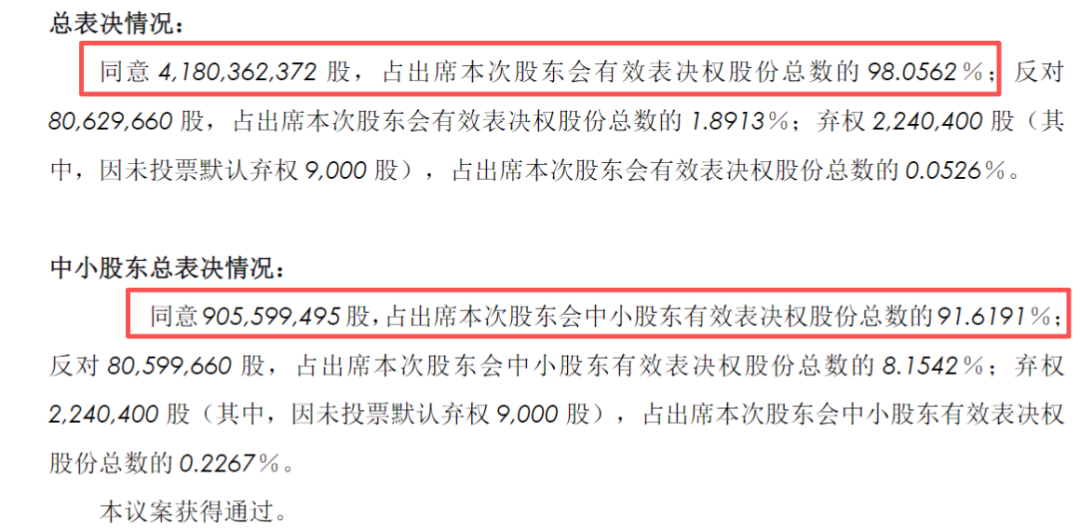
Core Viewpoint - *ST Tianmao's proposal for voluntary delisting was approved at the shareholder meeting, with 90% of participating small investors voting in favor, marking another case of voluntary delisting in the A-share market [1][3]. Group 1: Delisting Proposal and Shareholder Meeting - The shareholder meeting held on August 25 saw 6901 participants, representing 86.93% of the total shares, with 6898 small investors voting, accounting for 20.16% of the voting shares [3]. - The proposal for voluntary delisting received 98.06% approval from the valid votes, with small shareholders showing a 91.62% approval rate [3]. - The company plans to submit the delisting application to the Shenzhen Stock Exchange within 15 trading days following the shareholder meeting [3]. Group 2: Reasons for Delisting and Financial Status - The delisting is attributed to the company's need for business restructuring due to significant uncertainties affecting operations [3]. - *ST Tianmao has been under investigation by the China Securities Regulatory Commission (CSRC) for failing to disclose the 2024 annual report on time, leading to a 50% drop in stock price and over half of its market value lost [5][6]. - The company projected a net loss of 500 million to 750 million yuan for 2024, primarily due to increased reserve provisions from its subsidiary, Guohua Life [6]. Group 3: Cash Option for Shareholders - The company has set a cash option for dissenting shareholders at a price of 1.60 yuan per share, which represents a premium of approximately 10% over the last trading day's closing price of 1.45 yuan [7][9]. - The total estimated cost for this cash option is not expected to exceed 2.606 billion yuan, covering up to 1.629 billion shares [8]. - The cash option is designed to protect minority investors, but concerns about the reliability of funds and post-delisting liquidity have been raised [2][9]. Group 4: Market Context and Expert Opinions - The A-share market experienced a record trading volume exceeding 3 trillion yuan on the same day as the shareholder meeting, highlighting the challenging environment for *ST Tianmao's investors [2]. - Experts suggest that the design of the cash option aims to garner support from small shareholders, but caution is advised regarding the risks associated with the company's financial reliability and potential regulatory repercussions [2][9]. - The increasing number of voluntary delistings in 2025 is seen as a response to stricter regulations and market-driven reforms [4].
98.06%同意,这一股份有限公司将主动退市!
Jin Rong Shi Bao· 2025-08-26 09:48
Core Viewpoint - *ST Tianmao (000627) has taken a significant step towards voluntary delisting by passing a resolution at the 2025 first extraordinary general meeting of shareholders to terminate its stock listing on the Shenzhen Stock Exchange [1][3]. Group 1: Delisting Process - The company will submit a voluntary delisting application to the Shenzhen Stock Exchange within fifteen trading days after the shareholders' meeting decision [1][6]. - The stock will enter a phase of cash option distribution, exercise declaration, and settlement, and will no longer be traded [1][6]. Group 2: Shareholder Approval - The resolution to terminate the stock listing was approved by 4.18 billion shares, accounting for 98.0562% of the valid voting rights present at the meeting [3][6]. - Among minority shareholders, 905 million shares voted in favor, representing 91.6191% of the valid voting rights [3][6]. Group 3: Financial Performance and Reporting Issues - The company has been experiencing continuous performance decline and is currently in a loss-making state, with difficulties in annual report disclosures [2][8]. - The company faced significant delisting pressure due to the failure to disclose the 2024 annual report and the 2025 first-quarter report within the legal timeframe [8]. Group 4: Regulatory Actions - The company received a notice from the China Securities Regulatory Commission regarding an investigation for failing to disclose periodic reports on time [9]. - The company’s proactive delisting is seen as a measure to protect the interests of minority shareholders amid ongoing operational uncertainties [8]. Group 5: Industry Context - Other companies in the A-share market, such as AVIC Capital (600705) and Yulong Co. (601028), have also voluntarily delisted due to significant operational uncertainties, including deteriorating performance and liquidity pressures [10].


信用周报:调整后,如何抓住信用的机会?-20250826
China Post Securities· 2025-08-26 09:41
Report Industry Investment Rating - Not provided in the content Core Viewpoints of the Report - After two consecutive weeks of adjustment in the bond market since mid - August, the decline has exceeded the previous round in late July, resulting in a certain degree of cost - effectiveness. Currently, the strategy should prioritize liquidity. There are opportunities in 3 - 5 - year bank secondary capital bonds after adjustment, and it is also advisable to participate in the sinking of weak - quality urban investment bonds with a maturity of 1 - 3 years. However, the ultra - long - term strategy may not be a good choice due to high market uncertainty [3][36] Summary by Relevant Catalogs 1. Market Adjustment and Bond Performance - Since mid - August, the bond market has been continuously adjusting for two weeks, especially last week's adjustment exceeding expectations. Credit bonds declined synchronously, and the decline of major maturity varieties was higher than that of interest rates. The stock - bond "seesaw" effect continued, with the Shanghai Composite Index hitting a new high, and the bond market being insensitive to fundamental indicators, resulting in a continuous decline and rising yields [1][9] - From August 18 to 22, 2025, the yields of 1Y, 2Y, 3Y, 4Y, and 5Y treasury bonds increased by 0.4BP, 3.2BP, 9.7BP, 8.1BP, and 3.8BP respectively. The yields of AAA medium - and short - term notes with the same maturities increased by 4.9BP, 6.6BP, 5.8BP, 7.6BP, and 4.6BP respectively, and the yields of AA+ medium - and short - term notes increased by 4.9BP, 6.6BP, 7.8BP, 6.6BP, and 5.6BP respectively [9][10] - The market of ultra - long - term credit bonds weakened synchronously, with most of the declines exceeding those of the same - maturity interest - rate bonds. The decline of highly liquid ultra - long - term secondary and perpetual bonds was the lowest, while the decline of ultra - long - term urban investment bonds with the poorest liquidity was relatively large. The yields of AAA/AA+ 10Y medium - term notes increased by 6.00BP and 7.00BP respectively, and the yields of AAA/AA+ 10Y urban investment bonds increased by 13.01BP and 11.00BP respectively. The yield of AAA - 10Y bank secondary capital bonds increased by 6.69BP, while the yield of 10Y treasury bonds increased by 3.53BP [11][12] 2. Performance of Secondary and Perpetual Bonds - The market of secondary and perpetual bonds weakened synchronously, but the "volatility amplifier" feature was not obvious. The declines of 1Y - 5Y were similar to those of general credit bonds, and the decline gap in the ultra - long - term part was also close to that of ultra - long - term credit bonds. Currently, the part of the curve with a maturity of 3 years and above is still 25BP - 35BP away from the lowest yield point since 2025. Compared with the sharp decline at the end of July, the yield points of bonds with a maturity of over 3 years have reached new highs, and the adjustment amplitude is higher than that of the sharp decline at the end of July [2][16] - In terms of active trading, the sentiment was the most pessimistic in the second week of August. Although the market was still adjusting last week, the marginal sentiment of secondary and perpetual bonds improved. From August 11 to 15, the proportion of low - valuation transactions of secondary and perpetual bonds was 5.00%, 0.00%, 100.00%, 5.00%, and 0.00% respectively, and the average trading duration was 0.74 years, 1.02 years, 3.81 years, 1.53 years, and 1.12 years respectively. From August 18 to 22, the proportion of low - valuation transactions was 0.00%, 100.00%, 17.07%, 100.00%, and 100.00% respectively, and the average trading duration was 0.65 years, 4.73 years, 1.03 years, 5.66 years, and 3.30 years respectively [2][18] 3. Institutional Behavior - Public funds and other trading desks continued to sell, but it was more of a portfolio rebalancing rather than a full - scale reduction. At the same time, allocation desks such as wealth management and insurance institutions moderately bought during the adjustment. Public funds reduced their holdings of secondary bonds of national and joint - stock banks with a maturity of 3 - 5 years, with the total selling scale in the past two weeks approaching 20 billion, but they also increased their holdings of secondary capital bonds with a maturity of 1 - 3 years. Public funds were not very willing to sell their core assets such as weak - quality urban investment bonds [3][29] - Allocation desks such as bank wealth management and insurance institutions bought opportunistically after the sharp decline in the bond market, but they were also cautious about the maturity, mainly focusing on varieties with a maturity of 3 years and below. Since August, the increase in the liability side of wealth management products has been limited, and the demand is not strong, but it is not a full - scale redemption [3][29] 4. Performance of Credit Bond ETF Products - Credit bond ETF products performed poorly during the market adjustment in the past two weeks, with weak scale growth and net - value performance. In terms of scale change, the weekly scale of credit benchmark market - making ETF products has shrunk for two consecutive weeks since the market adjustment in the second week of August, and the weekly scale of science and technology innovation ETF products has been significantly weaker in August than in July. In terms of unit net - value change, the unit net values of the above two types of credit bond ETFs have suffered losses for two consecutive weeks, and the loss scale increased last week. In addition, the average turnover rate of the above two types of credit bond ETFs dropped to a new low last week [33]
一股东称为投票“千里赴会” 部分中小股东表示所提疑问未获实质回应
Mei Ri Jing Ji Xin Wen· 2025-08-26 06:52
Core Viewpoint - *ST Tianmao, controlled by Liu Yiqian, plans to voluntarily delist after facing difficulties in disclosing its annual report and being warned of delisting risks, with the proposal passing at a shareholder meeting with 98.0562% approval [1][5]. Group 1: Shareholder Meeting Details - The shareholder meeting held on August 25 lasted over two hours, with significant attendance from minority shareholders, some traveling long distances to participate [1][2]. - A total of 6,901 shareholders participated, with 17 attending in person and 6,892 voting online, representing over 42 billion shares, or 85.6420% of the voting rights [3]. - Despite concerns raised by minority shareholders regarding the delayed annual report and the company's operational status, the management did not provide substantial responses [3][4]. Group 2: Delisting Proposal and Voting Results - The proposal for voluntary delisting required approval from more than two-thirds of the attending shareholders, which was achieved with 41.80 billion shares voting in favor, equating to 98.0562% of the votes [5]. - Among minority shareholders, 9.05 billion shares voted in favor, representing 91.6191% of their voting rights [5]. Group 3: Shareholder Concerns - Minority shareholders expressed concerns about the cash option's exercise price of 1.60 CNY per share, which is approximately 36% of the company's net asset value of 4.41 CNY per share, indicating a significant discount [4]. - There were allegations that the company had pressured shareholders to vote in favor of the delisting proposal prior to the meeting, although this was not confirmed by the company [2].
98.06%同意!*ST天茂公告,股东会审议通过主动终止上市议案
Zhong Guo Zheng Quan Bao - Zhong Zheng Wang· 2025-08-26 04:20
Core Viewpoint - *ST Tianmao has made significant progress towards voluntary delisting, with shareholders approving the proposal to terminate the company's stock listing with a 98.06% agreement rate at the extraordinary general meeting held on August 25 [1][2]. Group 1: Delisting Process - The company will submit an application to the Shenzhen Stock Exchange for the termination of its stock listing within fifteen trading days after the shareholders' resolution [2]. - The last trading day for *ST Tianmao was August 13, with a closing price of 1.58 yuan [3]. - Shareholders eligible for cash options can exercise their rights at a price of 1.60 yuan per share during the cash option declaration period [3]. Group 2: Financial Implications - The cash option will be distributed based on the number of shares held by eligible shareholders as of the cash option registration date on September 2, 2025 [3]. - Jingmen Weituo Hongcheng Management Partnership (Limited Partnership) is expected to provide cash options for up to 1.629 billion shares, with the final distribution quantity to be confirmed after the registration date [3]. Group 3: Regulatory Issues - The company faces a risk of forced delisting due to the failure to disclose the 2024 annual report and the 2025 first-quarter report within the legal timeframe [4]. - The company has been under investigation by the China Securities Regulatory Commission for failing to disclose periodic reports on time [4]. Group 4: Industry Trends - Several companies have opted for voluntary delisting this year, indicating a trend towards companies choosing to exit the market proactively [5][6]. - The increasing number of voluntary delistings reflects a maturing market mechanism, with the concept of "voluntary exit" becoming more accepted among companies [7].
从“震慑”到“清退” 今年以来23家公司完成退市
Shang Hai Zheng Quan Bao· 2025-08-25 20:09
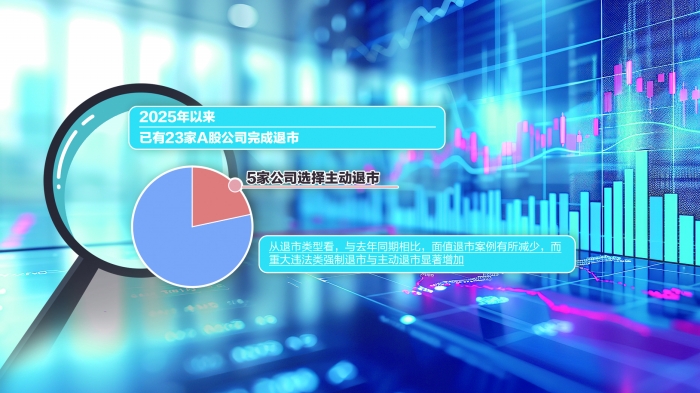
Core Viewpoint - The A-share delisting ecosystem is undergoing profound changes, with a significant increase in both mandatory and voluntary delistings, reflecting a shift from policy deterrence to normalized execution of delisting mechanisms [3][4][5]. Regulatory Changes - As of this year, 23 A-share companies have completed delisting, with 9 companies delisted in July alone. The types of delistings have shifted, with a notable increase in mandatory delistings due to major violations and voluntary delistings [3][4]. - Regulatory bodies have improved the efficiency of handling major violations, with some companies facing criminal charges post-delisting, indicating a "zero tolerance" approach to regulation [3][4]. - The execution of delisting has become faster, more precise, and harsher, with a significant reduction in the time from investigation to punishment, effectively eliminating opportunities for market speculation [4][5]. Delisting Cases - The case of *ST Jinkang illustrates the rapid process of delisting due to financial fraud, taking only about two months from the administrative penalty to formal delisting [5]. - There has been a marked increase in major violation delistings compared to the previous year, with 9 companies facing administrative penalties for financial fraud, triggering mandatory delistings [4][5]. Voluntary Delistings - There has been a rise in voluntary delistings, with 5 companies opting for this route this year, driven by factors such as strategic mergers and significant operational uncertainties [8][9]. - Companies like Yulong Co. and AVIC Industry have set cash options for investors during voluntary delistings, often at prices above the last trading price, to protect small investors [8][9]. Strategic Implications - The trend of voluntary delisting is shifting from a last resort to a strategic choice, allowing companies to escape short-term performance pressures and focus on long-term restructuring [9]. - Benefits of voluntary delisting include reduced operational costs and the ability to concentrate on risk management during periods of uncertainty [9].
中航沈飞: 中航沈飞股份有限公司关于对中航工业集团财务有限责任公司关联存贷款的风险持续评估报告
Zheng Quan Zhi Xing· 2025-08-25 16:34
Core Viewpoint - The report evaluates the ongoing risk assessment of the financial relationship between AVIC Shenyang Aircraft Corporation and AVIC Financial Company, confirming that the latter operates within regulatory compliance and maintains effective risk management practices [1][9]. Group 1: Basic Information about AVIC Financial Company - AVIC Financial Company was established in May 2007, with a registered capital of 395.138 million RMB, and is jointly funded by 12 member units of China Aviation Industry Corporation [2]. - The company is a non-bank financial institution approved by the National Financial Supervision Administration and has a legal entity status [2]. Group 2: Risk Management Overview - AVIC Financial Company has established a robust governance structure, including a board of directors and specialized committees for strategic development, risk management, and internal audit [3]. - The company employs a three-line defense model for risk management, with clear roles and responsibilities across departments to ensure effective risk control [4]. Group 3: Financial Performance - As of June 30, 2023, AVIC Financial Company reported total assets of approximately 220.15 billion RMB and total revenue of approximately 3.16 billion RMB for the year 2022 [8]. - The net profit for the year ending December 31, 2022, was approximately 560.89 million RMB, reflecting a significant increase from the previous year [8]. Group 4: Regulatory Compliance - AVIC Financial Company meets all regulatory requirements, including a capital adequacy ratio of 13.44% as of December 2024, exceeding the minimum requirement of 10.5% [8]. - The company has not encountered any major operational risks and adheres to all relevant financial regulations and internal control measures [6][9]. Group 5: Relationship with AVIC Shenyang Aircraft Corporation - As of June 30, 2025, AVIC Shenyang Aircraft Corporation's deposits with AVIC Financial Company are secure, with no delays in payments due to cash flow issues [8]. - The financial transactions between the two entities are conducted in compliance with national regulations, ensuring that risks associated with these transactions are manageable [9].

中航资本股市资讯:预计A股市场仍有望延续强势格局
Sou Hu Cai Jing· 2025-08-14 04:43
中航资本以为,达观情绪下本轮行情没有完毕,本年A股商场更像"增强版2013"。本年商场结构和2013 年相似,小盘和生长风格占优,但本年商场全体体现有望显着好于2013年。后市来看,估值抬升、增量 资金入市布景下不排除指数动摇加大,但宽松流动性结合盈利修复及叙事扭转,自上一年"924"以来的 本轮行情仍在延续过程中。 周三,上证指数实现8连阳并打破前高,商场量能打破2万亿元,创业板领涨,个股板块保持活泼。海外 商场方面,9月美联储降息预期大幅上升,根据CME"美联储观察",9月降息25个基点的概率为94.3%。 A股商场方面,当前上证指数打破2024年的3674.4高点,再创反弹新高,大盘全体趋势偏强,值得注意 的是,在本轮的上涨过程中没有以往的急涨急跌,商场的全体承接动能偏强,体现出老练商场的低动摇 和低回撤的特点。此外,A股两融资金持续添加,凸显商场决心不断回升。短期量能配合下,估计A股 商场仍有望延续强势格局,不过也需注意高位获利盘回吐压力。往后看,中期在资金面支撑和基本面修 复的布景下,商场向好趋势不改,后续指数中枢或将逐级抬升。 周三,上证指数早盘高开高走,随后有所回落,之后震动上扬,午后一度回落, ...
又一家上市公司拟主动退市 此前因年报逾期“披星戴帽”
Jin Rong Shi Bao· 2025-08-14 02:28
Core Viewpoint - Tianmao Group has announced its intention to voluntarily delist from the A-share market due to significant operational uncertainties and the inability to publish its 2024 annual report on time, which has led to considerable delisting pressure [1][4]. Group 1: Delisting Announcement - Tianmao Group's board has approved a resolution to voluntarily withdraw its A-share listing on the Shenzhen Stock Exchange, pending approval from shareholders [2]. - The delisting requires a two-thirds majority vote from shareholders, with the controlling shareholder holding 66.78% of the shares, making the support of the remaining 33.23% crucial for the resolution's passage [2][3]. Group 2: Reasons for Delisting - The company cited business restructuring and significant uncertainties as the primary reasons for the delisting decision [2]. - Tianmao Group has faced pressure due to the failure to disclose its 2024 annual report within the legal timeframe, leading to a delisting risk warning from the Shenzhen Stock Exchange [4]. Group 3: Financial Performance - Tianmao Group has reported declining performance over the years, with net profits decreasing by 67.32%, 18.88%, 41.78%, and 337.82% from 2020 to 2023, culminating in a net loss of 6.52 billion yuan in 2023 [5]. - For the first three quarters of 2024, the company has projected a net loss of 3.33 billion yuan, with expectations of a total loss between 5 billion to 7.5 billion yuan for the year [6]. Group 4: Investor Protection Mechanism - The company has established an investor protection mechanism, allowing shareholders to exercise a cash option for their shares post-delisting, ensuring they receive cash compensation for their holdings [3]. Group 5: Industry Context - Several companies have voluntarily delisted from the A-share market this year, including Haitong Securities and Yulong Co., due to operational uncertainties and financial difficulties [7]. - The trend of voluntary delisting is seen as a move to reduce "shell speculation" and optimize market ecology, reflecting the maturity of market mechanisms [8].