协鑫科技

Search documents
港股早评:恒指大幅高开1.59%,科技股、太空光伏股、保险股齐涨
Ge Long Hui· 2026-02-09 01:33
Group 1 - US stock market surged last Friday, with significant gains in Japanese and Korean markets, leading to a strong opening for Hong Kong stocks [1] - The Hang Seng Index rose by 1.59%, the National Index increased by 1.54%, and the Hang Seng Tech Index climbed by 1.9% [1] - Major tech stocks saw collective increases, with Baidu up by 3.5%, Alibaba and JD.com both rising by approximately 3% [1] Group 2 - Musk made a notable statement regarding AI deployment costs being lowest in space, resulting in a surge in space photovoltaic stocks, with Junda shares rising over 12% and GCL-Poly Energy increasing by 5.4% [1] - Semiconductor stocks, gold stocks, and insurance stocks also experienced gains [1] - However, traditional Chinese medicine stocks, oil stocks, and airline stocks saw some declines [1] Group 3 - Lanke Technology had a strong debut, opening over 57% higher on its first trading day [1]
多晶硅:反内卷预期再起,节前观望,节后关注现货价格;工业硅:临近春节,重视风险管理,等待盘面企稳
Yin He Qi Huo· 2026-02-09 01:11
Report Industry Investment Rating There is no information provided in the report regarding the industry investment rating. Core Viewpoints of the Report - In the polysilicon market, Tongwei Co., Ltd. has fully shut down its polysilicon production capacity, and GCL Technology has cut production, leading to a reduction in February's polysilicon output to around 80,000 tons. The boost from export rush to downstream operating rates fell short of expectations, but at the current silicon wafer operating rate, a monthly output of around 46GW can theoretically lead to polysilicon inventory reduction. From late December to January, there were basically no bulk transactions in the polysilicon spot market, and manufacturers' inventories have significantly accumulated to 340,000 tons. Anti - involution policies are expected to continue, with a greater emphasis on market - oriented principles in the future. Currently, the polysilicon spot market is under great pressure, and if some manufacturers significantly cut prices, the spot price may drop to near the cost line of each company. It is recommended to wait and see before the Spring Festival and pay attention to the spot price after the festival [4]. - In the industrial silicon market, this week, the weekly output of DMC decreased by 1.90% to 41,300 tons, the weekly output of polysilicon decreased by 0.05% to 19,200 tons, the operating rate of primary aluminum alloy decreased by 0.9 percentage points to 57.9%, and the operating rate of recycled aluminum alloy decreased by 1 percentage point to 58.3%. The weekly output of industrial silicon decreased by 14.05% to 63,200 tons, and the total number of open furnaces decreased by 34 to 184. The social inventory of industrial silicon increased by 0.8 tons to 562,000 tons, the inventory of sample enterprises in Xinjiang, Yunnan, and Sichuan decreased by 0.3 tons to 208,700 tons, and the downstream raw material inventory increased by 0.02 tons to 238,400 tons. Due to major manufacturers' planned production cuts and the increased production - cut expectations of silicone enterprises after a meeting last week, combined with a bearish commodity market atmosphere, the industrial silicon futures prices dropped significantly. Currently, the basis is at a relatively high level, and manufacturers are not willing to cut prices. The futures price is undervalued, but considering the approaching Spring Festival, it is possible for the futures price to further decline and then undergo re - valuation. It is recommended to reduce long positions and wait for the market to stabilize [6]. Summary According to the Table of Contents Chapter 1: Comprehensive Analysis and Trading Strategies Polysilicon - **Supply and Demand**: Tongwei's full - scale shutdown and GCL's production cut led to a reduction in February's output to around 80,000 tons. There was basically no bulk trading in the spot market from late December to January, and inventories reached 340,000 tons. At the current silicon wafer operating rate, a monthly output of 46GW can lead to theoretical inventory reduction [4]. - **Market Policy**: Anti - involution policies will continue, with more emphasis on market - oriented principles in the future. Measures such as state reserves and selling at no less than cost may continue, while manufacturers' joint price - holding actions have been cancelled [4]. - **Trading Strategy**: It is recommended to wait and see before the Spring Festival. After the festival, if the spot price drops to near the previous low, consider lightly increasing long positions or buying call options. The bottom of the spot price can be referred to the range of (45,000, 46,000) [4][5]. Industrial Silicon - **Supply and Demand**: This week, the output of downstream products decreased, and the output and the number of open furnaces of industrial silicon also decreased. The social inventory increased, the inventory of sample enterprises decreased slightly, and the downstream raw material inventory increased slightly [6][15][19][25]. - **Trading Logic**: Due to production cuts and a bearish market atmosphere, the futures price dropped significantly. The basis is high, and manufacturers are reluctant to cut prices. The futures price is undervalued, but there is a possibility of further decline and re - valuation before the Spring Festival [6]. - **Trading Strategy**: Reduce long positions and wait for the market to stabilize. The operating range of the futures price can be referred to (8,200, 9,100) [6][7]. Chapter 2: Industrial Silicon Fundamental Data Tracking - **Market Performance**: This week, industrial silicon futures prices broke through support levels and declined, while spot prices remained stable. The basis strengthened [12]. - **Downstream Demand**: The weekly output of DMC decreased by 1.90%, the weekly output of polysilicon decreased by 0.05%, the operating rate of primary aluminum alloy decreased by 0.9 percentage points, and the operating rate of recycled aluminum alloy decreased by 1 percentage point [15]. - **Industrial Silicon Production**: The weekly output decreased by 14.05% to 63,200 tons, and the total number of open furnaces decreased by 34 to 184. Major manufacturers cut production as planned, and the operating rates of other manufacturers remained stable for the time being [19]. - **Inventory**: The social inventory increased by 0.8 tons to 562,000 tons, the inventory of sample enterprises in Xinjiang, Yunnan, and Sichuan decreased by 0.3 tons to 208,700 tons, and the downstream raw material inventory increased by 0.02 tons to 238,400 tons [25]. - **Product Prices**: This week, industrial silicon spot prices remained stable, as did DMC and terminal product prices [30][35]. - **Intermediate and Downstream Industry Data**: The operating rate of silicone intermediates decreased slightly, the price of aluminum alloy increased, and the operating rate increased slightly. The price of industrial silicon raw materials remained stable [41][45][48]. Chapter 3: Polysilicon Fundamental Data Tracking - **Price Trends**: This week, the prices of silicon wafers and distributed components decreased, while the prices of batteries, polysilicon, and centralized components increased [52]. - **Component Data**: Due to the previous sharp increase in silver prices, the cost of photovoltaic components increased significantly, and the economic viability of export rush was hindered. Although the silver price has recently declined, the component production schedule is still at a low level due to the short export - rush window period around the Spring Festival. It is expected that the photovoltaic component production schedule in February will be 30GW. The European photovoltaic component inventory is 34.2GW, and the domestic manufacturers' component inventory is 26.1GW, both at a relatively low - to - neutral level [61]. - **Battery Data**: The export tax refund for photovoltaic batteries will be reduced and cancelled in 2027. The incremental demand for battery export rush may be less than that of components. It is expected that the photovoltaic battery production schedule in February will be adjusted down to around 35GW [62]. - **Silicon Wafer Data**: The silicon wafer inventory has increased to 28.32GW. The export tax refund for silicon wafers will be cancelled simultaneously with that of components, and there is still demand for silicon wafer export rush. The silicon wafer production schedule in February will remain flat at 46GW compared to the previous month [68]. - **Polysilicon Data**: This week, the polysilicon output decreased slightly, and the factory inventory increased to 340,000 tons. GCL Technology reduced its operating rate, and Tongwei Co., Ltd. shut down all production. The polysilicon operating rate in February will not change much compared to January, and the output may be reduced to around 80,000 tons due to Tongwei's shutdown and the number of days in the month [73].


电力设备及新能源周报20260208:预计“十五五”全球光伏市场保持高增,首个重大电网项目获核准
Guolian Minsheng Securities· 2026-02-09 00:40
Investment Rating - The report maintains a "Recommended" rating for key companies in the electric power equipment and new energy sectors, including Ningde Times, Keda Li, and others [6][7]. Core Insights - The global photovoltaic market is expected to maintain high growth during the "14th Five-Year Plan" period, with annual new installations projected to reach 725-870 GW globally and 238-287 GW domestically [3][39]. - The electric power equipment sector is witnessing significant developments, including the approval of a major grid project by the National Development and Reform Commission, marking a new phase of market competition [4][39]. - The new energy vehicle market shows strong momentum, with major manufacturers like BYD and NIO reporting substantial year-on-year delivery increases [2][14]. Summary by Sections New Energy Vehicles - In January 2026, several new energy vehicle manufacturers reported significant delivery growth, with NIO delivering 27,182 units (+96.1% YoY) and BYD leading with 210,051 units [2][14][24]. - The third China All-Solid-State Battery Innovation Development Summit was held, focusing on key materials and technological advancements [2][27]. New Energy Generation - The photovoltaic industry is transitioning from scale expansion to high-quality development, with a focus on technological integration and new application scenarios [39][40]. - The cancellation of export tax rebates for photovoltaic products starting April 1, 2026, will push companies towards innovation and sustainable competitiveness [45]. Electric Power Equipment and Automation - The State Grid's recent tender for ultra-high voltage equipment involved 119 packages, with 115 awarded, indicating robust market activity [4]. - The approval of the first major grid project under the "14th Five-Year Plan" signifies a positive outlook for the electric power sector [4]. Commercial Aerospace - The domestic first "one rocket, 36 satellites" satellite launch technology facility has been accepted, indicating advancements in commercial aerospace capabilities [5]. Market Performance - The electric power equipment and new energy sector saw a weekly increase of 2.20%, outperforming the Shanghai Composite Index, with lithium battery and solar indices showing significant gains [1].




商业航天深度:太空光伏的技术底层逻辑(附29页PPT)
材料汇· 2026-02-08 15:24
Core Viewpoint - The article discusses the emergence of a new era in satellite technology, emphasizing the urgent need for efficient power supply systems for satellites as China prepares to launch a significant number of satellites by the end of 2025 [6][9]. Group 1: Satellite Launch and Development - By the end of 2025, China plans to submit approximately 203,000 satellites to the ITU, covering 14 satellite constellations, with the Radio Innovation Institute applying for two constellations, each with 96,714 satellites, totaling nearly 193,000 satellites [7][8]. - Major operators and commercial satellite companies are also advancing medium-scale constellations, with China Mobile applying for 2,520 satellites, Yuxin Satellite for 1,296, and Guodian Gaoke for 1,132 [8][10]. - As of December 2025, the overall launch completion rate for major domestic constellations remains low, indicating they are in the early stages of network formation [13]. Group 2: Starlink Program and Launch Trends - The Starlink program exhibits a clear generational rhythm, with cumulative launches reaching approximately 11,034 satellites and applications totaling about 41,943 as of January 2026 [2][16]. - The annual launch volume has increased significantly, with projections for 2025 reaching around 3,200 satellites, reflecting a trend of accelerating deployment [15][20]. - Starlink's V1 to V3 satellites utilize crystalline silicon technology to prioritize supply chain scalability and system-level cost reduction, while V4 may adopt P-type silicon HJT or P-type silicon HJT-perovskite tandem structures [3][4]. Group 3: Photovoltaic Technology in Space - The current mainstream technology for space photovoltaic applications in China is multi-junction gallium arsenide (GaAs), although there is ongoing testing and validation of perovskite systems by various companies [4][26]. - The high unit price of GaAs photovoltaic cells is becoming a significant factor limiting system economics, prompting the industry to explore lower-cost alternatives such as silicon-based and perovskite technologies [21][34]. - The article highlights the unique requirements for photovoltaic cells in space, including radiation resistance, thermal stability, and long-term reliability under extreme conditions [22][25]. Group 4: Industry Outlook and Recommendations - The acceleration of satellite launches and the continuous validation of new photovoltaic technologies indicate a rising industry outlook and long-term growth potential for the space photovoltaic sector [5][6]. - The article recommends a "buy" rating for the space photovoltaic industry, citing key companies such as Maiwei Co., Aotewi, and others as relevant investment targets [5][6].



电力设备及新能源周报20260208:预计“十五五”全球光伏市场保持高增,首个重大电网项目获核准-20260208
Guolian Minsheng Securities· 2026-02-08 13:55
Investment Rating - The report maintains a "Recommended" rating for key companies in the electric power equipment and new energy sectors, including Ningde Times, Keda Li, and others [6][7]. Core Insights - The global photovoltaic market is expected to maintain high growth during the "14th Five-Year Plan" period, with annual new installations projected to reach 725-870 GW globally and 238-287 GW domestically [3][39]. - The electric power equipment sector is witnessing significant developments, including the approval of major grid projects and the awarding of contracts for high-voltage equipment [4][39]. - The new energy vehicle market continues to show strong momentum, with major manufacturers reporting significant year-on-year delivery increases [2][14]. Summary by Sections New Energy Vehicles - In January 2026, several new energy vehicle manufacturers reported substantial delivery growth, with NIO delivering 27,182 units (+96.1% YoY) and BYD maintaining a leading position with 210,051 units delivered [2][14][24]. - The third China All-Solid-State Battery Innovation Development Summit was held, focusing on key materials and technological advancements [2][27]. New Energy Generation - The photovoltaic industry is transitioning from scale expansion to high-quality development, with a focus on technological integration and new application scenarios [39][40]. - The cancellation of export tax rebates for photovoltaic products starting April 1, 2026, marks a shift to full market competition, pushing companies towards innovation and sustainable competitiveness [45][48]. Electric Power Equipment and Automation - The State Grid's recent tender for ultra-high voltage equipment involved 119 packages, with 115 awarded, indicating robust demand in the sector [4][39]. - The approval of the first major grid project by the National Development and Reform Commission signifies a positive outlook for infrastructure development in the electric power sector [4][39]. Commercial Aerospace - The domestic first "one rocket, 36 satellites" satellite launch technology facility has been accepted, indicating advancements in commercial aerospace capabilities [5]. Market Performance - The electric power equipment and new energy sector saw a weekly increase of 2.20%, outperforming the Shanghai Composite Index, with lithium battery and solar indices showing significant gains [1].


黑龙江绿色甲醇与电解槽项目进入实施阶段,特斯拉官宣干电极工艺量产
GOLDEN SUN SECURITIES· 2026-02-08 08:02
黑龙江绿色甲醇与电解槽项目进入实施阶段,特斯拉官宣干电极工艺量产 光伏:硅片价格下跌,电池价格保持稳定。据安泰科,本周多晶硅主流产品无公开报价、无 实际成交。据 Infolink,硅片市场延续上周走弱态势,整体仍处于价格下探阶段。各尺寸硅 片价格普遍承压,市场价格重心进一步下移。N 型电池片价格方面,本周 183N、210RN、 210N 型号均价持稳于 0.45 元/W,价格区间维持 0.43-0.45 元/W。尽管此前银价冲高回落 带动市场形成电池片降价预期,但当前实体白银现货供给偏紧,厂家采购仍需加价,头部企 业报价暂未调整,继续维持 0.45 元/W 的主流水平。组件市场受银价波动传导,成本端呈现 起伏态势,各组件厂基于自身成本核算调整报价。本周国内分布式组件公开报价区间为 0.80- 0.88 元/W,实际成交价格则下探至 0.75-0.80 元/W;TOPCon 组件公示价格保持稳定,国内 均价 0.739 元/W,分布式实际成交均价 0.76 元/W。核心关注:1)供给侧改革下的产业链 涨价机会,核心关注通威股份、协鑫科技、隆基绿能、晶澳科技、晶科能源、天合光能等; 2)新技术背景下带来的中长期 ...

周末重点速递丨券商热议“持币过节还是持股过节”,聚焦商业航天、人形机器人配置机会
Mei Ri Jing Ji Xin Wen· 2026-02-08 02:19
Group 1: Space Industry Developments - China successfully launched a reusable experimental spacecraft using the Long March 2F rocket on February 7, providing technological support for the peaceful use of space [1] - The space industry is expected to see significant growth, with a focus on core components of rockets and the potential for valuation premiums due to increasing demand [4] Group 2: A-Share Market Trends - Historical data indicates a "Spring Festival effect" in the A-share market, characterized by reduced trading volume before the holiday and increased volume afterward, with total trading volume dropping below 2.5 trillion yuan [2][3] - The market is anticipated to rebound in the week following the holiday, with a trend reversal typically occurring in the last five trading days before the festival [2][3] Group 3: Battery Technology Advancements - Perovskite batteries, recognized as the third generation of batteries, are expected to achieve GW-level mass production, with significant advantages in cost and efficiency [5][6] - The cost of perovskite battery production is projected to decrease from 1.2 yuan/W to 1.0 yuan/W by 2026, potentially surpassing the cost competitiveness of traditional silicon batteries [6] Group 4: Robotics and Sensor Technology - The trend towards more humanoid robots is expected to drive demand for AMR sensors, which offer higher precision and cost advantages over traditional optical encoders [7] - Companies involved in the production of components for humanoid robots are likely to benefit from the increased market opportunities as the demand for advanced sensors grows [7]

钙钛矿:迎来GW级量产
GOLDEN SUN SECURITIES· 2026-02-06 13:26
Investment Rating - The report maintains a rating of "Increase" for the industry [4] Core Insights - Perovskite solar cells are entering the era of GW-level mass production, with leading companies like JinkoSolar and LONGi Green Energy accelerating capacity release [2][35] - The efficiency of perovskite cells is rapidly improving, with laboratory efficiencies reaching 27.3% for single-junction cells and 35.0% for perovskite-silicon tandem cells, significantly surpassing the maximum efficiency of silicon cells at 27.9% [15][19] - The cost competitiveness of perovskite cells is expected to improve, with unit production costs projected to drop to 1.0 RMB/W by 2026, potentially surpassing silicon cells [2][35] Summary by Sections Section 1: Perovskite as the Next Generation Photovoltaic Solution - Perovskite solar cells utilize a hybrid organic-inorganic metal halide semiconductor as the light-absorbing material, offering advantages such as high efficiency, low cost, and lightweight [8][11] Section 2: Efficiency and Stability Breakthroughs - The report highlights significant advancements in efficiency and stability, with perovskite cells achieving rapid efficiency improvements compared to silicon cells [15][18] - The industry is overcoming stability challenges through material modifications and process optimizations, with some products achieving IEC commercial standard certification [25][26] Section 3: GW-Level Production Era - The first GW-level production line for perovskite solar cells has been launched, marking the beginning of large-scale production [35] - By 2027, global production capacity is expected to exceed 5GW, with a complete supply chain being established [2][35] Section 4: Investment Recommendations - The report suggests focusing on leading companies in the perovskite supply chain, particularly those with clear capacity deployment and advancements in tandem technology, such as LONGi Green Energy and Trina Solar [3] - Equipment manufacturers with high domestic production rates and sufficient orders, like JinkoSolar and Mibet, are also recommended for investment [3]




电力设备行业深度:钙钛矿:迎来GW级量产
GOLDEN SUN SECURITIES· 2026-02-06 12:34
证券研究报告 | 行业深度 gszqdatemark 2026 02 06 年 月 日 电力设备 钙钛矿:迎来 GW 级量产 钙钛矿电池是第三代电池,单结和叠层技术并行发展。钙钛矿是以通式为 ABX₃的有机-无机杂化金属卤化物为吸光材料,具备合成工艺简单、光电 转换效率高、成本低、重量轻等优势,钙钛矿电池技术路线分为单结与叠 层两类。叠层路线又细分为晶硅/钙钛矿叠层、全钙钛矿叠层等,其中晶硅 /钙钛矿叠层可与 PERC、TOPCon、异质结等现有晶硅电池技术结合,兼顾 效率提升与产线兼容性,是当前主流研发方向。 技术端:效率与稳定性双突破。钙钛矿电池效率提升速度远超晶硅电池, 单结钙钛矿实验室最高效率达 27.3%,钙钛矿-硅串联电池效率达 35.0%, 大幅超越晶硅电池 27.9%的实验室效率上限。单结钙钛矿已进入技术迭代 与产业化并行阶段,GW 级量产线逐步落地,头部企业大面积组件效率接 近 20%;叠层电池成为技术迭代核心方向,头部企业钙钛矿-TOPCon 叠 层电池效率突破 34%。行业通过材料改性、封装升级与工艺优化突破稳定 性瓶颈,部分产品通过 IEC 商用标准认证,核心生产设备实现 100%国产 ...
协鑫科技午后涨近3% 协鑫光电为目前行业前三的钙钛矿龙头企业
Xin Lang Cai Jing· 2026-02-06 07:19
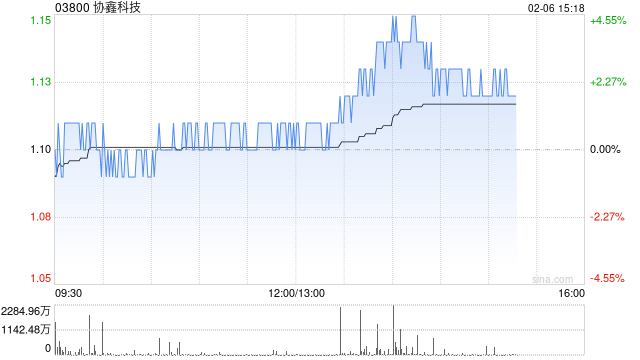
Group 1 - GCL-Poly Energy Holdings Limited (stock code: 03800) saw its stock price rise by 2.73% to HKD 1.13, with a trading volume of HKD 392 million [4] - According to a report by CMB International, the commercial aerospace theme is gaining traction, and perovskite batteries, due to their high energy-to-weight ratio, are expected to become the preferred choice for space photovoltaics, accelerating development [6] - GCL-Poly holds a 43.65% stake in its joint venture, GCL-Poly Solar, which is one of the top three companies in the perovskite sector, with GW-level production lines already in operation, positioning it to benefit significantly [6] - The European Union's carbon tariff will officially take effect on January 1, 2026, which is expected to lead to a price premium for granular silicon compared to rod silicon, reversing the current discount [6]